South Korea has become a cycling favourite for many, so we decided to explore its appeal. After covering 1,300 km, we’re now enthusiasts ourselves and are already planning a return trip.
Summers are hot and wet, while winters are very cold. We opted for late August to mid-September, catching the tail end of summer.
Our planning was minimal, but we were aware of long-established cycling “routes” with dedicated infrastructure. We knew Google Maps wouldn’t work, but Korean mapping apps with English interfaces were available. We also learned from Hanjin staff at Incheon Airport (ICN) that they could pack our bikes for us just before our departure flight. In essence, we could simply arrive, ride, and figure out the specifics as we went.
While we can’t control the weather, heavy rain could pose a challenge. To mitigate this, the ability to transport our bikes on a bus became a crucial factor, and it turned out to be possible.
The main Four Rivers route spans 700 km from Seoul in the north to Busan in the south. After the wet season, it’s unlikely you’d be forced to relocate, but buses are readily available. Local passengers typically don’t store much in the large under-bus compartments, so a bike can usually be loaded with only its luggage removed.There’s a Korean bike-travel Facebook group run by an Australian resident named Mark Thorrowgood. Additionally, several YouTube videos document riding the long trails in South Korea. We initially assumed these long routes would attract many international travelers, but that’s not actually the case.
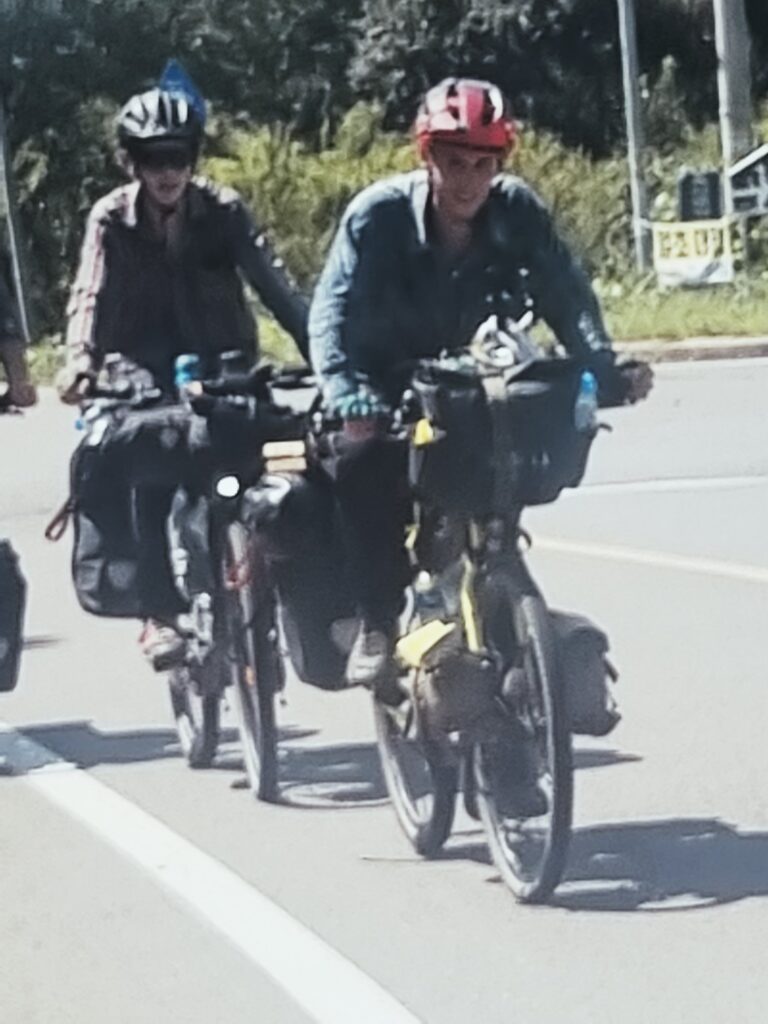
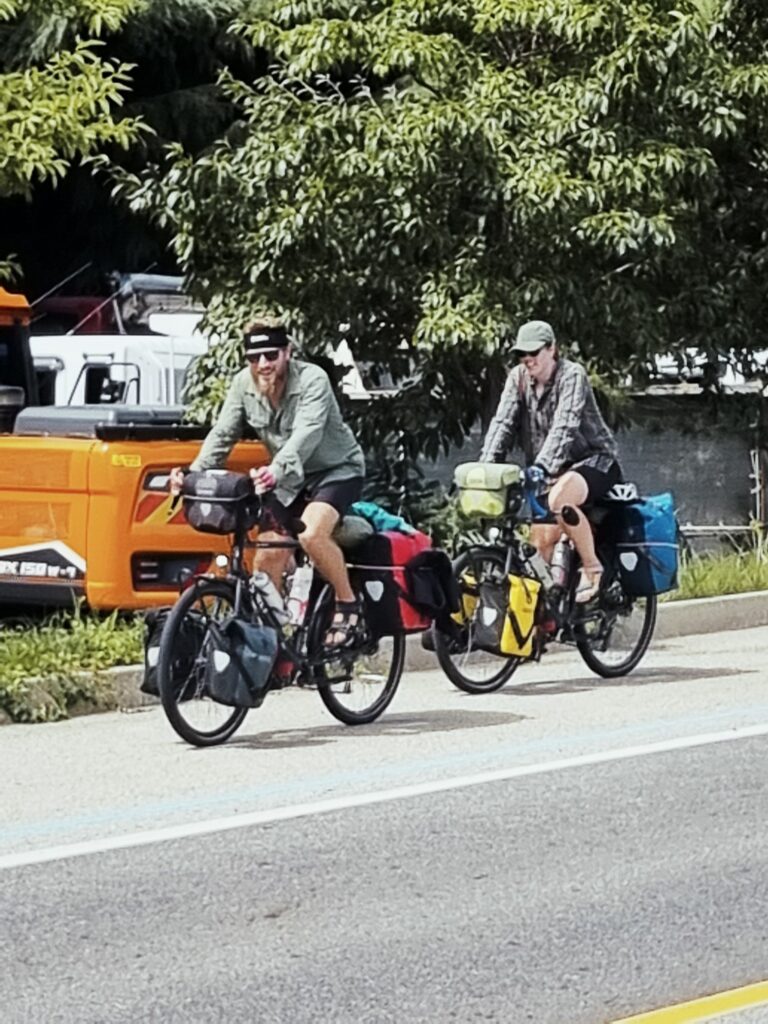
We also met some Kiwis and Canadians.
Yes, there are some world travellers, but 99% of cyclists are local. Koreans ride a lot, especially where there is infrastructure. Without separated infrastructure, they ride on the footpath. The roads often lack edges.
This guy is travelling with his mate. They have a tent and are doing their own cooking. The total body covering is typical. Saving on suncream perhaps?
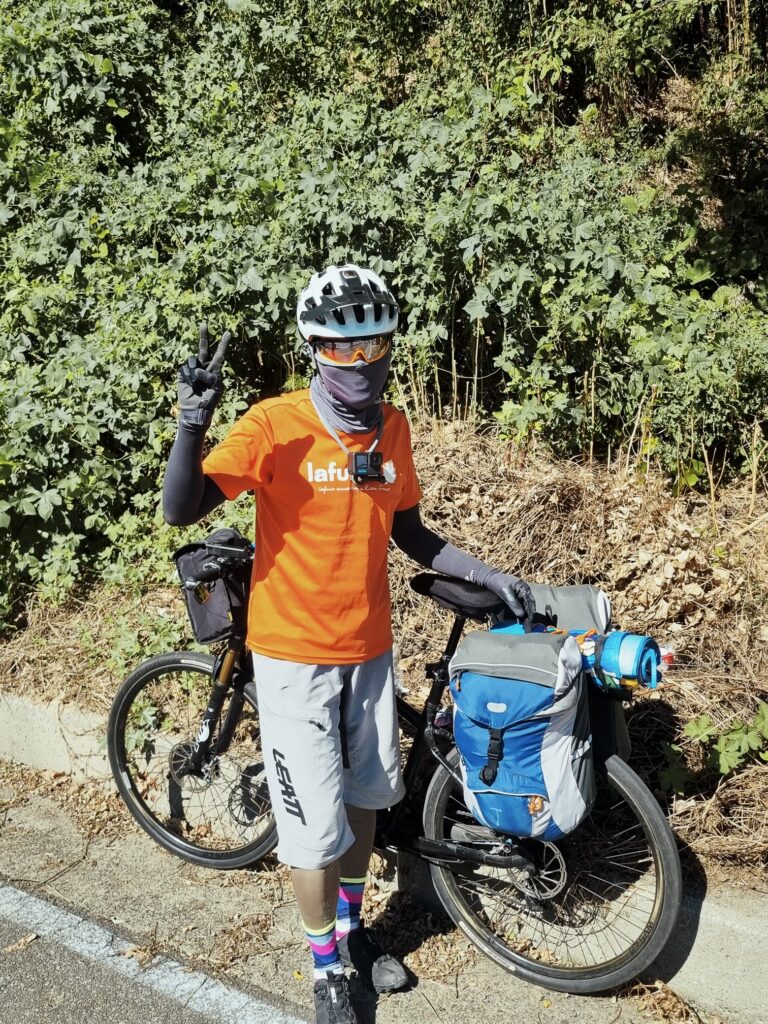
But the majority of Korean users on these long routes are not long distance travellers, but nearby residents. Within 30km of home. Just riding their bikes for the heck of it, for the joy, for the camaraderie, for the exercise in an apartment-living society, and for the nature. There are a lot of roadies, relishing the superb infrastructure.
A 700km-long separated bike route the full length of any country is truly impressive. We can’t help but wonder about the public policy decisions that were made, for this to exist. At all levels of government. Maybe the Koreans have worked stuff out and we all need to learn from them.
Typically there are two bike lanes and a walking lane. Along the Han River in Seoul there are sometimes double bike lanes in both directions. There is exercise equipment at regular intervals along the routes. Toilets with piped music and aircon!
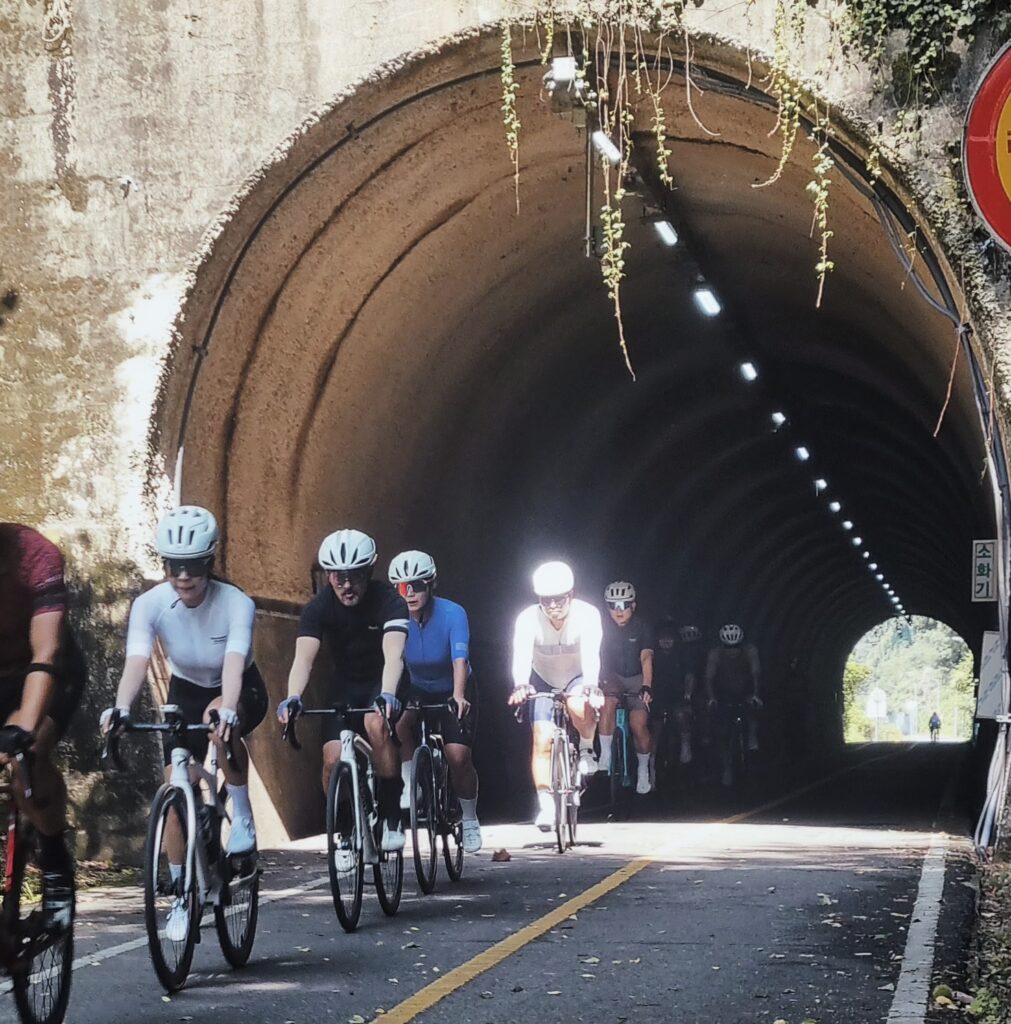
Noticing there is virtually no obesity in this quite wealthy country, we start to think the public policy decisions to spend mega bucks (Won) on this exceptionally good infrastructure might have been driven by health departments. Their public health costs must be lower due to widespread societal good health.
In Australia and most of the western world, cycling infrastructure has been fought for by advocacy groups. What has been provided has been slow to build and has been less than what was asked for. Here in Korea, it appears that there has been a long term national umbrella policy to provide for cycling.
Roadside fruit? Sorry, not here unless you happen to be in country when persimmons are ripe. There are persimmon trees everywhere. That’s late October and November, so, too cold already. There are a few figs that are reachable and not private. No blackberries.
The problem for fruit in this part of the world (Japan too) is the hornet that kills bees. They attack hives and kill every bee if they find a hive.
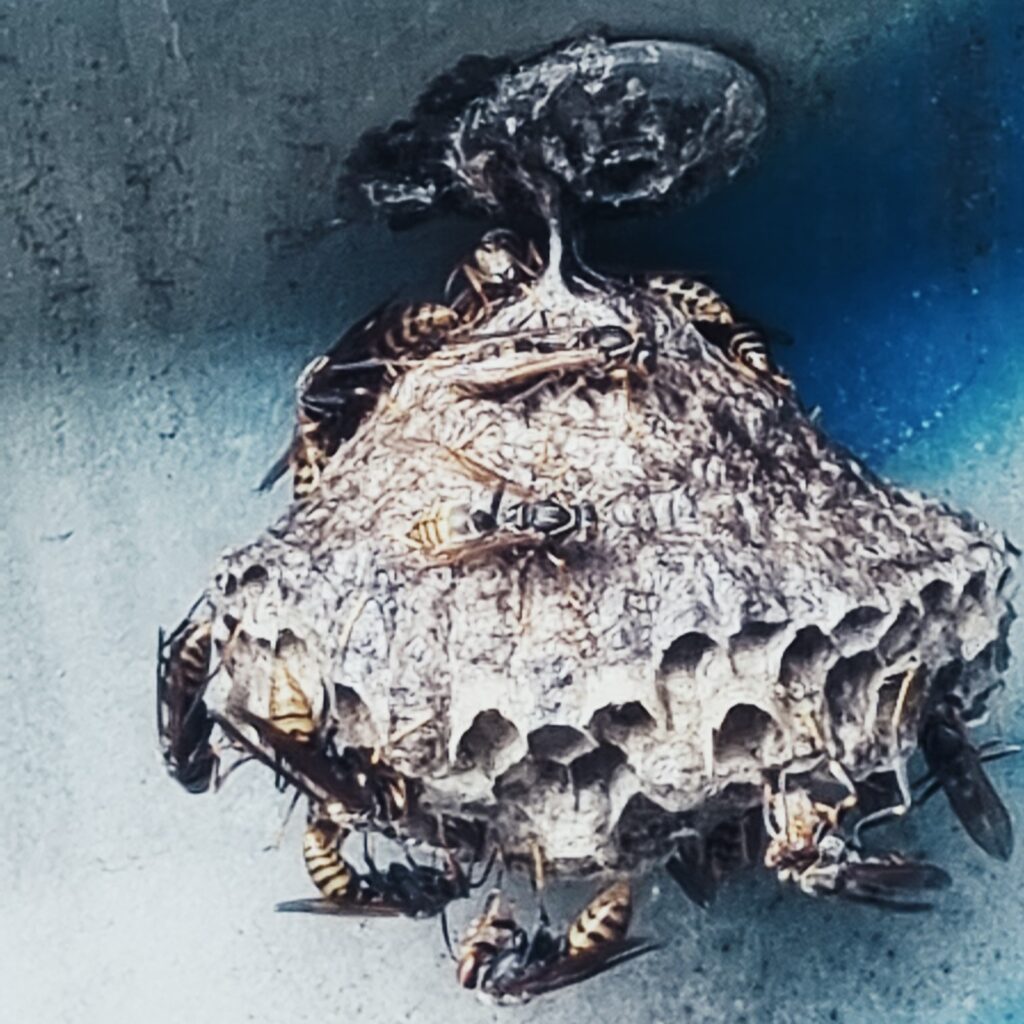
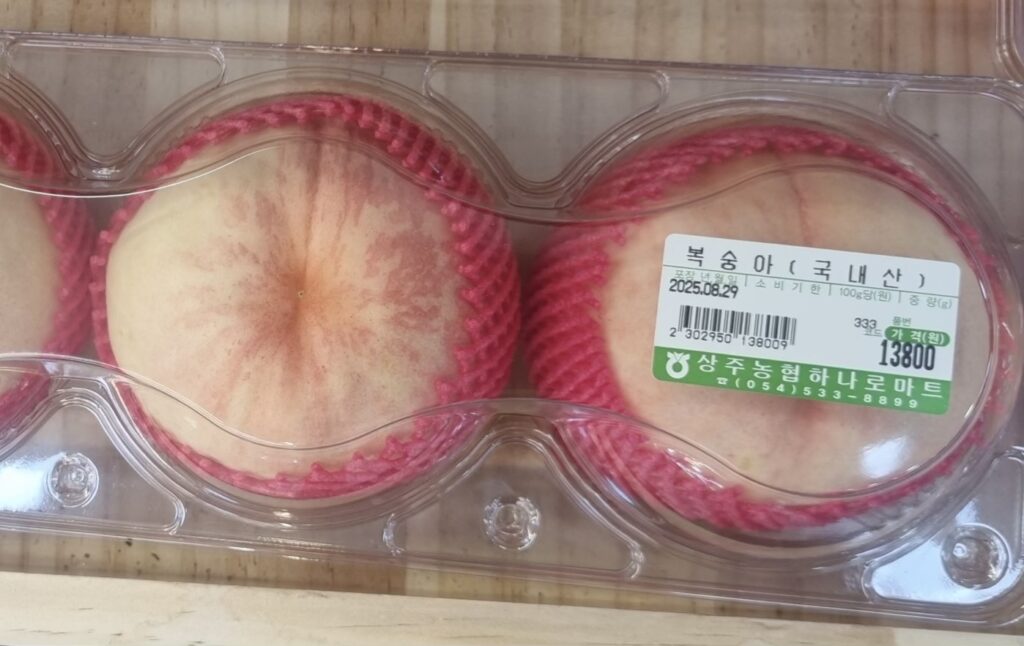
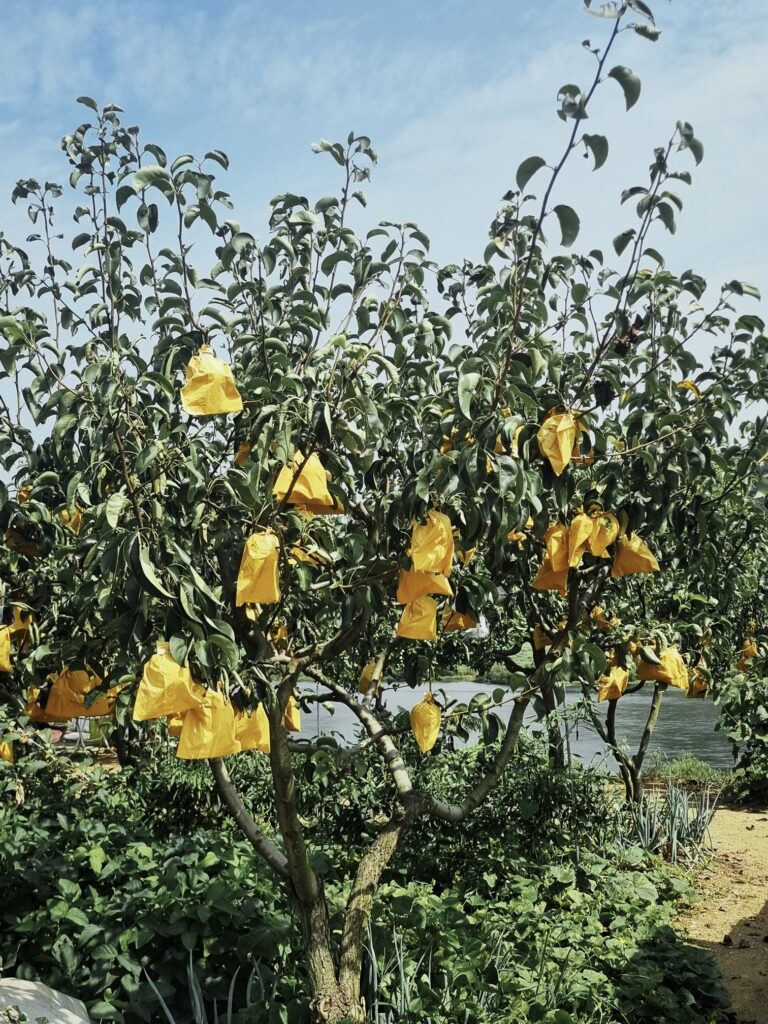
Consequently, a lot of fruit needs to be hand pollinated. Then it has to be protected from wasps and hornets by being covered with an individual bag. Here are apples in bags. Grape bunches and stone fruit are also grown in bags.
Coffee is expensive everywhere around the world right now, but in South Korea at least it is widely available. You can ride and think…”we’ll have a break at the next coffee shop” knowing that’s going to be within a few Kms.
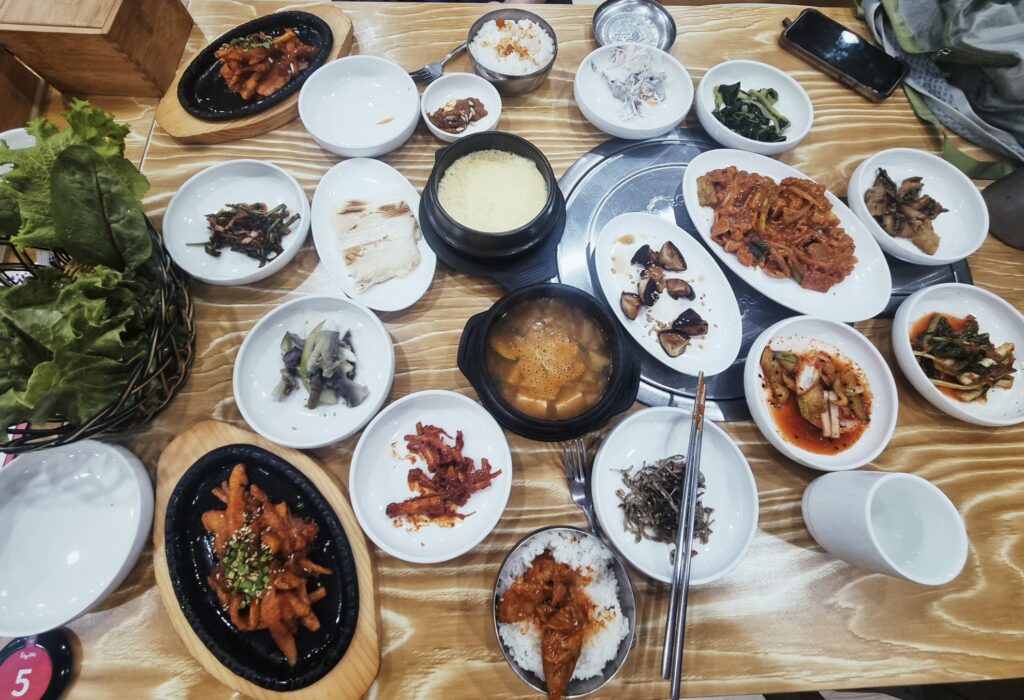
Making up for the fruit unavailability, are the fantastic evening meals. Here you want the Papago app. It does offer conversation translation, and typed text translation, but you can select “Image” and aim the phone at a menu outside a restaurant. What was Korean changes to English. You can avoid accidentally ordering chicken feet or pigs balls, should you want to! And you can reorder the buckwheat pancakes, the cold noodles, the fish, the bibimbap and other great dishes. They typically serve whatever you choose with several side dishes. Kimchi is always one of them.
There is so much variety. You could not do this in a tent and at only A$15-20 a person, having a feast every night quickly becomes part of your bike travel lifestyle in Korea.
In area, South Korea is 44% the Australian state of Victoria. It’s close to the size of Portugal. But the population is twice that of all of Australia and greater than Spain.
This is a mountainous country. 70% of the land is too rugged for settlement. Koreans mostly live in high-rises in cities.
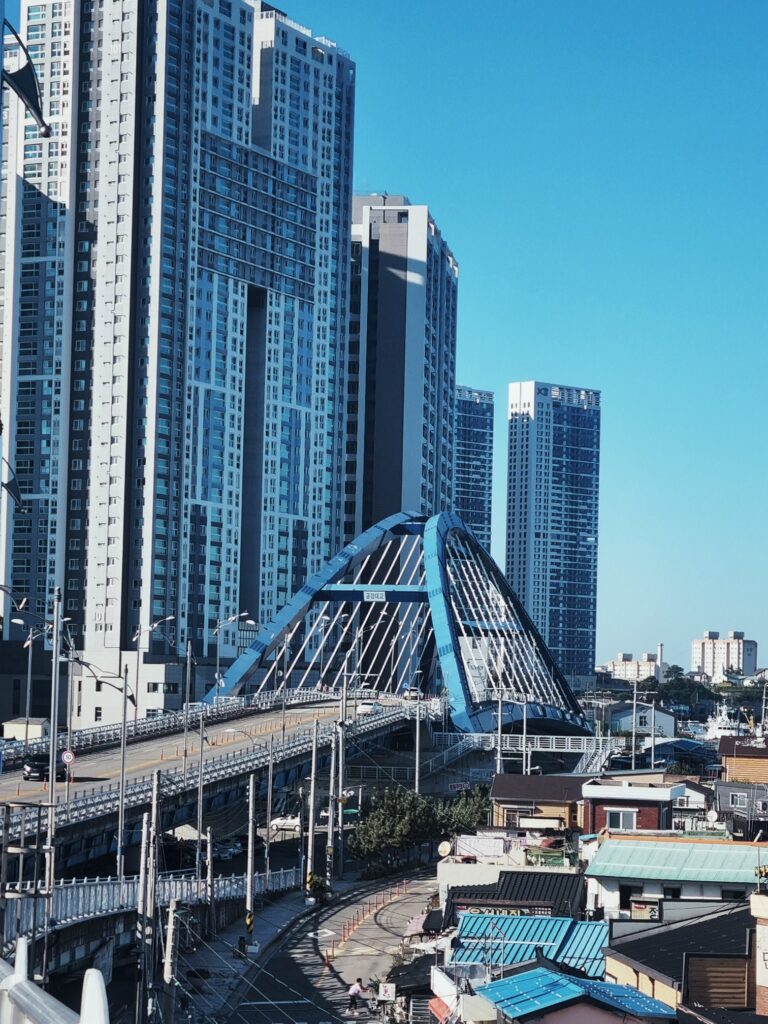
One aspect of the long bike trail infrastructure is that you are able to mostly be on level ground and mostly in nature, even though it is a mountainous and densely populated country. The routes are often on extensive levee banks along rivers. Some are once-were rail lines and these have nice tunnels. The signage is particularly good and, although not in English, is pretty clear. Papago can be used to check, but we rarely did.
In Europe there are cycle routes all over. That’s different to a long route on its own. So, in Europe, navigation is more something a bike traveller has to be on top of. And in Europe we don’t trust/rely-on signs. Euro Velo signs hidden by vegetation etc. This makes riding the long trails in Korea a special pleasure. There are very few side paths that you need to avoid taking. There is a consistent blue and white arrow. Add to that the fact that the Four Rivers trail goes on for hundreds of kms, is virtually all off-road and never far away from a town or city where there is lodging and food. Even in the cities there are spots where people pitch tents. Camping is part of the local lifestyle.
Demographically Korea has the lowest fertility rate in the world. Like in so many countries, the population is aging and reducing. But it is still 51 million people. That’s a little more than Spain, and double Australia. According to the internet, 30% of the population identify as Buddhist, 20% as Christian and 50% as no religion. Unemployment is 2.5%
Vivente is known as a bike brand but we also own a farm. Riding through farming country is so interesting. Is it the same for everyone? Perhaps it’s equally nice to be in the countryside but we notice different things.
Here in Korea you don’t see livestock. There are dairies. Milk by the way is quite available. But the Korean cows are not grazing. Land is too scarce. They are in barns being fed imported corn, alfalfa, wheat and additives.
There is quite a lot of rice, soyabean, sweet potato, corn, onion and chilli.
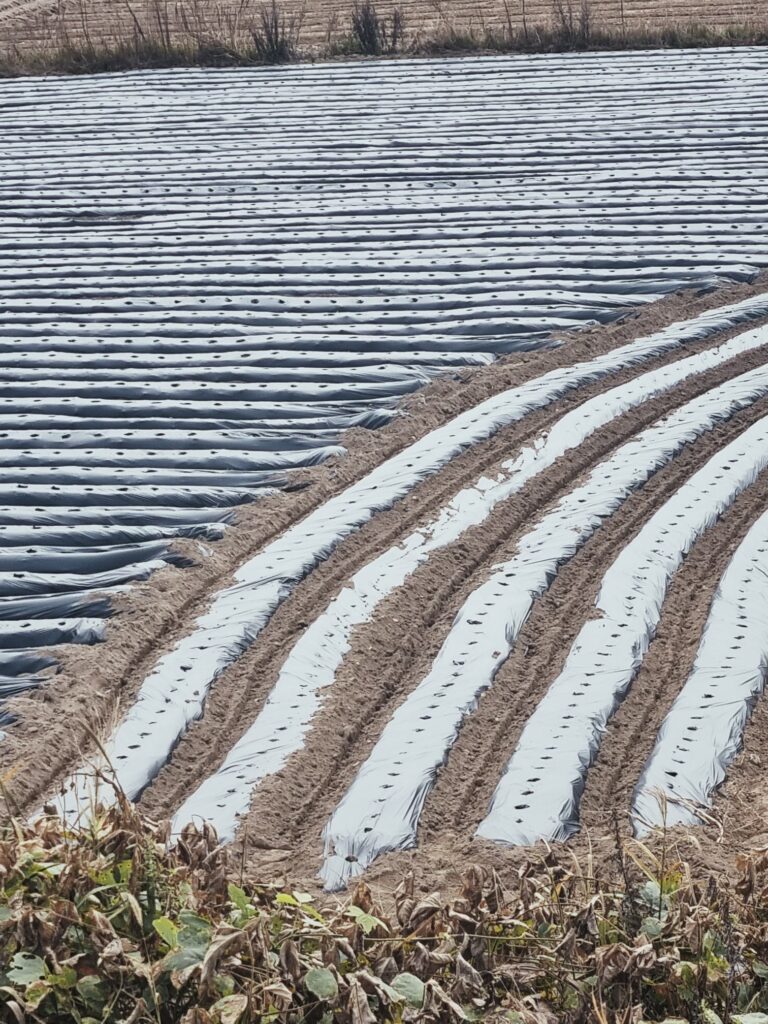
There are vast areas of covered vegetables. Most of the flat land is next to wide slow-flowing rivers. There are big levee bank systems in every case, protecting the biggest intensive food production set-ups you will ever see.
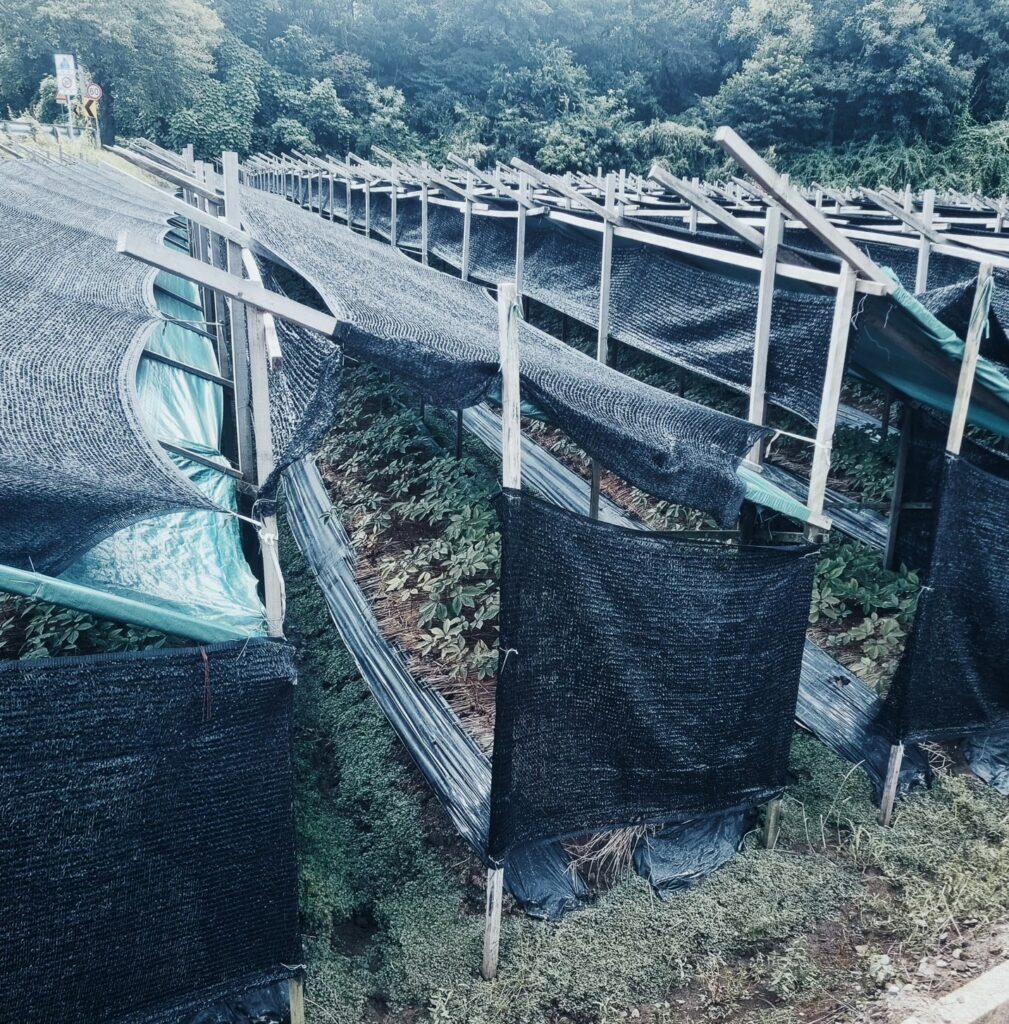
Amongst the unusual crops is ginseng, a forest floor plant which needs to be shaded. There is a 100km section where ginseng growing is common. With our meal in Gumi there were a few freshly harvested ginseng plants, well washed. A top, slightly like on a small carrot, and a spindly white thin root. The man who brought the trolley with the plates indicated to eat the lot.
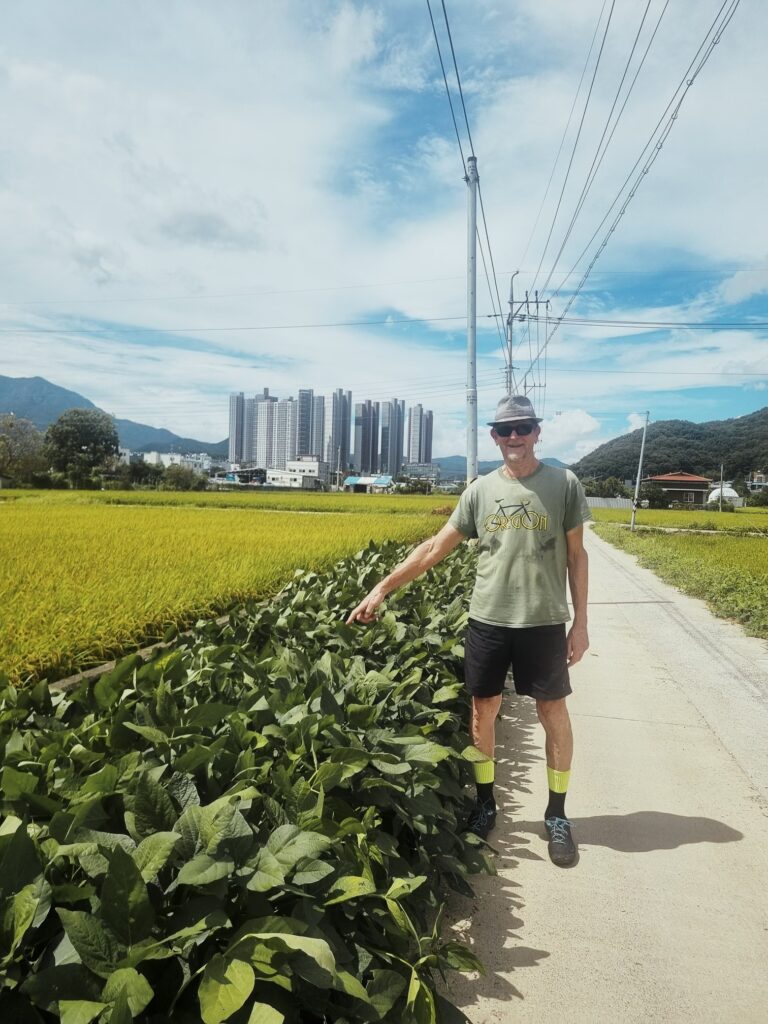
It would be interesting to know how they came to avoid herbicides.
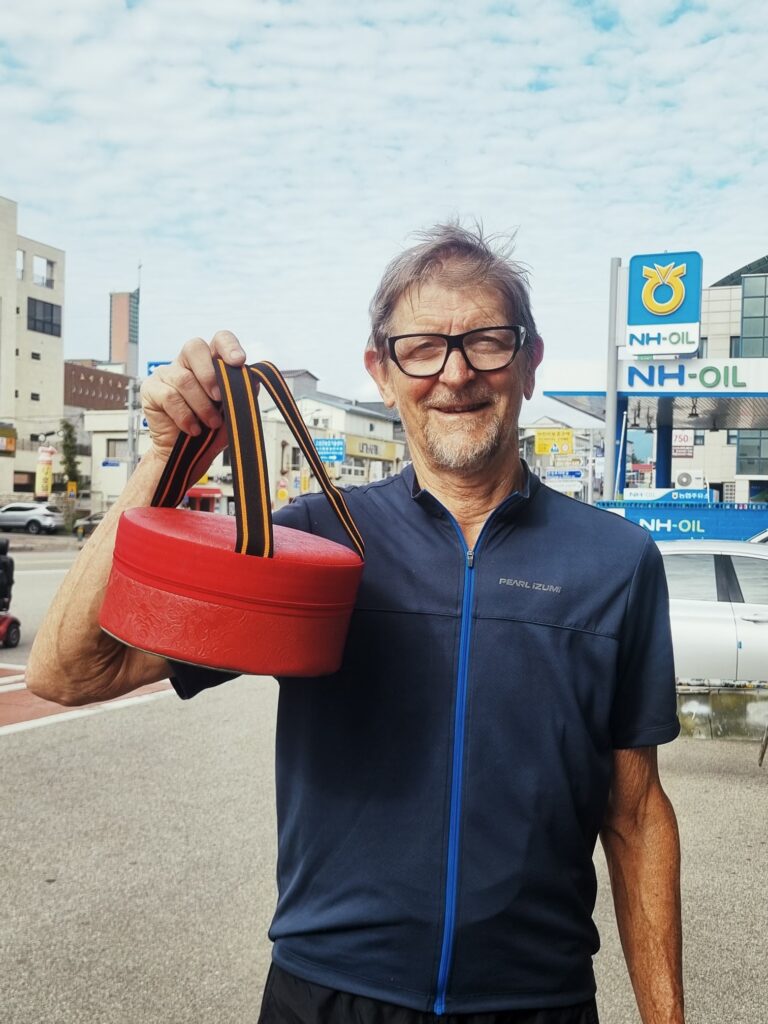
There is a thing called a Korean Farmers Pillow that has two straps and is held to the bum so you can move around with it on and sit down and continue weeding. We got one to bring back to the farm in Tassie. $6!
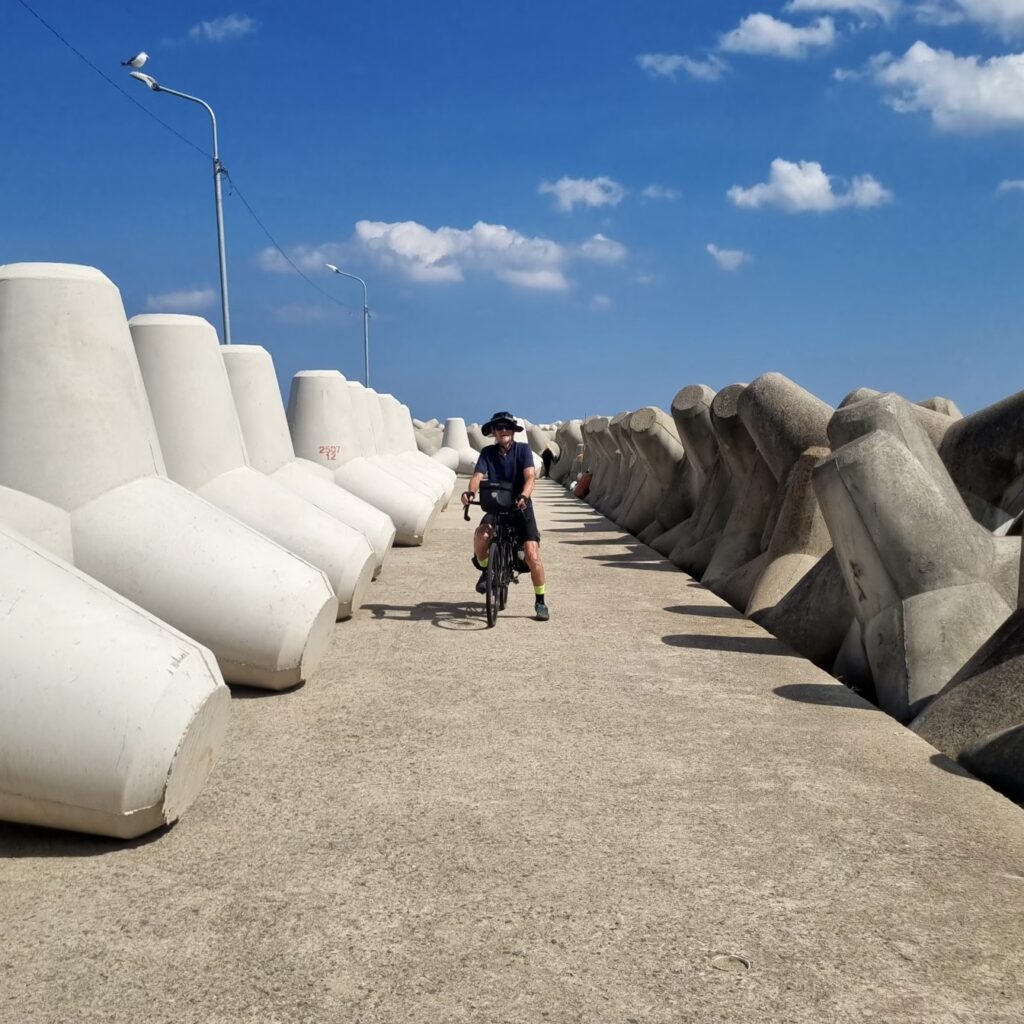
Along the east coast, for hundreds of kms, there are extensive tsunami protections. There are local escape routes on prominent signs all along the way. Loudspeakers on the ready. The East Sea has suffered a lot from tsunamis in the past.
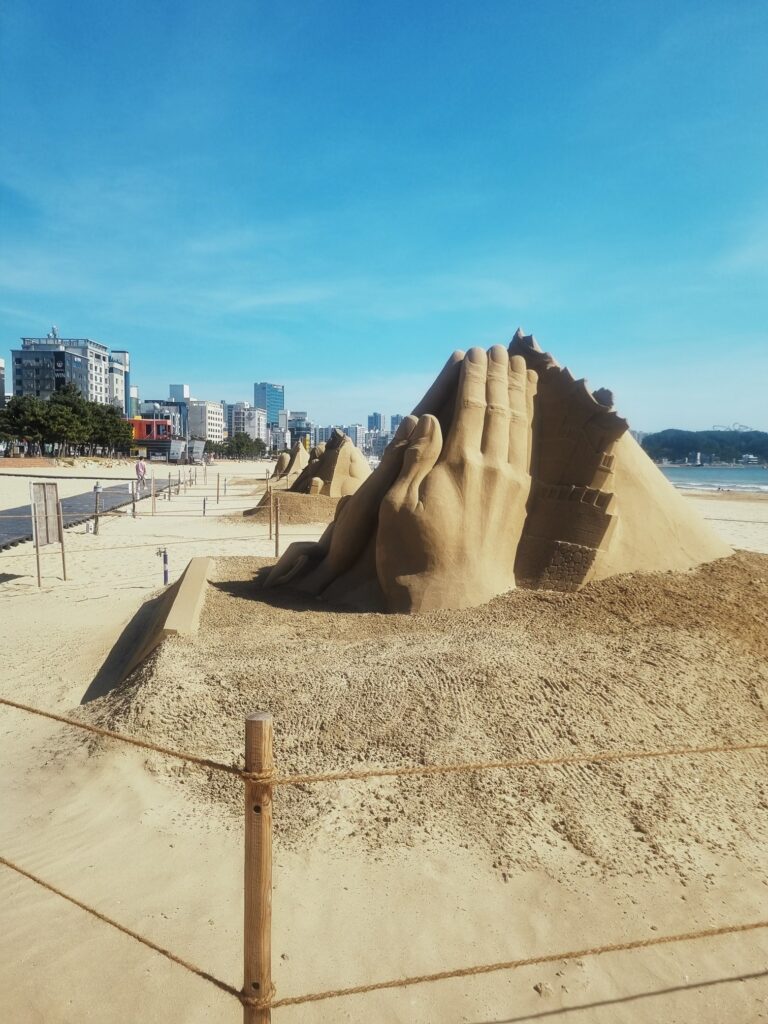
You see a lot of public art, including long art precincts, such as on the north side of Pohang. There are some massive sand sculptures that must be remade after rain.
You see a lot of public art, including long art precincts, such as on the north side of Pohang. There are some massive sand sculptures that must be remade after rain.
Using busses
We prefer to ride everywhere but being able to move further on a bus is something to know about. The Four Rivers route ends at Busan in the south. We rode the 700km. The East Coast route starts around and up the coast a bit from Busan. So we jumped on a bus to Pohang, around the southern start. That was easy to do. Frequent buses and good storage room.
We rode the 400km up the east coast to the DMZ. To get back to Seoul, riding would not be wise. Not all the way anyhow. The road has no shoulder, and cars would squeeze past you too close. There are tunnels with no shoulder and a bike is not expected.
There are several busses a day, probably because the military trainees stationed around the DMZ, are wanting to go home to Seoul and Incheon for a break. Most bus passengers on that route are in army clothing.
We booked this bus to Dong (East) Seoul terminal. There’s a booking machine with only Korean instructions. With the Papago ap its reasonably easy. Having booked, we didn’t want to risk there being other bikes already taking the space in the hold. So we took off our pedals, front wheel etc. There were not other bikes and we need not have done that, but we’d do it again.
Back to Seoul after three weeks ago being a total novice, it was great to hit the Han River bike paths. These are not bits and pieces. You can ride seamlessly, for 100km. Wide smooth paths, free of any impediment. Sometimes four lanes. Virtually no intersections. Some bike-only roundabouts. Experienced riders used to the path. No food delivery. Few electric bikes going too fast. Good bikes. No dogs. Peds on a separated path. In Seoul and Incheon we rode 200k. I can’t think of another large metropolis (this one is 28 million) as good.
The long stretches of great infrastructure in more remote places are equally memorable.
Along the east coast…
Along the Four Rivers….
Visiting South Korea with a bicycle, at the right time of year, is a great thing to do. It’s highly recommended.
Distance wise, you can ride 100km a day but also run at 60-80 km or 40-50km. They all work well. In fact, you can just work it out as you go. We didn’t book anything except that one bus.
On our Instagram posts we did cover some specifics about the ride/ferry/ride process that involves getting to the airport. Have a look if you are going there.
Testing Testing Testing
We rode on Swabia drop bars with 40mm Goodyear Transit Tour tyres (with tubes) and got no flats. They have Kevlar belts. 40mm has been pretty much a tourer’s tyre width for over a century. 1-⅜ to 1-½. It’s when surfaces are less smooth that the wider tyres beacon.
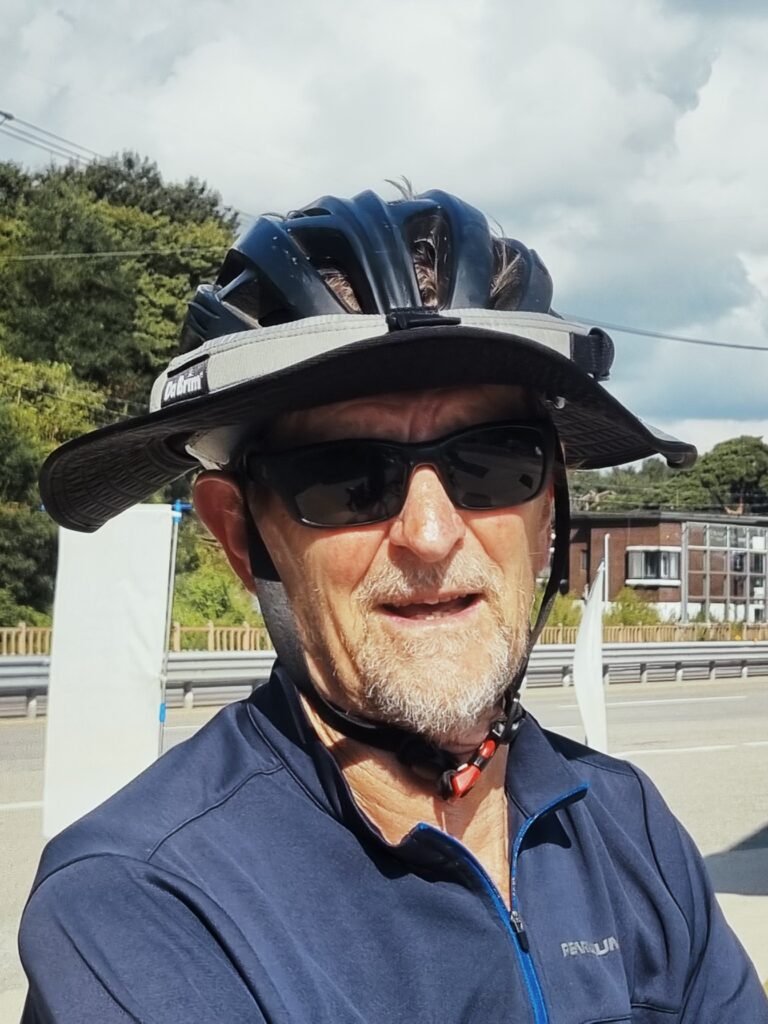
In two months’ time we’ll be in Maharashtra and will stay with the 40mm.We also tested the DaBrim helmet-fitted sunhats and give them a tick. DaBrim doesn’t seem to call them sunhats though. This one says not to exceed 25mph (40kph) as it might blow off. I felt up to 50km/h was ok but you need to slightly tilt the front down. It did not come off at 54km/h.
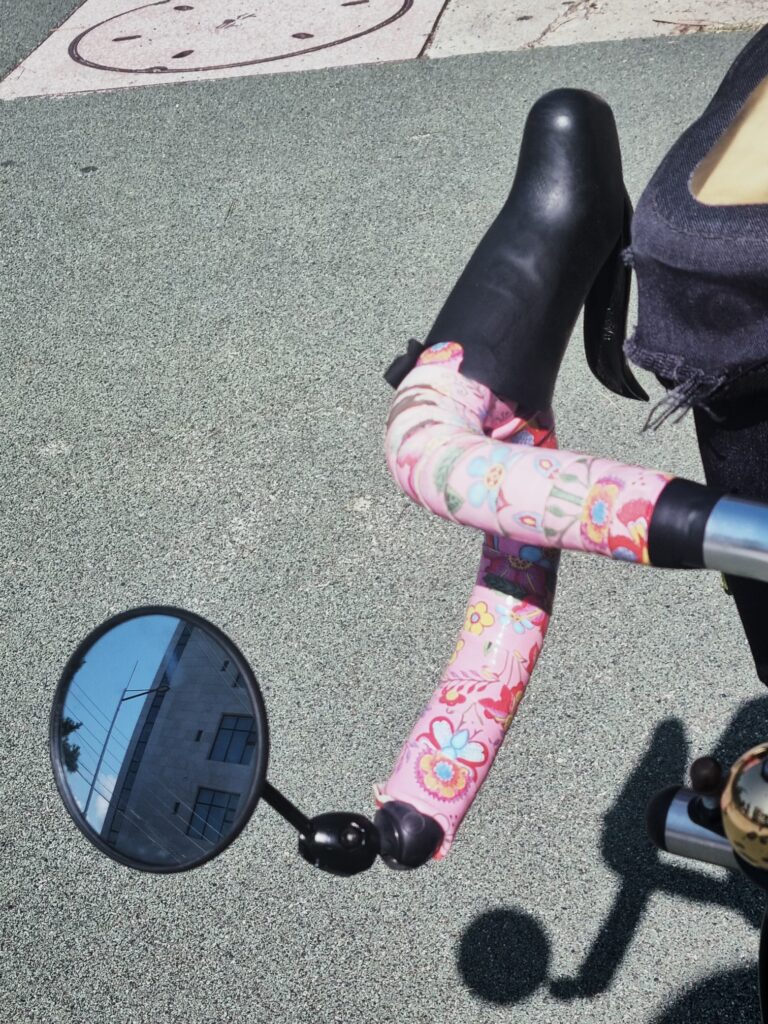
Another test was a better way of fitting the B&M mirror on drop bars. Having the mirror right at the end of the drops might not be far enough out if either
- the bars are narrower, such as on a bike for a short rider, or
- the rider has wider hips or is wearing more clothing.
By using the arm that comes with mirrors for sit-up bars, the mirror can be moved out. This was such a good result that we are adding the arm on all new Swabia bikes that we produce.