A ride on the Deccan plateau, from Nagpur to Hyderabad via the Ajanta and Ellora Caves. We chose the Swabia model, with 40mm Goodyear tyres and 50:19 Rohloff gearing.
We have been cycle touring in India since the 1970s. Back then, most Indians rode on bicycles, and now although very few do, the bicycle is still a great way to travel there and India itself is a fantastic cycling destination.
We arrive in mid-November, which is early winter when afternoon temperatures are high 20’s and mornings are mid-teens. The Indians have their beanies, earmuffs and shawls on. In the early morning, people stand around fires, warming their hands. It’s the easterly monsoon season and hardly a cloud to be seen.
India is half the land area of Australia but has over fifty times its population.
Since the 2008 Mumbai attack, there have been restrictions on where foreigners may stay. Typically, we need to be in a town of at least 40,000 to be confident of a valid lodging option which is not hard, but something you need to be mindful of. It’s best to arrive by 4pm at the latest, as it can take a while to find somewhere due to signs not being in English. Sometimes “A/C” is the give-away. Many people don’t even know about lodging and, hilariously, if you ask two people they might point in opposite directions and then start arguing. People are incredibly kind and helpful.
For most people, motorbikes have replaced bicycles and it is common for three or four people to be on the one motorbike. As we ride along, motorbikes come alongside and engage with us. Very few just ride past. They want to know where we are from, where we are going and so on. They really want to take selfies. Multiple times a day, people try to flag us down.
The feeling at the end of this ride is much more than an account of the miles, the ups and downs, the farming, the seasons, and the food. It is something that is unique to India and hard to put into words. The people want to engage, more than anywhere else. They ask why we are here. We say truthfully that we love being in India, that it’s such a great country.
English is one of the official languages. The fact that we can, to some extent, communicate makes a big difference. There are always people we can talk to. They are open to a traveller. Sadly, an Indian cycling around Australia would not experience the same thing.
India is a kaleidoscope of humanity. It is more communal and less individualistic. The first election of a communist state government anywhere in the world, happened in India.
Privacy is not much of an option. Personal space is not something you should expect. People just want to be near you. Men hold hands and walk arm in arm. They want to touch you. In India you are immersed in humanity.
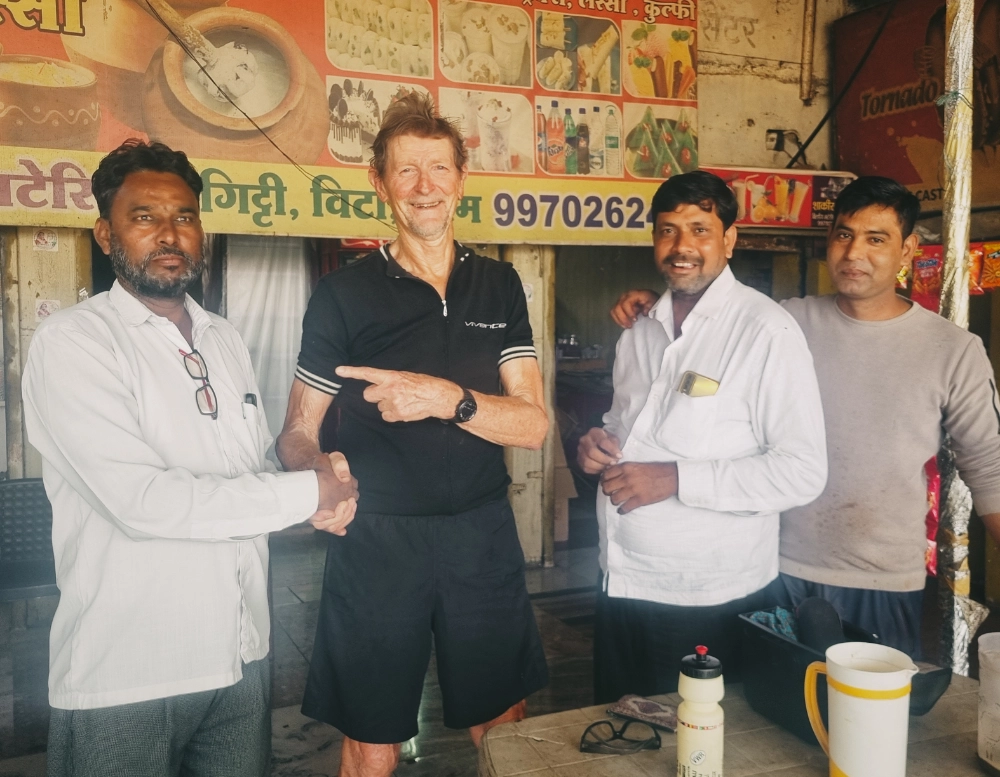
Households are large and, typically, multiple generations share the one home.
To people that have not travelled there it may seem to be a single society but it is diverse and multicultural, with many ethnic/tribal, religious and regional differences.
Getting there
Qantas now has a daily flight Sydney to Bengaluru (Bangalore) and one from Melbourne to Delhi. This is a great improvement from before. The flights land early afternoon local time and, from both arrival airports, Qantas has code-share flights with the biggest domestic carrier, Indigo. We can leave Australia in the morning and ride out of an Indian regional airport late that afternoon.
We chose Nagpur, in the east of Maharashtra. It’s close to the centre of the country. The next morning, we headed west, taking five days to reach Bhusawal. Then we approached Ajanta from the north.
Ajanta and Ellora
The Ajanta caves are amazing. The fact that they were covered over by jungle for more than ten centuries and only rediscovered in 1819 creates a sense of eerie timelessness. A British soldier was hunting a tiger and thought he saw it go into a small hole in the jungle. That’s how the caves were rediscovered.
The caves date back to the Buddhist period, over 2,000 years ago and, because the Hindu religion took over, and the caves are not in an agricultural zone, they were “lost”. Words cannot convey the marvel of Ajanta. You must go there. The caves get a very high rating. Up with Hampi, for example.
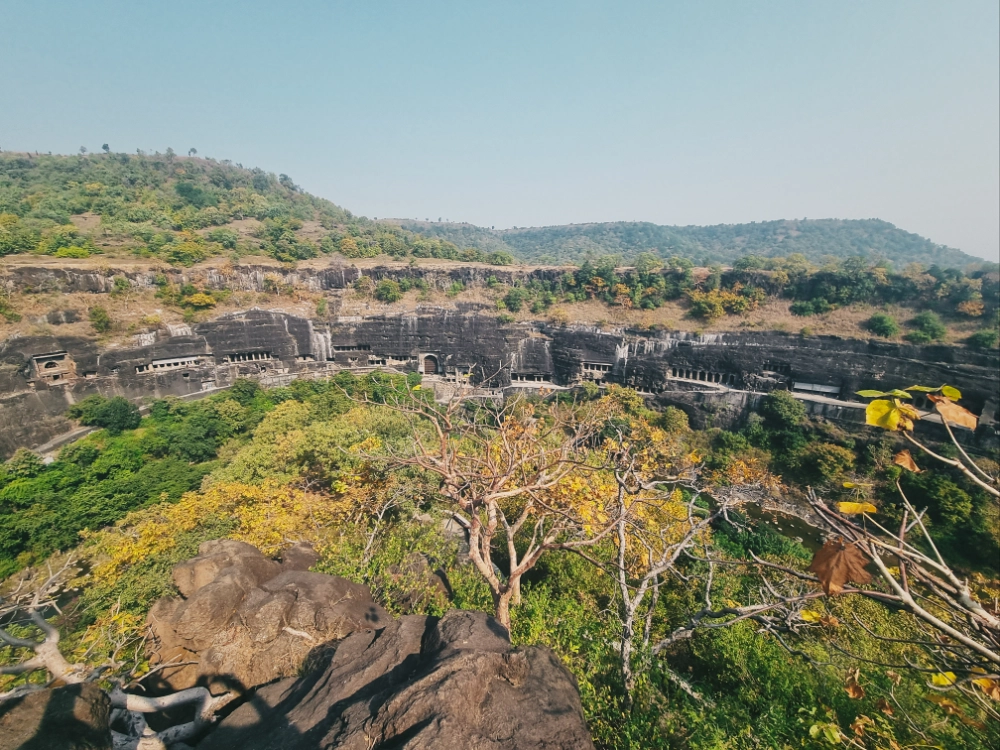
From Ajanta it is a day’s ride, south to Ellora Caves.
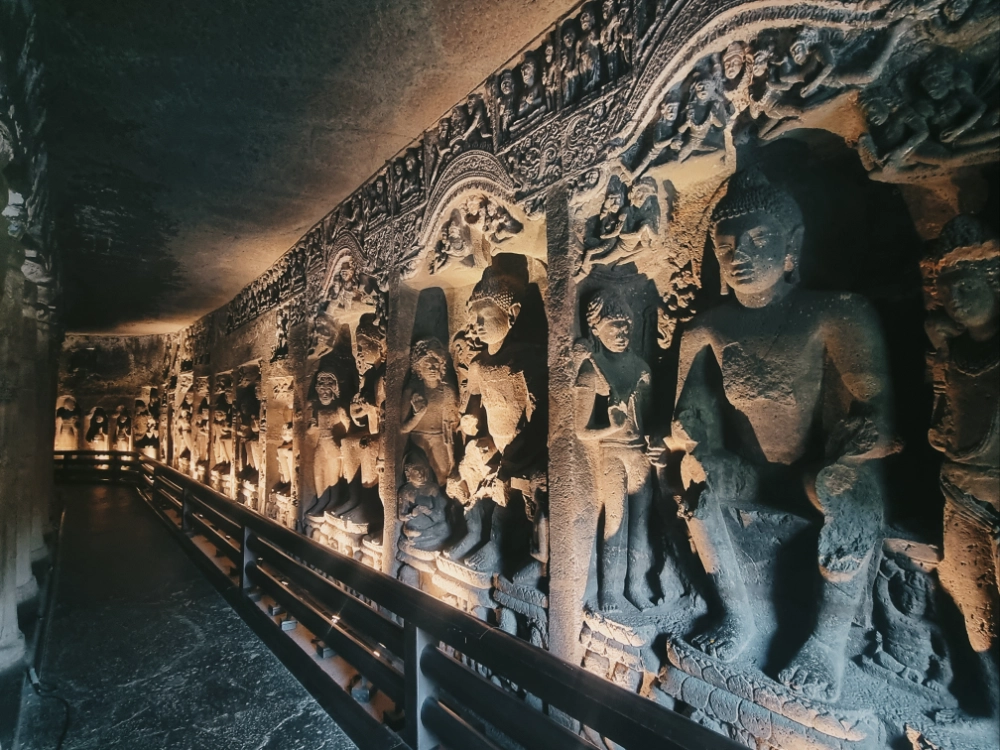
The area is 700-750m high so a bit cooler. The caves, like Ajanta, are in the hills. One particular structure is beyond imagination in its scale. It took ten generations, around the eighth century CE, to build and 200,000 tons of solid rock was removed. Kailash Temple (cave 16) has been called “the climax of the rock-cut phase of Indian architecture”. It’s just amazing.
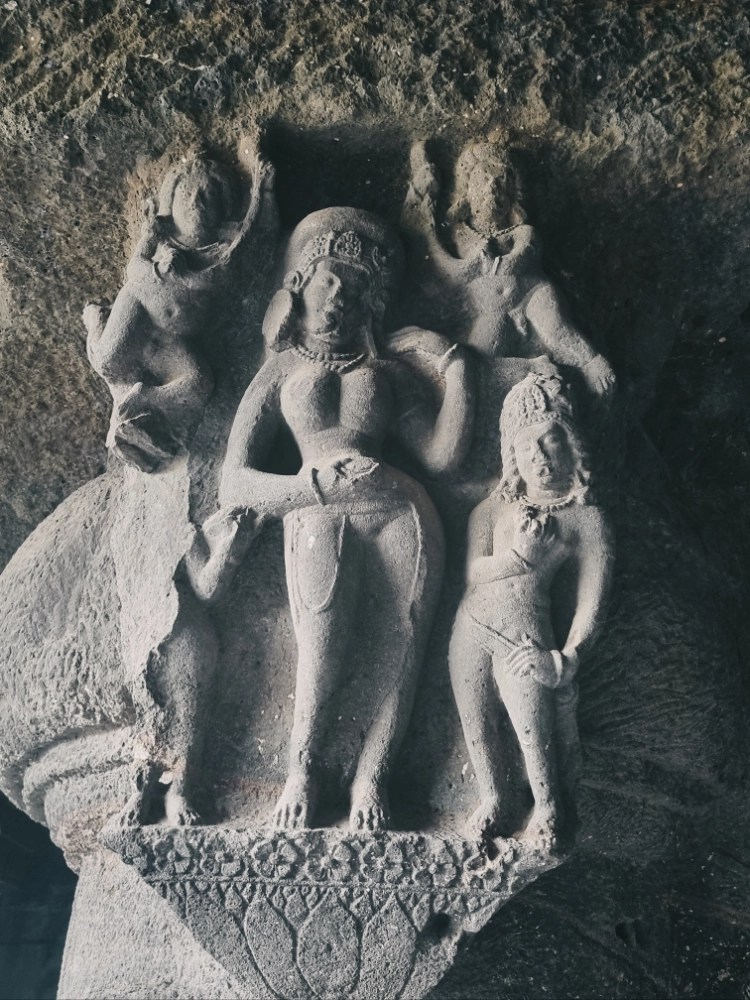
Ellora Caves is an amalgam of Buddhist, Hindu, and Jain cave temples. The caves include Buddhist chaityas and viharas, Hindu temples and Jain shrines. Thus, Ellora Caves is a symbol of religious harmony of the period. There are so many beautiful works here.
After Ellora it was time to head southeast
The Indian government created a digital currency, the eRupee. 80% of Indian transactions are made with it. Cash is tedious and there are probably germs on banknotes. Hence, we want to open a bank account. That won’t be easy and a major bank (SBI or State Bank of India) HQ at nearby Aurangabad is the target. (The account is not open as yet, but we are not giving up!)
On the Deccan there are some huge irrigation dams. Towns near the dams are good targets for overnight stays. They are economically secure and always vibrant. We call them “dam towns” and stay in Paithan and Majalgaon.
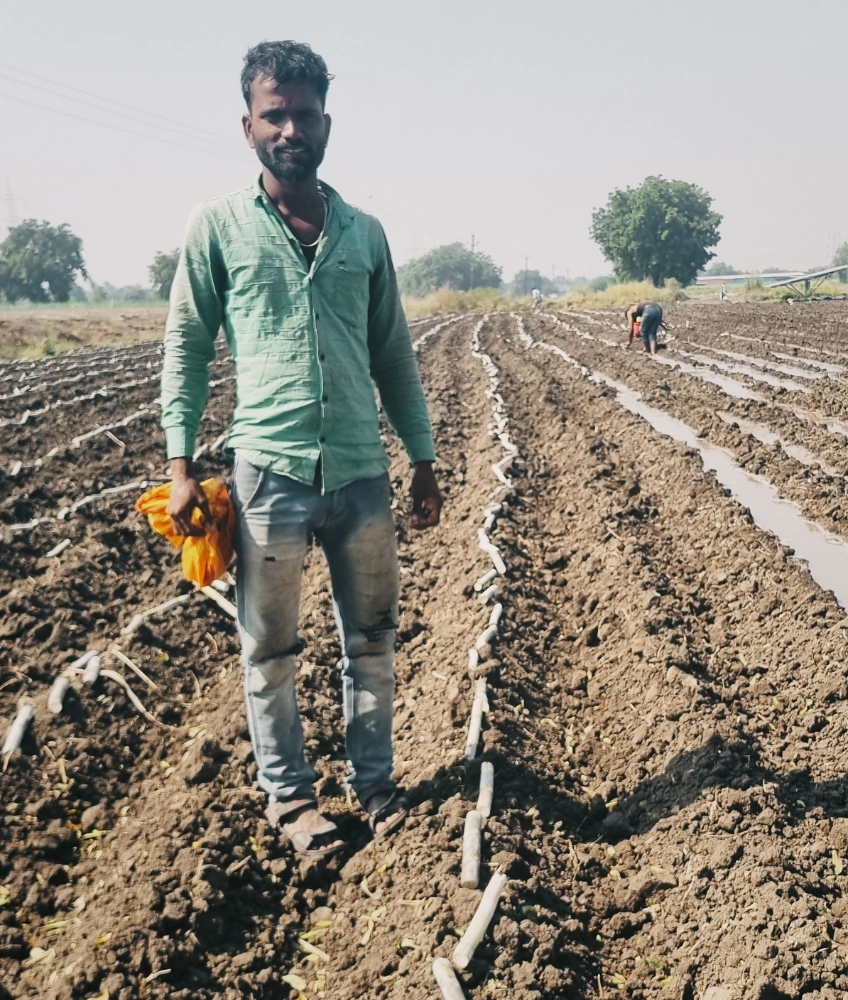
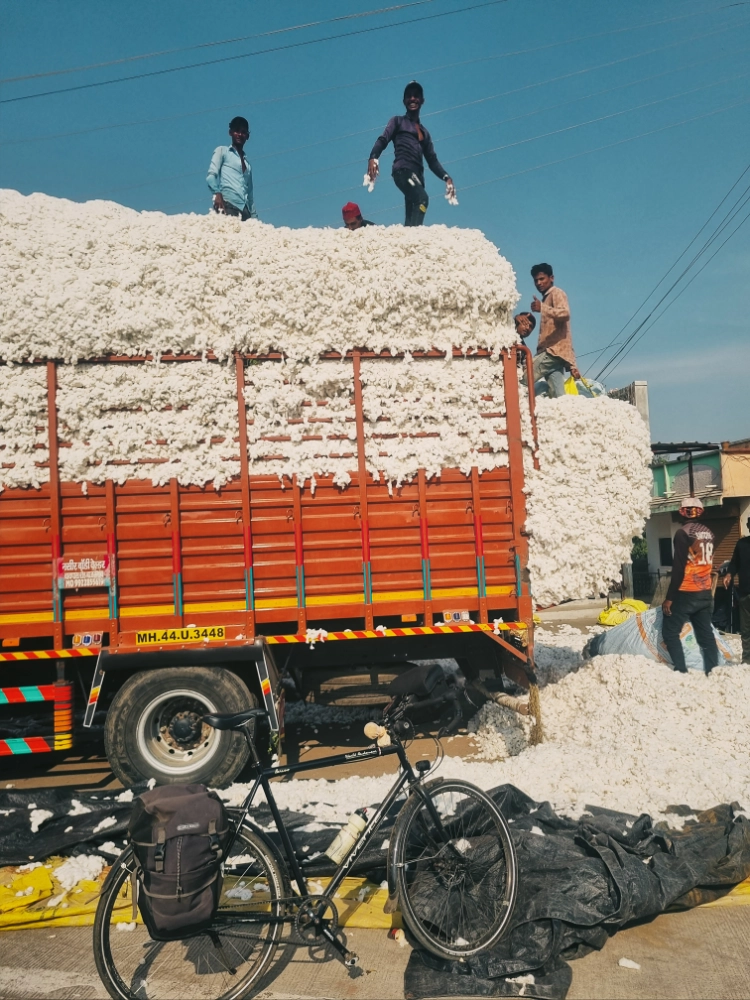
Along the roads we see people working on the main crops of sugar and cotton. Here they are planting the next sugarcane crop.
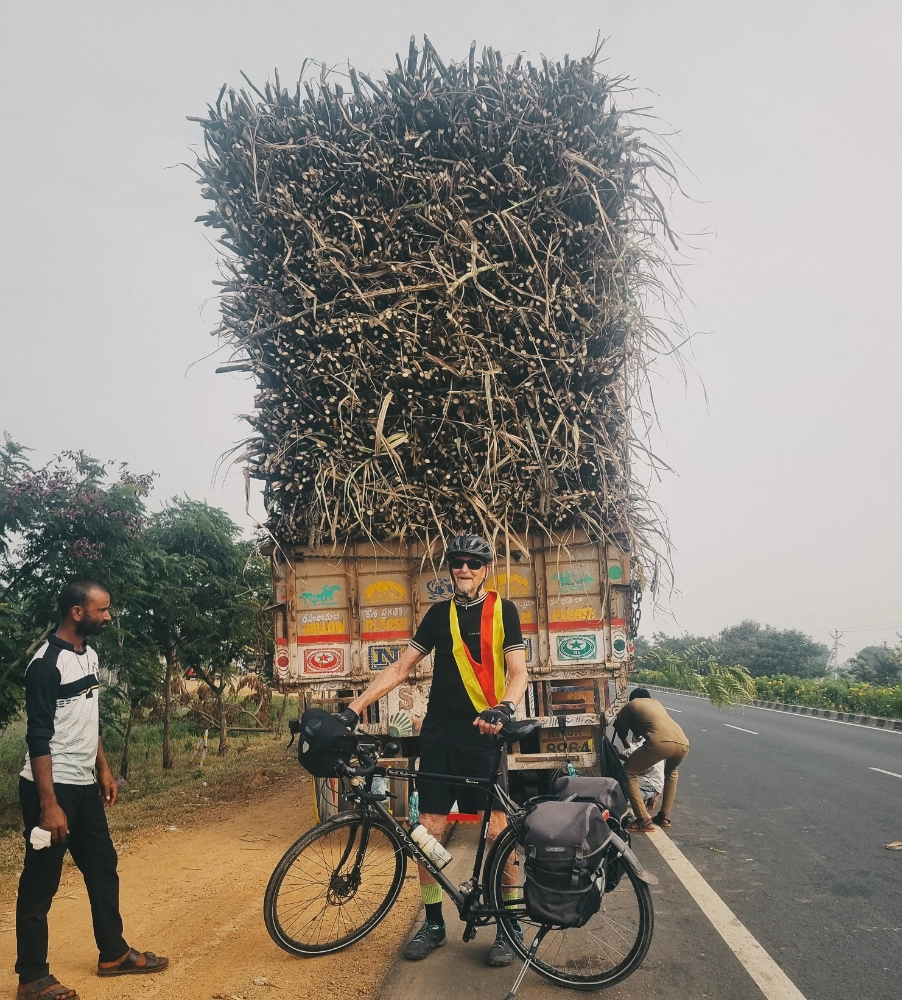
We share the road with some excessive loads of sugar cane. These guys are dealing with a broken axle. If we are ever asked for suggestions about how to improve road safety, we will mention enforcing load limits on trucks. Every day we see blown tyres and broken axles. There are over 15,000 road fatalities per year in this state alone.
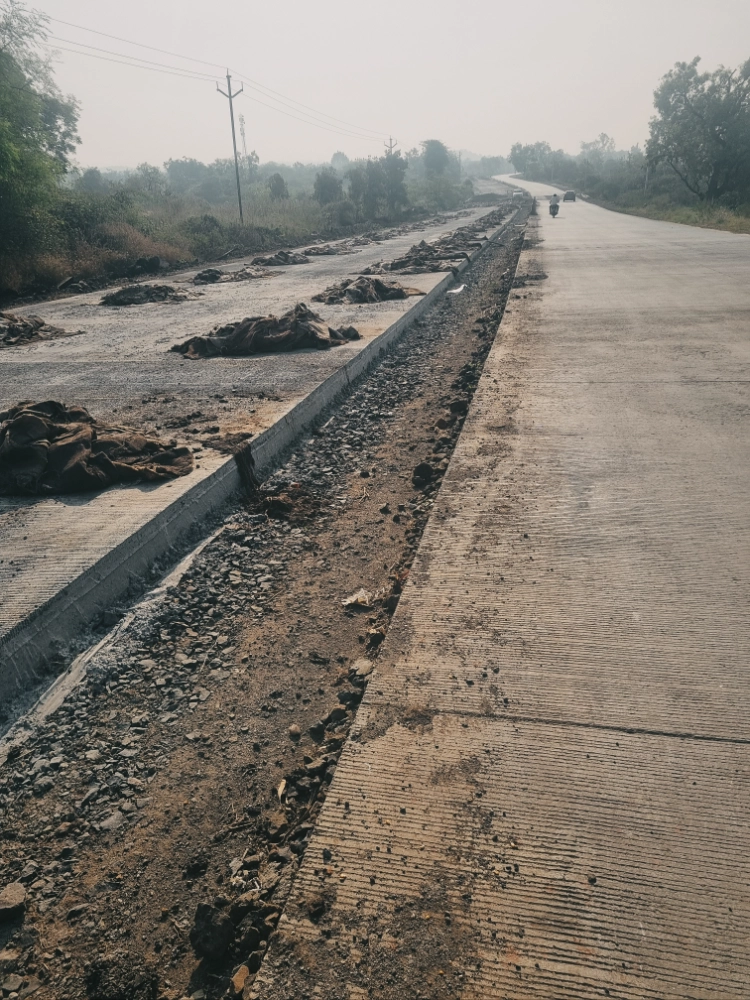
You might be surprised to hear that the roads are actually very good. In fact, they are often better than Australian roads. Cyclists need mirrors, lights, and to be very careful. It’s wise to have a horn too.
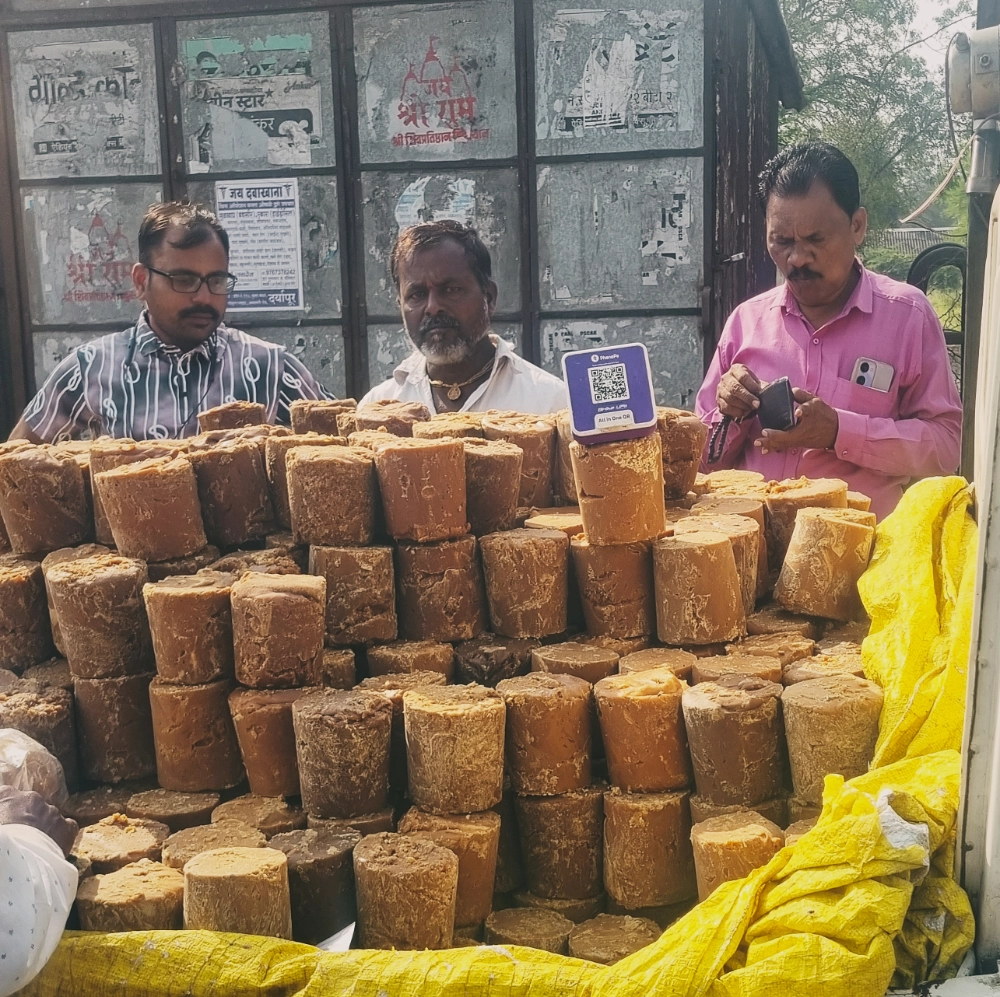
In India, sugarcane juice is boiled and reduced to jaggery, retaining the molasses and minerals. This is the commonly used form of sweetener. (Note the scan code on this stack of jaggery. If you have a bank account, you scan and pay in eRupees.)
In Maharashtra, we rode mainly on concrete divided four lane roads, like this one just being made.
Welcome from cycle groups in three cities
We stayed in a town called Parli which has a famous temple. Indians usually associate different towns with temples and wrongly assume we are there to see them.
Heading out from Parli in the morning we pulled over for a breakfast of onion dosa and coffee. A guy came in looking for the owner of the bike outside. He was a member of a local cycling group. They were returning from their morning ride. They had never seen a cycle traveller and could barely believe a foreigner would be there. We had a great time together for a few hours.
The next city we were going to, Latur, also had a cycling group and by the time we arrived there, a welcome party of cyclists, having received word from Parli, had assembled. Gifts were given. By chance, they had a bike ride scheduled the next morning.
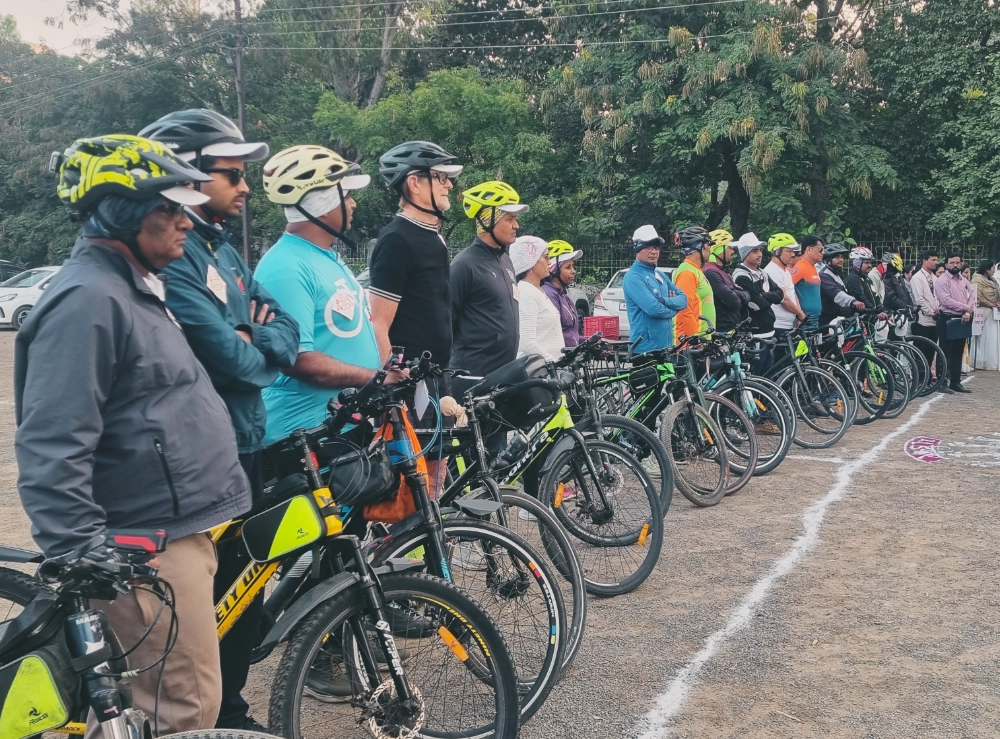
This is at the ride start. We are being addressed by the director of the Department of Health. Interestingly almost all of the thirty odd bikes had 40mm tyres. They all had derailleurs. Only two of the thirty bikes had wide tyres.
Our next city was Udgir and again the cycle club greeted us, presented gifts and took us to dinner. The next morning some members rode out to the first stop, 20km to the east.
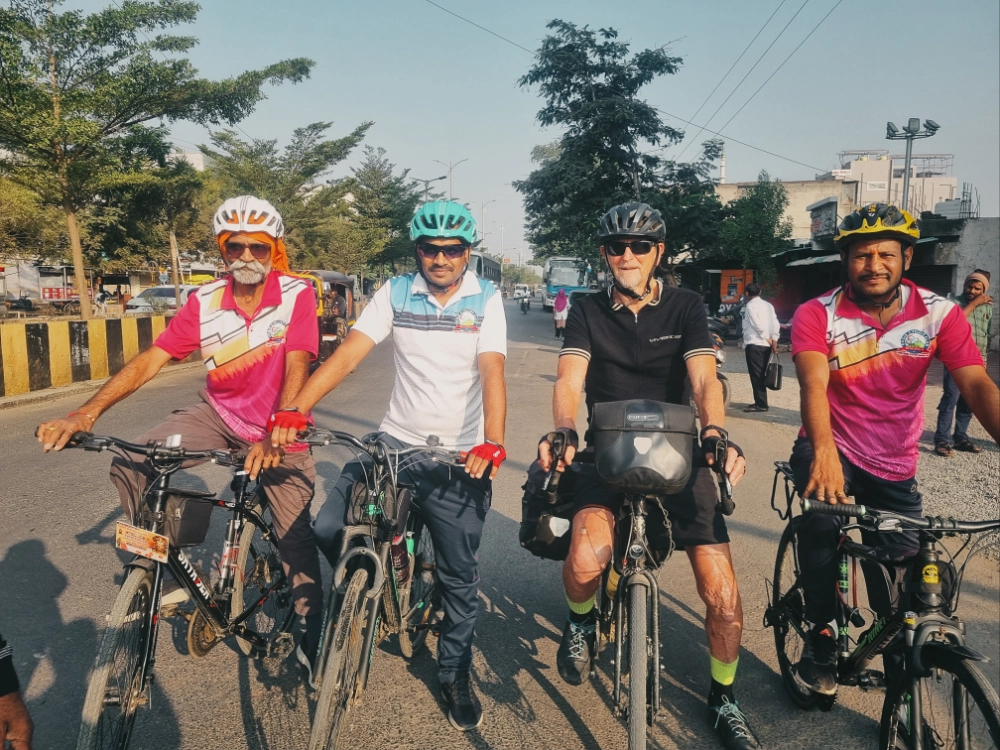
The manager of the hotel in Udgir said they had last had a foreigner stay there four years ago. A woman that flagged us down to ask “What are you doing here?” said she had grown up in Udgir, a city of 75,000 and had never seen a Westerner there.
Toil
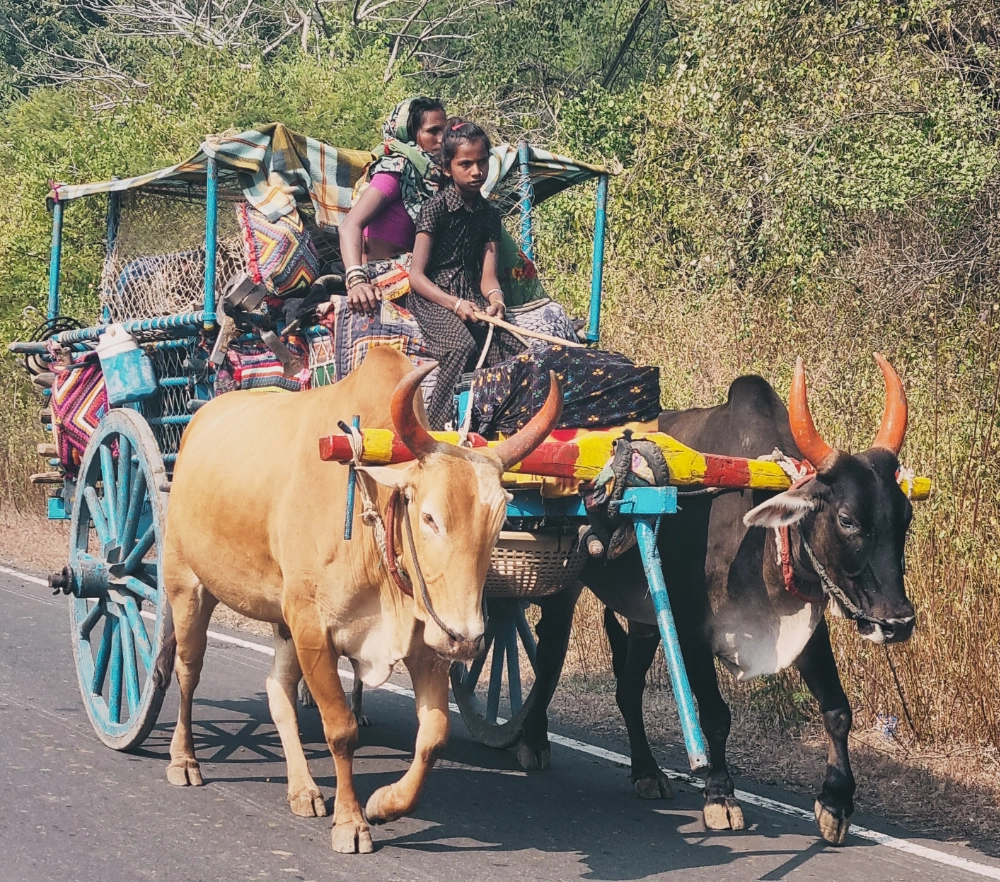
One of the most noticeable and moving things about being on the roads, on a bicycle, in rural India is being up close to the people as they toil, often with their animals, to make a living. Wood getters, pot seller, plougher, cotton pickers.
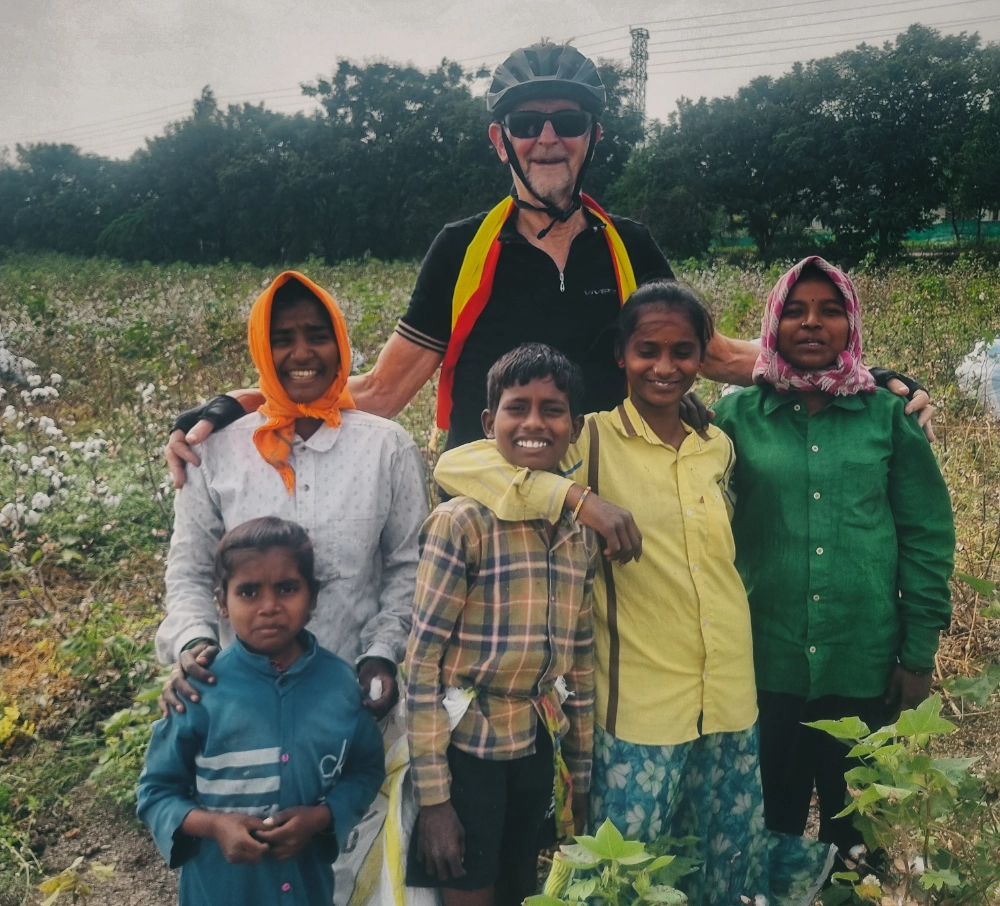
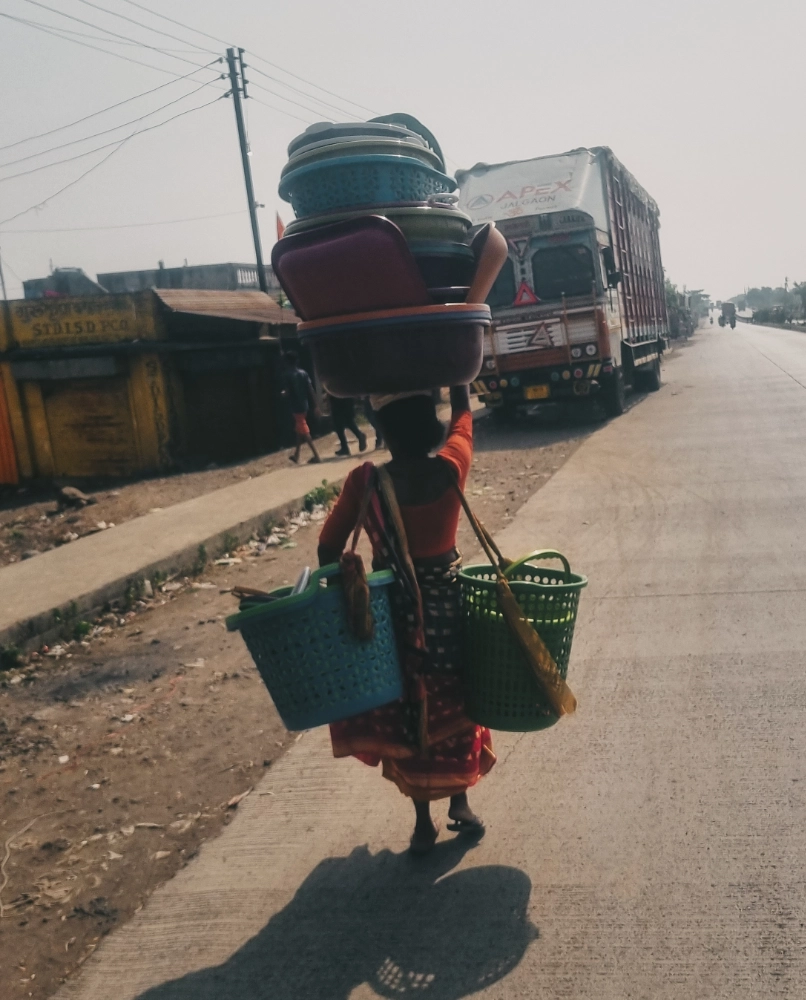
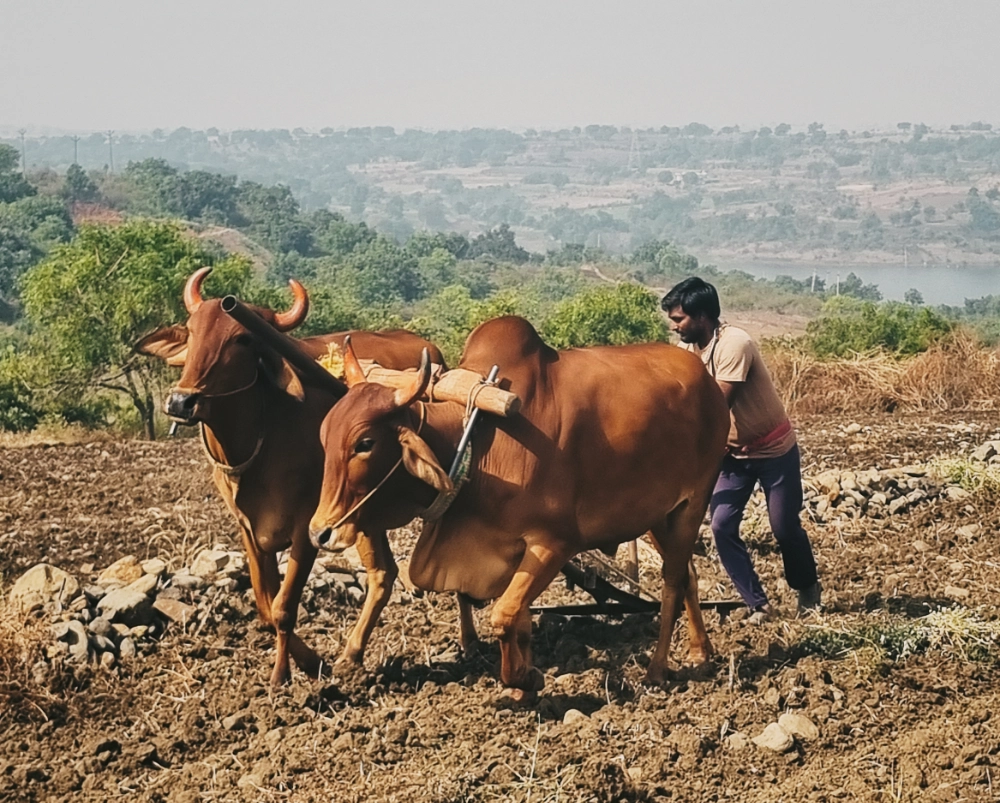
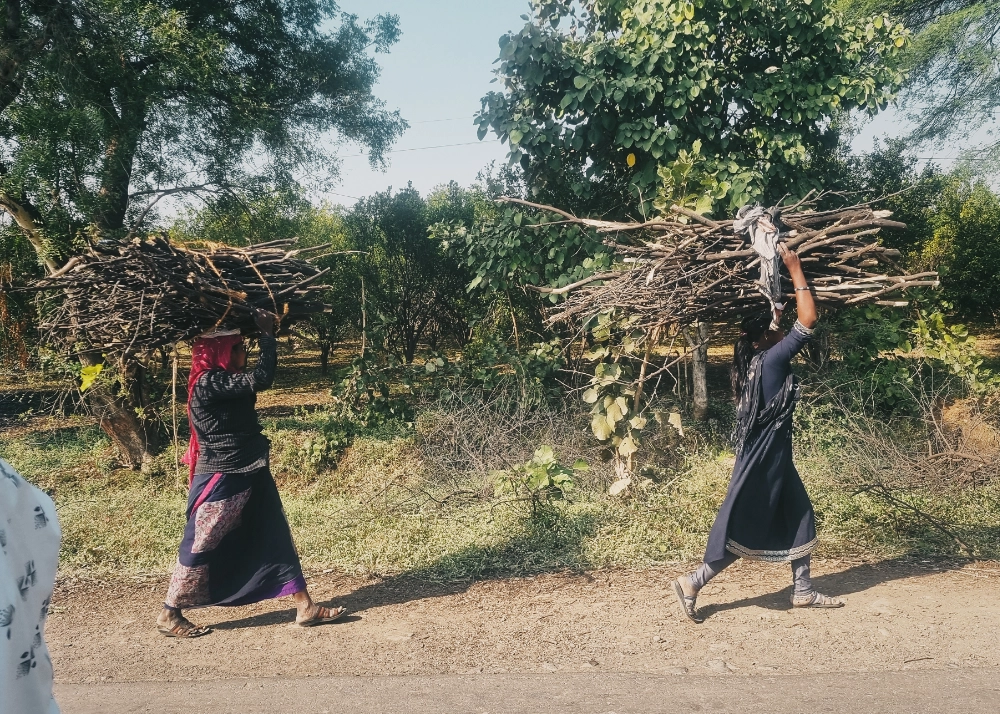
People seem generous compared to in rich countries. How can that be? It’s a little bit like how in countries with high speed limits, people want to go fast. It doesn’t make sense. Here in India, not a day goes by without finding, upon leaving a food stop, that our bill has been paid. It is humbling.
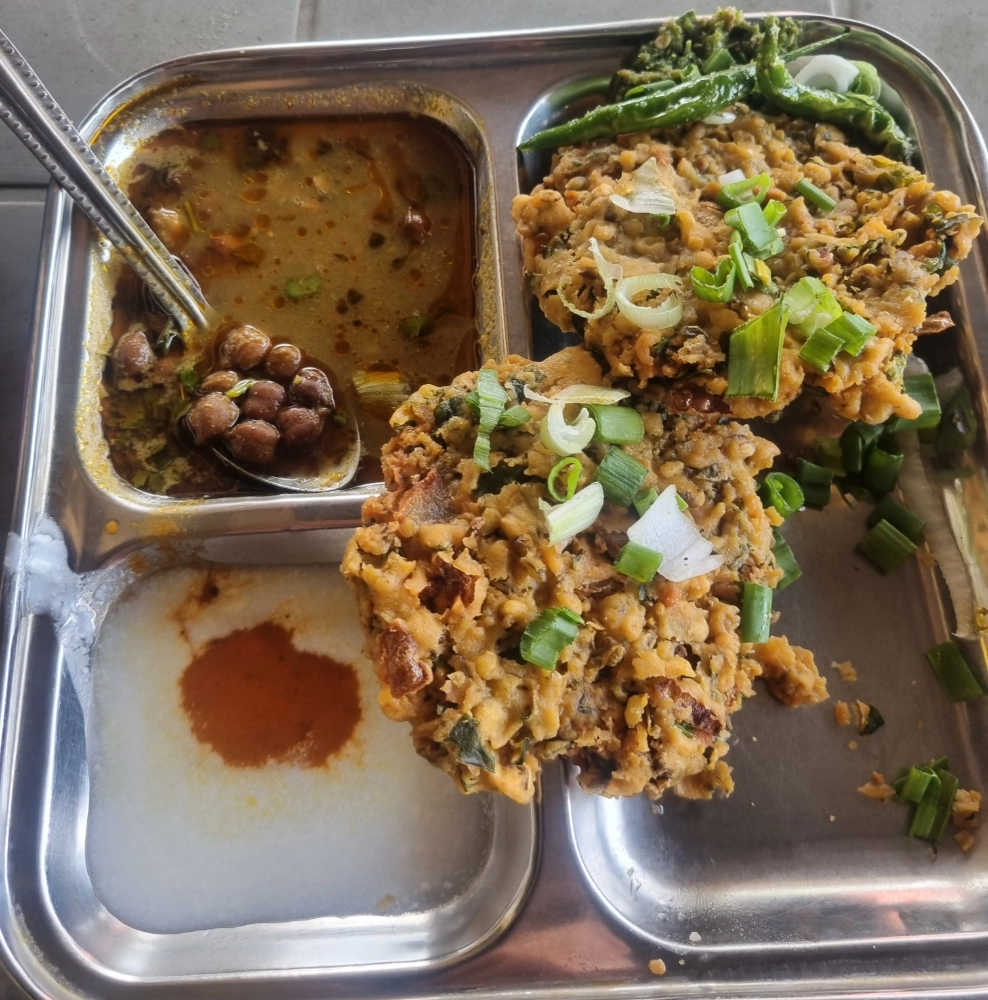
And what amazing snacks they are!
Update on Coffee on the Road in India
There aren’t ways to reliably get boiled water to make coffee. We don’t even take our aeropress. Roadside tea sellers are everywhere and about 20% also sell coffee. They have boiling milk and use the familiar small glasses, about ⅓ cup each. Starting the day with a few coffees is not hard to pull off. Avoid those headaches!
For coffee, they have powder in a satchel. It would be from Kashmir or the Corg. If you indicate “strong” they sprinkle a bit more on top.
Packing for the Return
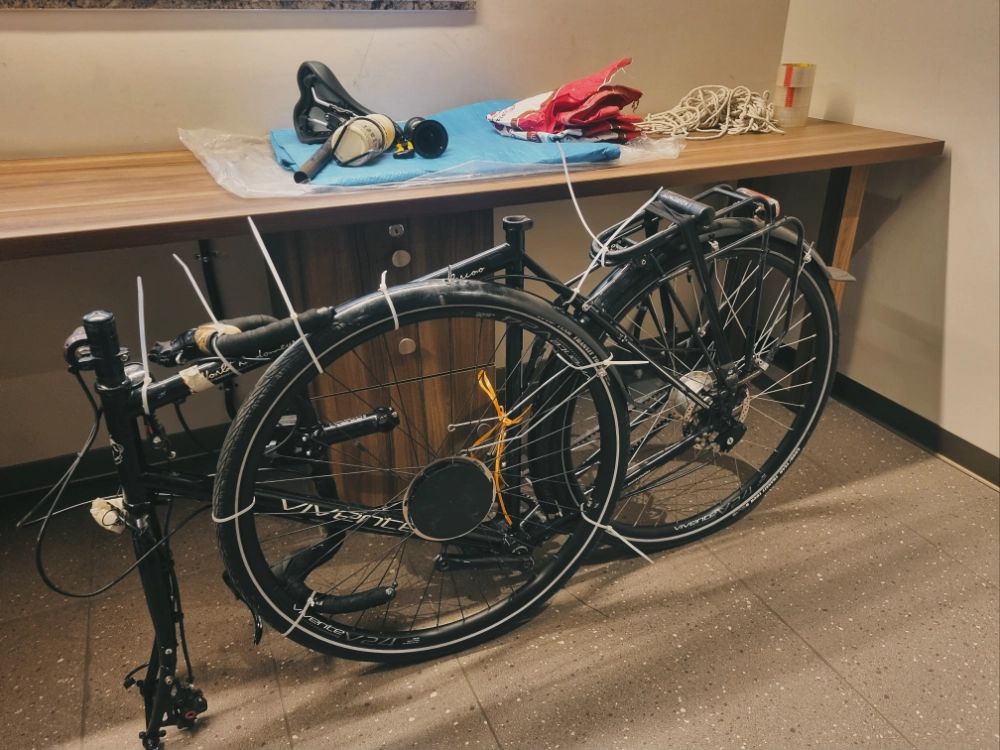
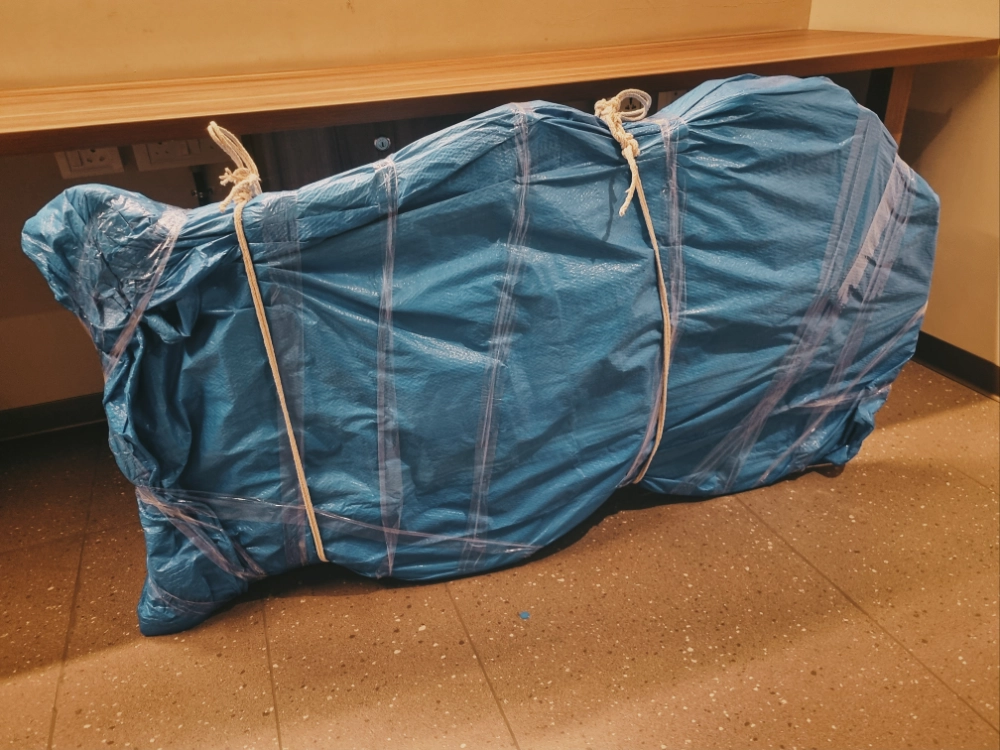
Having now departed from India many times, we have tried a few things and settled on a system that involves no cardboard and allows us to ride into airports.
If you front up to a check-in counter in some countries with a bicycle wrapped up in a tarp you might be rejected. But in India, especially with the domestic carriers, this is not a problem. We are checking in on Indigo ( the Qantas code share) at Hyderabad.
The airport is some distance from the nearest city (and 40km from Hyderabad). If there was accommodation at the airport it would mean we could stay out there and get ready there, rather than having to pack in the city and get transport. Getting transport would be a hassle as the packed bike does not fit into a three-wheeler. And, as we discover riding into HYD, three-wheelers are not even allowed in there.
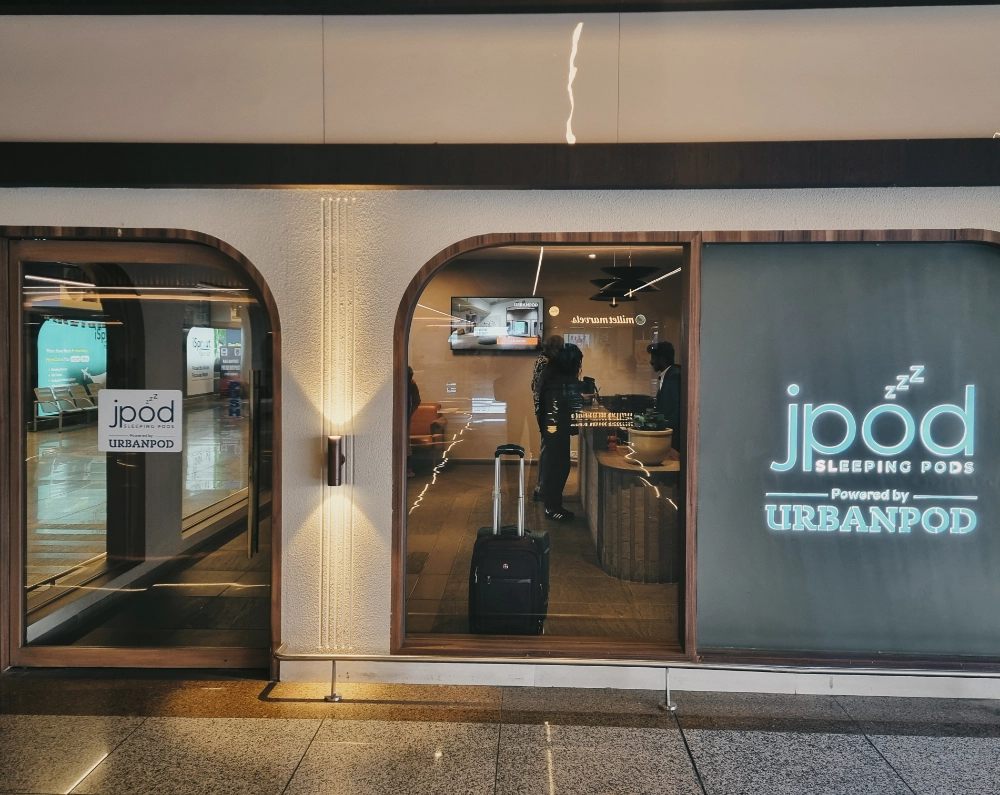
We discover that there are pods at HYD but on-line booking does not work.
Plan A then becomes
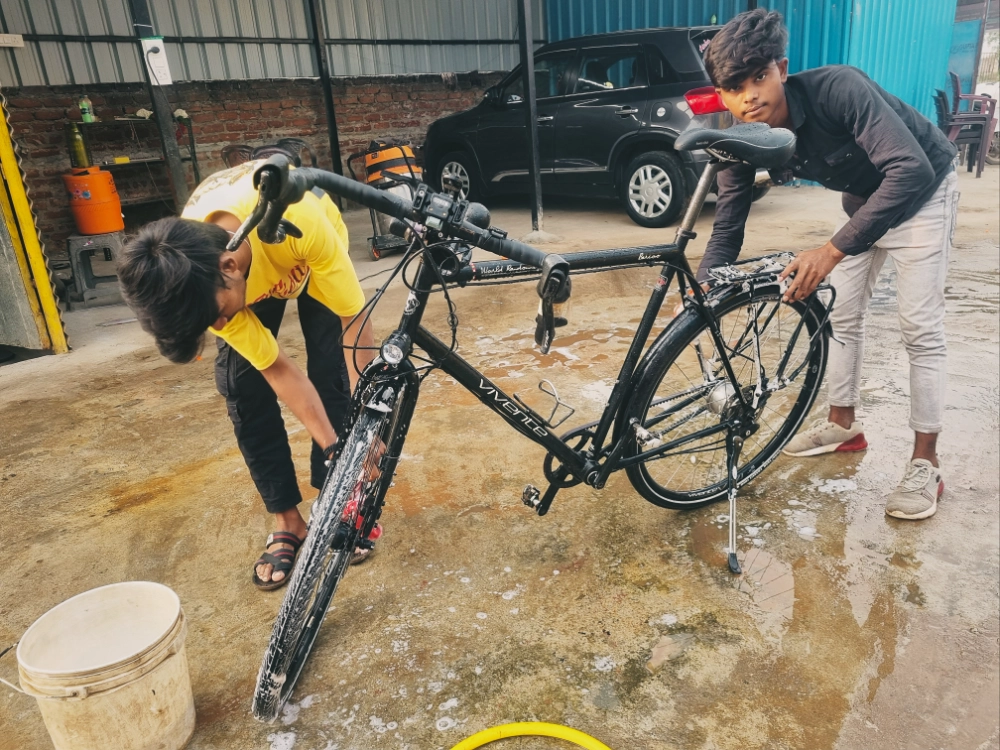
- wash the bike the day before
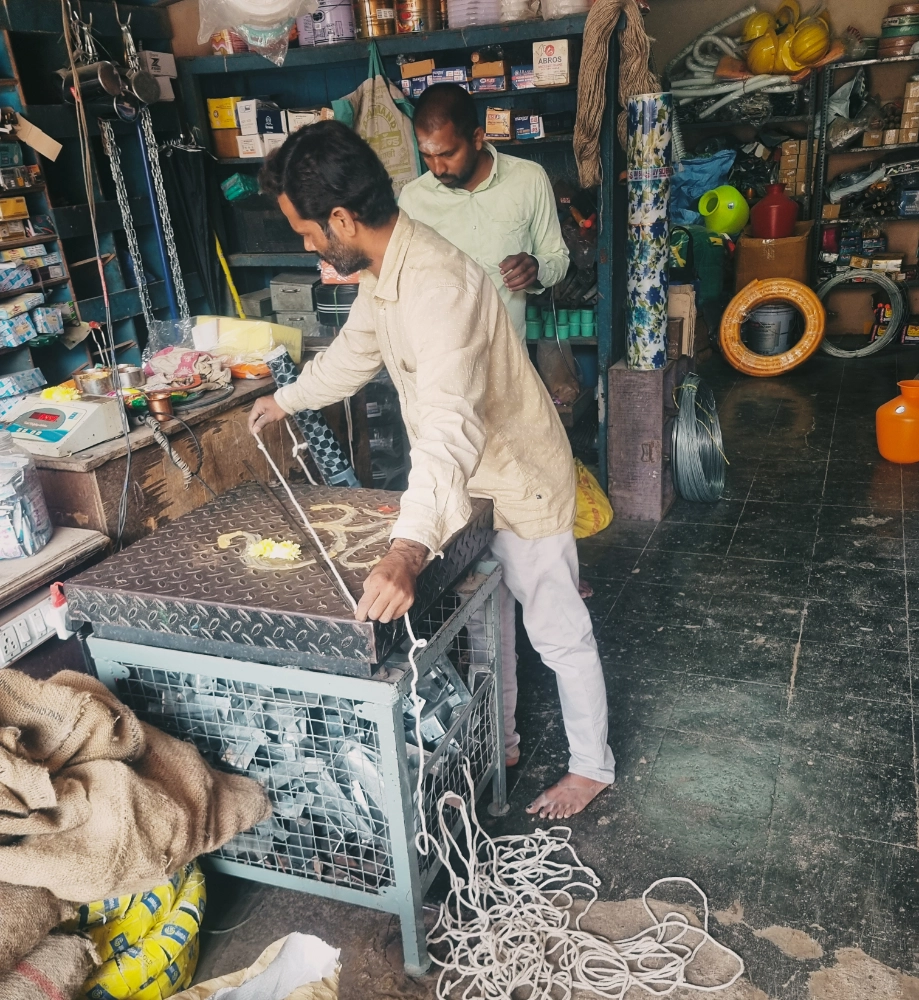
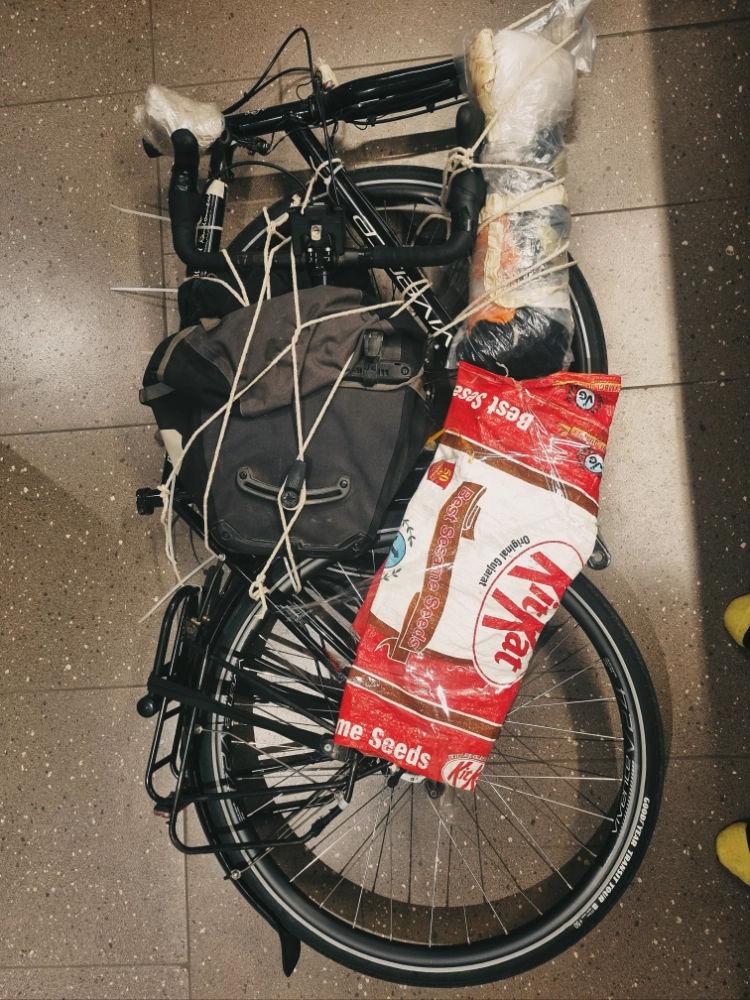
- along the way, get the packing materials, similar to what is covered in our India packing video. This included 20m of rope. Carry them on the bike and ride into HYD the day before the (early) flight.
- stay at the pod (which is easy to arrange in the middle of the day. It gets busy in the evening),
- disassemble the bike as per our video on this.
- pack it and protect it using the local materials and our luggage
- use a trolley to move from the pod to the check-in counter.
This all worked nicely and here are a few shots taken. Note: by riding out in the middle of the day we have the fall-back of returning to the city if we find no lodging.
What we tested on this trip
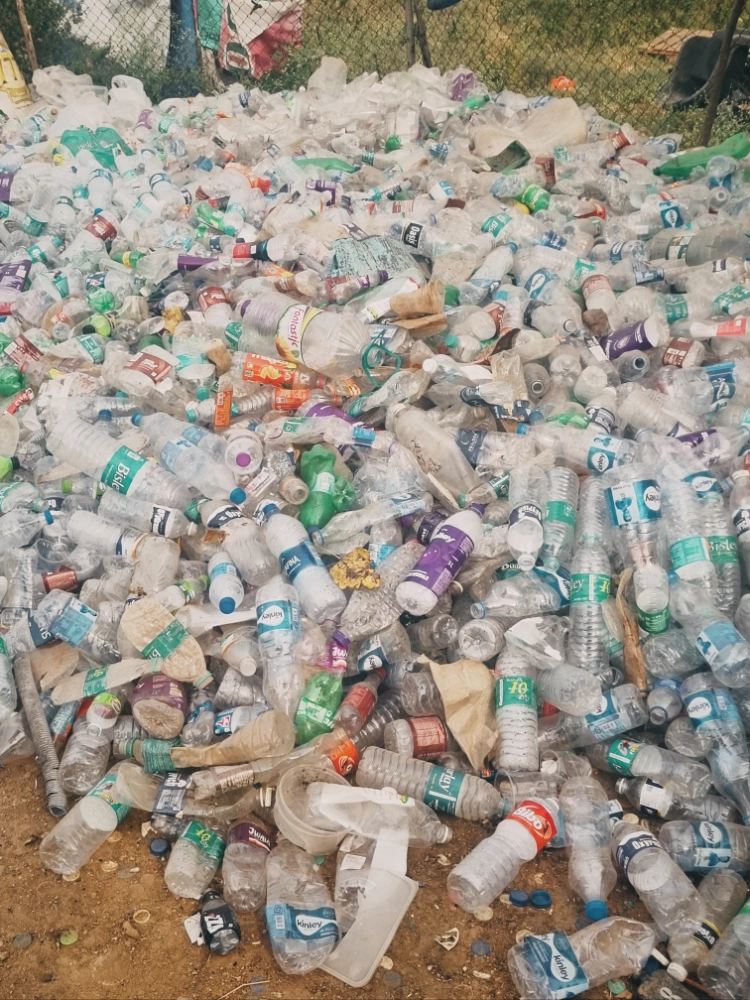
Sawyer Water filter. We took a six-year old charcoal filter Sawyer filter with three bladders. It’s the type where you squeeze the bladder to force the water through. Each of the bladders developed leaks within a few days so the whole unit had to be thrown away. Clean water is readily available in India in litre bottles for about 40 cents. The bottles are collected and recycled, helping to employ the poorest people who collect them.
Goodyear Transit Tour 40mm wide tyres. Once again, this tyre proved its quality. Not one puncture in 1,400km. Excellent rolling resistance and the right width for the conditions.
Soigneur woollen jersey. After a recommendation from Vivente riders, Rosina and Byron, we discovered these individually made fine merino jerseys. We were glad to be rid of polyester. How come we had not worked this out decades ago? This is a great product and made in New Zealand.
Riding the State and National highways of Maharashtra. Yes, there are risks. But over decades and tens of thousands of kilometres riding in India, we highly recommend it as a destination. We have a fresh five-year visa and will be back every November. Cyclists have to be careful everywhere, and India is no exception.