Trips
A ride southwest from Vizag, zig-zagging to turn 970km into 1,400km. We fly out of Bangalore 19 days later. In the first week we were in the delta areas of Andhra Pradesh. We crossed the Godavari and the Krishna rivers. Moving inland, the ghats in central AP are scattered. The tribal presence seen in northern AP and Odisha are minimal here although we did pass through some remote forests. The bikes are two Rohloff and one 27sp. It is Dec 2017. There has been a dramatic change in India, apart from demonetisation. Smartphones have arrived. Indians have gone “selfie nuts”.
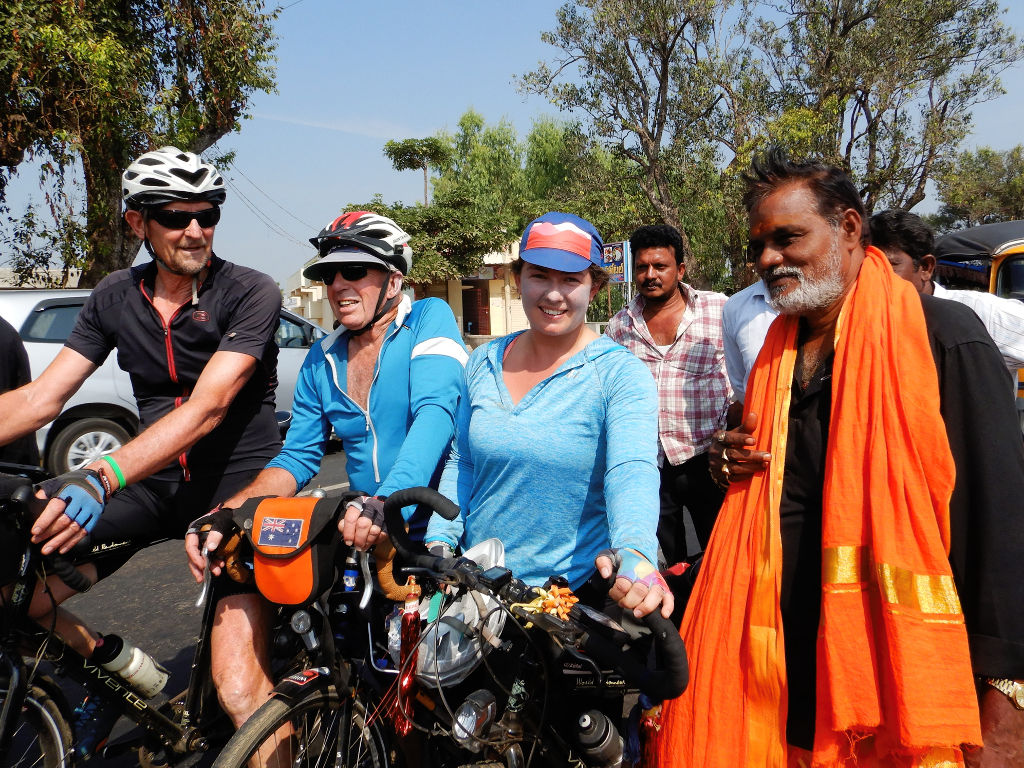
Off we go. We can sense we are in for a great time.
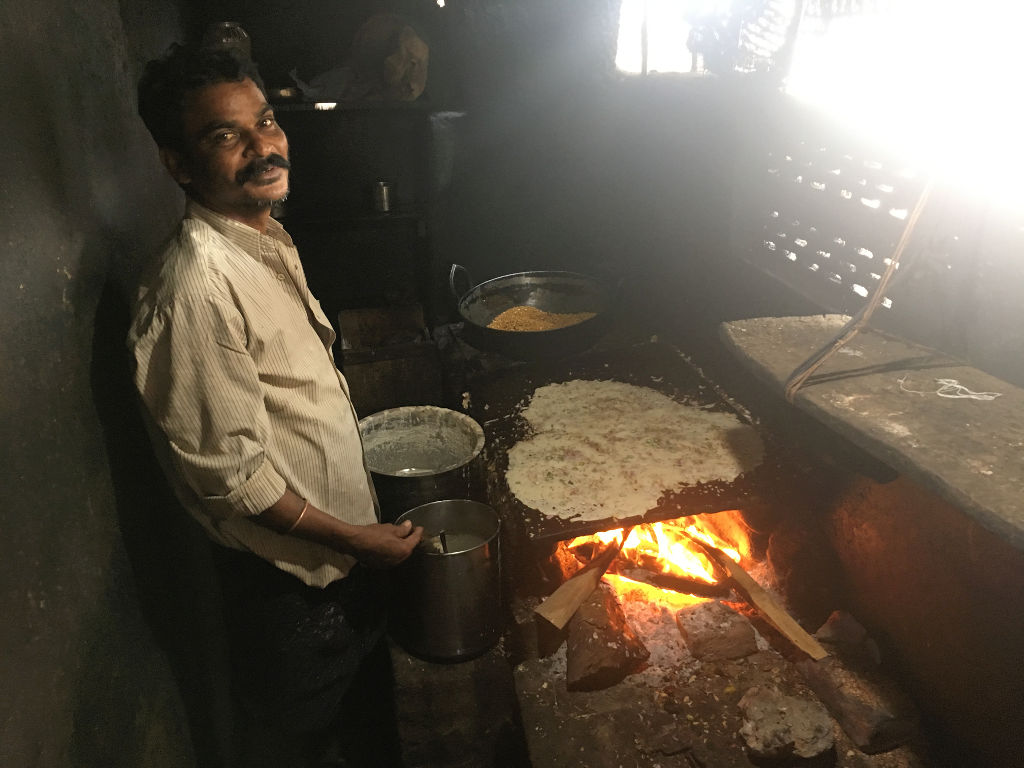
We stop in a village and watch as the dosa plate fires up. Perfect hosts they are. They would not even let us pay.
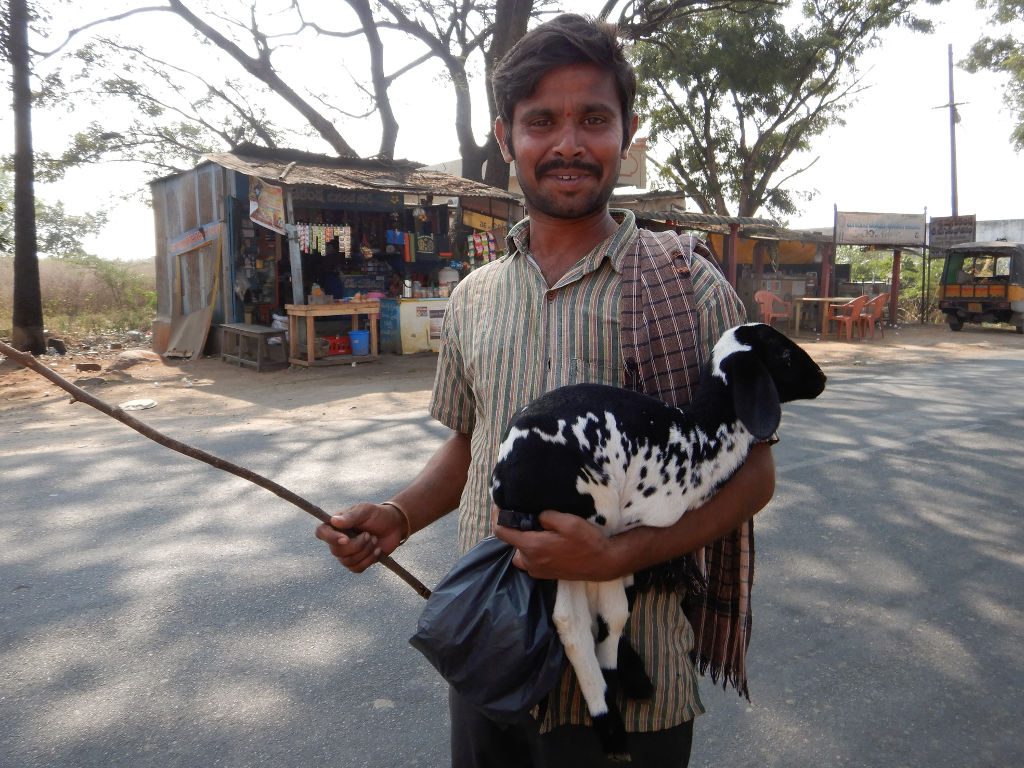
The openness of the faces we see along the way is the best thing of all. It’s the universal language and we love it.
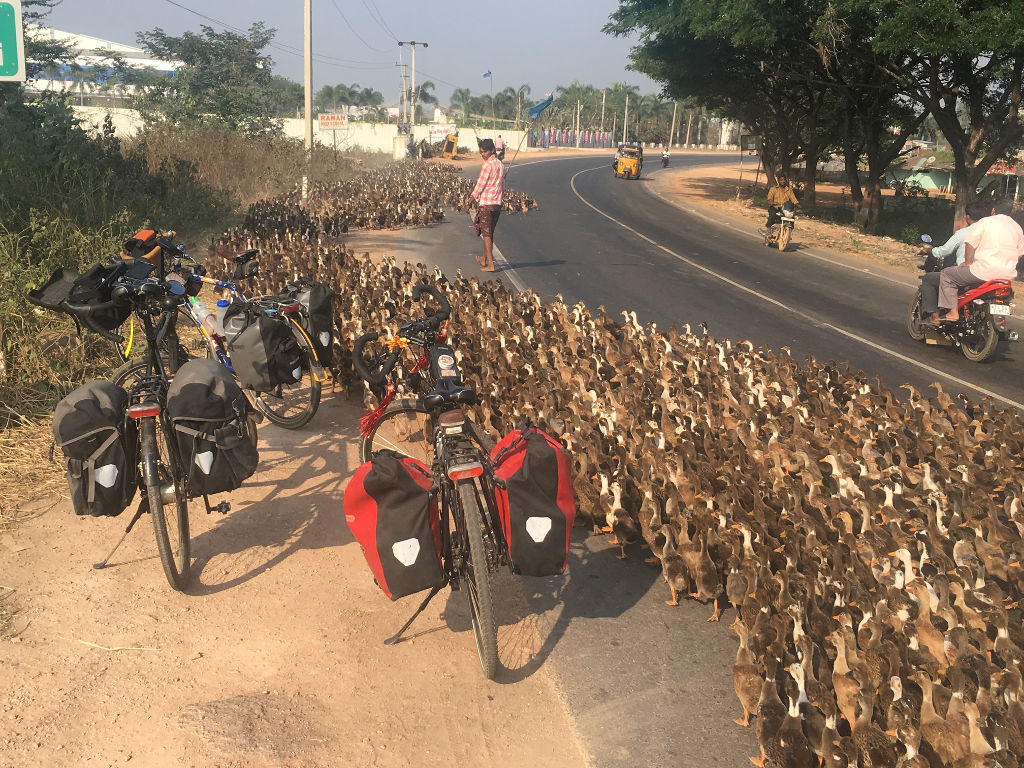
Ducks are a growth industry in coastal paddy areas. We are on a reasonably busy road and these few thousand ducks are moving from one paddy, across the road, to another. Everyone stops.
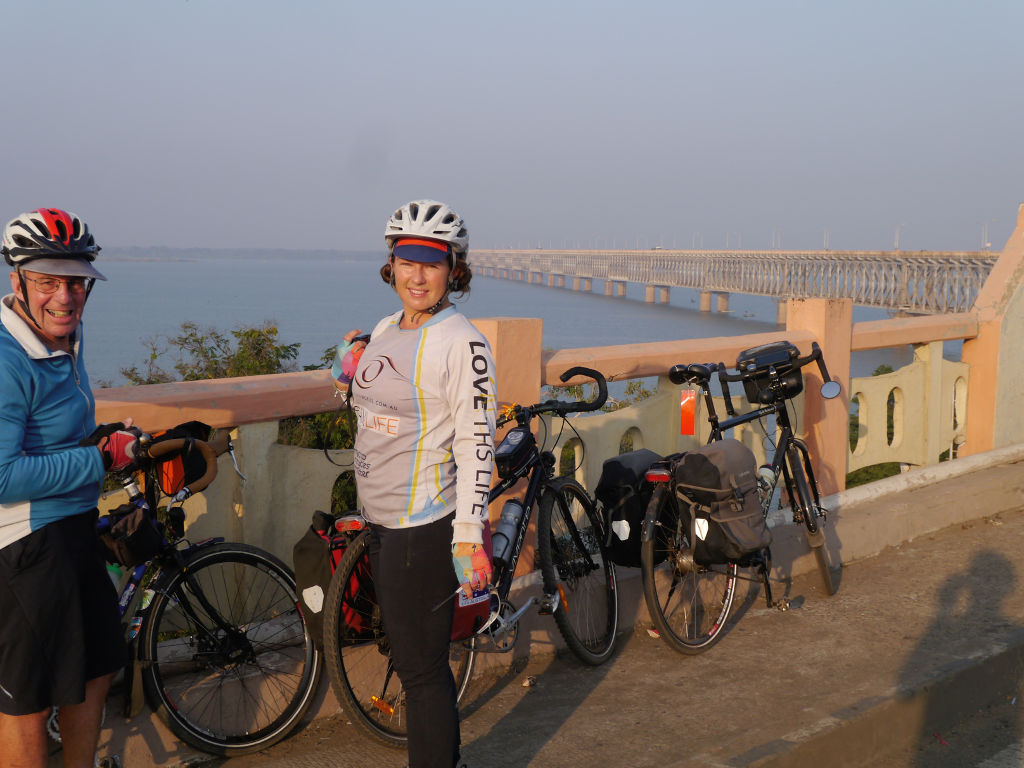
We are about to cross the Godavari. The big east-flowing rivers of south India start in the western ghats. Due to the monsoonal rains, by the time they reach the coastal lowlands in the east, they are several kilometres wide.
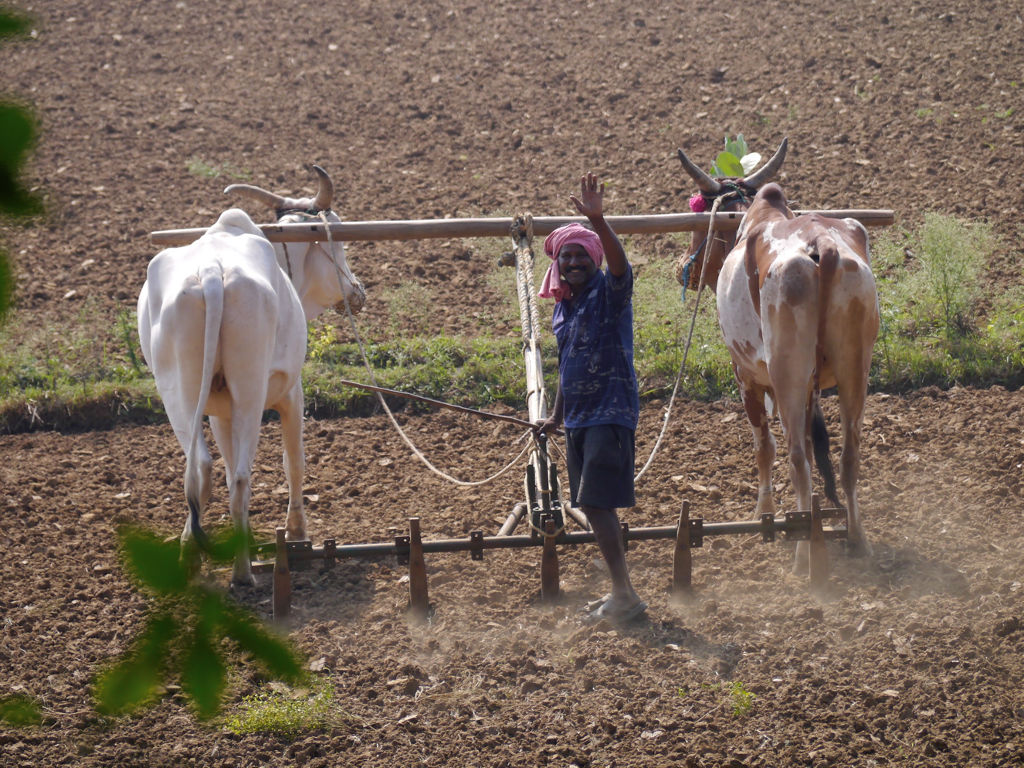
Bike tourers share a closeness with farmers in the old world. You only have to go there in order to feel it.
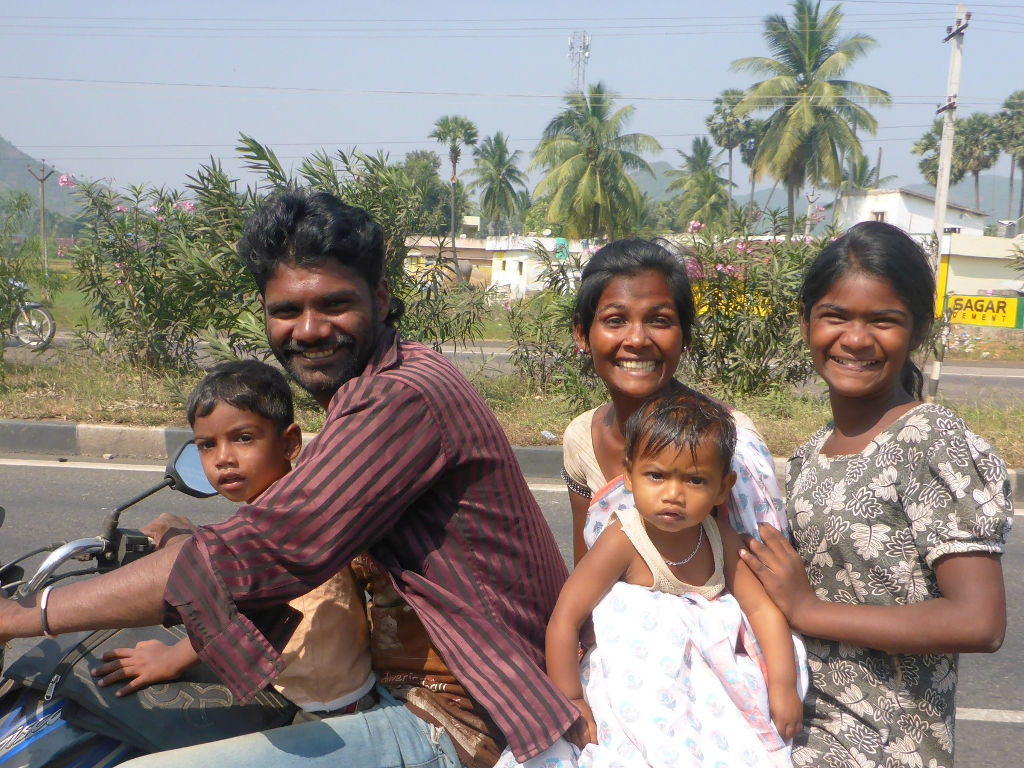
We are travelling at the same speed as lots of other people on the road. There are lots of these interchanges in which we are all having fun being side by side.
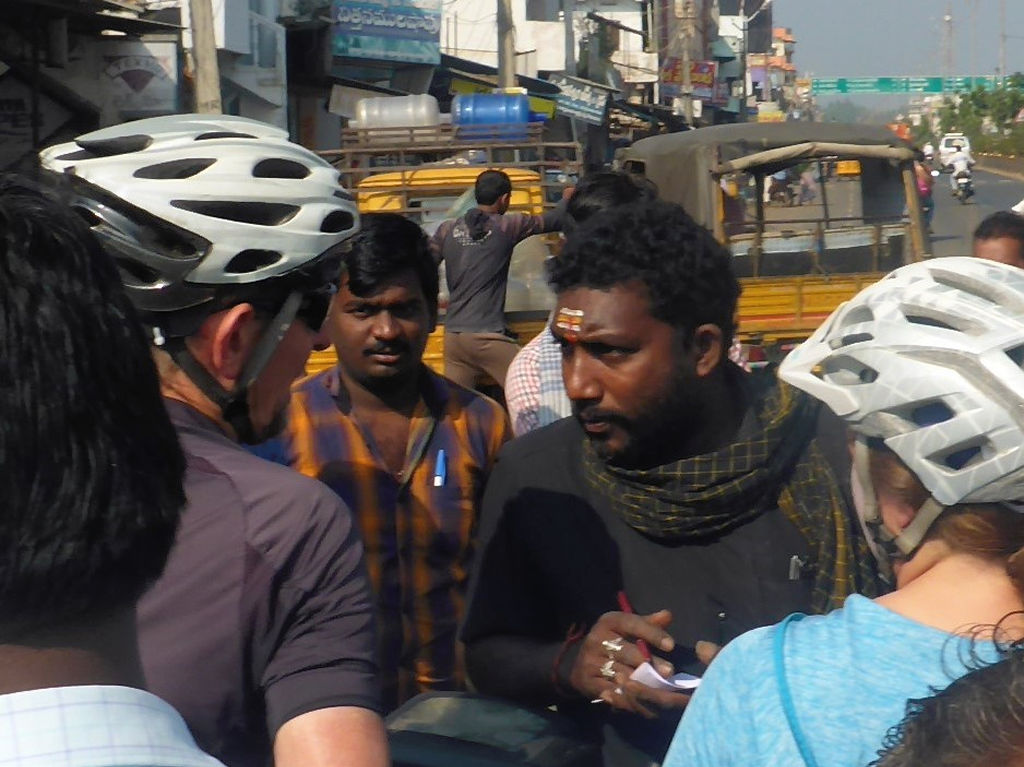
We encounter media every day and often ride through towns and hear “Australia” mentioned on the side of the road, meaning we were in the local paper that morning. Indians must be one of the most curious peoples on the planet.
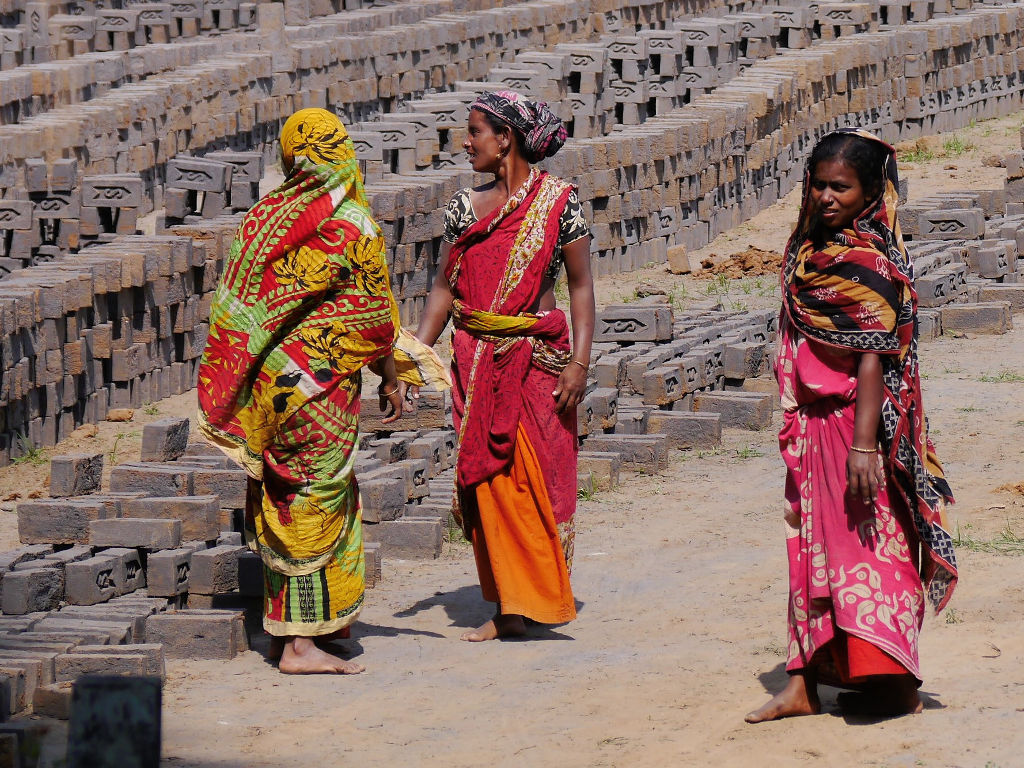
These women make mudbricks. We all stop and take the spectacle of each other in. Except that they are far more spectacular than we are.
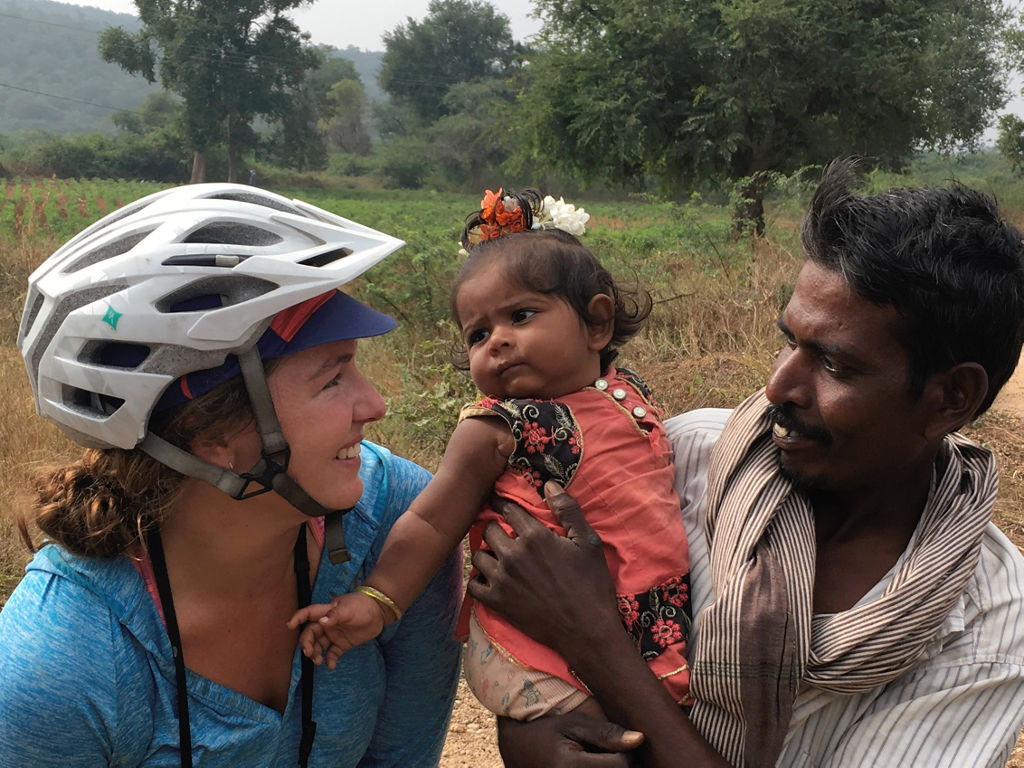
We’re not getting anywhere because we are having such a good time hanging out along the road. The people are so nice to us.
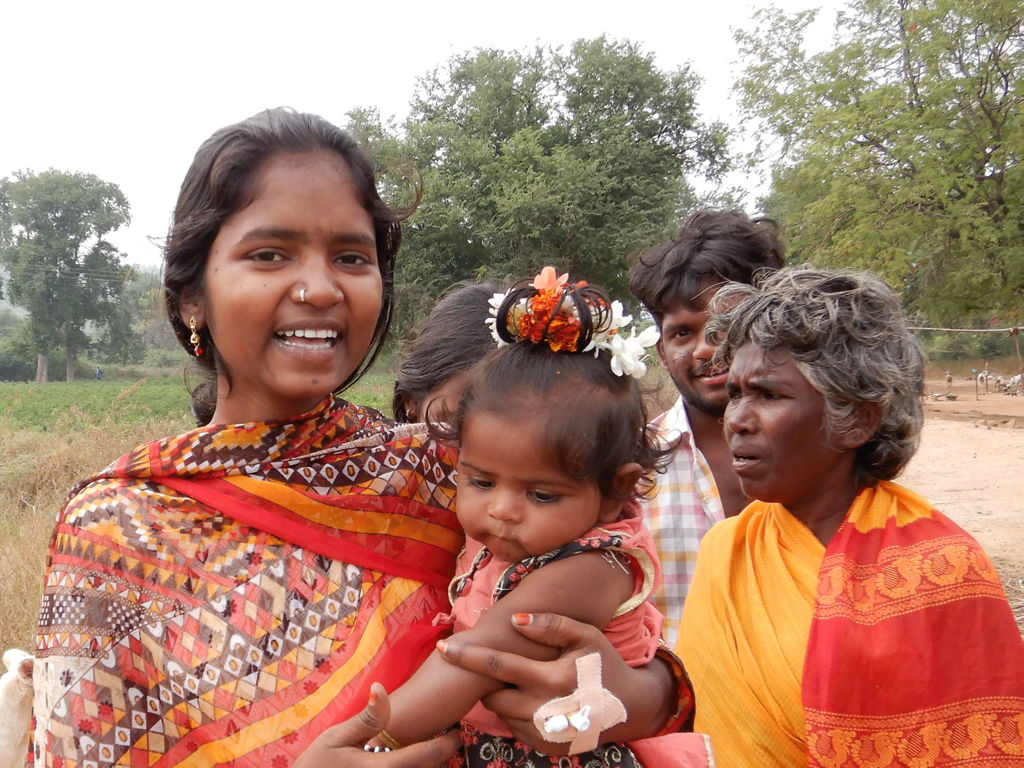
The colour here just knocks your socks off, with such beautiful skin.
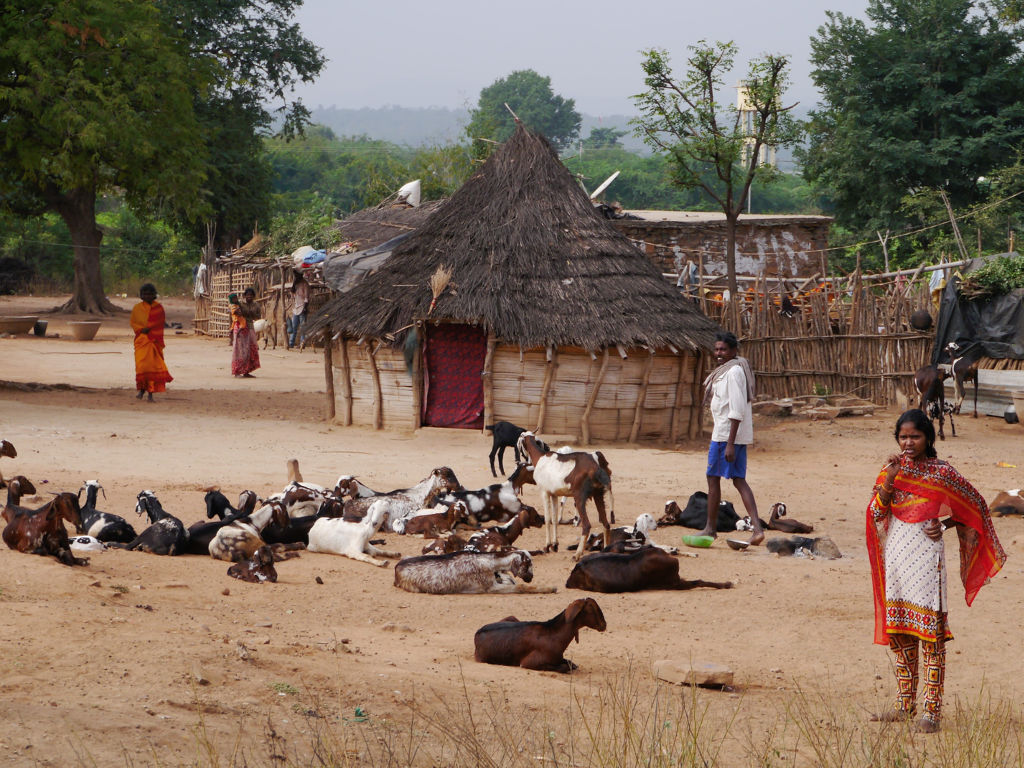
We are in the forest area now. Goat herders.
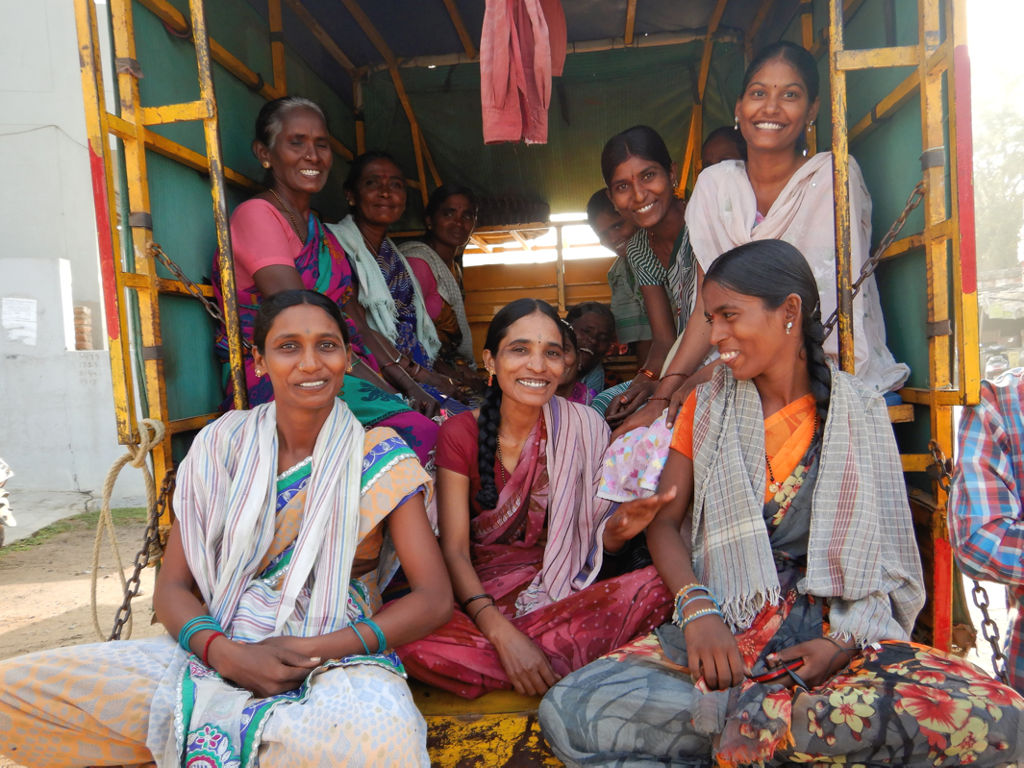
The three-wheelers go a little bit faster than us, so we have these interchanges with the people in the back. We can’t help but comment on how happy people seem here.
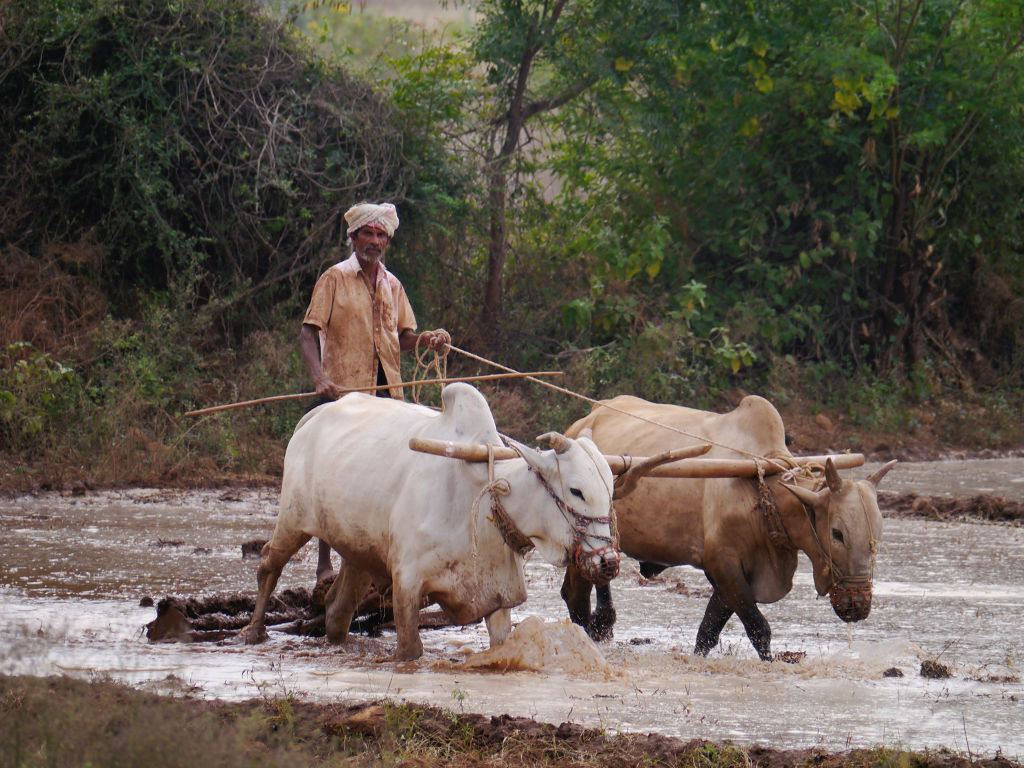
They are getting ready to plant seed for rice seedlings. They want smooth mud. The animals understand what to do. They have done it this way for hundreds of years.
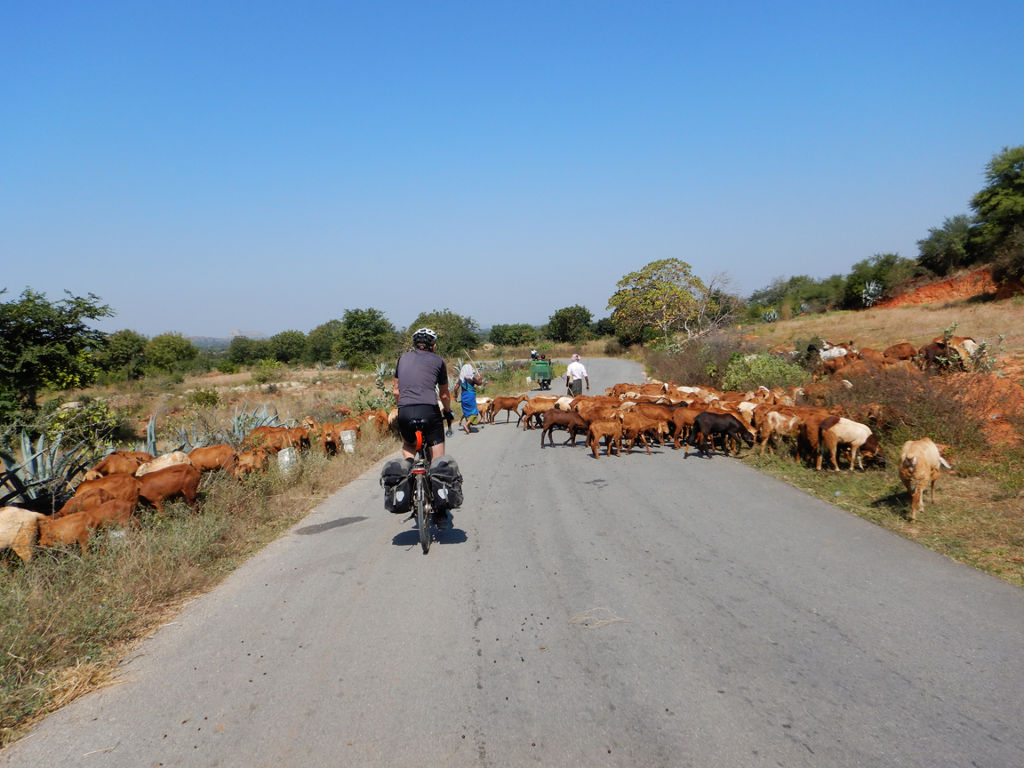
You cannot have too much of this. Touring out on the back roads in India is the best. Especially on the Deccan.
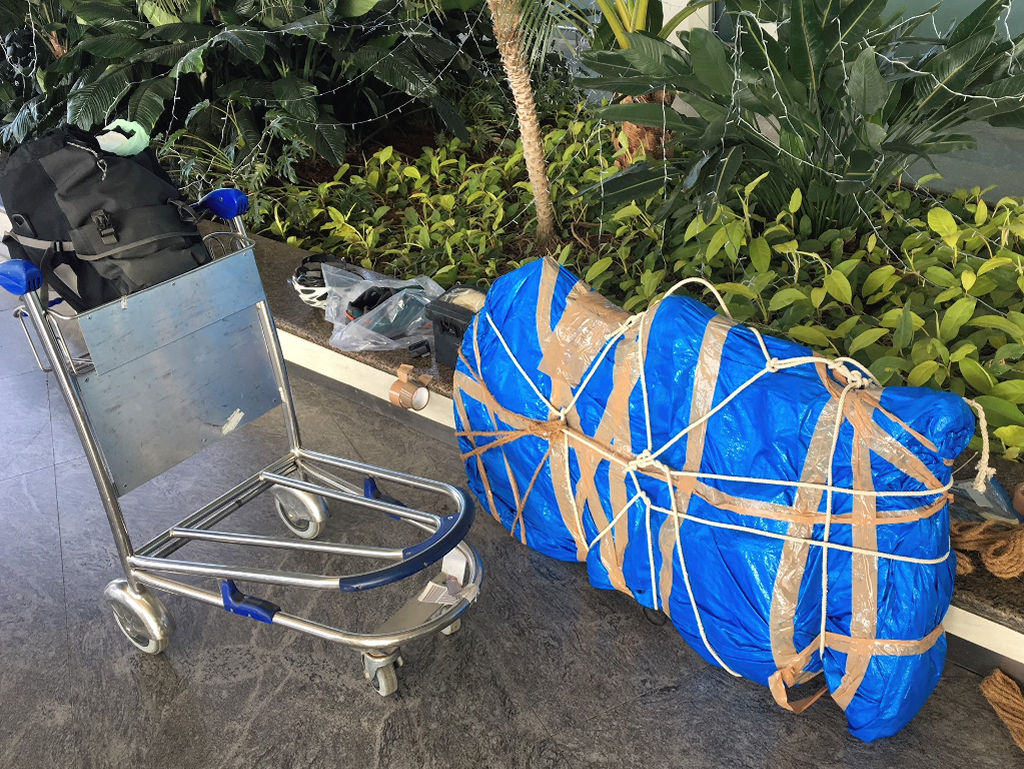
We pack at Bangalore (BLR) using materials we bought on the last day as we rode through the last towns. Coir rope, bath mats, tarpaulin. So much easier than scrounging for a carton in town and getting transport.
Tour of Andalucía. Flying into Malaga and heading out SE and then inland to Granada to see La Alhambra. Then further north to Cordoba and then west to Sevilla and then north on a bus to Merida, an old Roman city before riding down back through Sevilla and on to Cadiz. On the way to Cadiz I went past the airport at Jurez and was able to go in and confirm carton availability. After a few days in the very old city of Cadiz I know it will be easy at the airport.
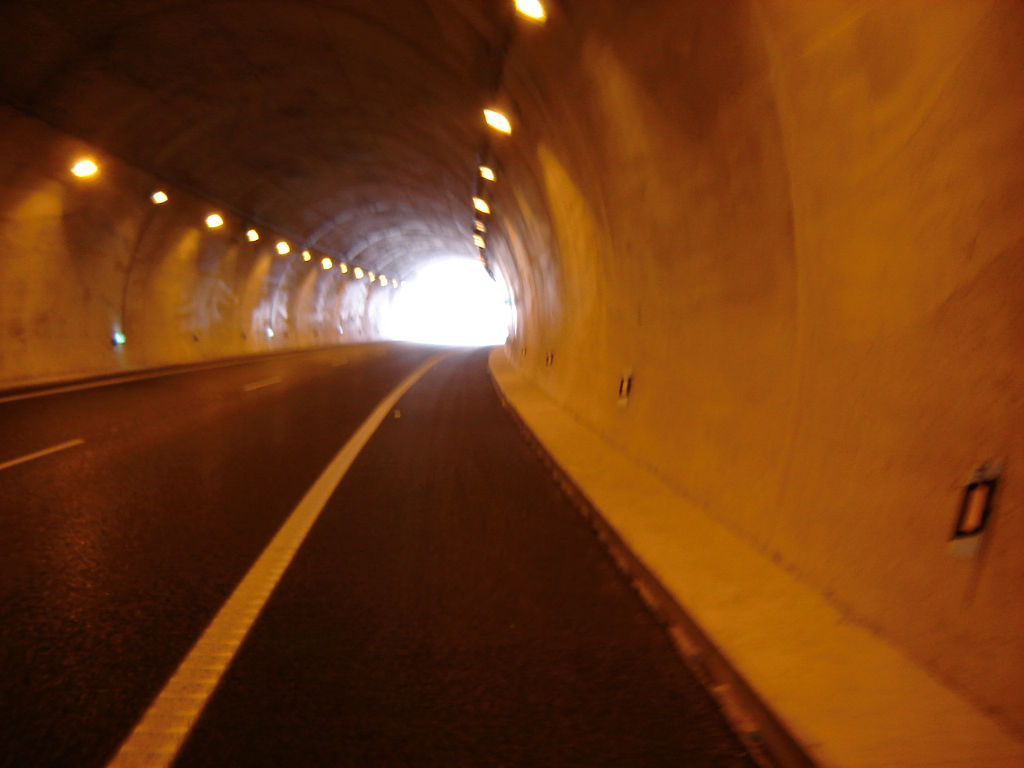
It is my first time riding in Spain and I’m hitting tunnels with no edge and signs saying no bikes. Then the country opens up as I climb a big range and drop into Granada. Coming in I am forced to use an expressway. No doubt this will be addressed in the future but currently it isn’t easy to ride into Granada from the south.
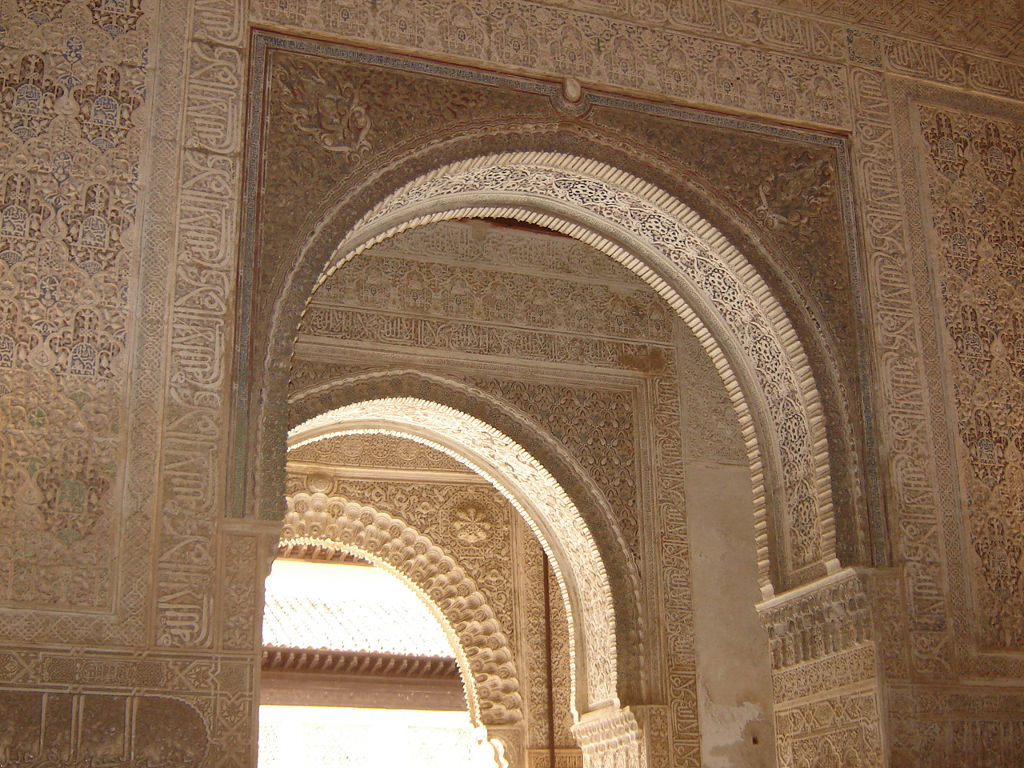
La Alhambra is truly amazing. Indeed, it must be up there with the best things made by humankind on the planet.
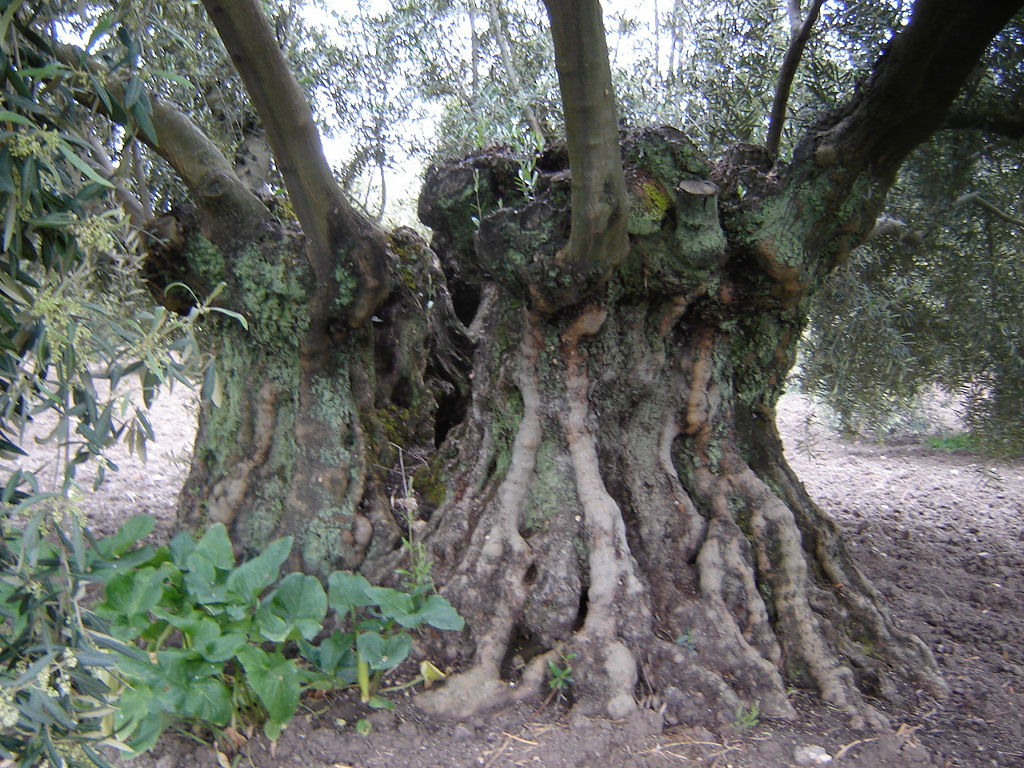
Really old olive trees apparently keep on producing. Presumably some of these trees are centuries old. They just keep pruning to get new branches.
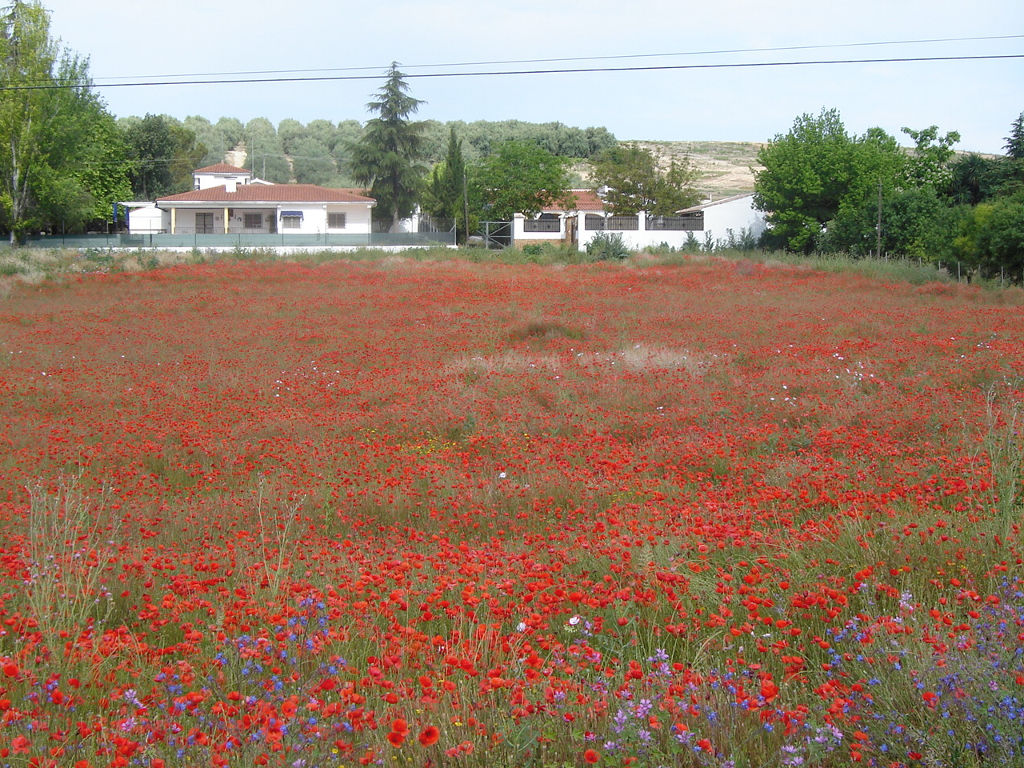
It is May and the poppies are gorgeous.
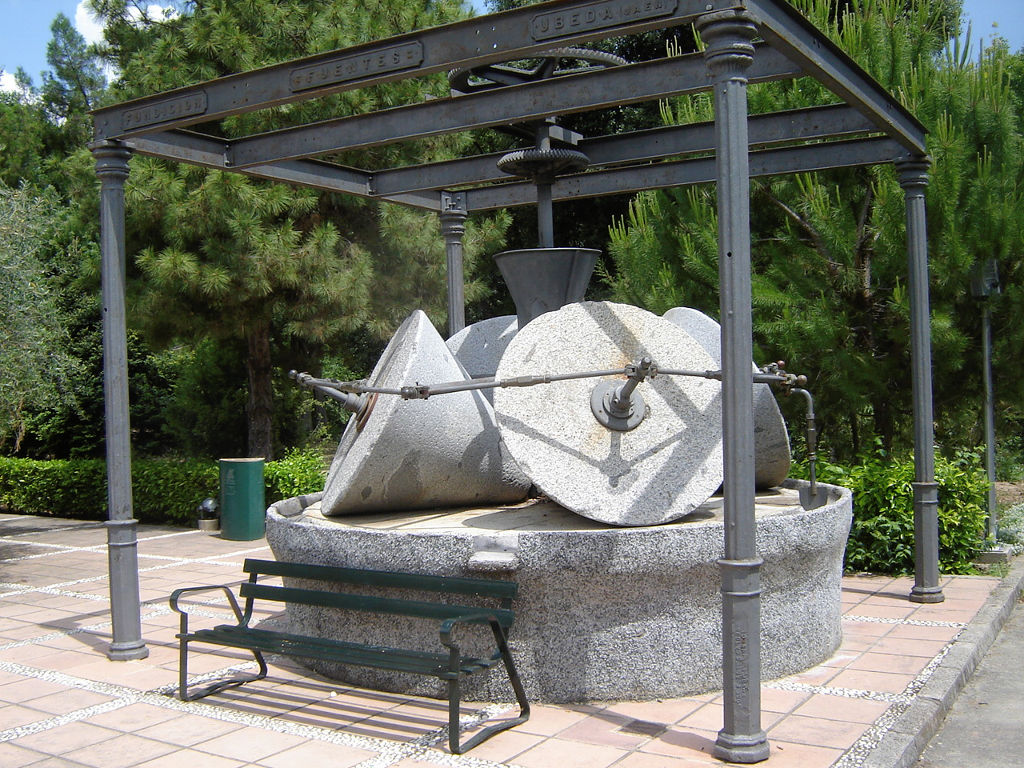
In the botanic gardens in Cordoba. For crushing olive oil, above the stones, in the steel structure, there is a transmission system to make the stones roll around in a circle.
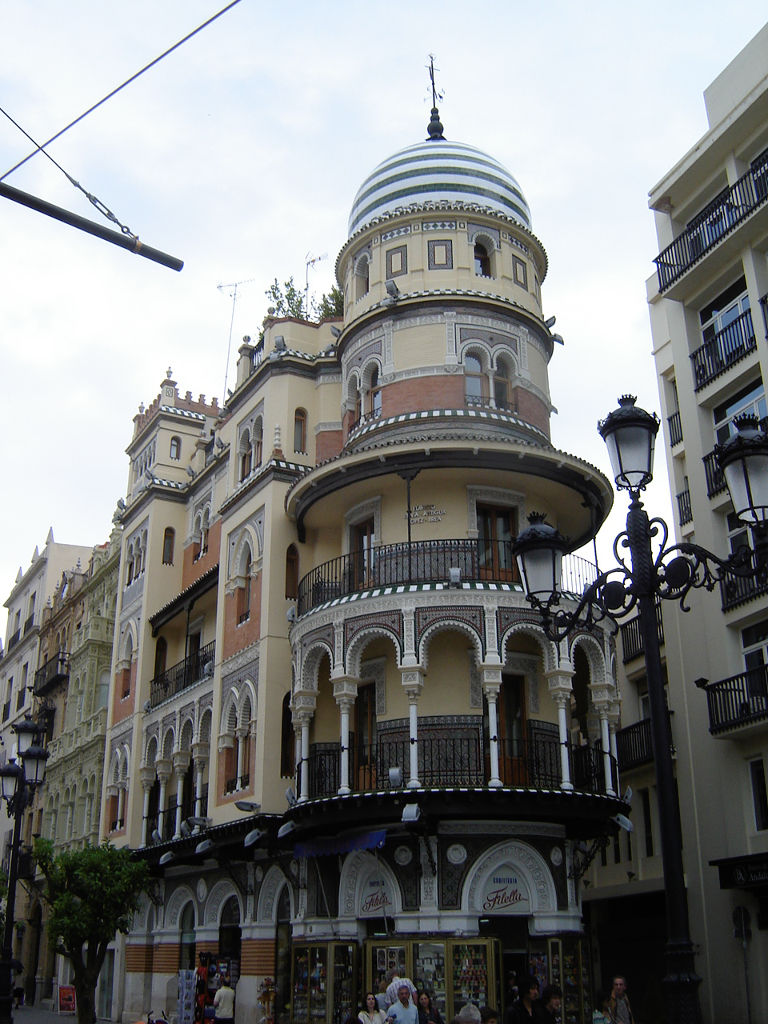
Sevilla is amongst the most picturesque cities anywhere. There are beautiful plazas, bridges, gardens and a massive cathedral. It is very bike friendly. A lot of classy horses too.
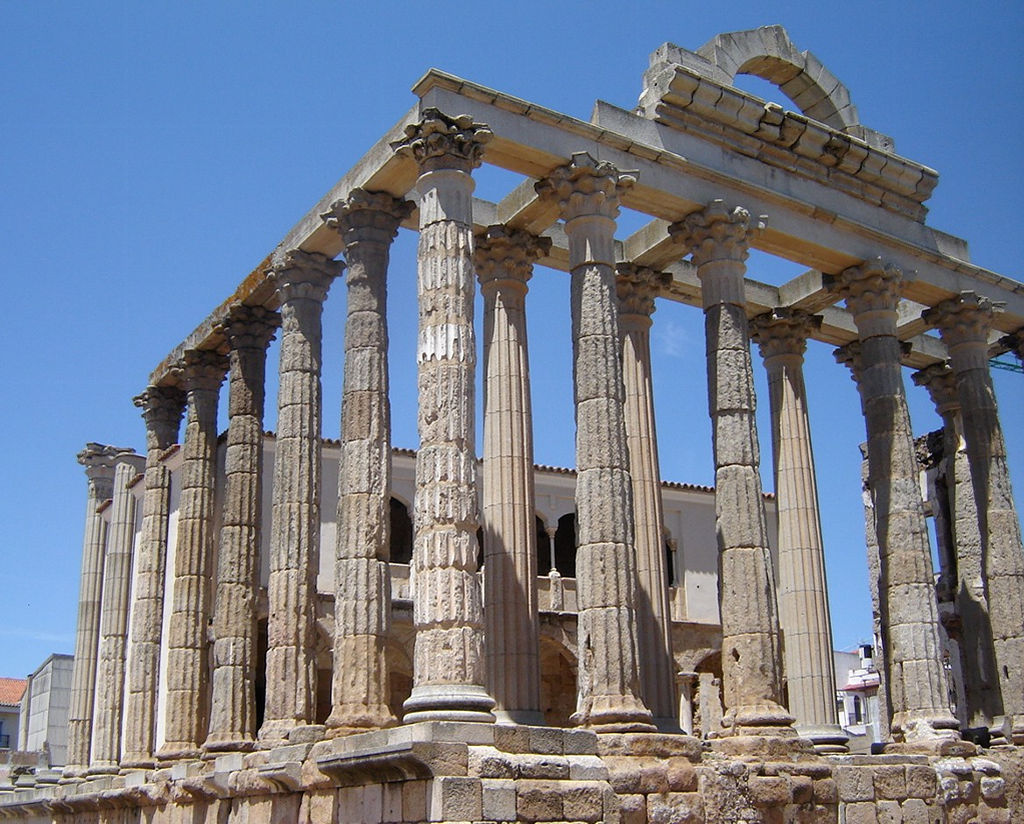
Up in Merida, founded in the 1st century BC, are impressive reminders of the times of Roman rule.
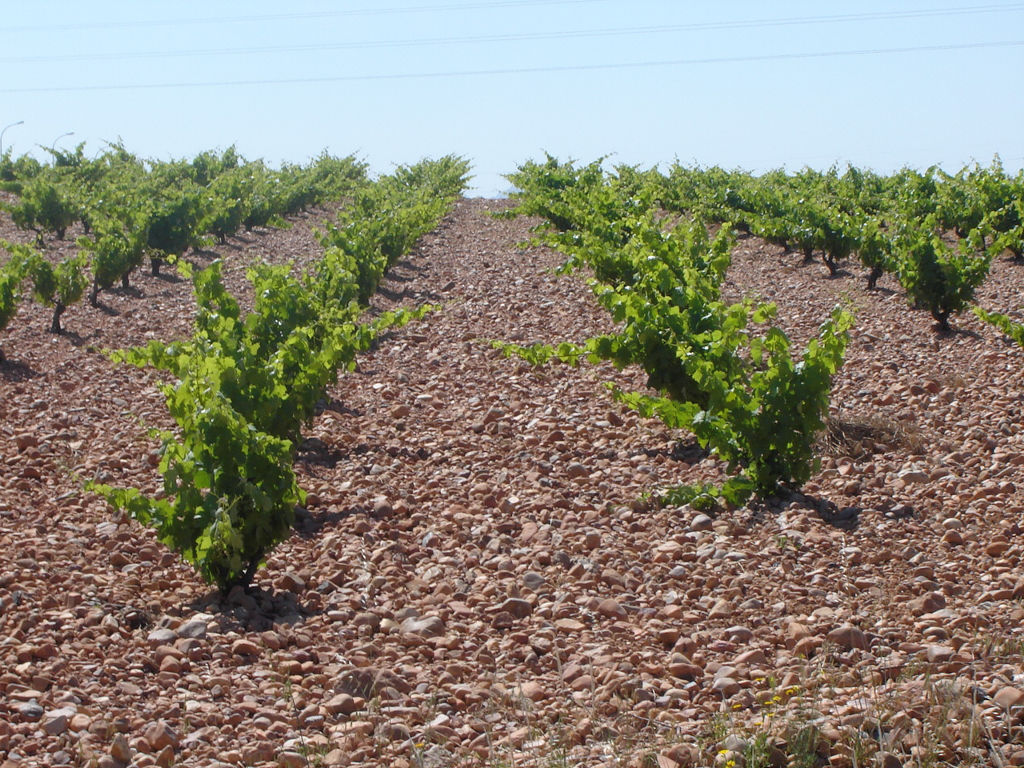
Would you go to this trouble to grow grapes? These are planted in 100% rock. The vines do look pretty happy though.
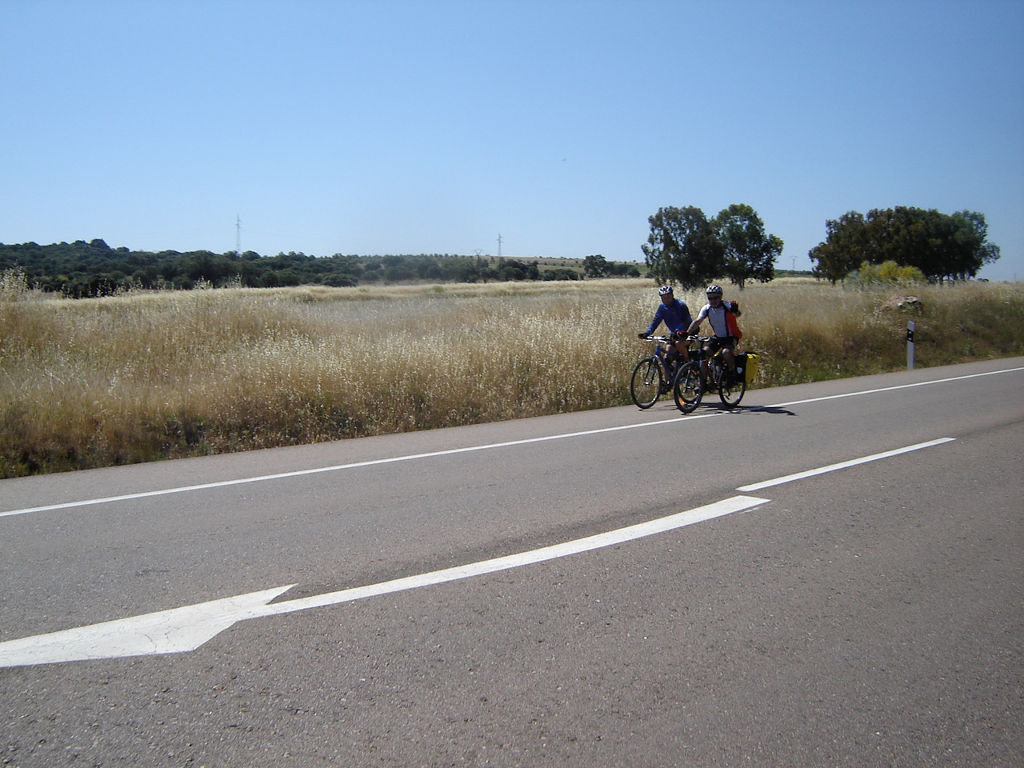
Heading south to Zafra I am seeing quite a few cycle tourers. It is a good route.
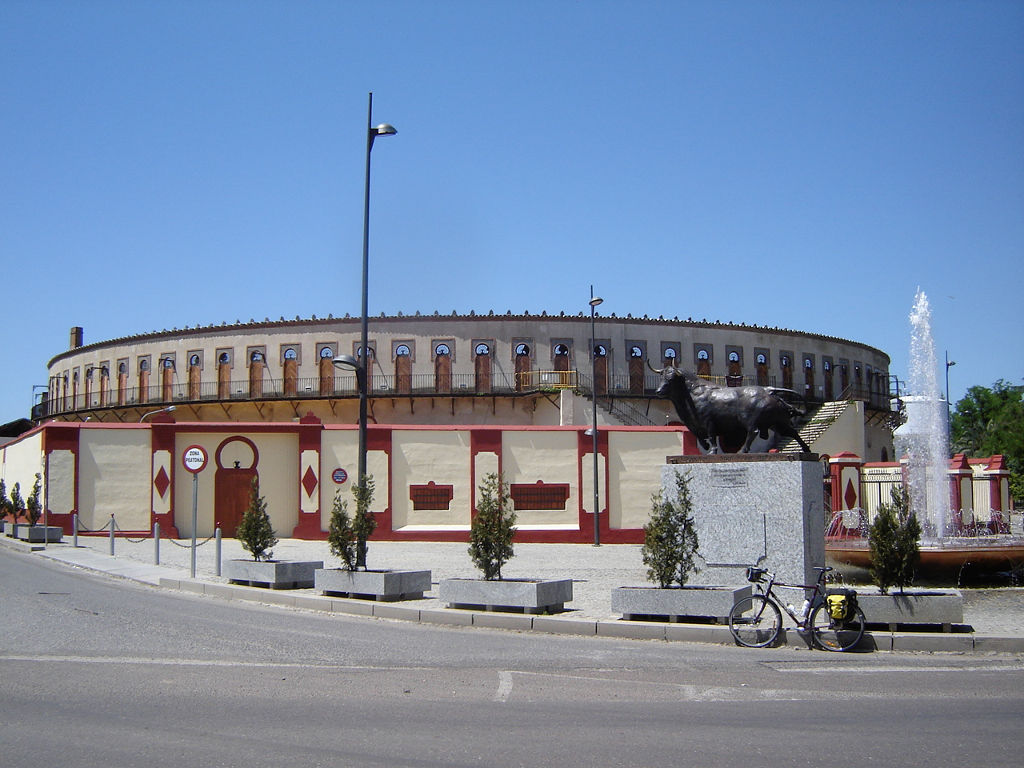
Plaza del Torres. This is in a town of only 15,000 people. Amazing that animal cruelty can be popularised and institutionalised on this scale.
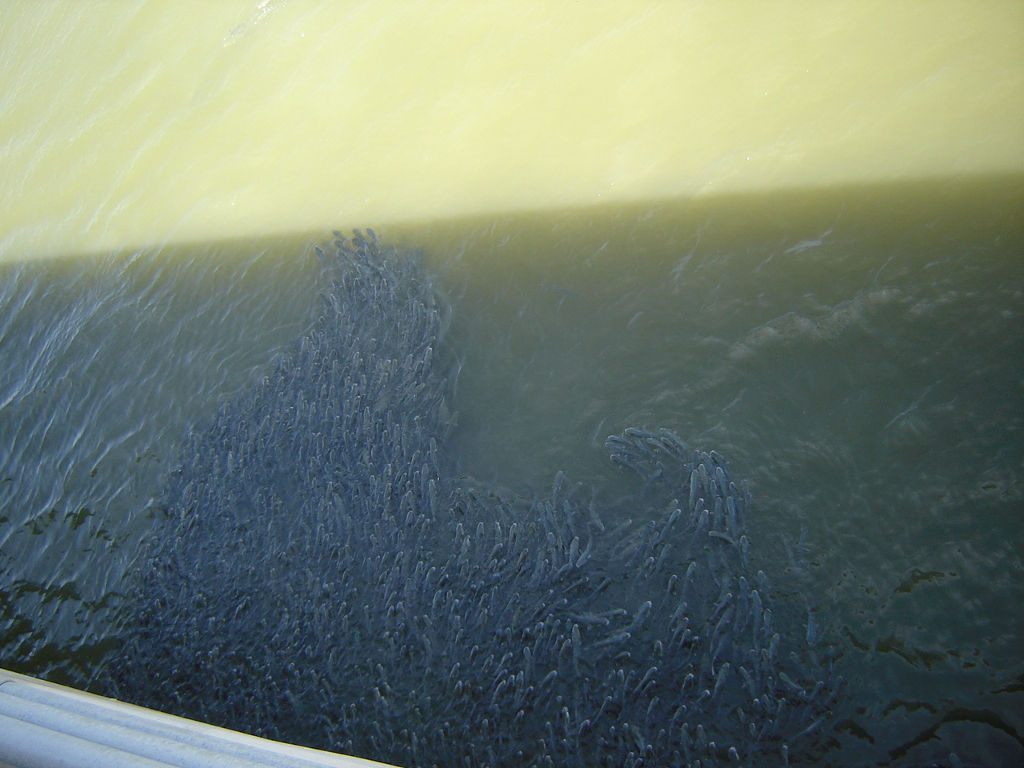
I’ve just stopped on this bridge for a break and looking over the side notice this huge school of fish.
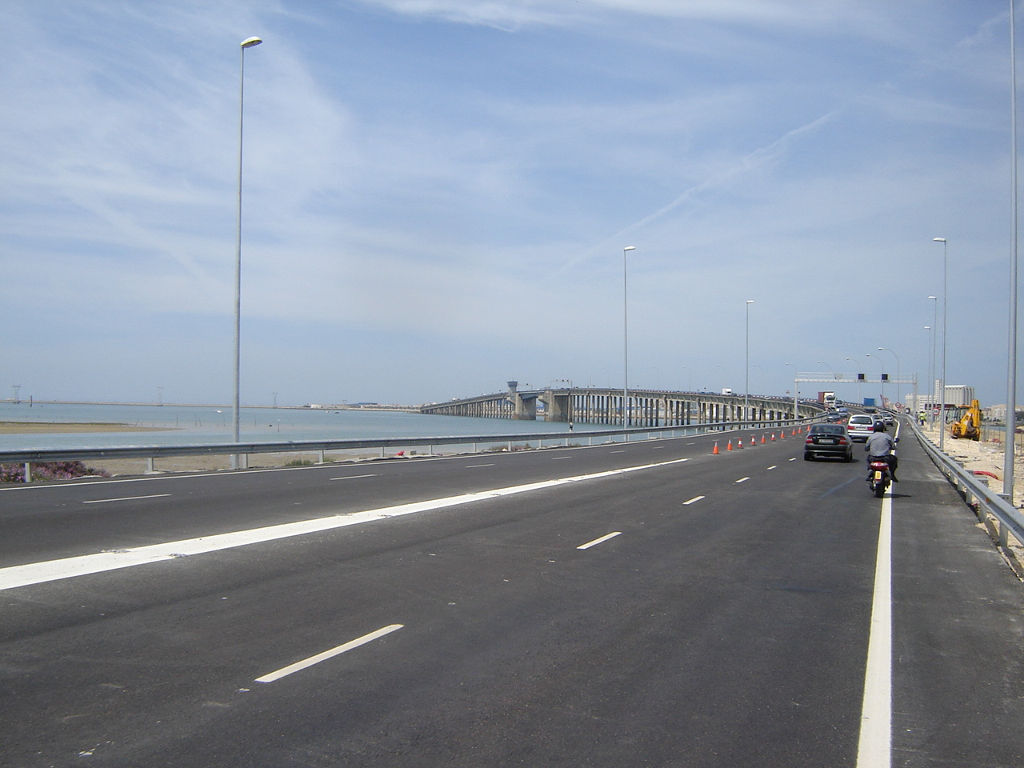
Approaching Cadiz. Decent shoulder. The city is on a long island that protects a natural harbour. As I came past the airport 30km back I was pleased to confirm there would be a carton available when I return in a few days.
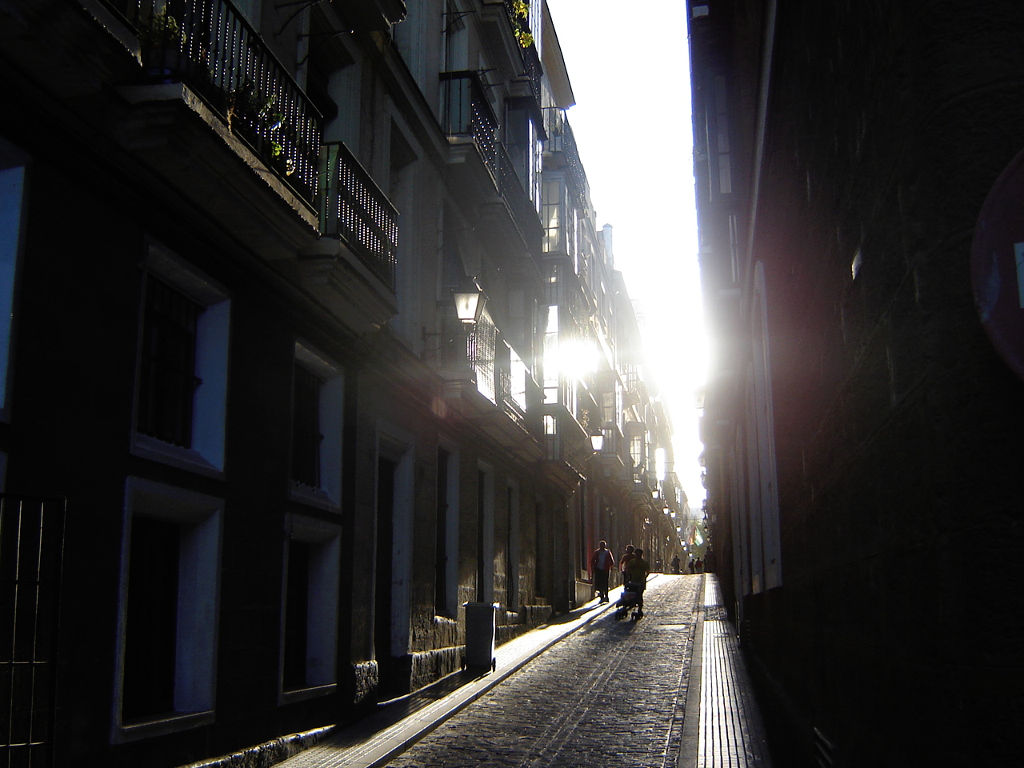
It is supposedly the oldest continuously inhabited city in Europe. Very Andalusian. Columbus sailed from here. There are very impressive gardens featuring specimens brought back from the New World 4-500 years ago.
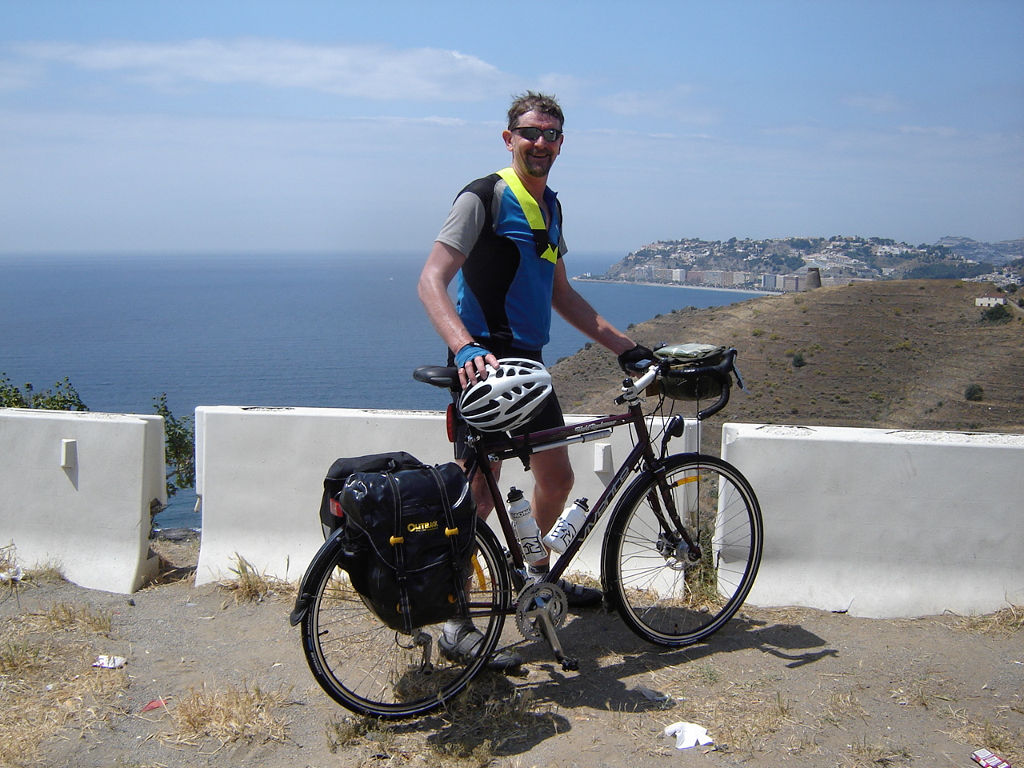
I have been riding a 2006 Vivente World Randonneur with Tiagra 9sp STI, front disc and rear cantilever, Alex rims, outboard BB. I am giving these Taiwanese panniers a go but am feeling they are not good enough. The outboard BB gets a bit of play. Coming off some of the mountain passes I am exceeding 70kph and am wondering what difference a rear disc brake would make.
A loop ride in Malawi. We rode to Sydney airport, bought Qantas cartons, packed and flew to Jo’burg and then Blantyre. We rode a 1,250km anticlockwise loop, via Monkey Bay, Nkhata Bay, Mzuzu, Mzimba, Kasungu and Lilongwe. Back at Blantyre we retrieved our cartons at the lodge where we stored them. Malawi is the sixth poorest country in the world. Friendly, safe but apparently corrupt. It has been so sad to see such hunger and very much a reminder of the lottery of birthplace. If you are reading this you probably won the lottery.
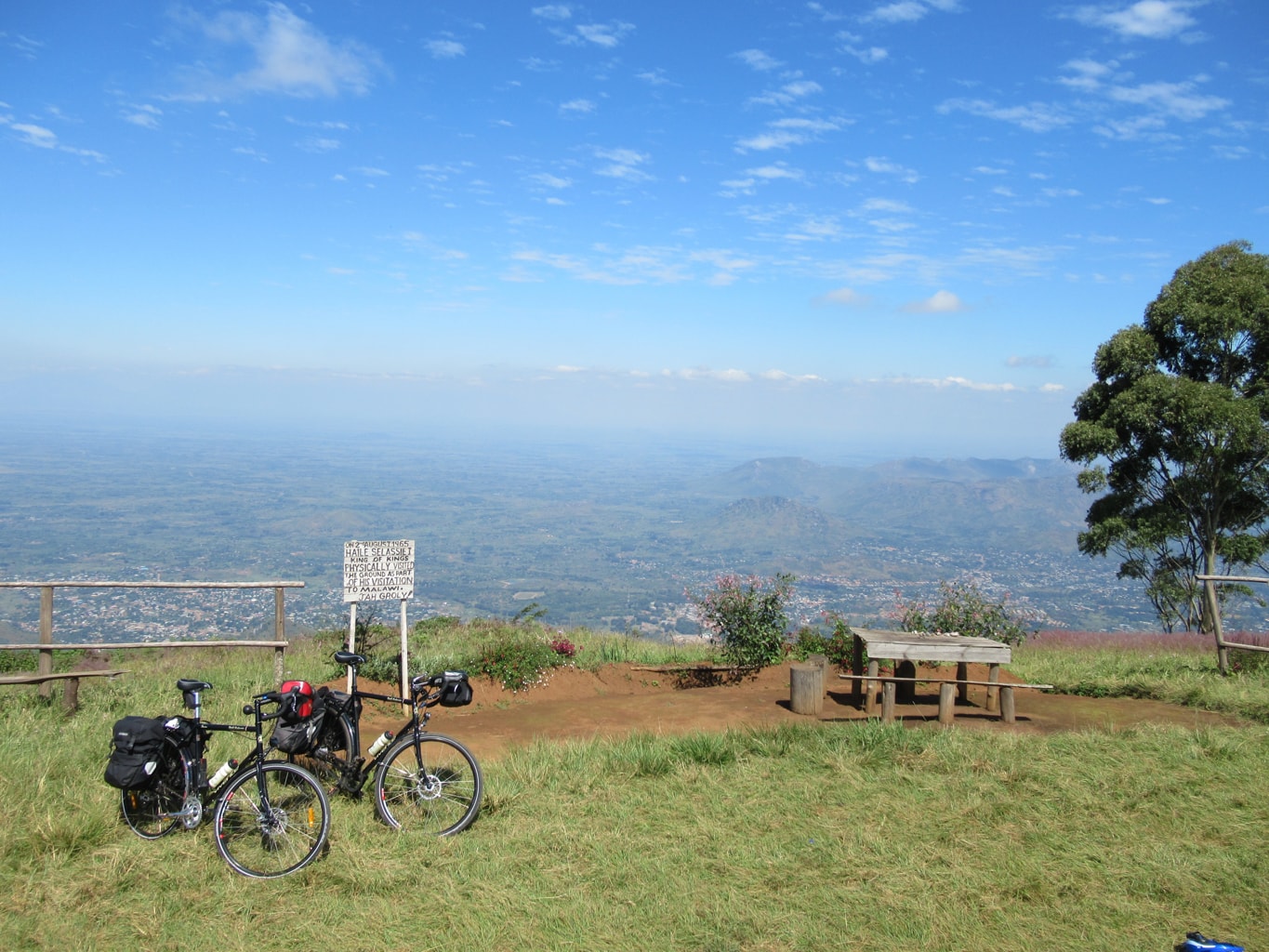
At Emperor’s View on the Zomba Plateau. Haile Selassie stood on this spot in 1965. He is revered in Africa. We are looking out across the Shire Plains.
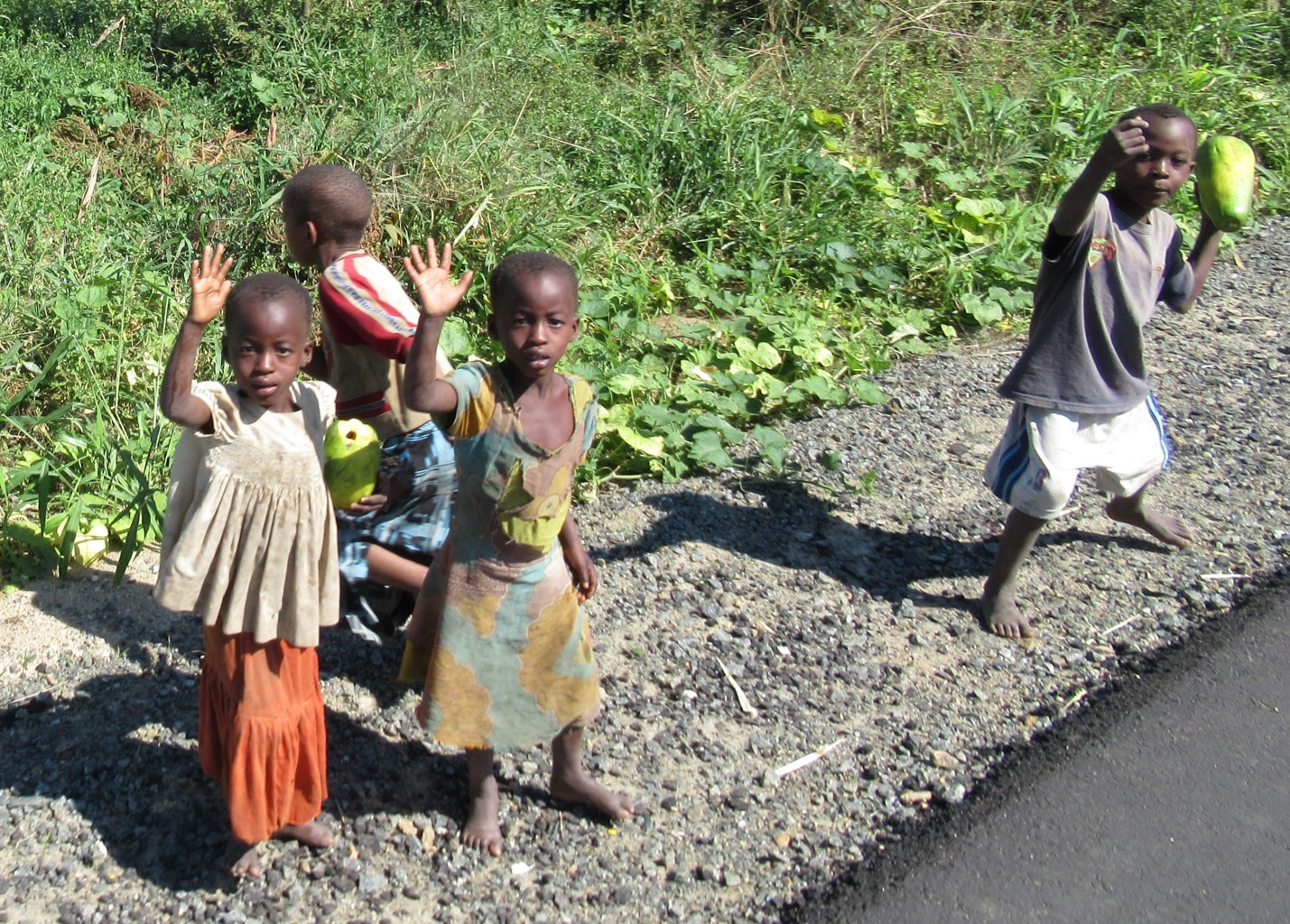
Kids get very excited to see us. The one that has turned away has spotted the camera and is diving into the bush. Some people think that taking their photograph is tantamount to stealing their soul. Objections to photography have been quite common.
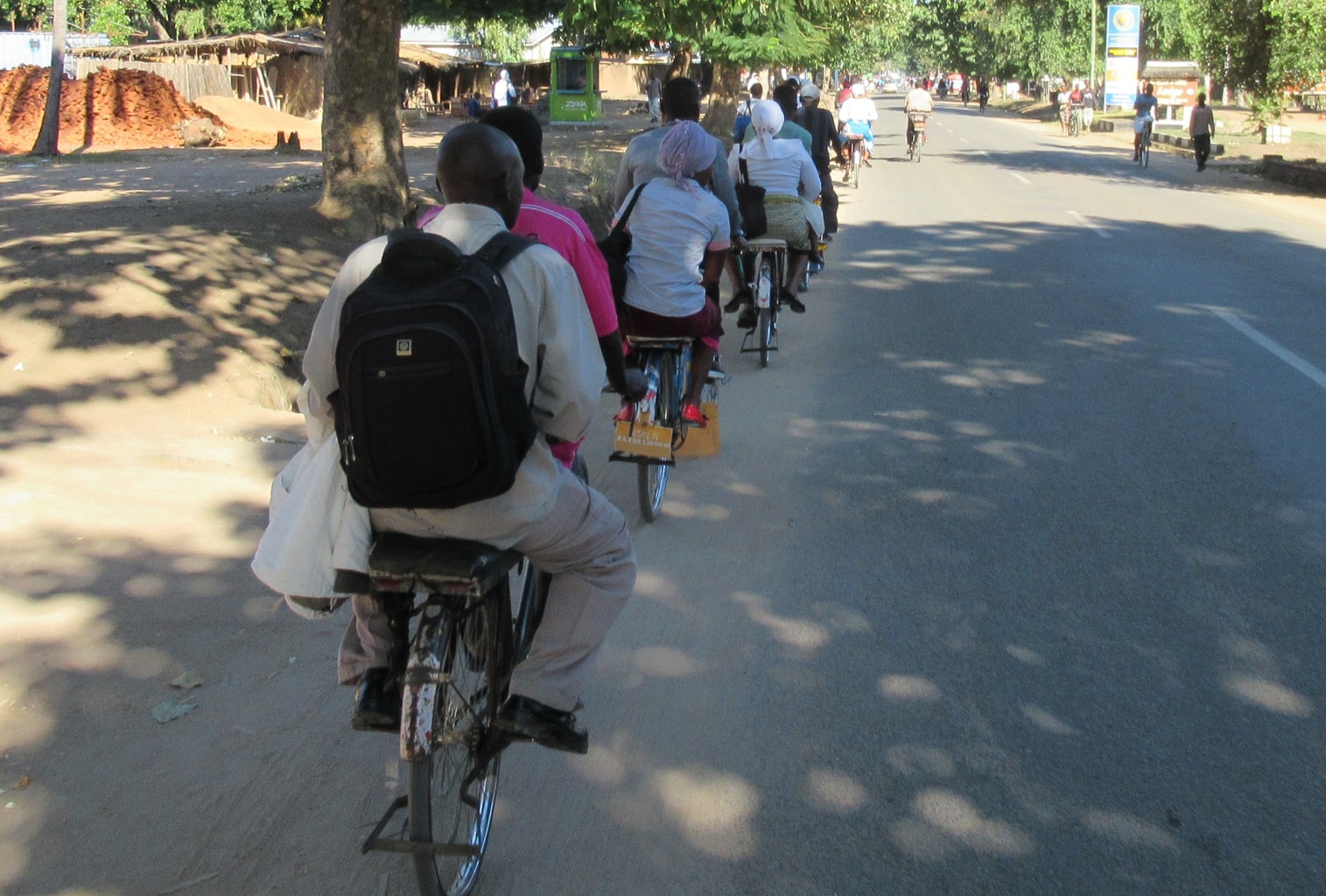
Mangochi in morning peak hour. Bicycles rule.
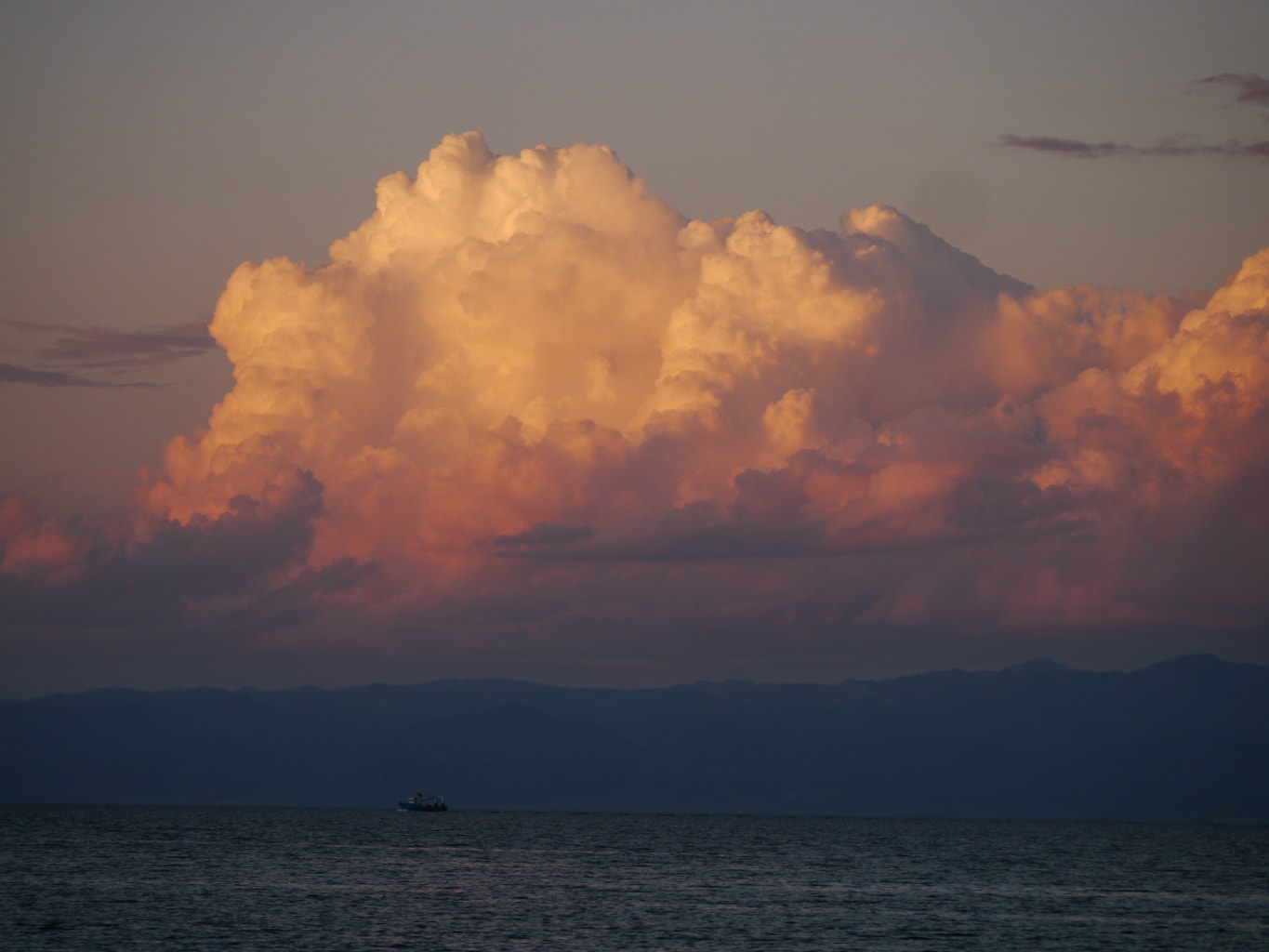
From Monkey Bay looking across Lake Malawi (Lake Nyasa) to the mountains in Mozambique. The lake, is part of the rift valley, where Africa is being pulled apart. It is home to more species of fish than any other lake.
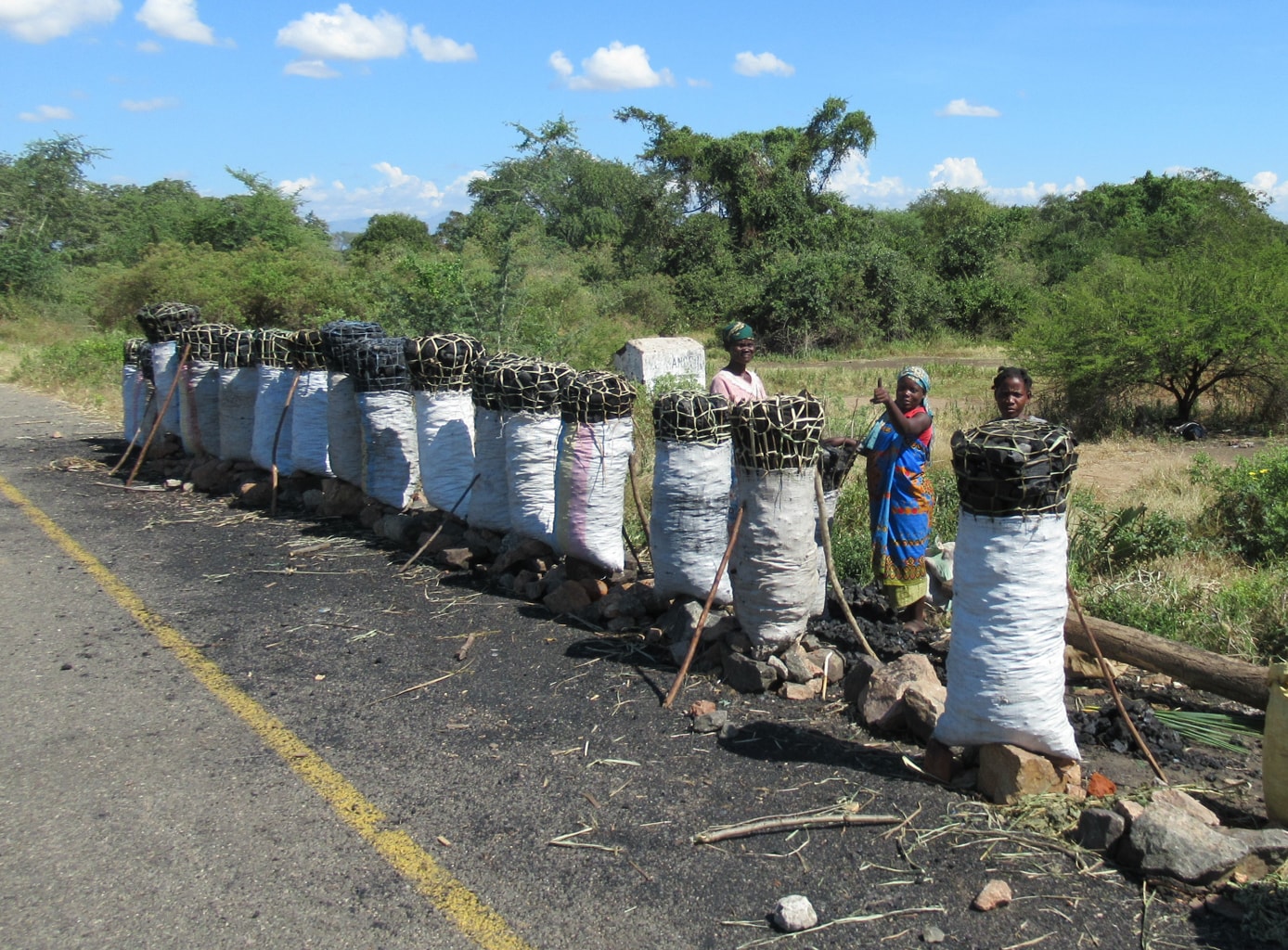
There is a lot of deforestation with daily encounters of bikes laden with firewood and roadside bags full of charcoal. One bag sells for about AUD5. Someone stands there all day, day in, day out, waiting for a sale.
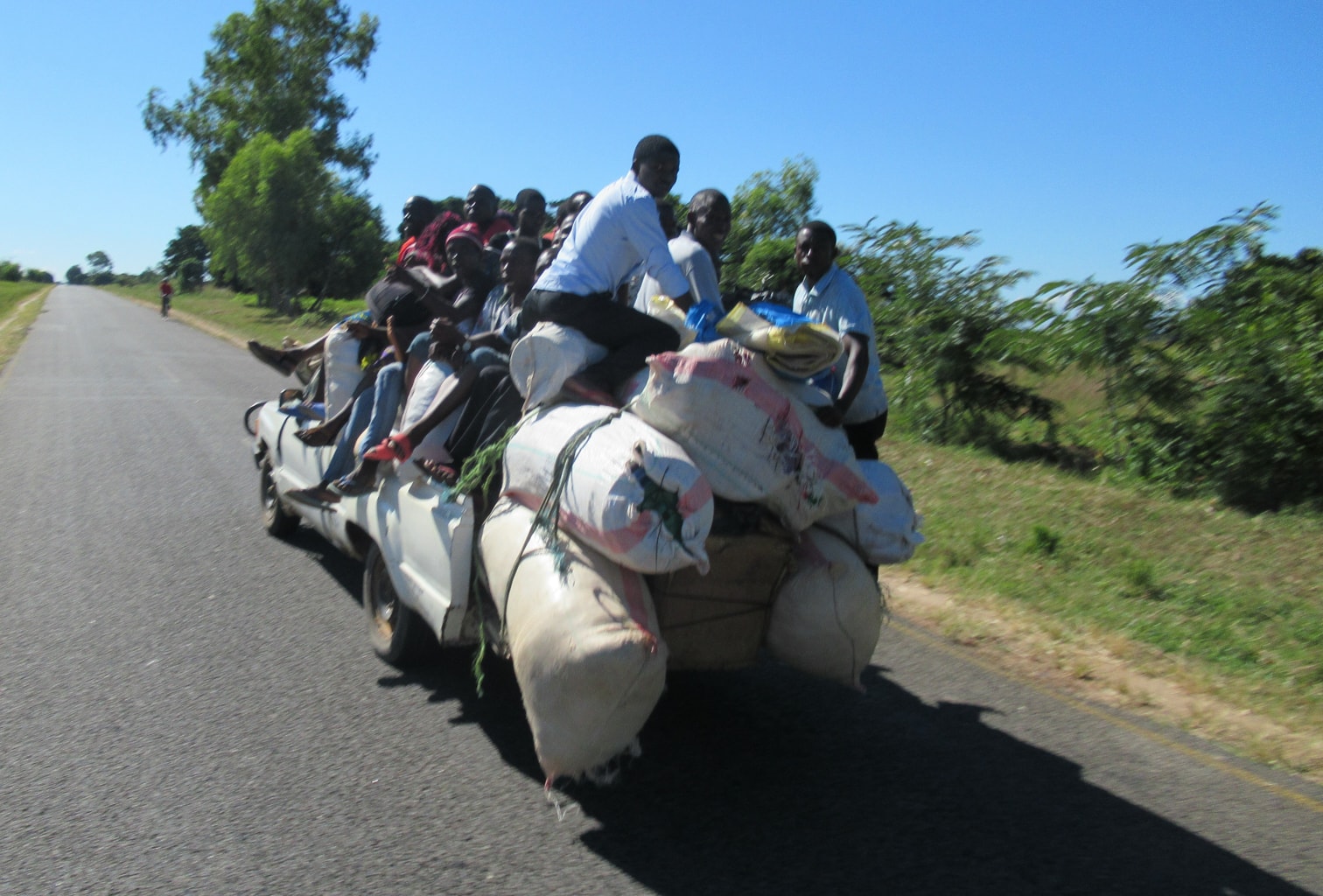
There are very few motor vehicles out in the country. Walking and cycling predominate. The occasional ute tends to be heavily overloaded.
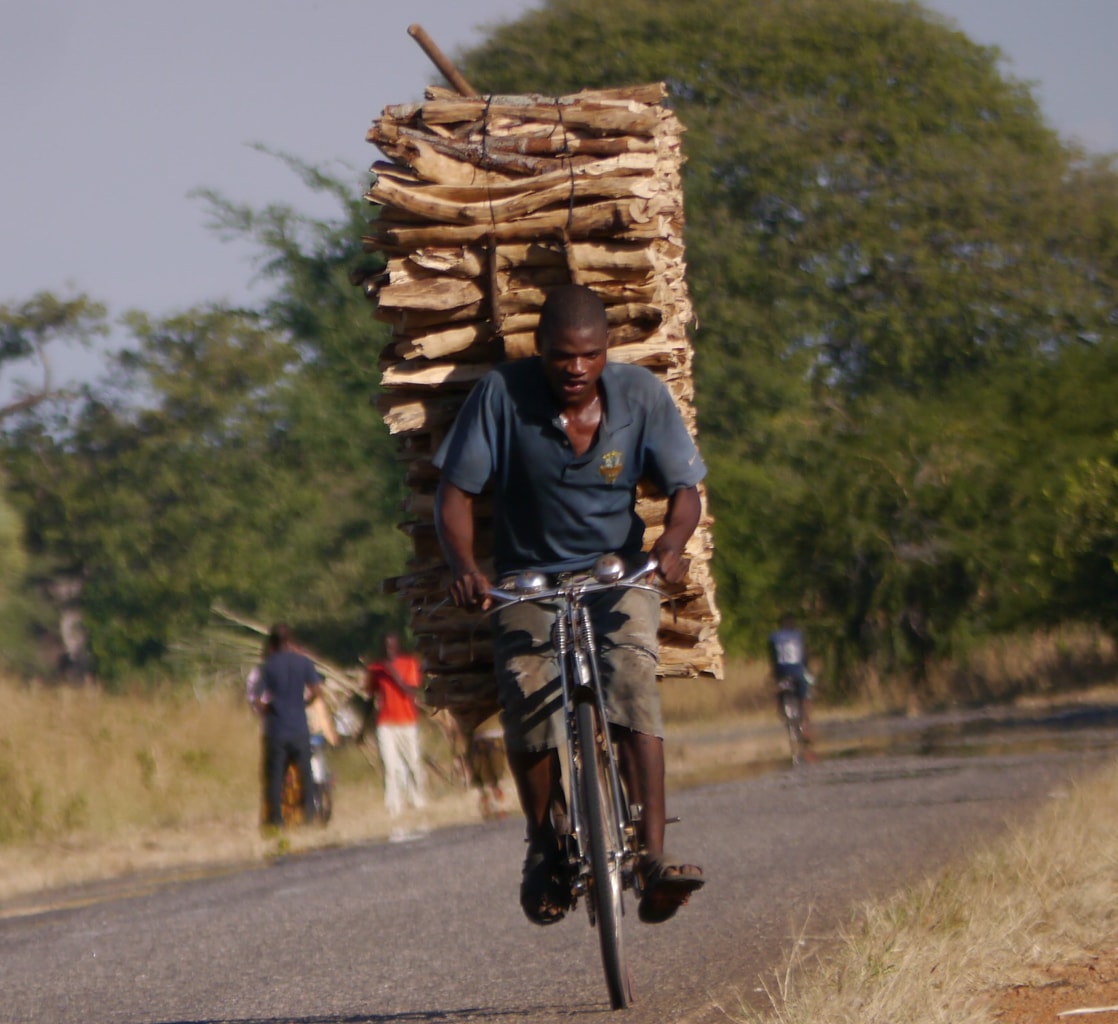
The size of the loads of wood on the bikes is amazing. This one is 16km south of Salima heading all the way to Salima. Imagine the energy needed to do this, day in, day out.
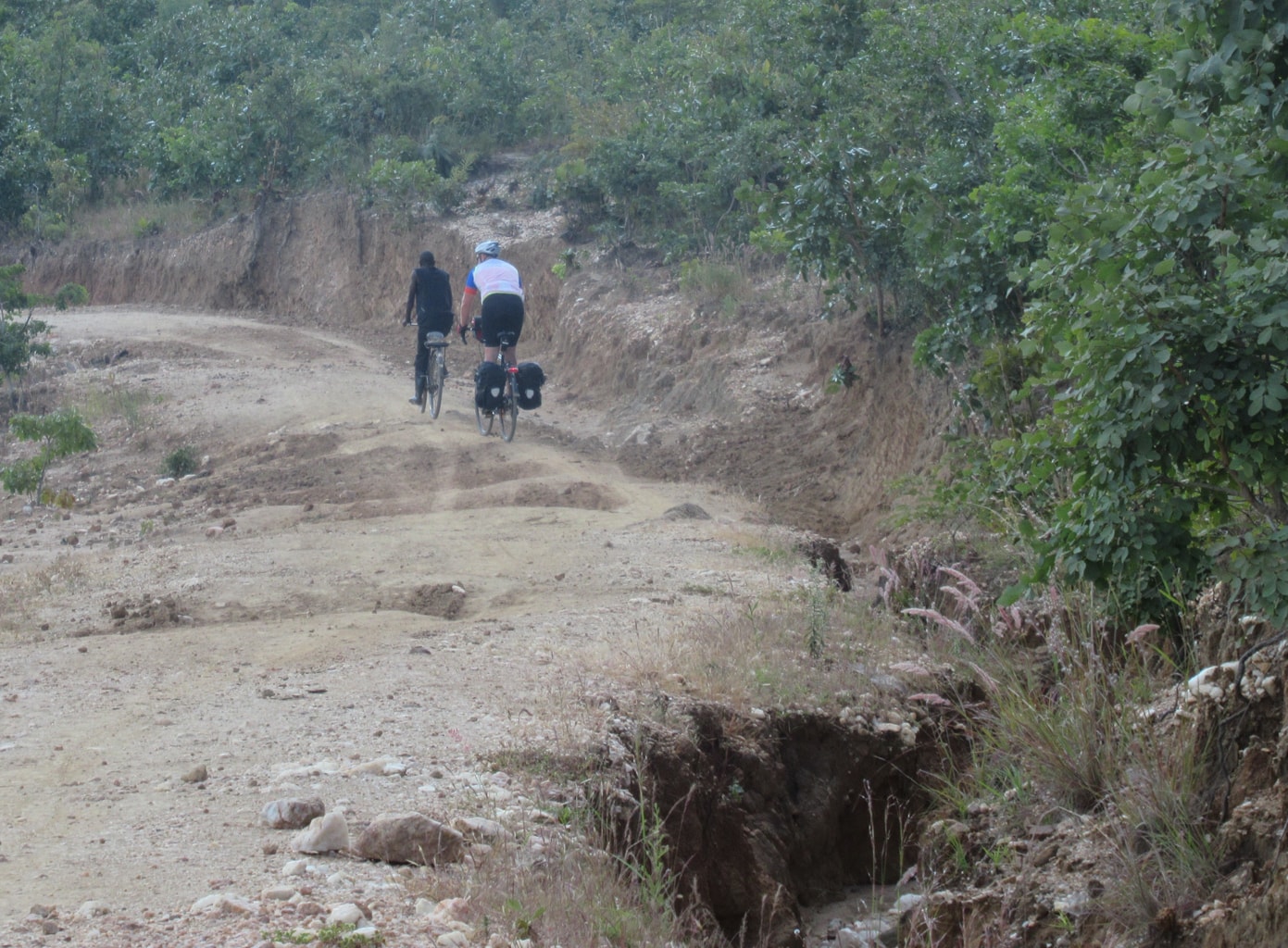
The bush track to Mzimba. In several places it would be impassable for a 4WD. Again, bicycles rule.
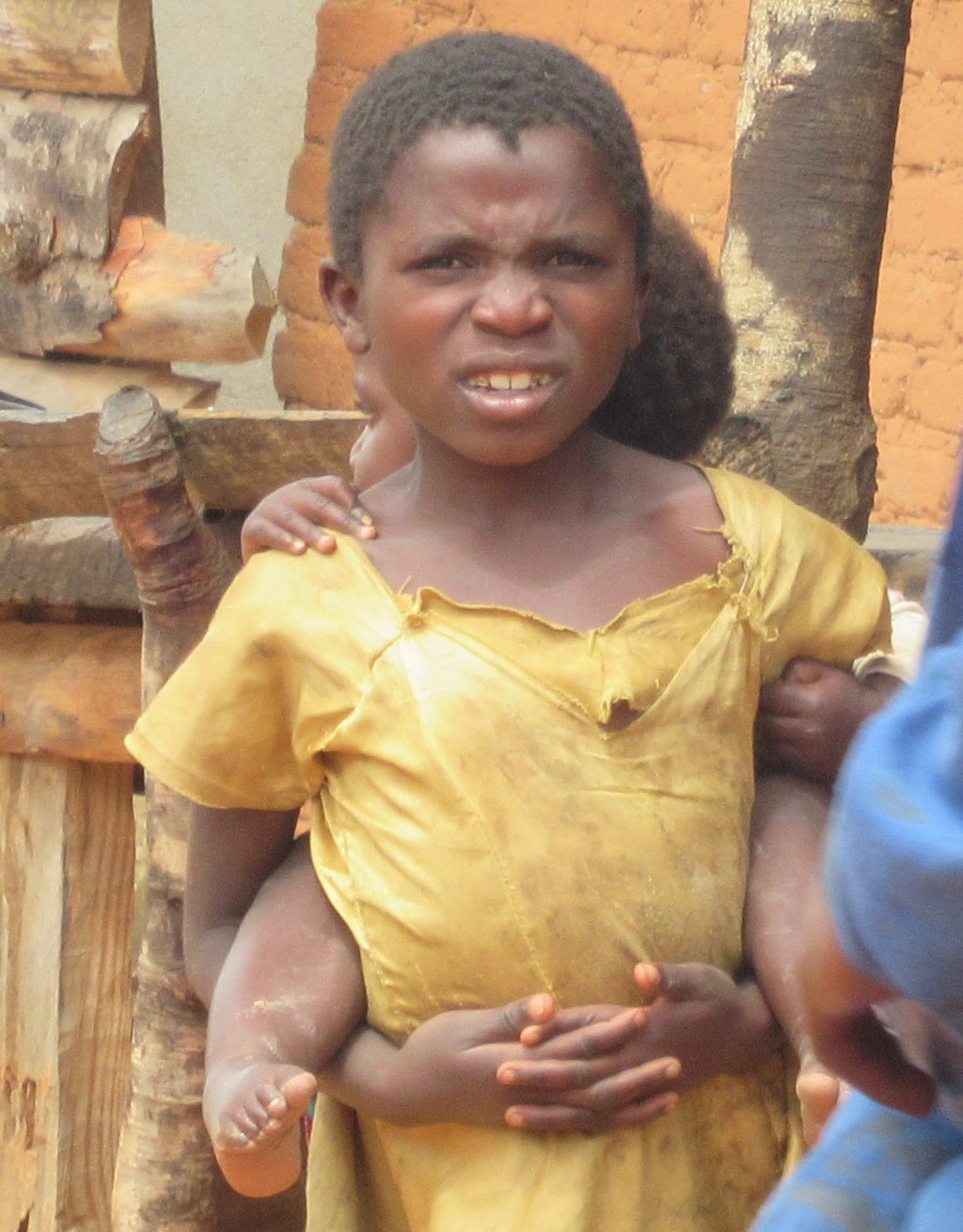
Girl with child at Chikongawa.
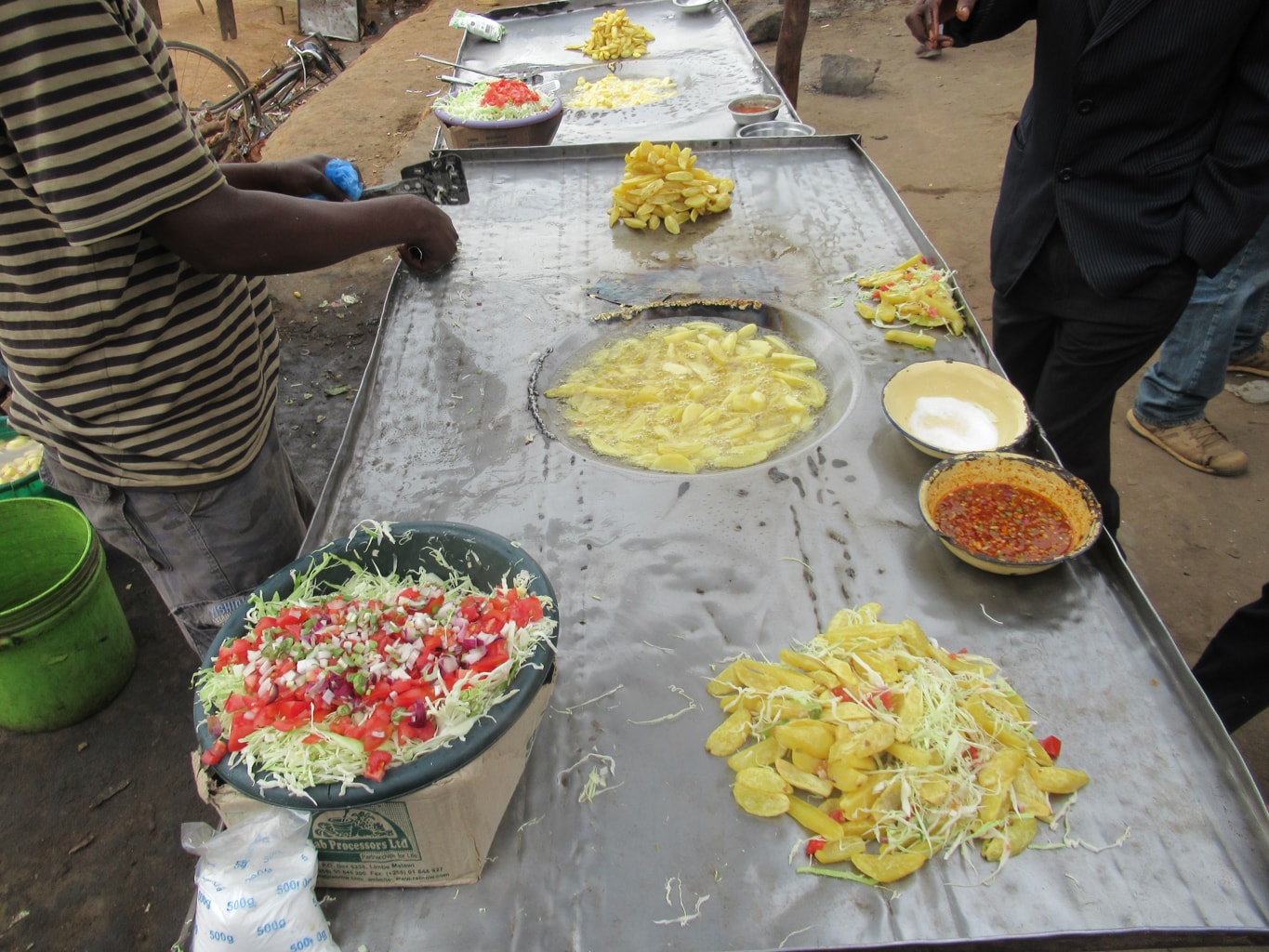
We often struggled to find street food. Deep fried potato is quite common. This is the early morning offering. There is a fire under the middle depression. Cooked chips are placed in a pile on the side and a little chopped cabbage is added. You stand there, eating with fingers and dip the chips in salt and chilli.
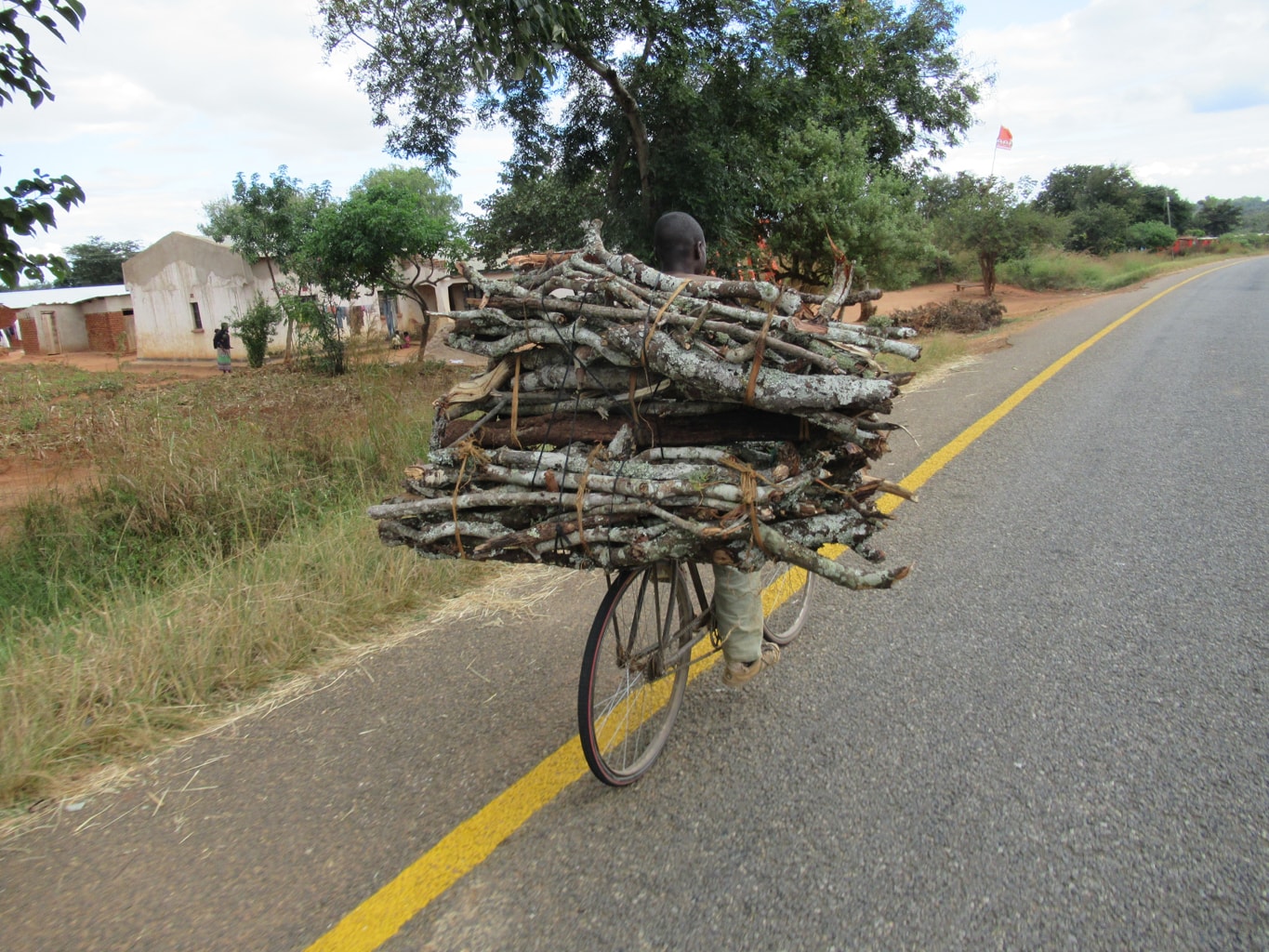
On a good stretch of road another load of wood. We probably passed 50 like this per day.
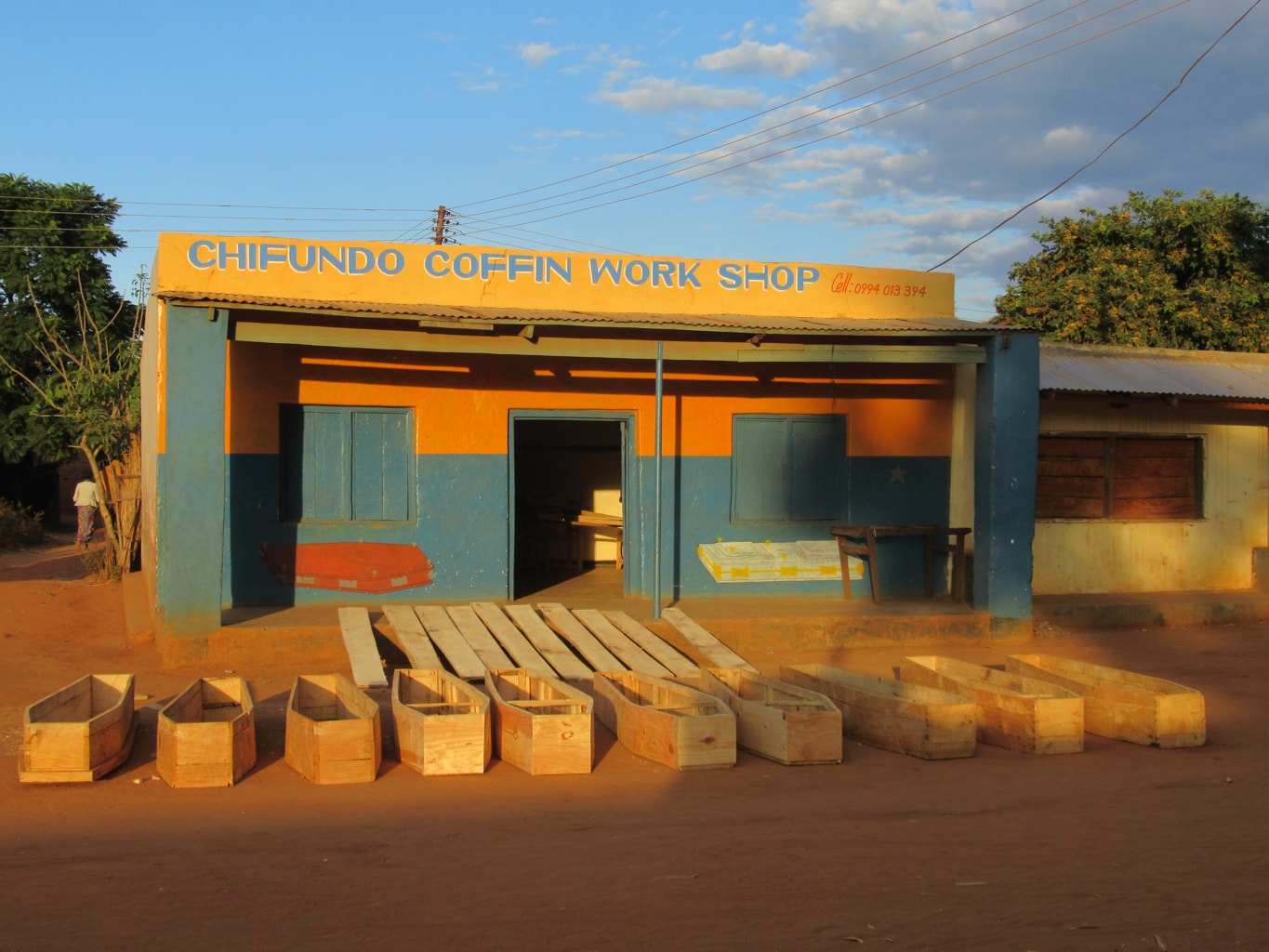
I have never seen so many coffin makers as in Malawi. At least three a day. Life expectancy ranking is 170th in the world. The number 1 cause of death is HIV/AIDS. The number 7 cause is malaria.
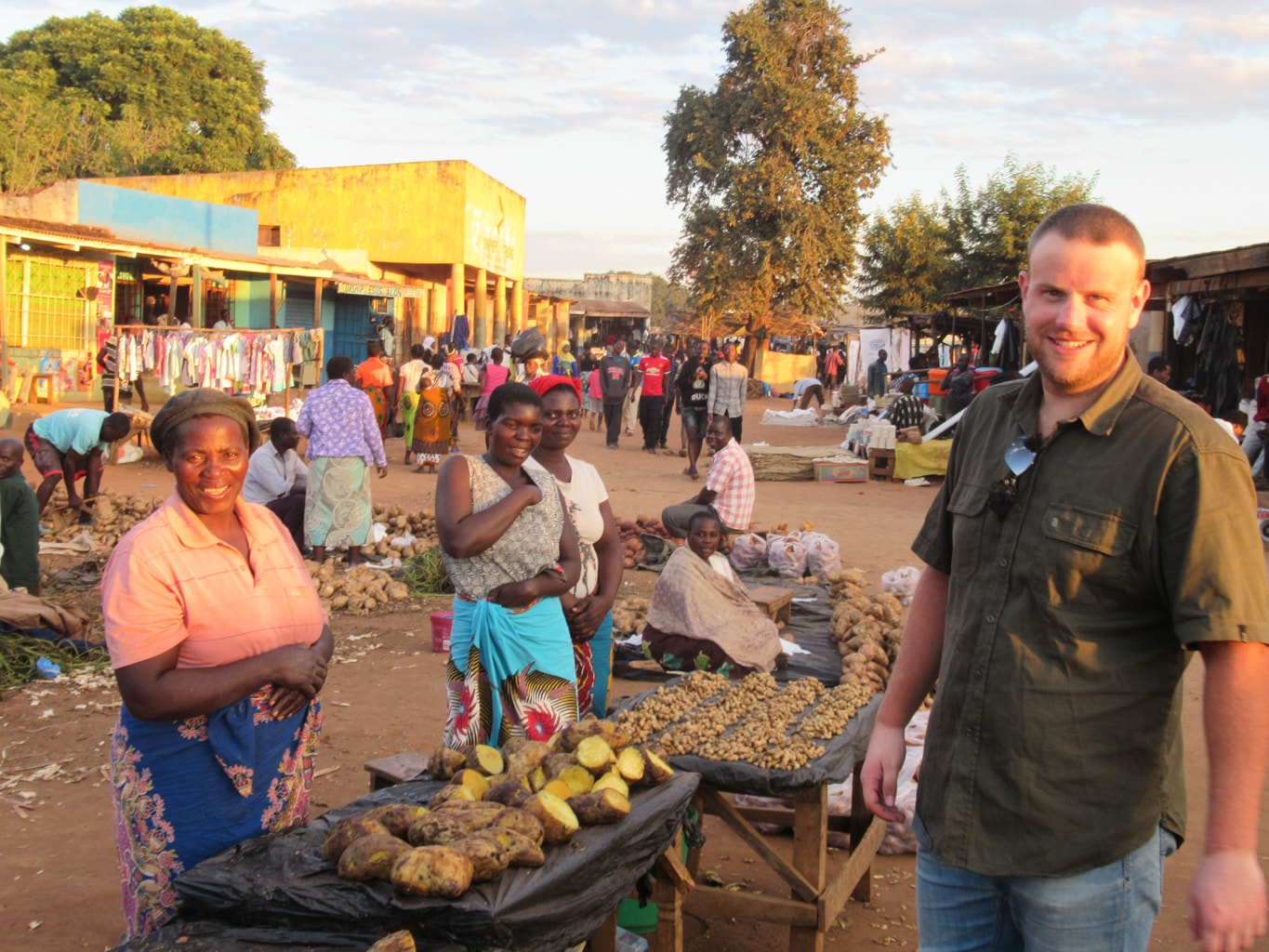
A lighter moment. Lachlan in the market in Madisi.
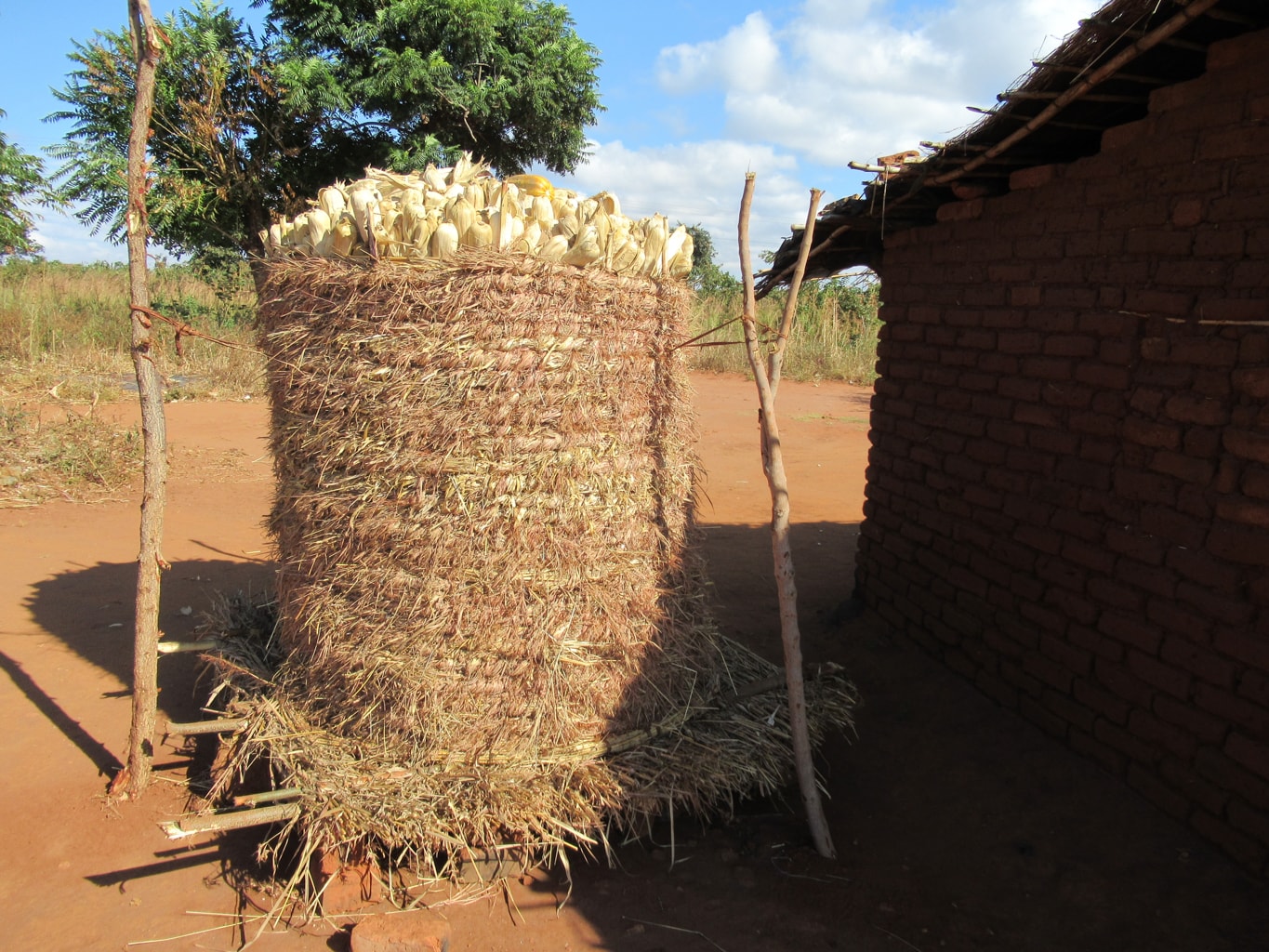
Typical corn storage made from interwoven stalks and leaves. Actually, here its called maize. This is by far the most common grain in Malawi.
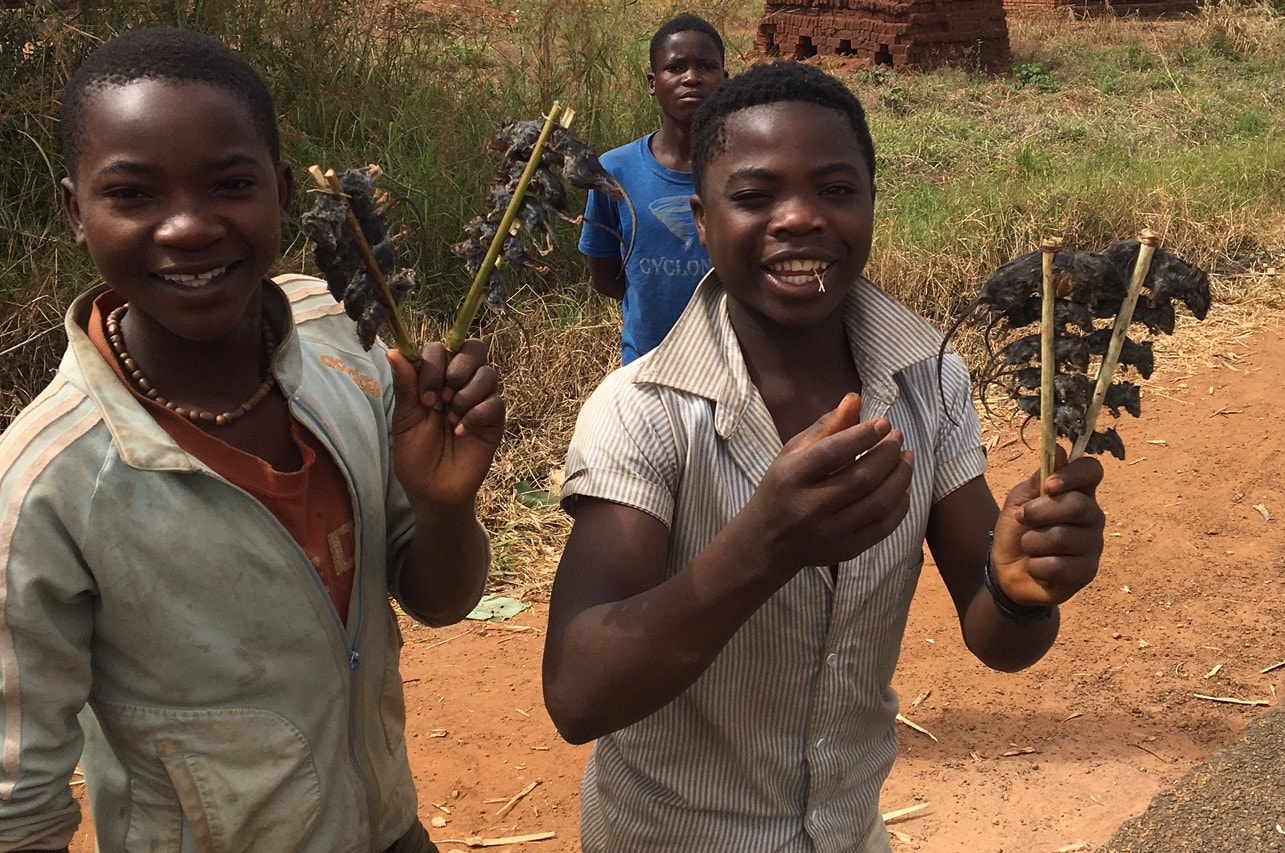
Mice. To us it is poverty food but to the hungry it is a treat to be eaten whole. This is common along the M1.
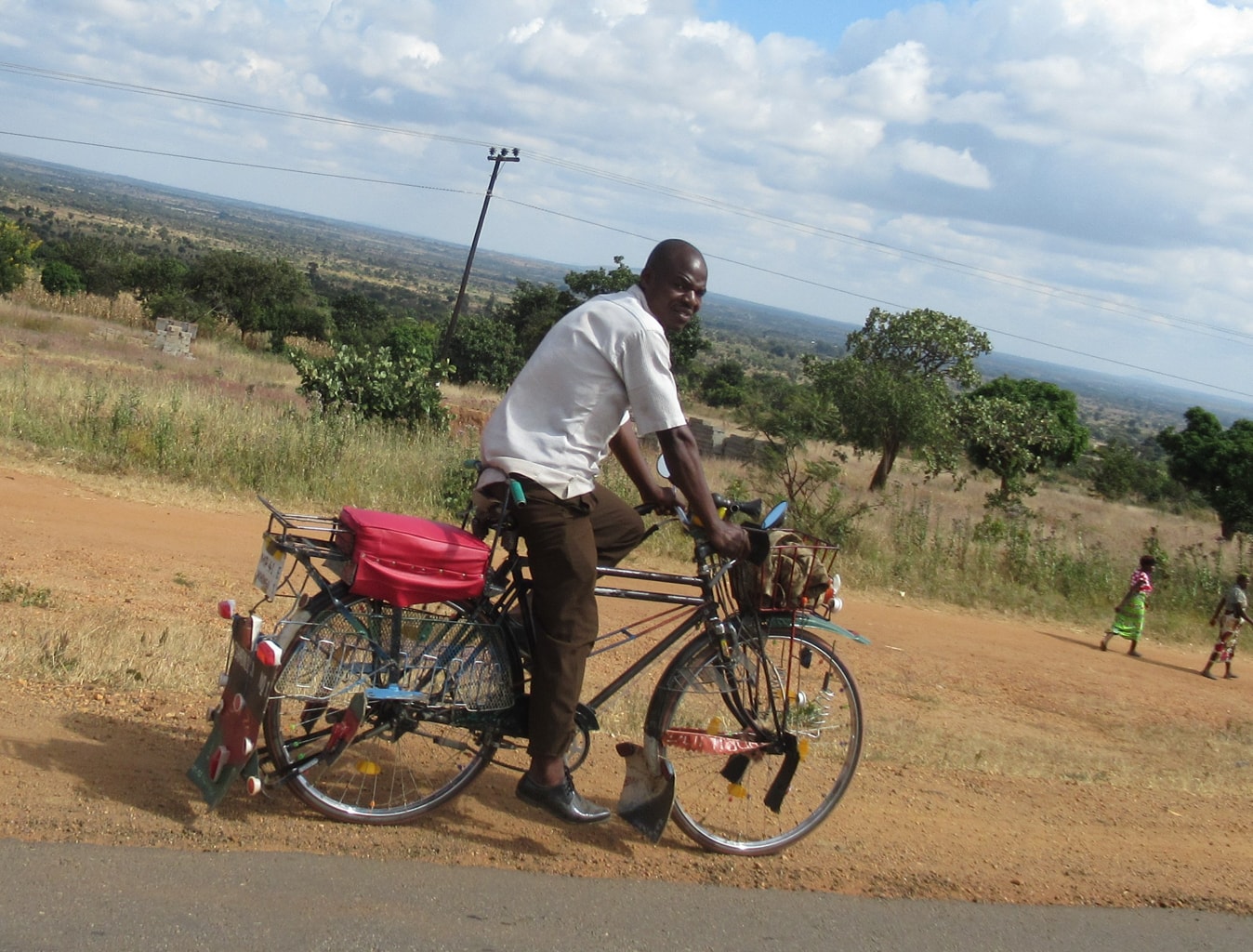
The incredibly tough local bike as transport for passengers and goods. Notice the double top tube, the mixte stays, the big mud flaps, the double mirrors, foot rests, skirt net and single slip sprocket. These cyclists are as tough as nails and we were in awe of them.
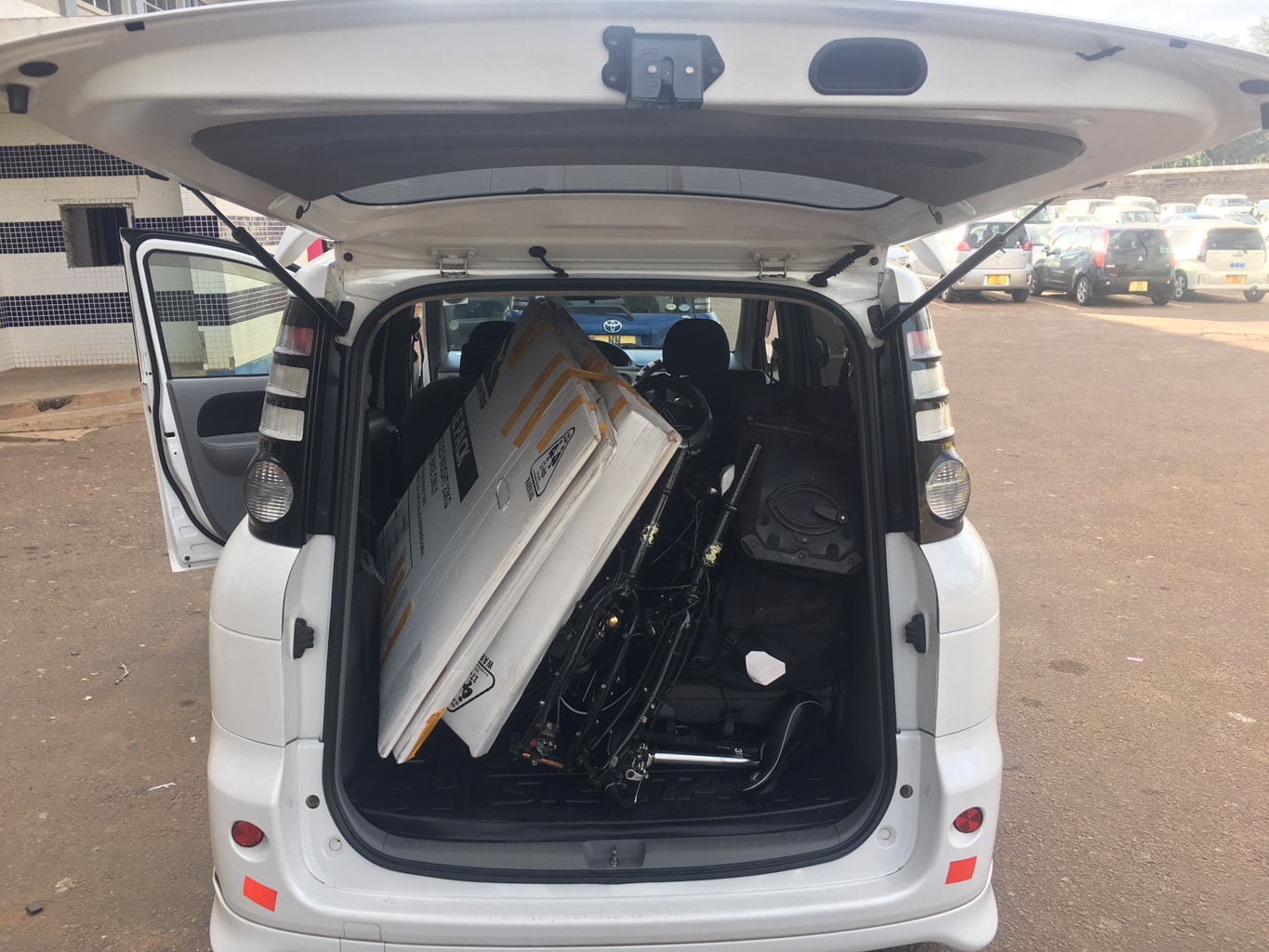
Unable to carry the cartons ourselves and unable to fit the two packed cartons in the small local vehicles, plus having the two of us to fit in, we got it all in one trip to the airport by preparing the bikes and folding the cartons like this. It has been an unforgettable bike tour.
A ride from Zurich south west trough Switzerland to Geneva and then down to the Med trough Grenoble and Provence to finally ride along the coast from St Raphael through Cannes to Nice.
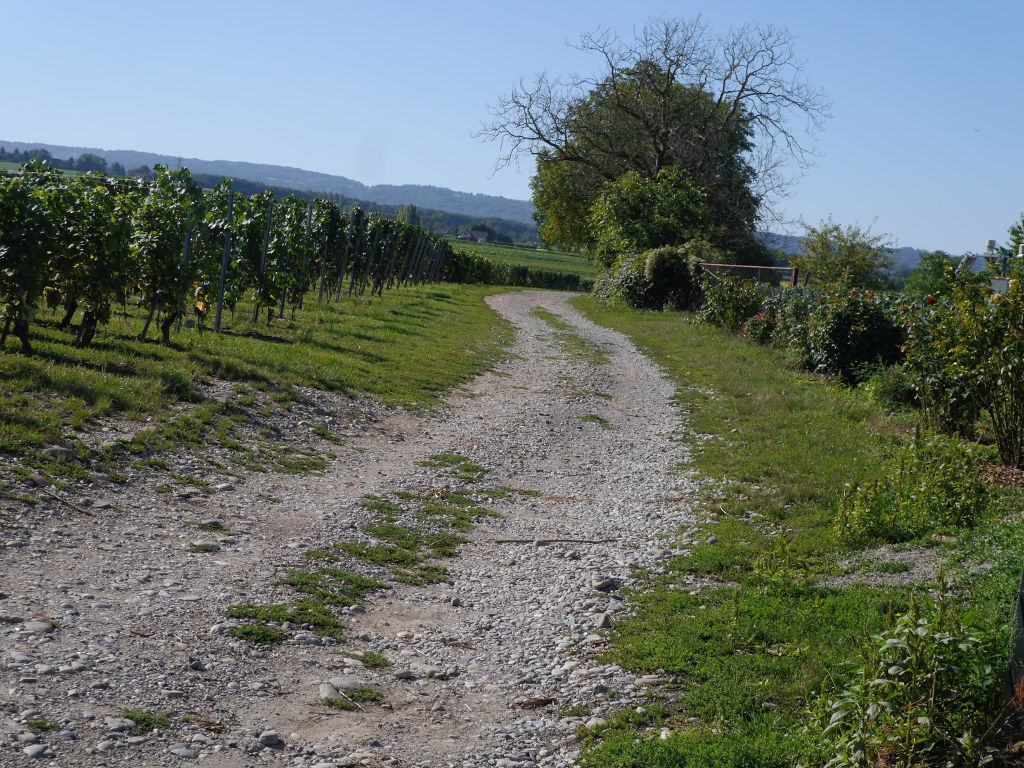
In this part of the world, in Google maps, the “Cycling” option really works. It makes use of tracks through forests, vineyards and all manner of places.
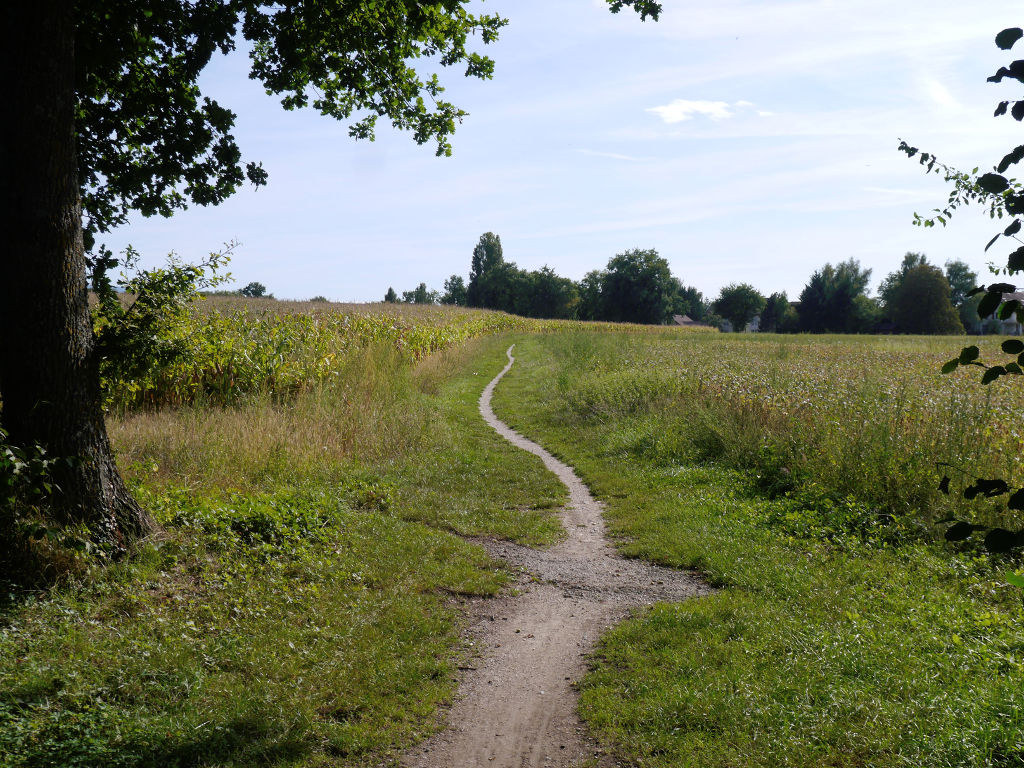
And through cornfields. Relatively narrow tyres are still the best choice as long as they are still protected against punctures. These tracks are usually well worn by cyclists.
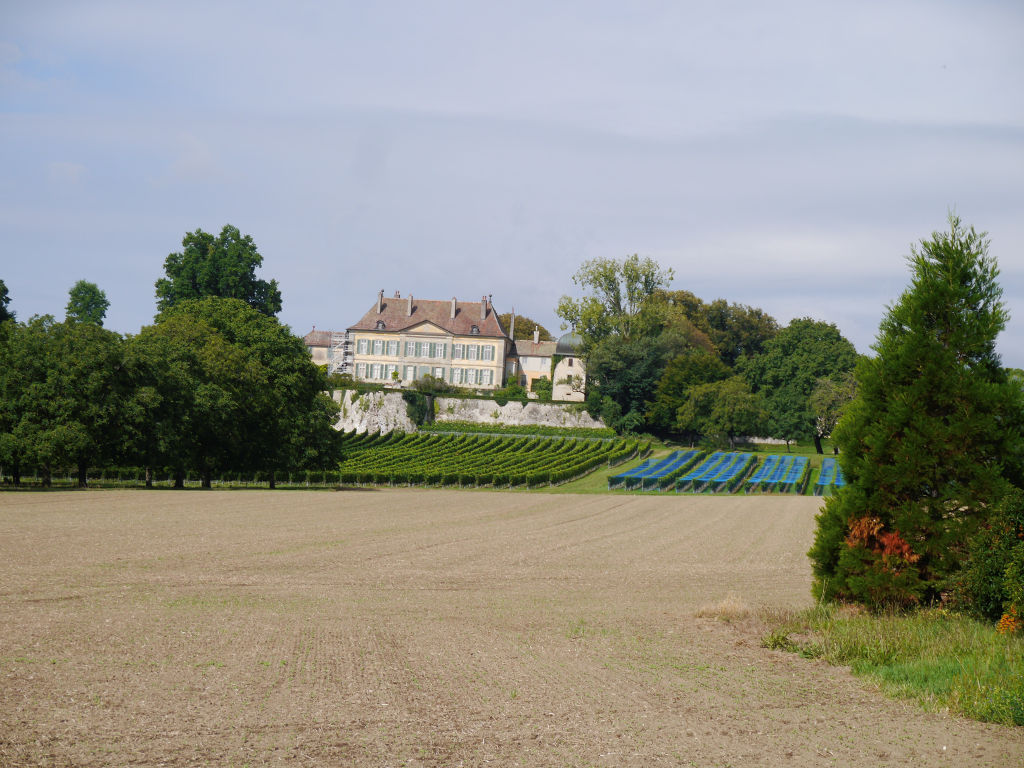
The scenery in Switzerland is unbeatable. Today it changed from German flavour to French flavour, all in the space of 20 km.
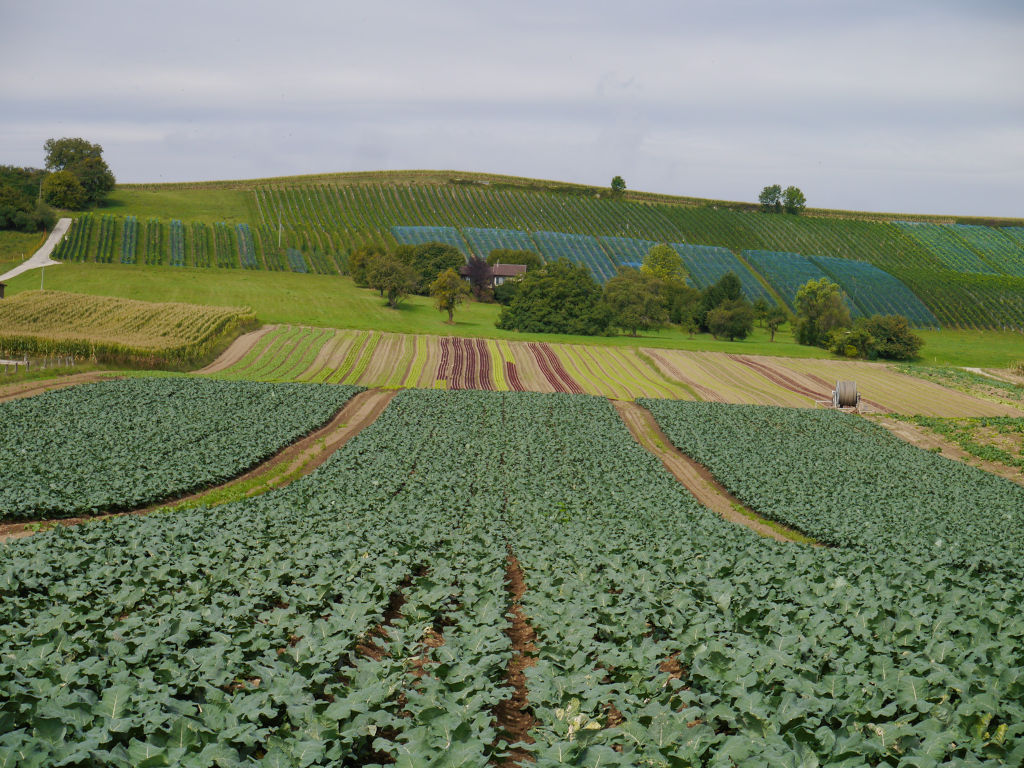
Super rich farmland with vegetables going very well without any irrigation.
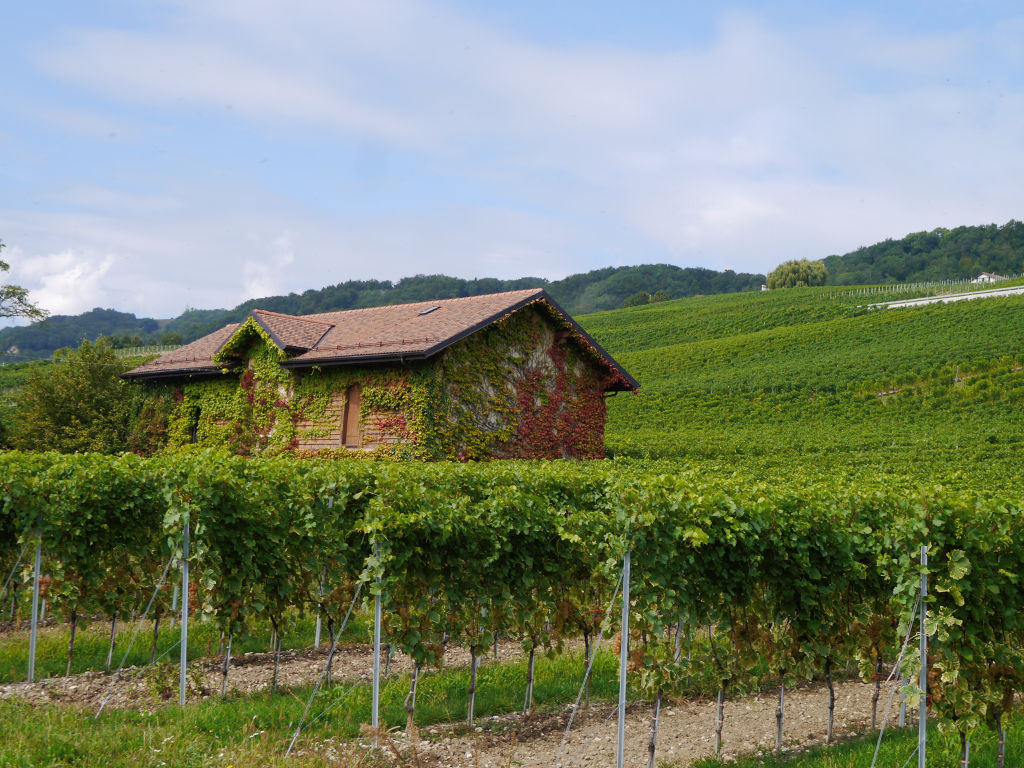
Wine grapes are just days off being ready. The west of Switzerland is a stunning region and excellent cycling routes there are easy to find.
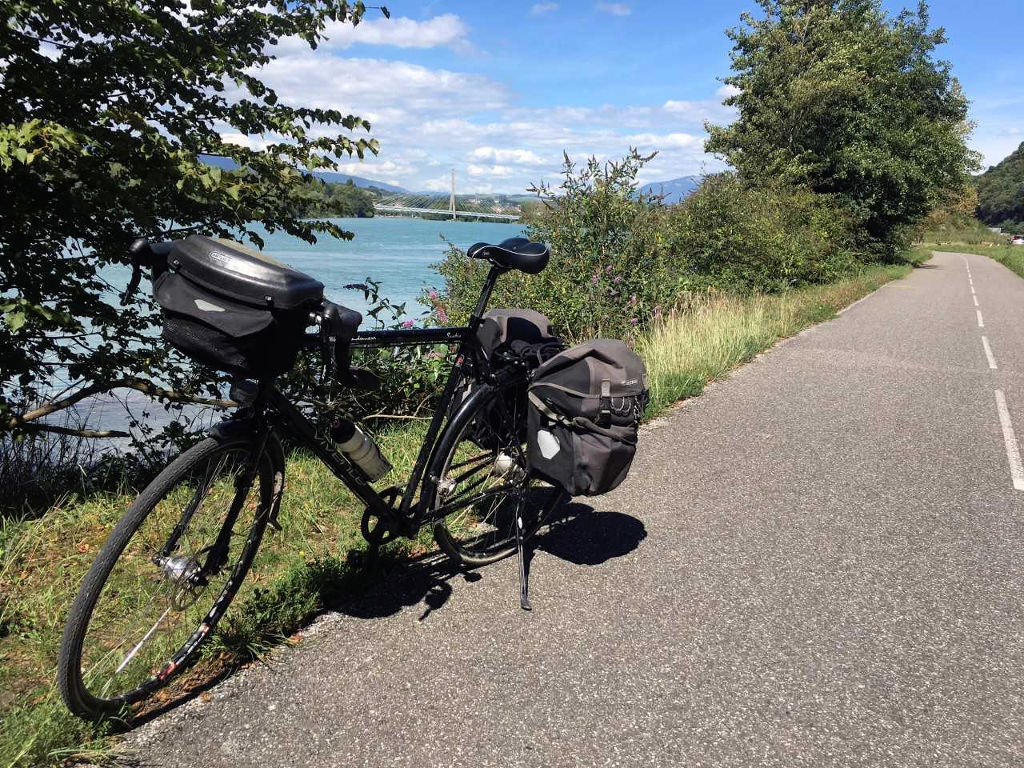
We are in France now and most of the day on the Rhone. For 30km I ride with a local bunch of old roadies. I say ‘old’ (they were in their 70’s) as I could not keep up with young roadies. I have luggage. Their leader is on an e-bike!
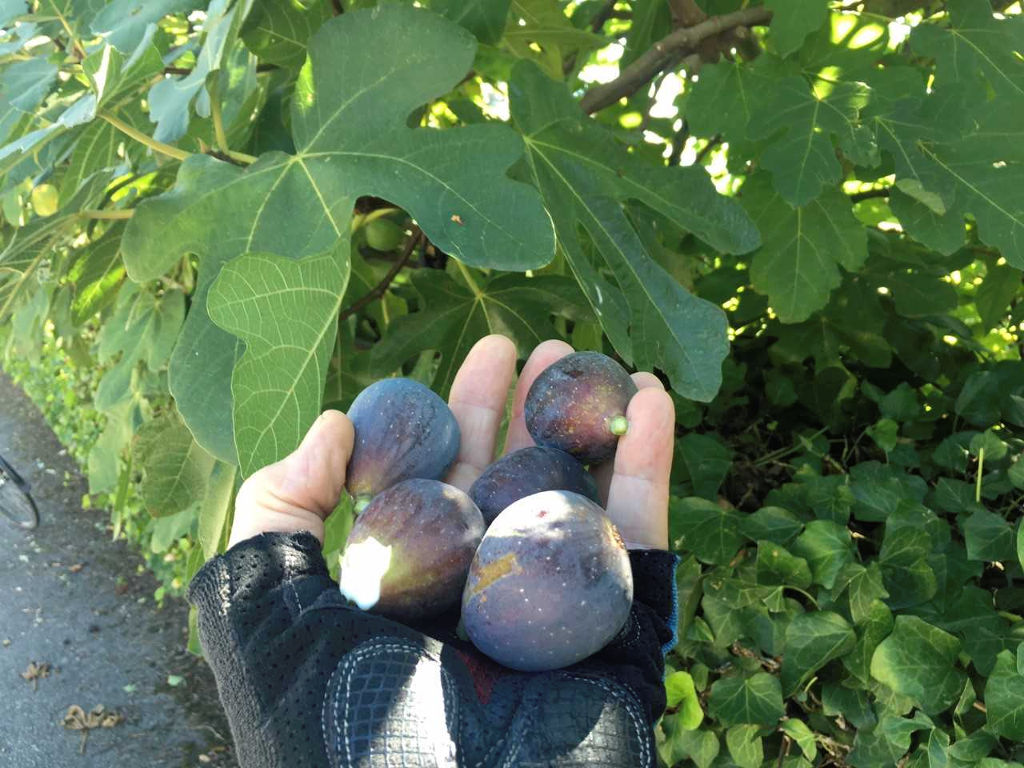
What greater pleasures are there then picking ripe fruit from the side of a bike path? Heading south I am speeding up the arrival of Autumn.
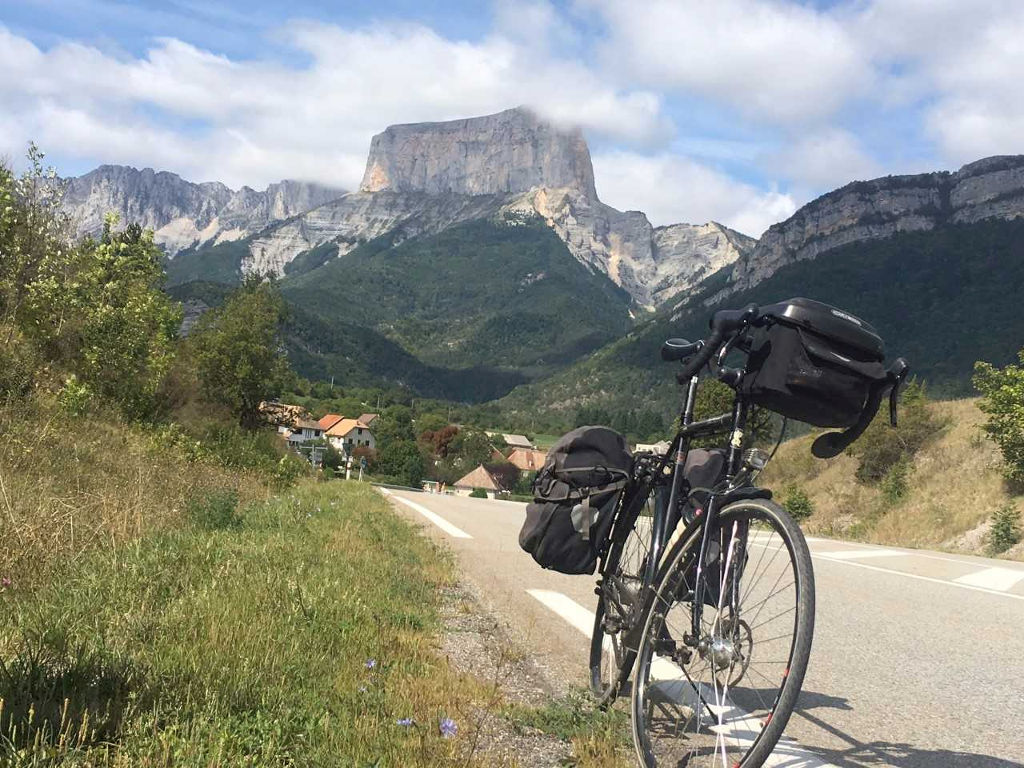
South of Grenoble the country becomes really stunning.
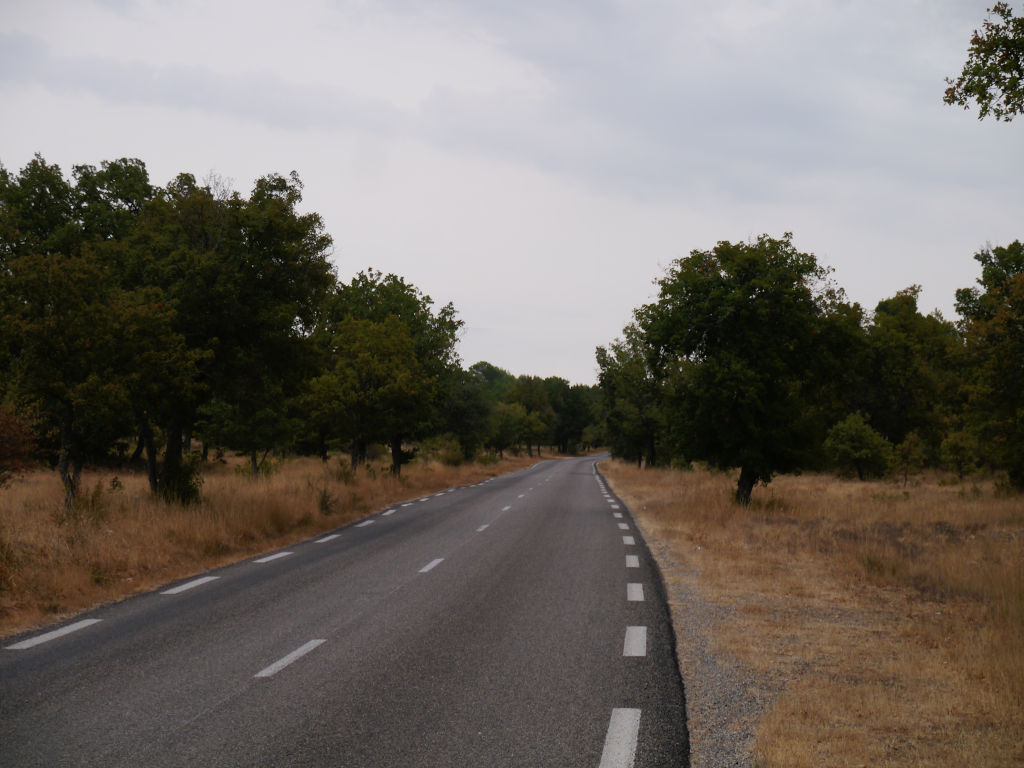
Now in Provence. This is a region to come back to. Beautiful roads in beautiful country.
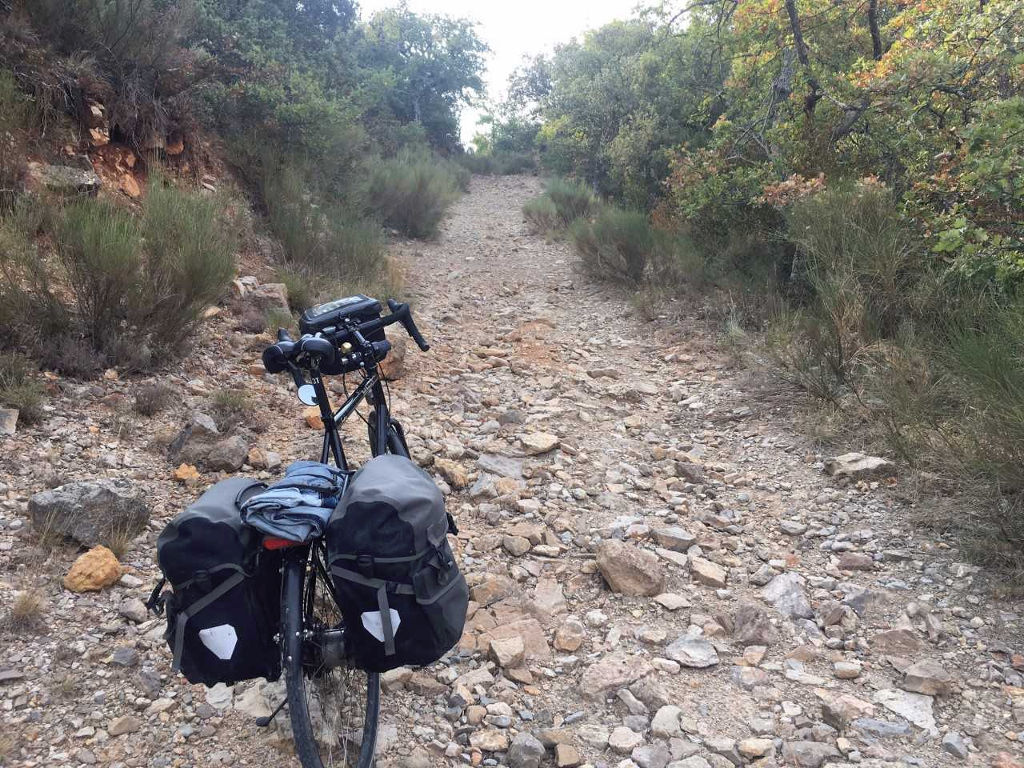
Sometimes Google maps assumes we are up for anything. This particular section is better done walking I think. But once up there I am so glad I have come this way.
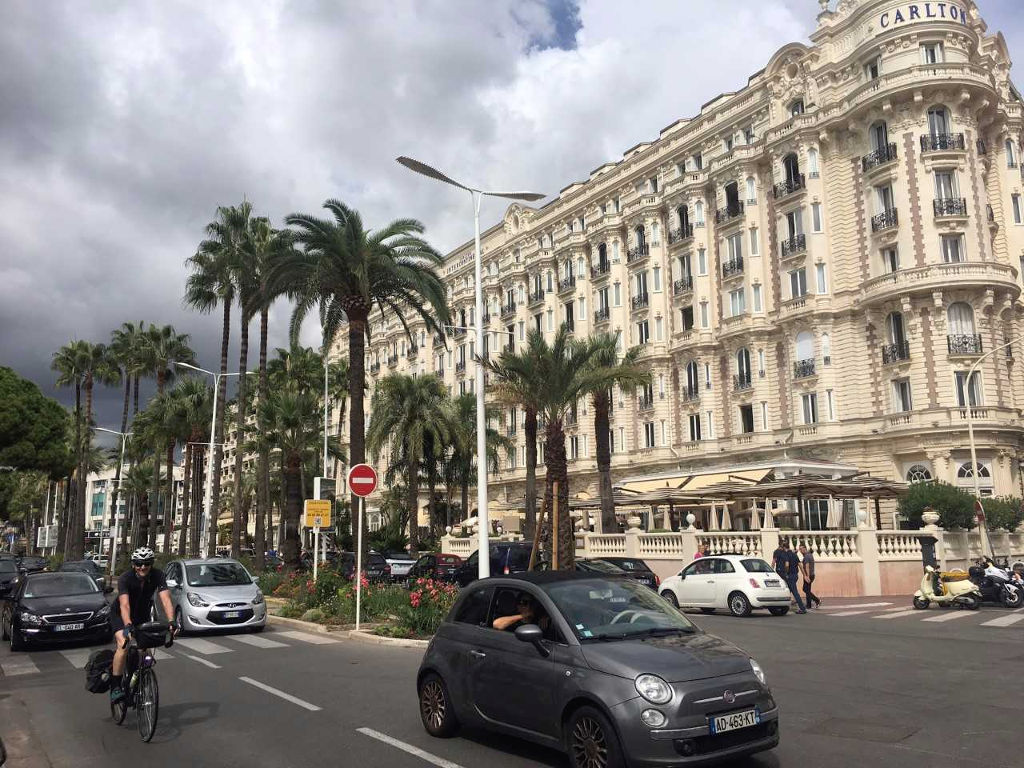
Down on the coast now, I come through Cannes. This whole coastal area is stunning.
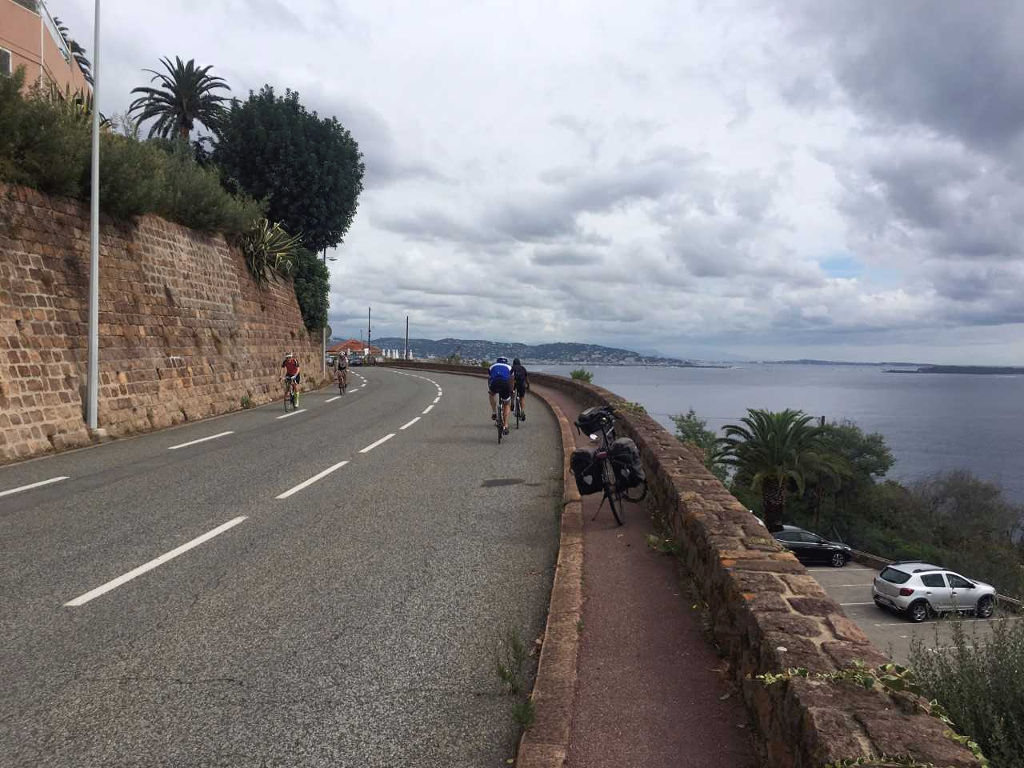
After staying in an Airbnb in St Raphael, it is Sunday morning and I ride up the coast. Cycling central. There are thousands of riders out.
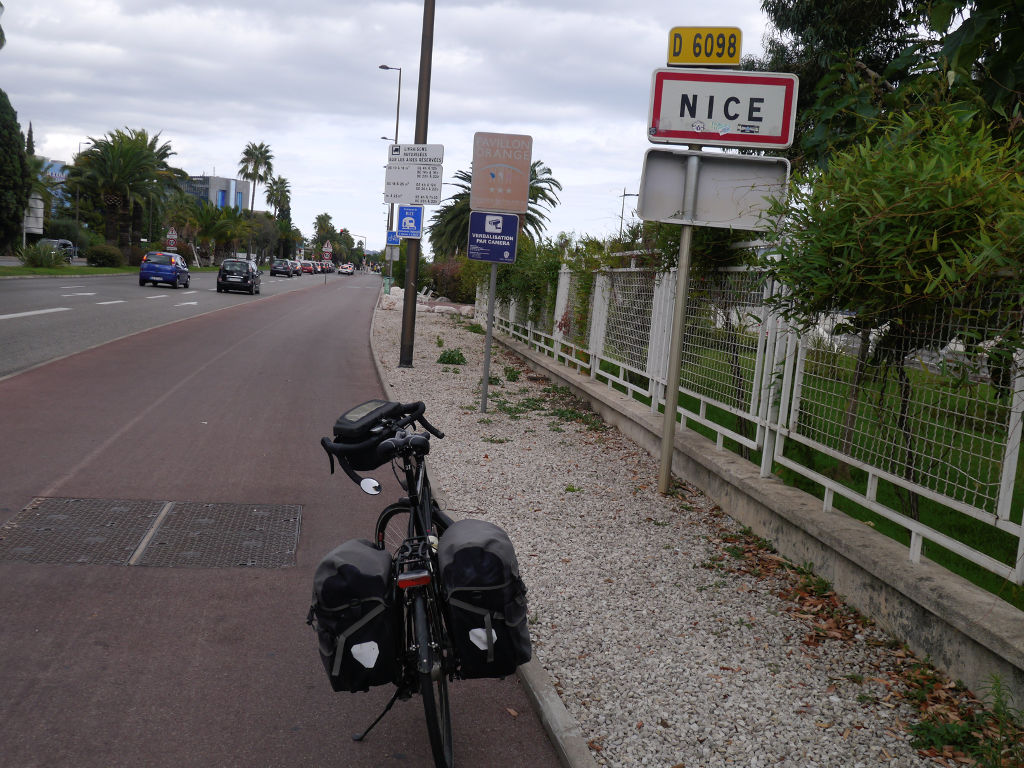
Arriving in Nice. Just near this spot I go into the airport to check. No. No cartons right now. They are restocked on Wed, the day after I fly out.
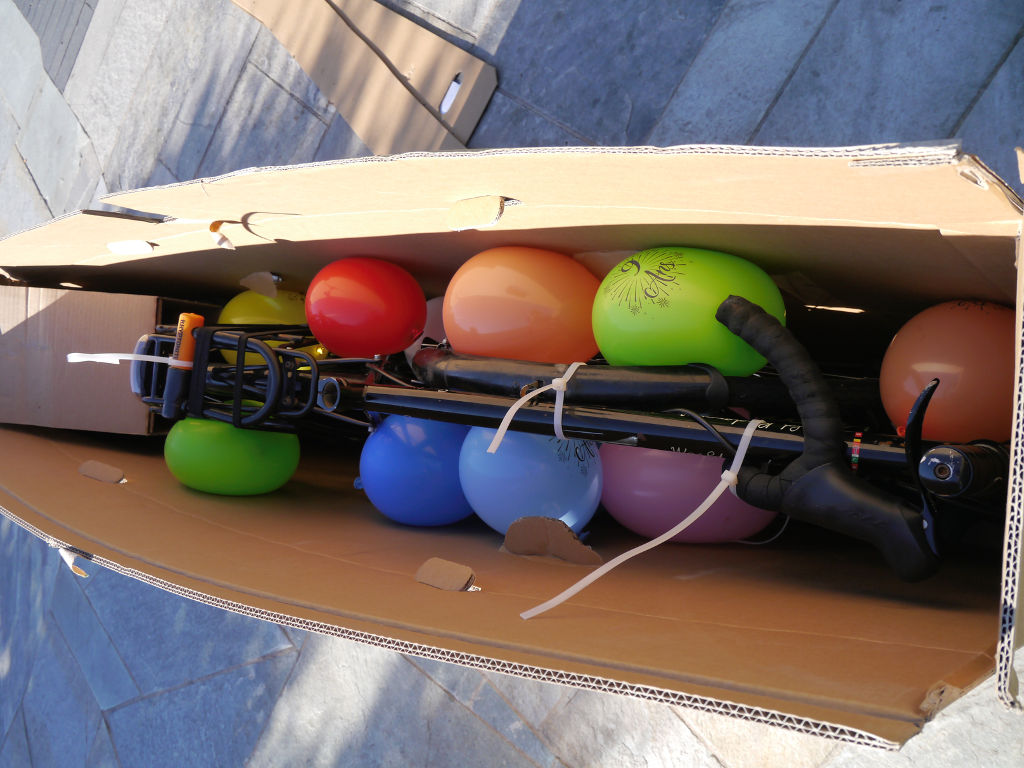
Undeterred I get a carton at a bike shop. I try out the balloon packing system someone told me about. Thumbs up for that.
A two week urban tour of one of America’s, indeed the world’s, great cities. The ride was timed to include the NYC Century, a 100-mile ride, organised by Transportation Alternatives (TA) that attracts thousands. It also included a four-day ride in Boston. It is very difficult to take your bike on the train so, on the Boston city tour, I used their public bike share system.
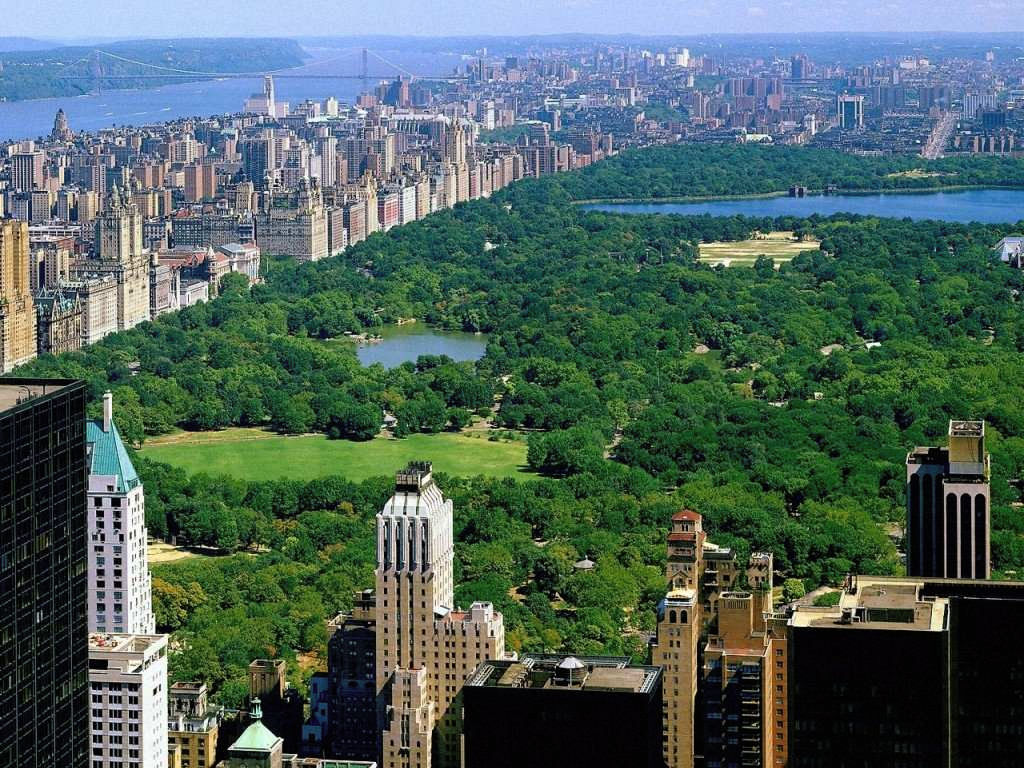
Central Park is a great place to start cycling in NYC. It’s big and it is central. Over in Brooklyn, Prospect Park is also very good.
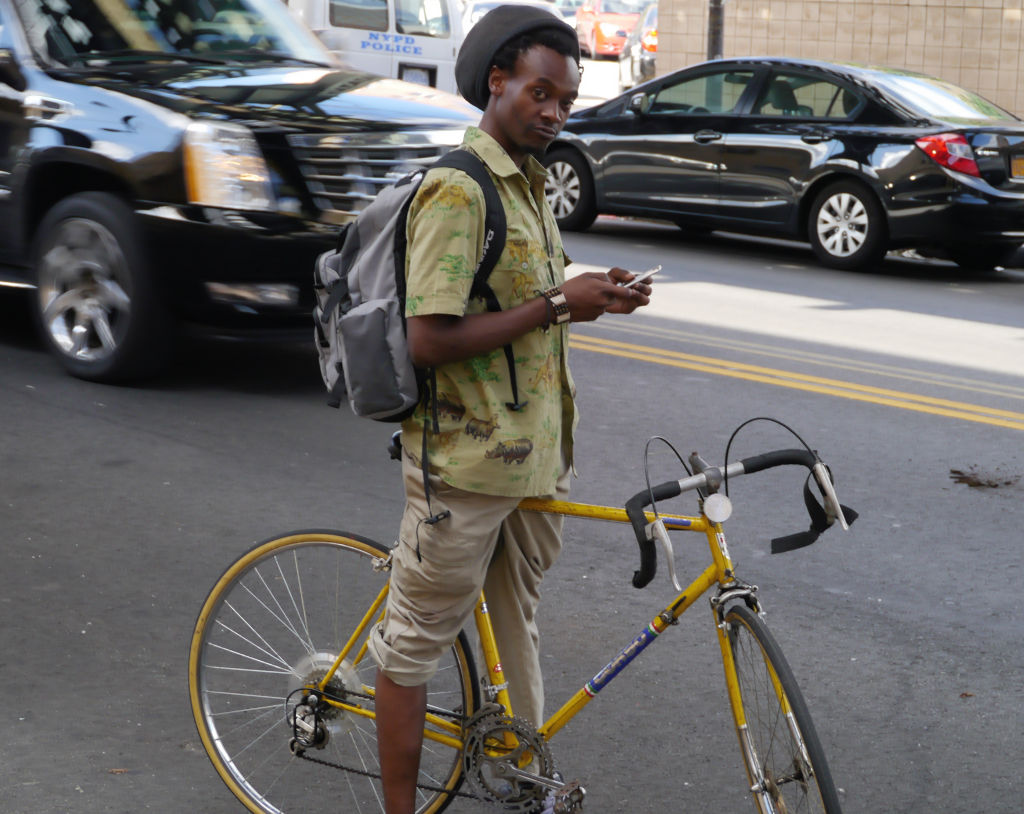
Venturing out onto the streets you soon find yourself mixing it with humanity. There is a great feeling of solidarity amongst the cyclists.
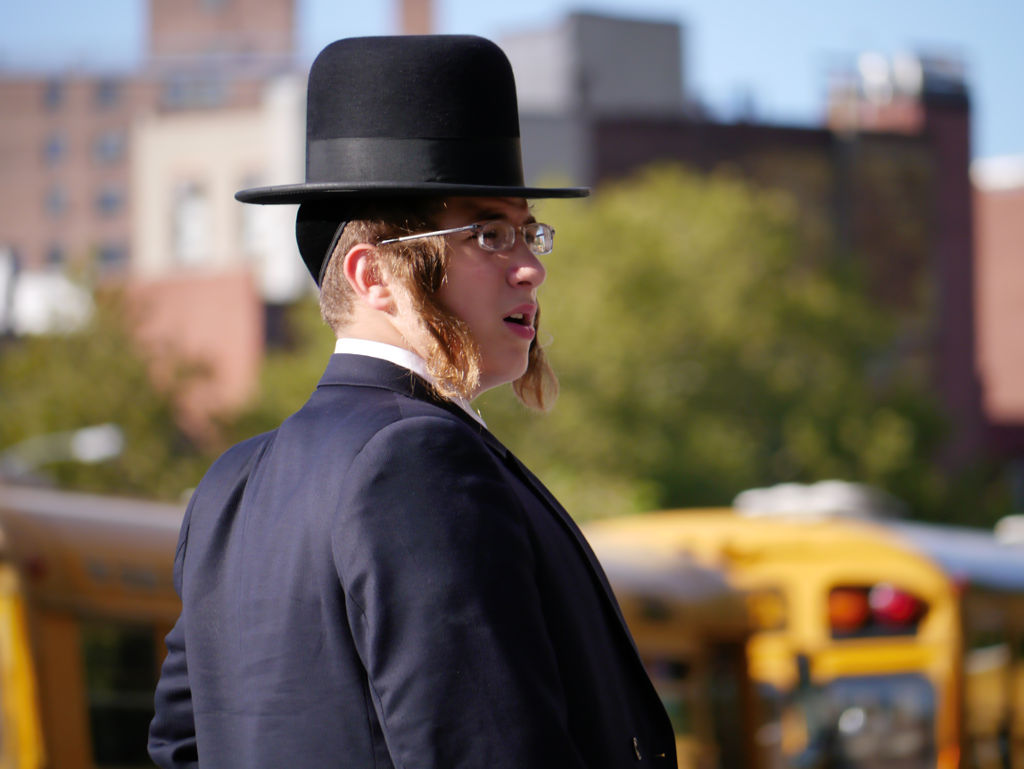
NYC is a city of subcultures. There are areas of Brooklyn where the orthodox Jews resisted the introduction of bike paths that were only white lines painted on the road, by painting them with black paint at night. Their concern was that cycling encouraged immorality due to revealing lycra clothing.
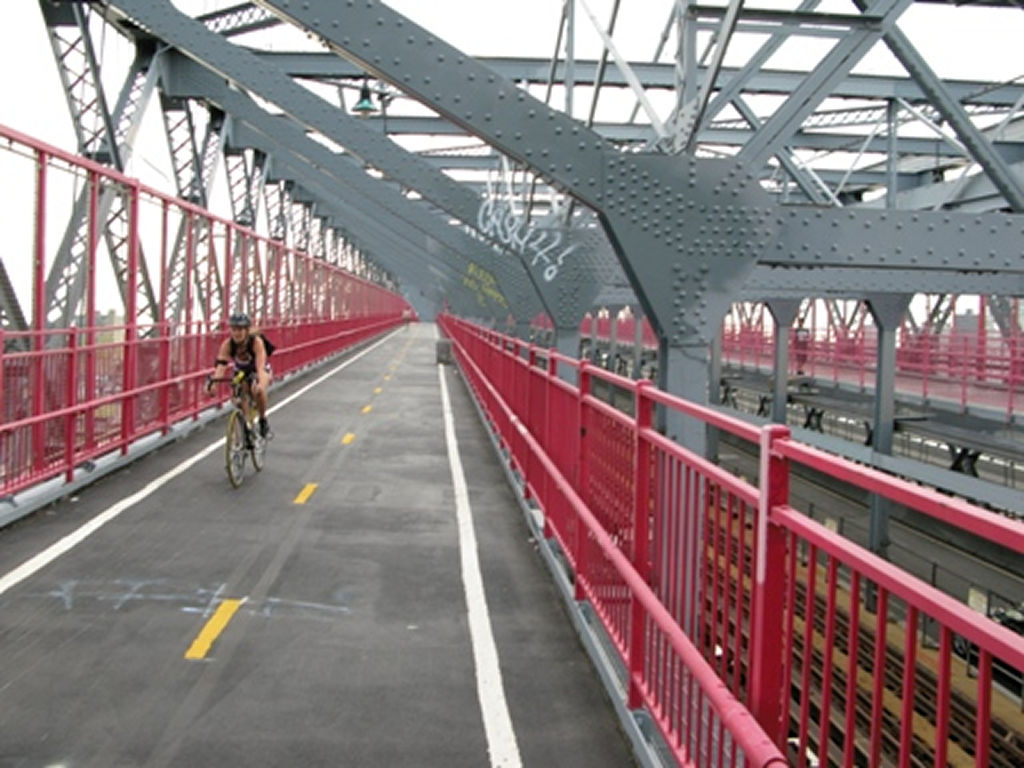
Across the East River, the Manhattan and Brooklyn bridges both have bike paths and carry thousands of bikes a day. Although helmet wearing is not mandatory, in peak hour on these bridges, over 80% wear one.
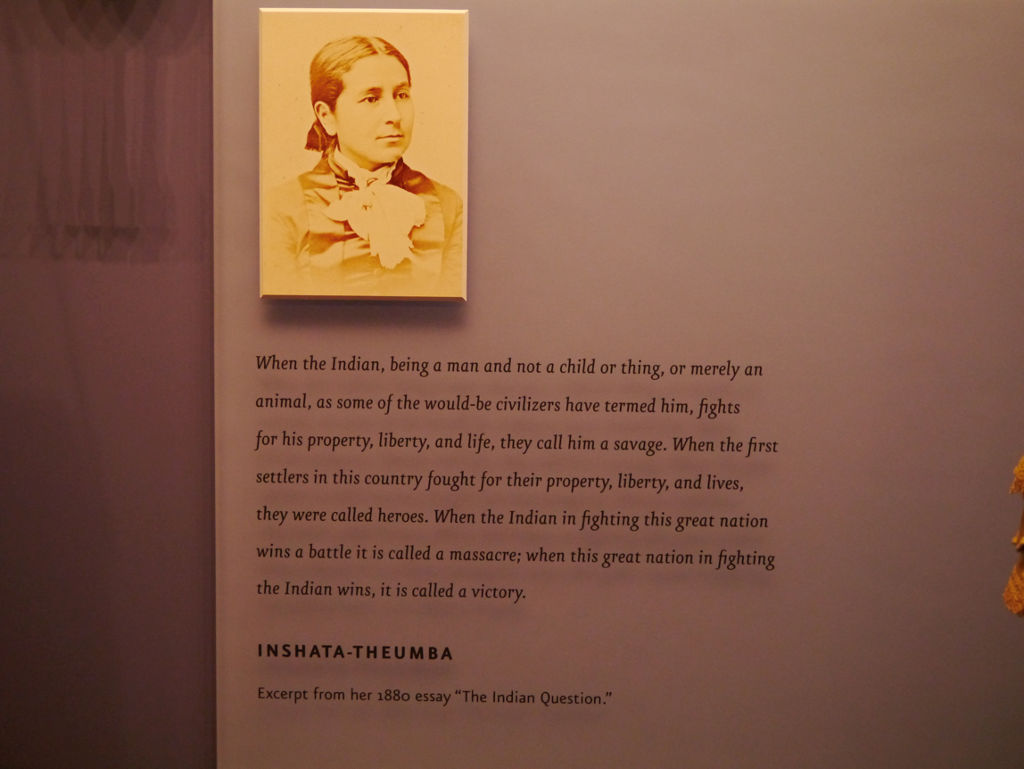
In lower Manhattan at the Museum of Indian History this powerful statement could just have well been written about the plight of Australia’s indigenous people. Where a massacre was called a victory.
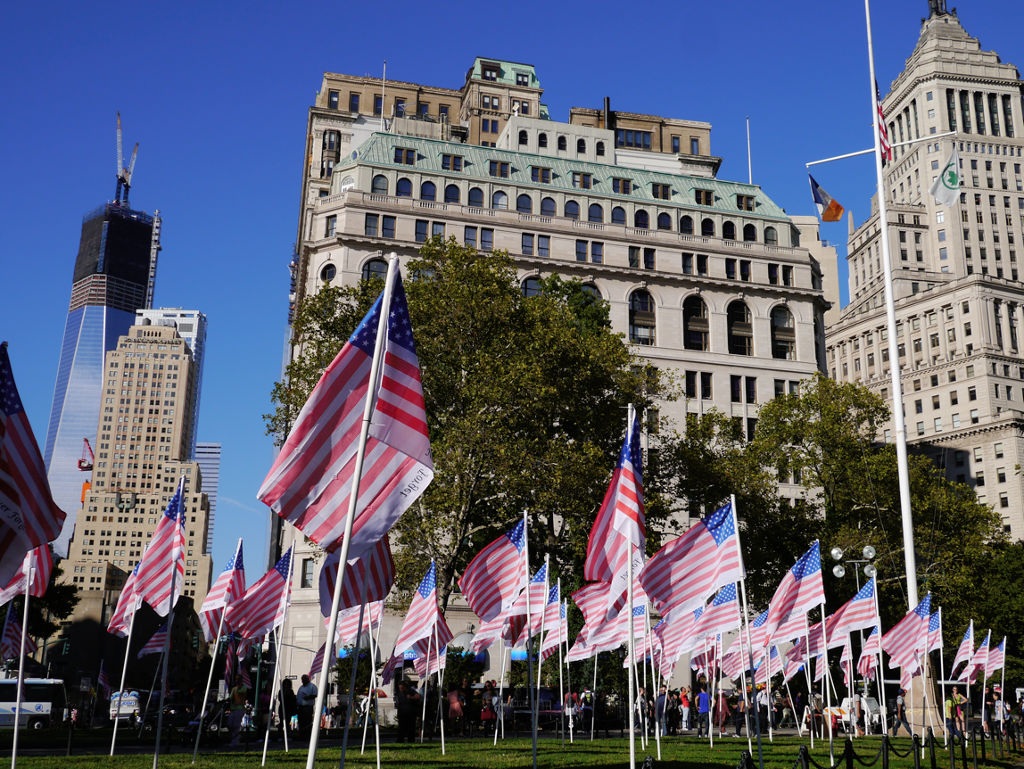
Also in lower Manhattan. Non-American find the US obsession with their flag hard to understand. And Americans don’t like it being pointed out or challenged. It is as if their flag is a holy institution.
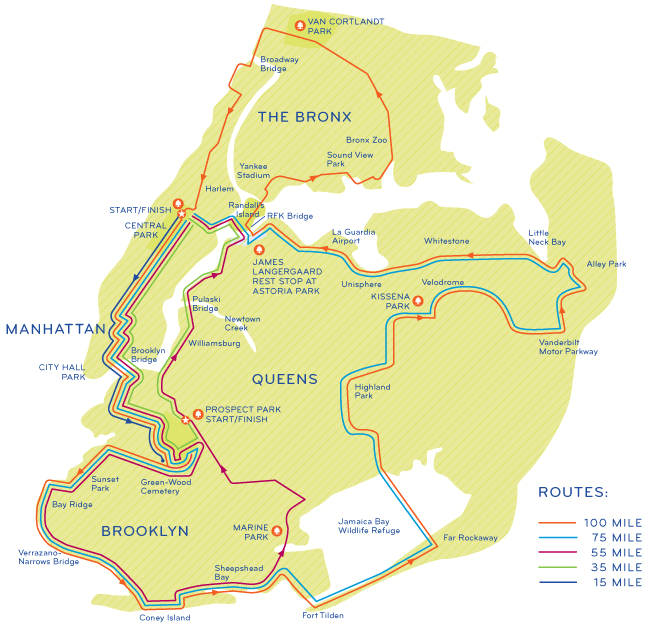
Map of the NYC Century route. Despite signposting many riders end up doing 180-190km instead of 160.
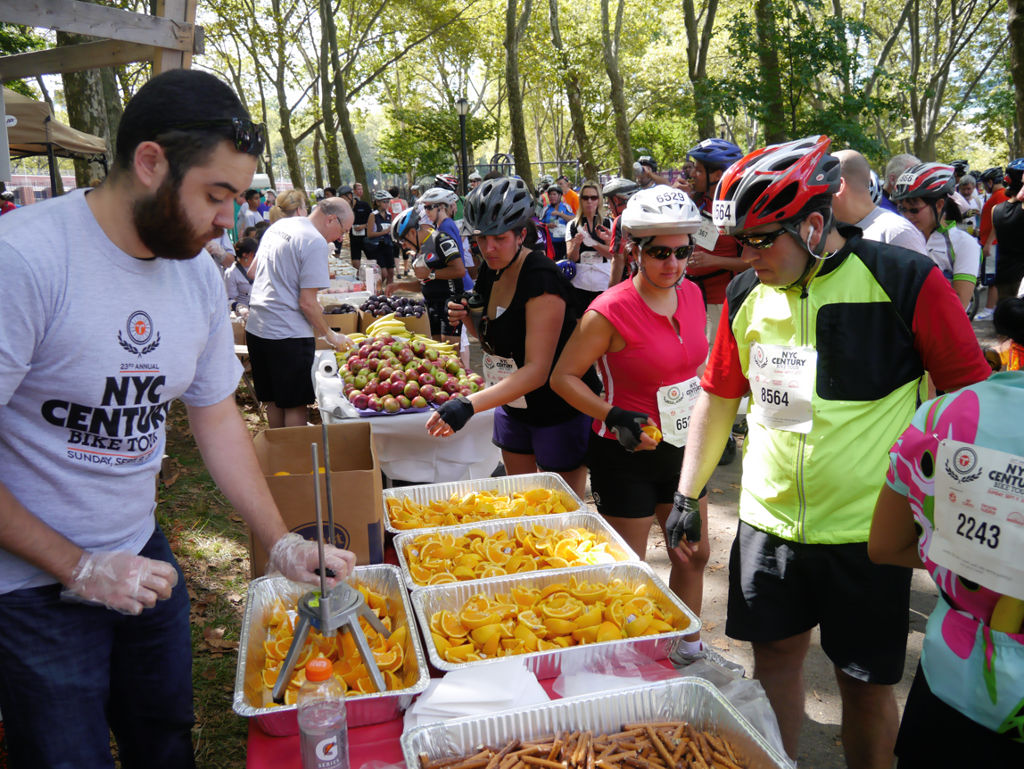
TA does a great catering job. They also take pictures of each rider just before the Verrazano Bridge and sell them.
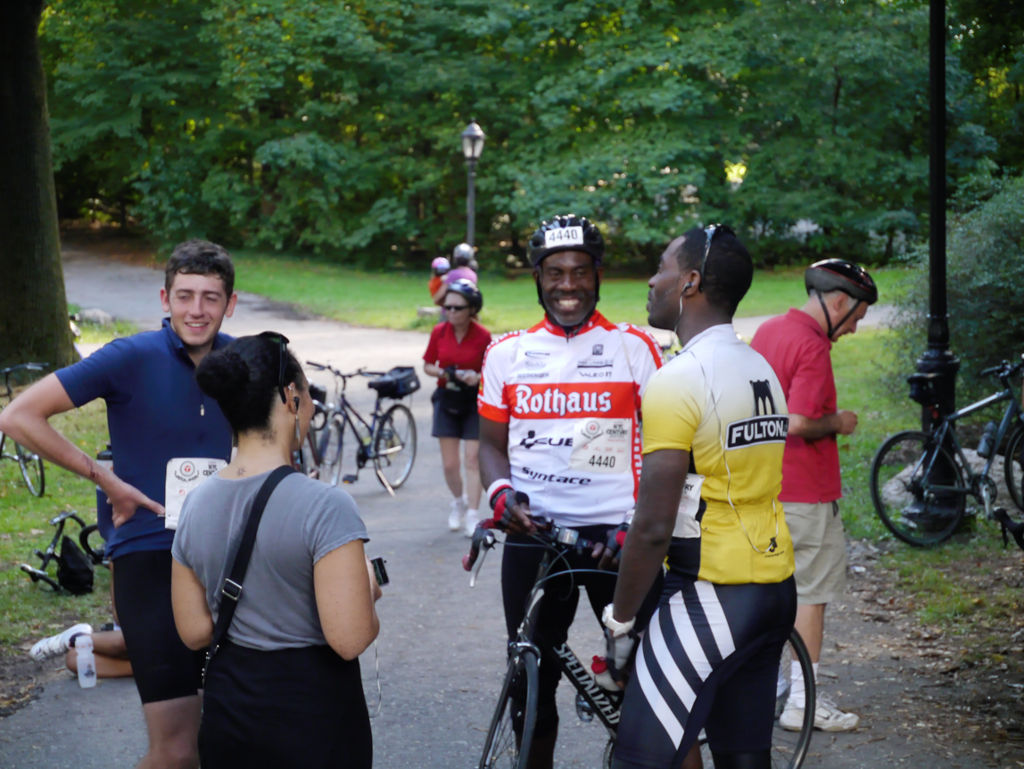
Lots of riders do it every year. It is a major social event in the city.
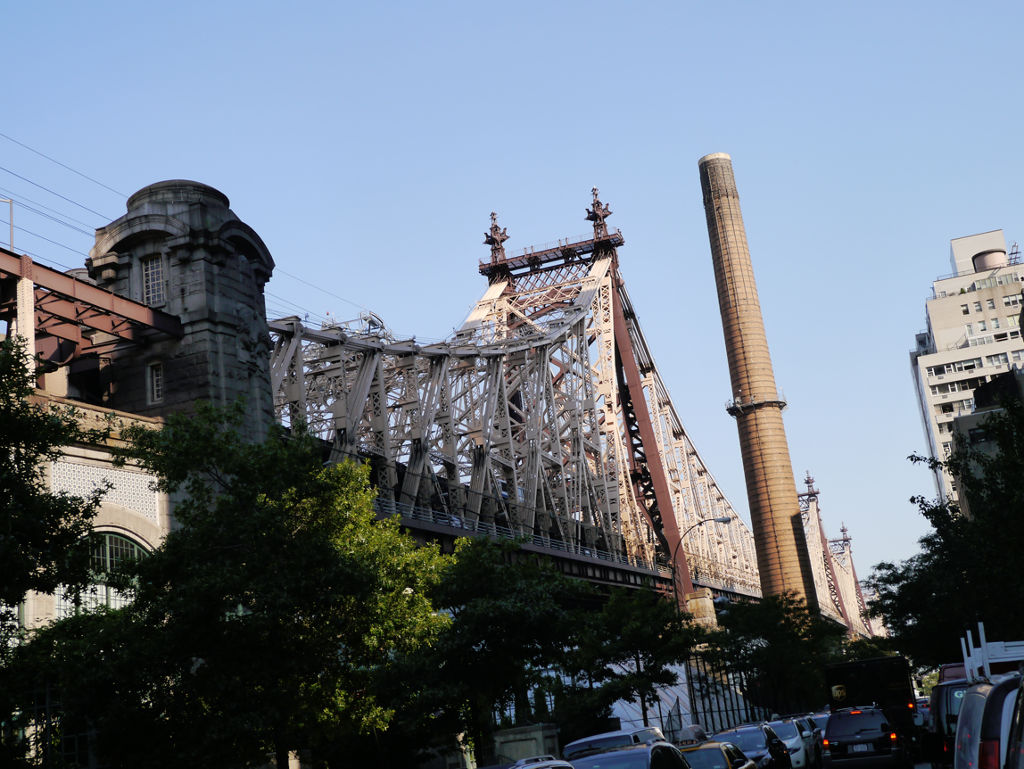
The Triborough bridge linking The Bronx, Queens and Manhattan. The bike path is not great but it is an essential link in the entire metropolis.
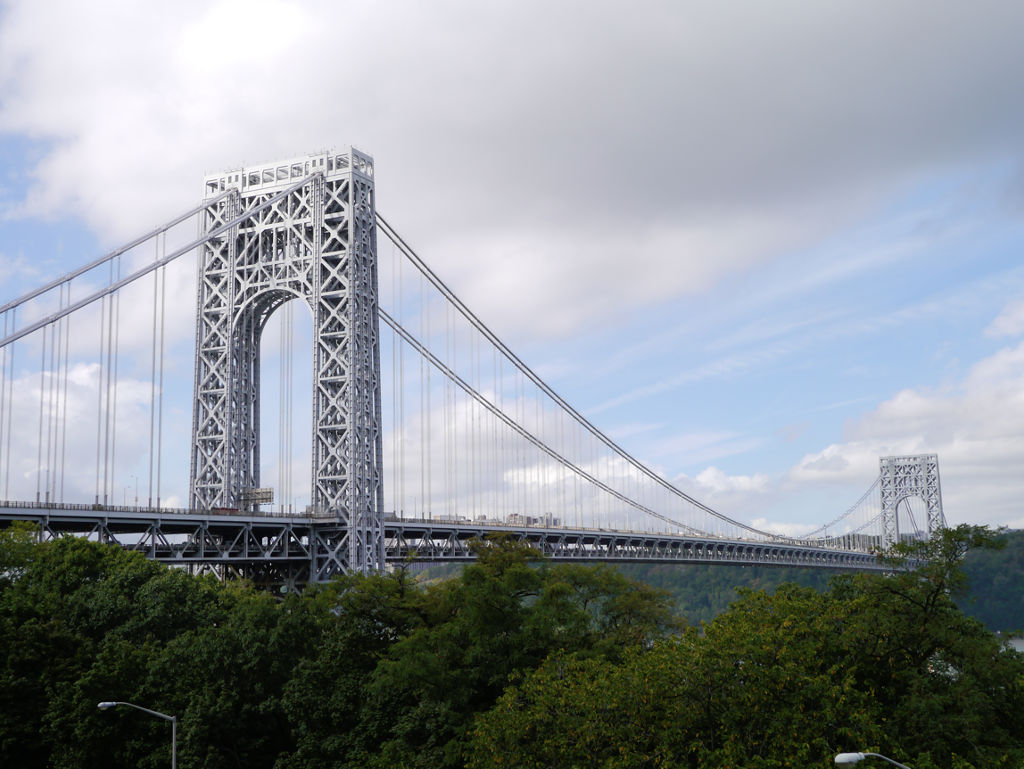
This is the bridge across the Hudson to New Jersey. You have to ride 230 blocks to upper Manhattan to get to it, but it is really a must-do.
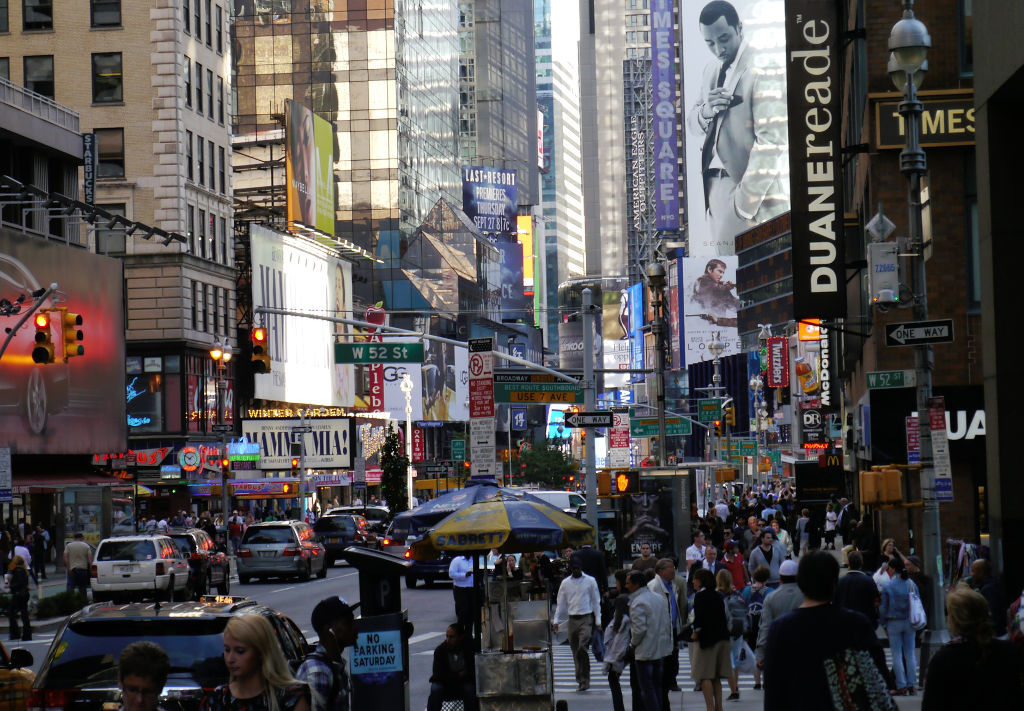
Nothing beats the buzz of riding on the streets in mid-town and lower Manhattan.
An urban tour of Vancouver and the surrounds. Particularly looking at the cycling infrastructure and the level of bicycle use. A test ride with the Ritchey Breakaway Coupling system. The intention was to be able to pack the bike in a small enough space to measure no more than 62” (W+L+H). This is the limit of luggage size to be not considered oversize. Frame coupling systems on the market promote themselves as being able to do this. But I discover it is definitely not true if the bike has 450mm chainstays, 700x35c tyres, full length mudguards, rear touring rack, and a tall steering tube. This test frame is an XXL but even if it was only an M it would have been most unlikely. So I become quite sceptical about marketing of coupling systems.
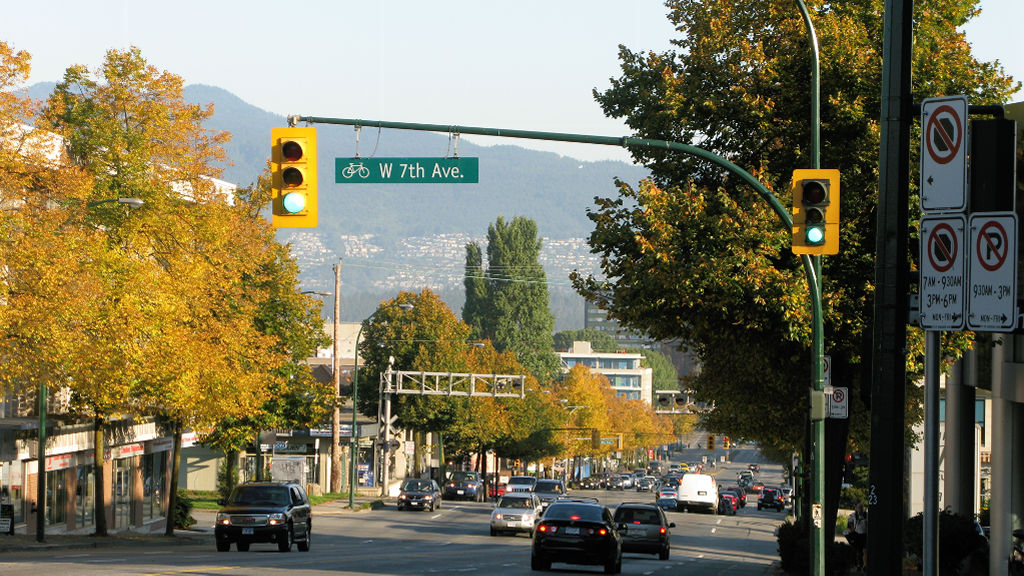
See the bike symbol in the overhead sign? Riding in from the airport it is great to encounter road signs that indicate major through streets are bikeways.
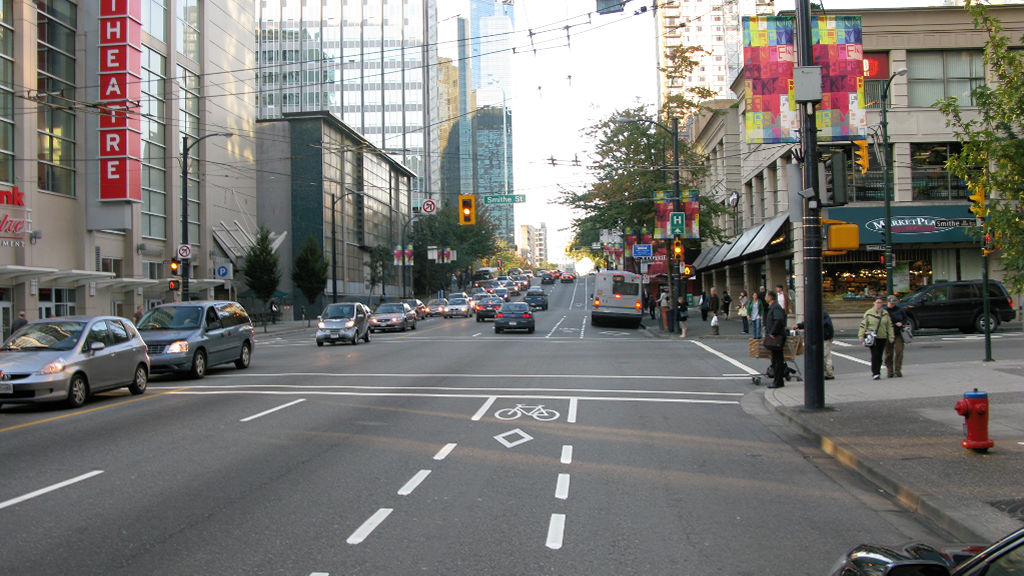
Vancouver has not gone for separated paths on the city streets but for line-marked paths like this. They can seem risky to new cyclists. But they legitimise cycling and grant generous road sharing to the cycling mode. At intersections, you can go through and be at less risk from turning traffic.
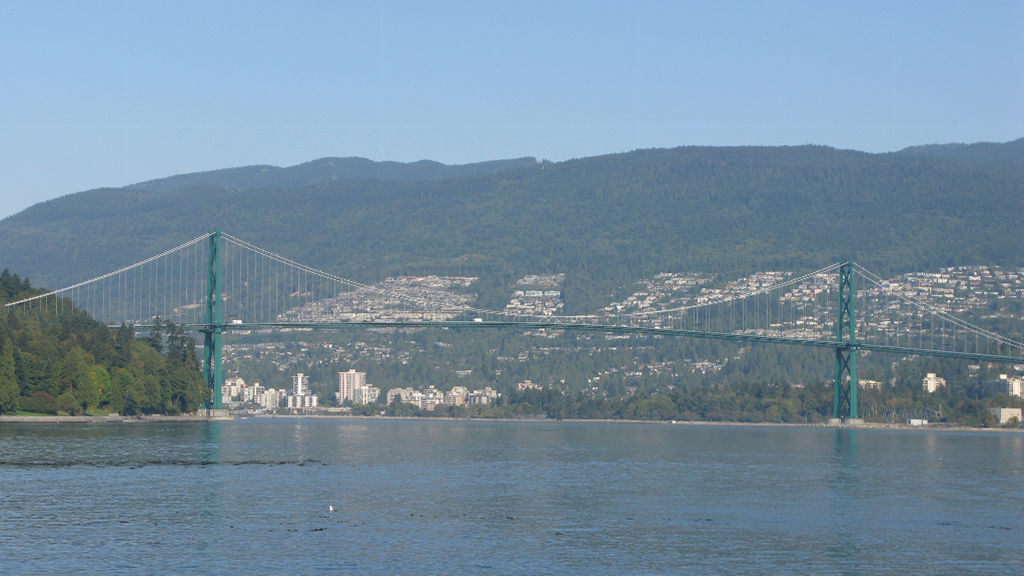
Vancouver is built around a harbour. Most of the city is on the south. Lions Gate Bridge is the cycling link to North Vancouver. The whole main (south) side is one administrative local government area. Perhaps having one large administrative area is a reason they have achieved so much.
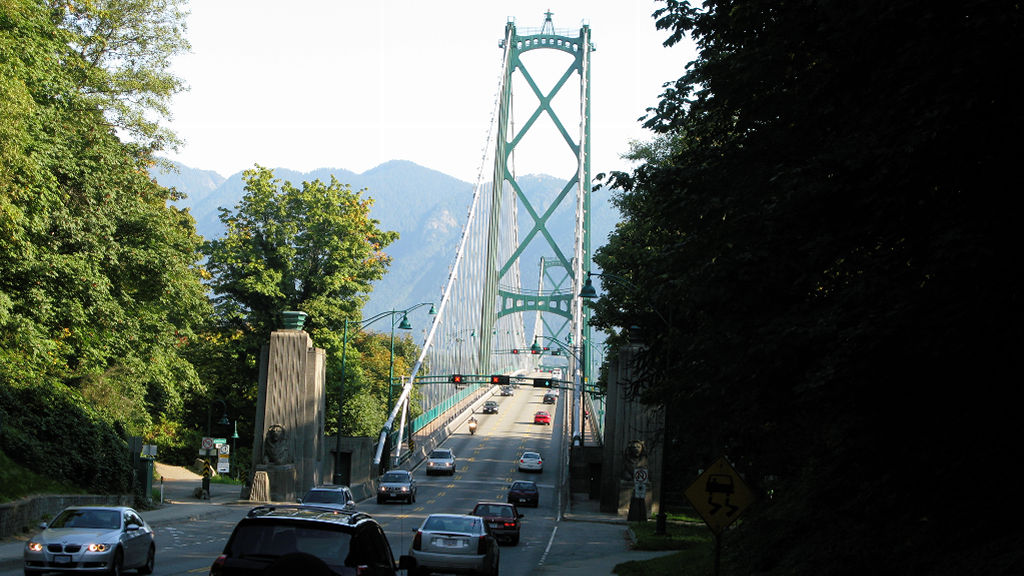
From Stanley Park on the south end of the bridge there is a comfortable cycling approach.
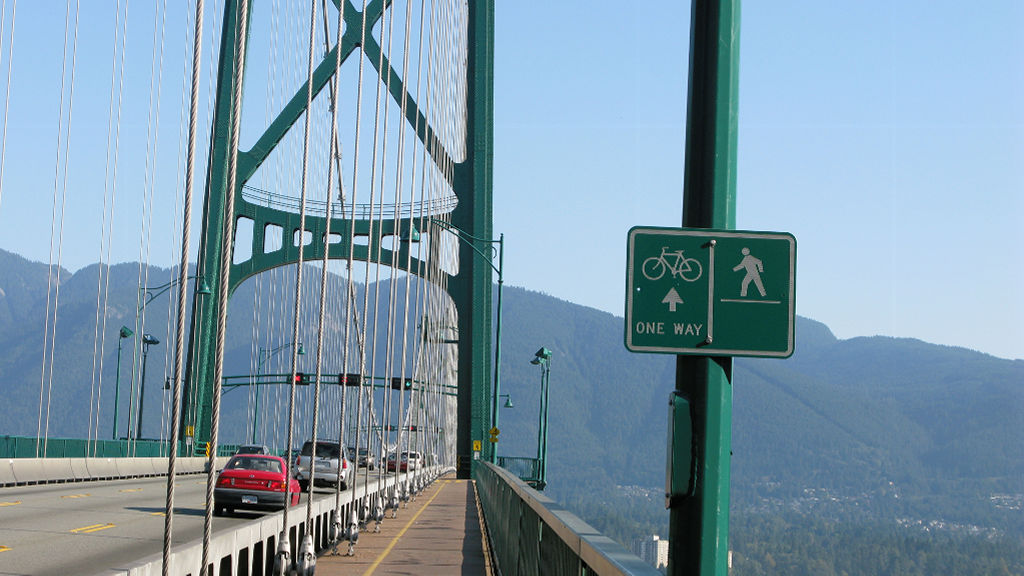
Lions Gate Bridge is one-way on each side due to its narrowness. Compared to Sydney Harbour Bridge, Jacques Cartier Bridge in Montreal or the big NYC bridges, the cycle-way is strikingly open (not enclosed).
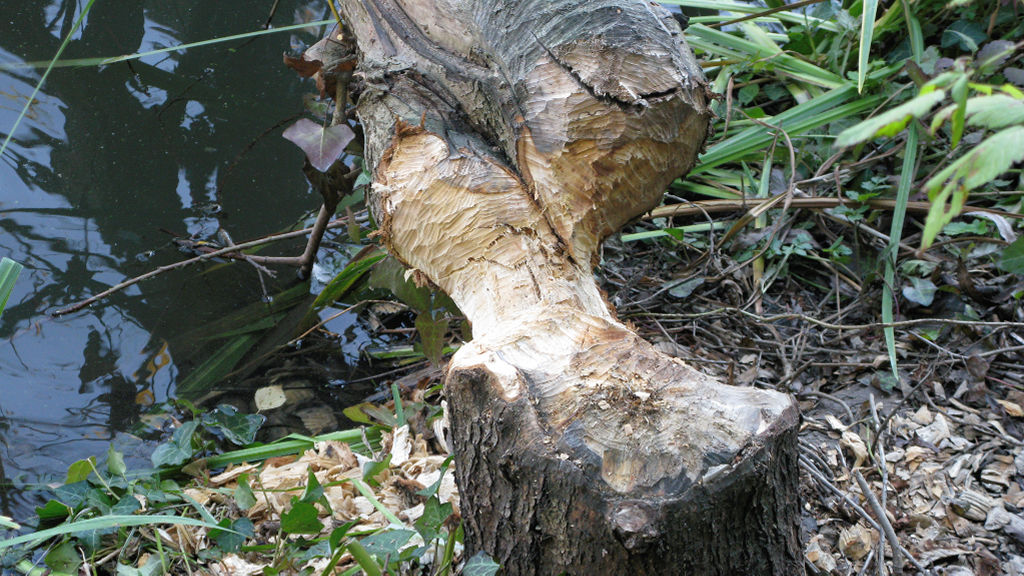
Out of the city today I discover the work of beavers, chopping down trees to make a dam.
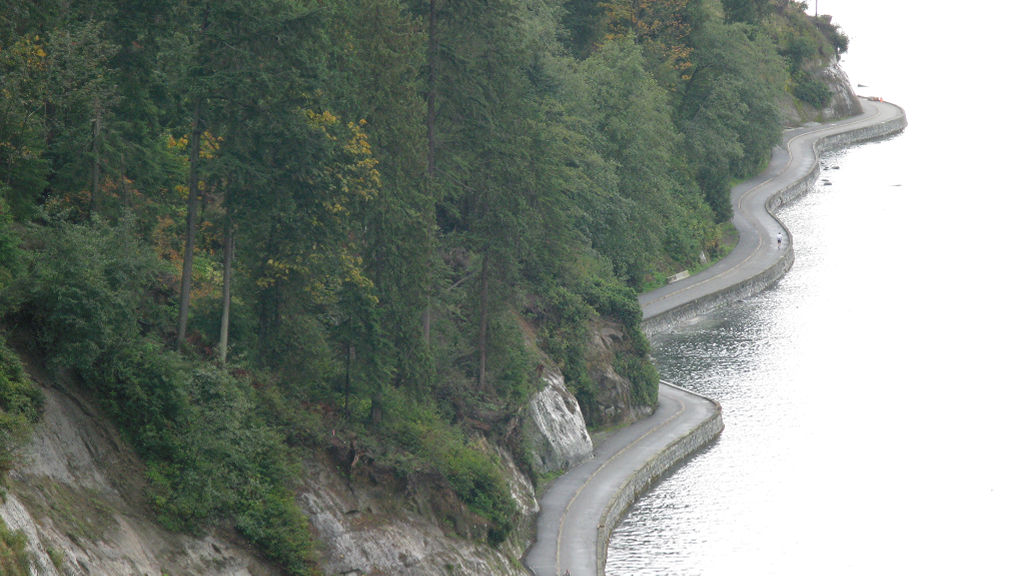
Stanley Park is one of the places where recreational cyclists can ride away from traffic. There is a road in the park for cars too. Signs on the cycle-way say, if you want to exceed 15kph then please use the road. Meanwhile, on the road the limit is 30kph and signs say yield to cycles.
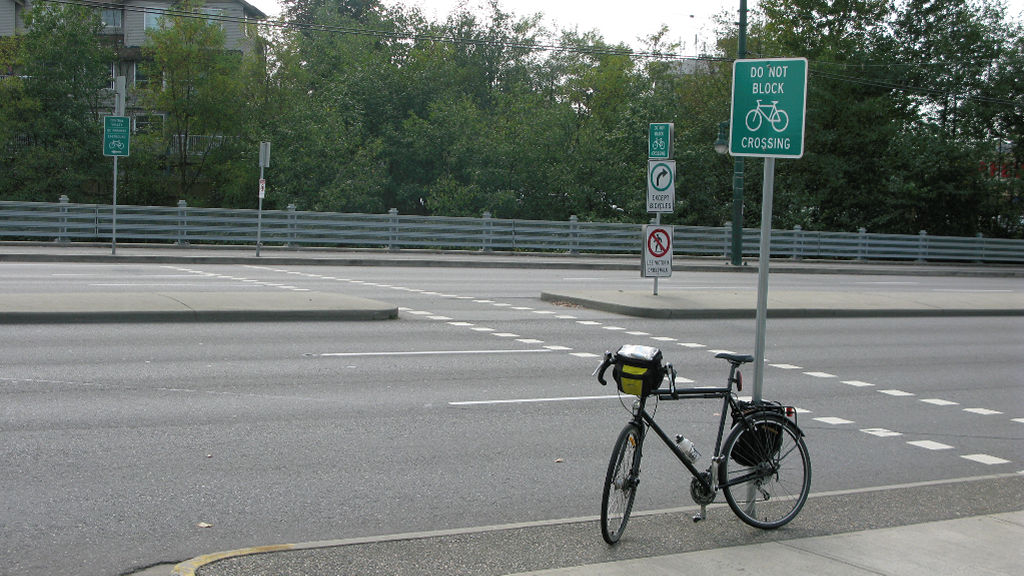
Signs like this legitimise bike riding. They are thoughtful and part of a clear agenda to encourage cycling.
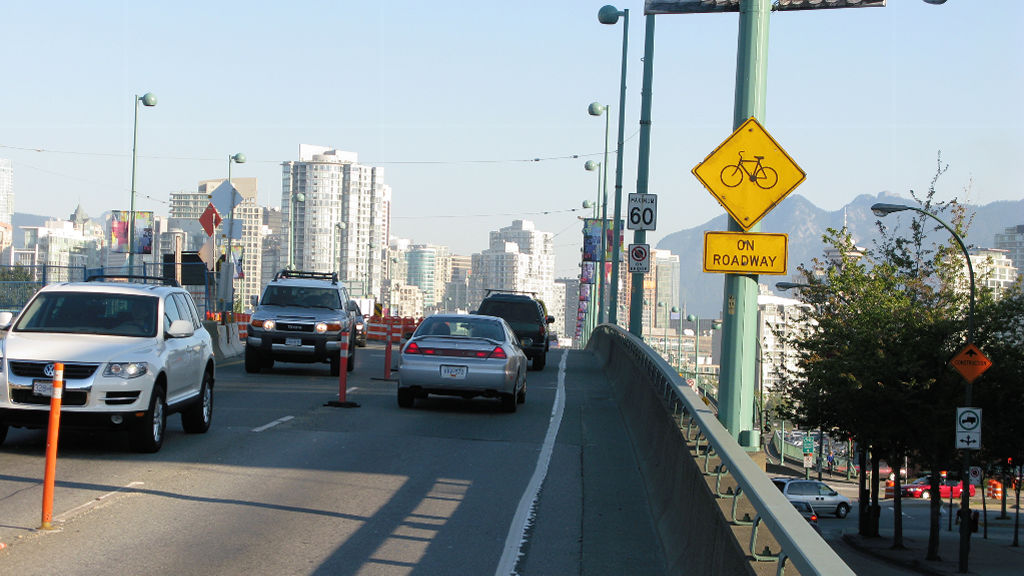
Where a bridge is too narrow for a separate bike lane it is made clear that we may take the lane. And it is not a small sign.
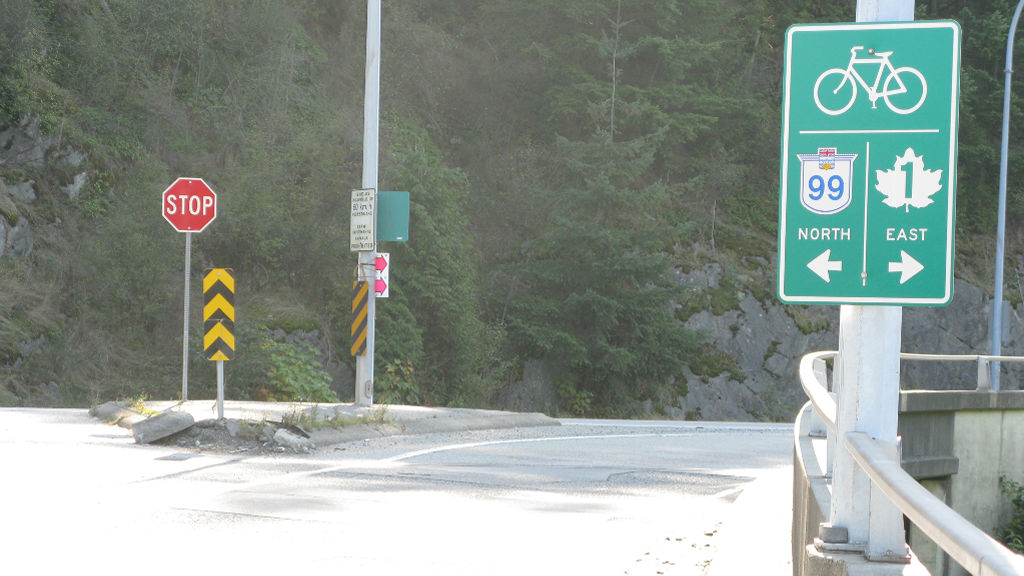
Up on the NW corner of the city fringes, more signage saying we are allowed to cross over Hwy 99. Not surprisingly, motorists have “got it” and I am not being harassed at all.
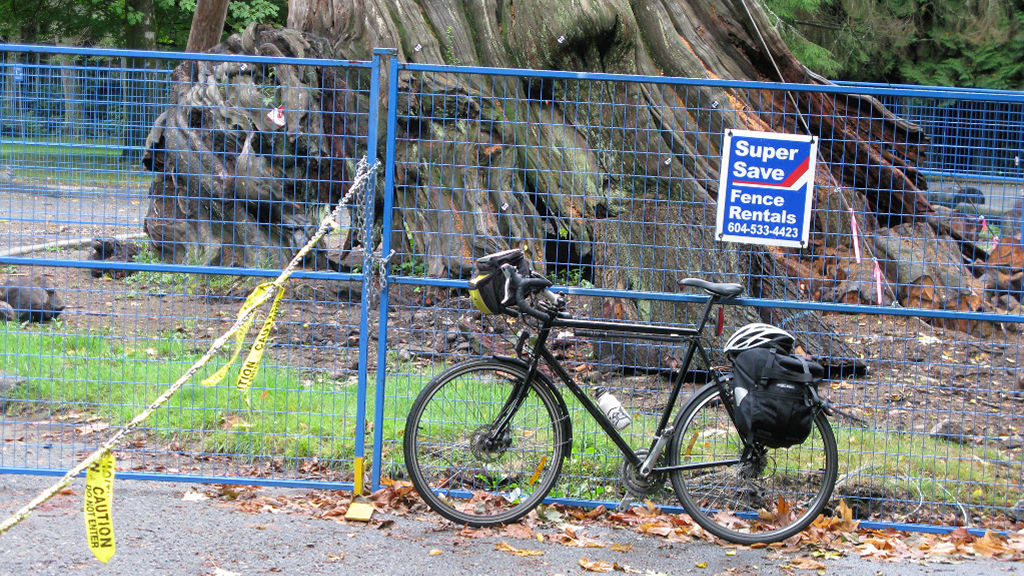
The 2008 test bike using Ritchey couplings, Tiagra shifters, front cable disc and rear cantilever. The outboard BB has started to develop a bit of movement and has me thinking of getting a square taper cartridge BB.
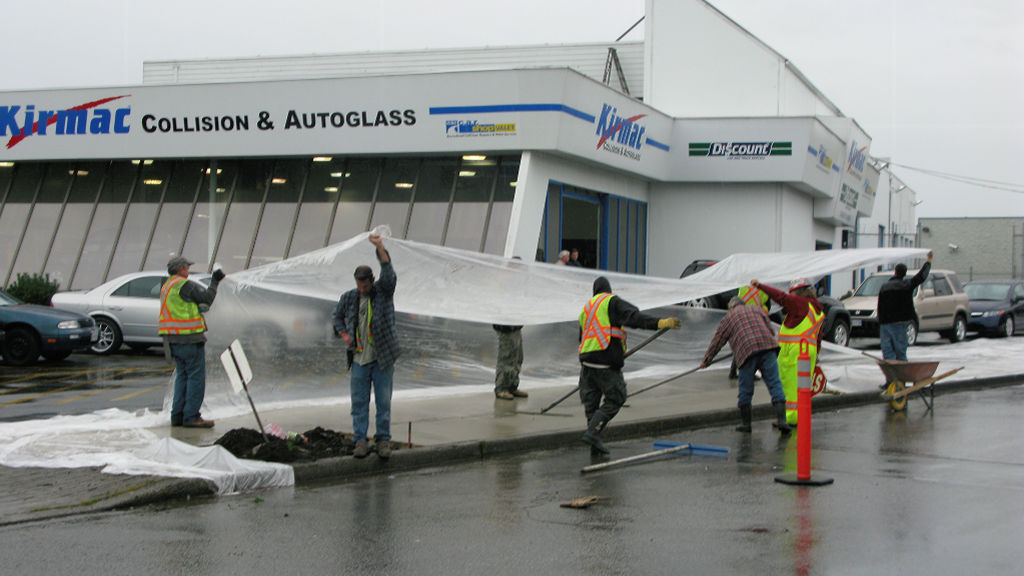
Not about bicycles. It is a rainy day and these guys have done a concrete pour. While the finishers work on the concrete, other workers hold a big sheet of plastic above them to stop it getting wet.
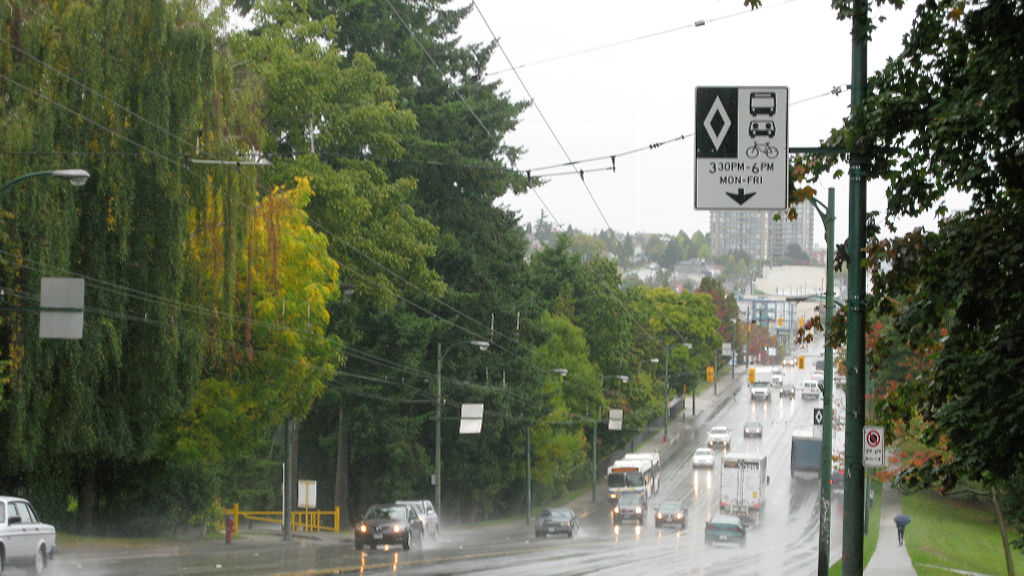
My last day and more rain. This sign underlines the difference between Sydney and Vancouver. In both cases we are allowed to ride in bus lanes. But in Sydney it is not signed that we can. Riding on Parramatta Rd for example in peak hour can be intimidating. In Vancouver it is right up there on the sign that we are permitted to ride there. And, significantly, motorcycles are not.
Just a 100km ride on a day. It is barely valid to make it into a blog. But my only other bike ride in China had been on a Moulton which does not make it in a VWR blog. Plus, this was in sub zero temperature. The water in my water bottle began to freeze.
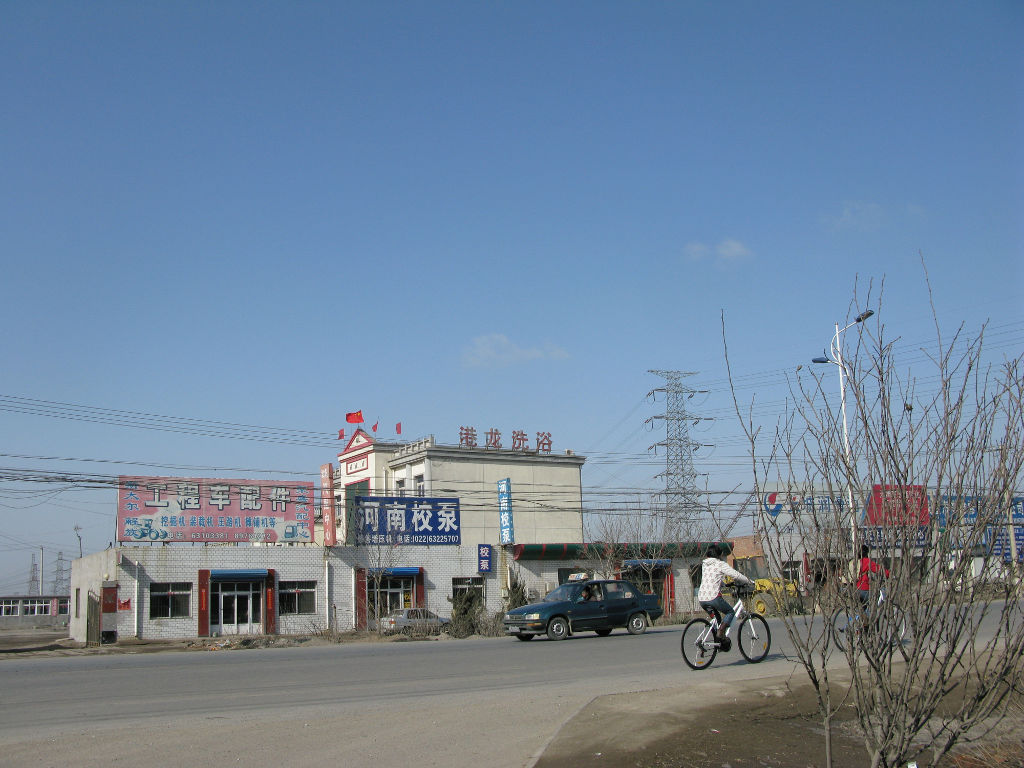
Crispy cold outside Tianjin in the far north of China.
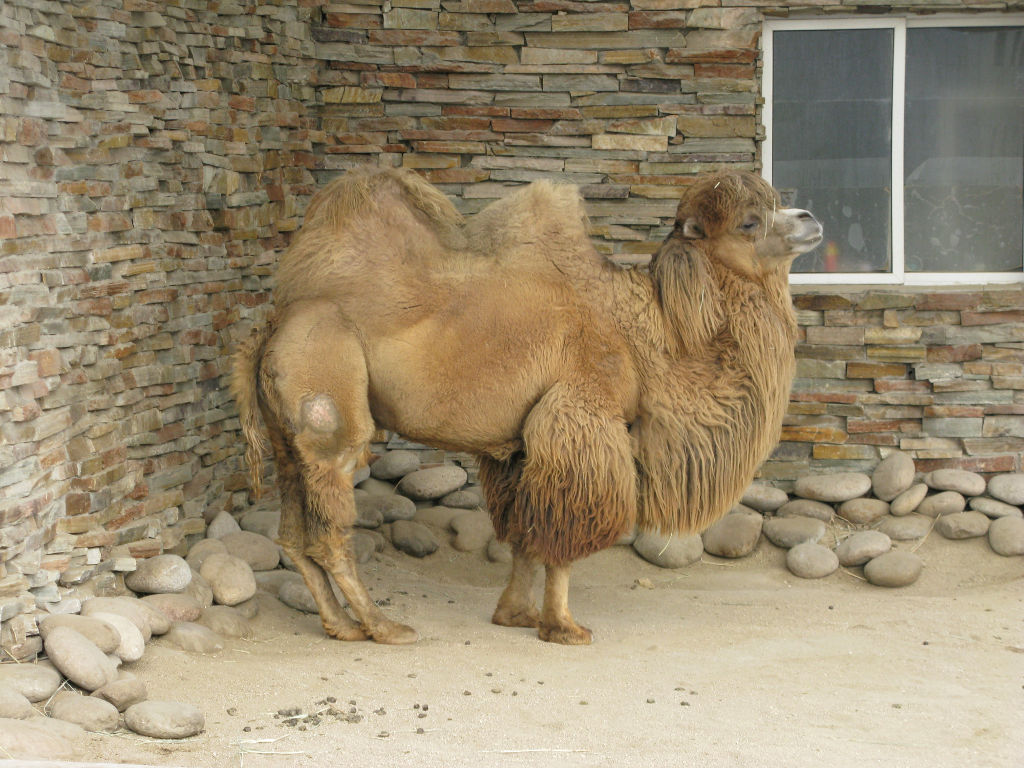
Impressive camel along the way.
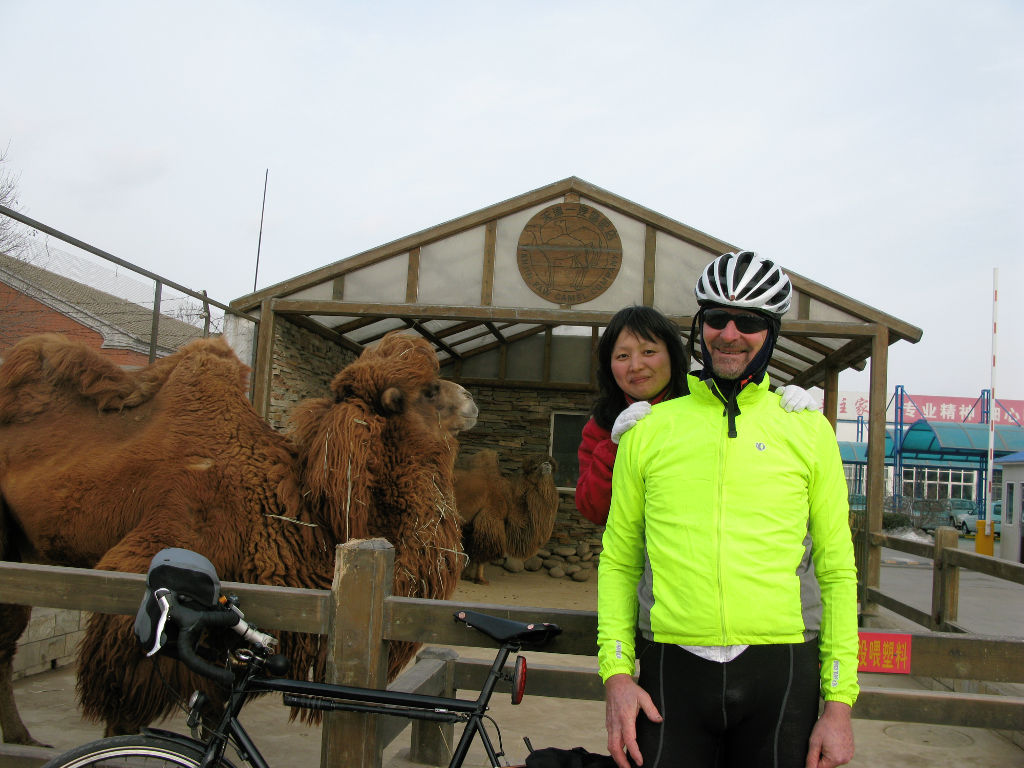
Two girls from the factory were told to accompany me. They seemed to take 100km on a basic bike in sub-zero weather in their stride. I am test riding the Ritchey Breakaway frame.
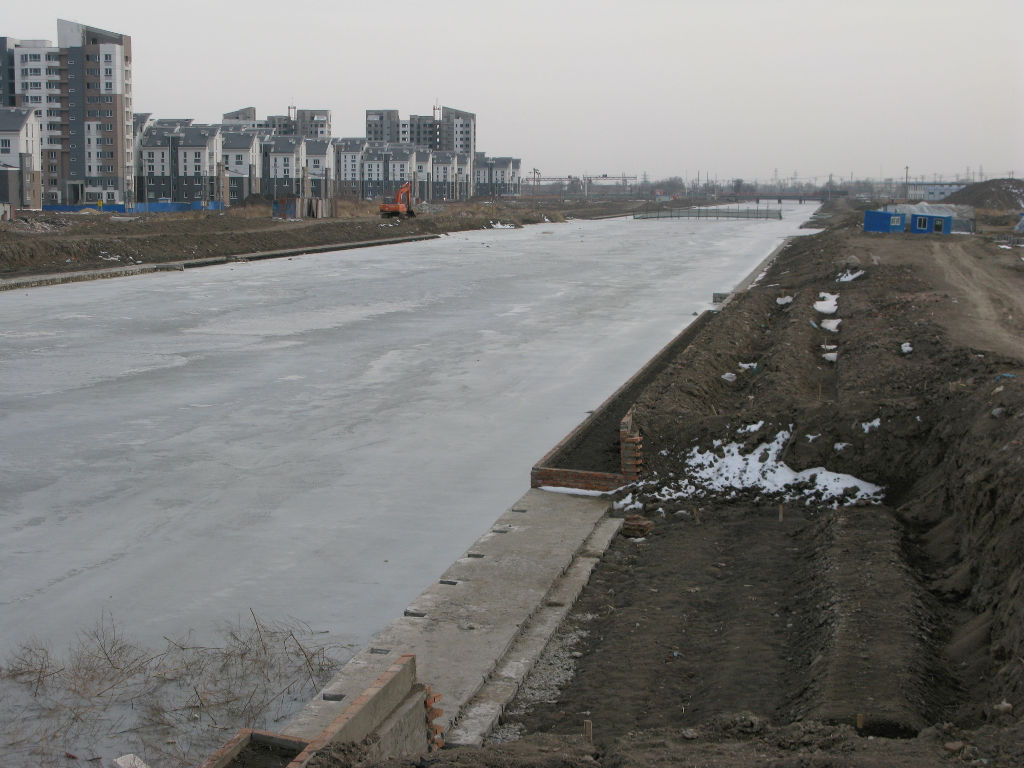
Frozen canal.
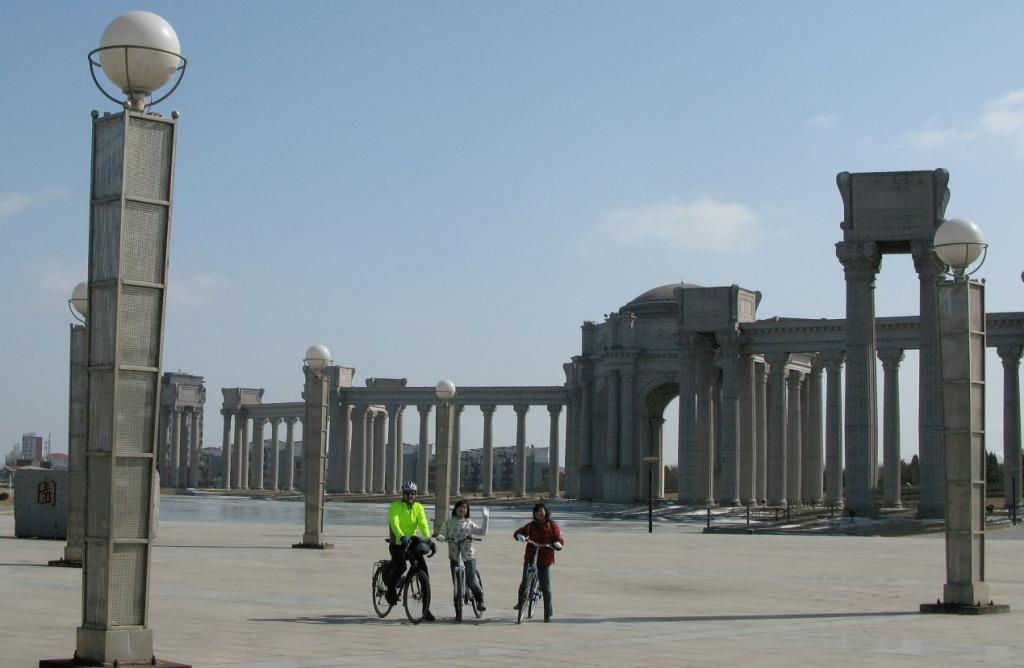
The bitterly cold landscape is without people. We have it to ourselves. Afterwards I get back to my hotel and lie in a warm bath for an hour to thaw out.
Three of us fly into Trabzon which is the most easterly airport on the Turkish Black Sea coast. We head West to Istanbul. To get some variety, after Sinop we go up to Kastamonu on the Anatolian plateau and then West to Safronbolu. Then down to Eregli, then to the Marmara and Istanbul.
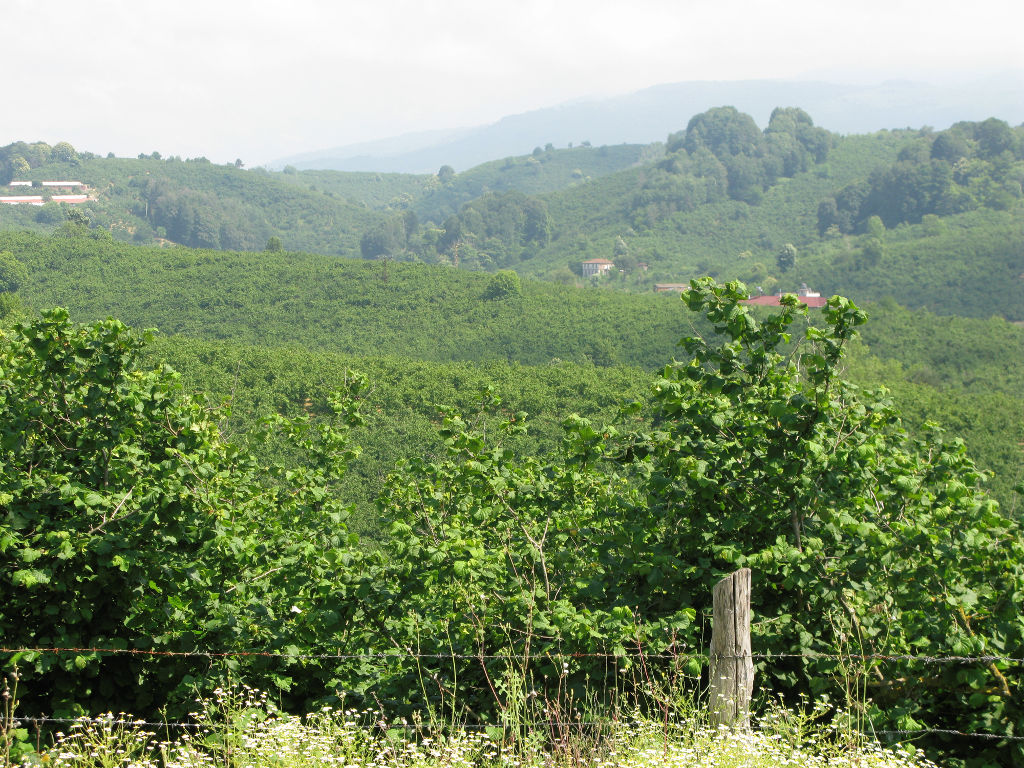
There is very little margin between the vast 1,800m plateau and the Black Sea. So much so that there are lots of tunnels along the road. The steep slopes are the main hazelnut producing region of the world. Locally known as findik pronounced “foonduk”. We are helping to eat them.
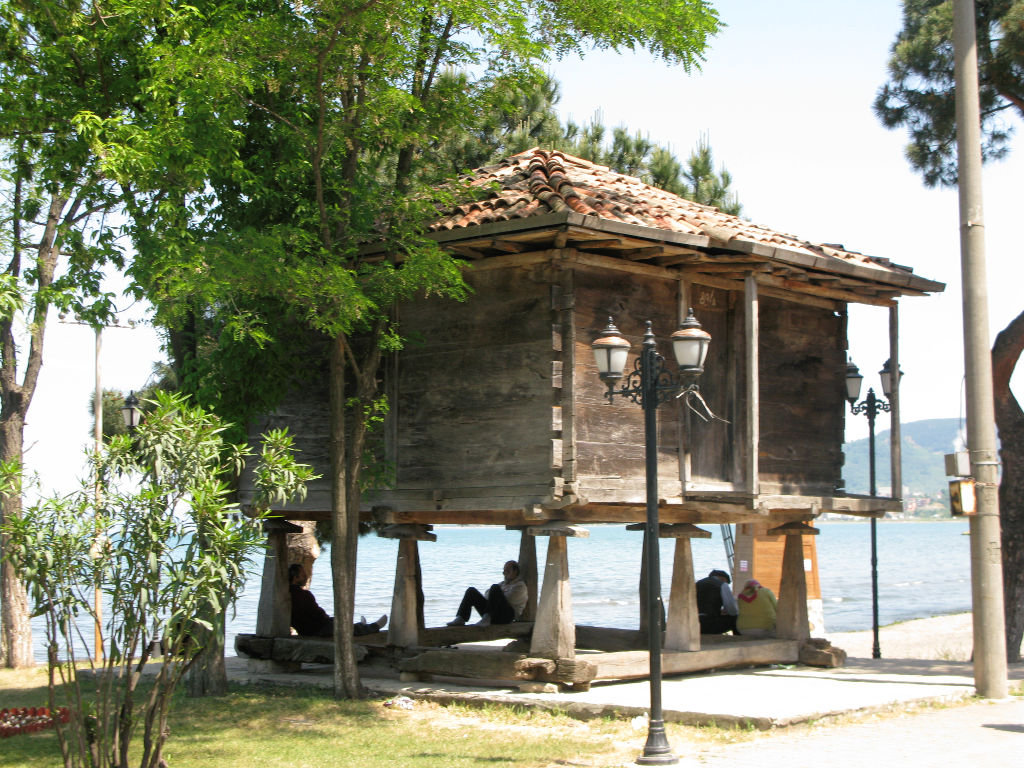
These interesting stone-post structures are typical along the coast. We speculate about why they would be made like this. Perhaps to keep termites away from the wood?
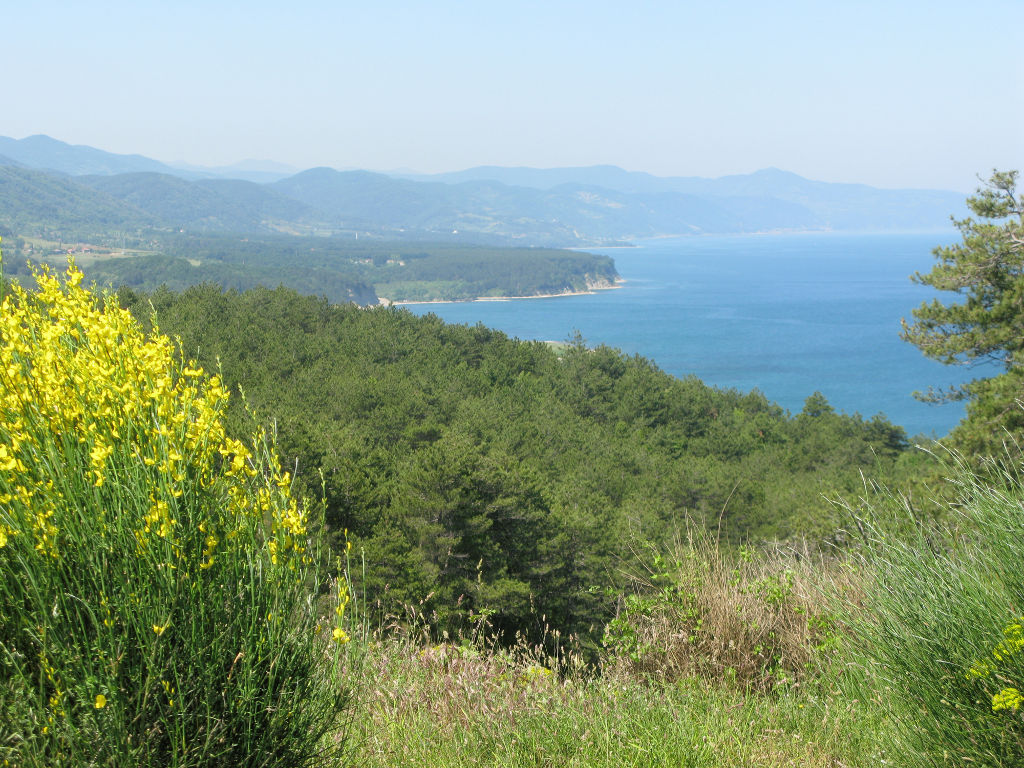
It is a beautiful coastline and involves an average daily climb of over 1,000m. We are keeping our lights on all the time because of the tunnels. Up to 10 a day. Not dangerous if you have lights.
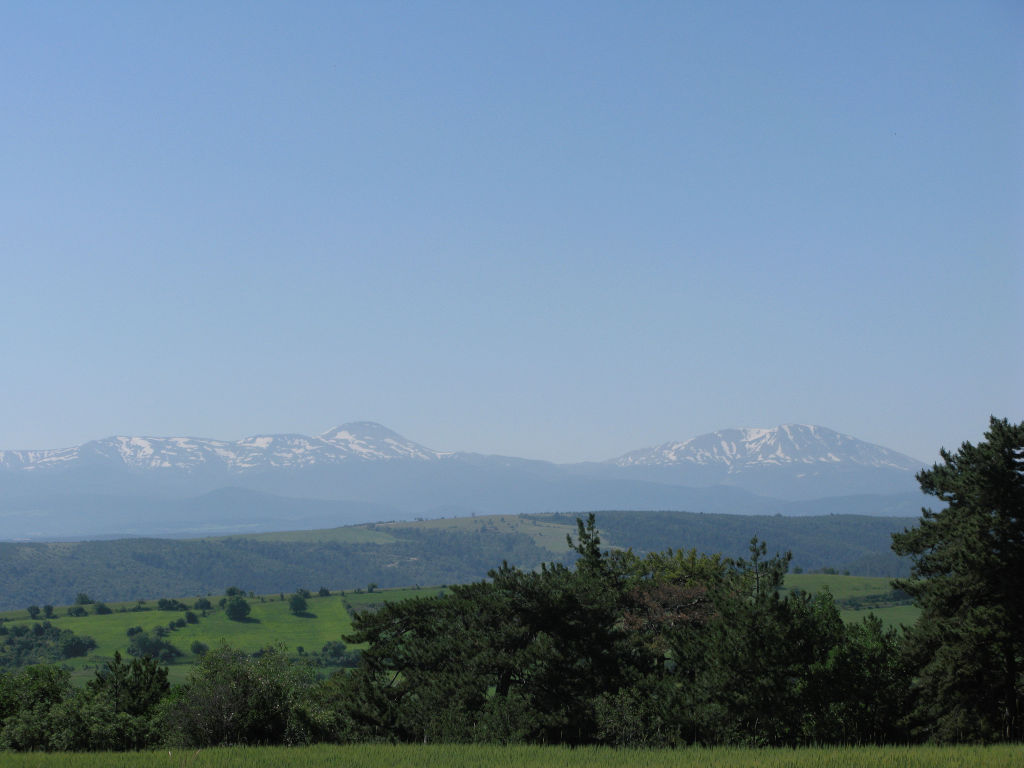
Up on the plateau there is more majestic scenery. Due to the elevation, it is much milder. The winters must be severe. This is west of Kastamonu (which is a great city to cycle through).
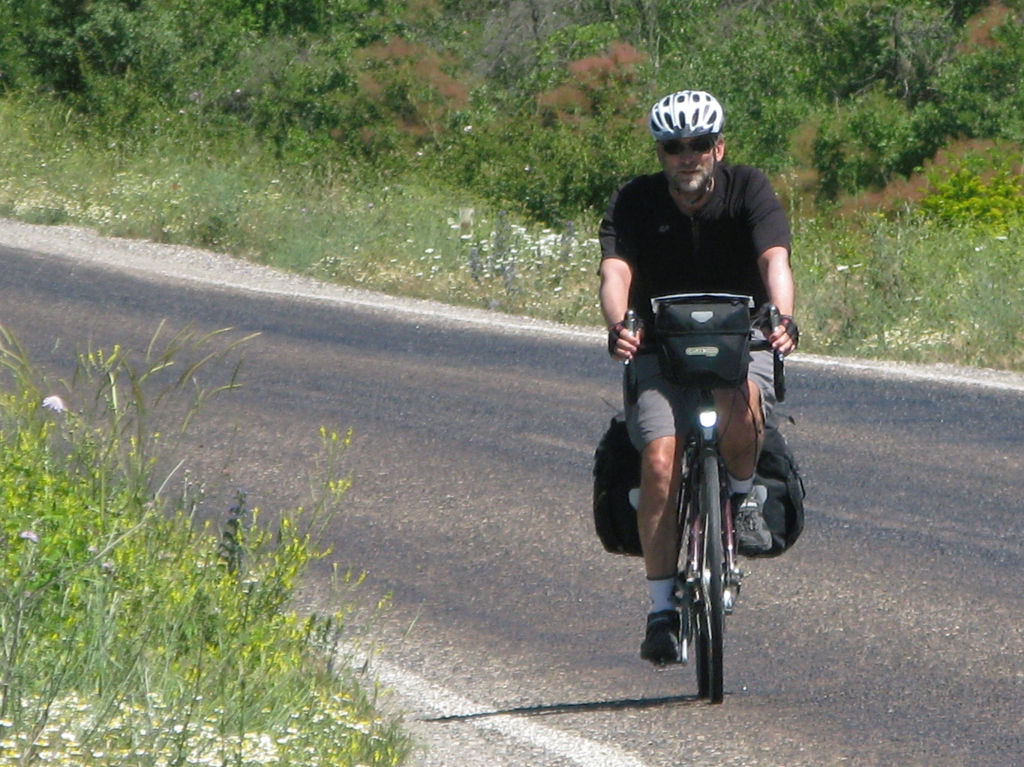
Allan on his 2008 Vivente World Randonneur, approaching Safronbolu.
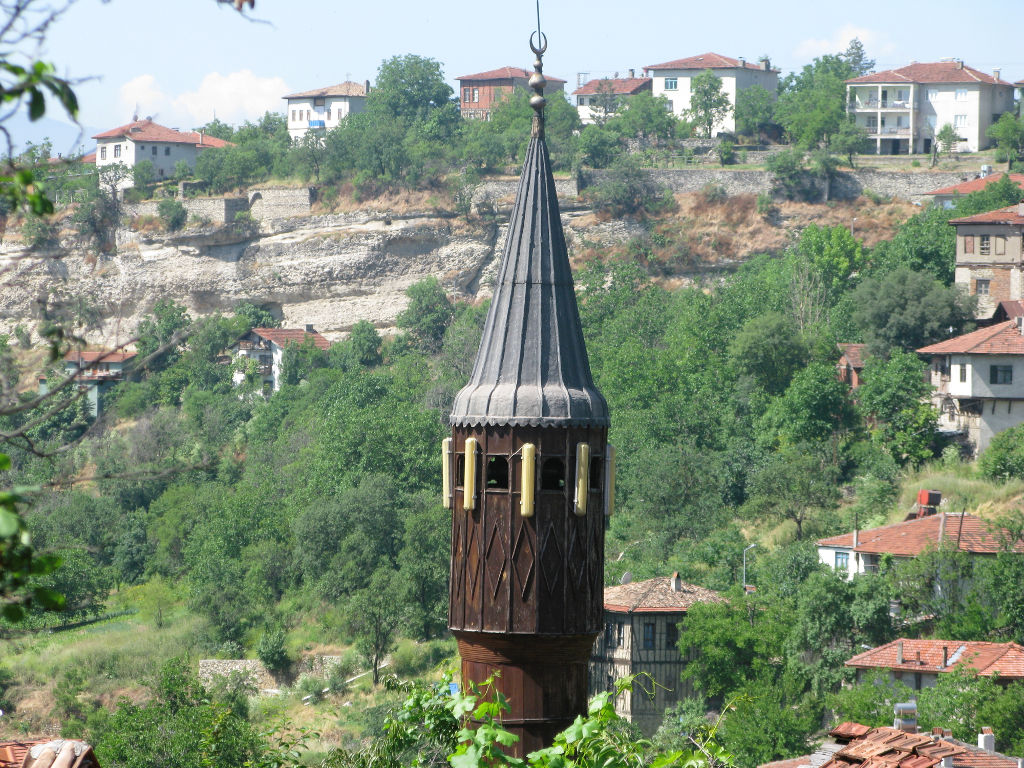
An impressive mosque in Safronbolu. Except for the roof, it is all wooden. This is a beautiful town.
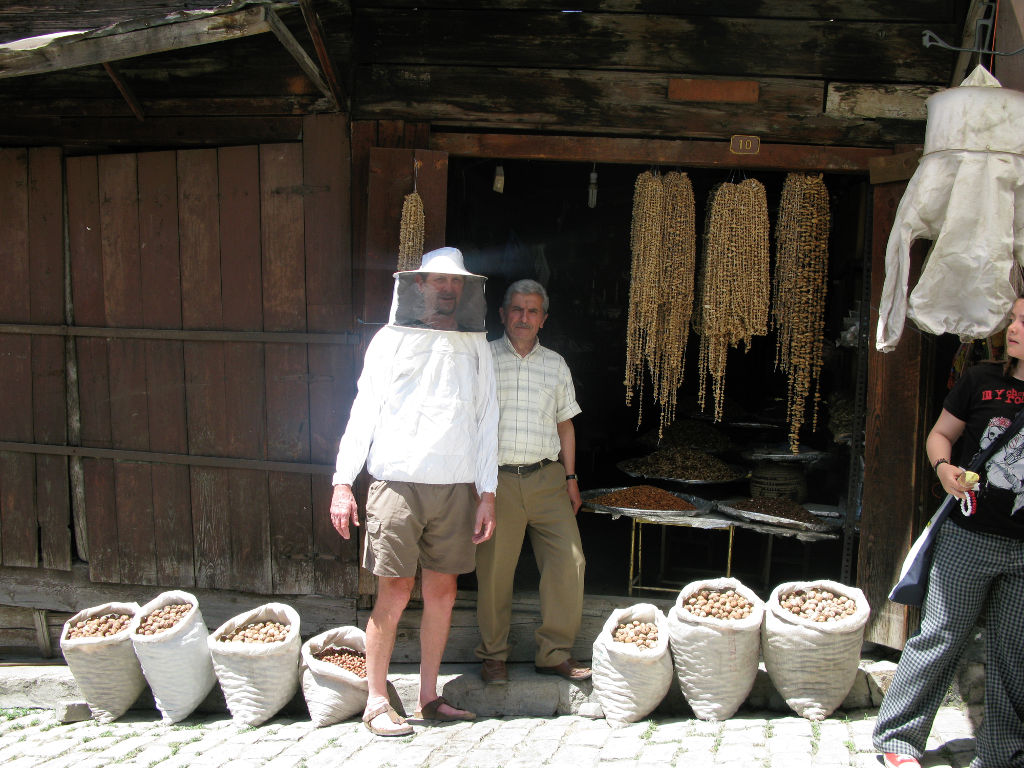
We had a rest day today. There are lots of walnuts, hazelnuts and bee hives around here. I could not resist the bee suit and bought it for only 20 lira.
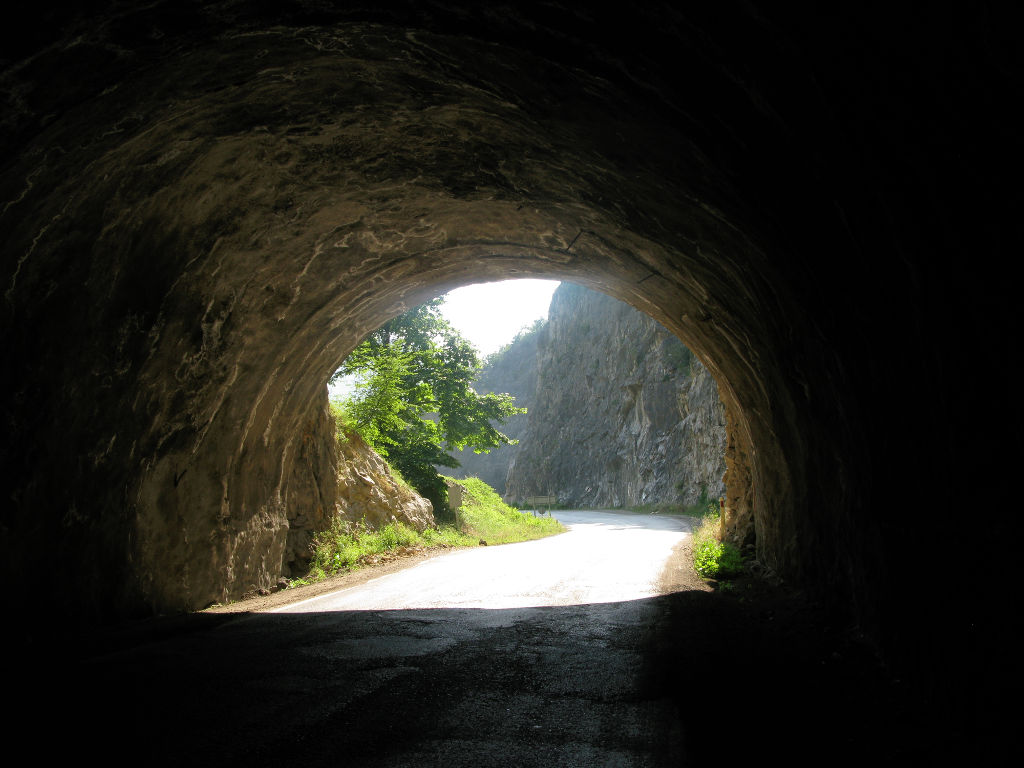
The dogs in Turkey are very threatening to tourers but only to the rider in front. There was one waiting just outside this tunnel today. I deployed my latest defence – a water pistol loaded with a mix of chilli powder and water. This enraged the dog but getting it in the eyes worked perfectly.
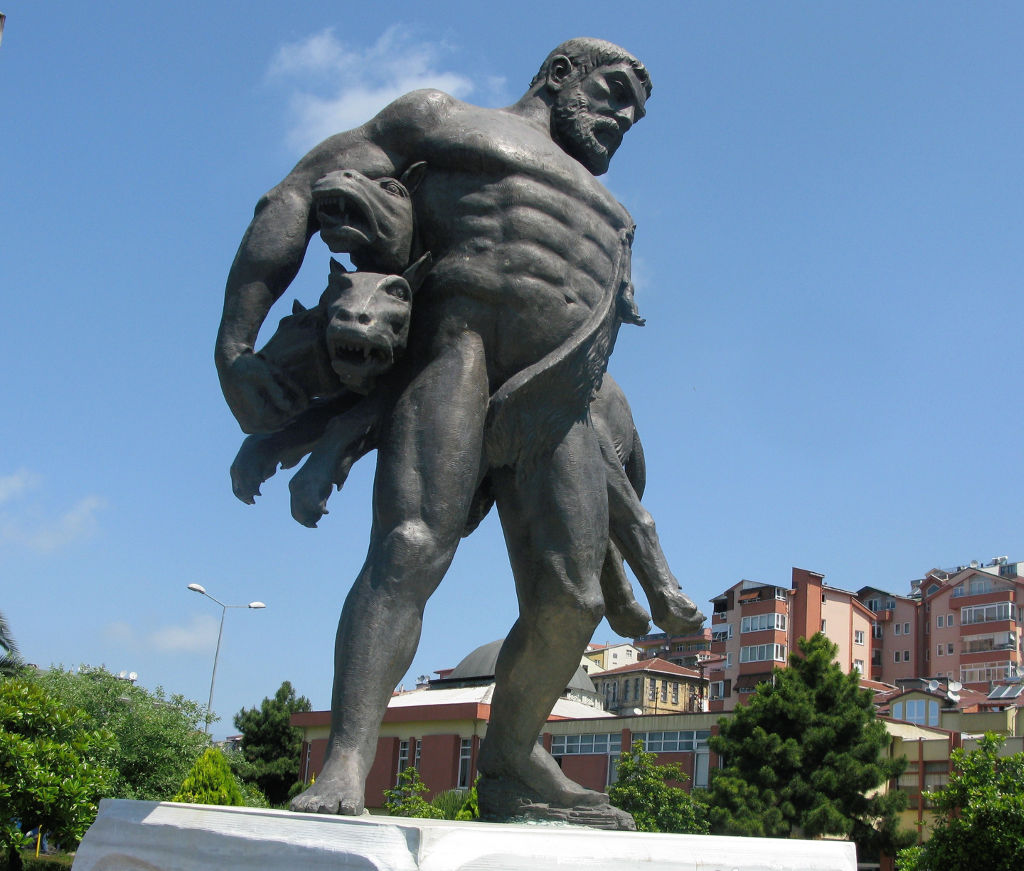
Near to Ergali today we pass a cave outside of which Zeus slayed a three-headed dog. We feel a special affinity with Zeus.
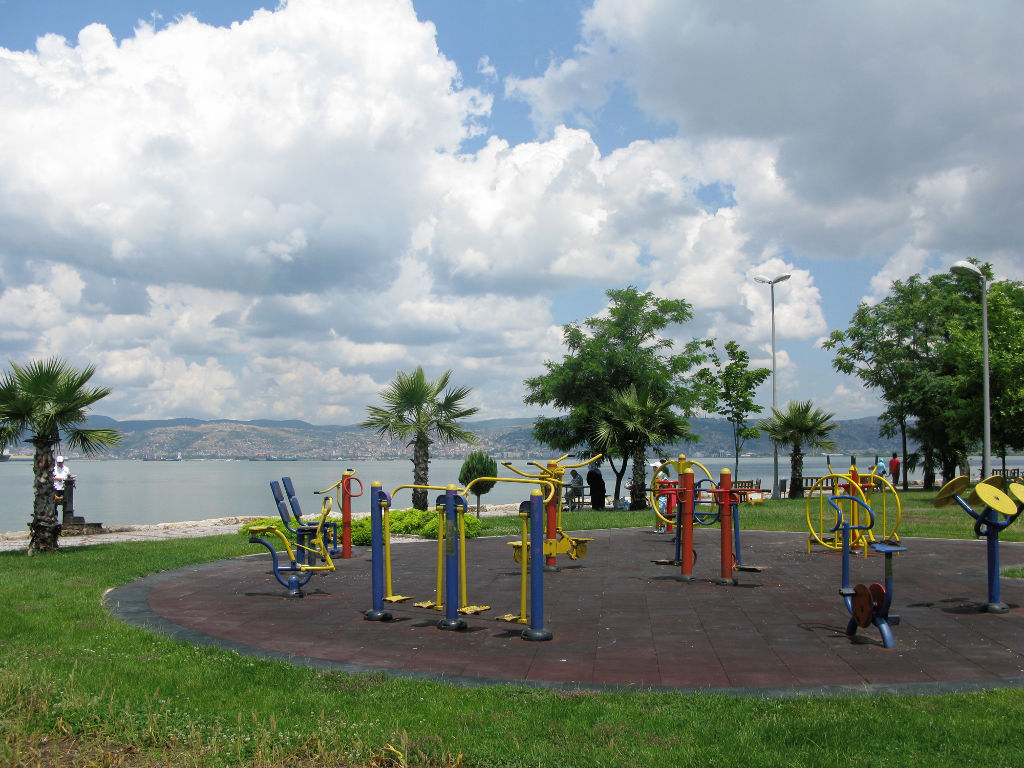
On the Marmara Sea coast now. Public exercise equipment is commonplace and typically used by all age groups, both male and female. It is not just for extreme exercise types of people. Turkey is quite ahead on this.
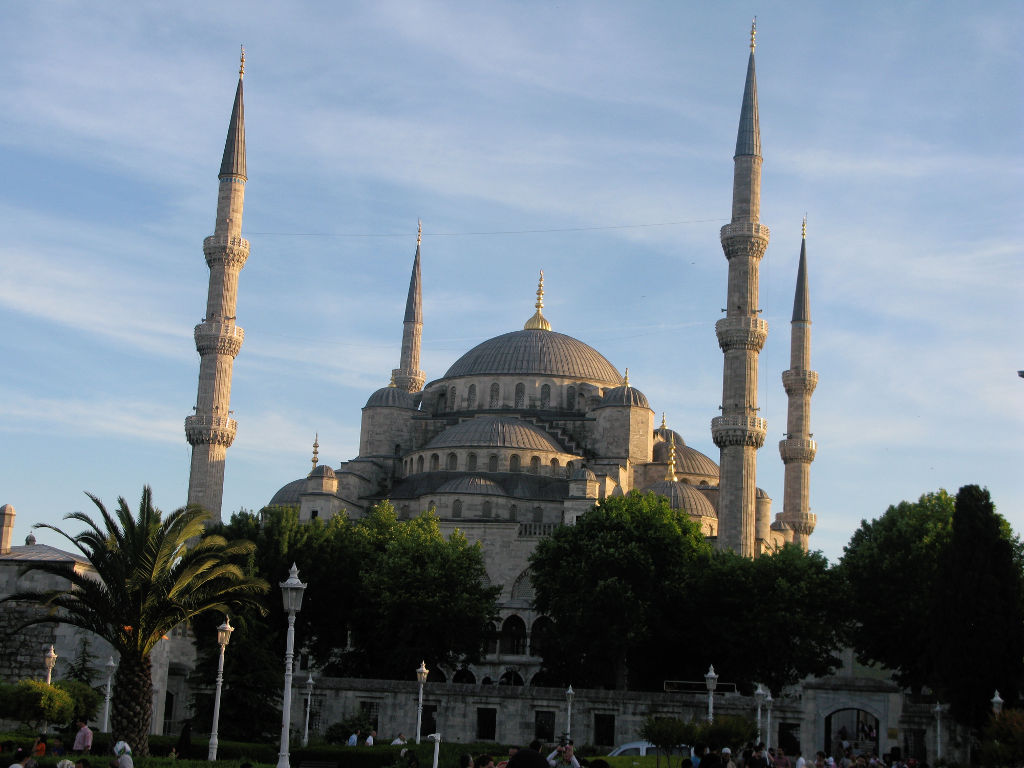
The Blue Mosque in Istanbul. For us it is 1,400km since we started in Trabzon. Tomorrow we will ride to the airport and search for cardboard and manufacture our own bike cartons.
We flew to Tehran and got the bus to Tabriz where the tour started. We rode through Ardabil reaching the Caspian Sea at Astara. We then mostly followed the coast as far as Sari then got the bus to Tehran and spent a few days touring in Tehran before flying out.
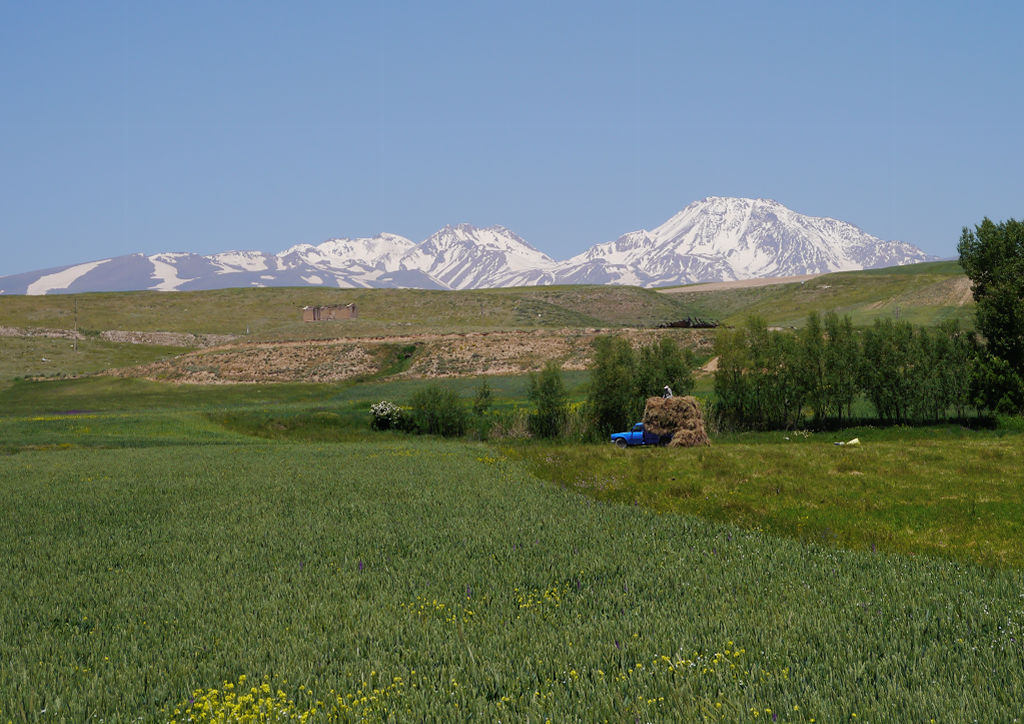
Climbing east from Tabriz, even in mid-summer the snow doesn’t melt. This is big country with big mountains. Notice the blue ute being loaded with hay. Iran is the world capital of blue utes.
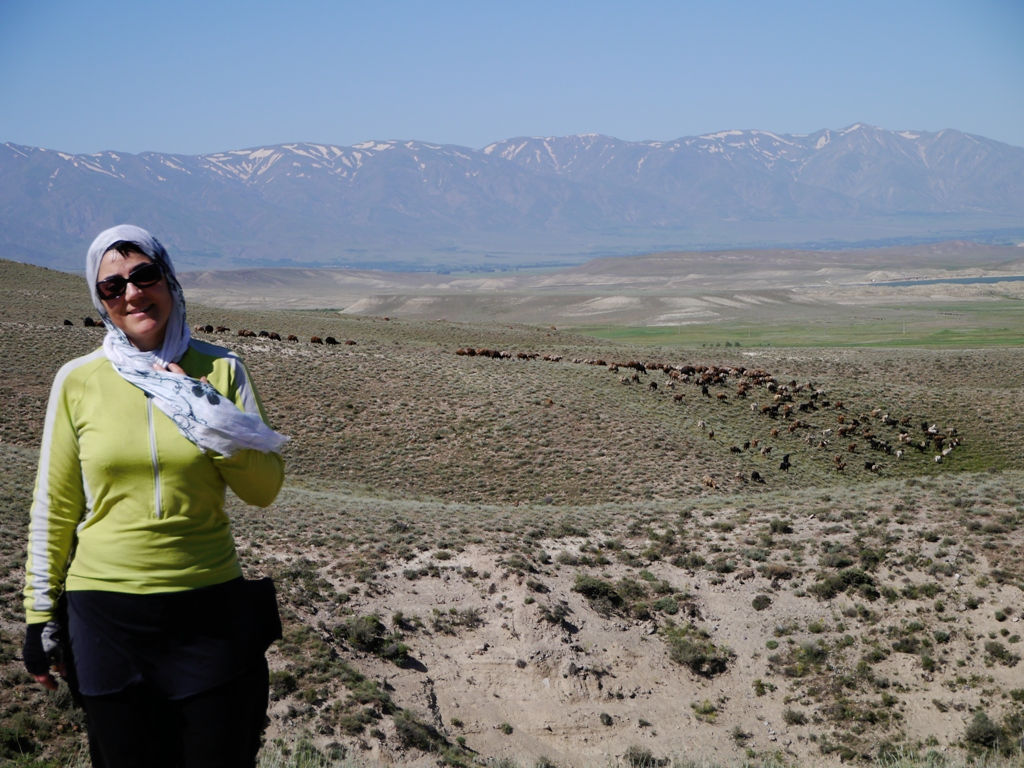
Big country and the best way to see it and to actually be there is on a bike. Women need to cover up but it is not too difficult.
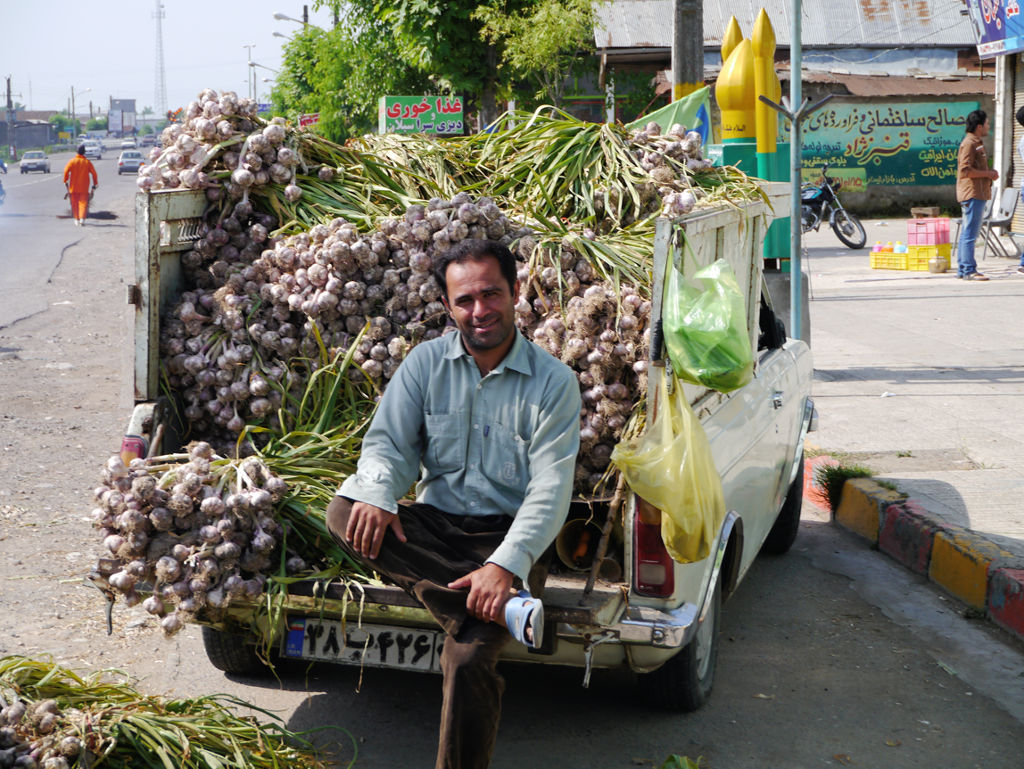
Trying to prove me wrong this garlic seller has a white ute. There isn’t a friendlier country than Iran in the whole world.
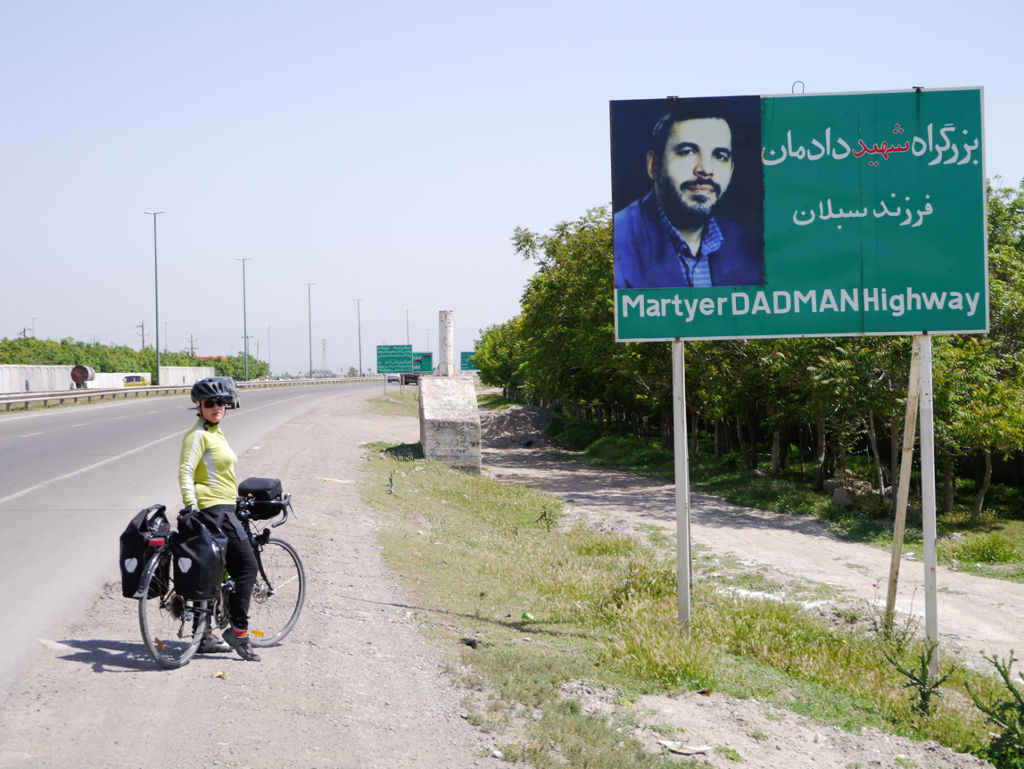
The roads are very good. For example, far better than the USA or Australia. Smooth and wide shoulders. Quite often they commemorate martyrs. Signage is good.
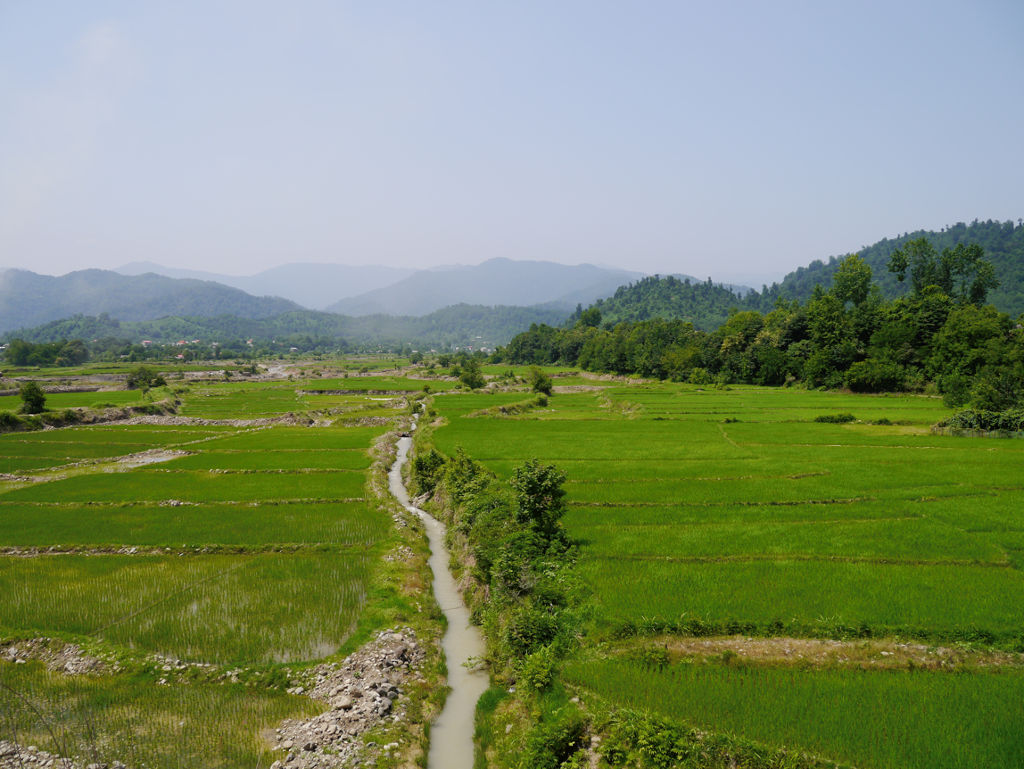
The southern end of the Caspian Sea is a very rich agricultural zone. Rice is one of the main crops. Also, tea, kiwi fruit and nut crops. Although the rainfall is low the snow melt provides ample water.
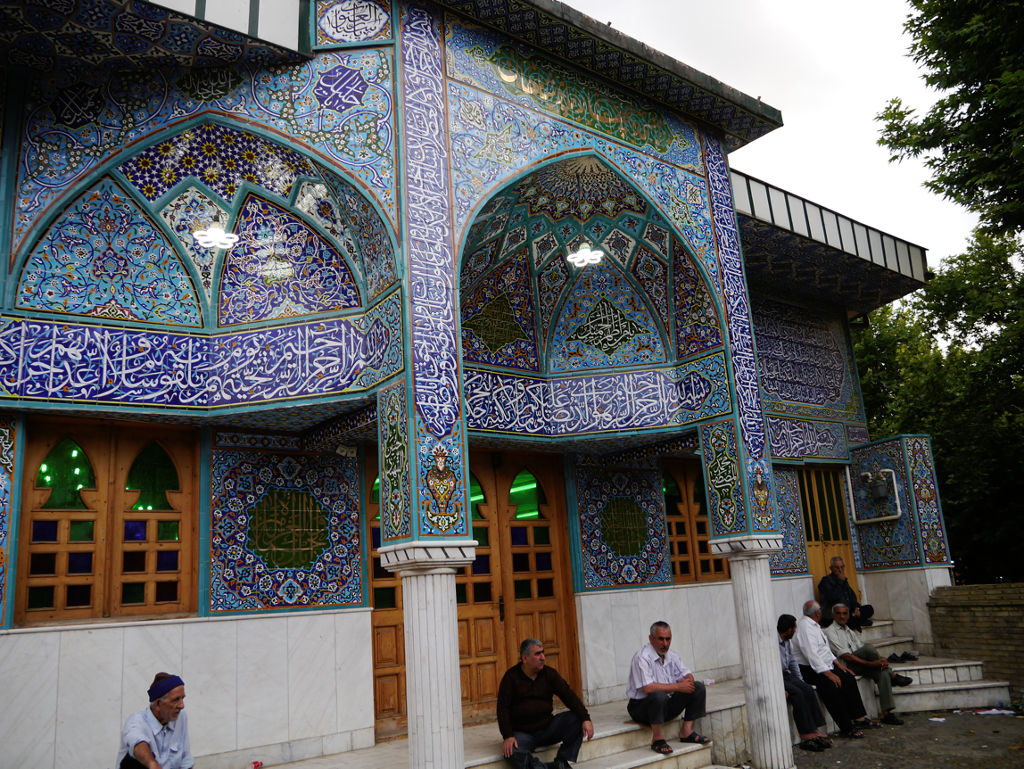
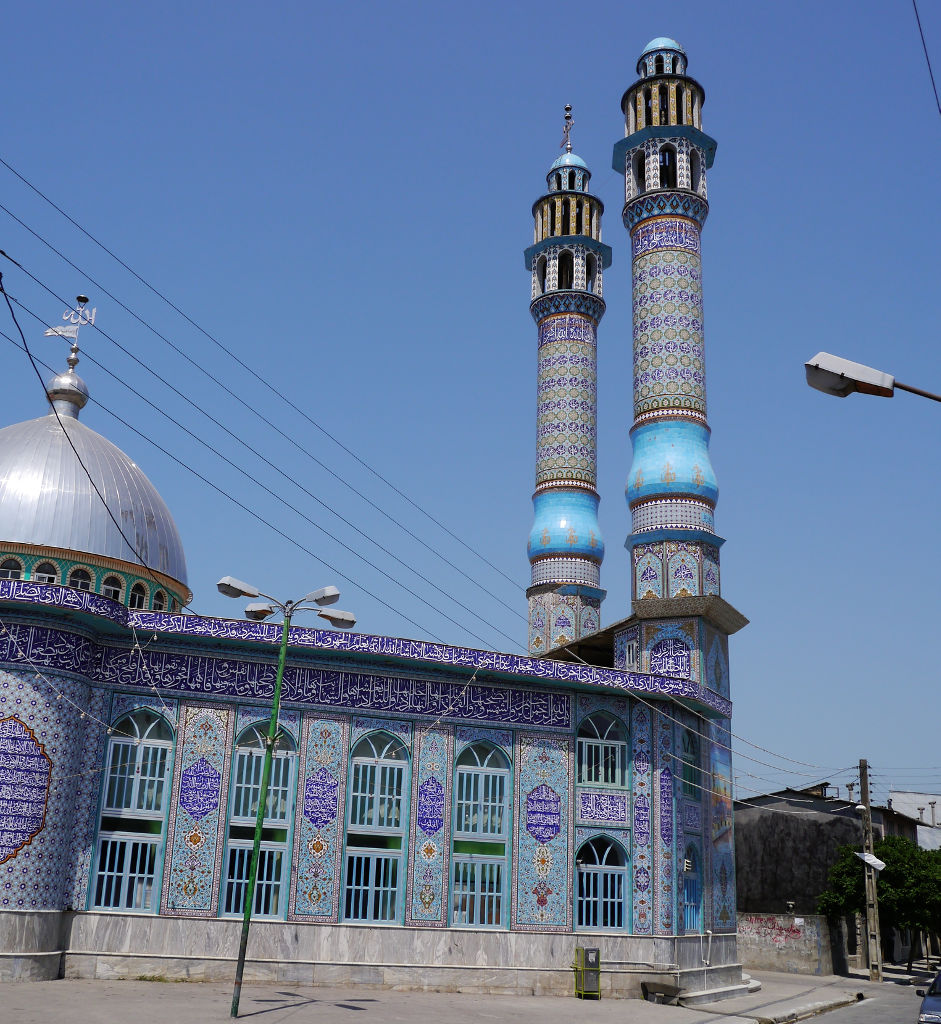
Exquisite ceramic work abounds. Not just on mosques. Many public buildings, even water fountains, feature beautiful ceramics.
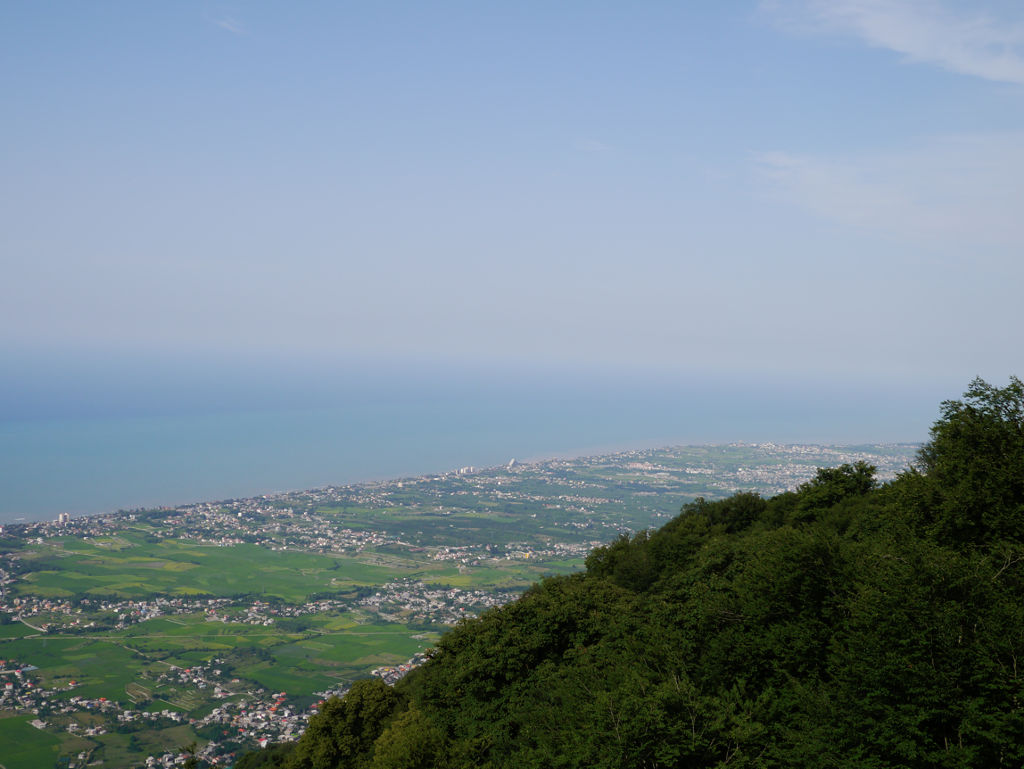
We played the tourist role and took the cable car up to see the view of the coastal are at the south end of the Caspian. This sea is below “sea level” and extremely salty.
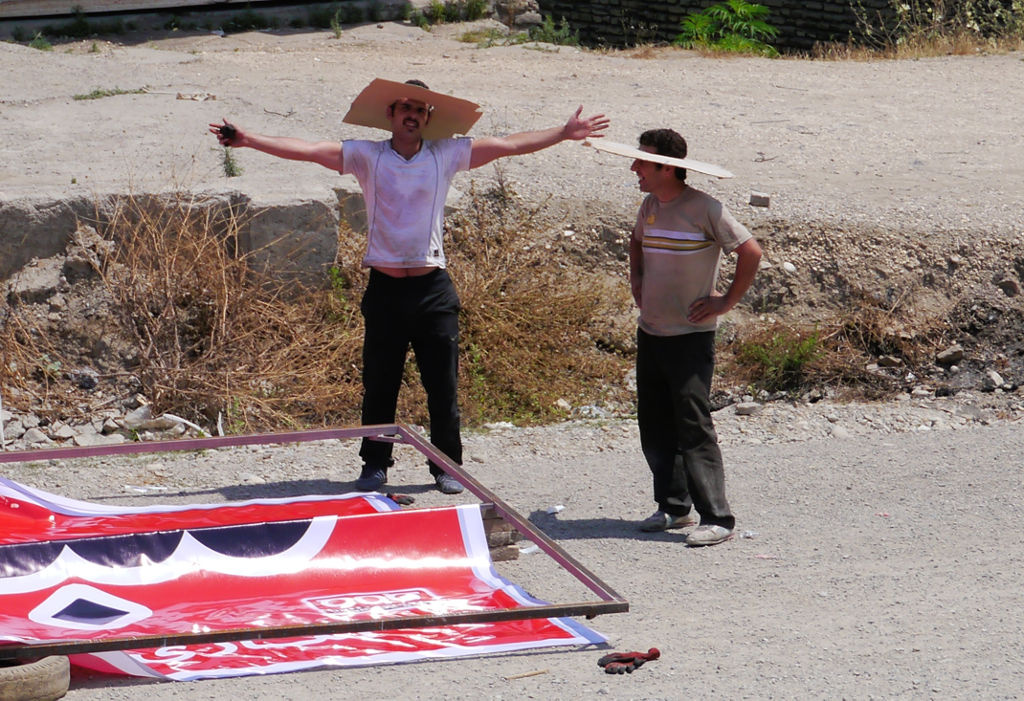
These guys have made sunhats out of pieces of cardboard.
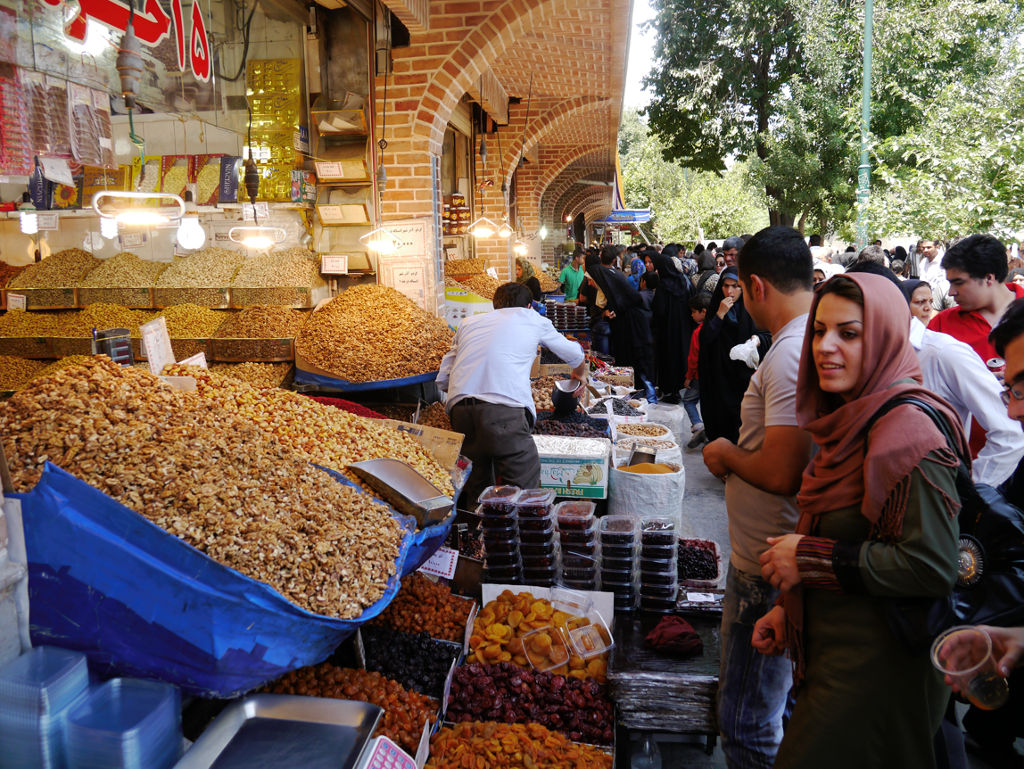
The food in the bazars is amazing. So many nuts and dried fruits. You can get lost in them and need to take care. Not that they are dangerous. It is normal to see businessmen counting out thousands of dollars in public. That means it is safe.
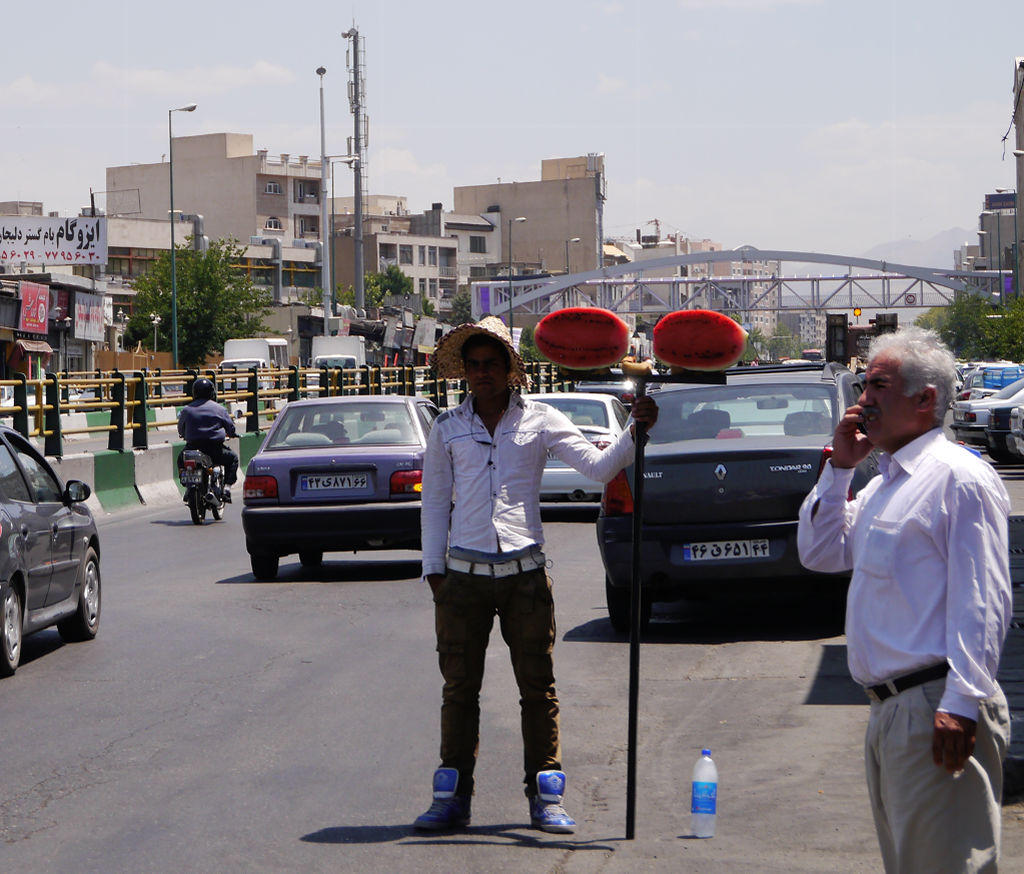
Tehran itself is easy and safe to cycle around. This guy is selling watermelon right out in the traffic. These days with a gps on your phone and a downloaded map you won’t get too lost. Note though that google is blocked in Iran.
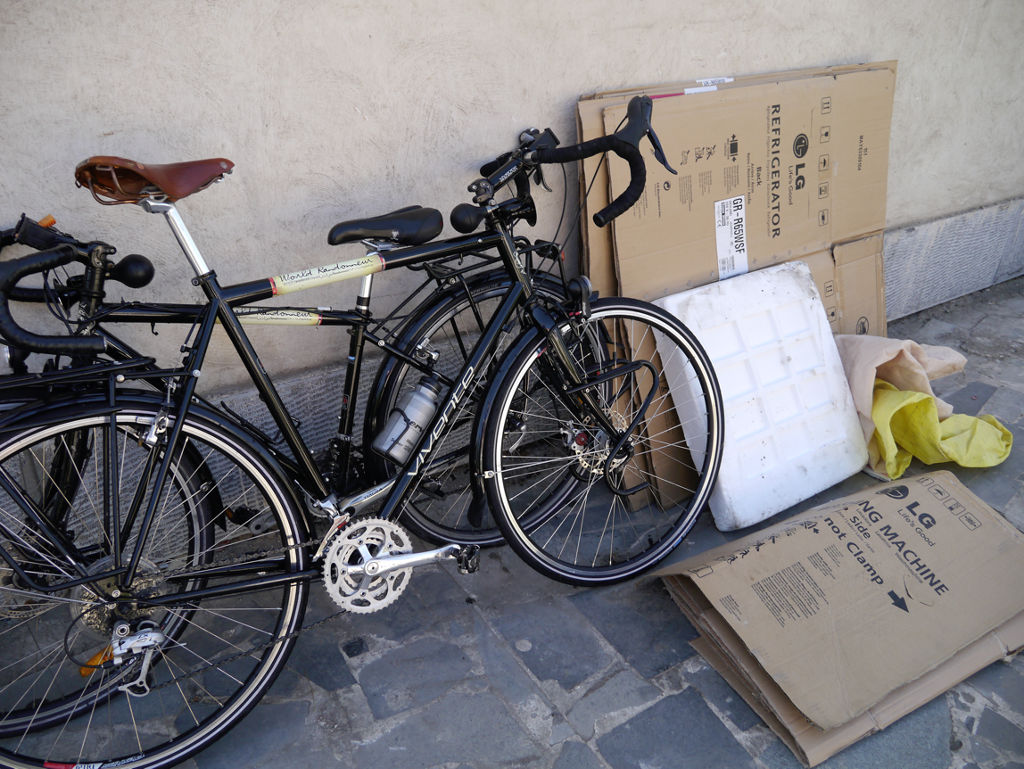
Time to go so the cardboard search is undertaken. Some refrigerator cartons are soon found. Note the leather saddle being test-ridden. It was a fail. A Taiwan copy of a Brooks Team Professional.
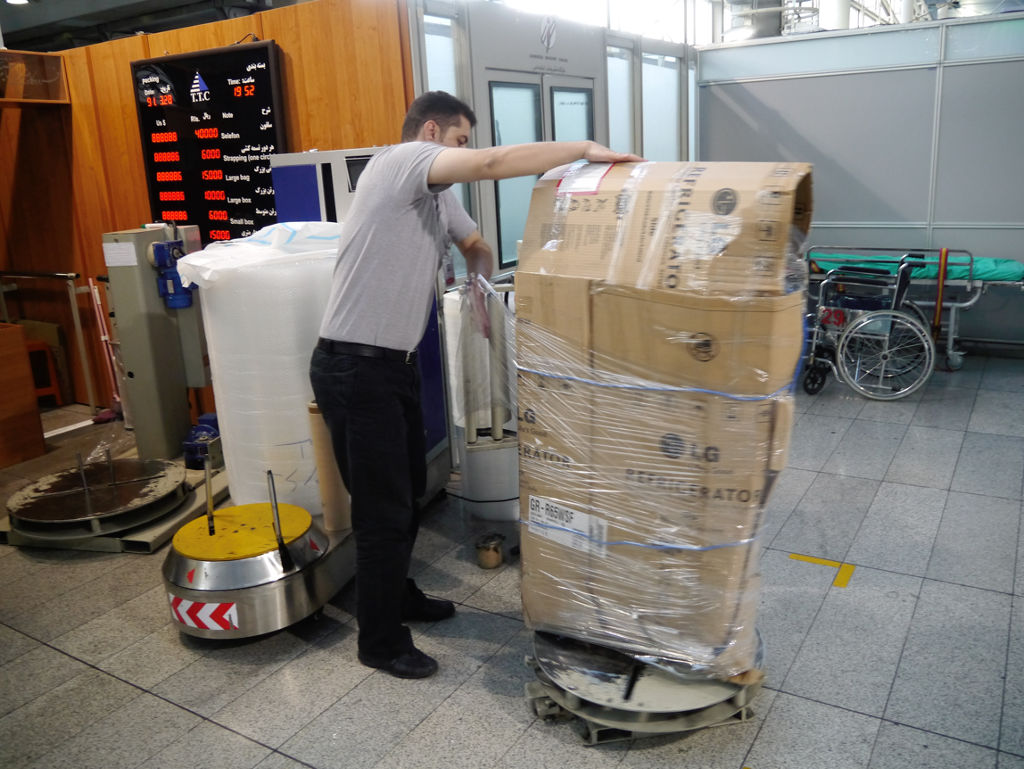
At the airport (which is a blue-ute ride out of the city) the plastic wrapping machine finishes the job. It is a good idea to look at airport websites to see if they have these machines as they save a lot of worry.
After decades of wanting to ride in Africa, Vivente World Randonneur has made a start in Rwanda, home of the Congo-Nile Trail. The trail is mostly on the Congo side. If you just ride the trail you don’t cross the mountain that is the actual watershed. But over a few weeks, we ride all over the country, mostly therefore on the (surprisingly) good roads that Rwanda has. One bike has 700 x 1.75” tyres (Smart Sams). The other 700 x 35C (Marathons). No punctures.
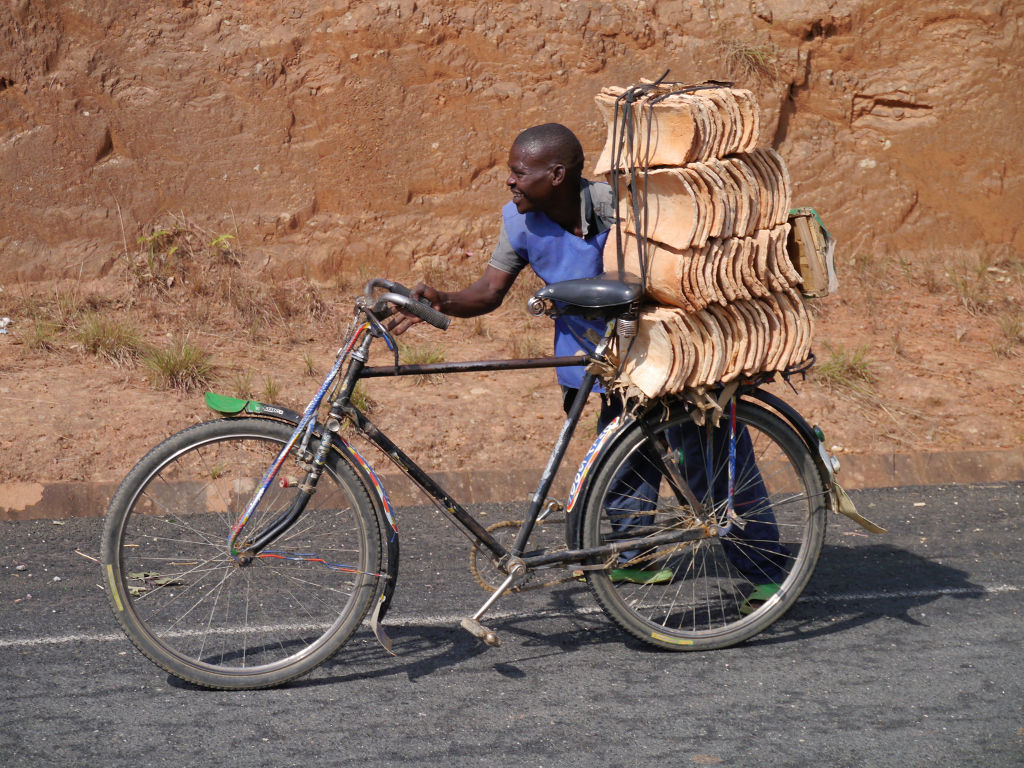
Not long out of Kigali we see that daily life in this very hilly country involves pushing loads up hill. The local bikes are all single speeds. They are really into their bikes.
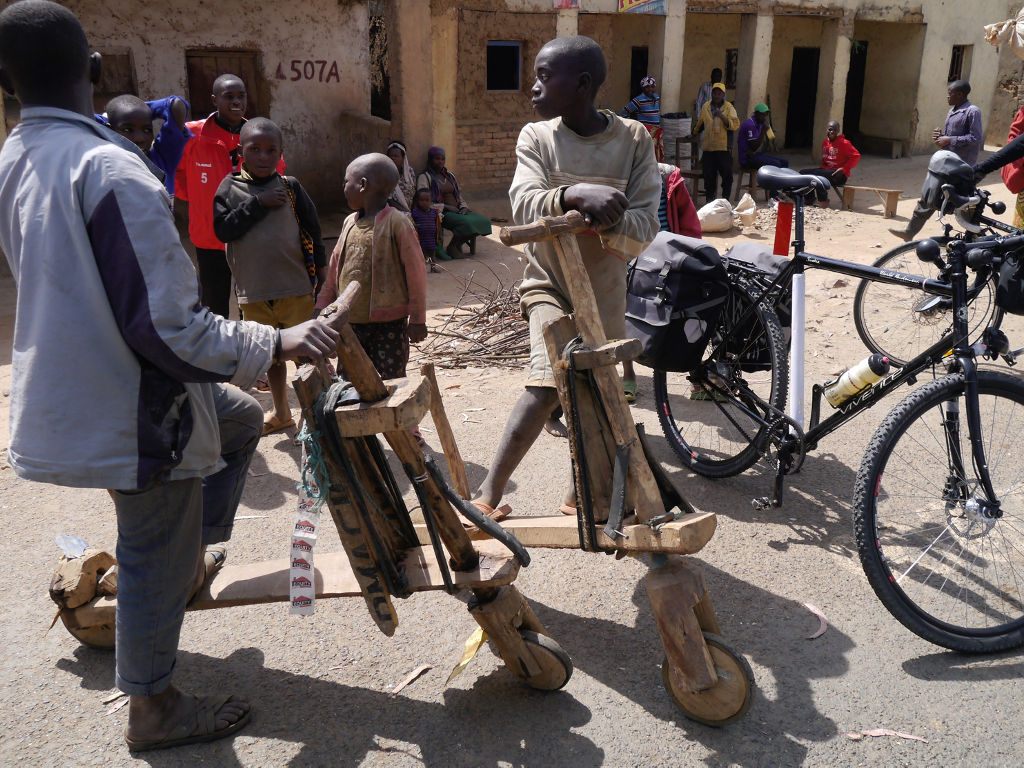
In the mountains the boys have wooden scooters. Some are big and able to carry another boy. They also have other toy-like things they have made basically from whatever they can find. They play endlessly with their scooters and balls and stick-runners.
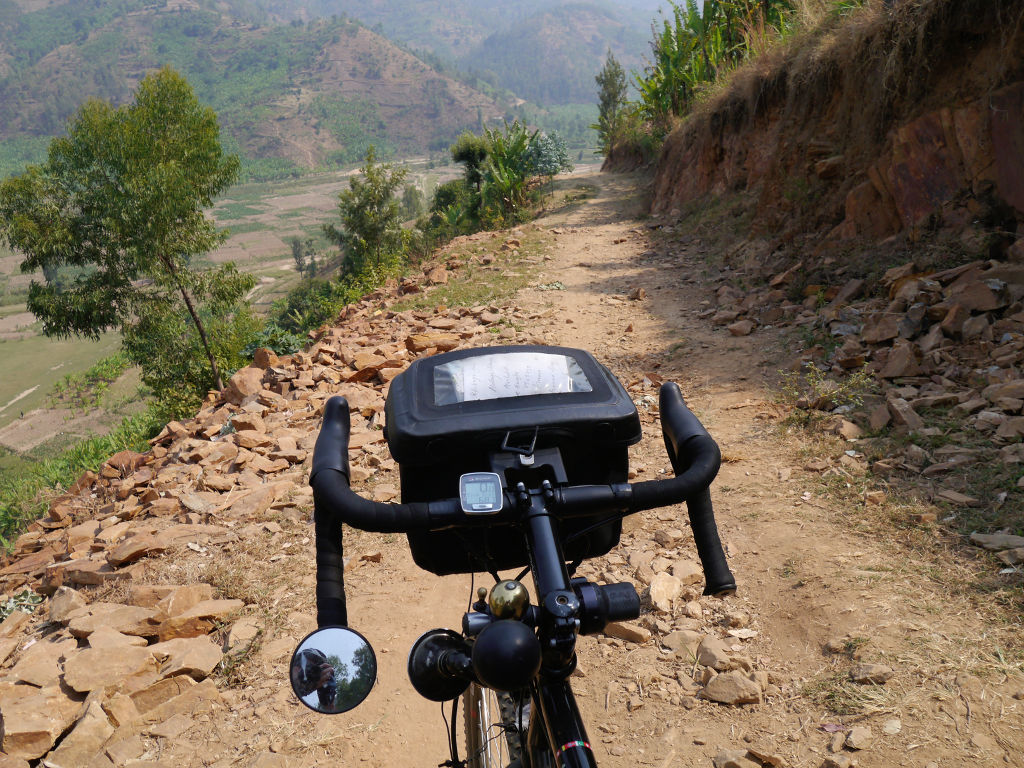
The Congo-Nile Trail follows ridges that come down to Lake Kivu. This is a large north-south rift valley lake. The trail is an idea managed by the RDB (Rwanda Development Board). Lodging can be found along the way. A few bits are tough but most are not.
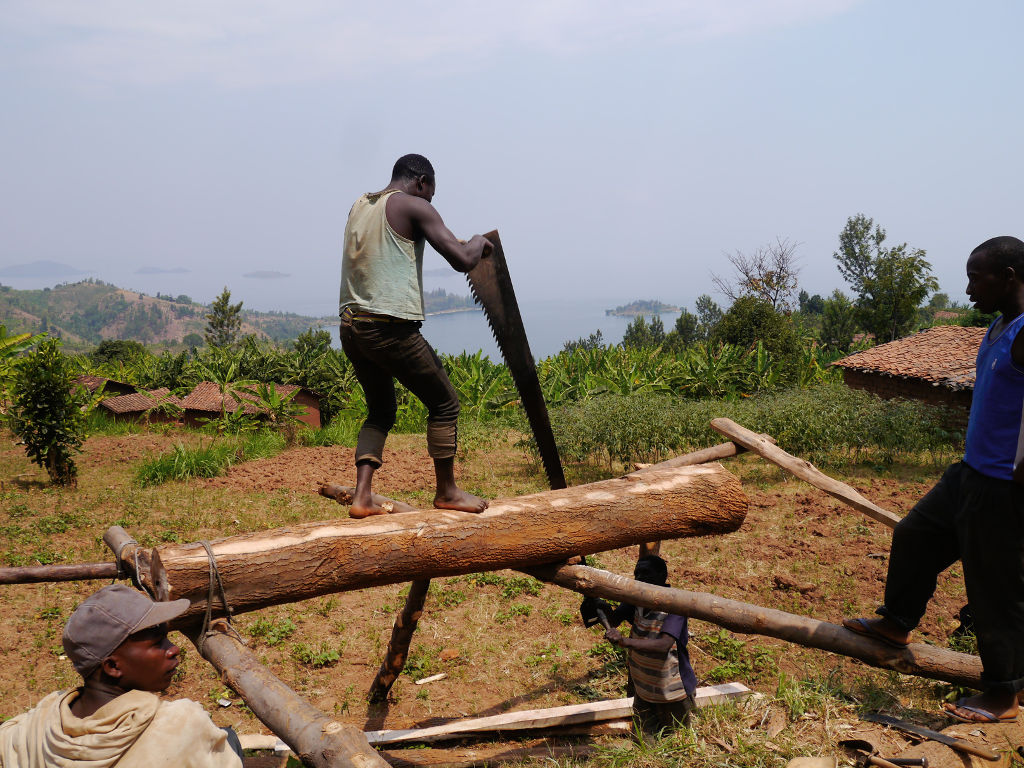
It is great being in a country where things are done by hand. The guy underneath follows a line on the wood, made with a string-line.
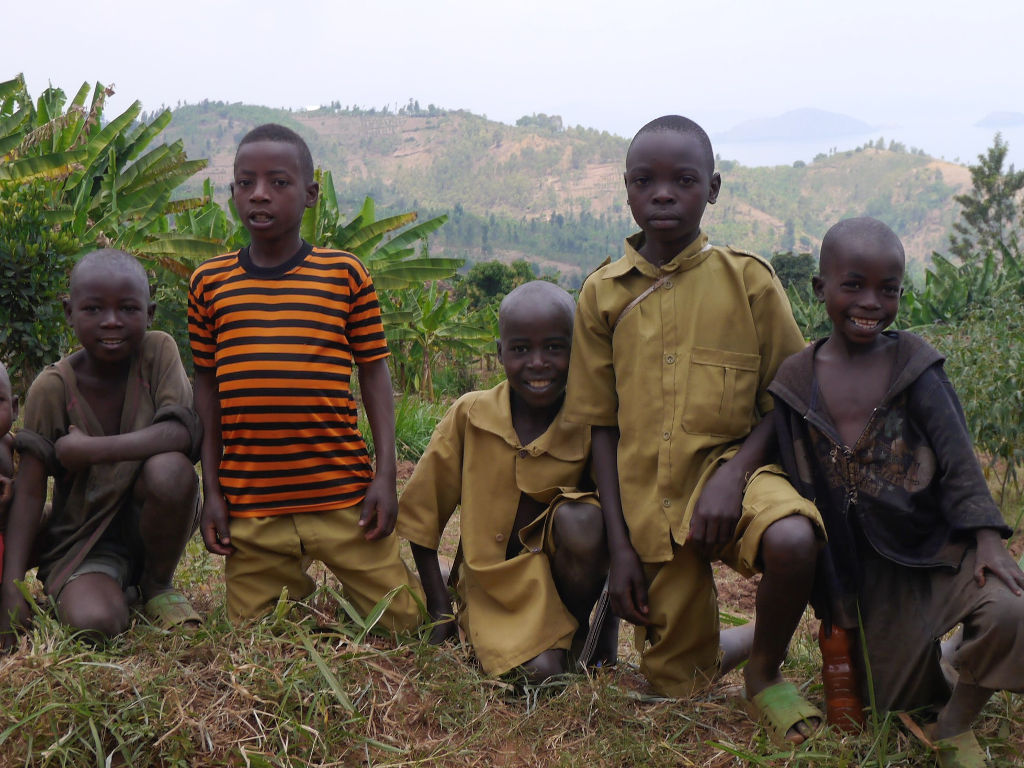
The kids. Along the trail, some of them ask for money. Not in the rest of the country though. The predominant feeling is of deep appreciation. If you are pushing your bike up a rough track, a kid will come and help you push.
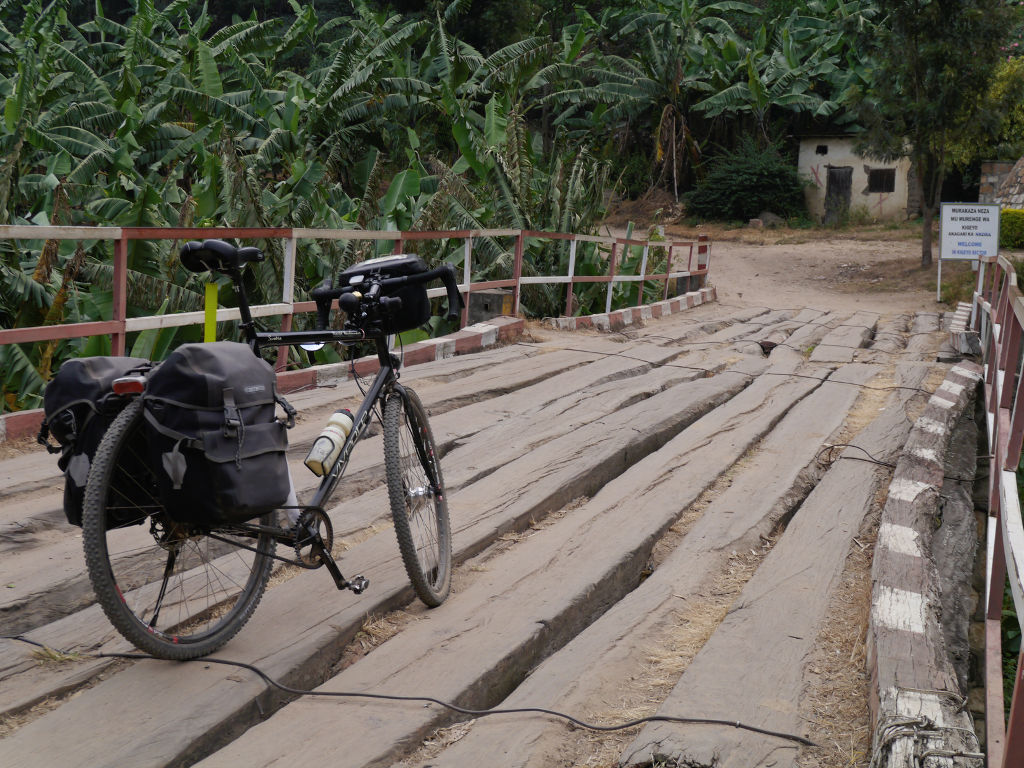
We walked but the locals ride over all the bridges. Even the ones with big cracks in them.
Three shots of the dozens we took of people riding bikes downhill with loads. It’s the way things are moved around. There are very few lorries or minivans. On the middle shot they have live pigs on the back.
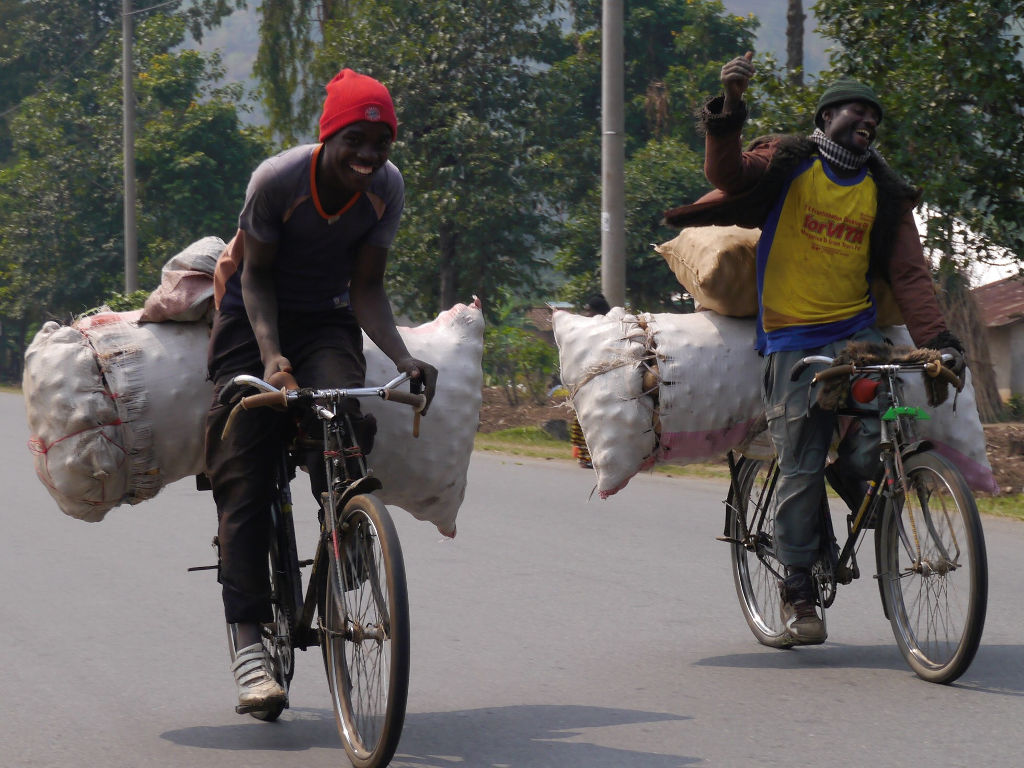
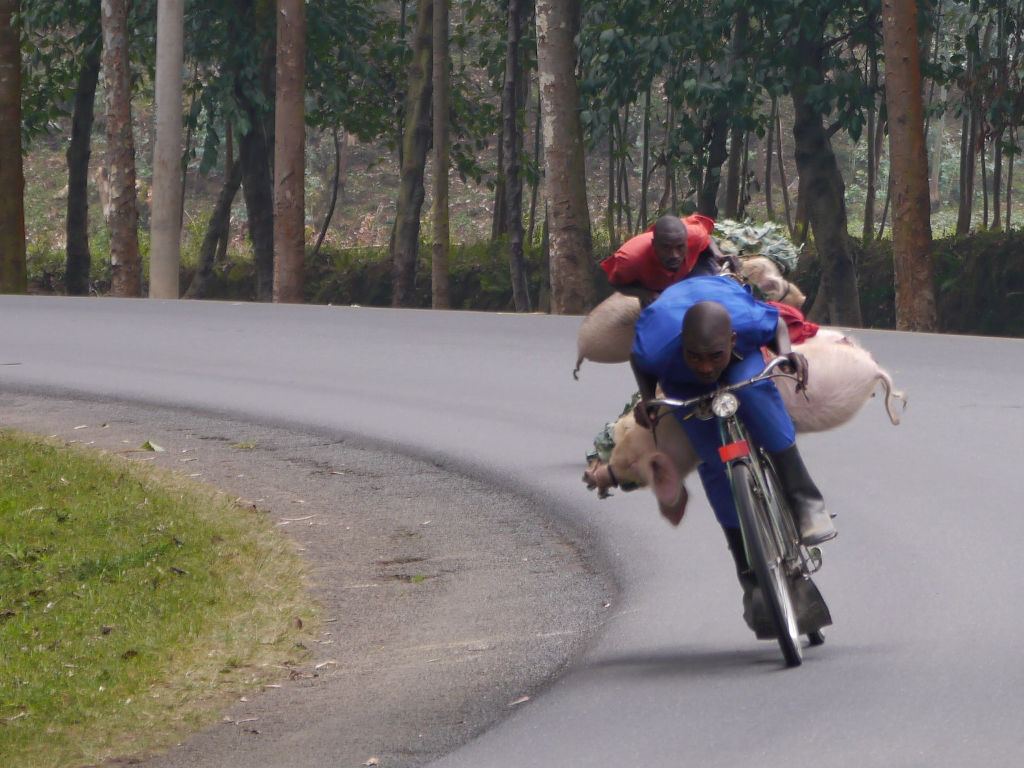
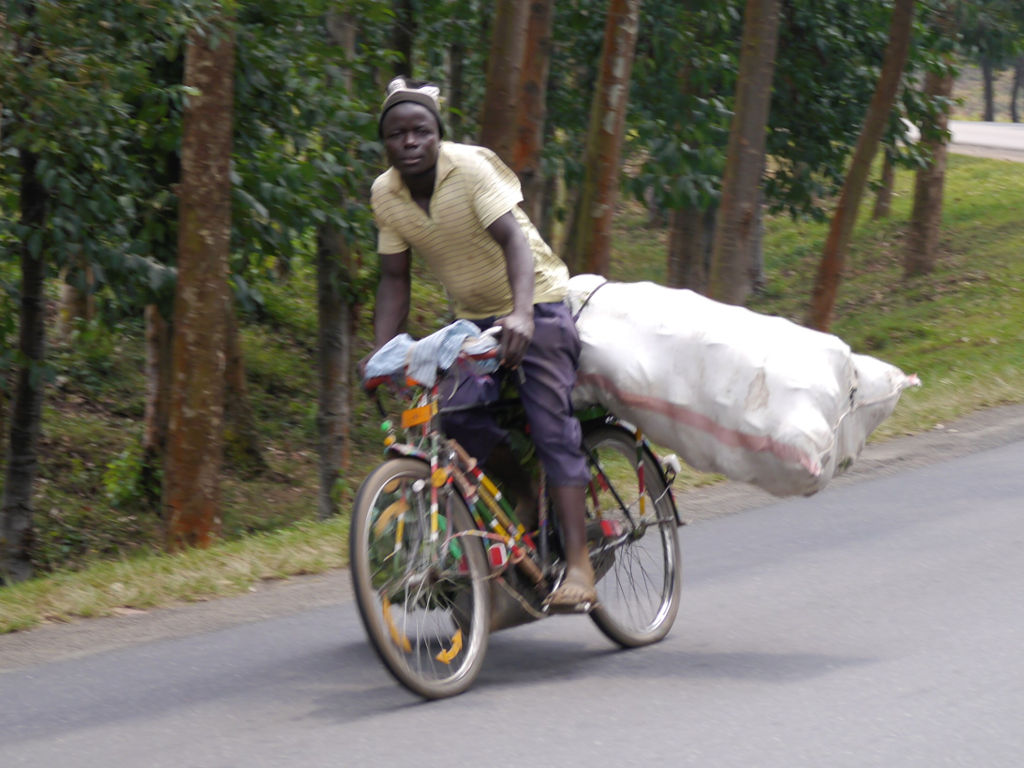
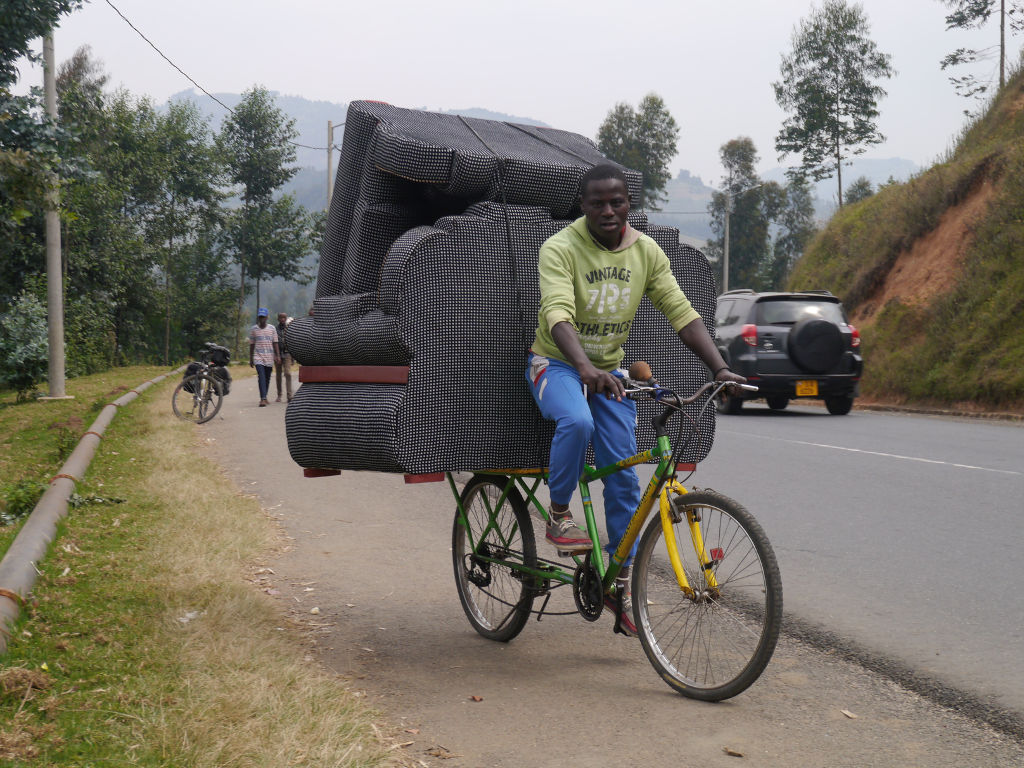
This poor guy SO wanted the shot sent to his friend who supposedly had a smartphone but alas it did not work. How impressive is he!
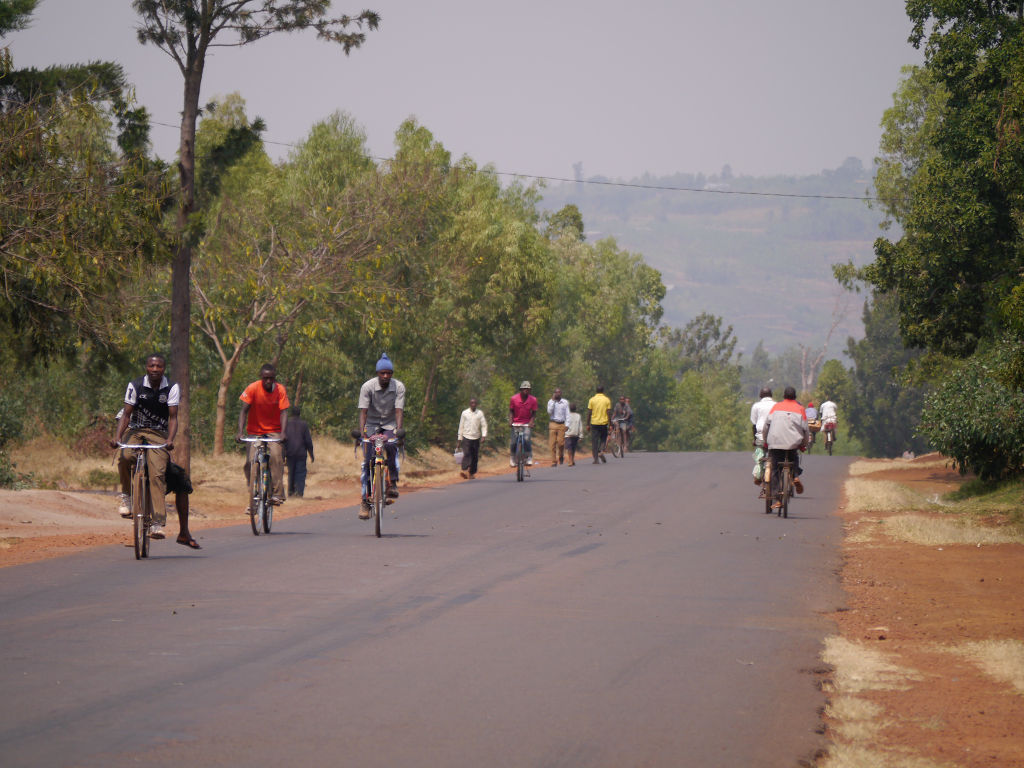
Country roads have lots of bikes.
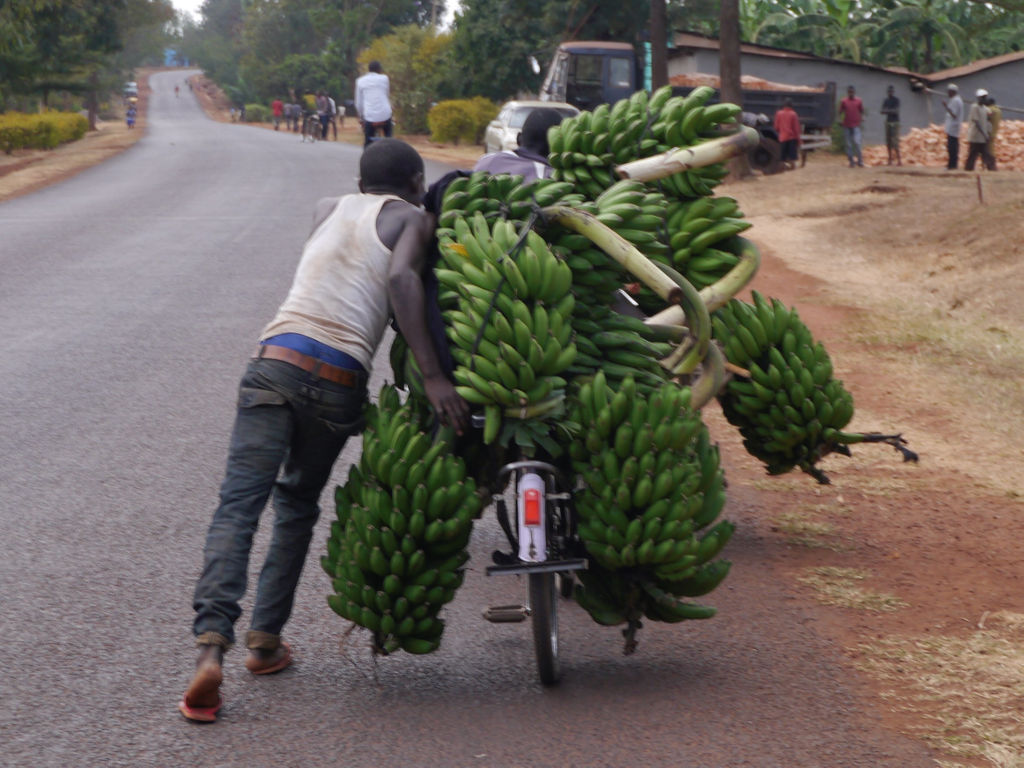
Pushing bananas up hill. I think bananas are worth a bit more at the top of a hill.
The route. Definitely intending to come back!After arriving back in the capital Kigali we undertake a trip to the northern volcano region to trek to see the mountain gorillas.
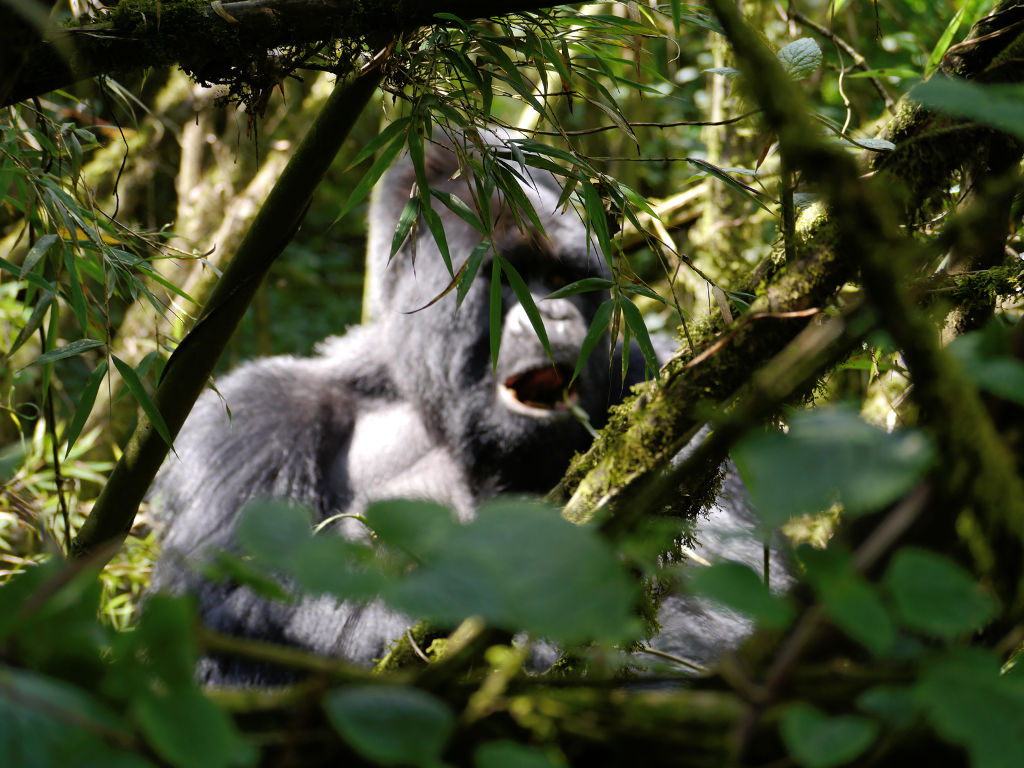
Words can’t describe the feeling of being near to these animals. Rwanda has developed this very well and it is an experience of a lifetime.