Trips
In Australia, Victoria has a strong history of cycle advocacy. Over the decades, the state has accumulated extensive bicycle infrastructure. To cyclists from other states, this is notable and appreciated. This trip explores more of Victoria by riding the rail trails.
The Rail Trails (RT) movement, whilst national, has also had its greatest success in Victoria. Over five decades, Bicycle Victoria and more recently Bicycle Network have collaborated with government, plus bushwalking and other organisations. There are now 49 separate rail trails in the state.
We head over from Tasmania on the Spirit to check some of them out.
Being January, it’s bushfire and heatwave season, but life must go on. If it is forecast to be a hot day, we’ll leave early. If there is a bushfire, we’ll change routes. Last January that meant skirting around the Grampians and getting past Dimboola just in time before roads were closed.
This ride is mostly in the Southeast, where the weather is milder. We are not into suffering or taking on excessive risks. It might be 45℃ in Mildura but only 29℃ in Orbost (on the Snowy River at the end of the East Gippsland RT).Off the Spirit we ride around the west of Corio Bay on the Bellarine Rail Trail.
From Port Arlington, there’s a fancy ferry that runs to inner Melbourne. They take bikes but you need to book. It’s a great way to move between Geelong and Melbourne.
Once at Southern Cross station in Melbourne we connect to the Victorian train network. Drouin station is about 40 km from the start of the 138 km long Great Southern Rail Trail (GSRT) and we head there.
There are some cool features of rail trails. Especially these longer ones.
Normal navigation on bike rides is interesting and fun. But on a long rail trail you just don’t do it. Also, you don’t climb anything steep. Trains don’t do that. You get to go right through the centre of town. Although close to things, there is a sense of being in a separate zone. Safe and welcome.
On the Rail Trail website you can pick a state, then a region, and see the trails in lists and on a map. In Gippsland there are 12.
Long before good road networks were established, and road bridges built, trainlines were the main access routes into Gippsland. Before then, access had been limited to coastal vessels. Welshpool, on the GSRT was one of these port-access points.
In typical British fashion, the stolen Aboriginal land was “granted” to settlers. The trainlines allowed timber and farm produce to be taken out. As we tour through Loch, Korumburra, Leongatha, Welshpool and Yarram, there is little to indicate we are on the land of the Kurnai people. There are very few memorials. Things are happening though. There is a Treaty in Victoria. There are provisions for truth telling.
Between 1830 and 1850 Indigenous population in the south east region had collapsed, from thousands to less than one hundred. They were wiped out, about eight generations ago. When intensive colonisation occurred in the late 1870s, brought by the train in 1877, it must have seemed like vacant land.
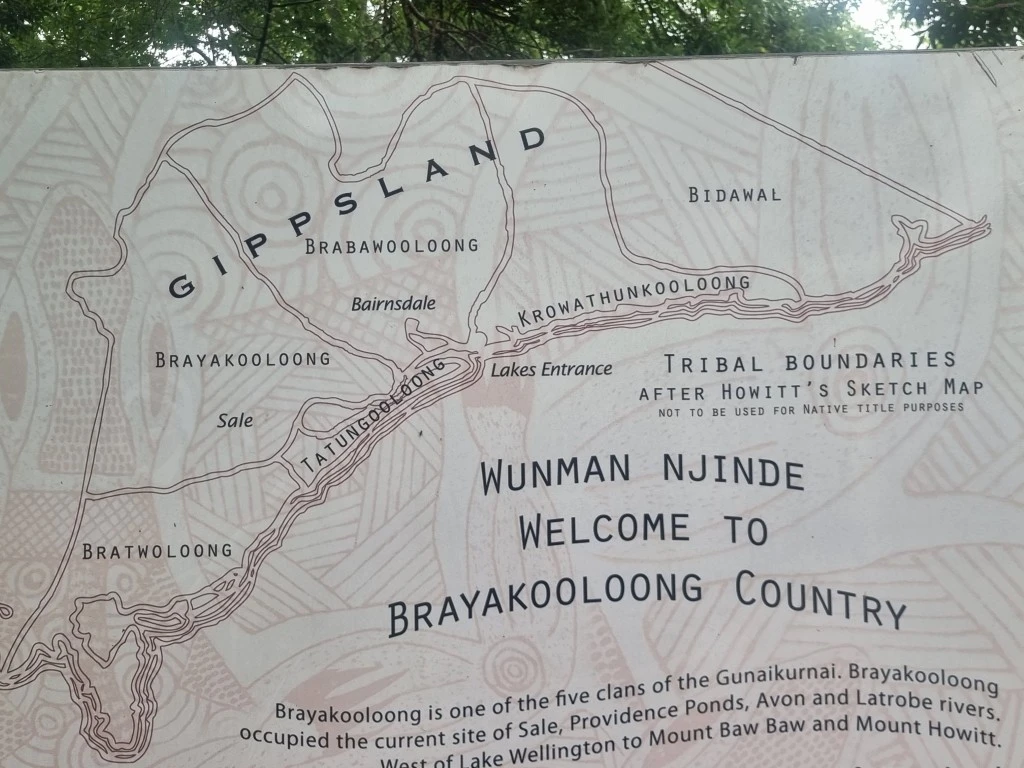
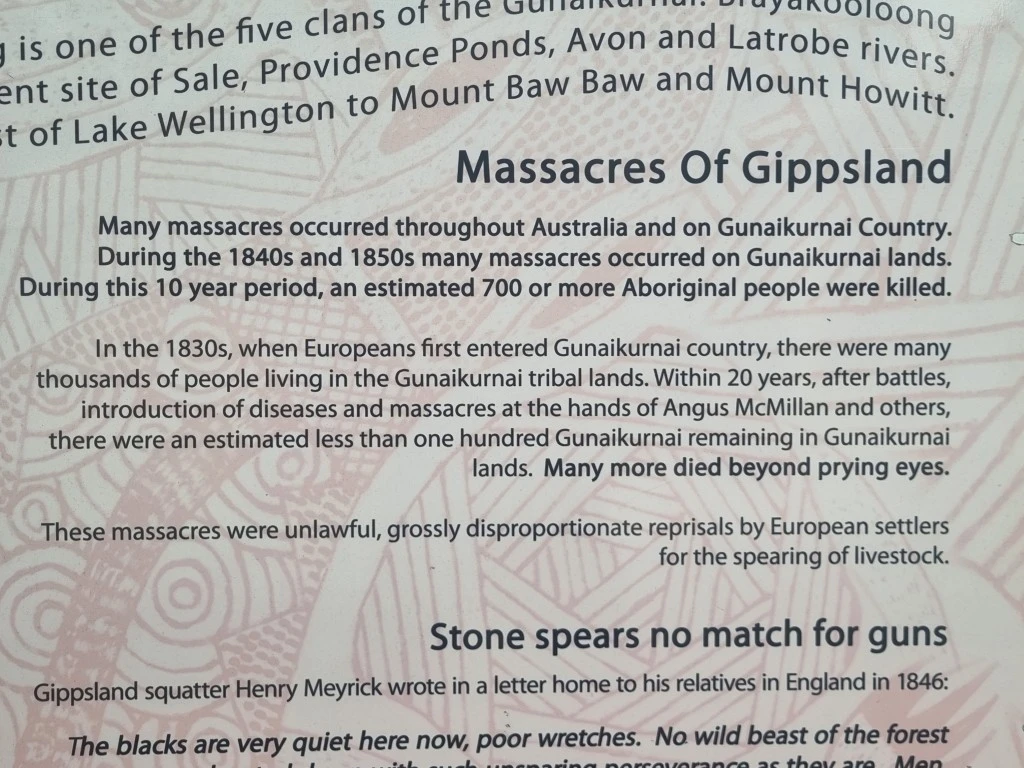
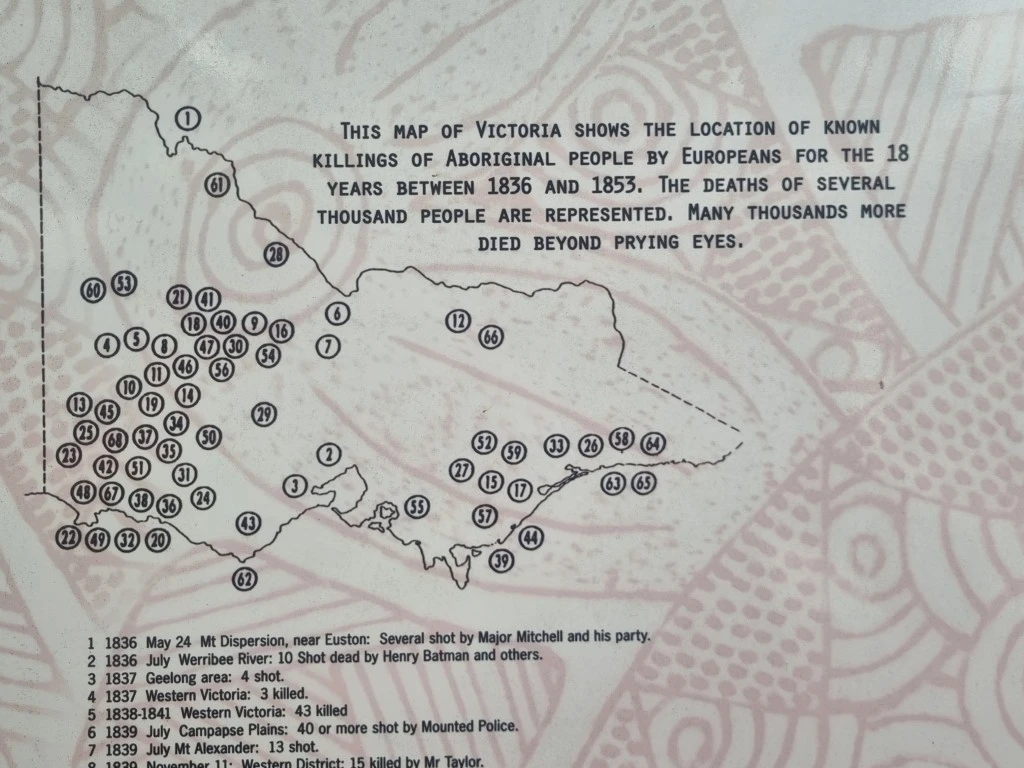
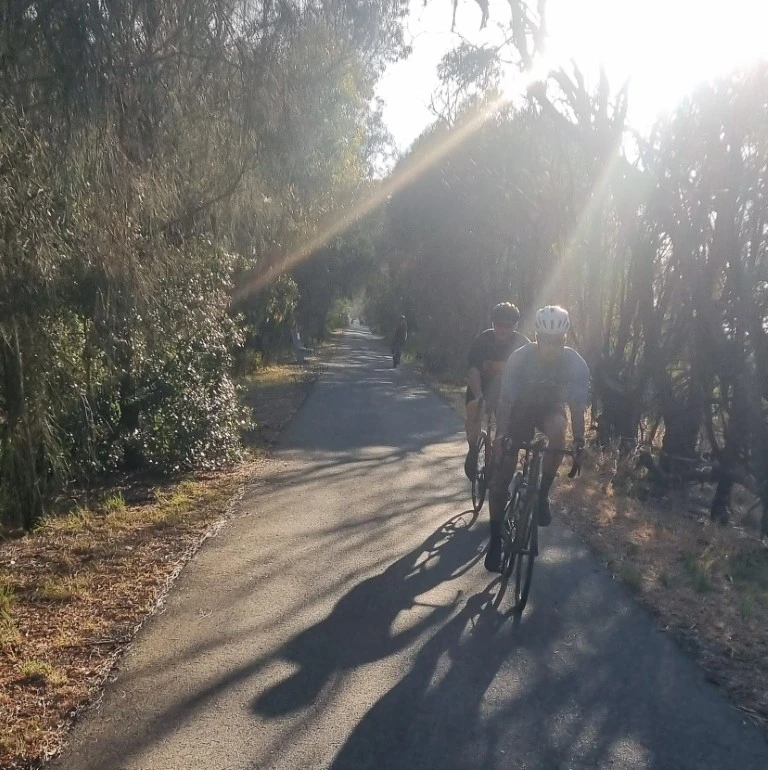
Much of the time the trail is in beautiful forest and bushland. Wildlife abounds. The trail surface is fine gravel and 40mm tyres are a good choice. There is virtually no loose sand.
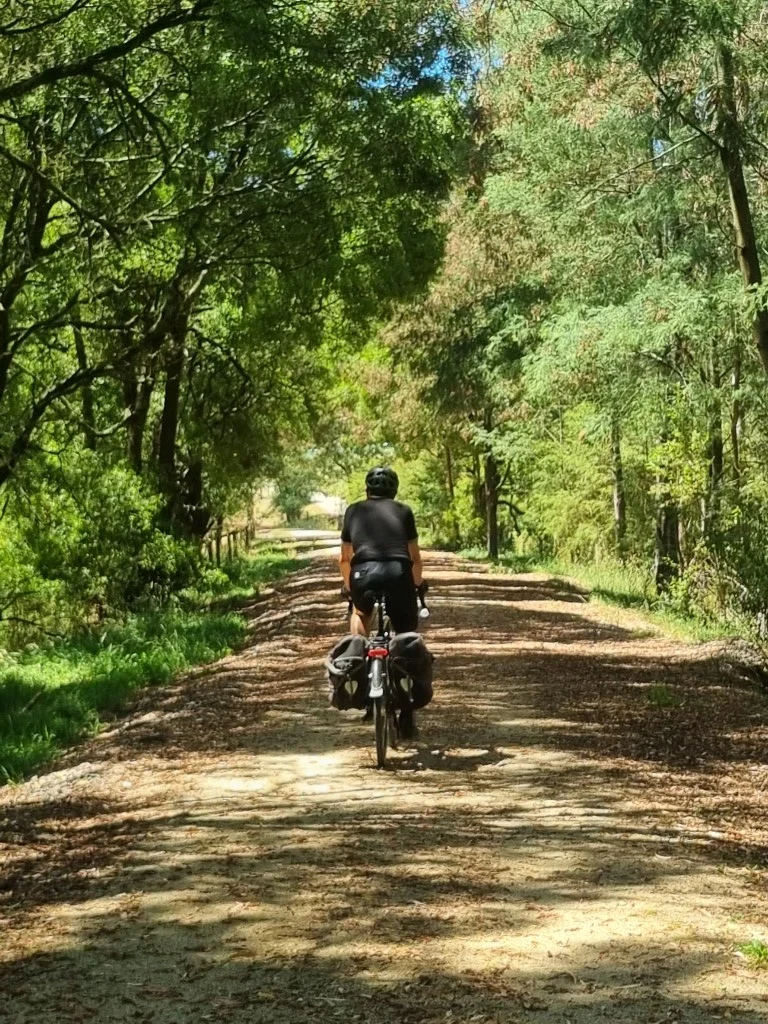
We soon get into the vibe of being out in the bush and on a beautiful trail. There is no rush. The impulse is, at the end of a trail, to find another one. After reaching Yarram, to reach the next trail starting at Bairnsdale there are two days road riding, with a stop at Sale. The highway has a good shoulder.
North of Sale there is an extensive and low-lying plain. Sale itself is only 5M above sea level. The plain north to Stratford is less than 15M above sea level. It’s rich dairy pasture-growing country. It will eventually be inundated by salt water due to sea level rise.
Then it is another day on the tar to Bairnsdale.
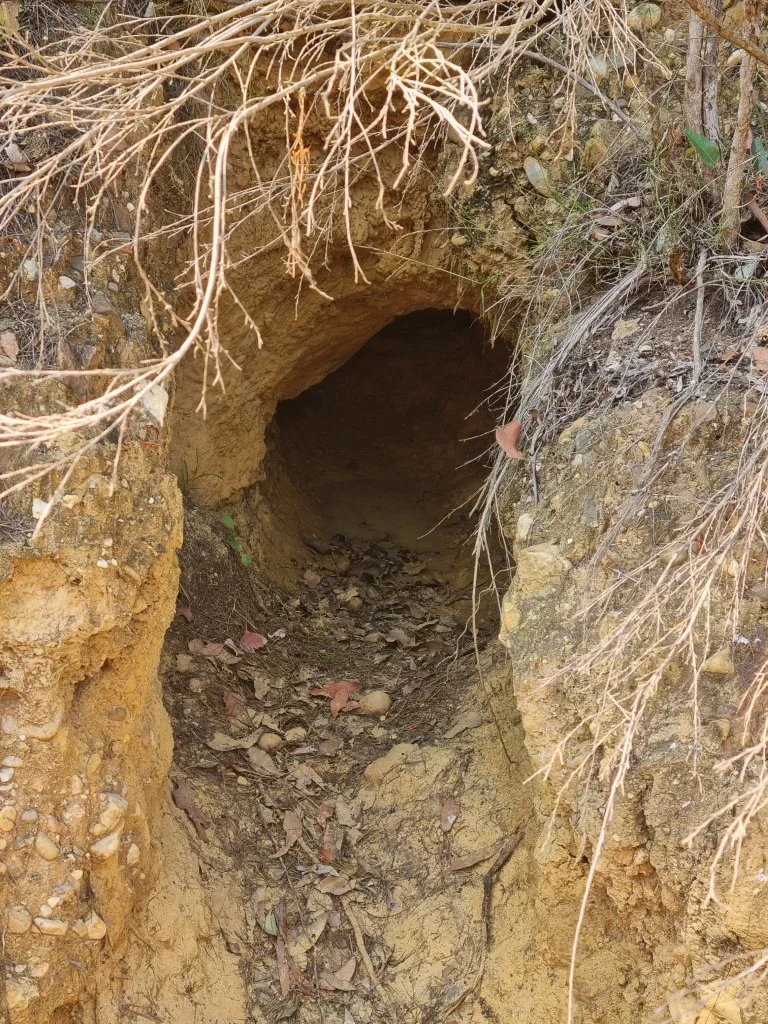
Bairnsdale is where the East Gippsland Rail Trail (EGRT) starts. It’s well made and has excellent signage. There are informative plaques and fascinatingly large wombat holes.
Travelling on a bike, you don’t expect serenity. But these days in the bush are like that.
After two days on the highway, with caravans and wide mirrors and wide boat trailers, as we head out east from Bairnsdale, we are immersed in serenity again.
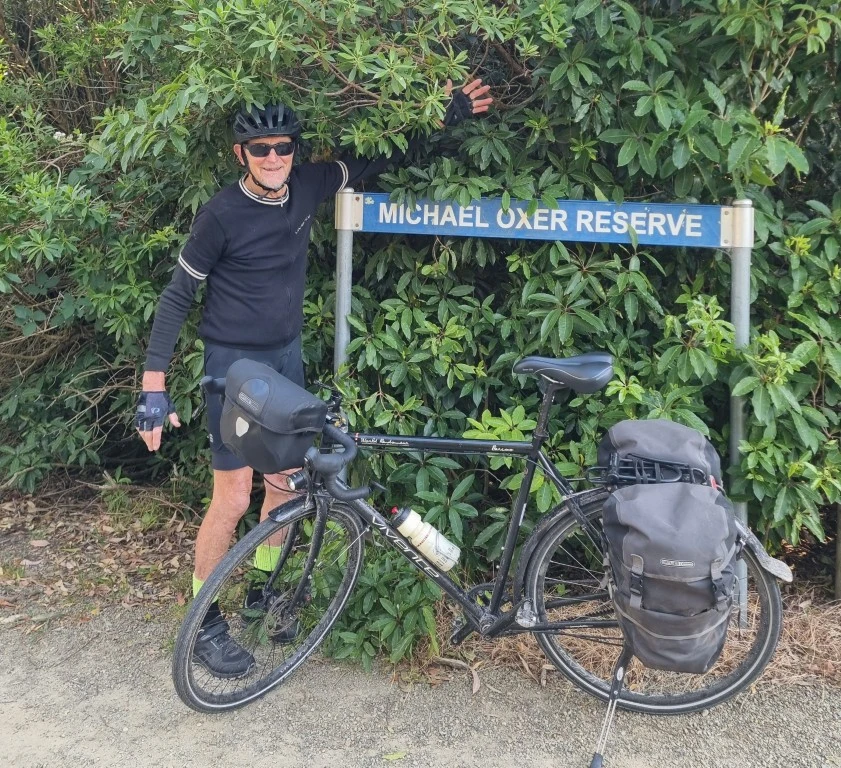
We come across a memorial to the work of Michael Oxer. Michael has inspired people in Melbourne, in Victoria and nationally and this is a very fitting recognition.
Although it is mid summer there are still several other cyclists travelling on Victorian Rail Trails. Here are the bikes of two Koreans cycling around the world.
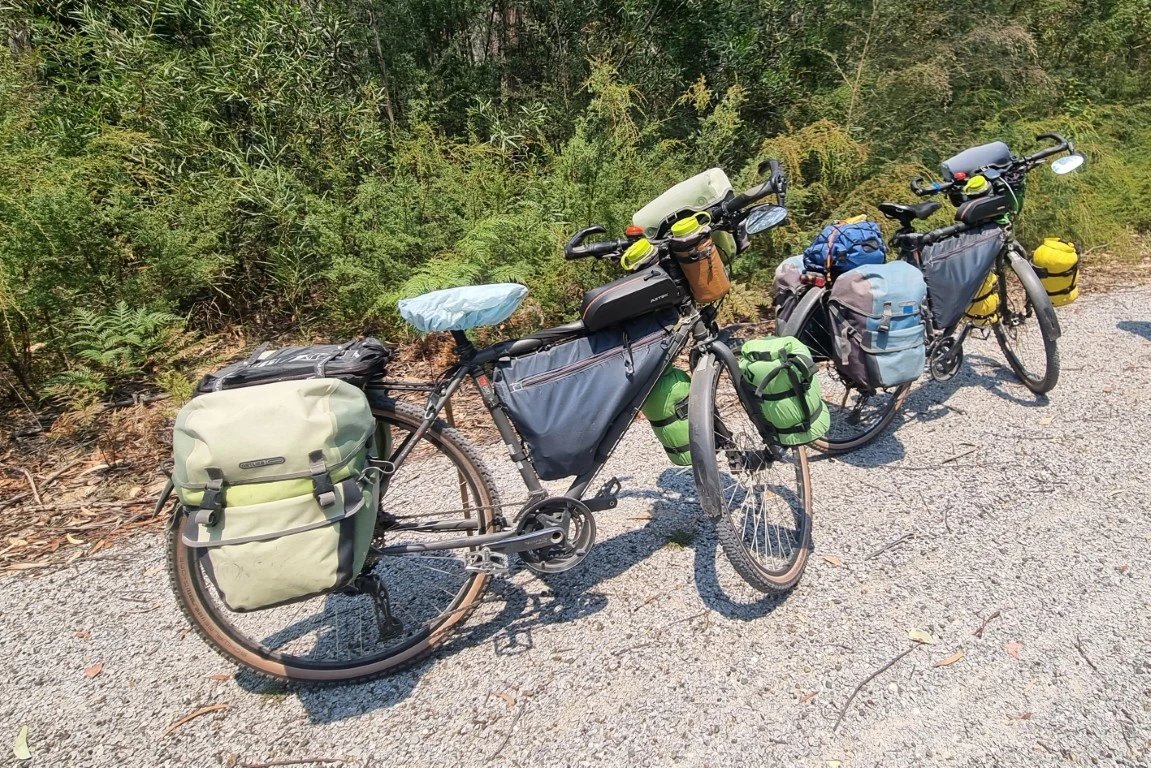
They are German bikes with 40mm tyres and triple sets. They are quite similar to the now discontinued Vivente Anatolia.
It’s a current trend on sit-up bar touring bikes to use frame bags and to move the water bottles up behind the handlebars. Also to have front fork-blade-mounted luggage, not on a rack, but on two or three M5 mounts in a straight line on the fork blades.
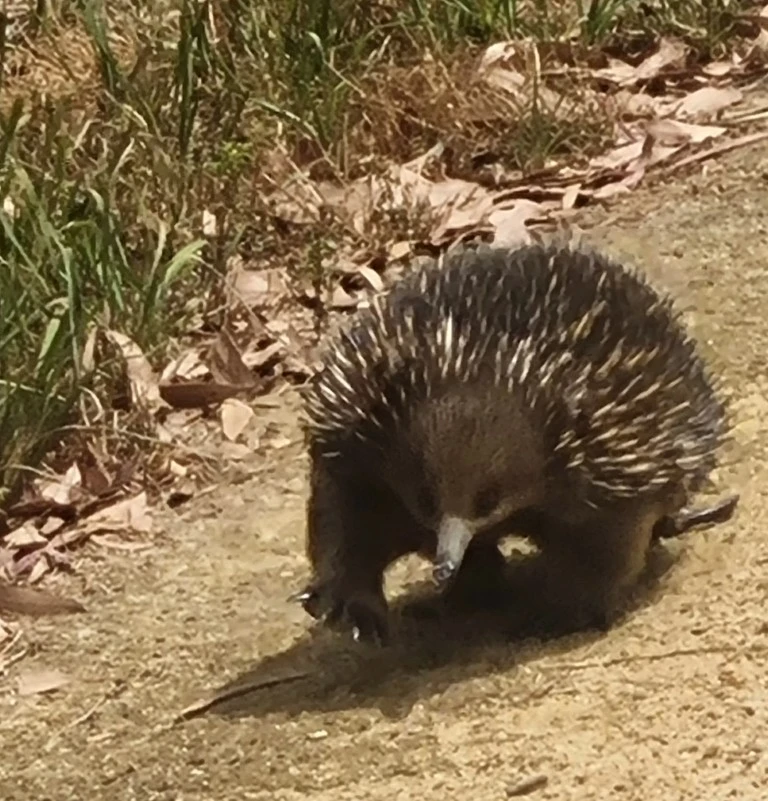
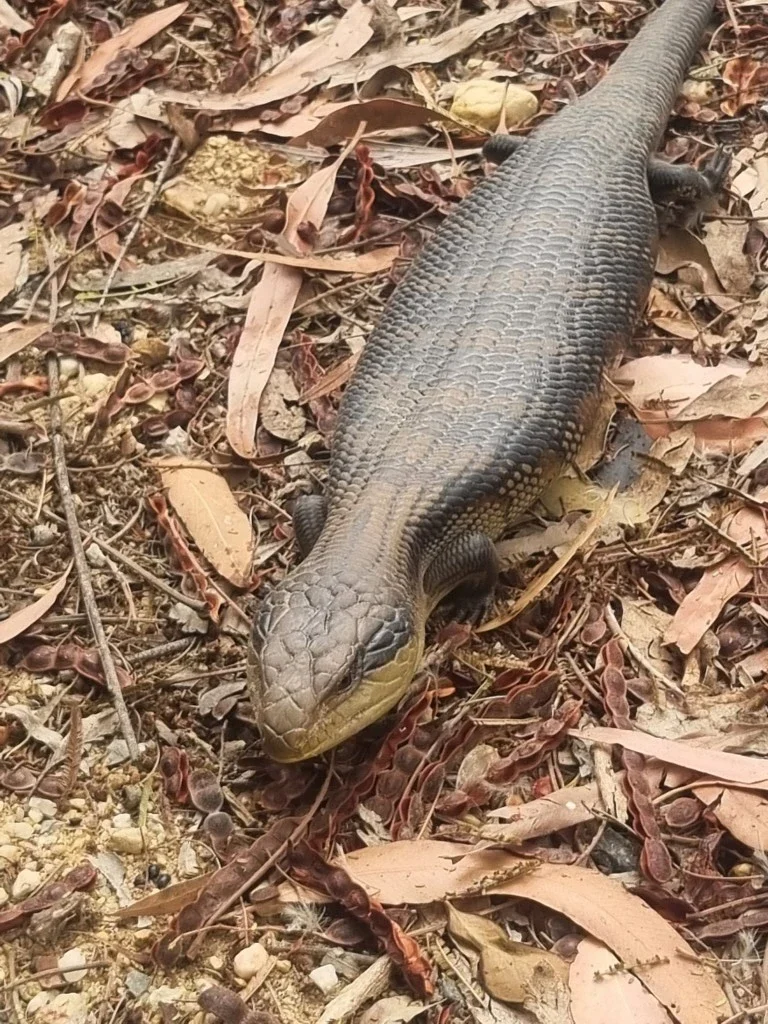
If you love Australian wildlife, you will love riding these rail trails. Plenty of echidna, blue tongue lizards, wombat holes and their characteristic square poo, and huge termite nests. Birdlife in abundance. Sadly, no goannas for this ride.
At Nowa Nowa we take a side trip north to visit the Buchan (“Buch” as in” Buccaneer”) caves. Take the Old Buchan Road. The caves are well worth a visit.
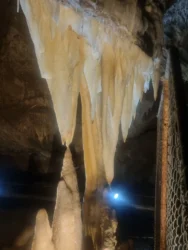
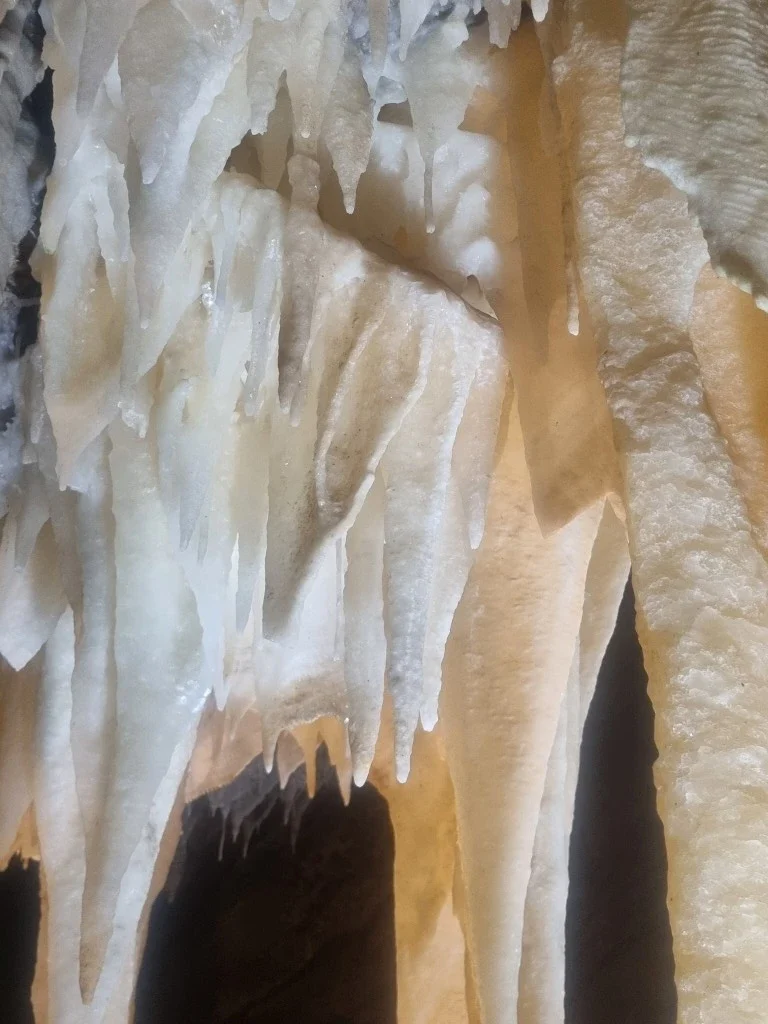
After Buchan we want to cut across to Orbost which is the eastern end of the EGRT. From there we will ride back to Bairnsdale.
Studying the maps there is a choice between the Buchan-Orbost Road, which is tar, and the Mottle Range. Fortunately, we came across a report from a guy (on a Vivente) from 2012. He took this route and reported that much of it was unrideable. He did see 10 goannas though! So, we take the tar. In the 55km section through the mountains there was only one car. Thank you, taxpayers!
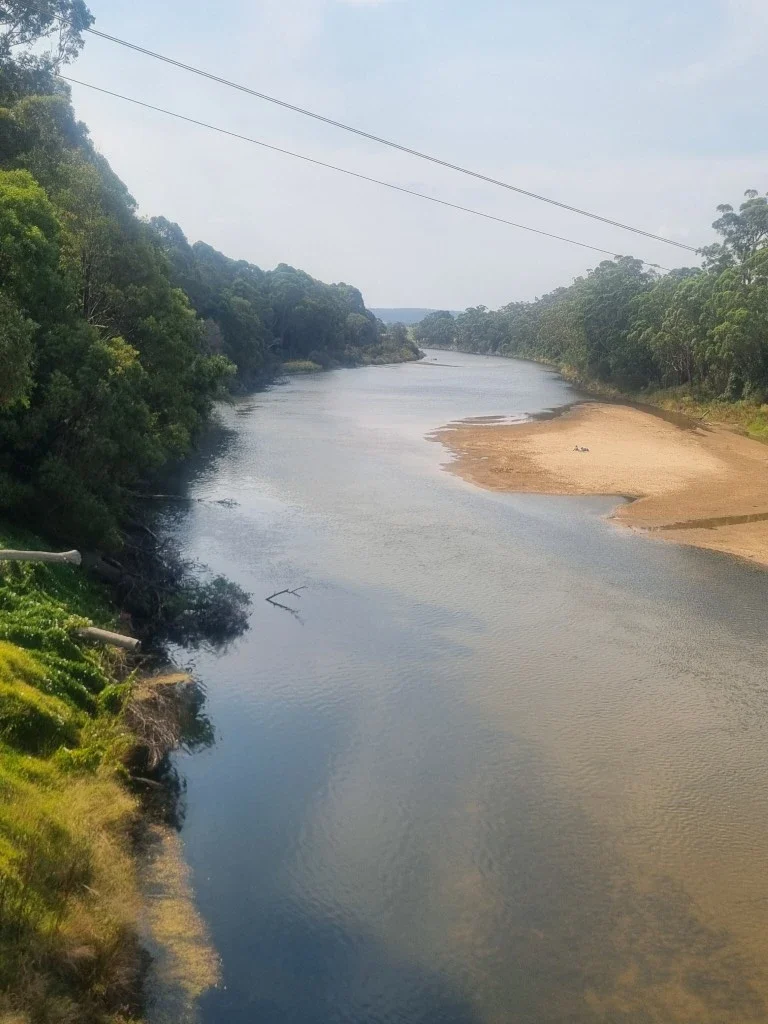
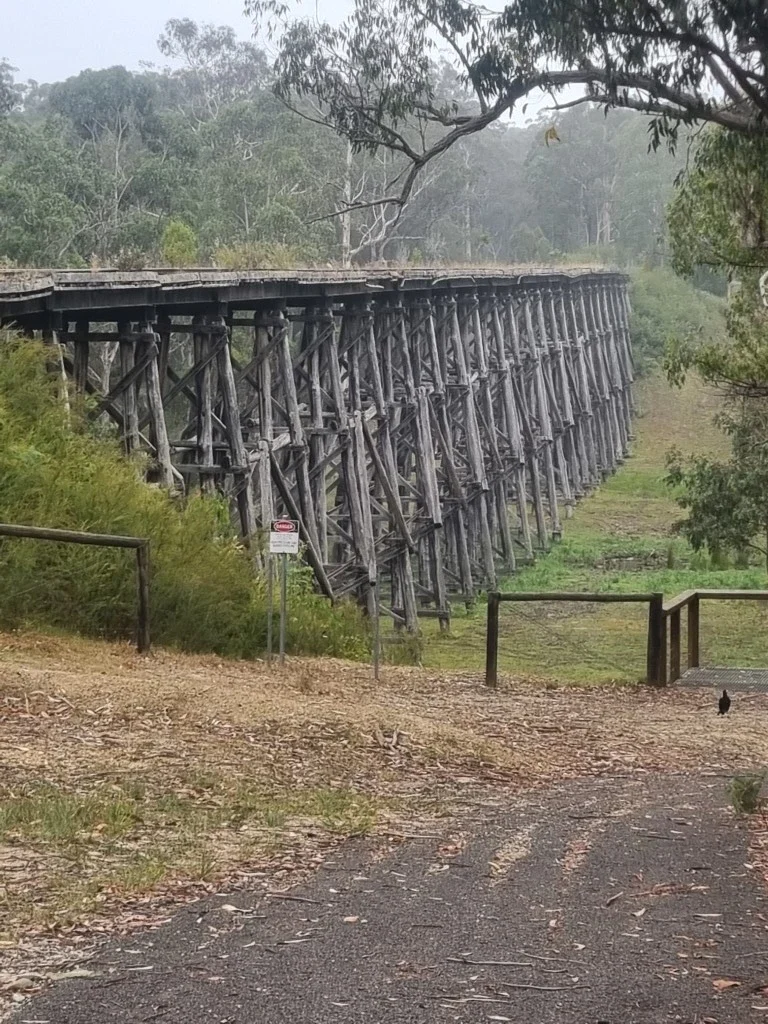
Along the trail, heading back westward, there are some amazing bridges.
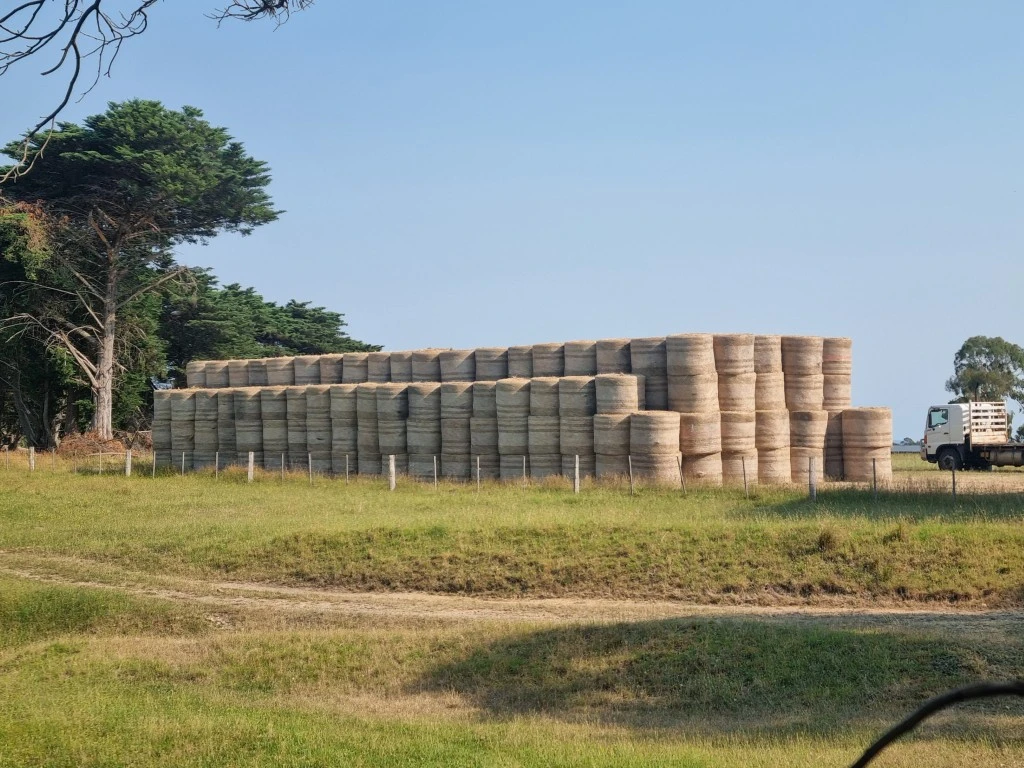
We are not in farming country as much as in the bush but there are some lovely rural scenes.
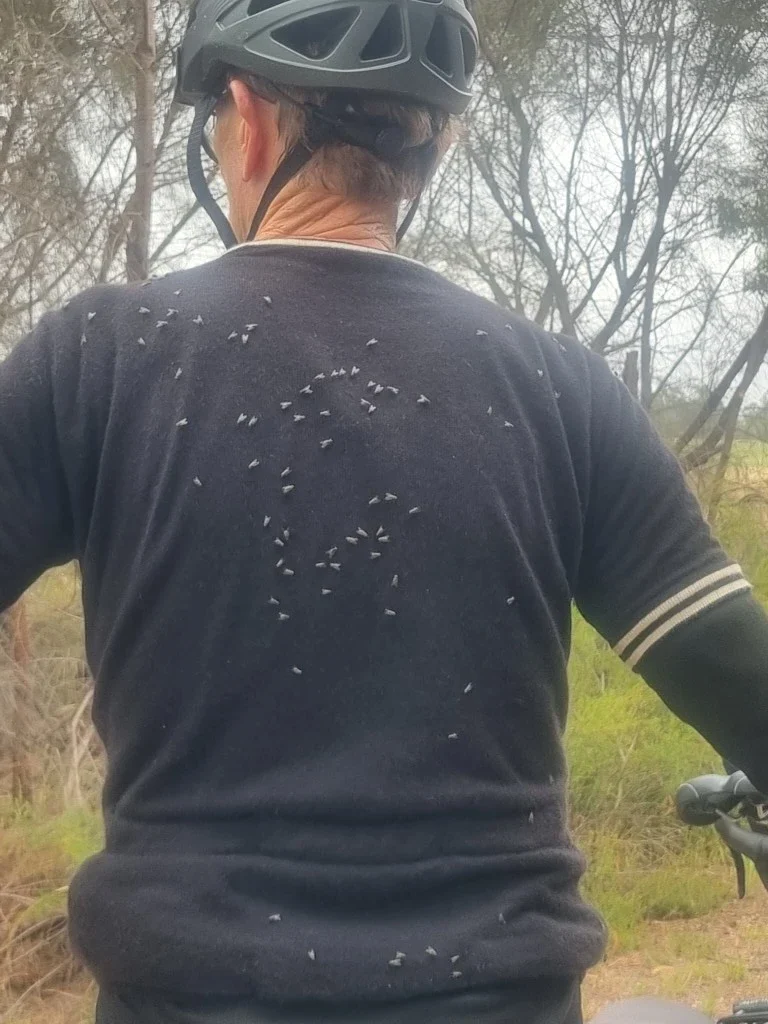
From Bairnsdale, having already cycled the highway, we are on the train to Stratford and the start of the Gippsland Plains RT. This is dairy country. There are lots of flies. We deploy the roll-on Aeroguard. But it’s not enough…
This trail might be one of the earlier ones to be developed. Or maybe it was not so well funded. It’s good but not AS good as the others. It goes as far as Traralgon. This is brown coal mining country. Fifteen km past Traralgon is Morwell where the mushroom trial took place. Morwell is a surprising place. Probably two thirds of shops are “for lease”. The town is quite empty. Apparently, the proximity of Morwell and Traralgon meant that eventually one would take over as the regional centre.
This completes the Gippsland Rail Trails, and we are back to Melbourne on the train. Our sights are on Geelong where the Spirit of Tasmania departs. There is scheduled track work and we need to get to the far western outskirts of Melbourne before we can catch a train. Once again, the Victorian cycling advocates of yesteryear and recent times deliver. We ride the brand-new Dixon Veloway to Footscray.
In Footscray we were shocked to see both Teds and Beasleys bike shops are there no more. They were thriving multi-generation businesses, looking after people like us. Who’s doing it now?
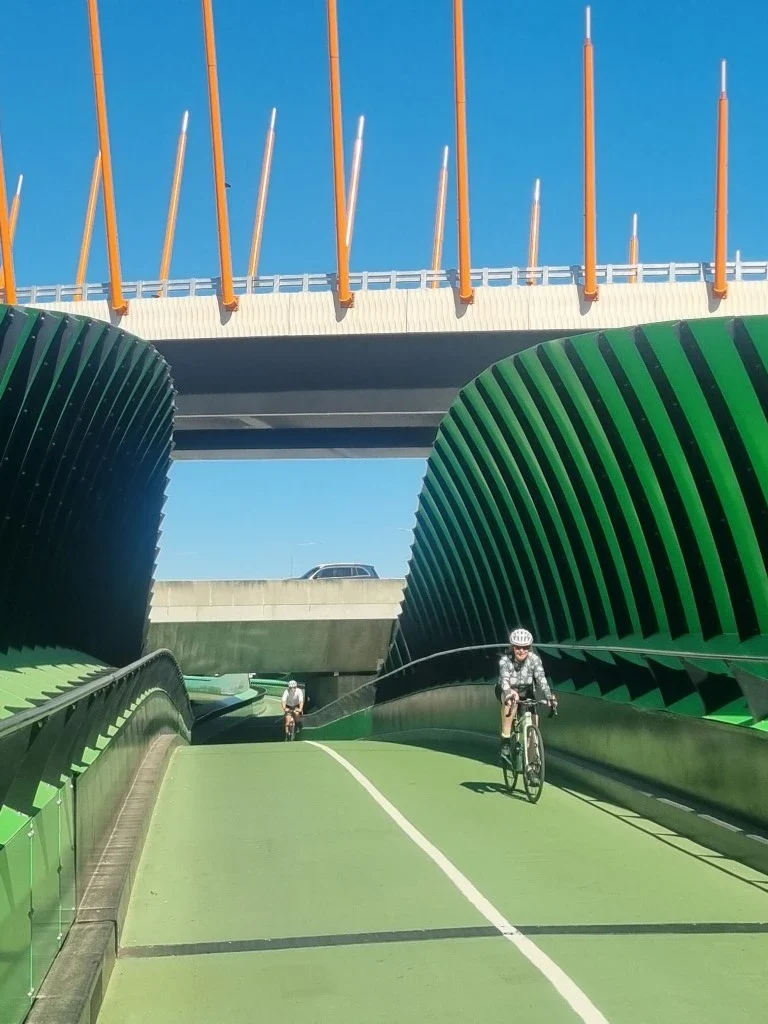
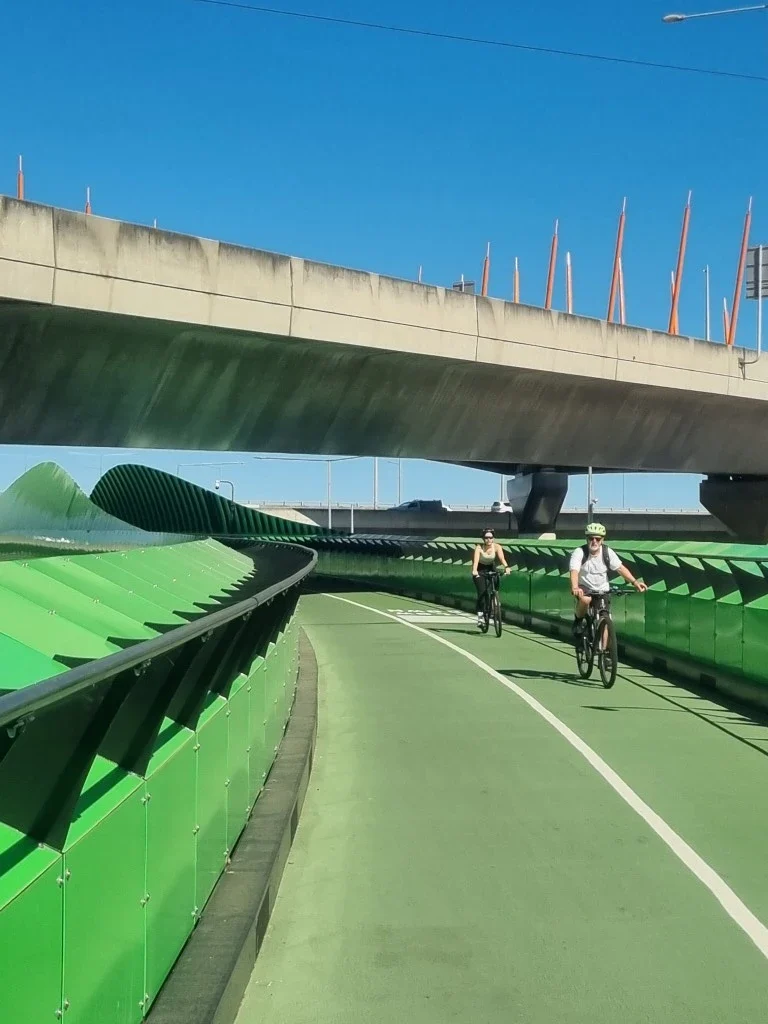
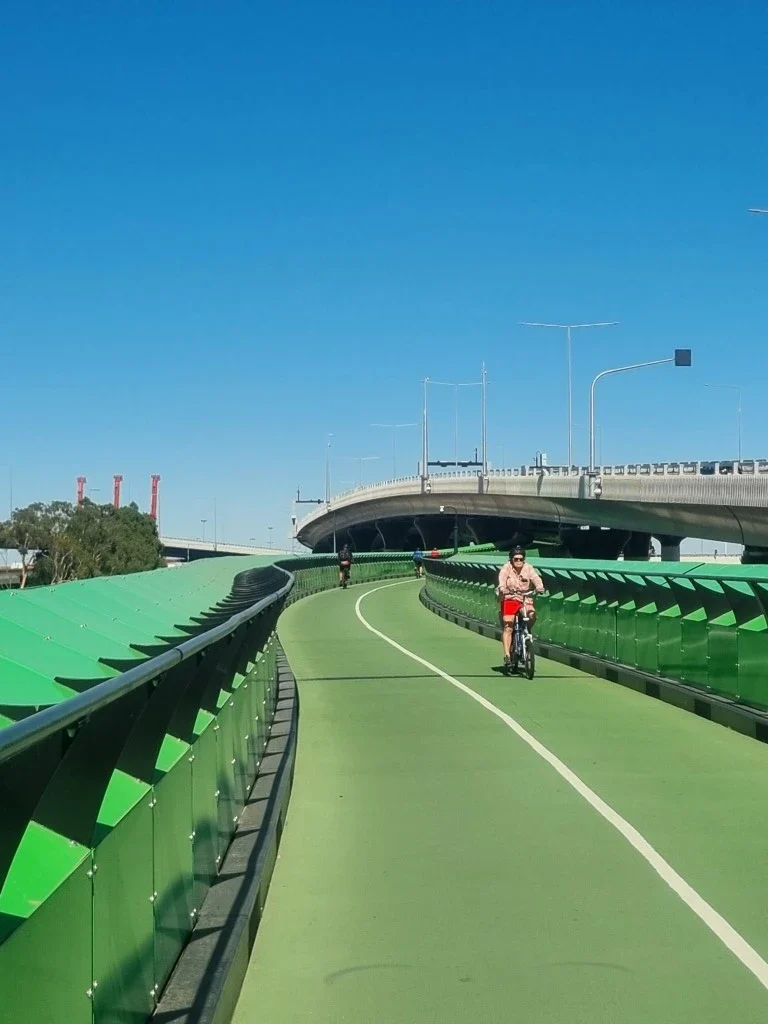
We then pick up the Federation Trail to Werribee. The recently opened Federation Trail, just one of numerous long routes in Melbourne, is not a rail trail but rather follows an old sewer easement. As a testament to the state’s commitment to cycling, there are four huge new bridges across highways. It is fantastic cycling infrastructure. A credit to the state governments that made the decisions to build it.
Testing
40mm tyres on rail trails. There’s no need for wider tyres (which would have been slower). Not that that matters really.
Drop bars. On rougher trails you want the higher leverage of wider bars but there is no tight cornering here. Any bar is fine.
Standard 50:19 Rohloff gearing. There’s no need for lower gears. Trainlines are not steep. Lower gears are ok to have, but you would not use them.
Riding in January and not booking ahead. To remain flexible in case of fires or heavy rain, we booked only 24 hours ahead and that worked every night. Motels, caravan park cabins. The better availability is from Jan week 2.
Jersey. Following the ride in India last November the Soigneur woollen jersey receives another tick.
Plug for Victorian trains. Key rail stock purchasing decisions, made decades ago, resulted in rail carriages having space for two bikes. Having bikes on trains is normalised. Other passengers accept the cyclist and the bike. We don’t feel like we are “in the way”. Usually there are multiple carriages on any one train, each with a picture of a bike on the side. Generally, you can use your Myki card. Riding rail trails. It’s unquestionably a nice way to travel. You don’t miss the traffic. You go into multiple small villages that modern highways bypass. The surface is firmer than I’d expected. No flats. You are a member of a tourist category that provides significant support to each community, and it is appreciated. Seeing other cyclists and walkers, rather than traffic, feels good. It’s not crowded, but there is some company. Wildlife replaces barking dogs. You are more in natural bush and less in the modified urban and farming landscapes. There’s history to be seen. Picking the route of the old trainline was about picking and managing slope. And trying to be not washed away in the next flood. The line to Sale opened in 1877. Two trains a day ran.
A ride on the Deccan plateau, from Nagpur to Hyderabad via the Ajanta and Ellora Caves. We chose the Swabia model, with 40mm Goodyear tyres and 50:19 Rohloff gearing.
We have been cycle touring in India since the 1970s. Back then, most Indians rode on bicycles, and now although very few do, the bicycle is still a great way to travel there and India itself is a fantastic cycling destination.
We arrive in mid-November, which is early winter when afternoon temperatures are high 20’s and mornings are mid-teens. The Indians have their beanies, earmuffs and shawls on. In the early morning, people stand around fires, warming their hands. It’s the easterly monsoon season and hardly a cloud to be seen.
India is half the land area of Australia but has over fifty times its population.
Since the 2008 Mumbai attack, there have been restrictions on where foreigners may stay. Typically, we need to be in a town of at least 40,000 to be confident of a valid lodging option which is not hard, but something you need to be mindful of. It’s best to arrive by 4pm at the latest, as it can take a while to find somewhere due to signs not being in English. Sometimes “A/C” is the give-away. Many people don’t even know about lodging and, hilariously, if you ask two people they might point in opposite directions and then start arguing. People are incredibly kind and helpful.
For most people, motorbikes have replaced bicycles and it is common for three or four people to be on the one motorbike. As we ride along, motorbikes come alongside and engage with us. Very few just ride past. They want to know where we are from, where we are going and so on. They really want to take selfies. Multiple times a day, people try to flag us down.
The feeling at the end of this ride is much more than an account of the miles, the ups and downs, the farming, the seasons, and the food. It is something that is unique to India and hard to put into words. The people want to engage, more than anywhere else. They ask why we are here. We say truthfully that we love being in India, that it’s such a great country.
English is one of the official languages. The fact that we can, to some extent, communicate makes a big difference. There are always people we can talk to. They are open to a traveller. Sadly, an Indian cycling around Australia would not experience the same thing.
India is a kaleidoscope of humanity. It is more communal and less individualistic. The first election of a communist state government anywhere in the world, happened in India.
Privacy is not much of an option. Personal space is not something you should expect. People just want to be near you. Men hold hands and walk arm in arm. They want to touch you. In India you are immersed in humanity.
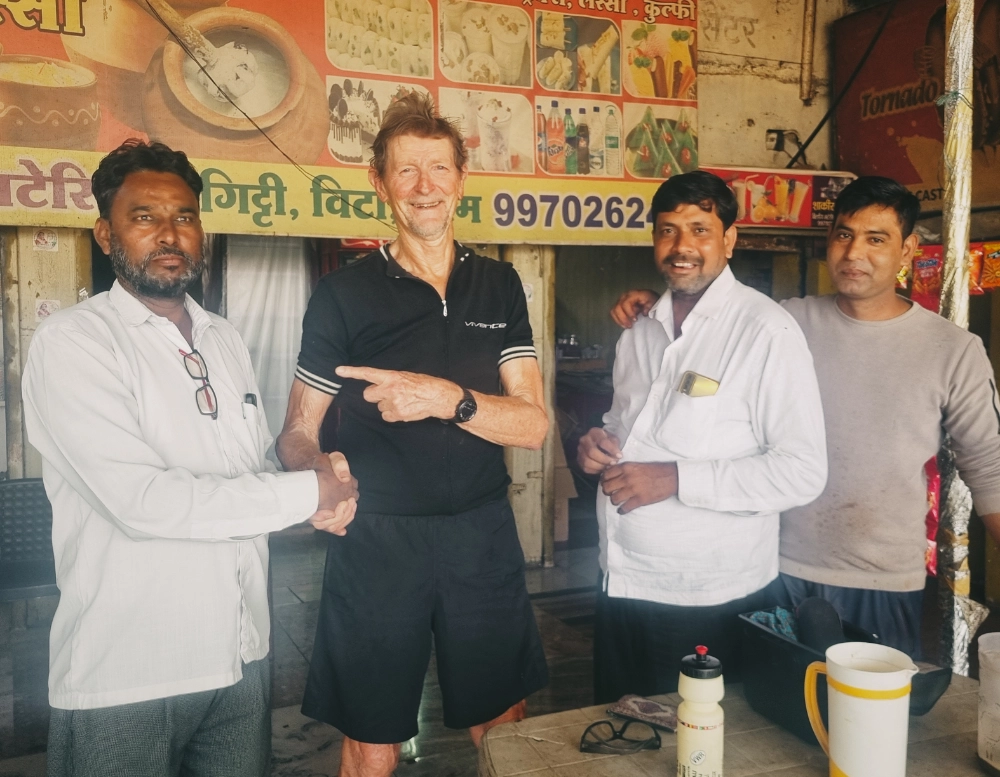
Households are large and, typically, multiple generations share the one home.
To people that have not travelled there it may seem to be a single society but it is diverse and multicultural, with many ethnic/tribal, religious and regional differences.
Getting there
Qantas now has a daily flight Sydney to Bengaluru (Bangalore) and one from Melbourne to Delhi. This is a great improvement from before. The flights land early afternoon local time and, from both arrival airports, Qantas has code-share flights with the biggest domestic carrier, Indigo. We can leave Australia in the morning and ride out of an Indian regional airport late that afternoon.
We chose Nagpur, in the east of Maharashtra. It’s close to the centre of the country. The next morning, we headed west, taking five days to reach Bhusawal. Then we approached Ajanta from the north.
Ajanta and Ellora
The Ajanta caves are amazing. The fact that they were covered over by jungle for more than ten centuries and only rediscovered in 1819 creates a sense of eerie timelessness. A British soldier was hunting a tiger and thought he saw it go into a small hole in the jungle. That’s how the caves were rediscovered.
The caves date back to the Buddhist period, over 2,000 years ago and, because the Hindu religion took over, and the caves are not in an agricultural zone, they were “lost”. Words cannot convey the marvel of Ajanta. You must go there. The caves get a very high rating. Up with Hampi, for example.
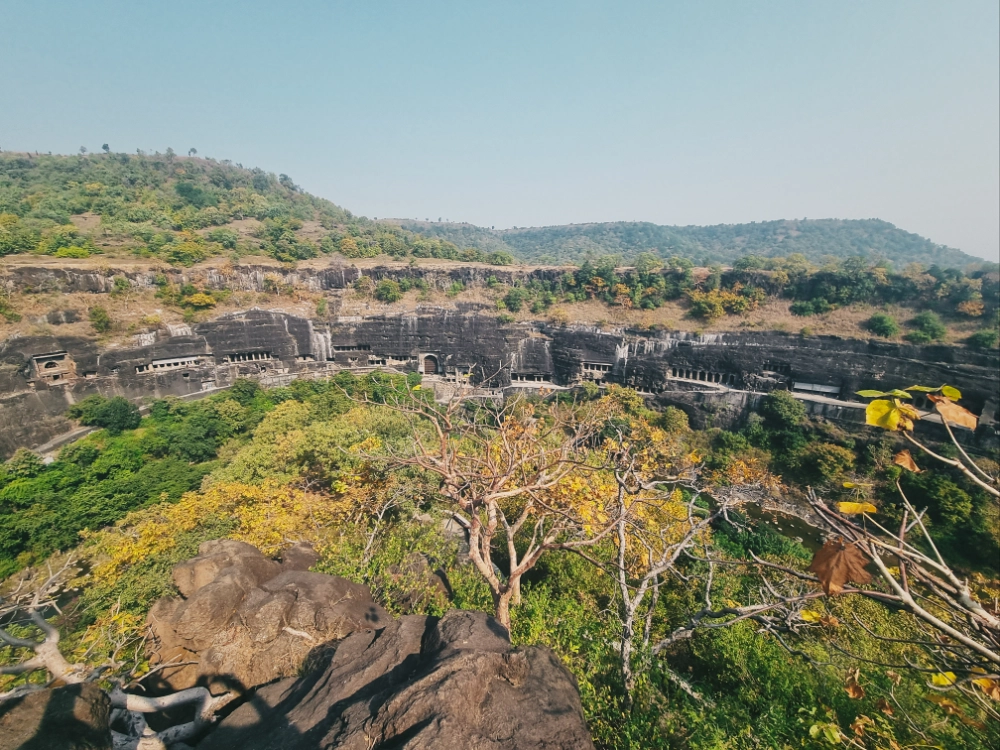
From Ajanta it is a day’s ride, south to Ellora Caves.
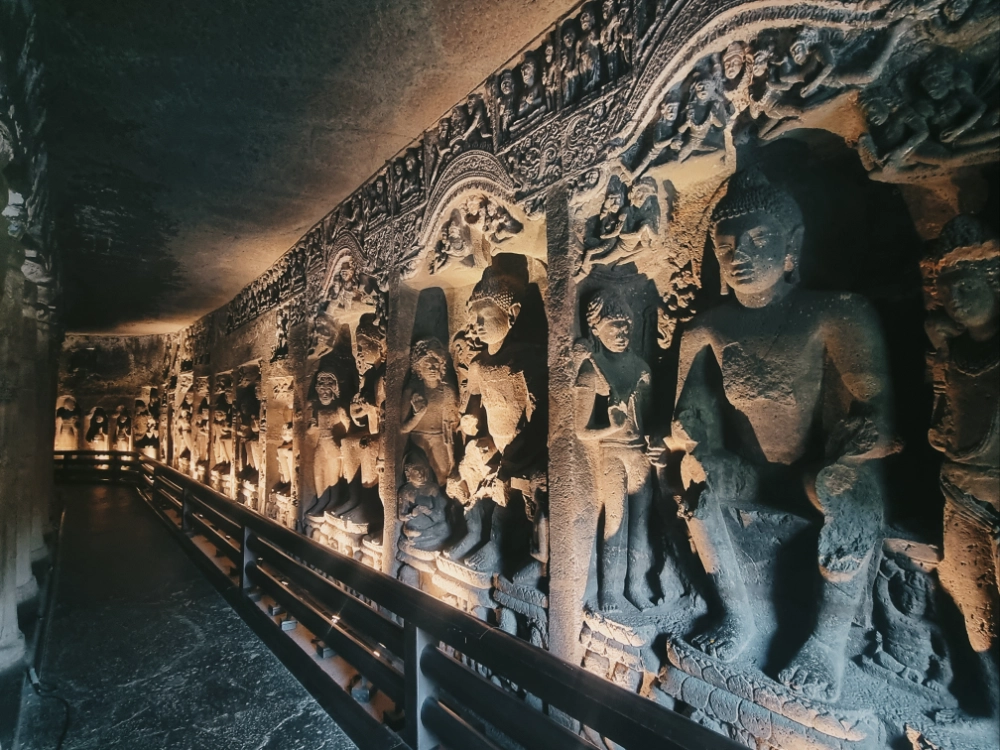
The area is 700-750m high so a bit cooler. The caves, like Ajanta, are in the hills. One particular structure is beyond imagination in its scale. It took ten generations, around the eighth century CE, to build and 200,000 tons of solid rock was removed. Kailash Temple (cave 16) has been called “the climax of the rock-cut phase of Indian architecture”. It’s just amazing.
Ellora Caves is an amalgam of Buddhist, Hindu, and Jain cave temples. The caves include Buddhist chaityas and viharas, Hindu temples and Jain shrines. Thus, Ellora Caves is a symbol of religious harmony of the period. There are so many beautiful works here.
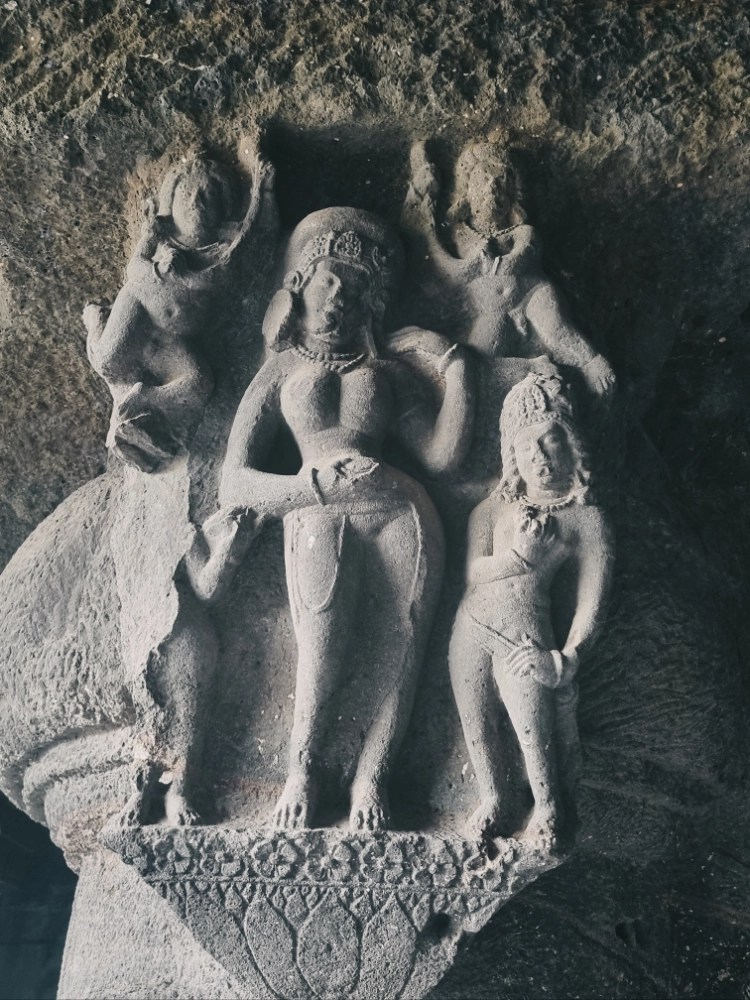
After Ellora it was time to head southeast
The Indian government created a digital currency, the eRupee. 80% of Indian transactions are made with it. Cash is tedious and there are probably germs on banknotes. Hence, we want to open a bank account. That won’t be easy and a major bank (SBI or State Bank of India) HQ at nearby Aurangabad is the target. (The account is not open as yet, but we are not giving up!)
On the Deccan there are some huge irrigation dams. Towns near the dams are good targets for overnight stays. They are economically secure and always vibrant. We call them “dam towns” and stay in Paithan and Majalgaon.
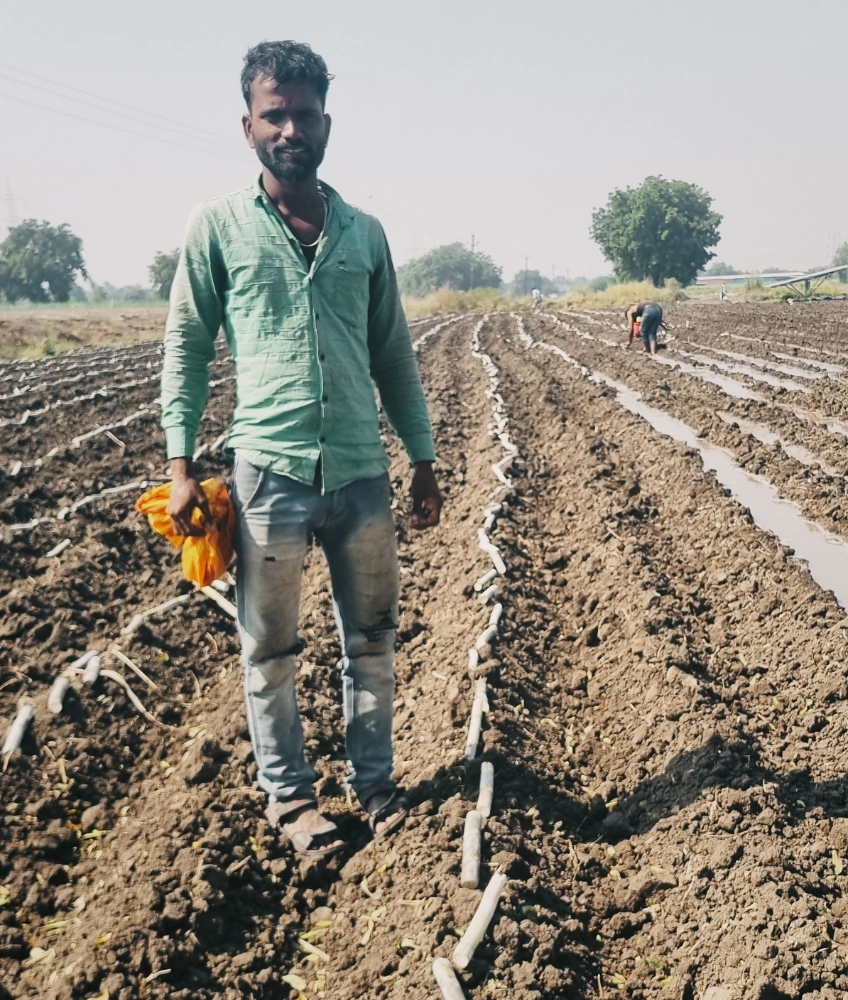
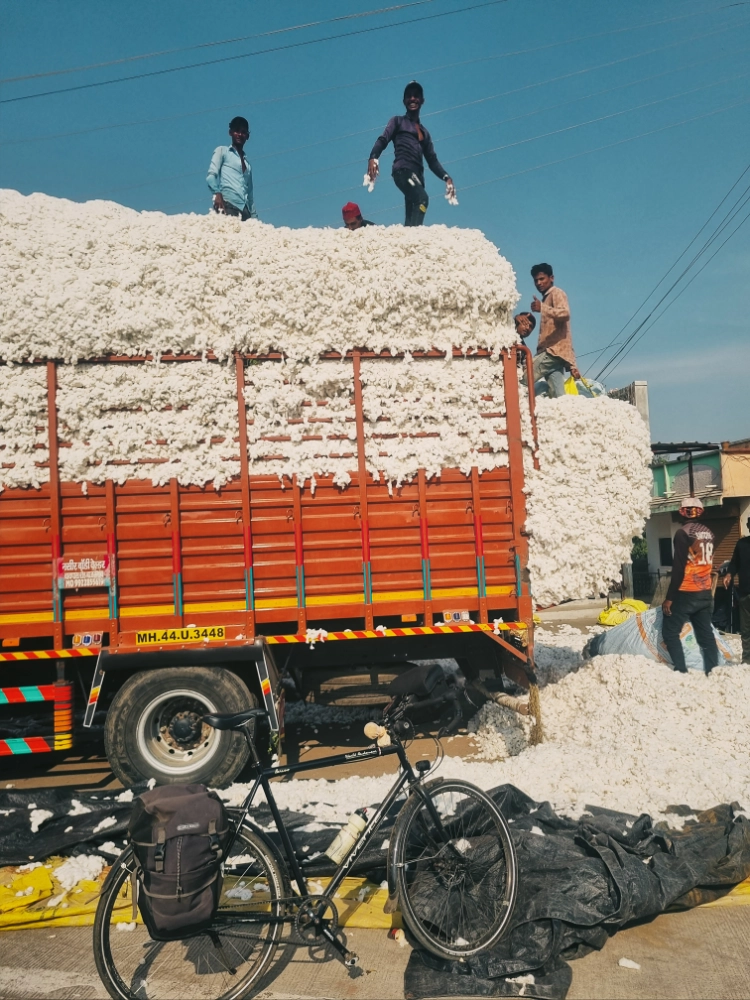
Along the roads we see people working on the main crops of sugar and cotton. Here they are planting the next sugarcane crop.
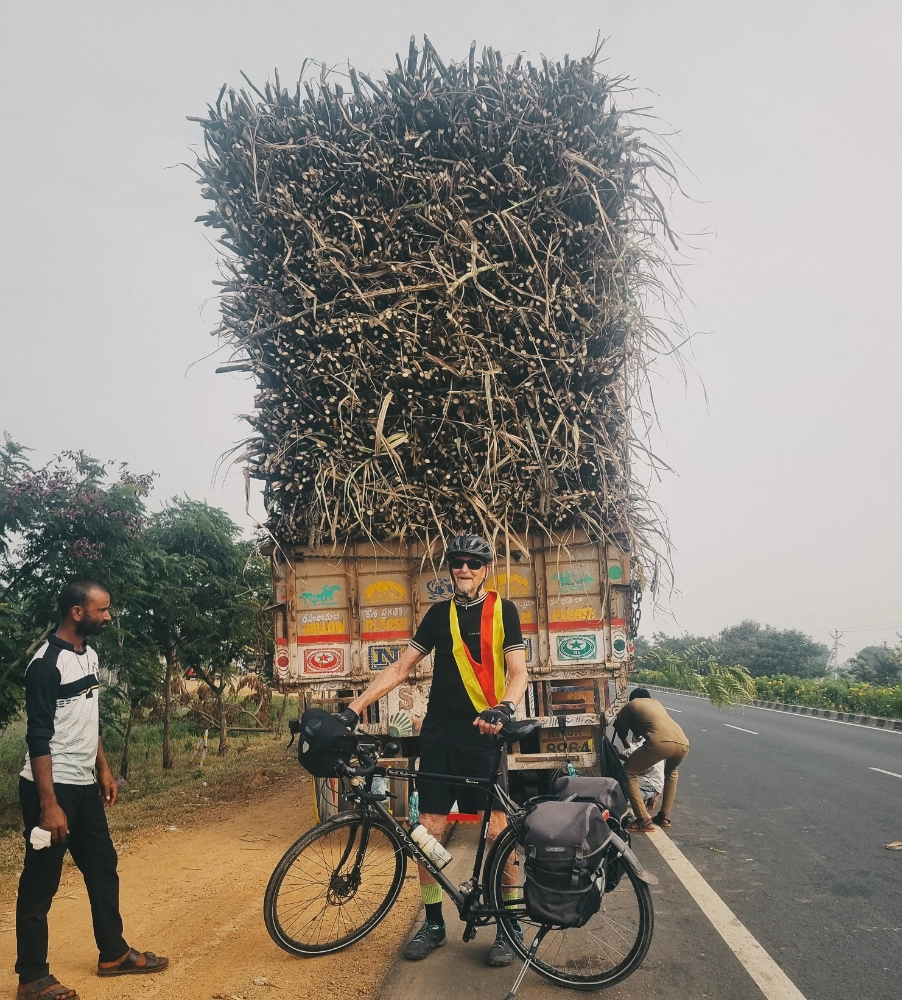
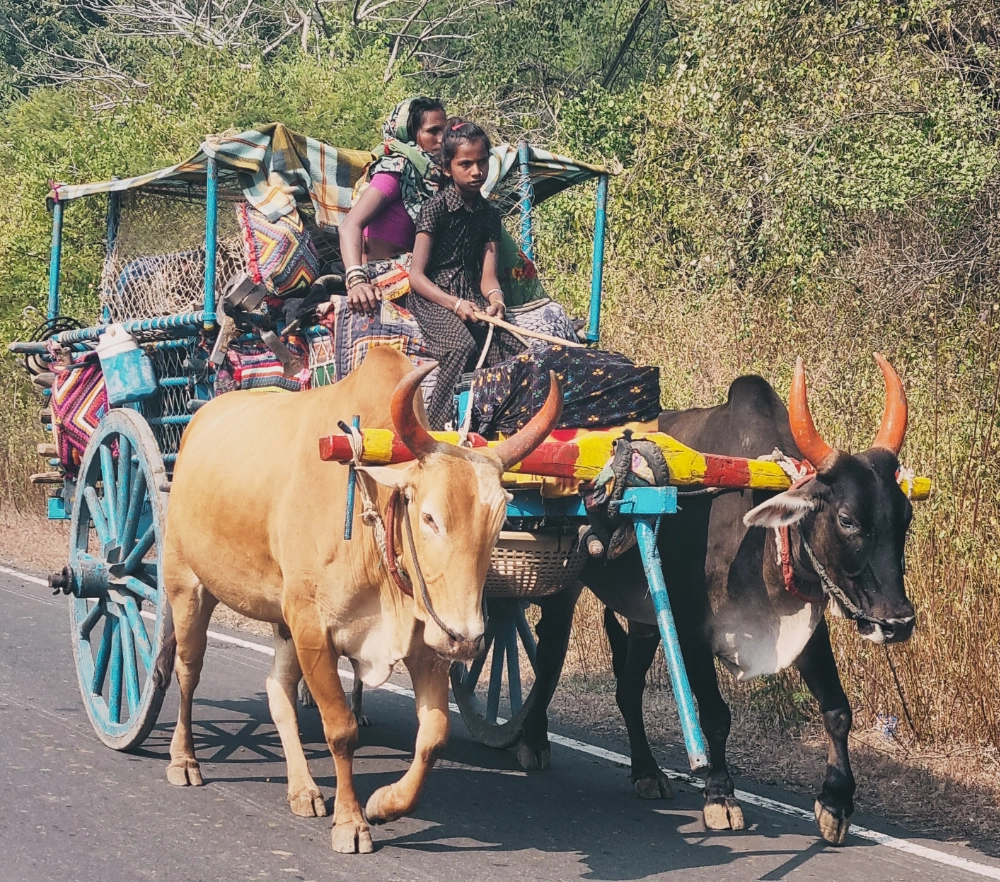
We share the road with some excessive loads of sugar cane. These guys are dealing with a broken axle. If we are ever asked for suggestions about how to improve road safety, we will mention enforcing load limits on trucks. Every day we see blown tyres and broken axles. There are over 15,000 road fatalities per year in this state alone.
You might be surprised to hear that the roads are actually very good. In fact, they are often better than Australian roads. Cyclists need mirrors, lights, and to be very careful. It’s wise to have a horn too.
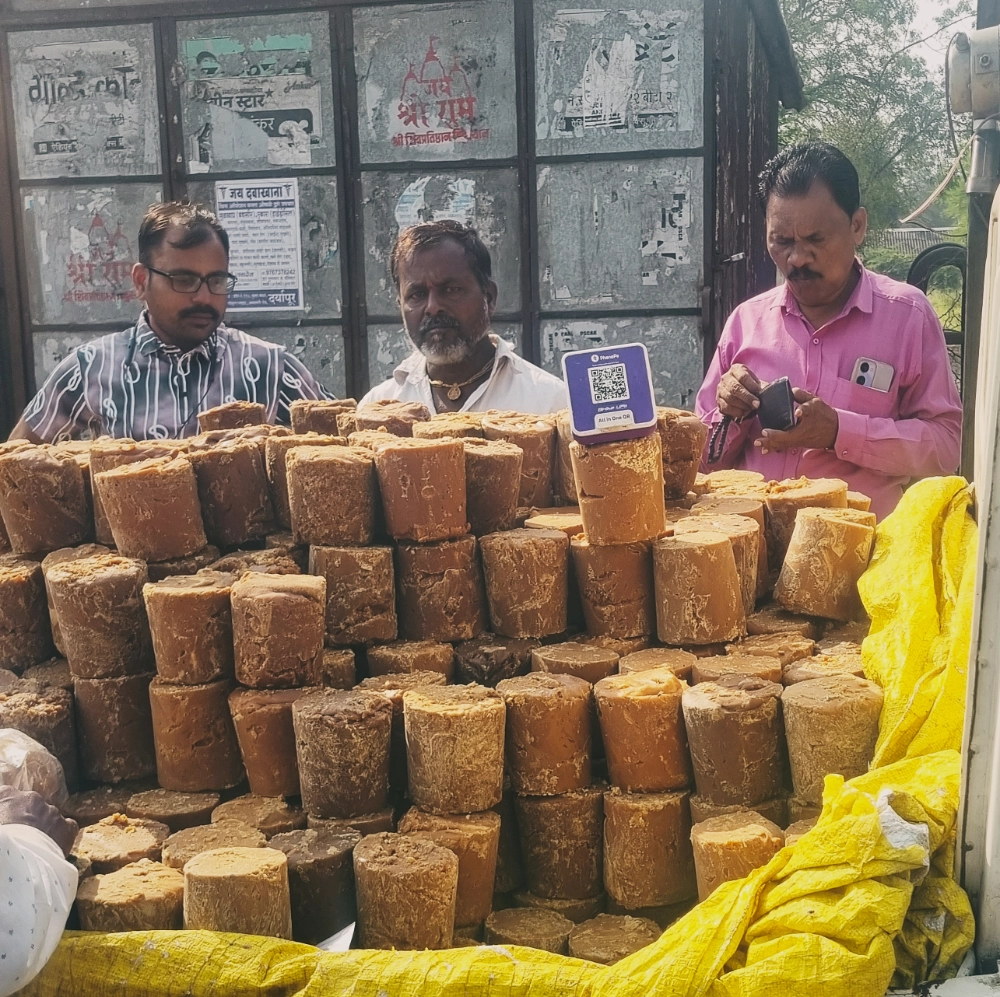
In India, sugarcane juice is boiled and reduced to jaggery, retaining the molasses and minerals. This is the commonly used form of sweetener. (Note the scan code on this stack of jaggery. If you have a bank account, you scan and pay in eRupees.)
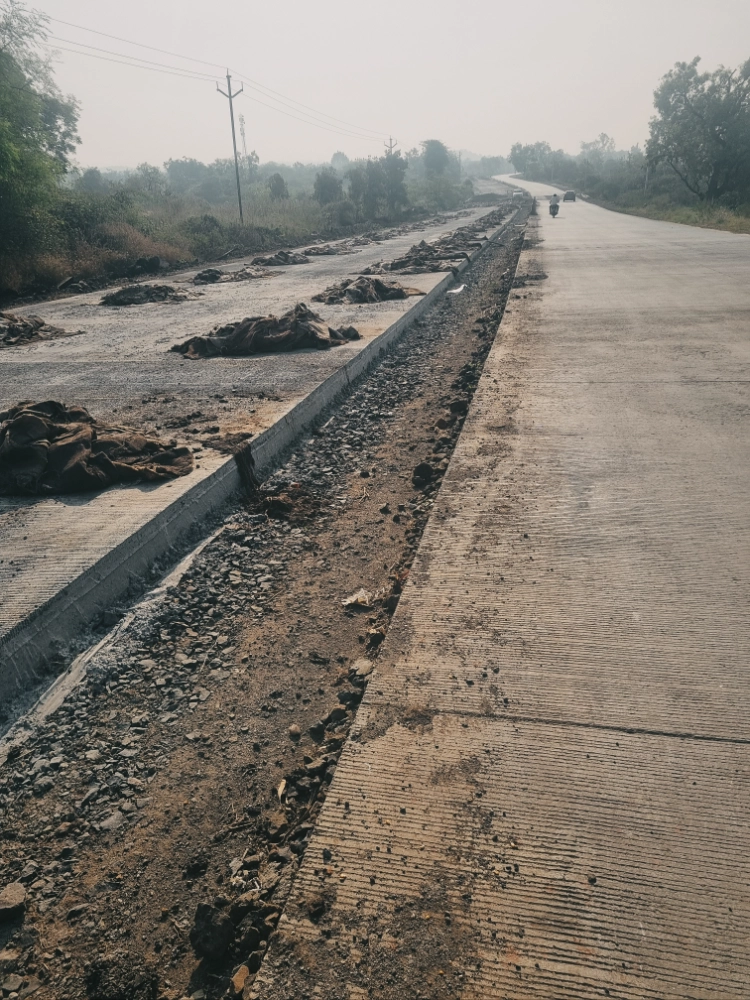
In Maharashtra, we rode mainly on concrete divided four lane roads, like this one just being made.
Welcome from cycle groups in three cities
We stayed in a town called Parli which has a famous temple. Indians usually associate different towns with temples and wrongly assume we are there to see them.
Heading out from Parli in the morning we pulled over for a breakfast of onion dosa and coffee. A guy came in looking for the owner of the bike outside. He was a member of a local cycling group. They were returning from their morning ride. They had never seen a cycle traveller and could barely believe a foreigner would be there. We had a great time together for a few hours.
The next city we were going to, Latur, also had a cycling group and by the time we arrived there, a welcome party of cyclists, having received word from Parli, had assembled. Gifts were given. By chance, they had a bike ride scheduled the next morning.
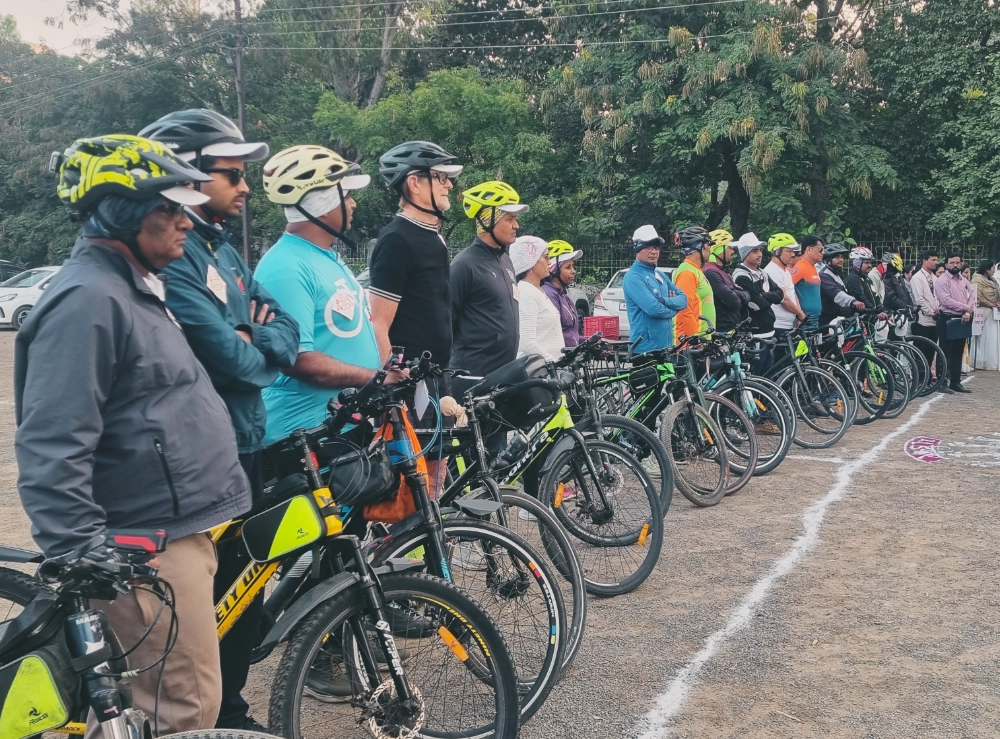
This is at the ride start. We are being addressed by the director of the Department of Health. Interestingly almost all of the thirty odd bikes had 40mm tyres. They all had derailleurs. Only two of the thirty bikes had wide tyres.
Our next city was Udgir and again the cycle club greeted us, presented gifts and took us to dinner. The next morning some members rode out to the first stop, 20km to the east.
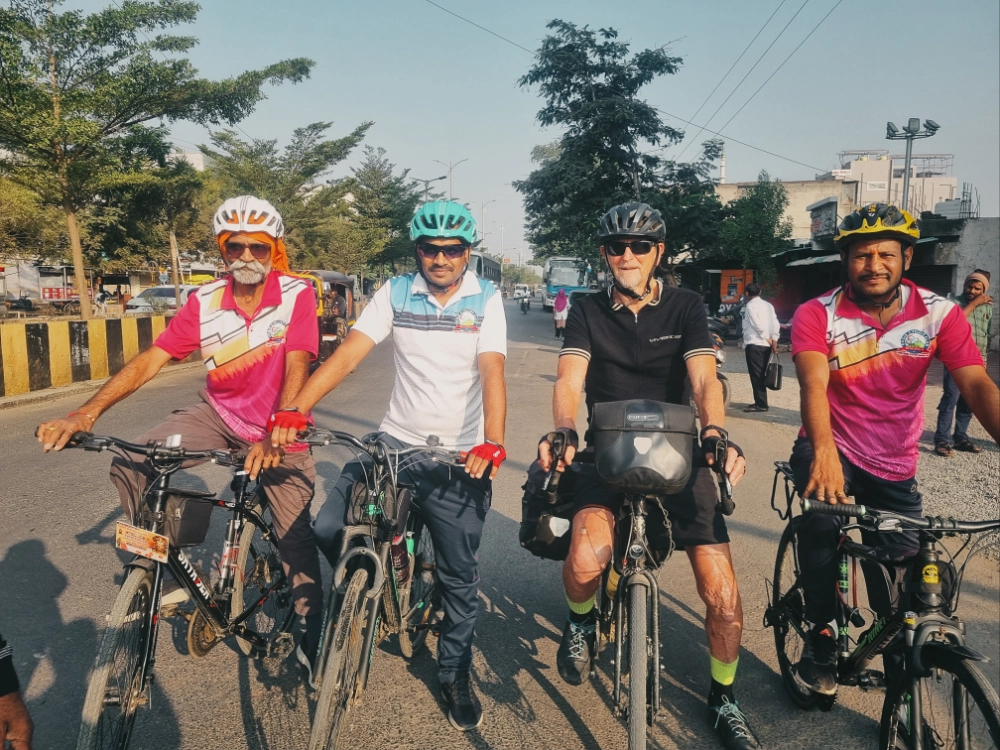
The manager of the hotel in Udgir said they had last had a foreigner stay there four years ago. A woman that flagged us down to ask “What are you doing here?” said she had grown up in Udgir, a city of 75,000 and had never seen a Westerner there.
Toil
One of the most noticeable and moving things about being on the roads, on a bicycle, in rural India is being up close to the people as they toil, often with their animals, to make a living. Wood getters, pot seller, plougher, cotton pickers.
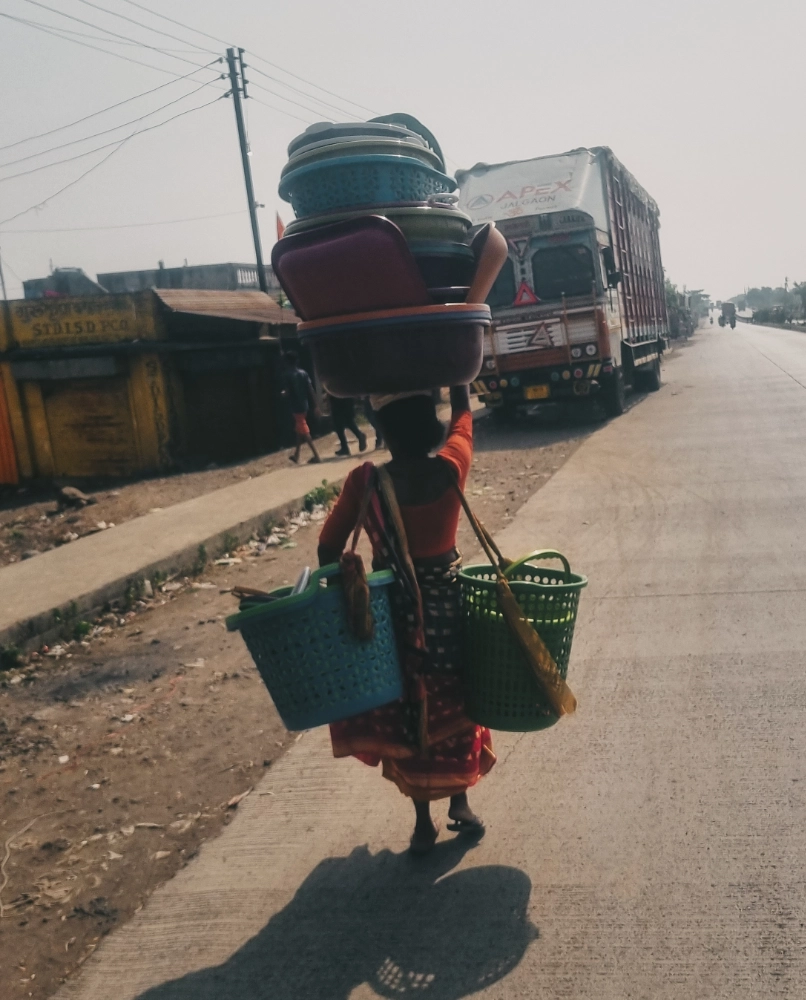
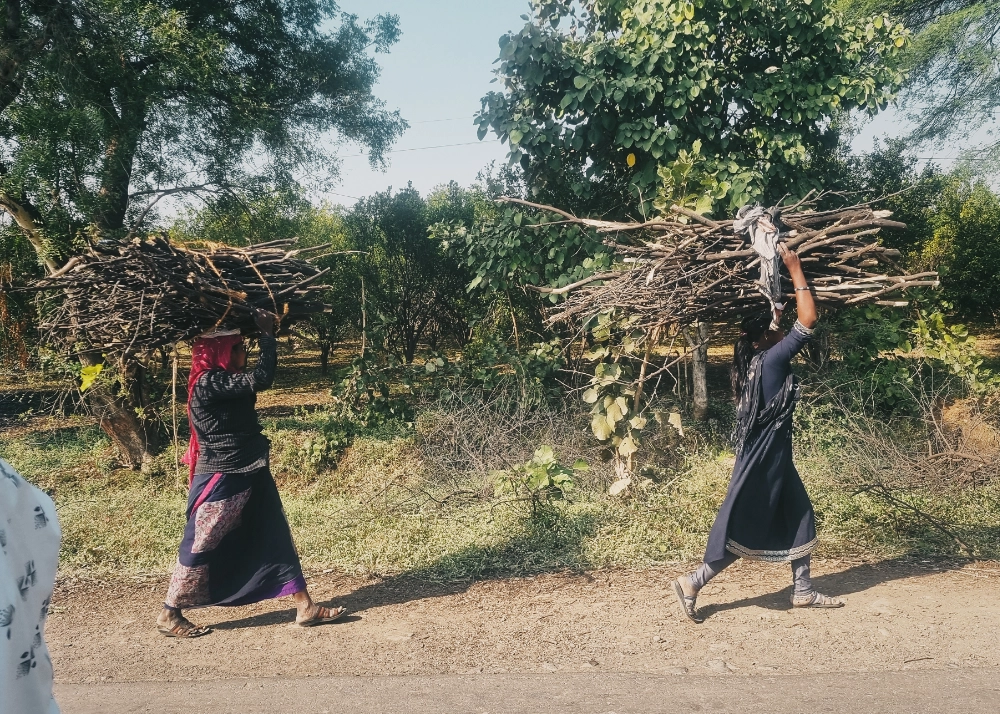
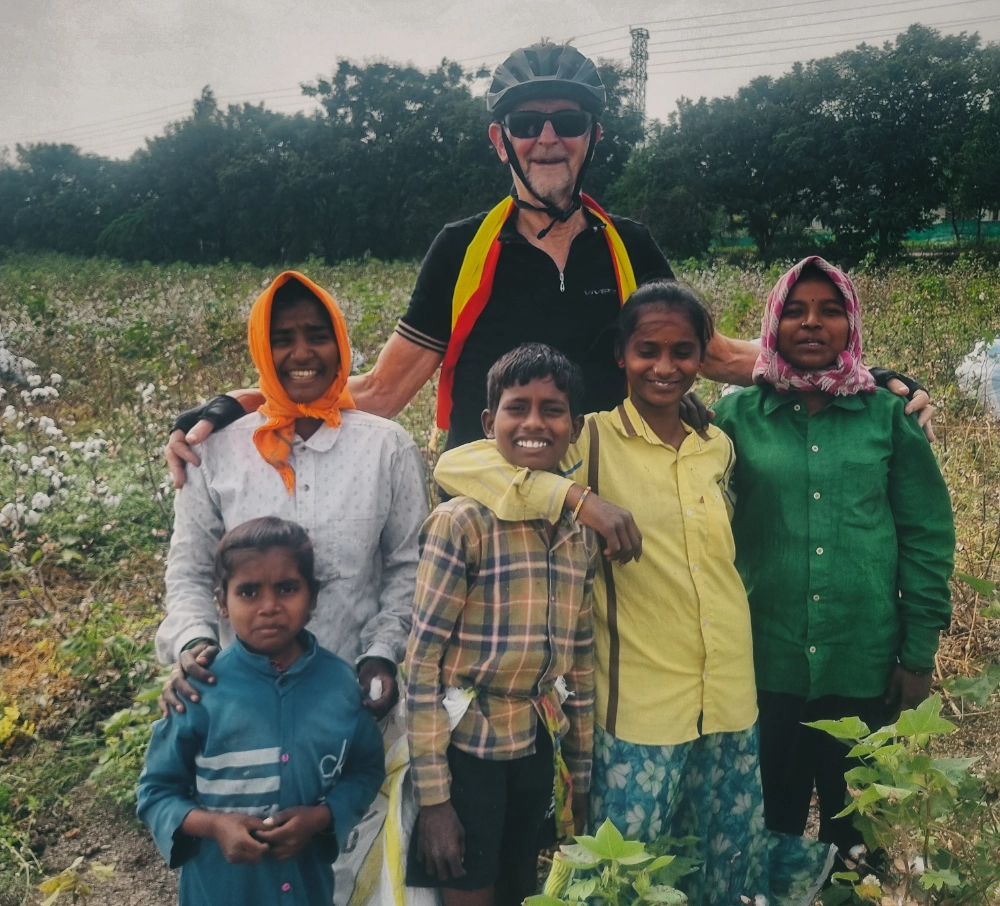
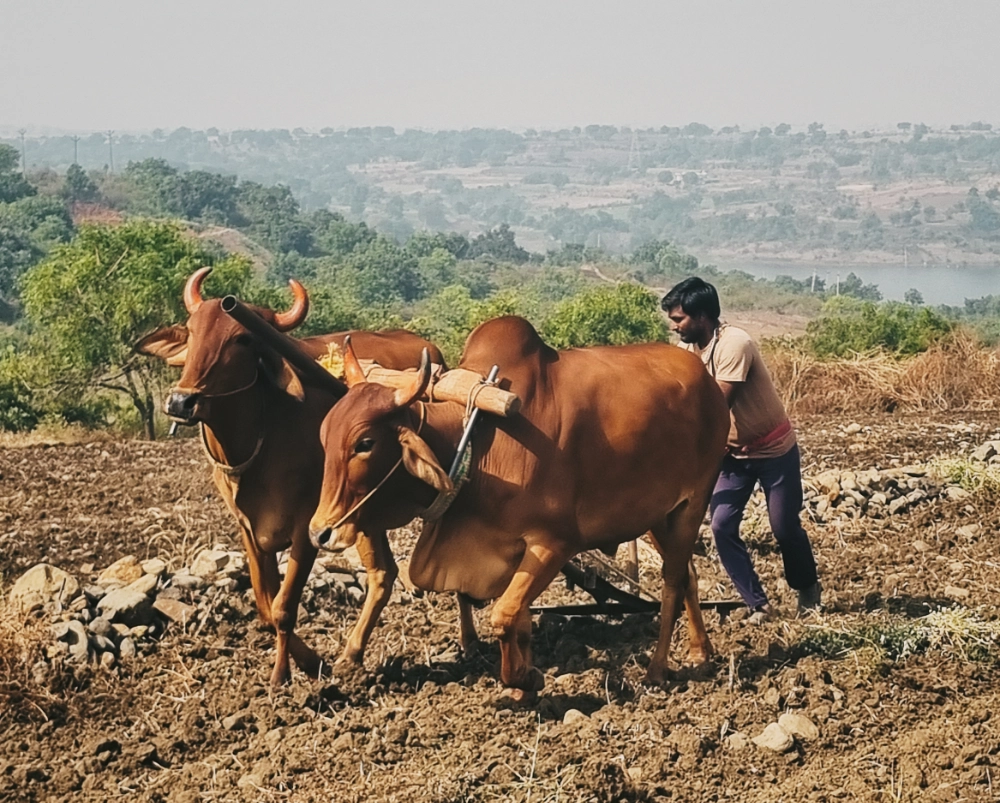
People seem generous compared to in rich countries. How can that be? It’s a little bit like how in countries with high speed limits, people want to go fast. It doesn’t make sense. Here in India, not a day goes by without finding, upon leaving a food stop, that our bill has been paid. It is humbling.
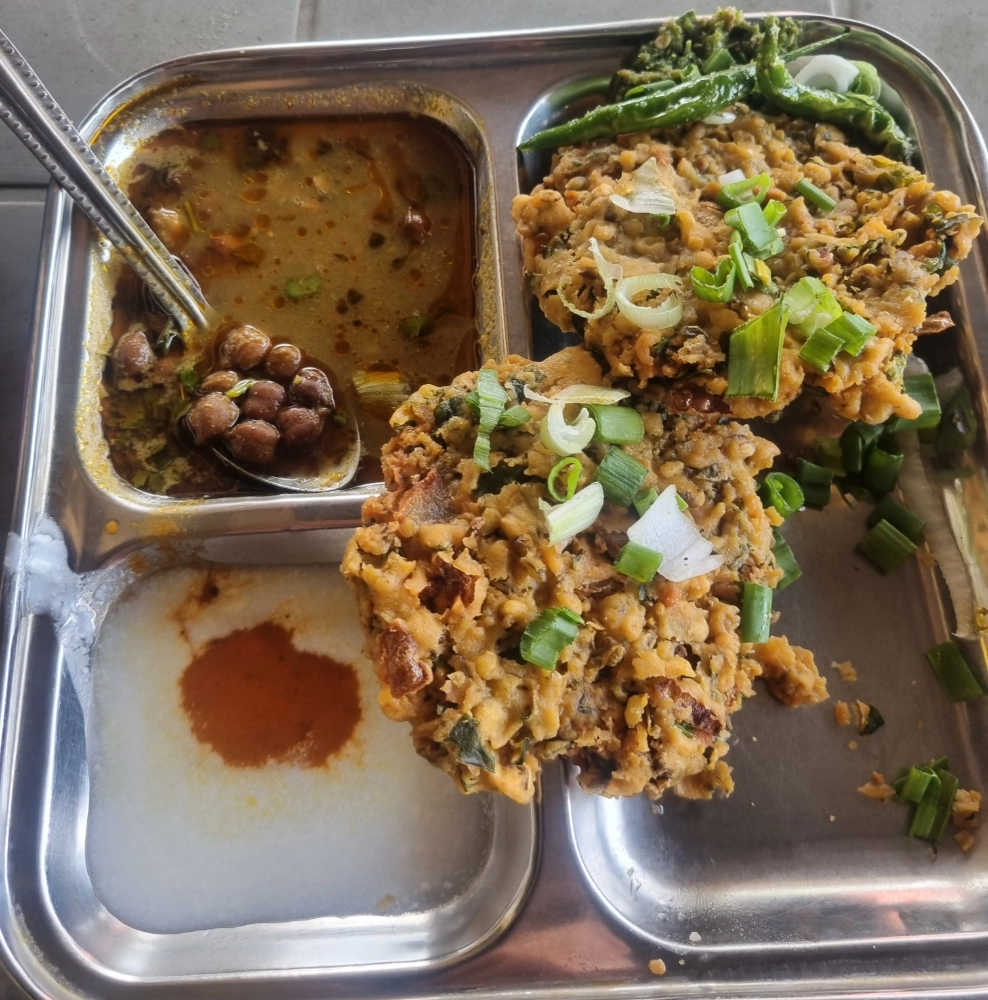
And what amazing snacks they are!
Update on Coffee on the Road in India
There aren’t ways to reliably get boiled water to make coffee. We don’t even take our aeropress. Roadside tea sellers are everywhere and about 20% also sell coffee. They have boiling milk and use the familiar small glasses, about ⅓ cup each. Starting the day with a few coffees is not hard to pull off. Avoid those headaches!
For coffee, they have powder in a satchel. It would be from Kashmir or the Corg. If you indicate “strong” they sprinkle a bit more on top.
Packing for the Return
Having now departed from India many times, we have tried a few things and settled on a system that involves no cardboard and allows us to ride into airports.
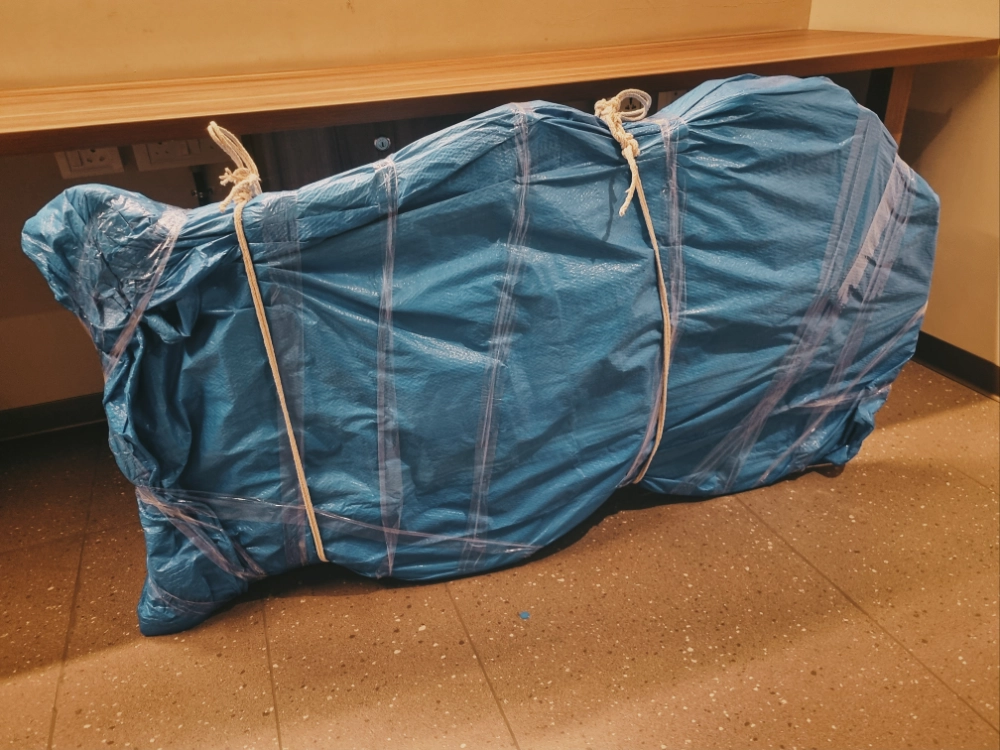
If you front up to a check-in counter in some countries with a bicycle wrapped up in a tarp you might be rejected. But in India, especially with the domestic carriers, this is not a problem. We are checking in on Indigo ( the Qantas code share) at Hyderabad.
The airport is some distance from the nearest city (and 40km from Hyderabad). If there was accommodation at the airport it would mean we could stay out there and get ready there, rather than having to pack in the city and get transport. Getting transport would be a hassle as the packed bike does not fit into a three-wheeler. And, as we discover riding into HYD, three-wheelers are not even allowed in there.
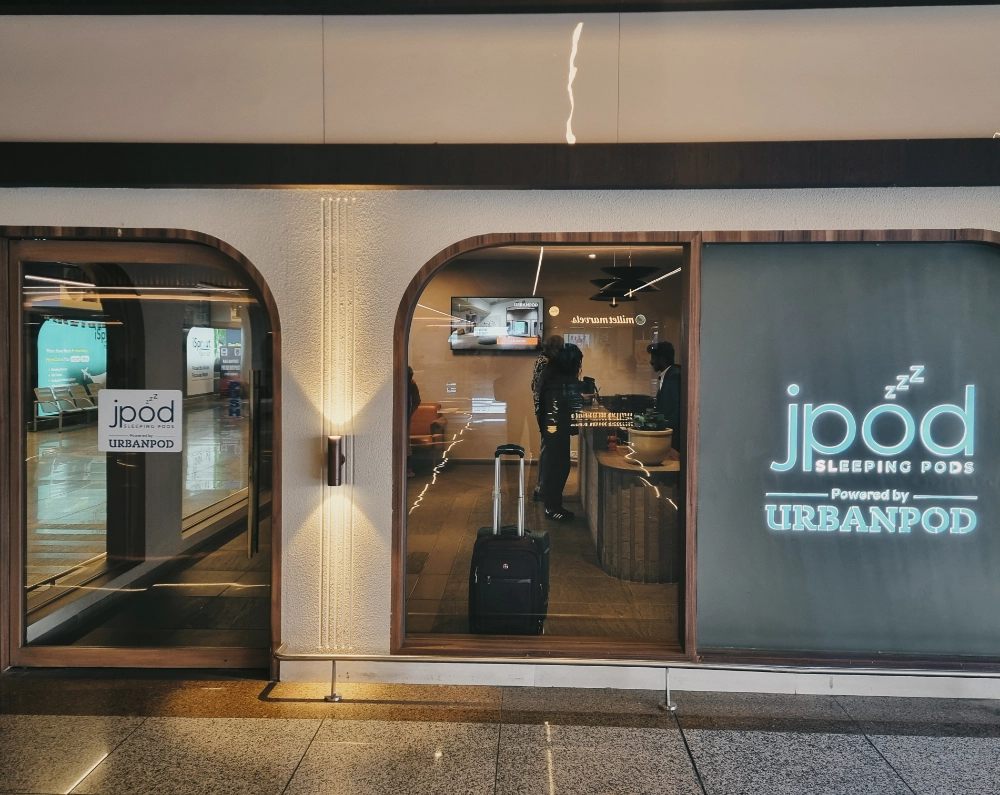
We discover that there are pods at HYD but on-line booking does not work.
Plan A then becomes
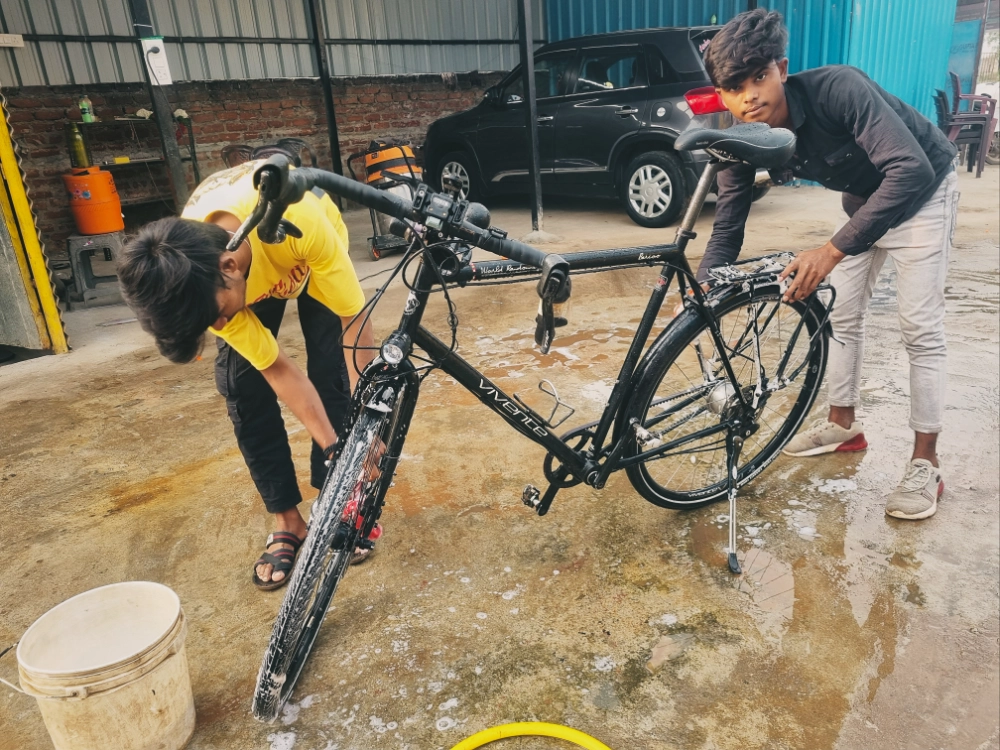
- wash the bike the day before
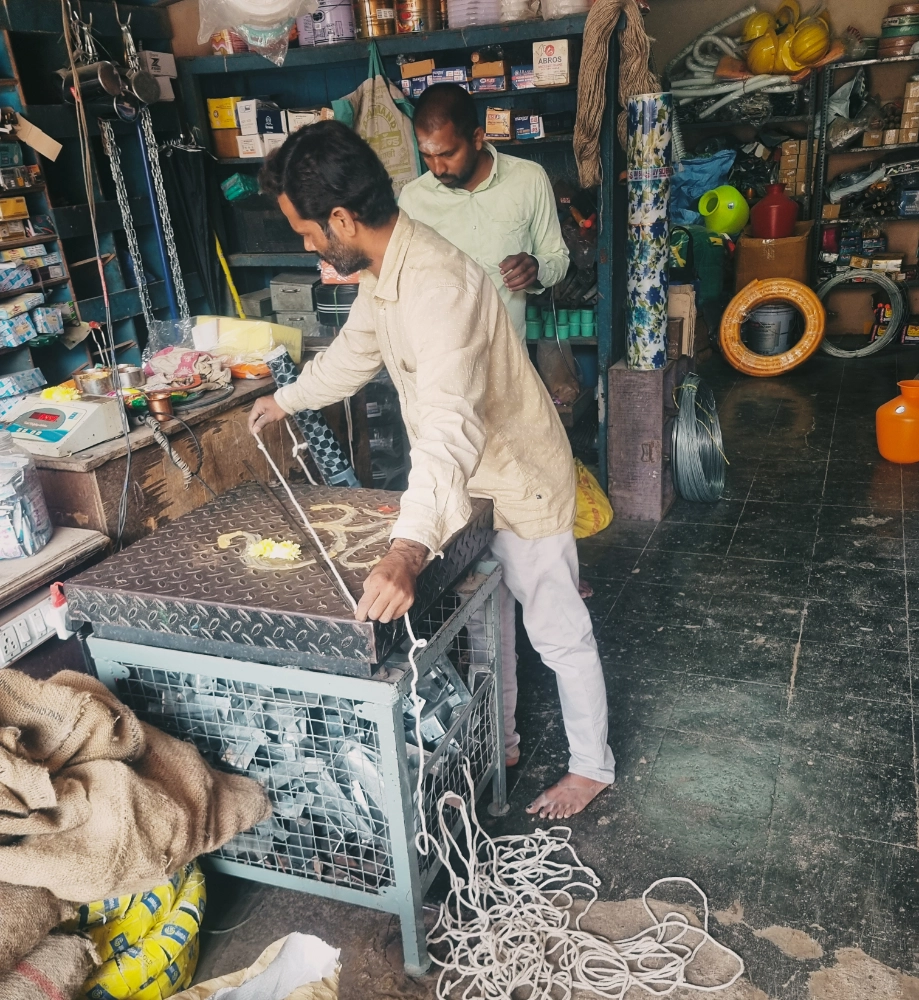
- along the way, get the packing materials, similar to what is covered in our India packing video. This included 20m of rope. Carry them on the bike and ride into HYD the day before the (early) flight.
- stay at the pod (which is easy to arrange in the middle of the day. It gets busy in the evening),
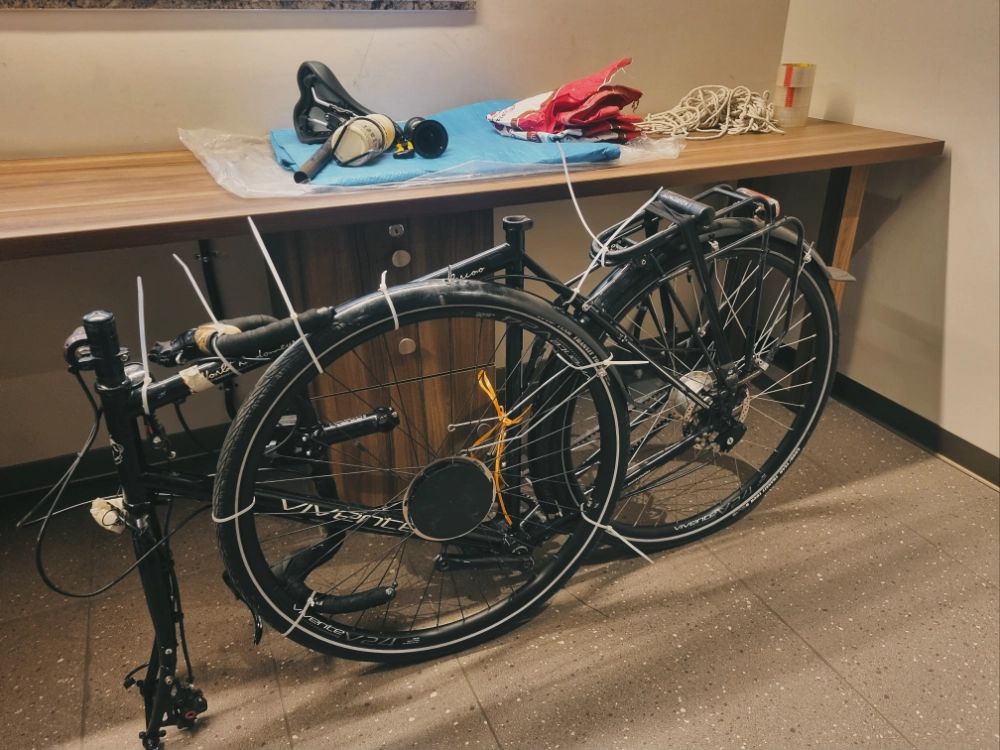
- disassemble the bike as per our video on this.
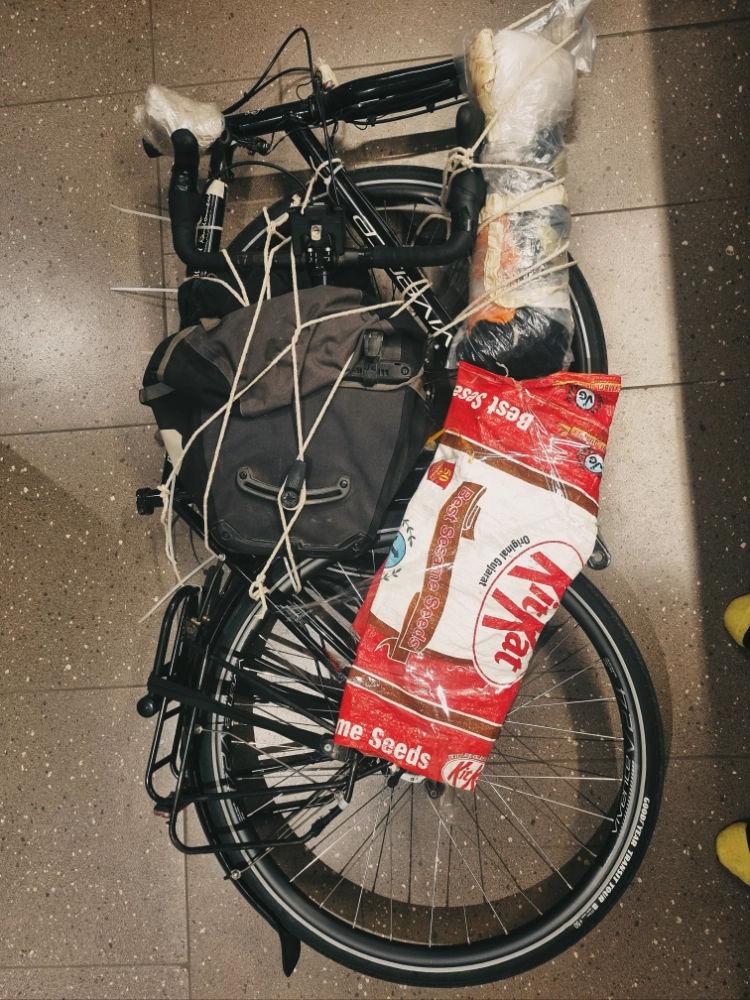
- pack it and protect it using the local materials and our luggage
- use a trolley to move from the pod to the check-in counter.
This all worked nicely and here are a few shots taken. Note: by riding out in the middle of the day we have the fall-back of returning to the city if we find no lodging.
What we tested on this trip
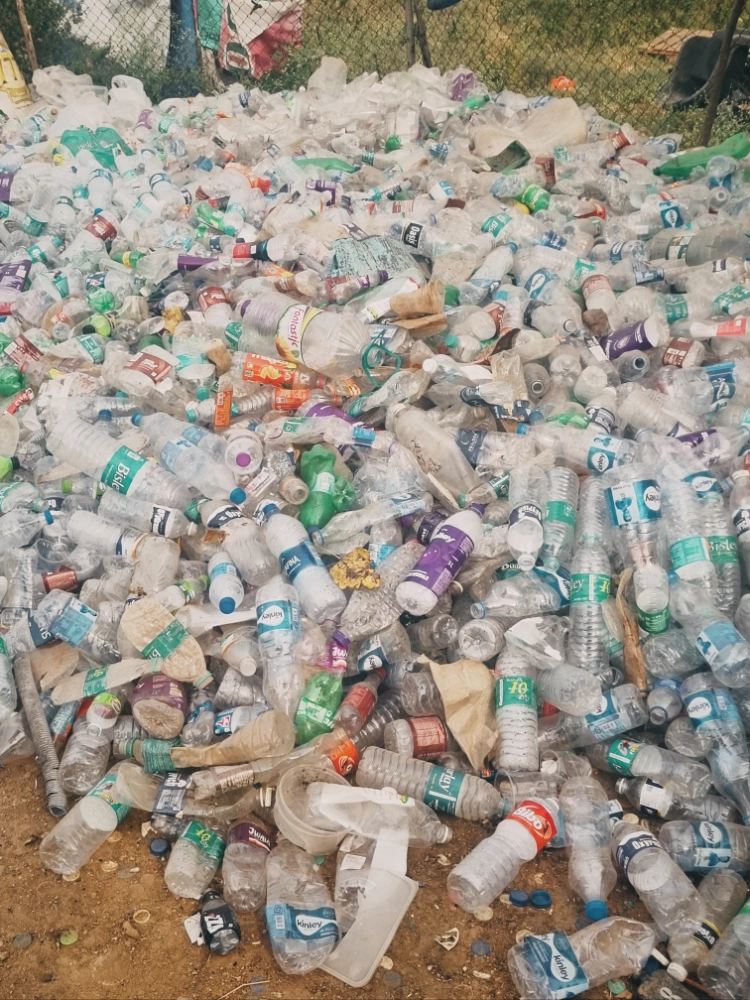
Sawyer Water filter. We took a six-year old charcoal filter Sawyer filter with three bladders. It’s the type where you squeeze the bladder to force the water through. Each of the bladders developed leaks within a few days so the whole unit had to be thrown away. Clean water is readily available in India in litre bottles for about 40 cents. The bottles are collected and recycled, helping to employ the poorest people who collect them.
Goodyear Transit Tour 40mm wide tyres. Once again, this tyre proved its quality. Not one puncture in 1,400km. Excellent rolling resistance and the right width for the conditions.
Soigneur woollen jersey. After a recommendation from Vivente riders, Rosina and Byron, we discovered these individually made fine merino jerseys. We were glad to be rid of polyester. How come we had not worked this out decades ago? This is a great product and made in New Zealand.
Riding the State and National highways of Maharashtra. Yes, there are risks. But over decades and tens of thousands of kilometres riding in India, we highly recommend it as a destination. We have a fresh five-year visa and will be back every November. Cyclists have to be careful everywhere, and India is no exception.
South Korea has become a cycling favourite for many, so we decided to explore its appeal. After covering 1,300 km, we’re now enthusiasts ourselves and are already planning a return trip.
Summers are hot and wet, while winters are very cold. We opted for late August to mid-September, catching the tail end of summer.
Our planning was minimal, but we were aware of long-established cycling “routes” with dedicated infrastructure. We knew Google Maps wouldn’t work, but Korean mapping apps with English interfaces were available. We also learned from Hanjin staff at Incheon Airport (ICN) that they could pack our bikes for us just before our departure flight. In essence, we could simply arrive, ride, and figure out the specifics as we went.
While we can’t control the weather, heavy rain could pose a challenge. To mitigate this, the ability to transport our bikes on a bus became a crucial factor, and it turned out to be possible.
The main Four Rivers route spans 700 km from Seoul in the north to Busan in the south. After the wet season, it’s unlikely you’d be forced to relocate, but buses are readily available. Local passengers typically don’t store much in the large under-bus compartments, so a bike can usually be loaded with only its luggage removed.There’s a Korean bike-travel Facebook group run by an Australian resident named Mark Thorrowgood. Additionally, several YouTube videos document riding the long trails in South Korea. We initially assumed these long routes would attract many international travelers, but that’s not actually the case.
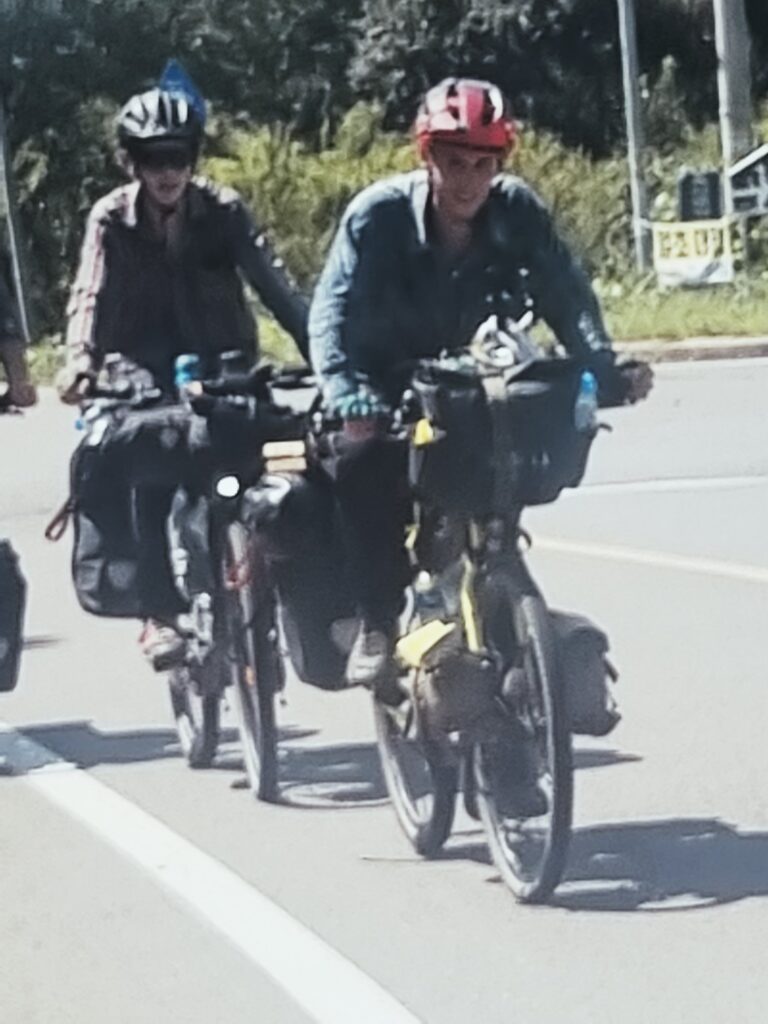
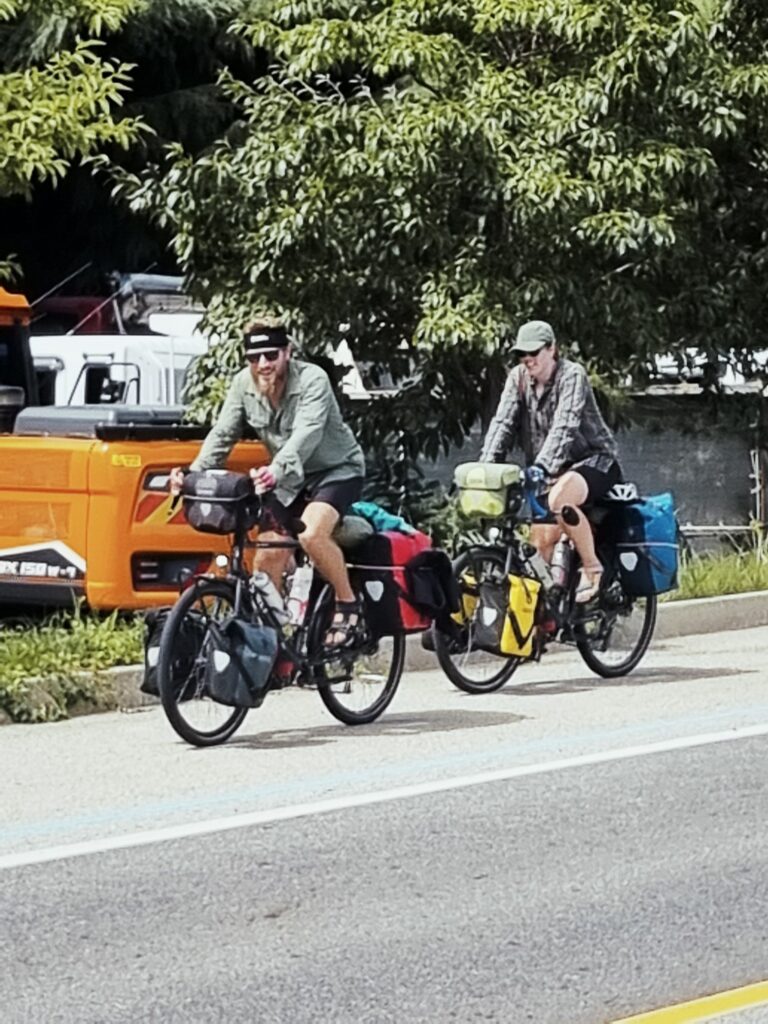
We also met some Kiwis and Canadians.
Yes, there are some world travellers, but 99% of cyclists are local. Koreans ride a lot, especially where there is infrastructure. Without separated infrastructure, they ride on the footpath. The roads often lack edges.
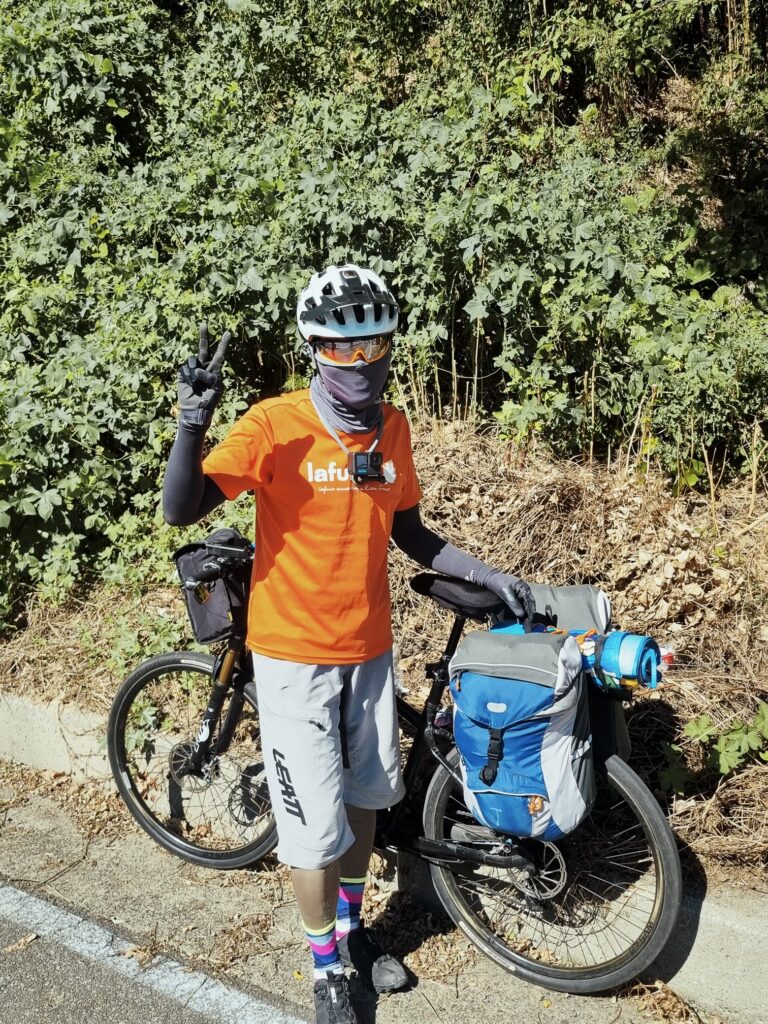
This guy is travelling with his mate. They have a tent and are doing their own cooking. The total body covering is typical. Saving on suncream perhaps?
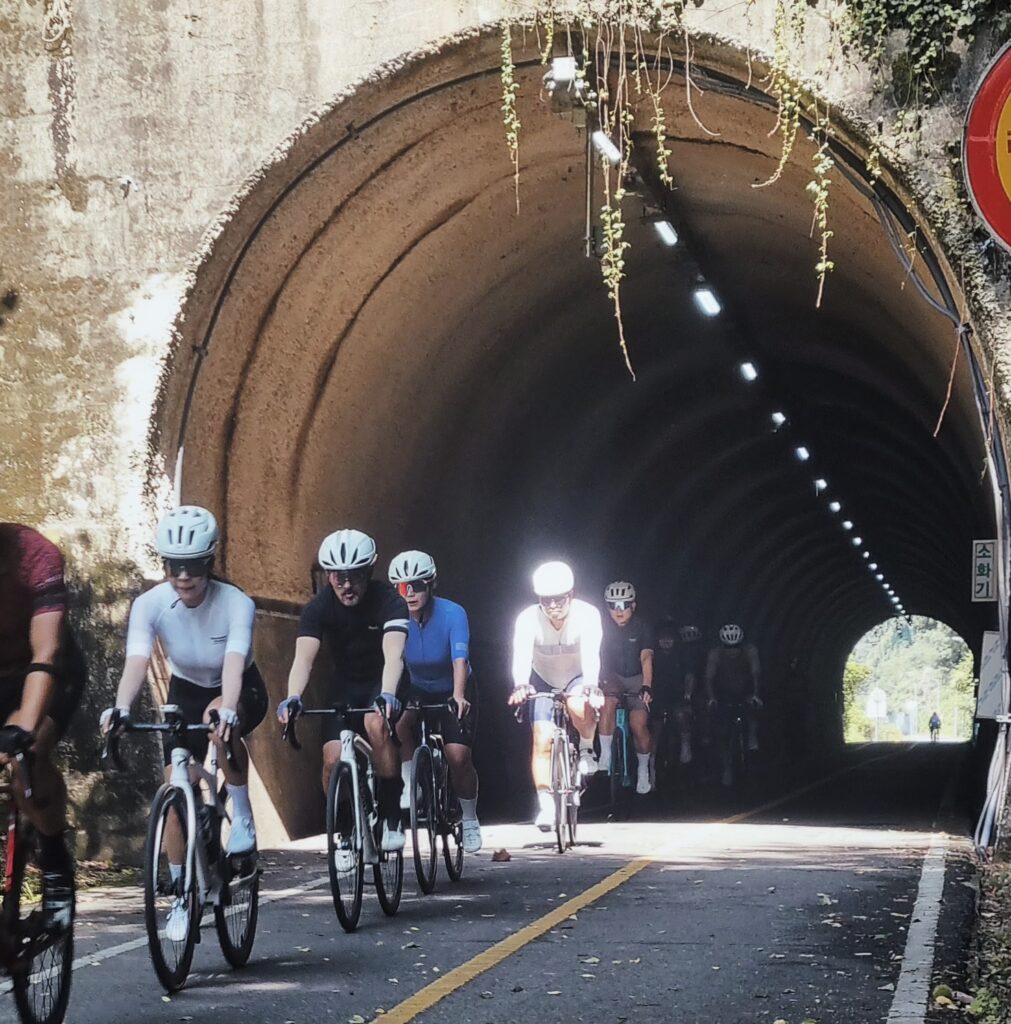
But the majority of Korean users on these long routes are not long distance travellers, but nearby residents. Within 30km of home. Just riding their bikes for the heck of it, for the joy, for the camaraderie, for the exercise in an apartment-living society, and for the nature. There are a lot of roadies, relishing the superb infrastructure.
A 700km-long separated bike route the full length of any country is truly impressive. We can’t help but wonder about the public policy decisions that were made, for this to exist. At all levels of government. Maybe the Koreans have worked stuff out and we all need to learn from them.
Typically there are two bike lanes and a walking lane. Along the Han River in Seoul there are sometimes double bike lanes in both directions. There is exercise equipment at regular intervals along the routes. Toilets with piped music and aircon!
Noticing there is virtually no obesity in this quite wealthy country, we start to think the public policy decisions to spend mega bucks (Won) on this exceptionally good infrastructure might have been driven by health departments. Their public health costs must be lower due to widespread societal good health.
In Australia and most of the western world, cycling infrastructure has been fought for by advocacy groups. What has been provided has been slow to build and has been less than what was asked for. Here in Korea, it appears that there has been a long term national umbrella policy to provide for cycling.
Roadside fruit? Sorry, not here unless you happen to be in country when persimmons are ripe. There are persimmon trees everywhere. That’s late October and November, so, too cold already. There are a few figs that are reachable and not private. No blackberries.
The problem for fruit in this part of the world (Japan too) is the hornet that kills bees. They attack hives and kill every bee if they find a hive.
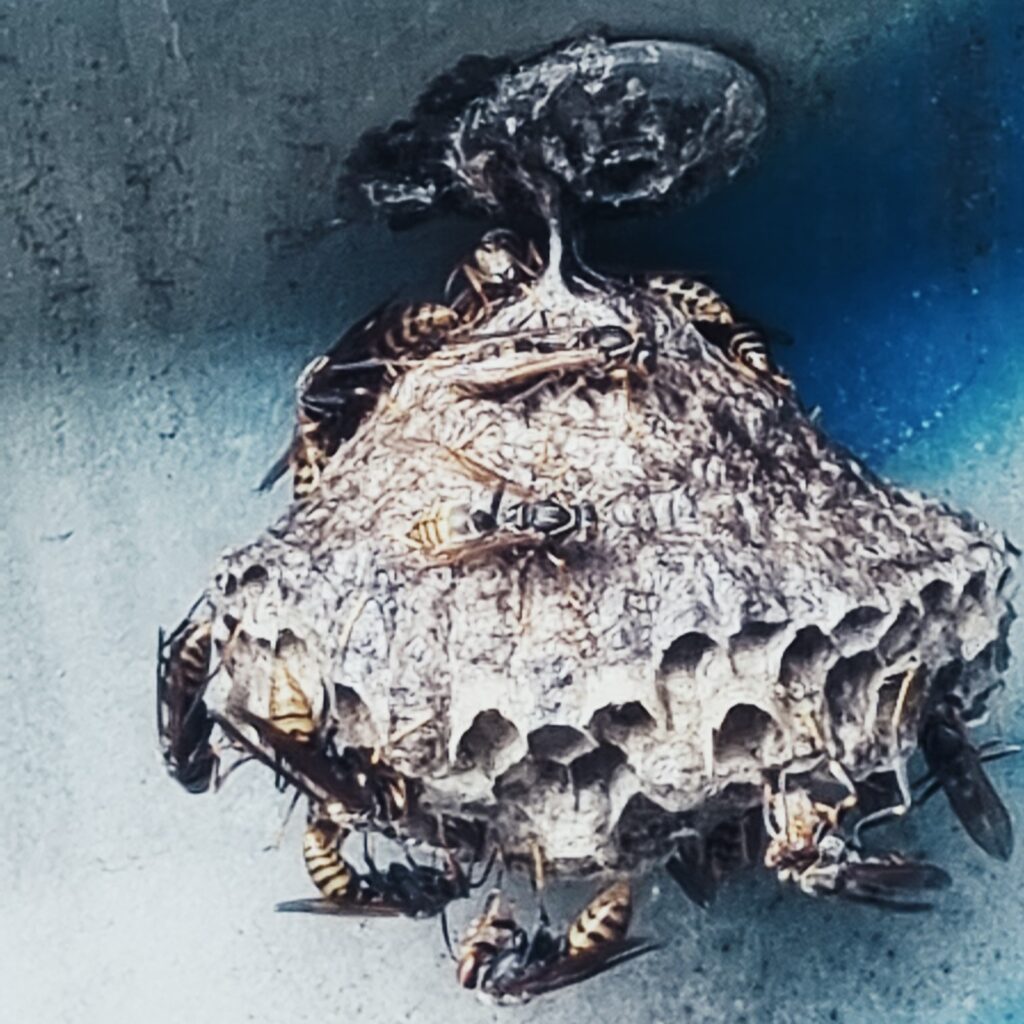
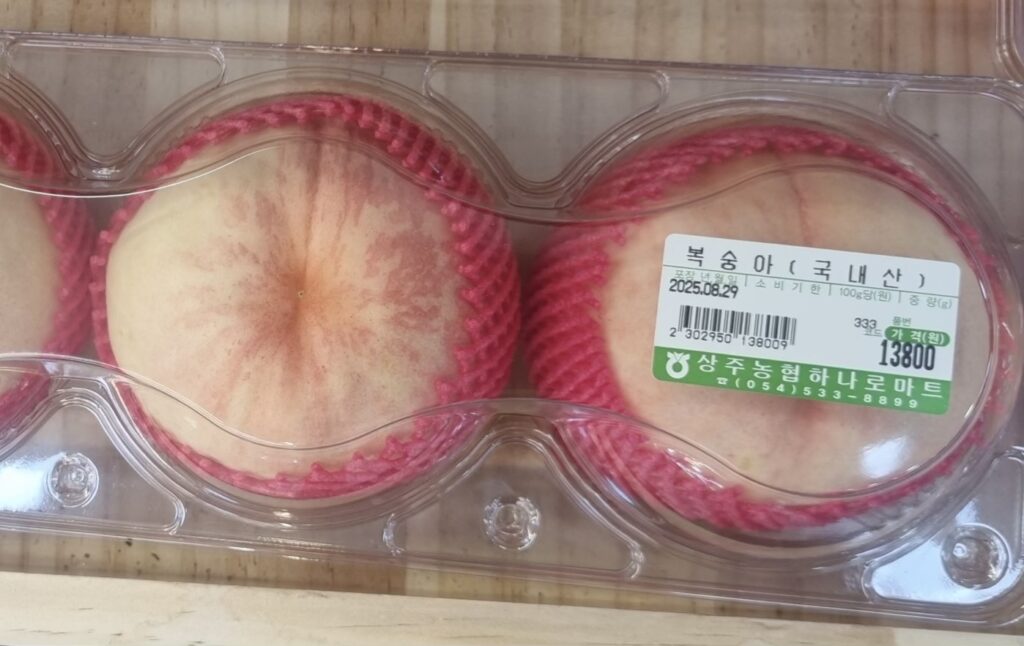
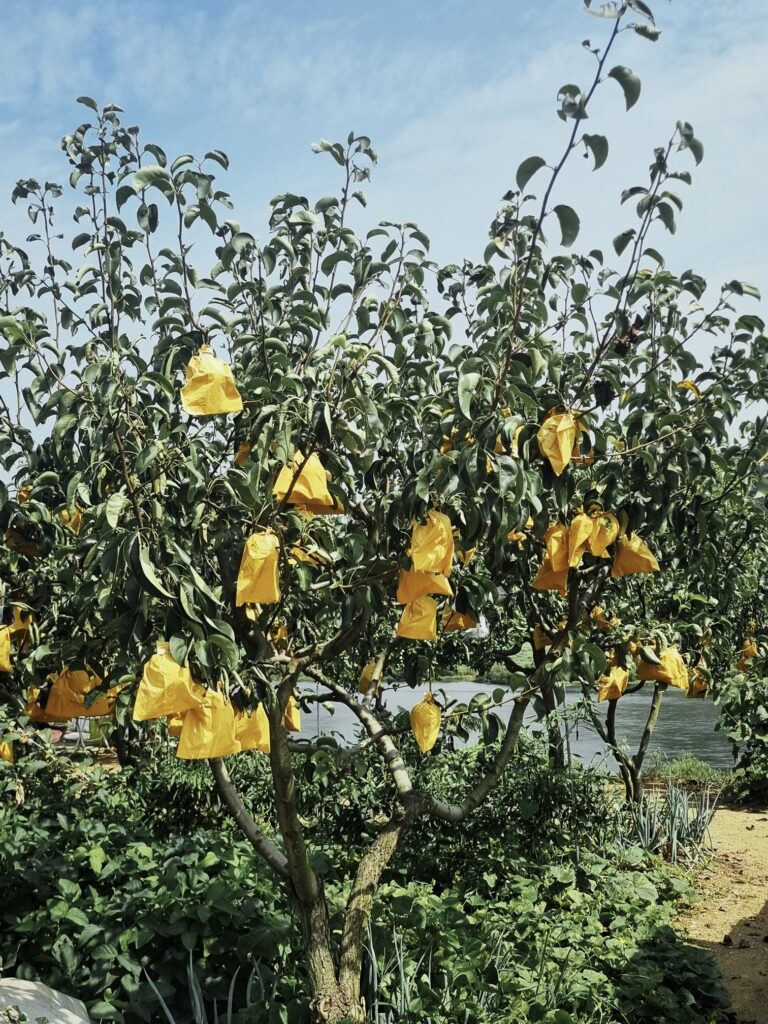
Consequently, a lot of fruit needs to be hand pollinated. Then it has to be protected from wasps and hornets by being covered with an individual bag. Here are apples in bags. Grape bunches and stone fruit are also grown in bags.
Coffee is expensive everywhere around the world right now, but in South Korea at least it is widely available. You can ride and think…”we’ll have a break at the next coffee shop” knowing that’s going to be within a few Kms.
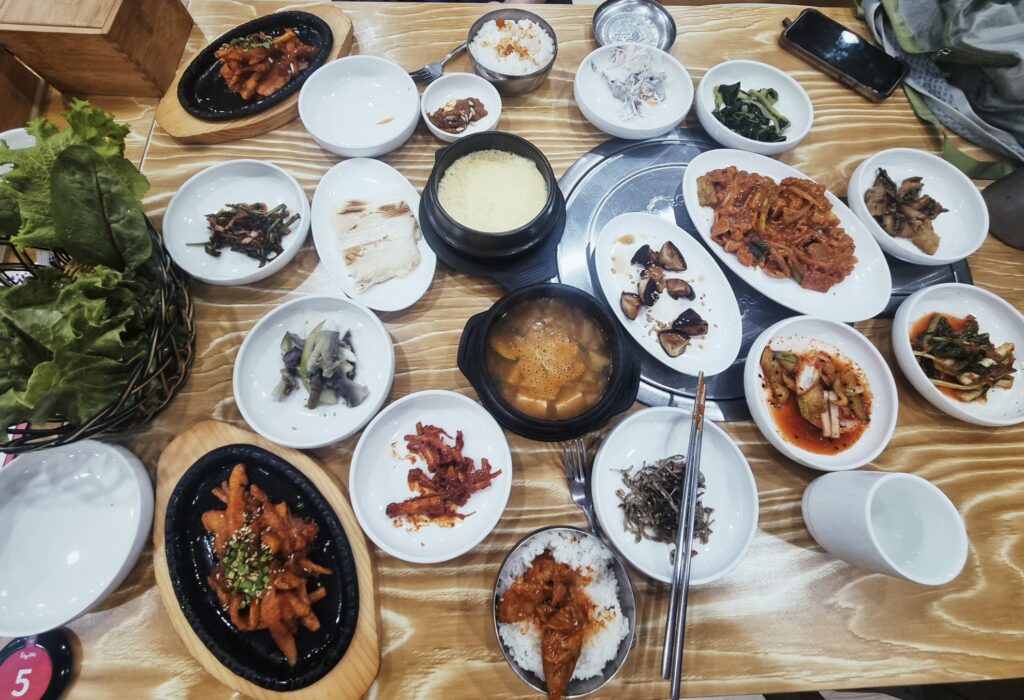
Making up for the fruit unavailability, are the fantastic evening meals. Here you want the Papago app. It does offer conversation translation, and typed text translation, but you can select “Image” and aim the phone at a menu outside a restaurant. What was Korean changes to English. You can avoid accidentally ordering chicken feet or pigs balls, should you want to! And you can reorder the buckwheat pancakes, the cold noodles, the fish, the bibimbap and other great dishes. They typically serve whatever you choose with several side dishes. Kimchi is always one of them.
There is so much variety. You could not do this in a tent and at only A$15-20 a person, having a feast every night quickly becomes part of your bike travel lifestyle in Korea.
In area, South Korea is 44% the Australian state of Victoria. It’s close to the size of Portugal. But the population is twice that of all of Australia and greater than Spain.
This is a mountainous country. 70% of the land is too rugged for settlement. Koreans mostly live in high-rises in cities.
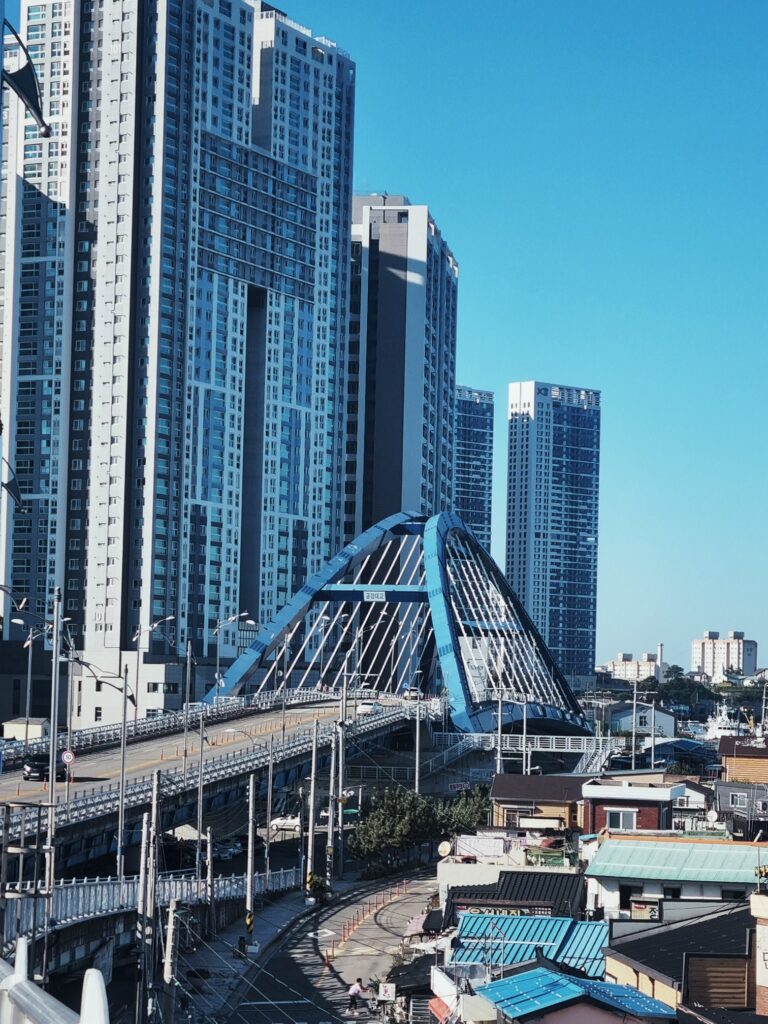
One aspect of the long bike trail infrastructure is that you are able to mostly be on level ground and mostly in nature, even though it is a mountainous and densely populated country. The routes are often on extensive levee banks along rivers. Some are once-were rail lines and these have nice tunnels. The signage is particularly good and, although not in English, is pretty clear. Papago can be used to check, but we rarely did.
In Europe there are cycle routes all over. That’s different to a long route on its own. So, in Europe, navigation is more something a bike traveller has to be on top of. And in Europe we don’t trust/rely-on signs. Euro Velo signs hidden by vegetation etc. This makes riding the long trails in Korea a special pleasure. There are very few side paths that you need to avoid taking. There is a consistent blue and white arrow. Add to that the fact that the Four Rivers trail goes on for hundreds of kms, is virtually all off-road and never far away from a town or city where there is lodging and food. Even in the cities there are spots where people pitch tents. Camping is part of the local lifestyle.
Demographically Korea has the lowest fertility rate in the world. Like in so many countries, the population is aging and reducing. But it is still 51 million people. That’s a little more than Spain, and double Australia. According to the internet, 30% of the population identify as Buddhist, 20% as Christian and 50% as no religion. Unemployment is 2.5%
Vivente is known as a bike brand but we also own a farm. Riding through farming country is so interesting. Is it the same for everyone? Perhaps it’s equally nice to be in the countryside but we notice different things.
Here in Korea you don’t see livestock. There are dairies. Milk by the way is quite available. But the Korean cows are not grazing. Land is too scarce. They are in barns being fed imported corn, alfalfa, wheat and additives.
There is quite a lot of rice, soyabean, sweet potato, corn, onion and chilli.
There are vast areas of covered vegetables. Most of the flat land is next to wide slow-flowing rivers. There are big levee bank systems in every case, protecting the biggest intensive food production set-ups you will ever see.
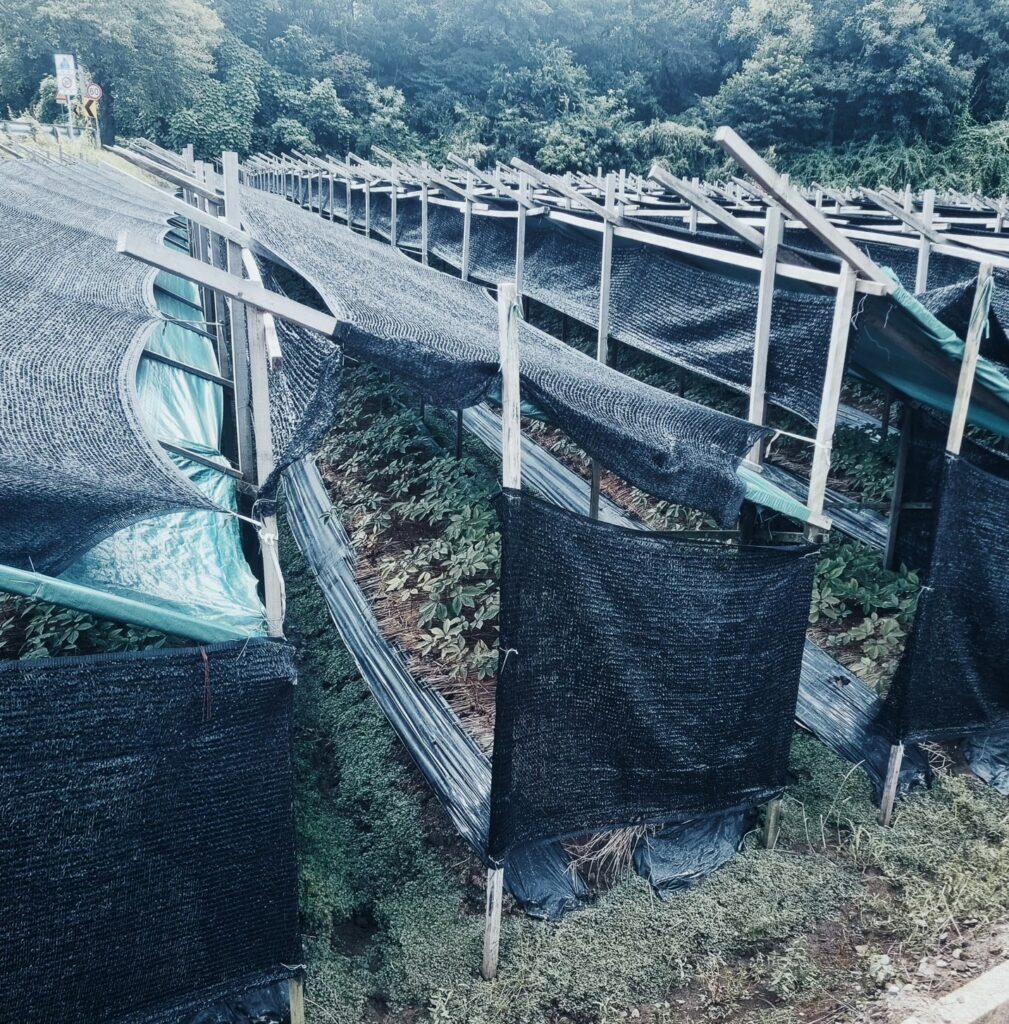
Amongst the unusual crops is ginseng, a forest floor plant which needs to be shaded. There is a 100km section where ginseng growing is common. With our meal in Gumi there were a few freshly harvested ginseng plants, well washed. A top, slightly like on a small carrot, and a spindly white thin root. The man who brought the trolley with the plates indicated to eat the lot.
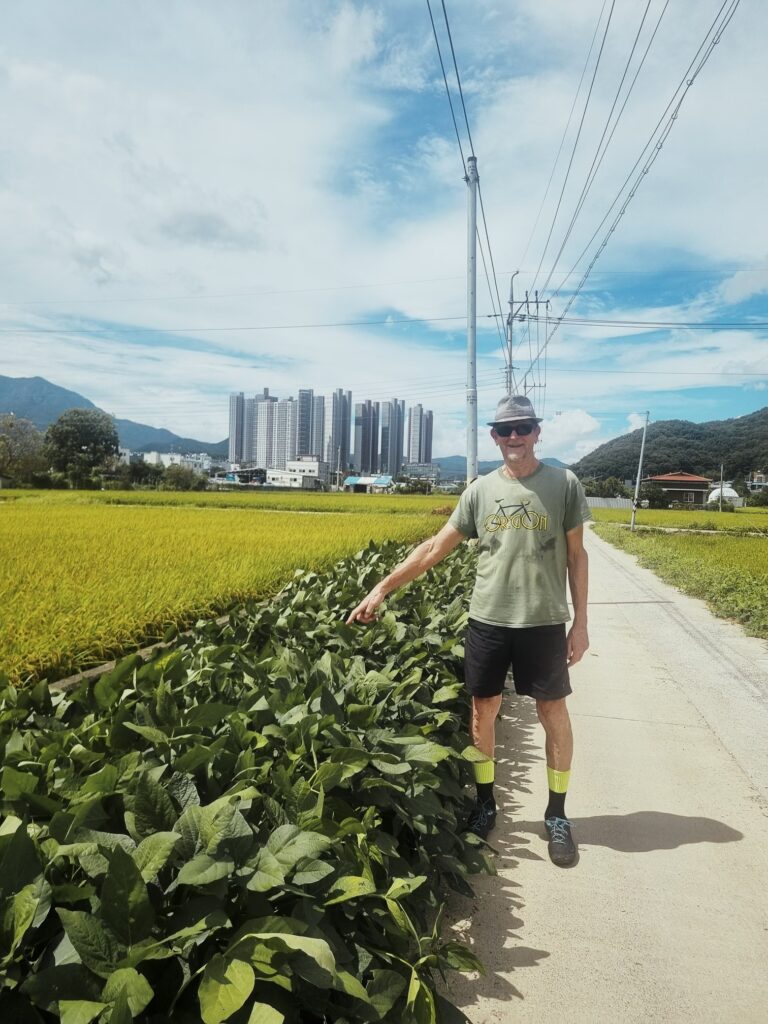
It would be interesting to know how they came to avoid herbicides.
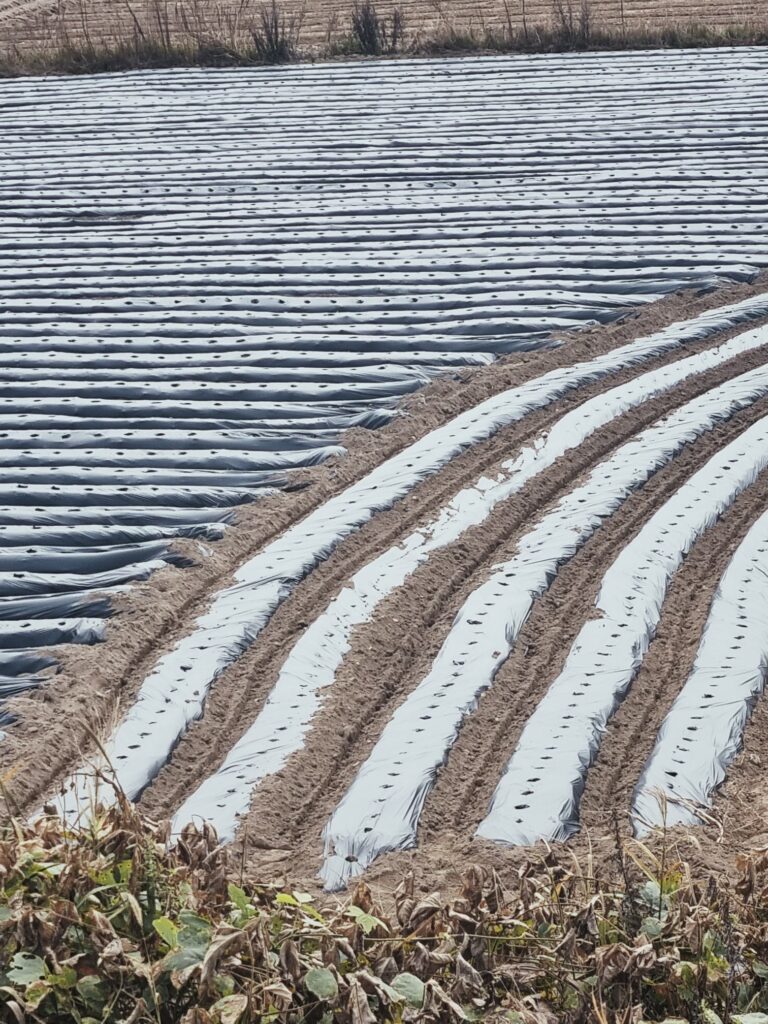
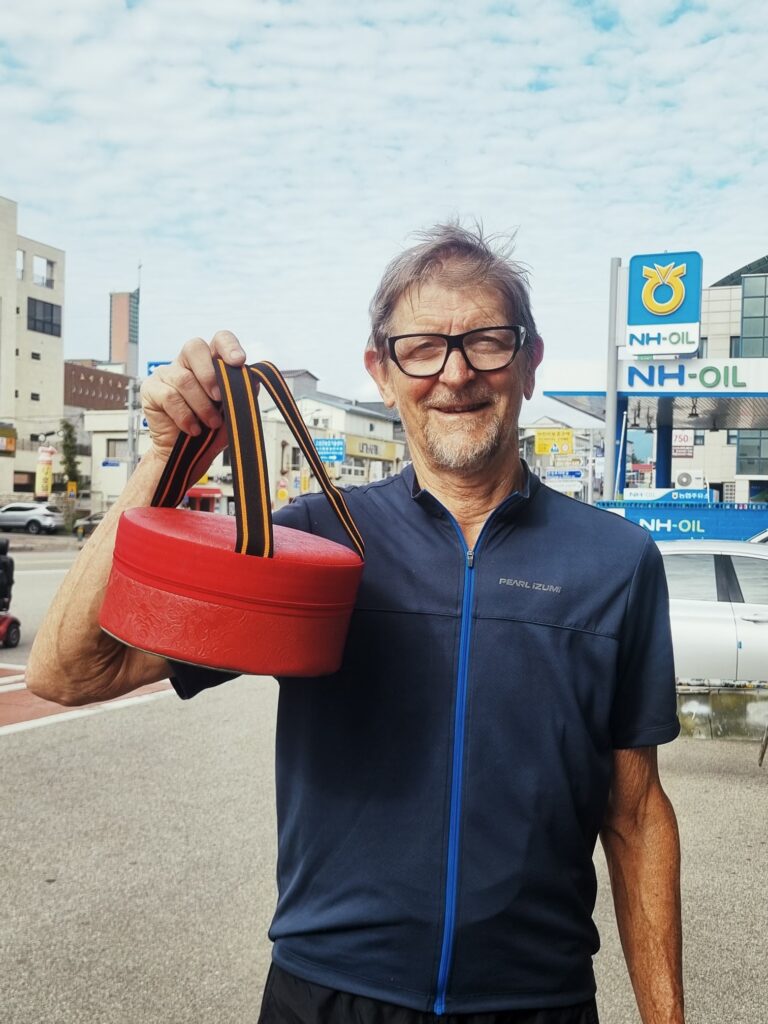
There is a thing called a Korean Farmers Pillow that has two straps and is held to the bum so you can move around with it on and sit down and continue weeding. We got one to bring back to the farm in Tassie. $6!
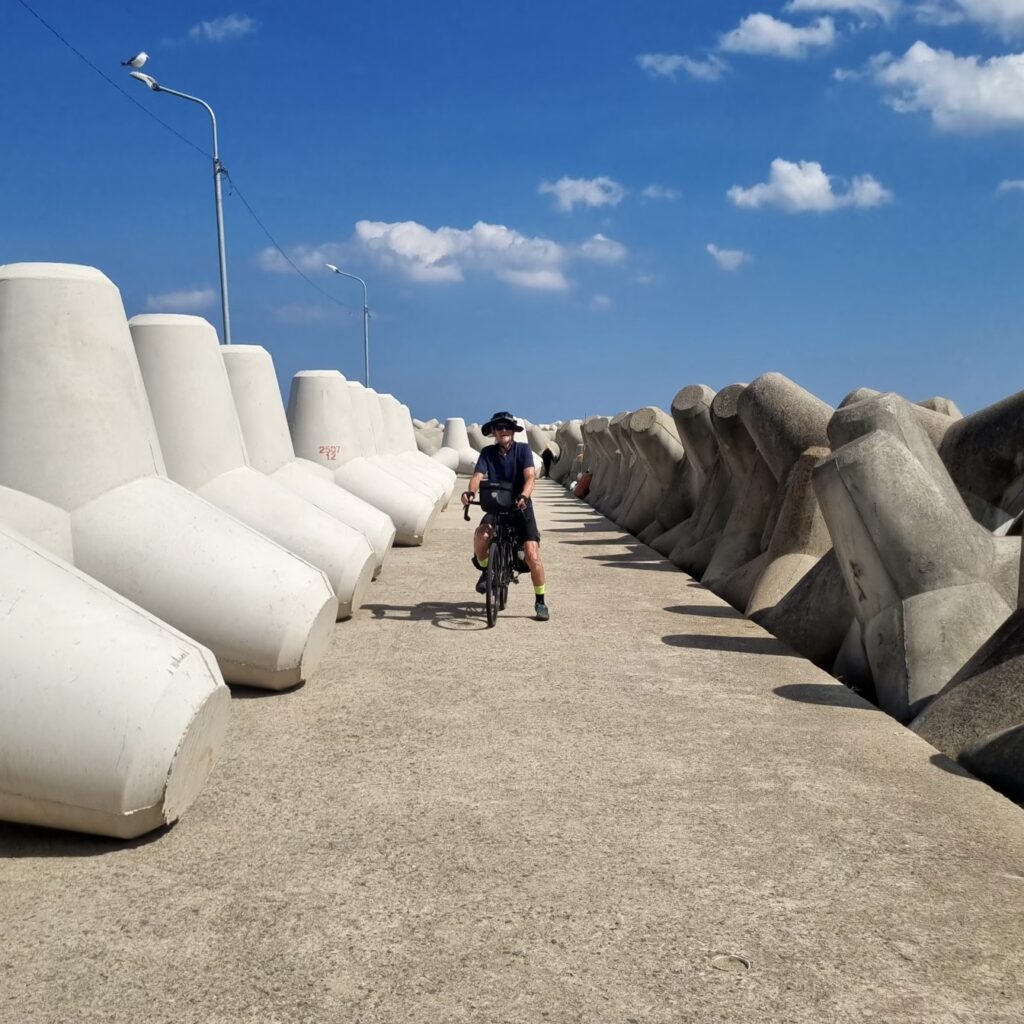
Along the east coast, for hundreds of kms, there are extensive tsunami protections. There are local escape routes on prominent signs all along the way. Loudspeakers on the ready. The East Sea has suffered a lot from tsunamis in the past.
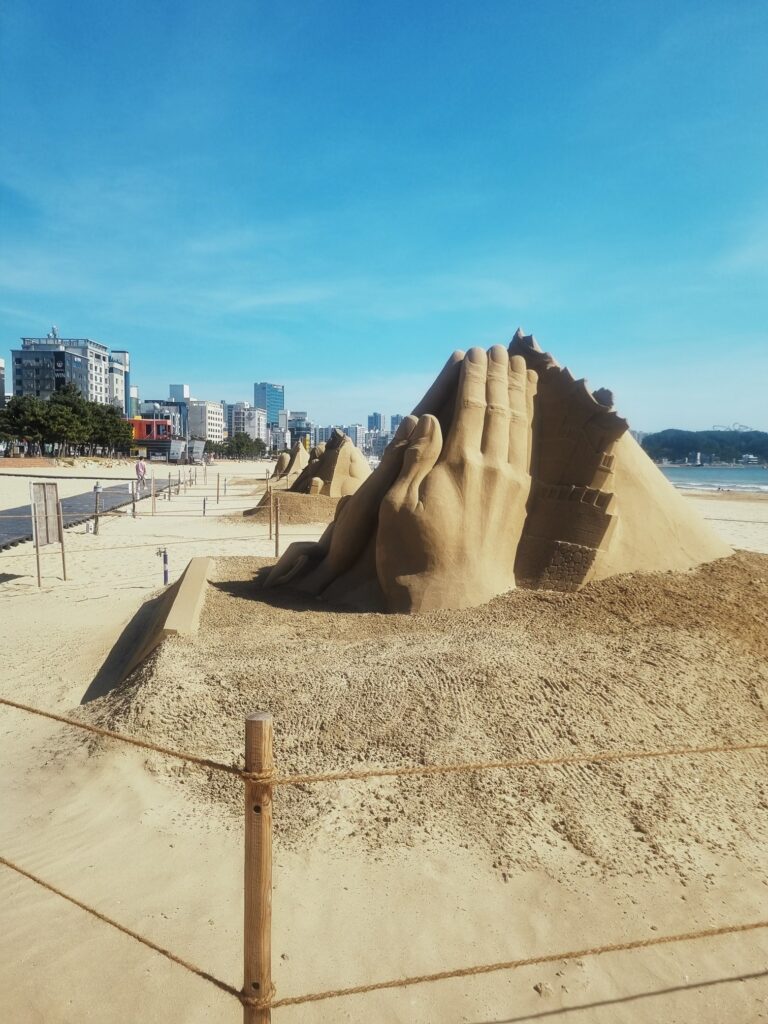
You see a lot of public art, including long art precincts, such as on the north side of Pohang. There are some massive sand sculptures that must be remade after rain.
You see a lot of public art, including long art precincts, such as on the north side of Pohang. There are some massive sand sculptures that must be remade after rain.
Using busses
We prefer to ride everywhere but being able to move further on a bus is something to know about. The Four Rivers route ends at Busan in the south. We rode the 700km. The East Coast route starts around and up the coast a bit from Busan. So we jumped on a bus to Pohang, around the southern start. That was easy to do. Frequent buses and good storage room.
We rode the 400km up the east coast to the DMZ. To get back to Seoul, riding would not be wise. Not all the way anyhow. The road has no shoulder, and cars would squeeze past you too close. There are tunnels with no shoulder and a bike is not expected.
There are several busses a day, probably because the military trainees stationed around the DMZ, are wanting to go home to Seoul and Incheon for a break. Most bus passengers on that route are in army clothing.
We booked this bus to Dong (East) Seoul terminal. There’s a booking machine with only Korean instructions. With the Papago ap its reasonably easy. Having booked, we didn’t want to risk there being other bikes already taking the space in the hold. So we took off our pedals, front wheel etc. There were not other bikes and we need not have done that, but we’d do it again.
Back to Seoul after three weeks ago being a total novice, it was great to hit the Han River bike paths. These are not bits and pieces. You can ride seamlessly, for 100km. Wide smooth paths, free of any impediment. Sometimes four lanes. Virtually no intersections. Some bike-only roundabouts. Experienced riders used to the path. No food delivery. Few electric bikes going too fast. Good bikes. No dogs. Peds on a separated path. In Seoul and Incheon we rode 200k. I can’t think of another large metropolis (this one is 28 million) as good.
The long stretches of great infrastructure in more remote places are equally memorable.
Along the east coast…
Along the Four Rivers….
Visiting South Korea with a bicycle, at the right time of year, is a great thing to do. It’s highly recommended.
Distance wise, you can ride 100km a day but also run at 60-80 km or 40-50km. They all work well. In fact, you can just work it out as you go. We didn’t book anything except that one bus.
On our Instagram posts we did cover some specifics about the ride/ferry/ride process that involves getting to the airport. Have a look if you are going there.
Testing Testing Testing
We rode on Swabia drop bars with 40mm Goodyear Transit Tour tyres (with tubes) and got no flats. They have Kevlar belts. 40mm has been pretty much a tourer’s tyre width for over a century. 1-⅜ to 1-½. It’s when surfaces are less smooth that the wider tyres beacon.
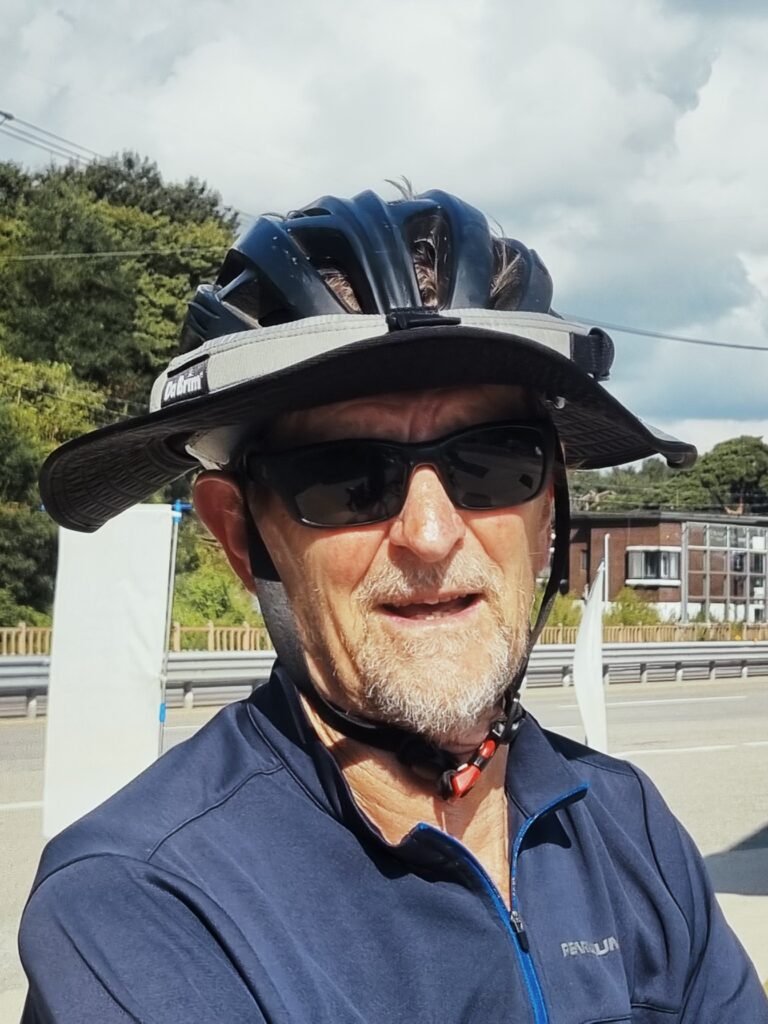
In two months’ time we’ll be in Maharashtra and will stay with the 40mm.We also tested the DaBrim helmet-fitted sunhats and give them a tick. DaBrim doesn’t seem to call them sunhats though. This one says not to exceed 25mph (40kph) as it might blow off. I felt up to 50km/h was ok but you need to slightly tilt the front down. It did not come off at 54km/h.
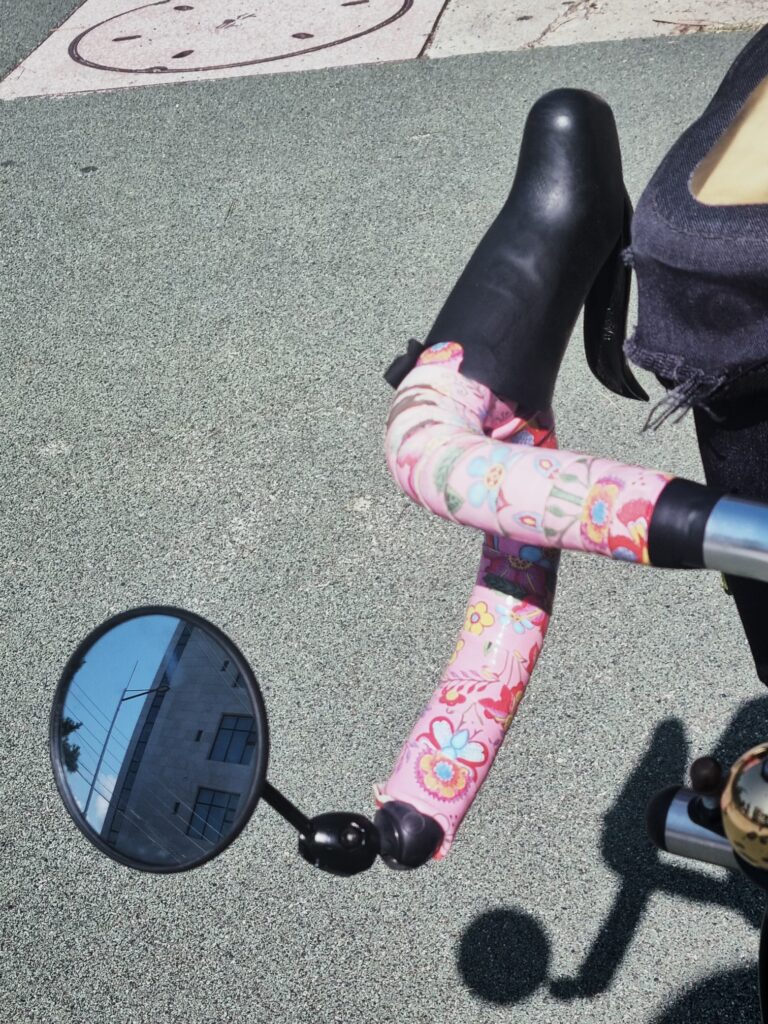
Another test was a better way of fitting the B&M mirror on drop bars. Having the mirror right at the end of the drops might not be far enough out if either
- the bars are narrower, such as on a bike for a short rider, or
- the rider has wider hips or is wearing more clothing.
By using the arm that comes with mirrors for sit-up bars, the mirror can be moved out. This was such a good result that we are adding the arm on all new Swabia bikes that we produce.
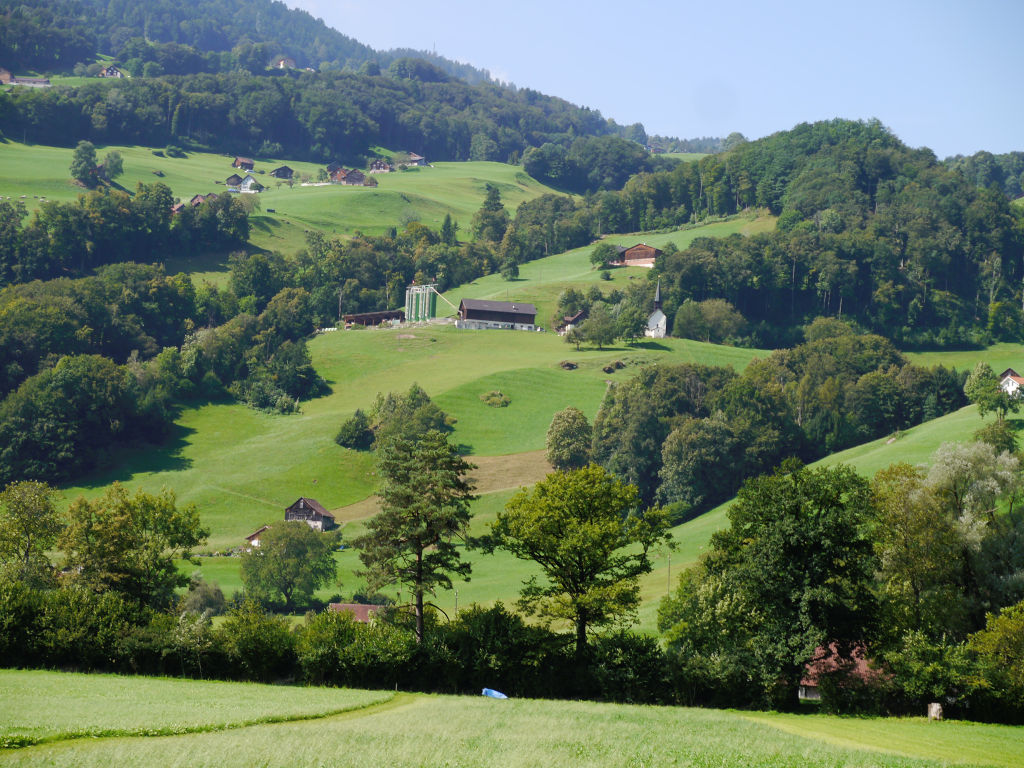
A ride from Zurich, through Lichtenstein, across southern Bavaria to Salzburg in Austria, to Linz, over the Danube into the Czech Republic, to Pilsen and then to Prague.
Heading south east out of Zurich. There are two long lakes (Zurich Obersee and Walensee) with excellent paths and classic (amazing) Swiss scenery.
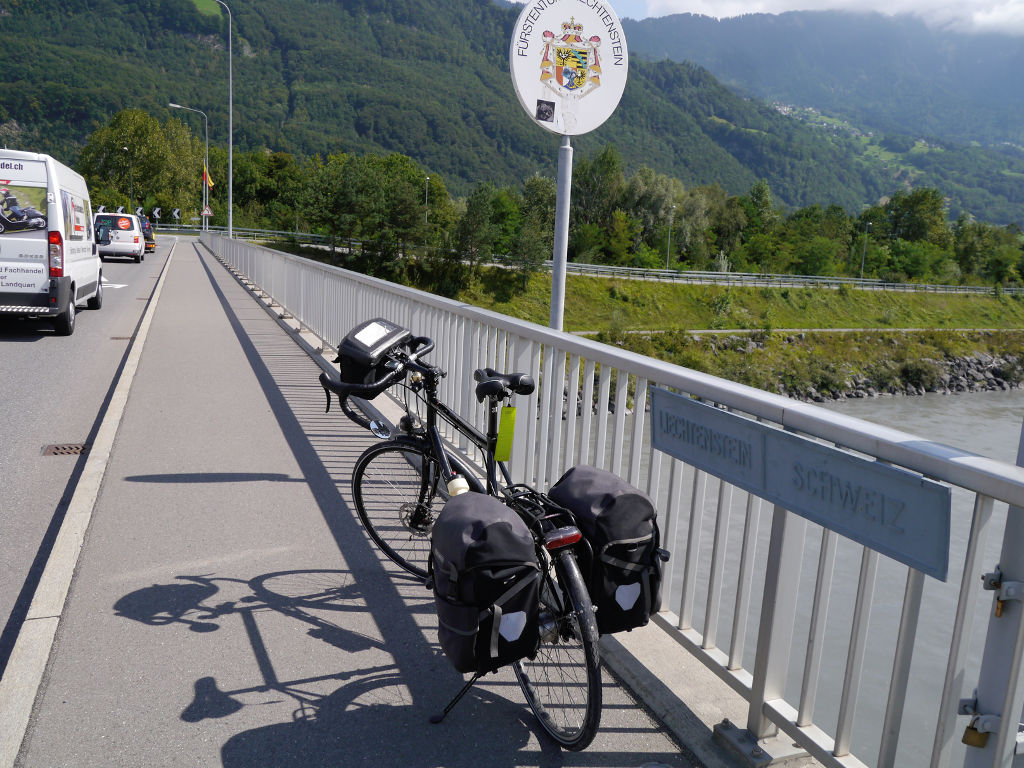
Crossing into Lichtenstein. I’m riding a Swabia and am testing out the Gates Carbon Belt Drive.
In Salzburg things seem very civilized. There are lots of tourists but on a bike you are soon away from that.
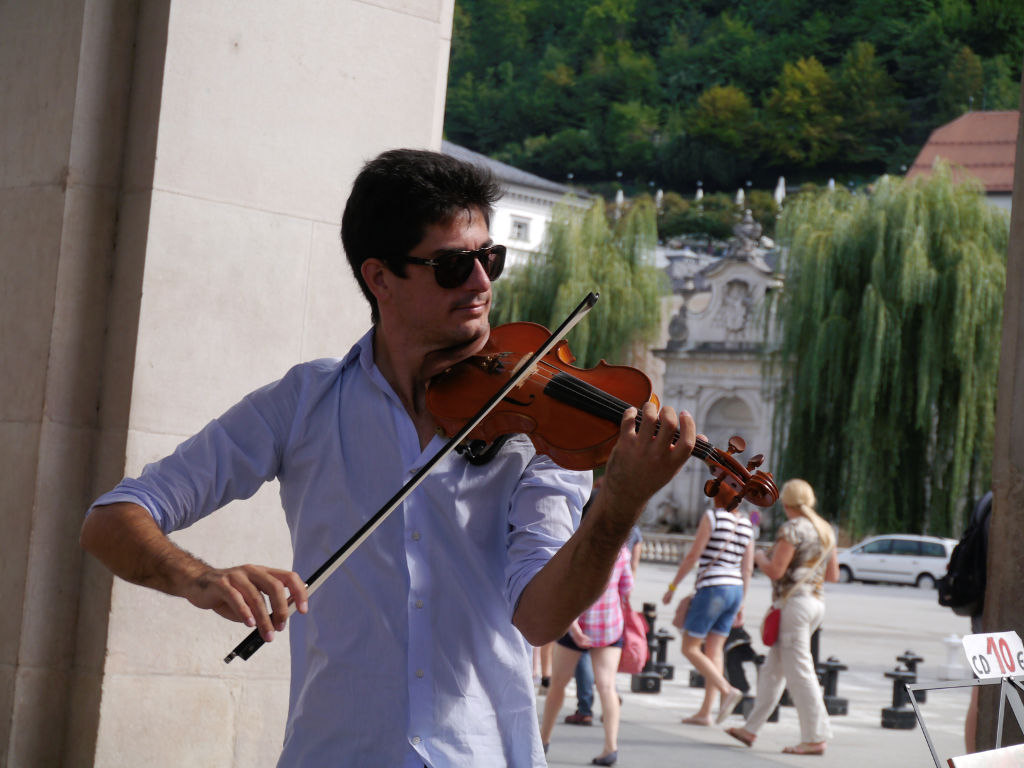
Salzburg.
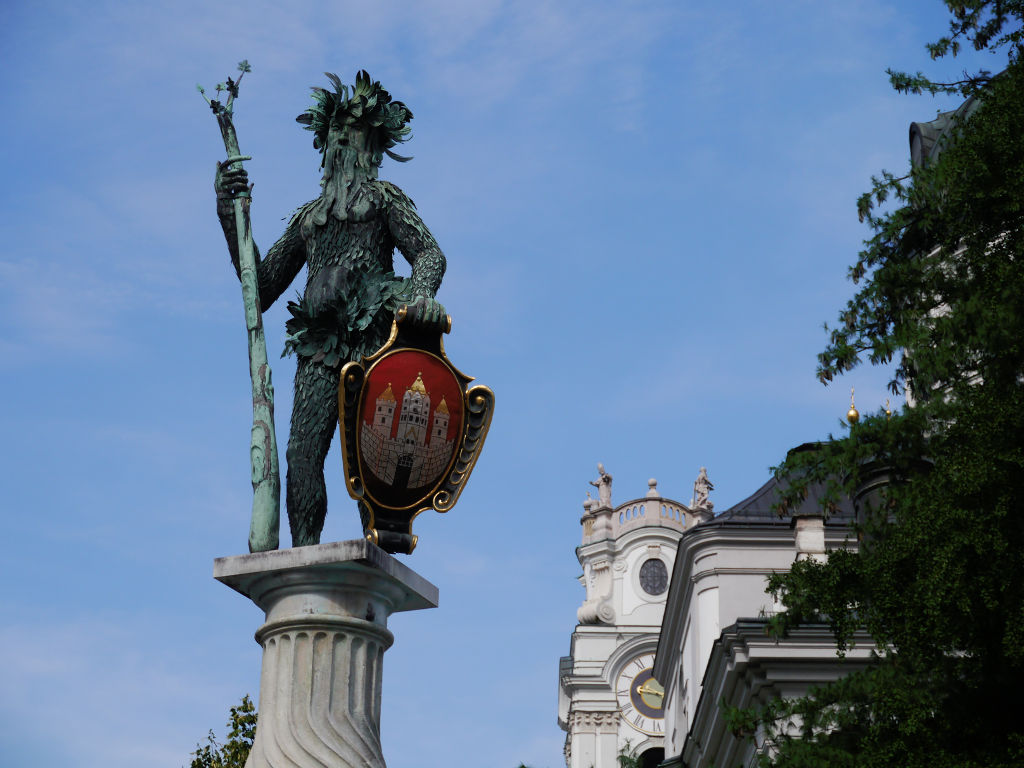
Artichoke flowers for sale. Artichoke flowers have a unique smell.
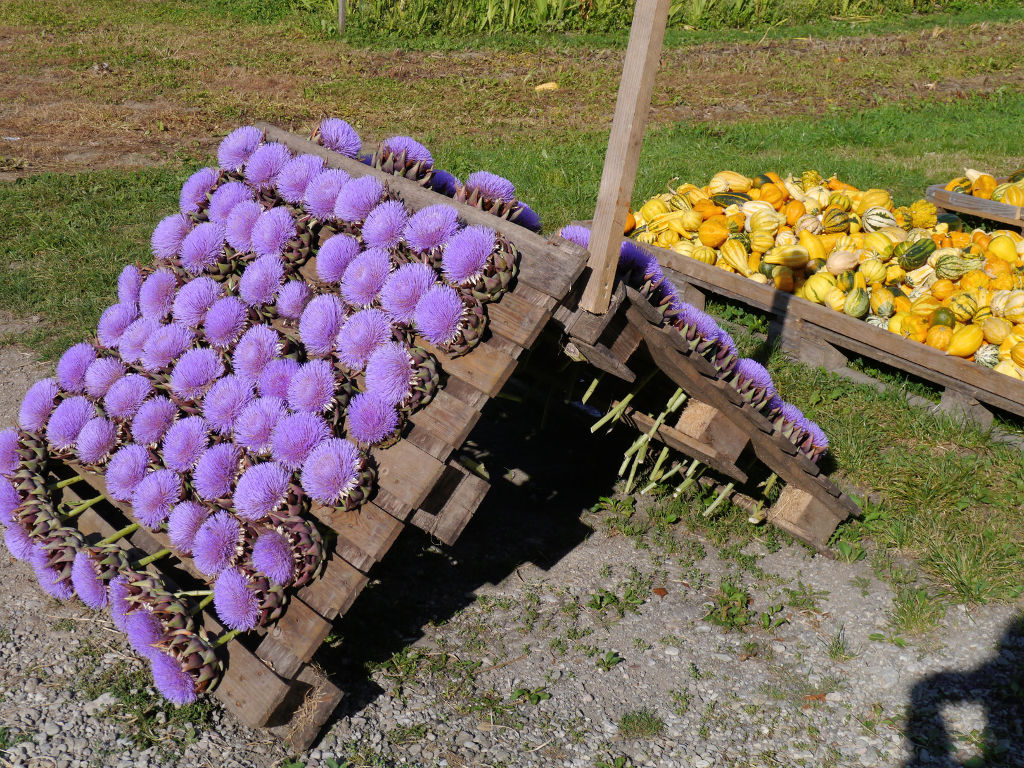
Near Bayerisch Eisenstein and the Czech border I’m briefly on Velo Route 13, the Iron Curtain Route.
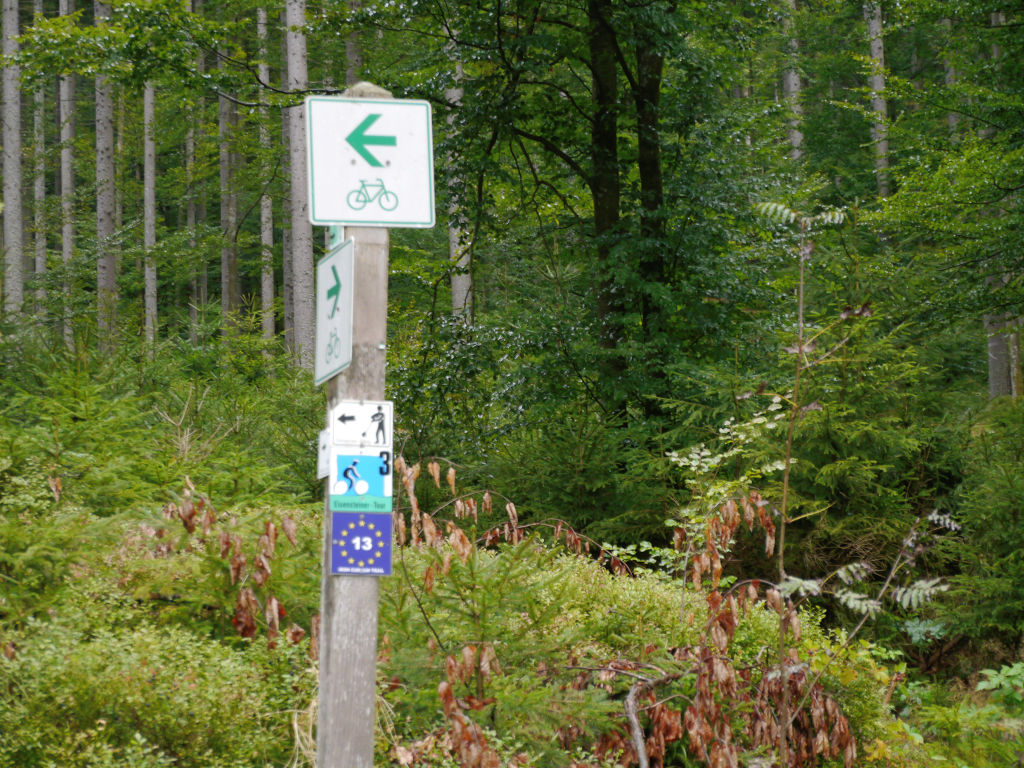
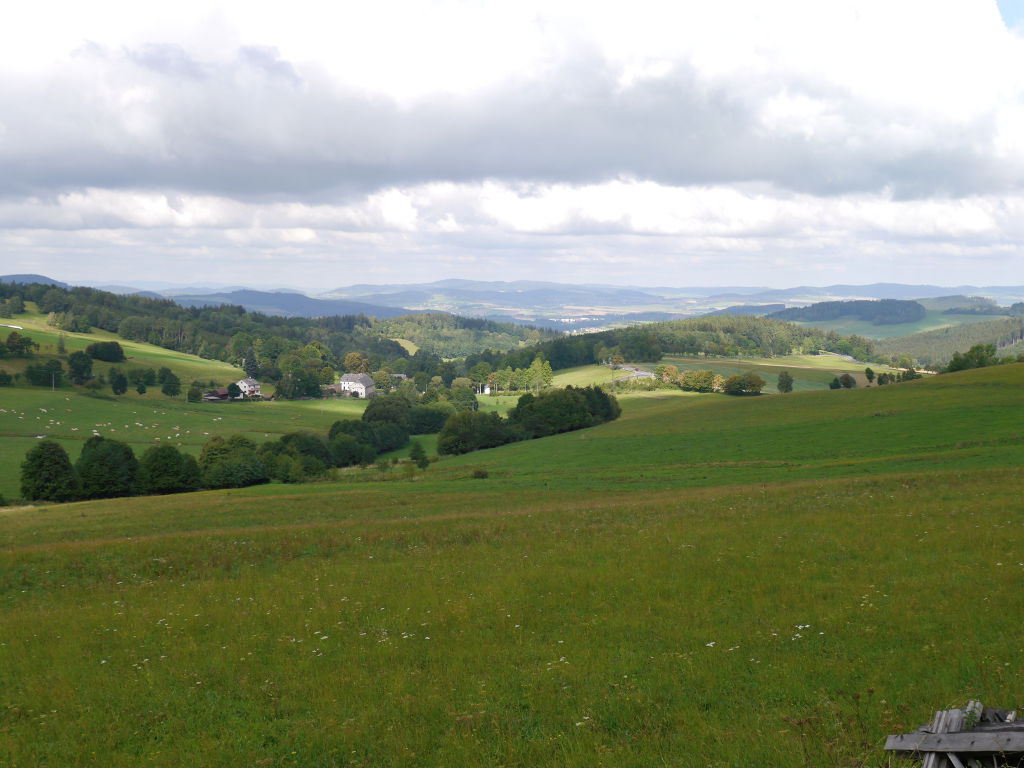
Looking N-NE over the border ranges there are expansive views towards Pilsen. Looking forward to a beer there.
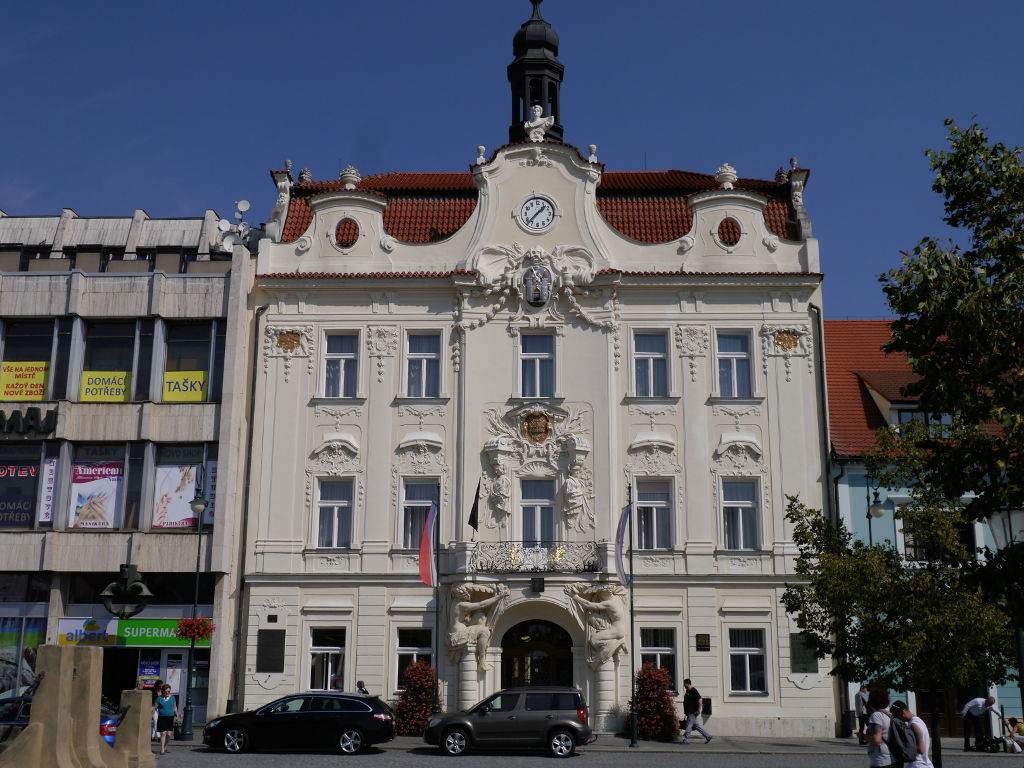
Provincial baroque architecture in Czech Republic.
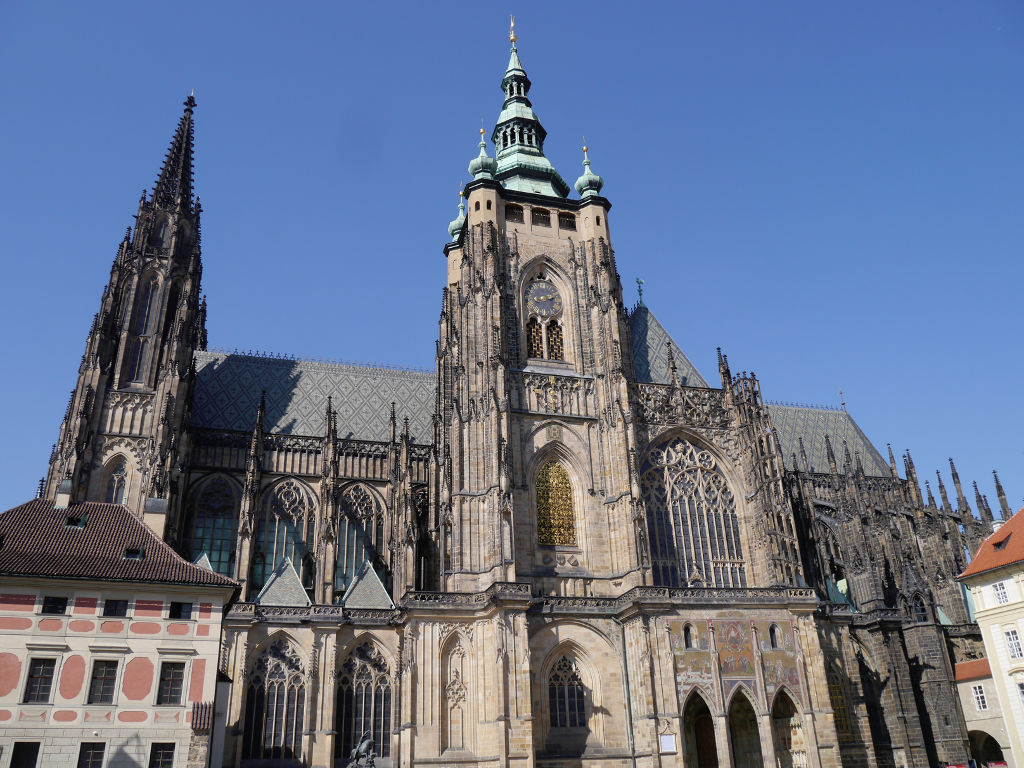
Prague has so many exceptional buildings. It is packed with tourists but if you can handle that and if the weather is good it is a great place to cycle through. Bike friendly too.
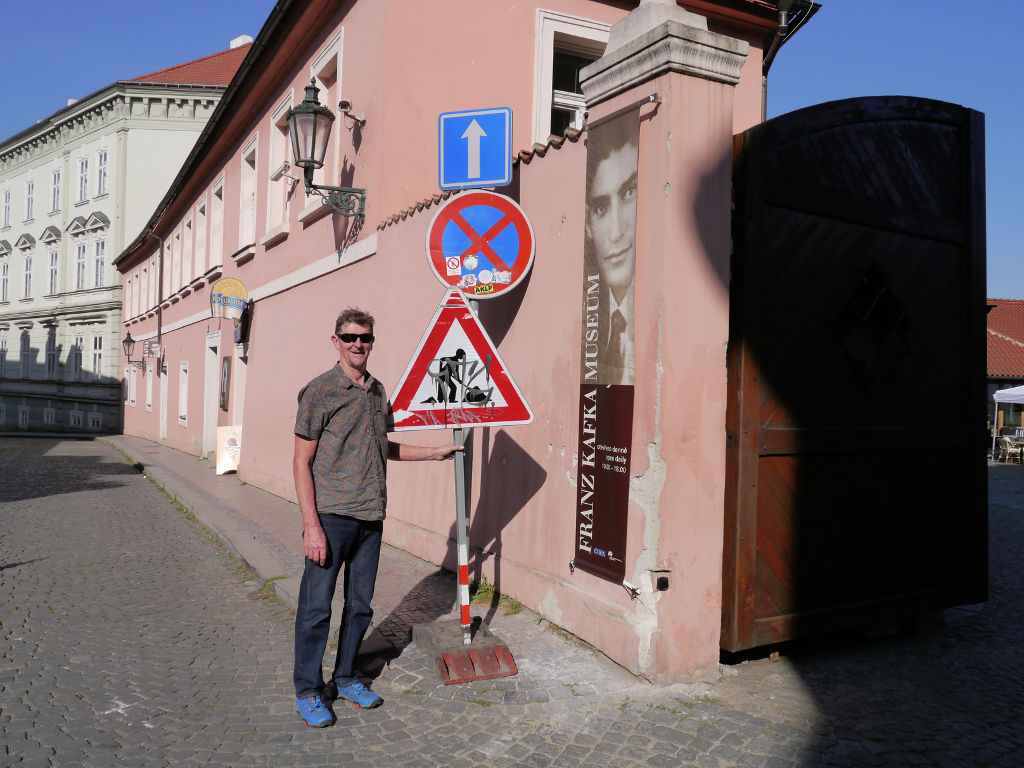
Kafka was here. “There is hope. But not for us”. So many famous lines.
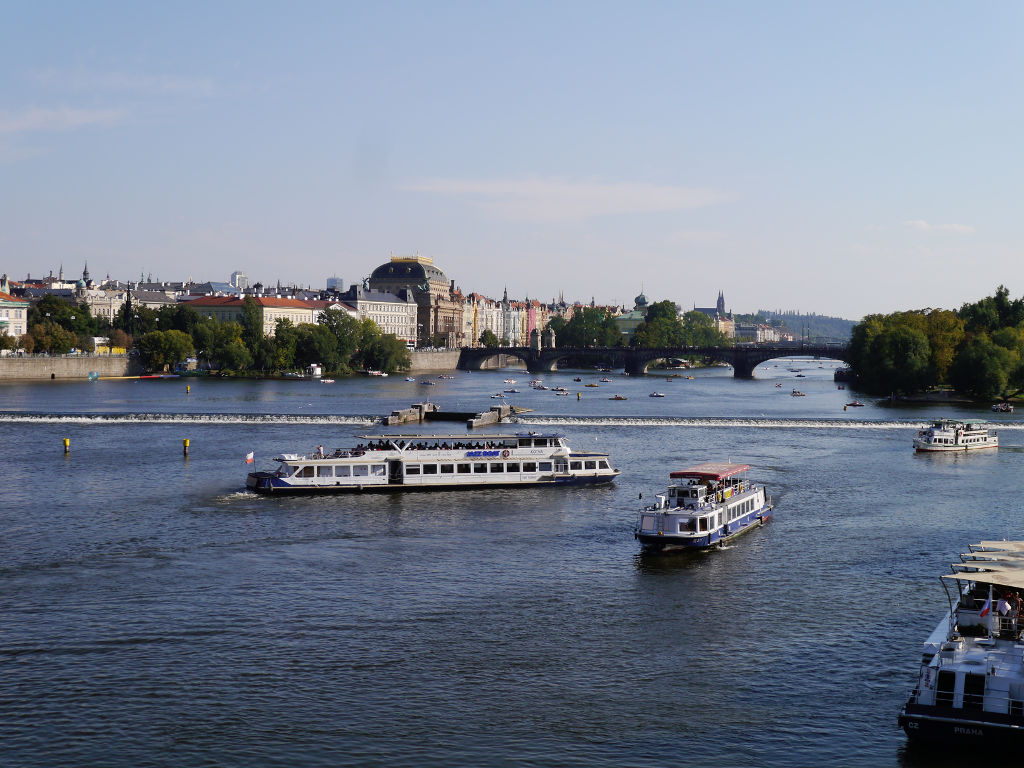
The Vltava. It’s a big river and Prague is on both banks.
There are no cartons at the airport, so I got one at a shop near my Airbnb and took it out on the train and put it in the left luggage the day before my flight. Then I rode out and packed there.
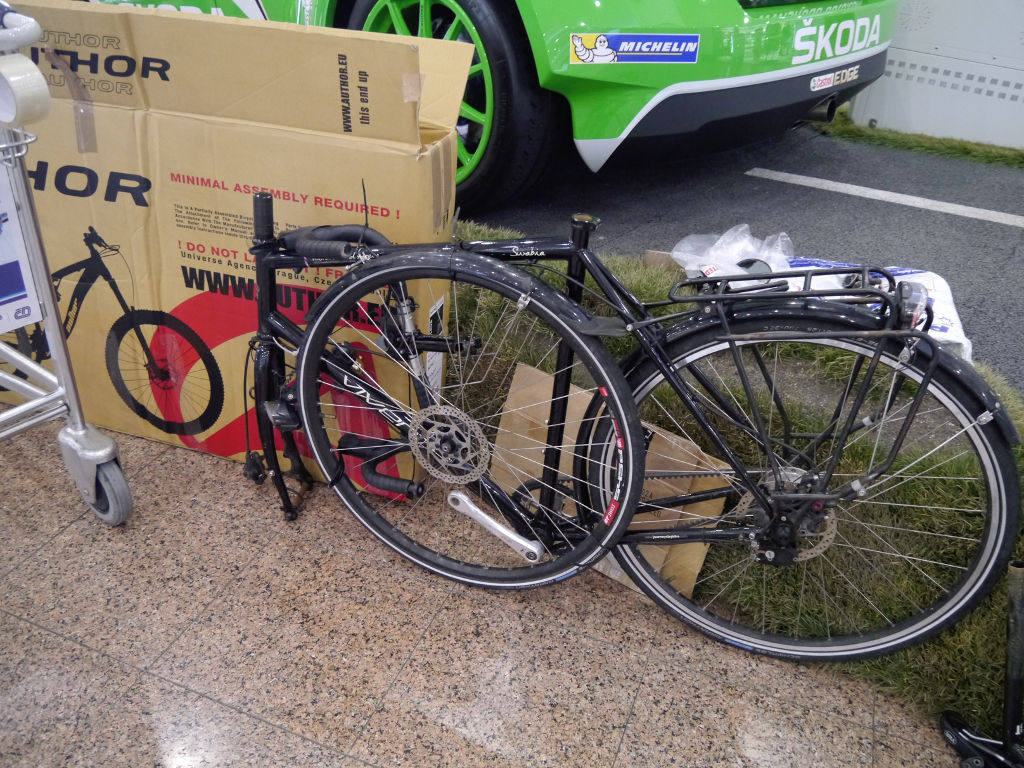
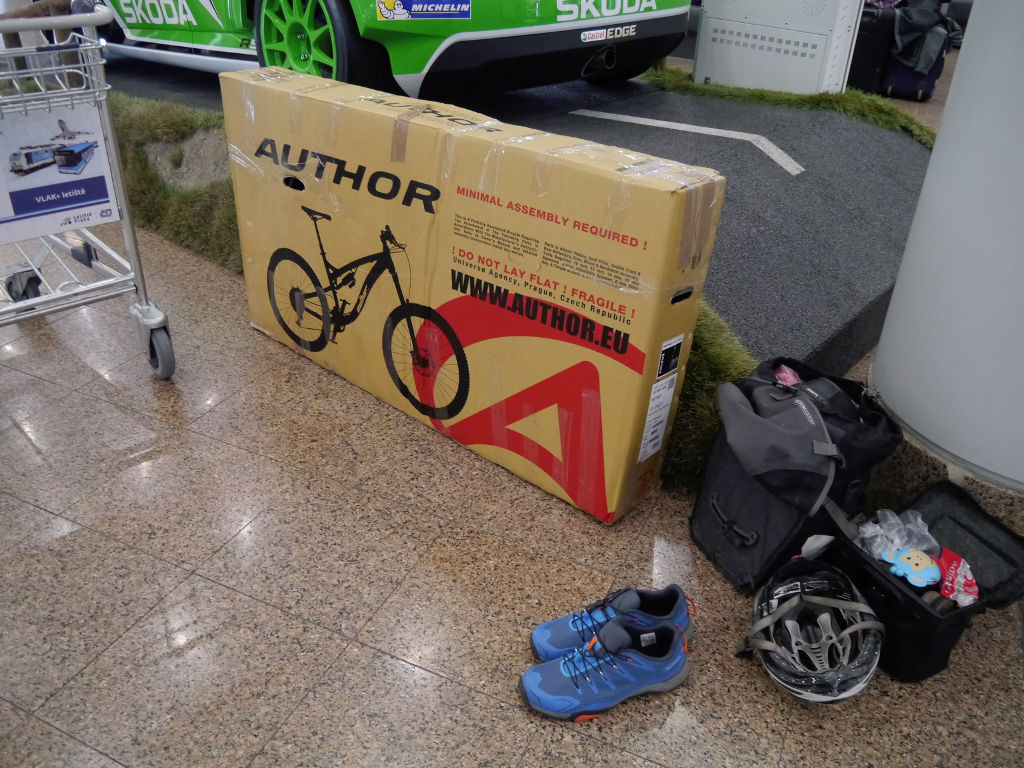
We are publishing this 7 years later. We never documented this ride as it came to an abrupt end when I fainted whilst riding. I fell off, broke my collarbone and had to hole-up in a lodging for 10 days before being able to catch a bus. Then I travelled to Madurai and met up with my four ride buddies, who had carried on, a few days before we all flew home.
We didn’t document this ride, partly because it seemed like a failure. But that is to deny our vincibility. To deny that things do go wrong. That bad things can happen, and bike touring is not all roses. And that we get a bit older and more vulnerable every year. But that we can get back up and go on.
Should we stop going on new adventures after a medical incident? Certainly not. Since then, we have done 12 more tours and there are more in various stages of planning.
Let’s have a look at the ride up to the fall.
We met up at the airport near Goa and rode down the coast for a few days stopping at Margo, Karwar and Honnavar before climbing up to Jog Falls.
The country around Goa is lush and a favourite place for folks that have “dropped out”, mostly from Europe.
You can feel hemmed in on the west coast. It is a bit crowded. There are some big rivers and sometimes it’s best to cross on ferries rather than head inland just to find a bridge.
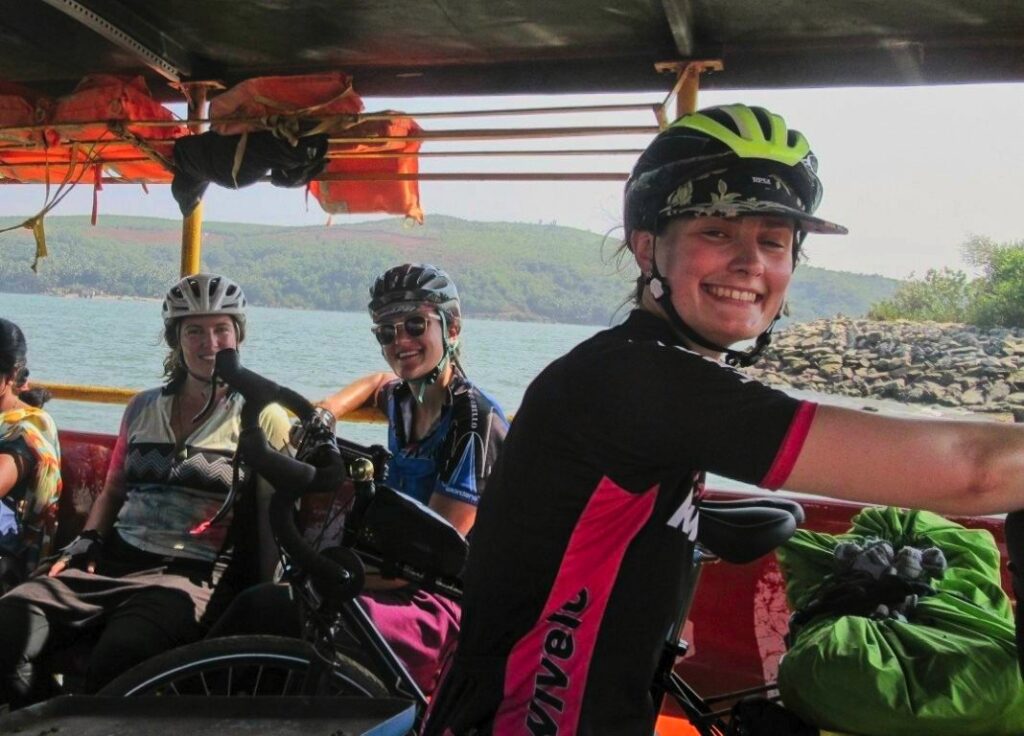
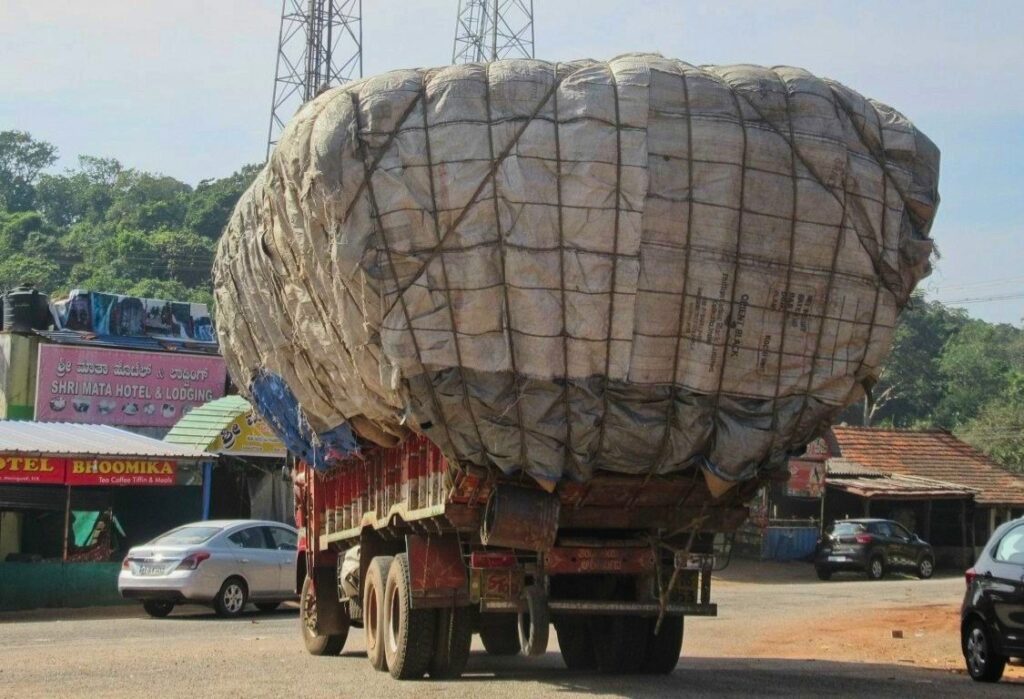
There is a highway down the west coast of course and there are some impressive trucks. Some have big loads. There’s something about them that makes us marvel and admire them. Perhaps it is how tidily they have been tarped and roped.
Moving inland, the country rises and there are beautiful scenes in the tea country. This is Karnartaka, not Kerala or Tamil Nadu where you expect to see tea. This state has equally beautiful scenery.
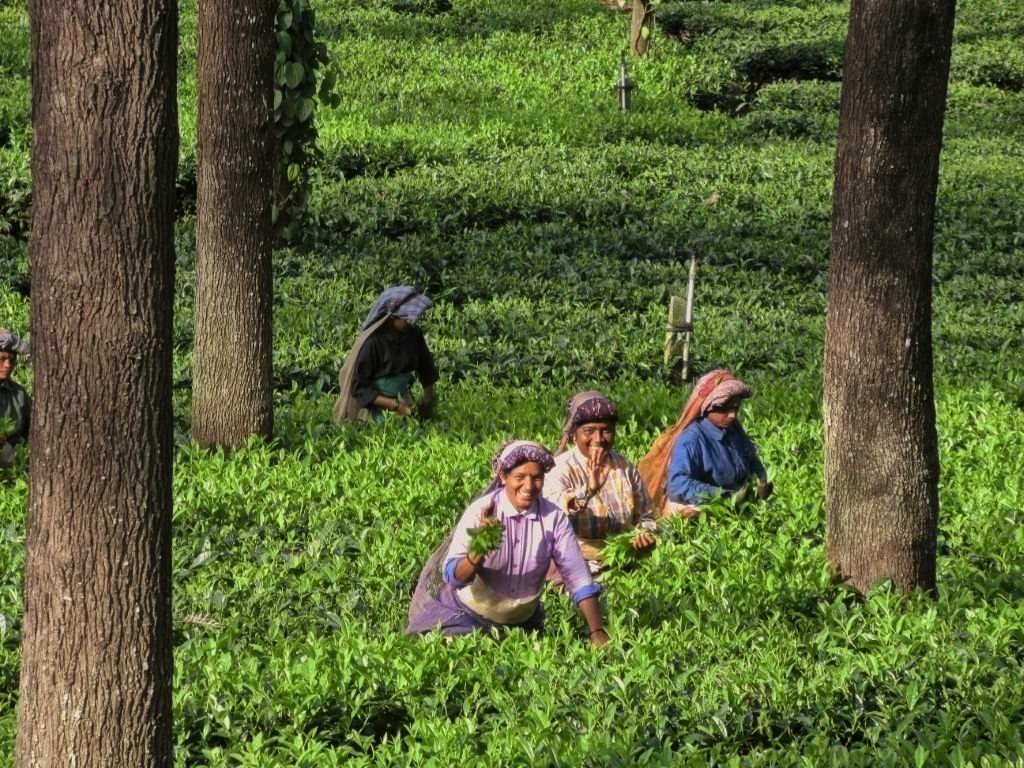
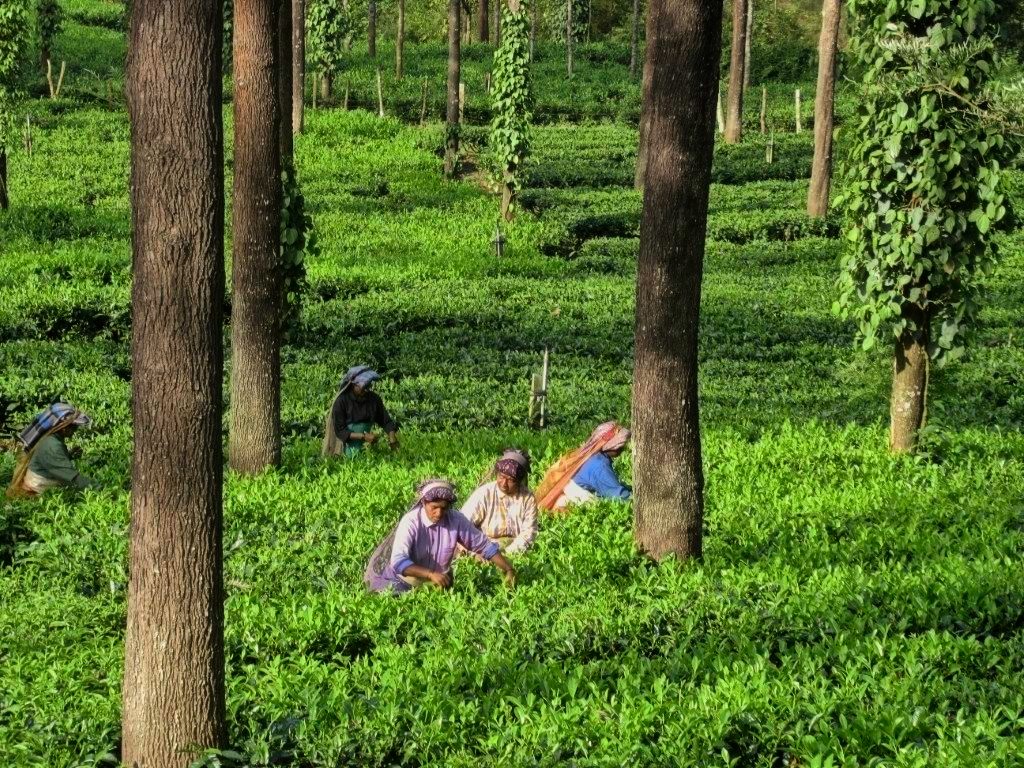
The roads are good and there is very little traffic.
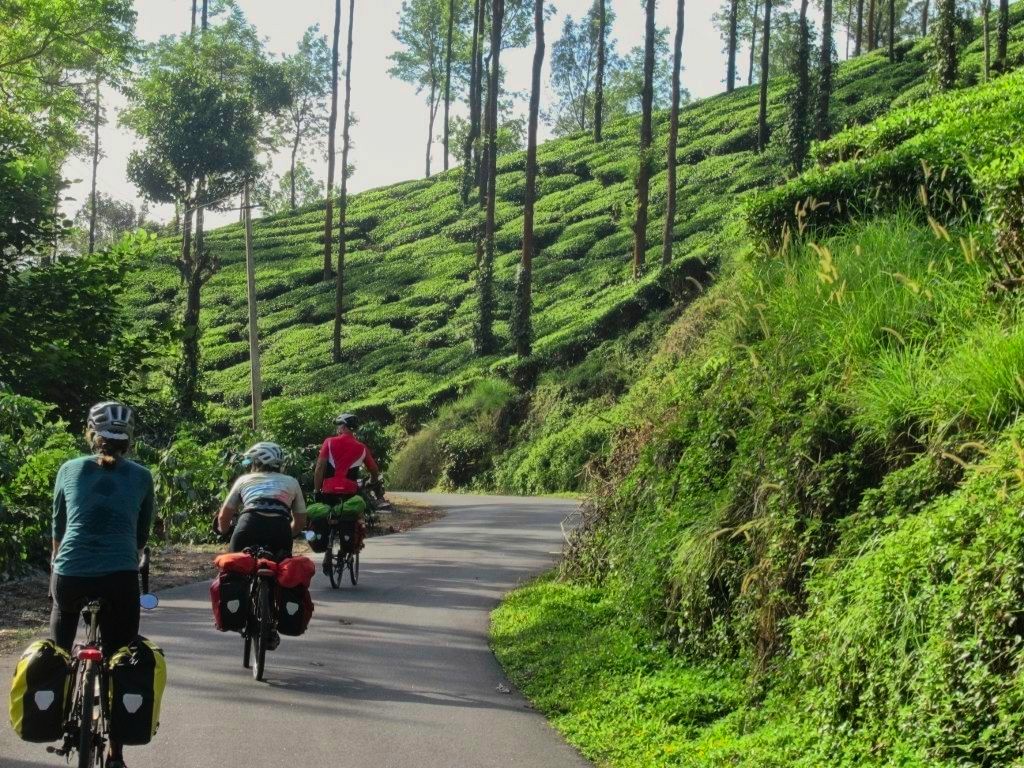
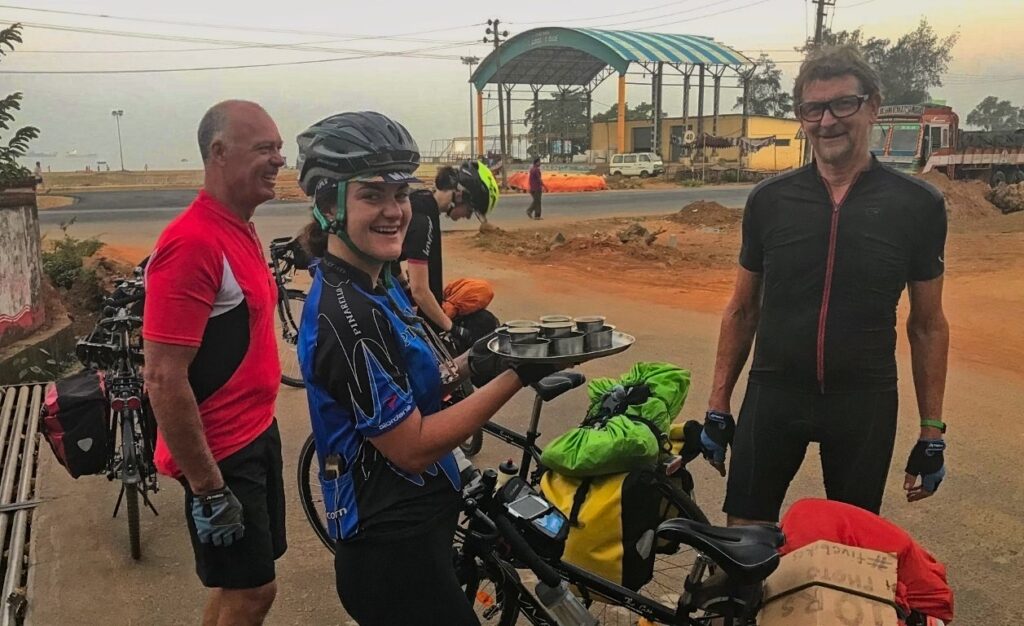
Frequent chai stops happen. We have to sample the local product.
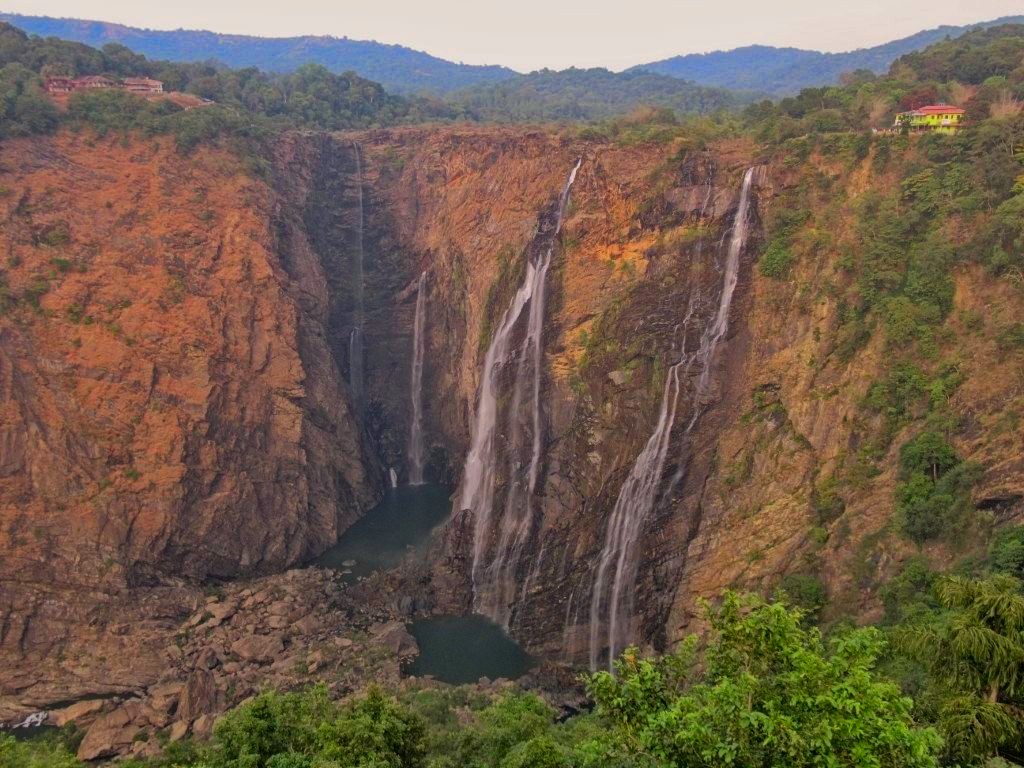
Jog Falls is a famous place in India but for us it was a fizzer. It was December and the dry season. But we were happy to be there.
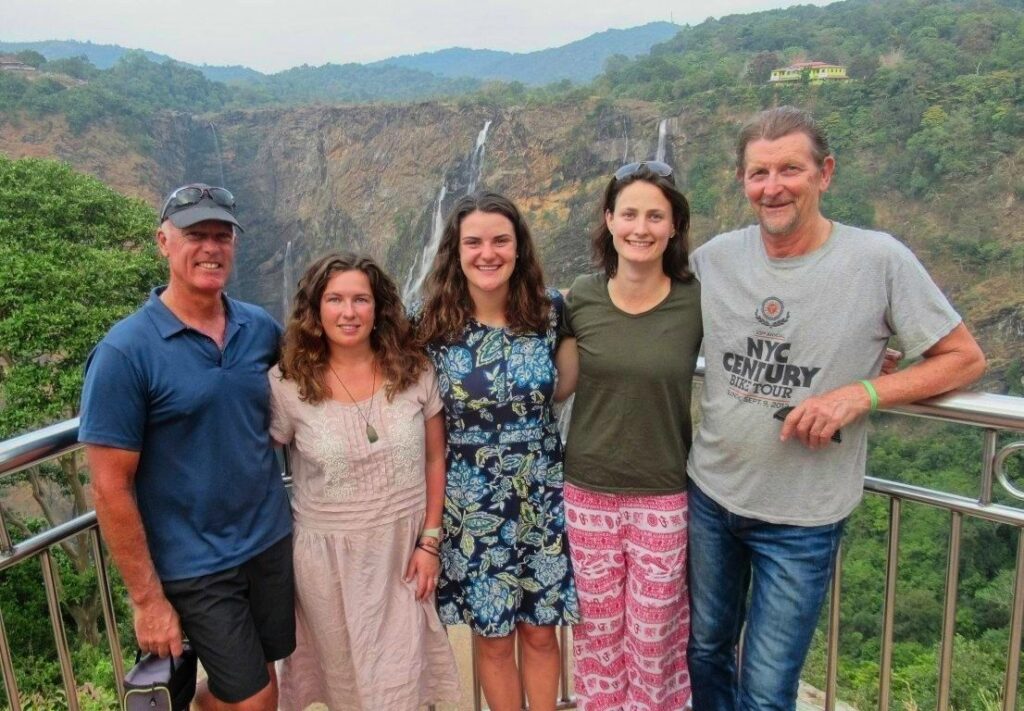
The western ghats is a big range. Along the top there are extensive areas with wildlife reserves, forests, and quiet, unsettled places. You can head eastward onto the Deccan. Or you can wind your way around, occasionally seeing elephants, coming across hill stations and entering coffee country.
Further south is the Coorg, made famous in bike touring circles by Dervla Murphy. For now, we were entering Chikmalalur District. I’d last ridden through here in 2009.
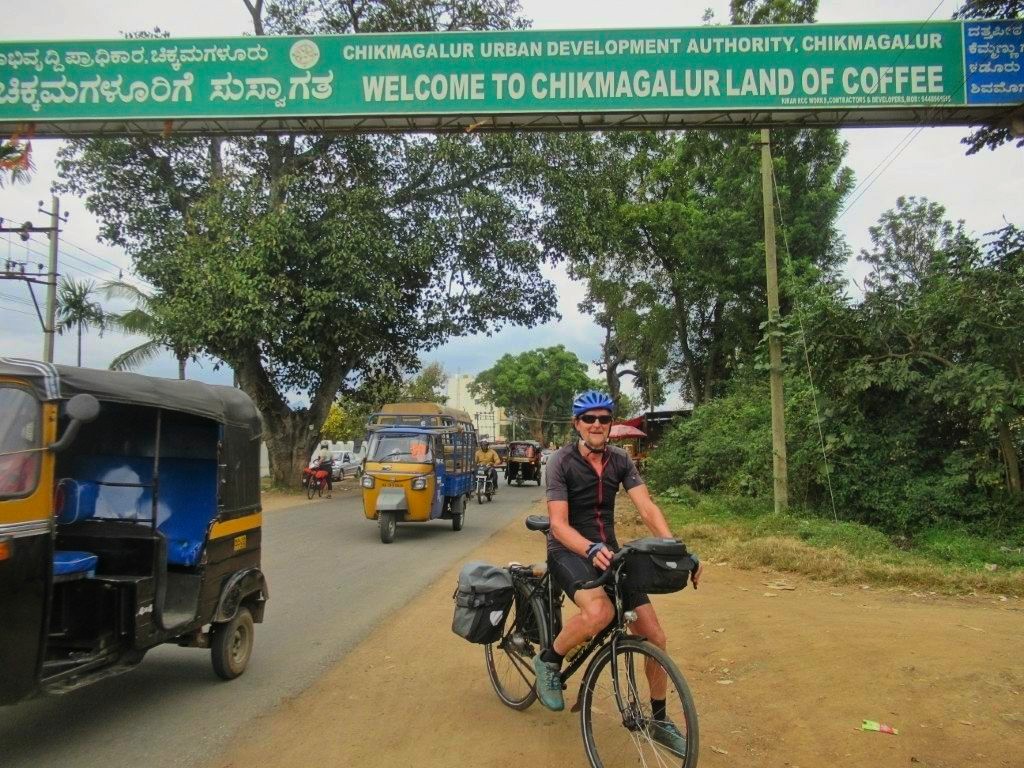
Here in the south, in the larger towns, and especially in the district capitals, there are hotels (eateries) that match anything you can find anywhere.
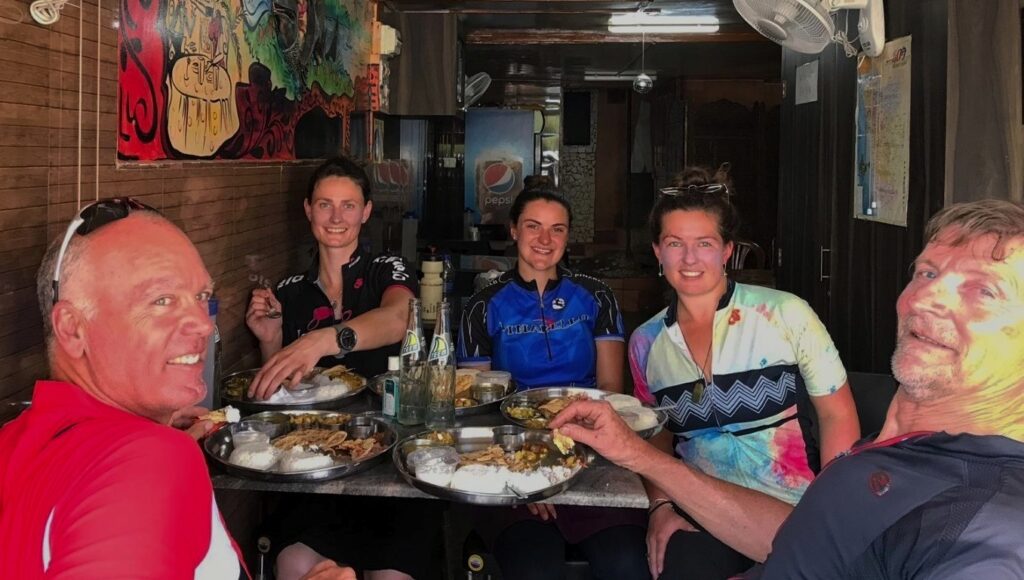
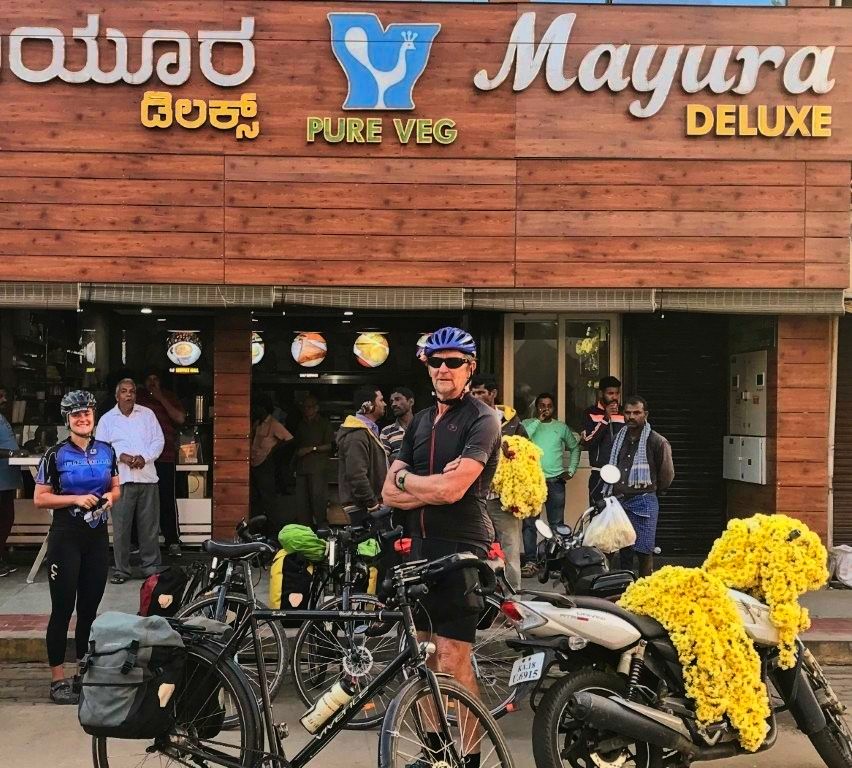
We had a rest day in Chikmalalur.
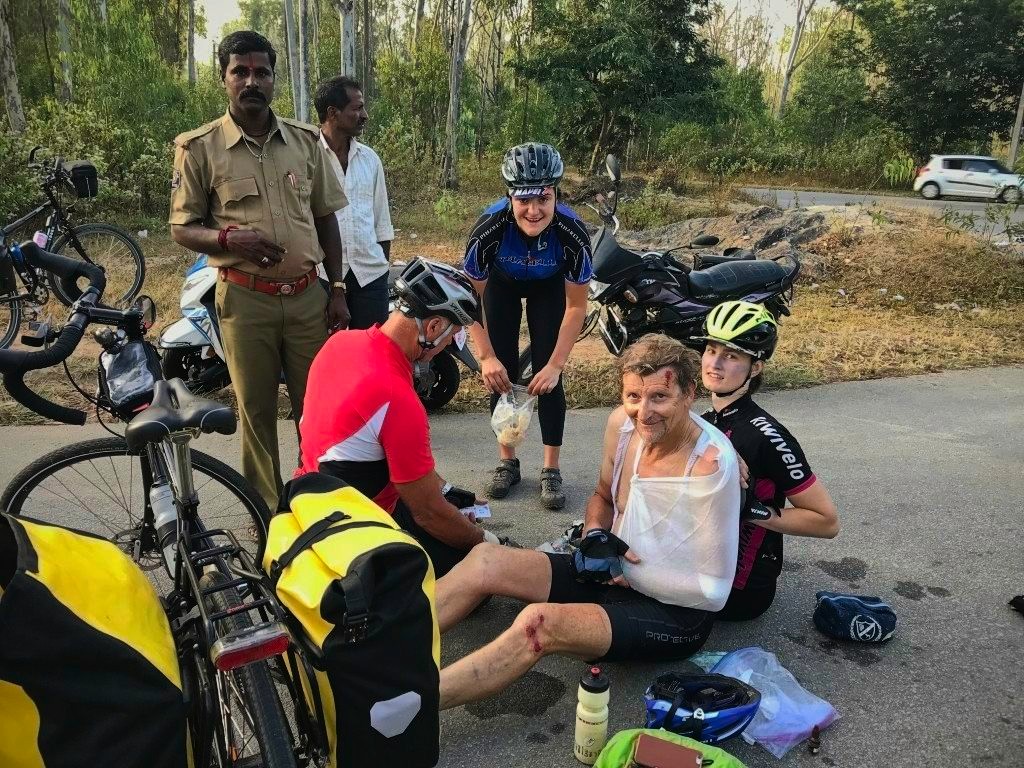
The fall happened on the morning we left Chikmagalur. There was no warning. I was riding up a hill trying to keep up with my friend. We were chatting and suddenly I just fainted. It had never happened before, and has not happened since.
There was one funny aspect to this. A few days prior we had one of those discussions you have when on bike tours. Someone asks…”what day is it?” and you all realize you don’t know. You don’t need to know and just had not thought about it.
As I was regaining consciousness, one of the first-aid-trained buddies put her head down near mine and applied one of the classic tests to assess people for concussion. She asked me what day it was and I didn’t know. There was silence and then we all laughed.
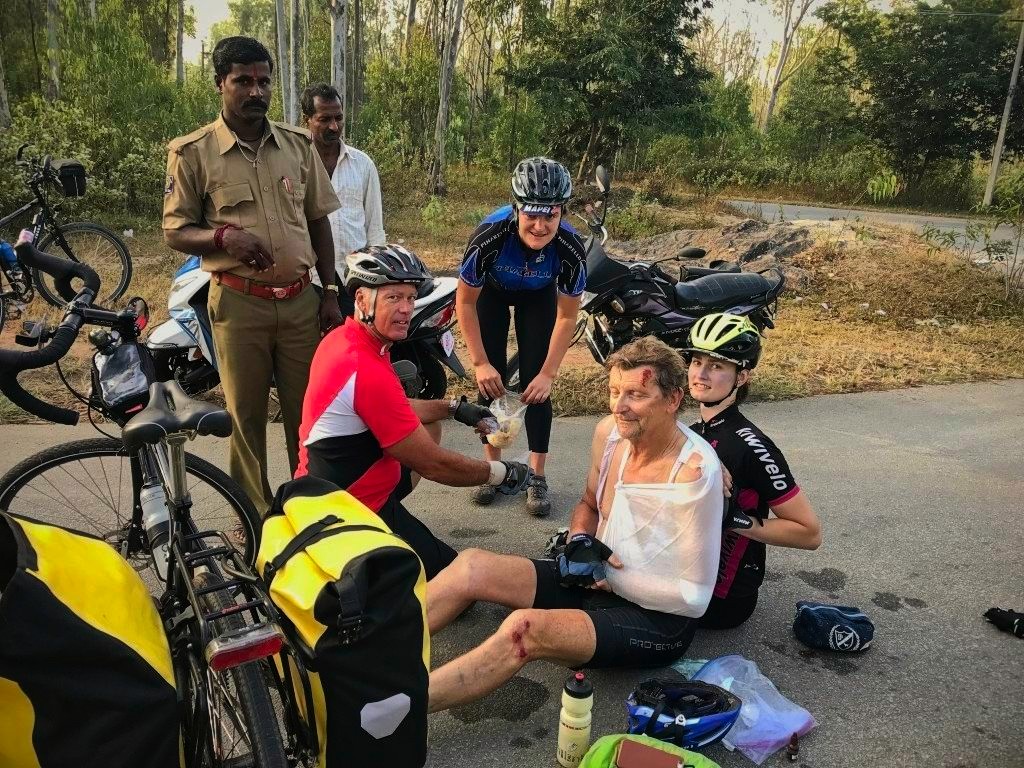
We were scheduled to fly out from Madurai in two weeks. It was decided that I’d rest up in town whilst the others would carry on. In 12 days I would travel by bus with my bike to Madurai, find lodging and wait for them. I found someone that could pack my bike for me and get me on the bus to Bangalore where I had to change for Madurai.
In Chikmagalur I was closely scrutinised by the medical people. Brain scan, X-rays, ECG all for $40 in total and without any delay. Apparently, syncope is rare but can happen.
It was great to get to Madurai. We had passed through there in 1978. The town is famous, particularly because of the Meenakshi Temple. Seeing it was the main reason for ending our tour in Madurai.
This shot is of one of the gates. It is 10 stories high.
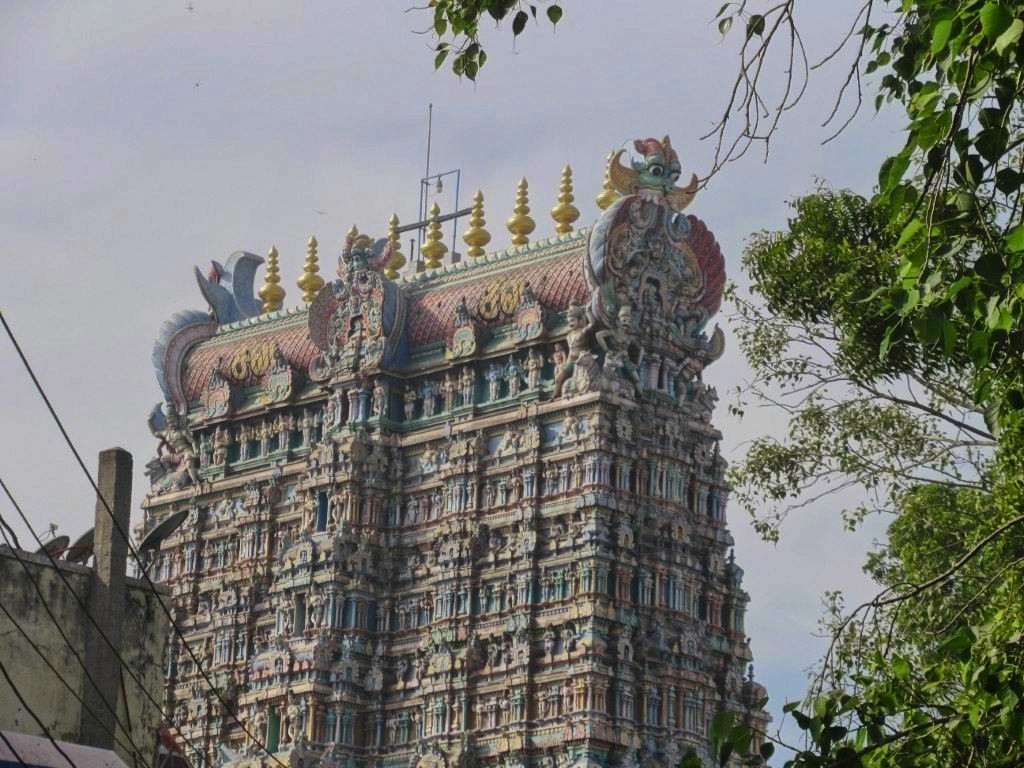
It’s been a long wait. Now it’s time to do some more rides in India. Maharashtra 2025 is coming up.
A 1,350km ride linking Merida and San Sebastian (Donostia), via eastern Portugal.
Riding a Swabia with 700c G-One 45mm tubeless and 50:19 gearing, we chose late May and June to avoid the intense heat of the Iberian summer. Merida was the northerly end of our 2008 Andalusian ride and San Sebastian was the southern end of the 2024 France ride. This was a link ride. We have previously also ridden from Nice to Cordoba and, overall, have developed an affection for riding in this corner of Europe.
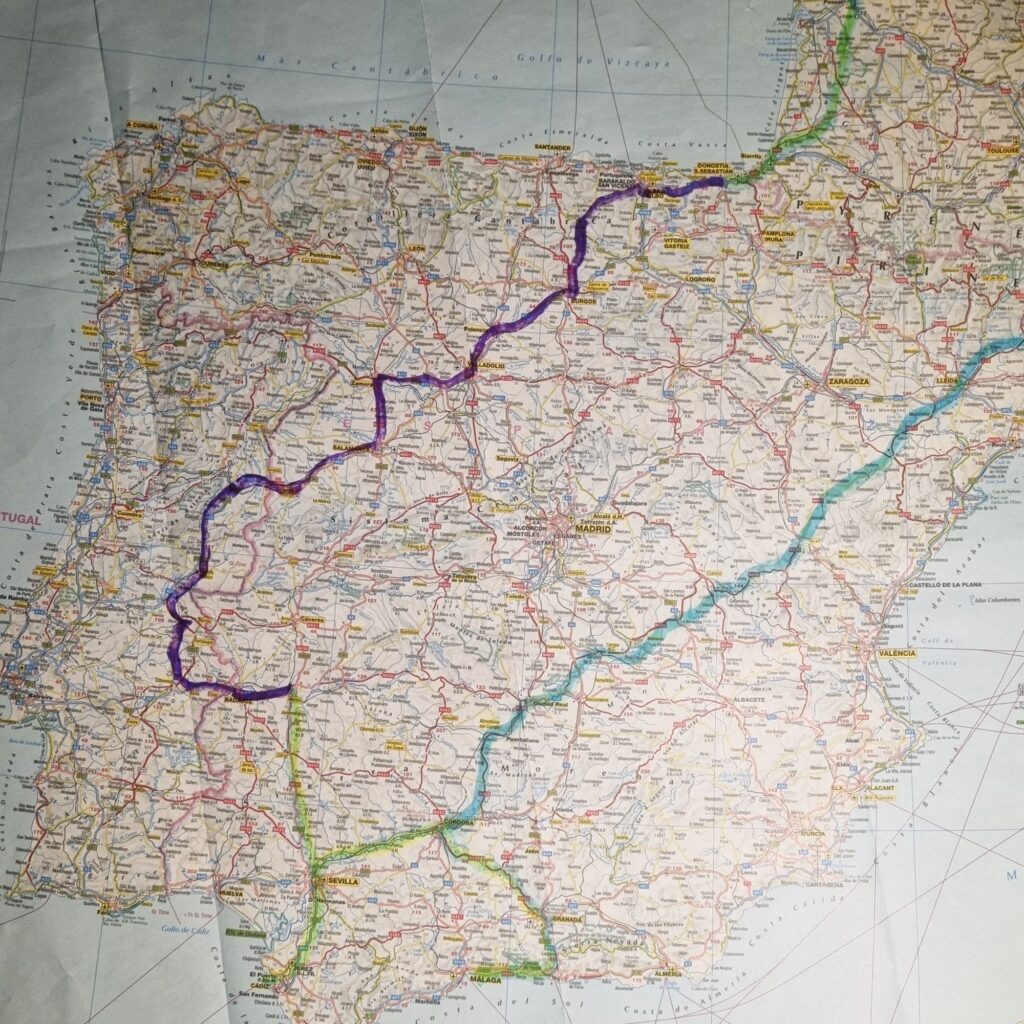
There are bike riding apps like Komoot but it’s just so easy to use google maps and so handy to be able to change things on the day. Google allows you to quickly check out riding and driving routes. Often the “N” roads (the old highways) are the best ways to ride. Or at least for sections. The bike option may not suggest the N road and checking the car option does. In Spain and Portugal, the traffic is mostly on motorways and the N roads are often not at all busy. They have shoulders.
I divide days into two or three stages and for each one plot a route and email it to myself. The final stage has the night accommodation as the end point.
When using the bike option, you must have the screen open to watch for corners. This runs the battery down and in coffee stops I’m sitting near the power point and have a fast charger.
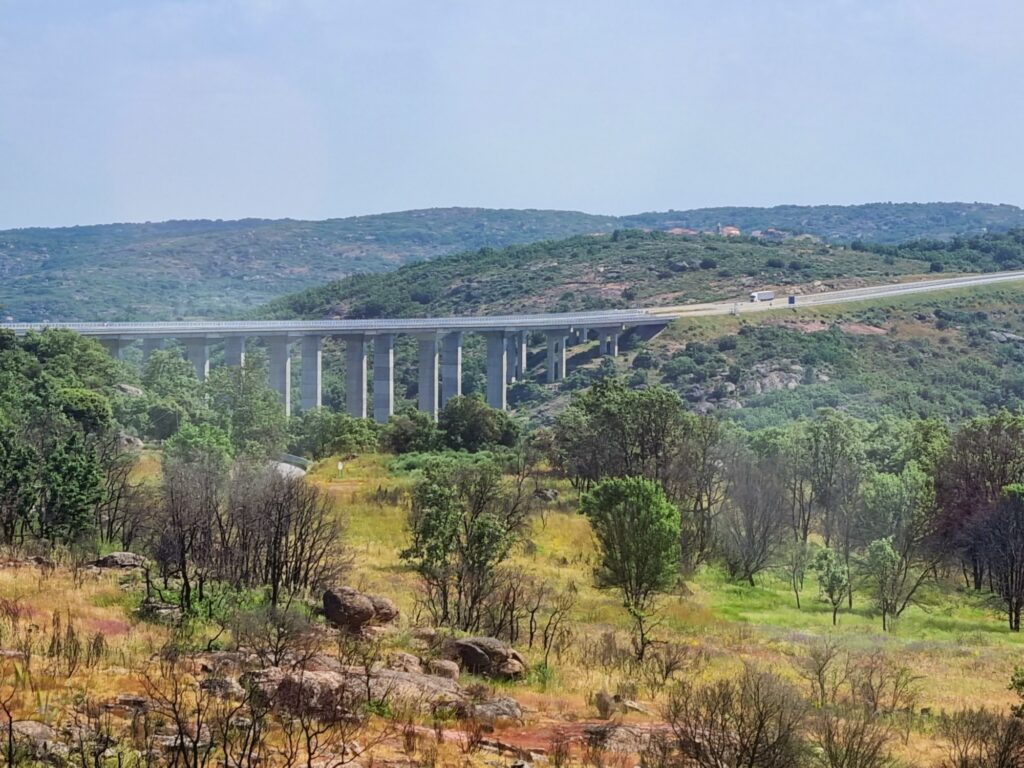
A new motorway provides a bridge over a deep ravine in Guarda province in Portugal. The old highway (N16) goes right down to the Cao River, is superb and has no traffic at all.
Sometimes the bike route Google gives is pretty hectic. This is north of Palencia. A 25km stage overgrown track. A bike with a rear derailleur would not have been rideable and that’s along walk! Plus, it’s only one stage of a 105km day to Burgos.
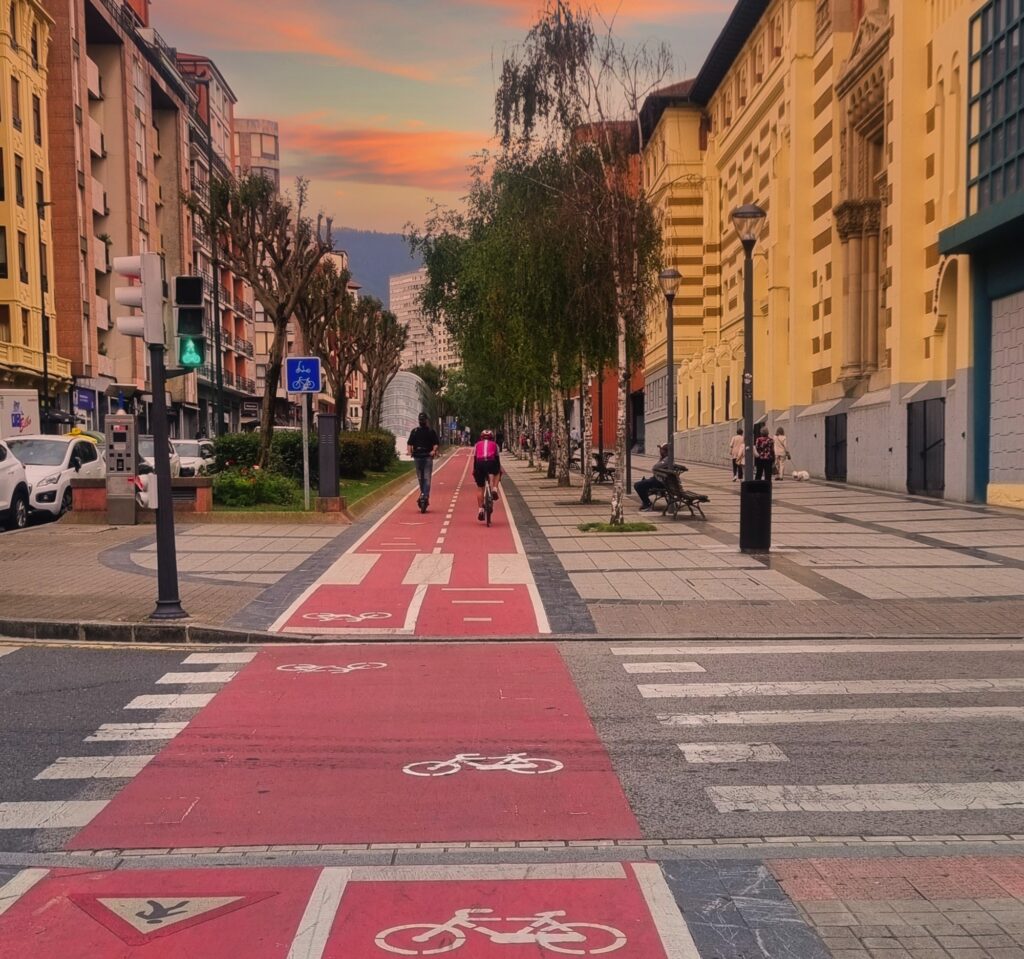
Other times, especially in and around the big cities, google knows the bike routes. Out in the country I’ll often use a car route. But in and out of cities, where there is always bike infrastructure, it’s better to turn on the bike option in google and follow it carefully. This is in Bilbao.
This ride took me into eastern Portugal. Westward from Merida and Badajoz in Spain to Estremoz in Portugal. Estremoz happens to be the source of much of the world’s marble. Cobblestones are marble. The buildings are marble. The vanity basin was carved out of marble. The cemetery is marble. They even grind marble up and mix it with paint.
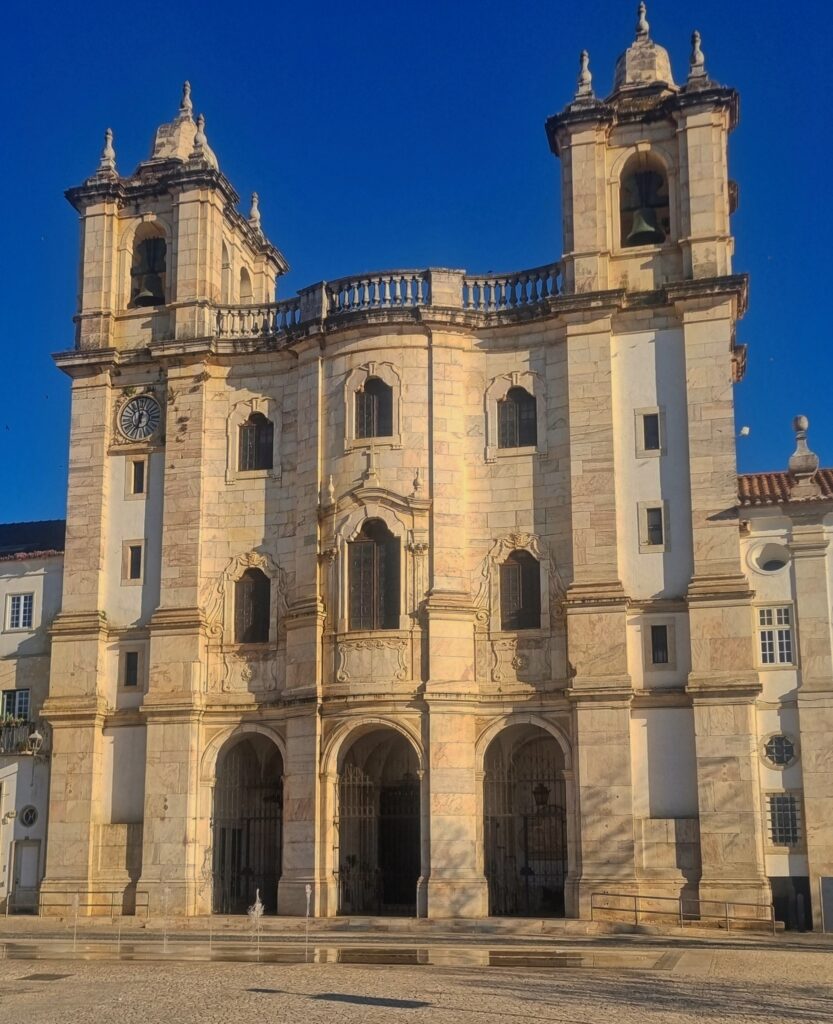
Portugal is experiencing the over-tourism problem, especially in the south (the Algarve) and on the west coast (Lisbon and Porto). House prices are too high. People say there are too many “golden visas”. Populist anti-immigrant parties are winning elections.
But this was not al all an issue in the east of the country. Local businesses were happy to serve me.
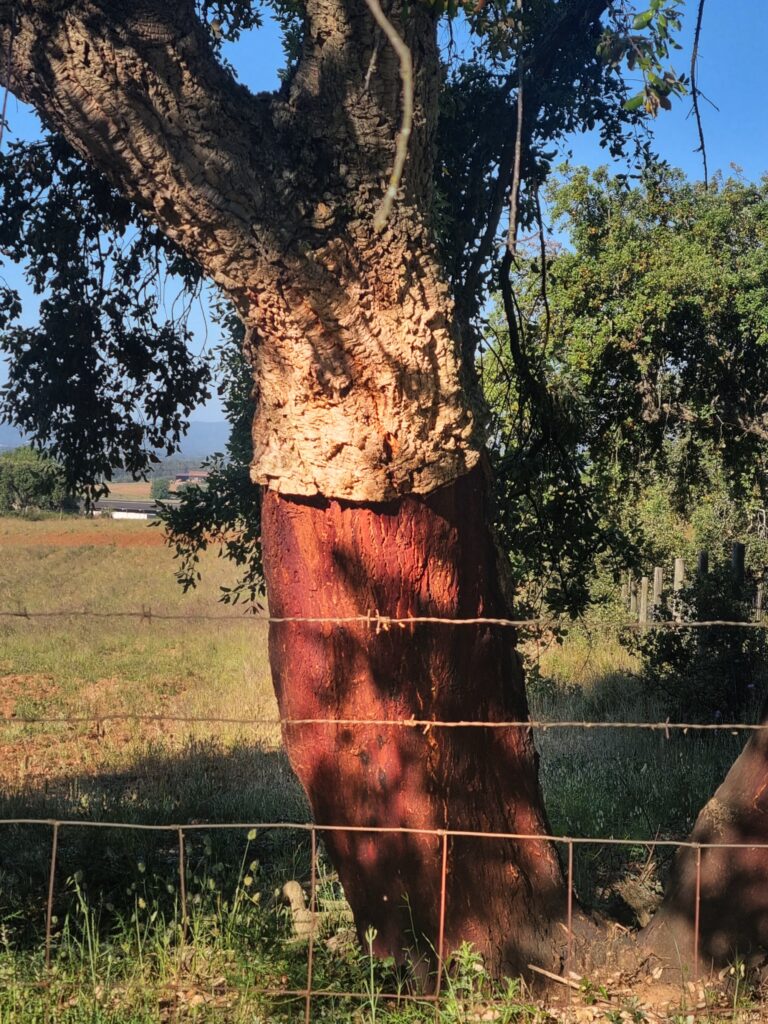
An interesting crop in Portugal is cork. Cork is an oak tree that lives for about 200 years. The bark is harvested ever 9-12 years. You see hundreds of the trees along roadsides.
Spain and Portugal are experiencing a long-term reduction in rainfall. Along with increasing temperatures this is causing an expansion of aridity. One result is that water for farming is being treated with greater value. Irrigation is in concrete canals. Compare that with the Murry-Darling basin in Australia where water is running in dirt canals giving rise to massive losses.
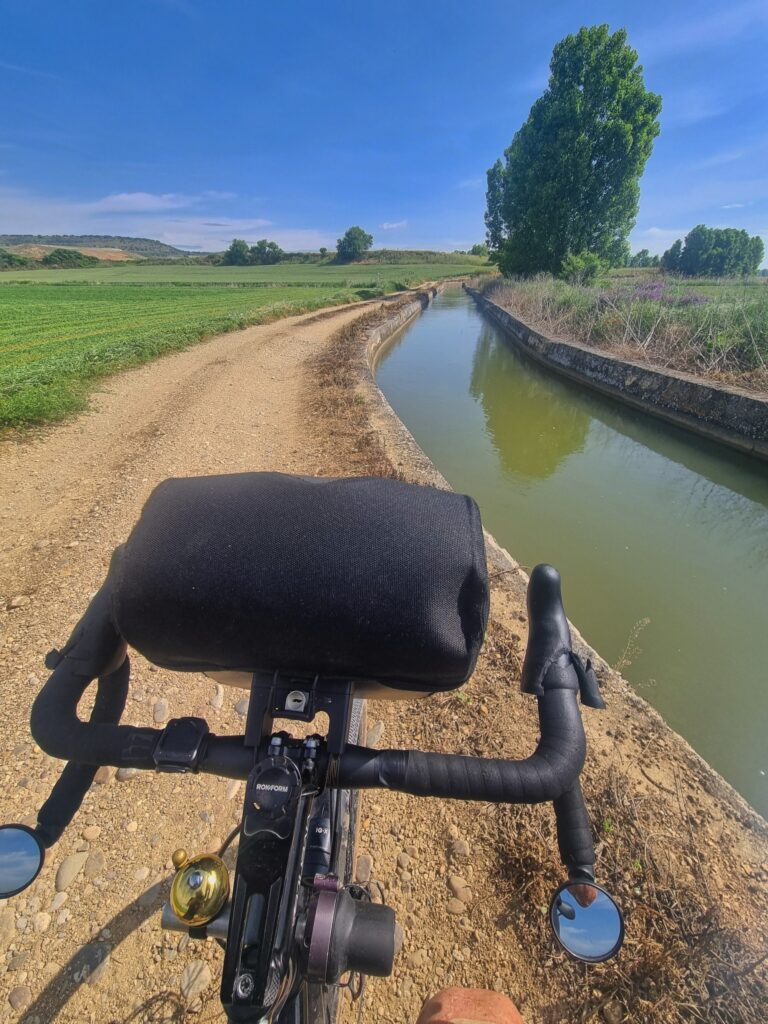
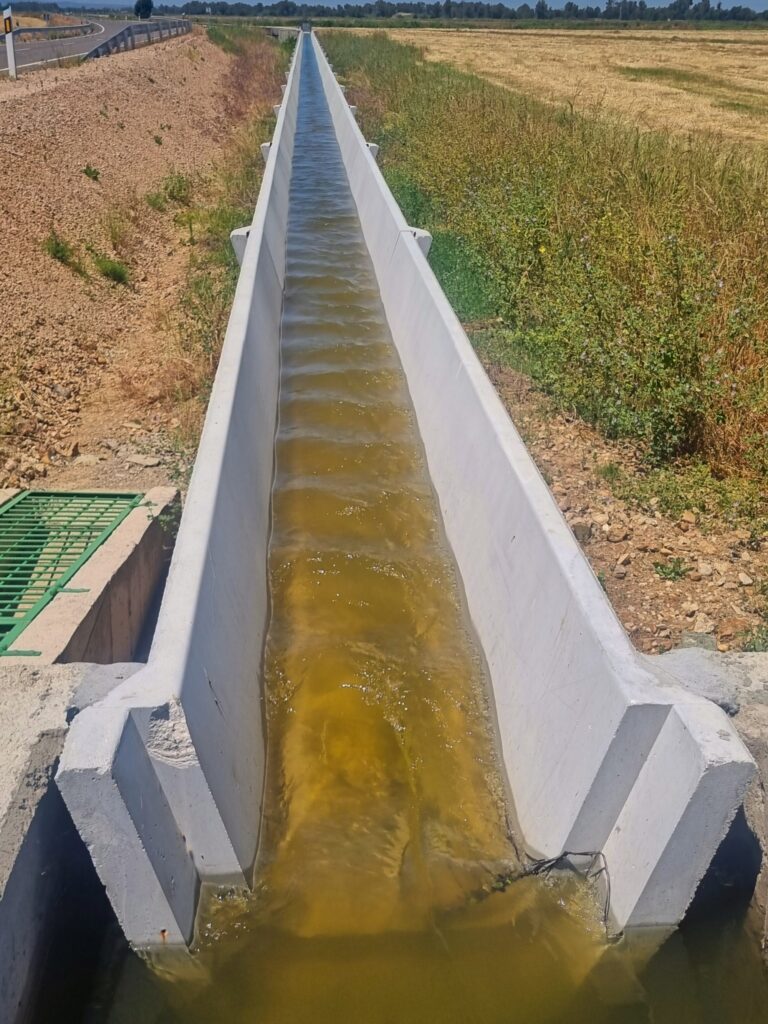
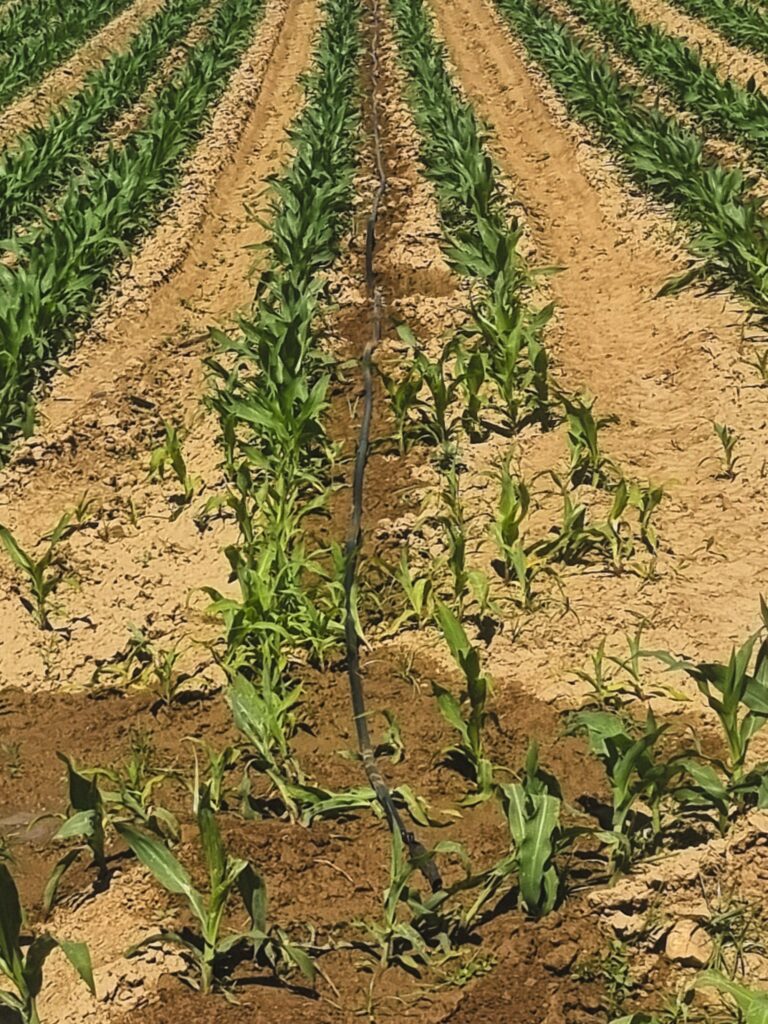
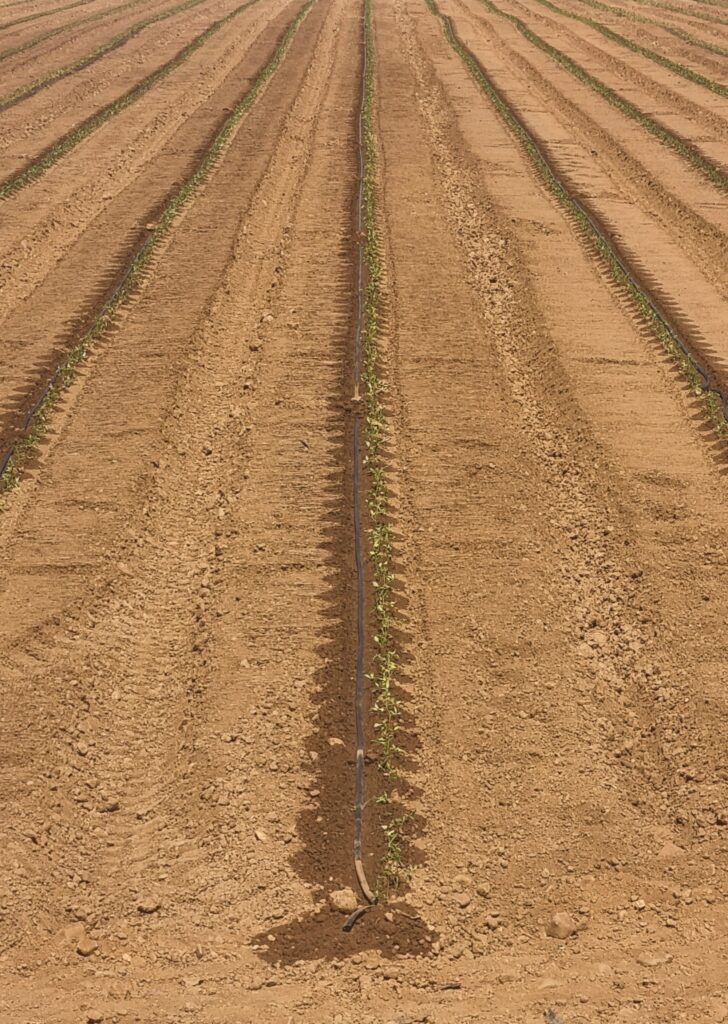
When they use the water, they try do so in the most efficient way as shown in these crops of tomatoes and corn. Meanwhile, in Australia, precious water is being wasted big time.
The art of Spain
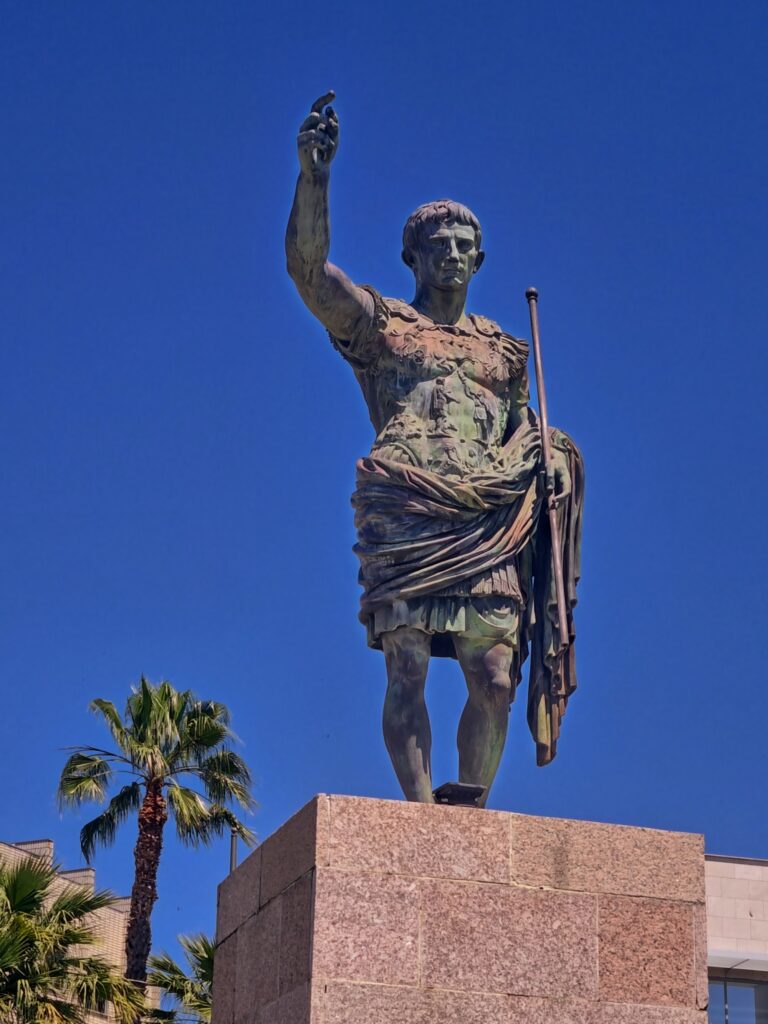
The quality and amount of public art in Spain needs to be mentioned. Below are just a few examples.
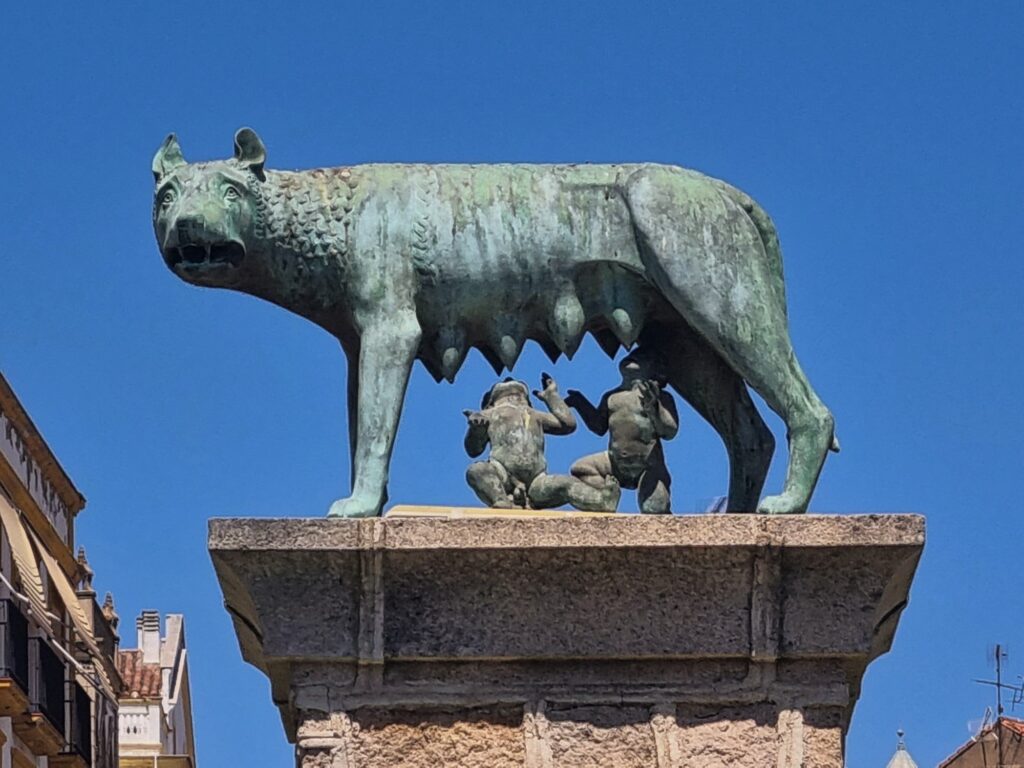
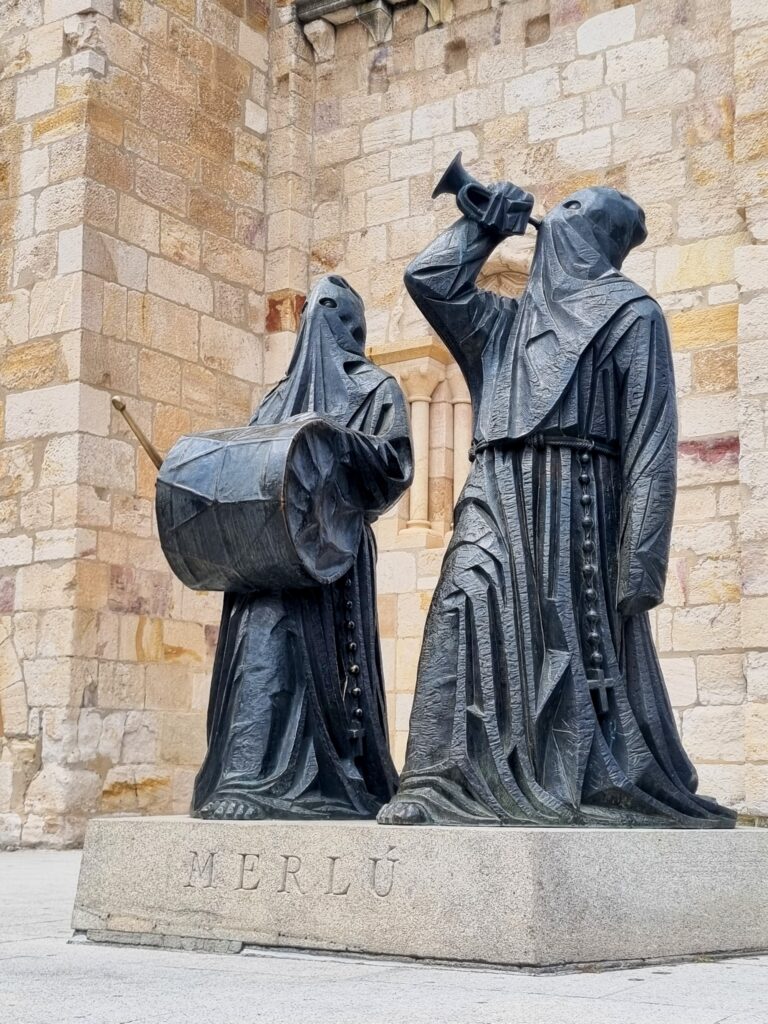
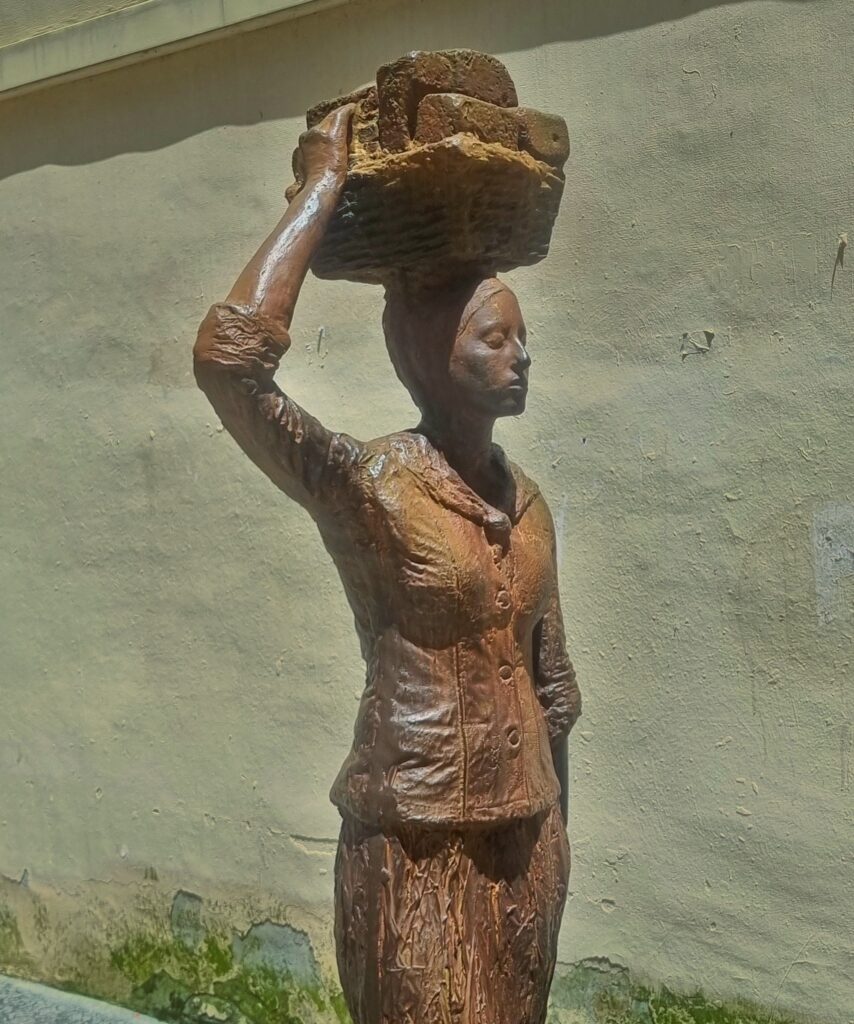
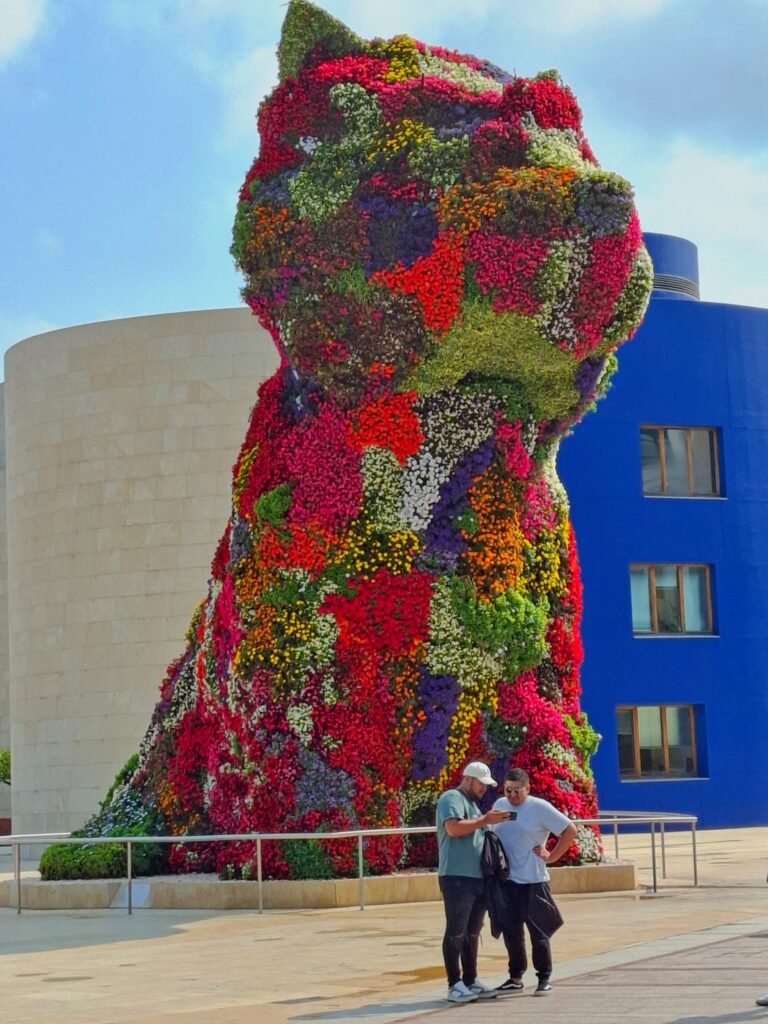
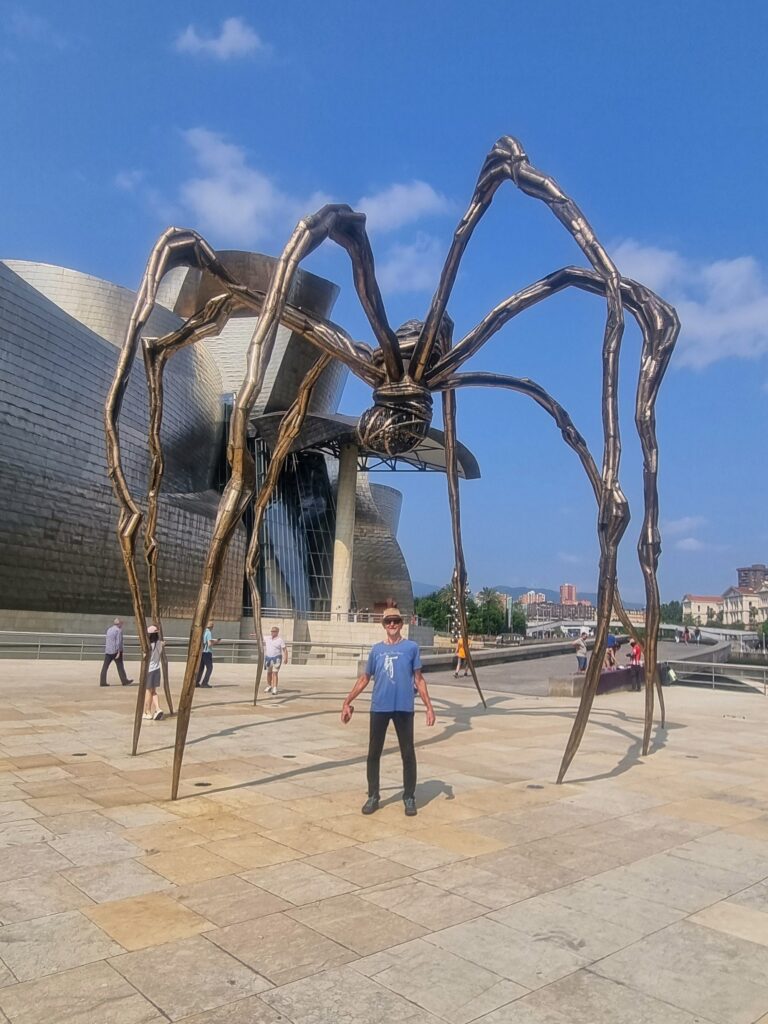
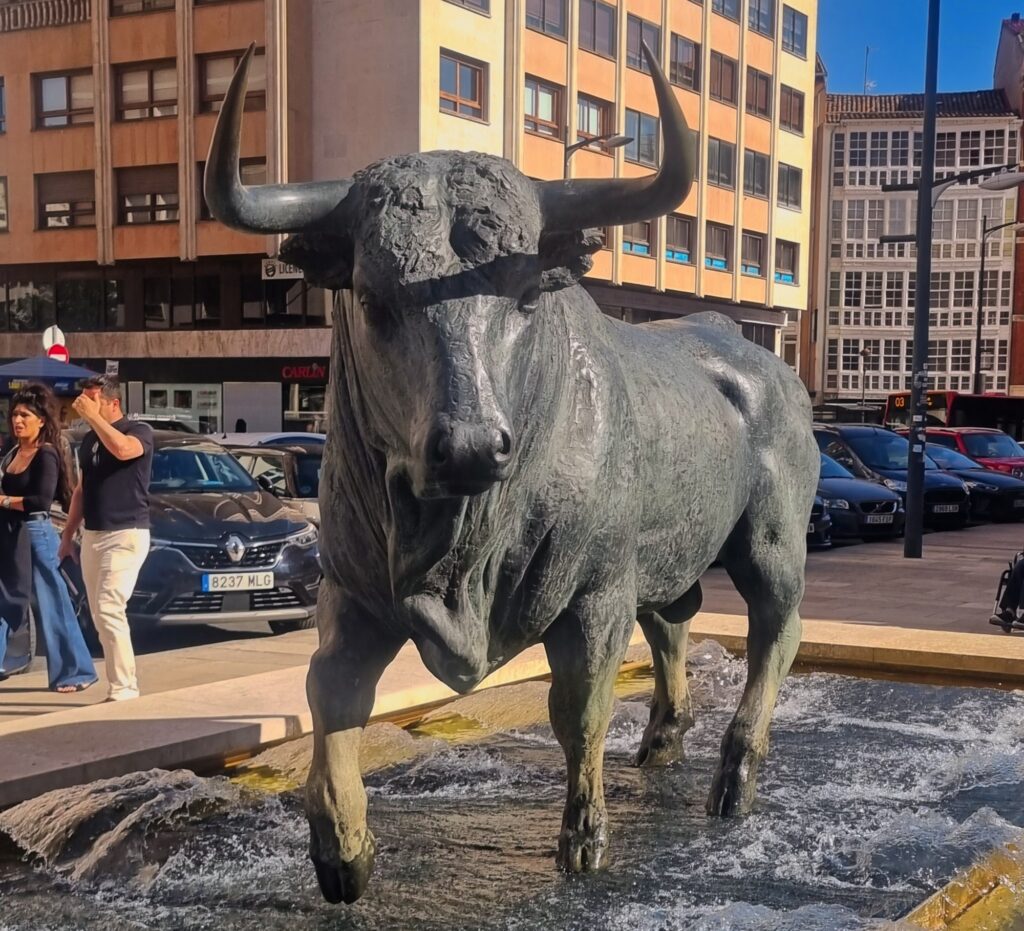
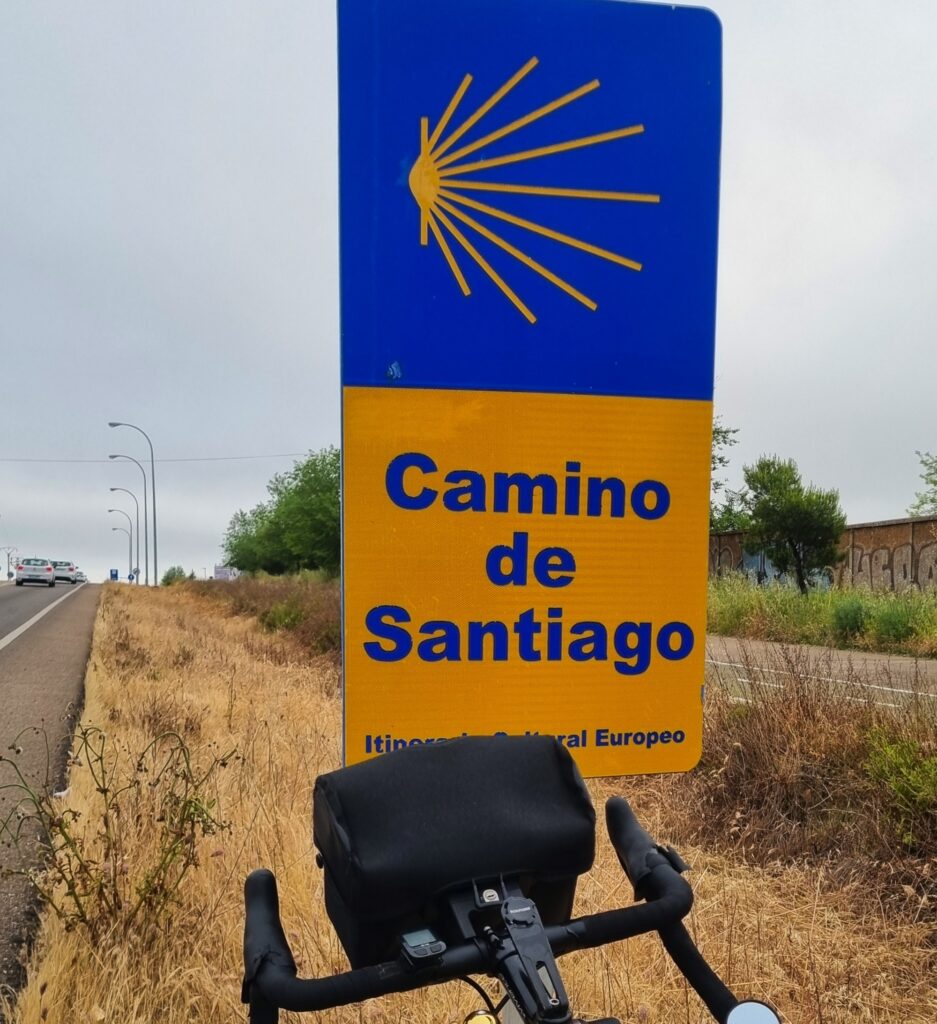
Everyone knows about the Camino de Santiago pilgrimage route. But I did not realise there are multiple routes.
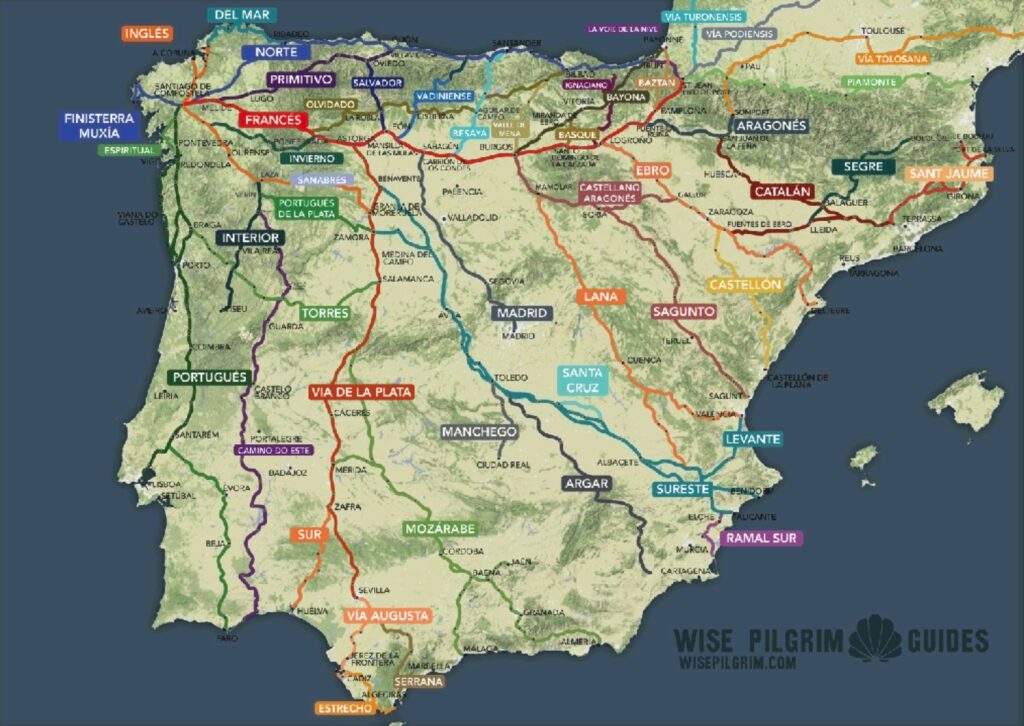
As I moved north, I found I was regularly riding on one of the routes. There are bikers and walkers. Accommodation gets a bit tighter as you approach the Basque country where the routes often converge.
A feature of this ride was having more time in the Basque Country. The language is completely different to Spanish. The absolute treat was having a few days in Bilbao. This city has to be one of the most pleasant on the whole planet. It’s highly recommended!
San Sebastian is a day or two ride to the east of Bilbao. It’s focused on the beach whereas Bilbao is inland a little and hemmed in by forested mountains. Along the Bay of Biscay coast the rainfall is higher. It reminded me of the Black Sea coast in Turkiye.
Bilbao has a population of 350,000. It is relatively flat with a grand layout and 4-8 story buildings. There are very few cars. There’s an underground metro plus lots of walking and cycling. The Guggenheim was opened in 1997 and has become the #1 drawcard.
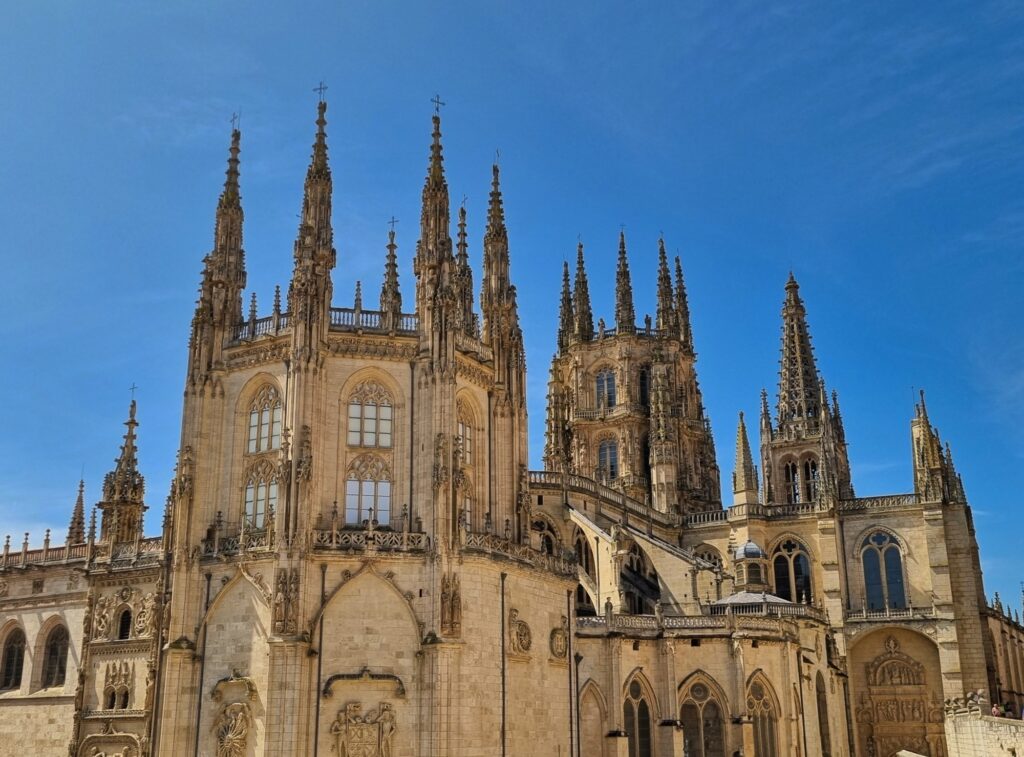
Bike tours in Spain do have the feature of going through some great cities. Apart from the Basque coast, this trip had me riding through Madrid, Merida, Salamanca, Valladolid and Burgos. They all warrant a rest day and there is no shortage of stunning things to admire.
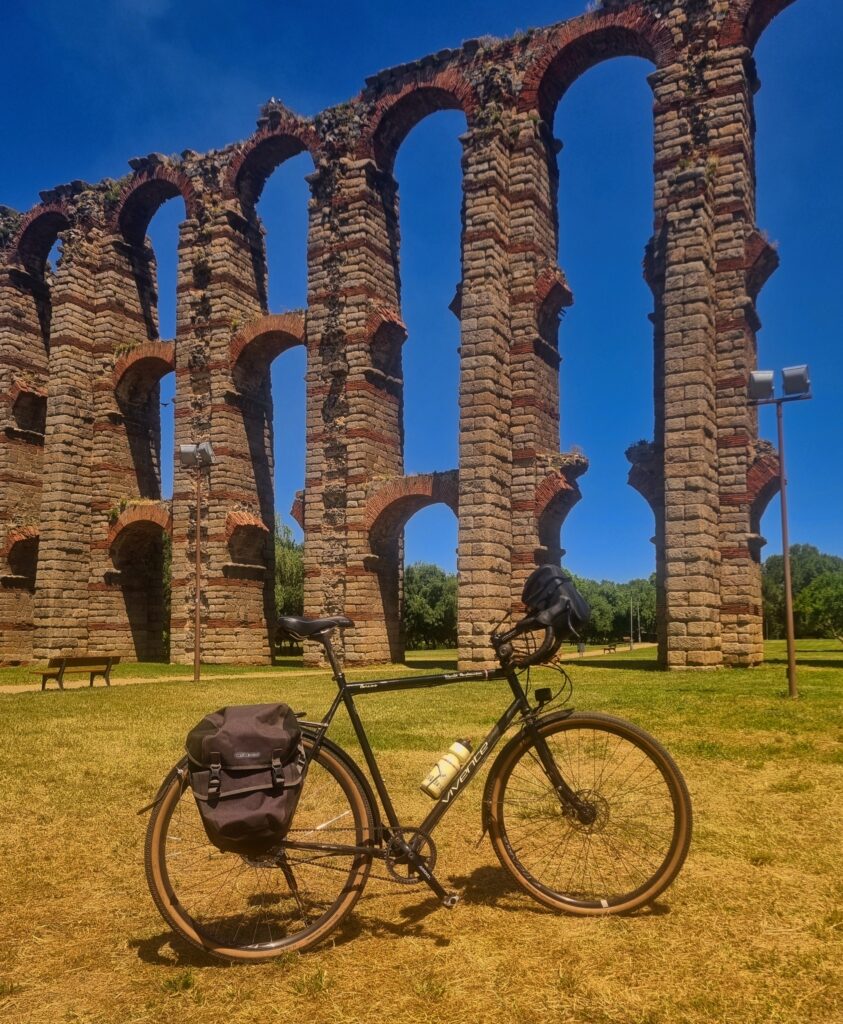
Riding a Vivente with Gates belt drive and Rohloff transmission is, in itself, mechanically uneventful. Nothing goes wrong. So, there’s not much to say about the bike. However, on this ride I had chosen to be tubeless and to not even carry an emergency tube. It was just curiosity. How does if feel to be vulnerable?
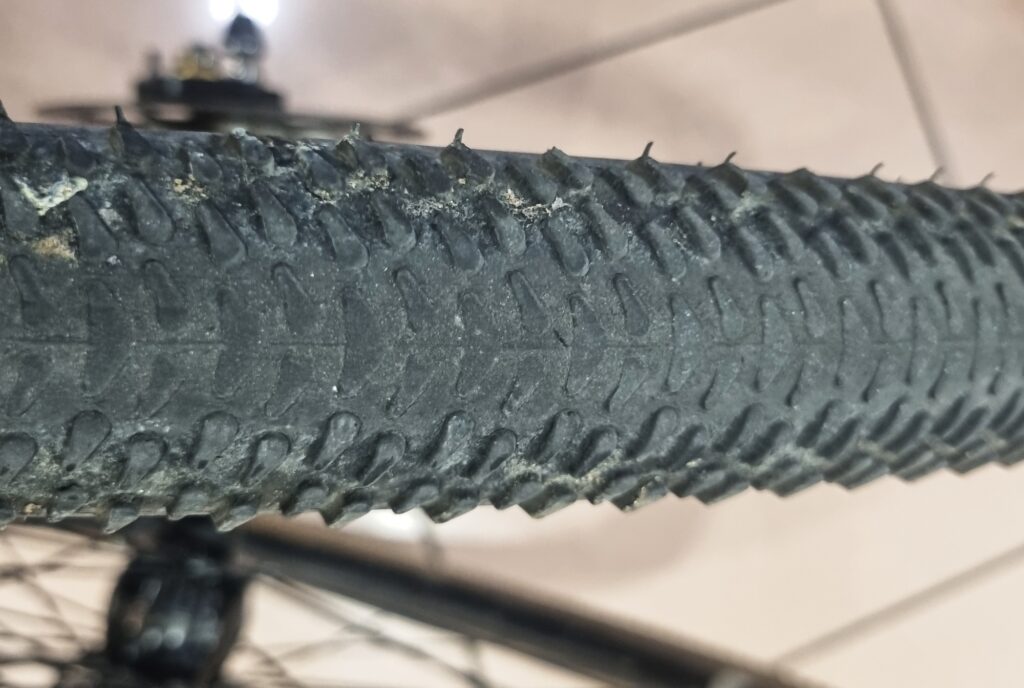
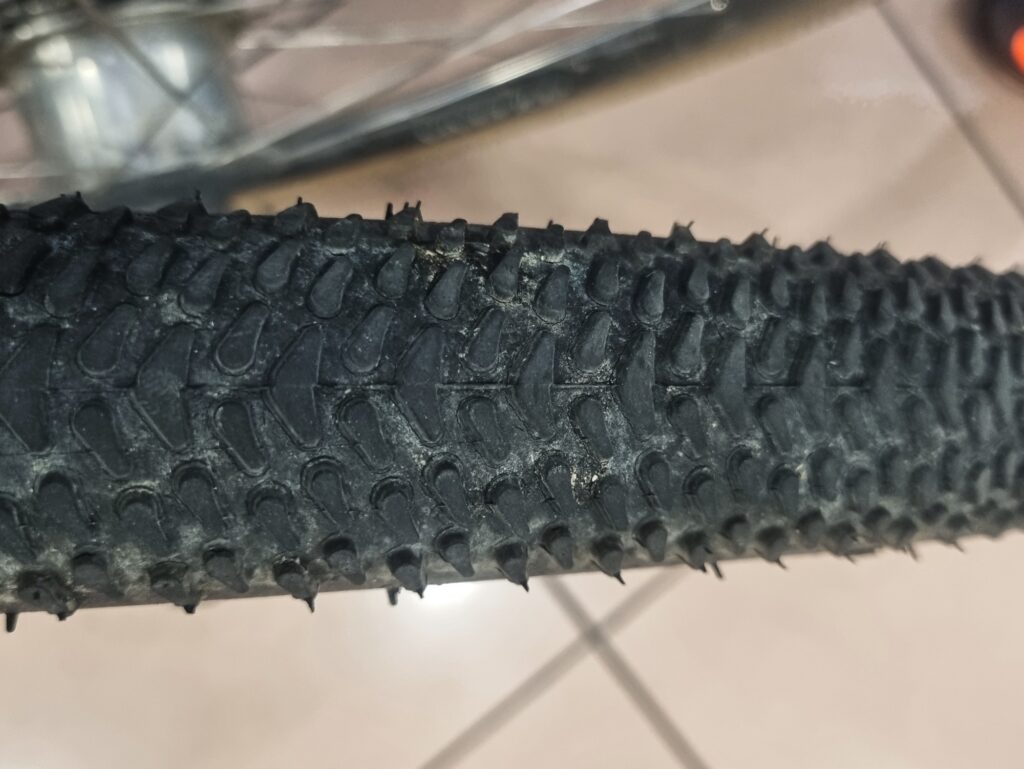
My tyres were Schwalbe G-One R 700×45. They are thin skinned, fast and light. They are made for competitive gravel racing. I carried dynaplugs but did not have to use one. I was in a lot of remote places and on some rough stony tracks. If I had a puncture, it was sealed by the solution, and I was unaware of it. I added air using a Lezyne pump with a gauge about every 10 days.
These tyres wear out and are not suitable for a very long trip such as around Australia. They had been on my 700C wheels in the US ride last November, Victoria and South Australia last January and now on this ride. When they reached 3,500 km from the start in the US I decided to rotate them. I had that done at a bike shop in Valladolid. No booking! It was done whilst I had a coffee over the road. New solution and labour cost AUD$50. The rear tyre wears much faster. Now that they are rotated, they might have another 3,000km in them. The below shots were just before the rotation.
Riding a bike through Spain and Portugal, you spend a lot of time in beautiful and quiet places.
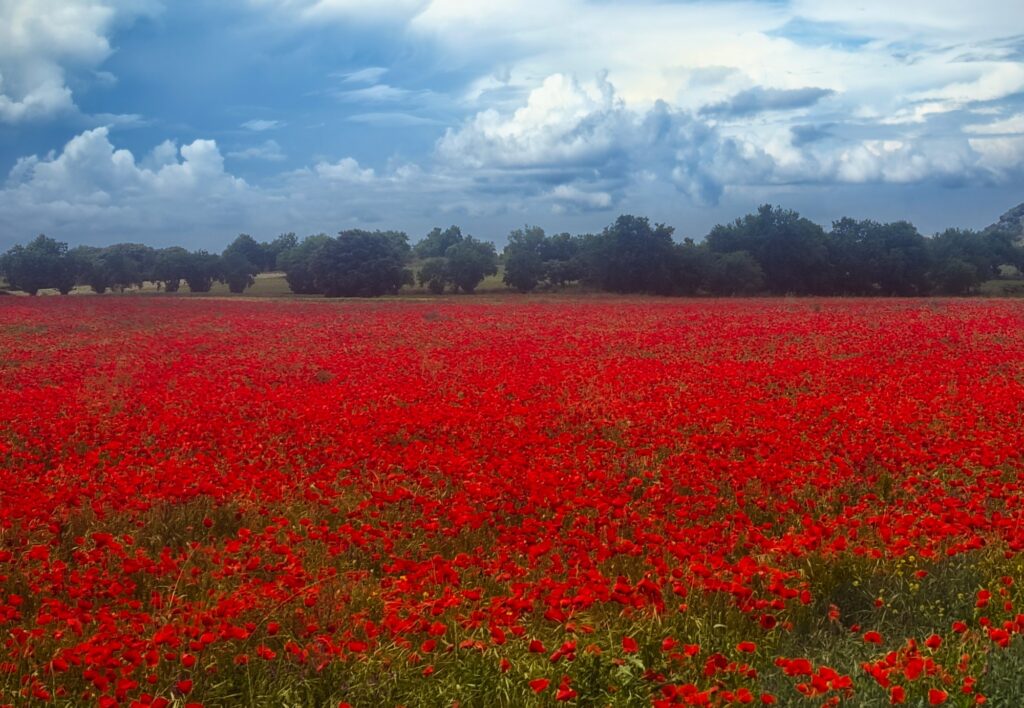
It is poppy season in May and June.
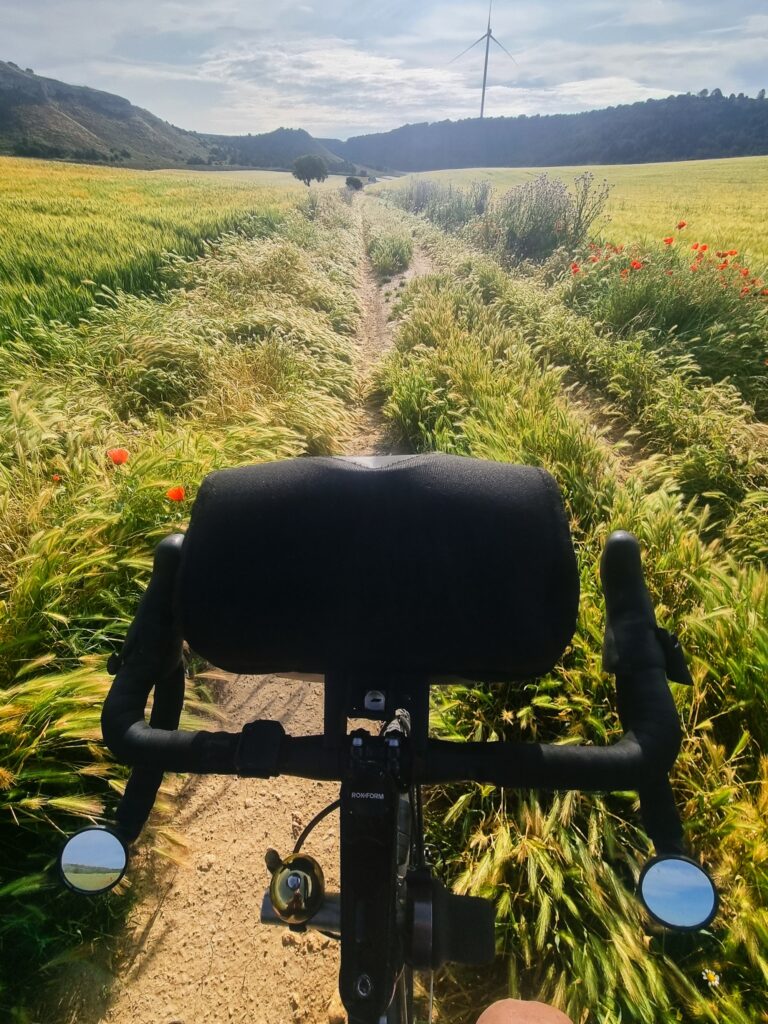
On a track between two valleys, north of Burgos (MP4 file called quiet places)
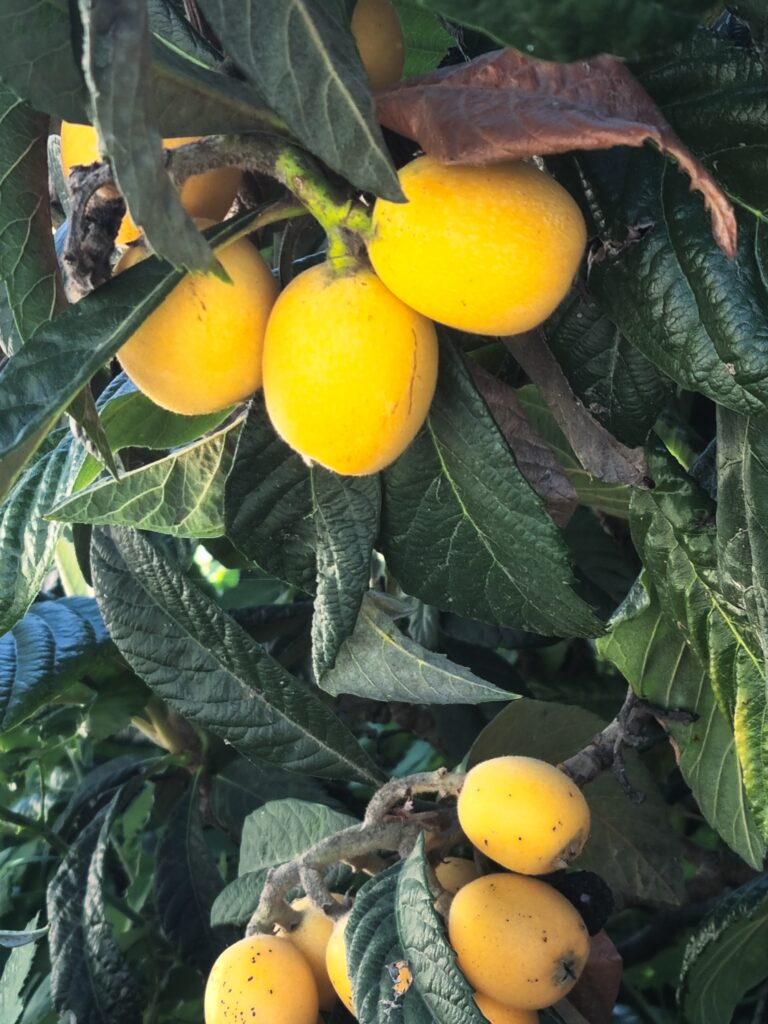
Another delight of travelling by bike is the roadside fruit. For the Iberian peninsular the best time is autumn when there are figs and grapes everywhere. In June there’s not so much but there were loquats in many areas and cherries in the north.
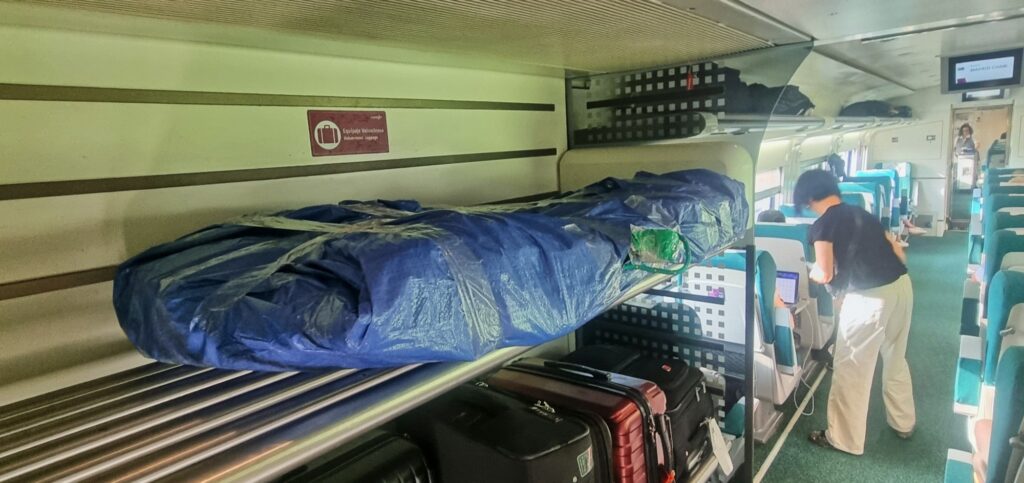
If you need to cover distance in Spain at the start or end of a ride you can use the trains. You need to pack the bike in a tarp. (broken down like we do for flying). Just get a small cheap tarp at the hardware. Best to book a week in advance.
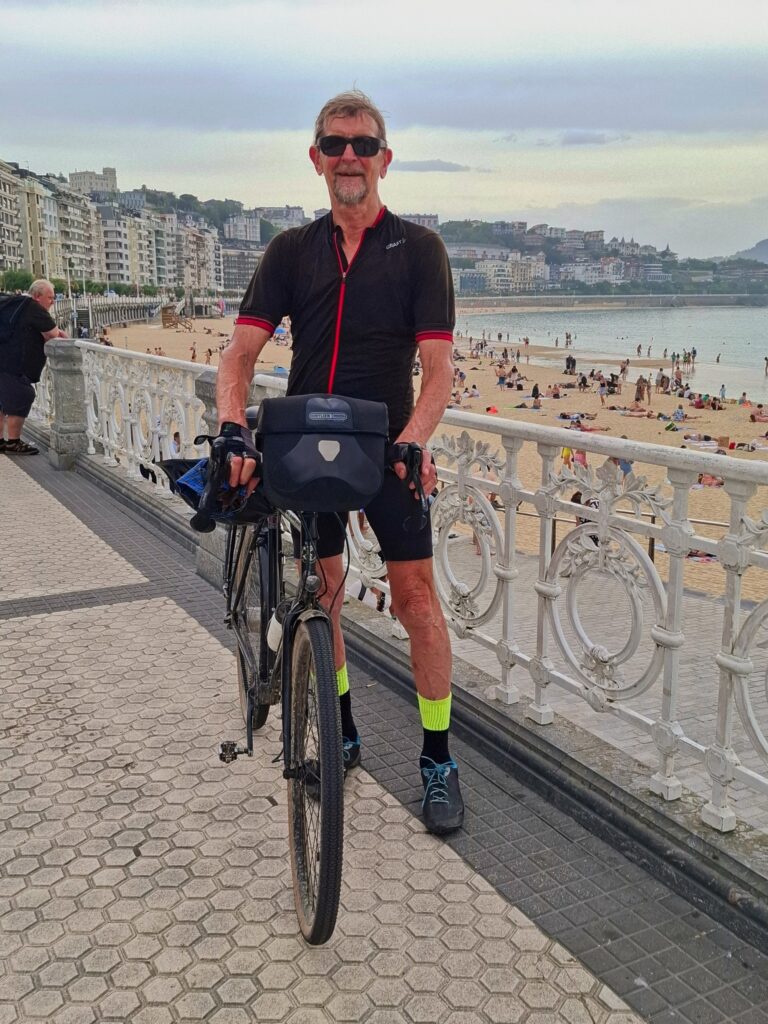
There’s always a great feeling when we arrive in the last city. This is at the beach in San Sebastian. Note the tradie socks!
Cycling in Spain
The Spanish really “get” bike riding. Bike infrastructure is fantastic and treatment on the roads could not be better. There was not a single dangerous moment in 1,350km.
Below are two shots from Madrid, demonstrating how much cyclists are cared for by the road designers.
There is a 2.2km road under Madrid airport. That’s a long tunnel! There are two traffic lanes each way with a wide, clean, well lit, protected bike lane in each direction.
In Spanish cities there is a road marking which means (a) a car must stay behind a bike when there is a bike and (b) in any case, a car may not exceed 30kph. This happens even on some 6-lane roads.
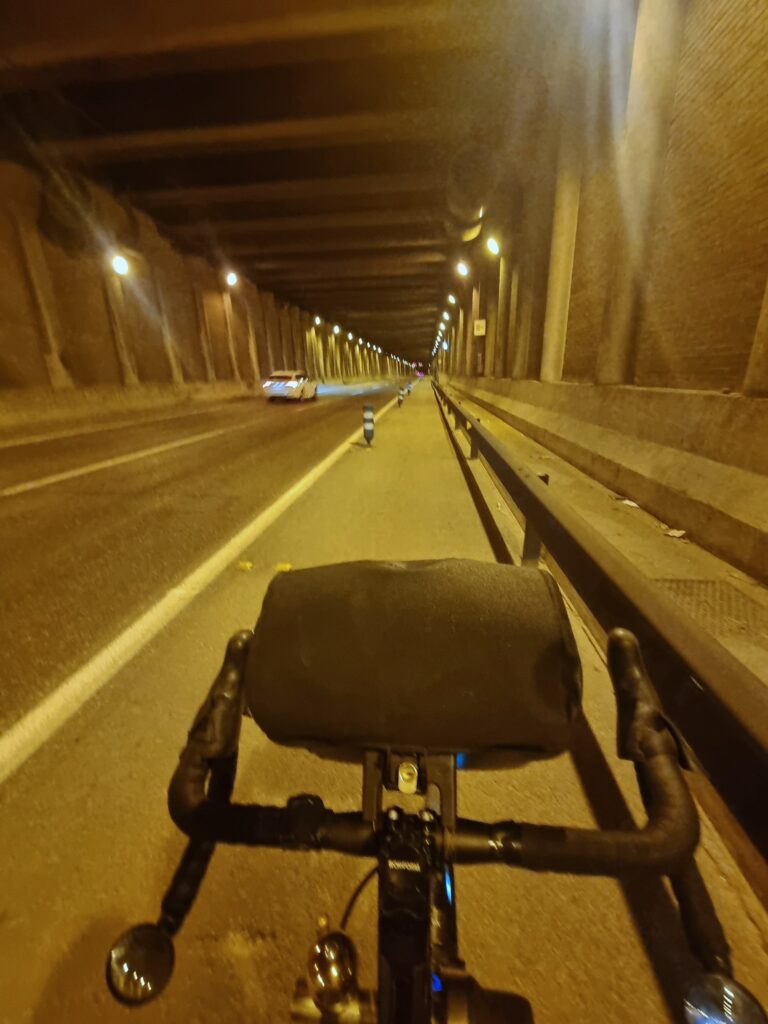
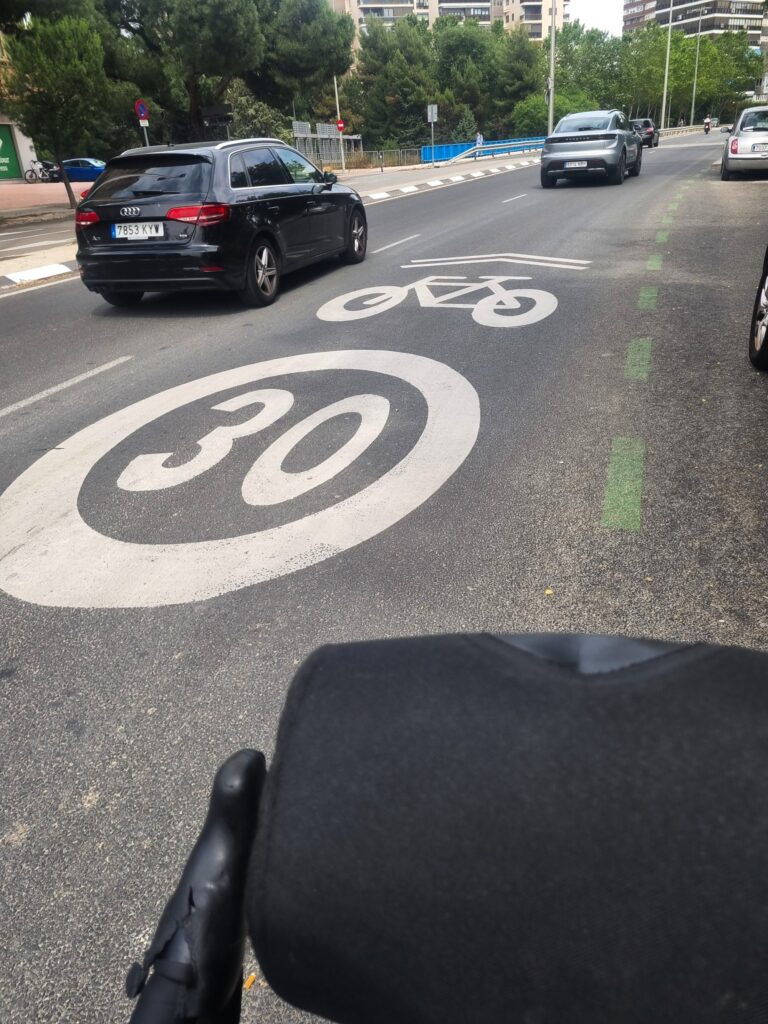
At Madrid airport bike cartons are available at the Left Luggage.
Thinking ahead for further Iberian rides, an option could be Barcelona to Santiago de Compostela via Zaragoza, Pamplona, the Basque and Galicia. In Autum when the figs and grapes are ripe. Spain is so good! And we need to keep testing our bikes.
After taking the Spirit of Tasmania ferry from Devonport to Geelong we completed a 1,500km tour in January 2025, avoiding bushfires and heatwaves. There had just been big fires in the Grampians, but we adjusted the course. Then, a week after we had a coffee break with the locals in Dimboola, the town was evacuated, and the highway was closed. Some would say it’s a bad idea to tour here in January, but it was fine. Heatwaves come and go, often only lasting a few days. You can adjust your route, you can schedule a rest day, you can leave early in the morning and you can be lucky. We even mostly had tail winds.
The initial target was the Aboriginal site at Lake Condah, then the Murtoa Stick Shed, then the Coorong, the mouth of the Murray, the Fleurieu, the Warrawong Sanctuary and finally, Adelaide. We would work out the in-between bits along the way.
I’m testing out various new things. The main one is new handlebars. I’m calling them “Barcoo”.
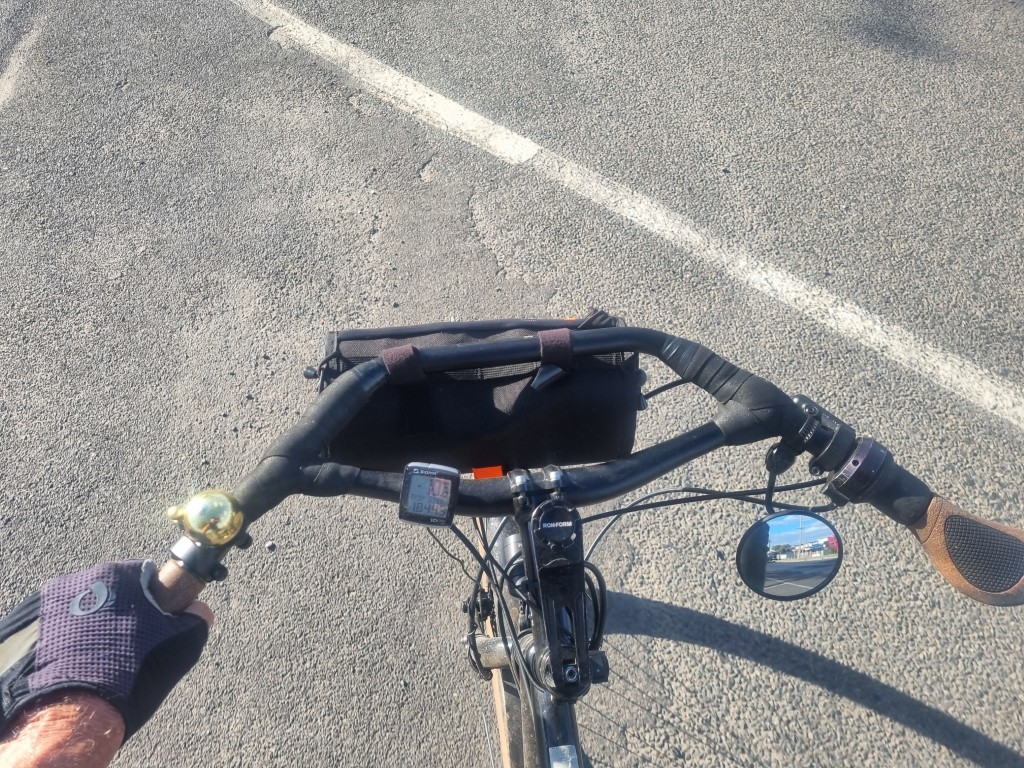
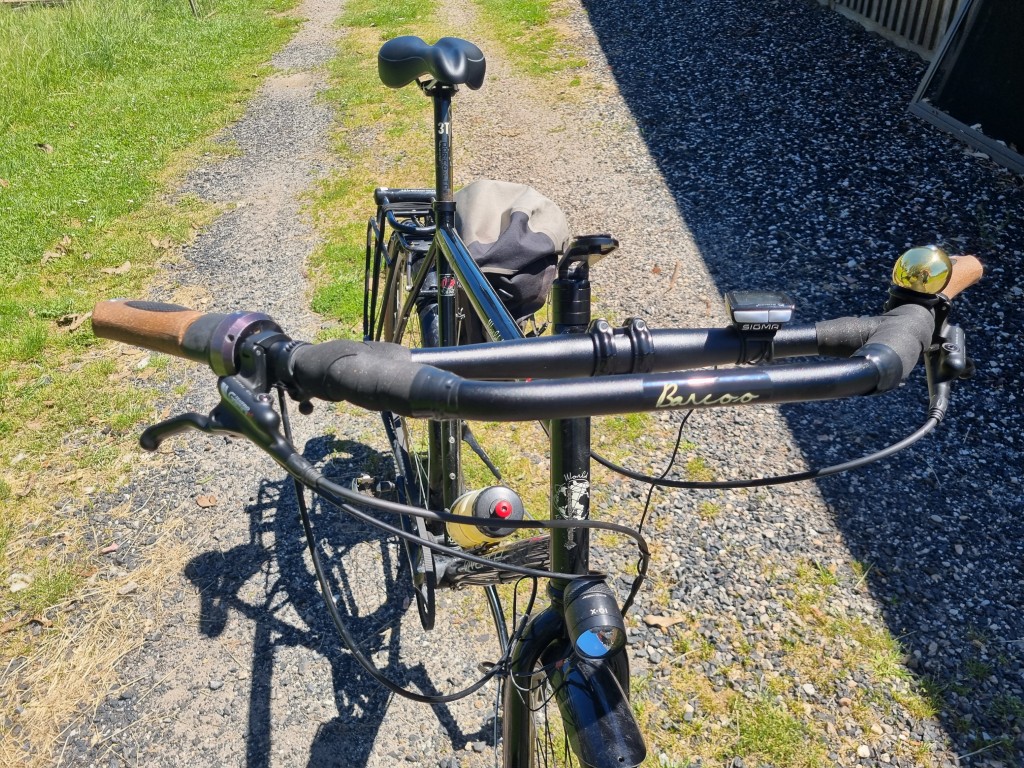
The bars are swept back with an added front section. There are special Ergon GC1 grips that “correct” for the angle. There are bags made to hang down from the front section. We need to know how this bar set-up works out. (see below for more information)
Another test on this ride is of a light to alert oncoming cars from behind. There is a switchable headlight facing rearward.
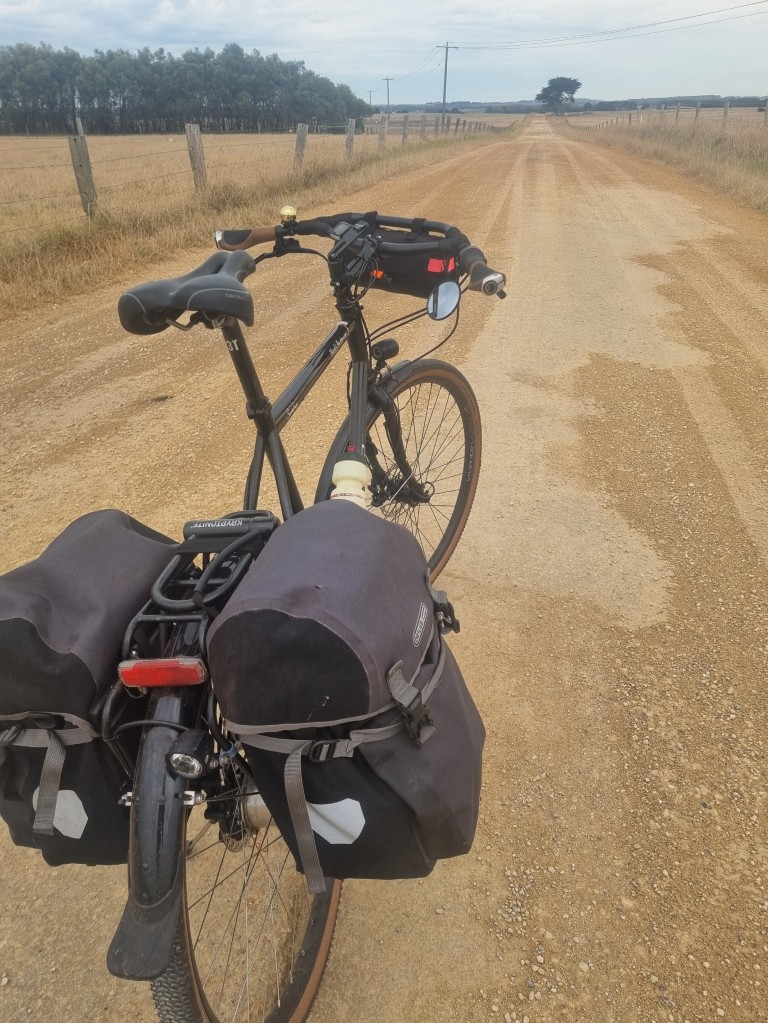
When you are riding and have a buddy a few hundred metres behind, in your mirror, their headlight is very noticeable. Hence the idea of projecting a headlight rearward and being able to “on/off” it after seeing particular vehicles in the mirror and in particular places. But, after trying this out, we decided it’s not much of a benefit. If we must ride on some highway sections where there is fast traffic, a road shoulder is what is really needed.
This time there have been frequent gravel roads, and the grip of the 45mm has been valuable.
At 45mm it is still a relatively narrow tyre. We compare it to a more traditional 40mm Marathon.
On unsealed roads, when there is no loose material, the embedded gravel and corrugations are bumpy in these parts.
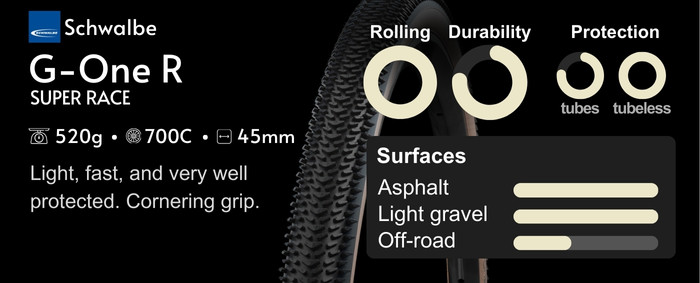
The 45mm tyres at 50psi were more comfortable than the traditional 40mm touring tyres. Kevlar belted, 40mm tyres, at 60psi, are less supple and feel rougher.
In loose material, thinner tyres sink in further. It’s not that thinner tyres don’t work; On good tar they are excellent. But in these regions, on mixed roads, the G-ONE R’s were ideal.
There are catheads in this part of the world too, so the 45mm tyres have been running tubeless, with 60g of Schwalbe solution per tyre and a spare bottle with 60g in the luggage.
Before the start of this ride the Gates belt had already lost one tooth but we didn’t replace it. It had already travelled 32,000km. Going around the Grampians there was a lot of sand, and the belt felt increasingly gritty. Washing it from the water bottle about four times a day seemed to fix that. But, over the coming days, more teeth came off and inspections showed several other teeth were half-loose.
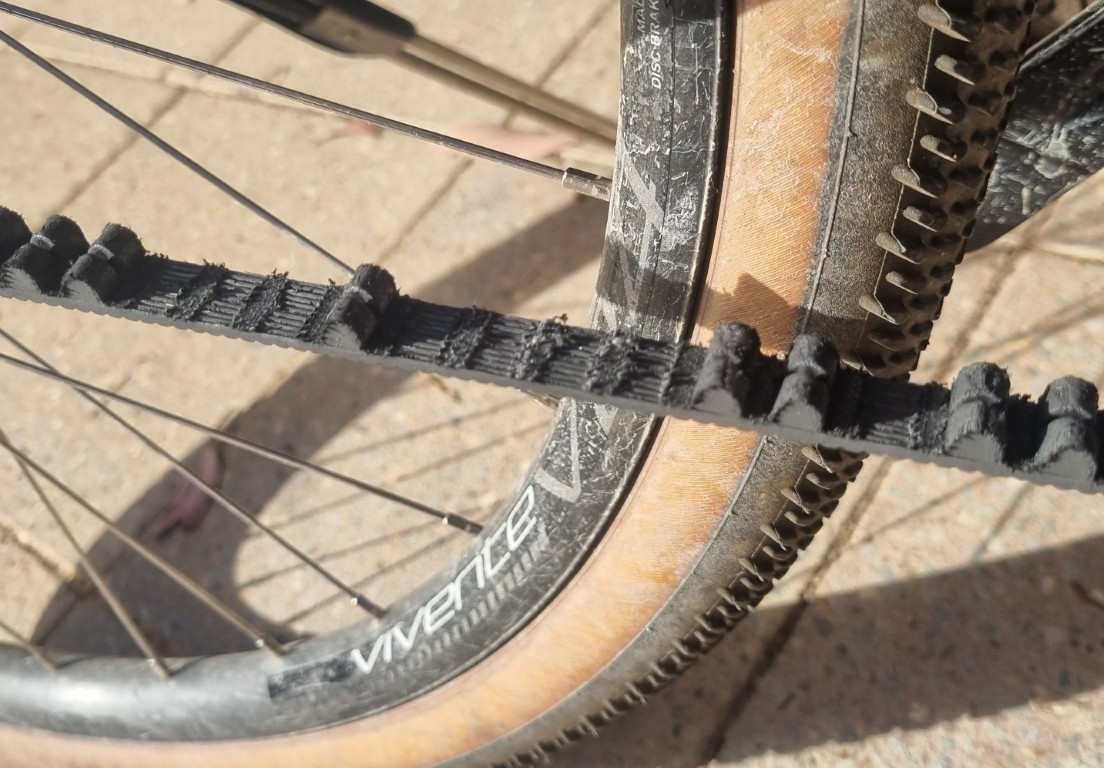
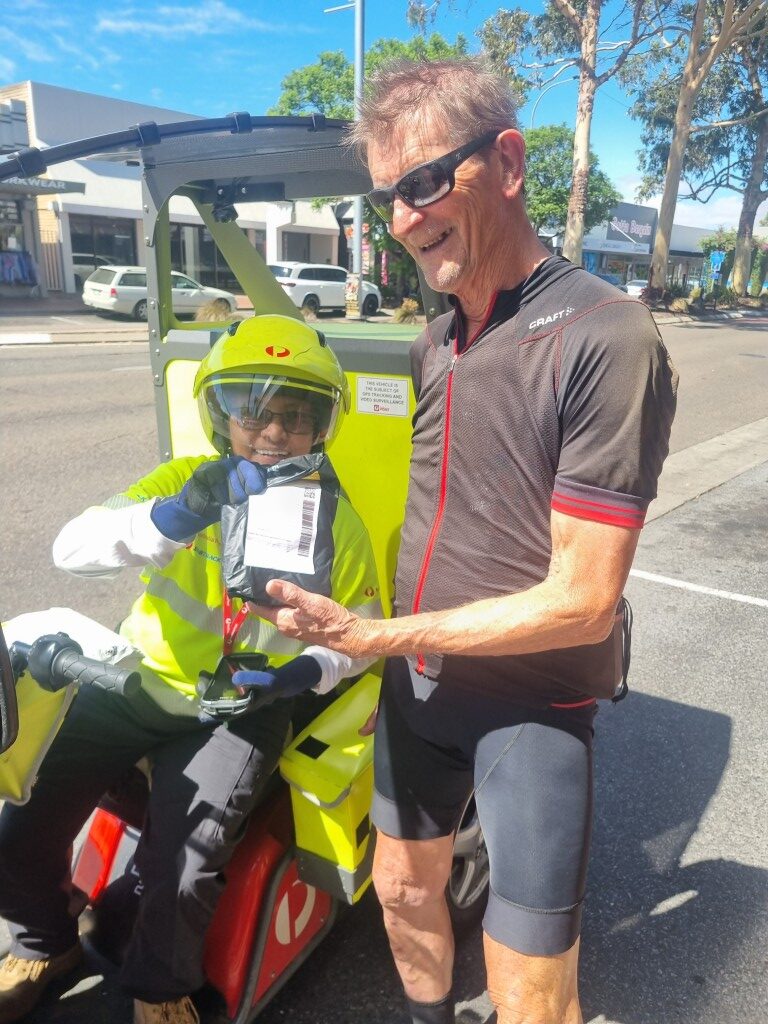
Omafiets in Sydney got a new belt delivered to Murray Bridge in 48 hours after notice. We didn’t need to run the belt down to this point and next time we probably won’t. But it is good to know how long they last. And it’s good to use things for as long as they work. There are people ready to look after Vivente riders. You don’t need to carry much with you. This belt took 33,000 km to wear out and only 15 minutes to change. Read more about Gates belt-life expectancy and belt replacement.
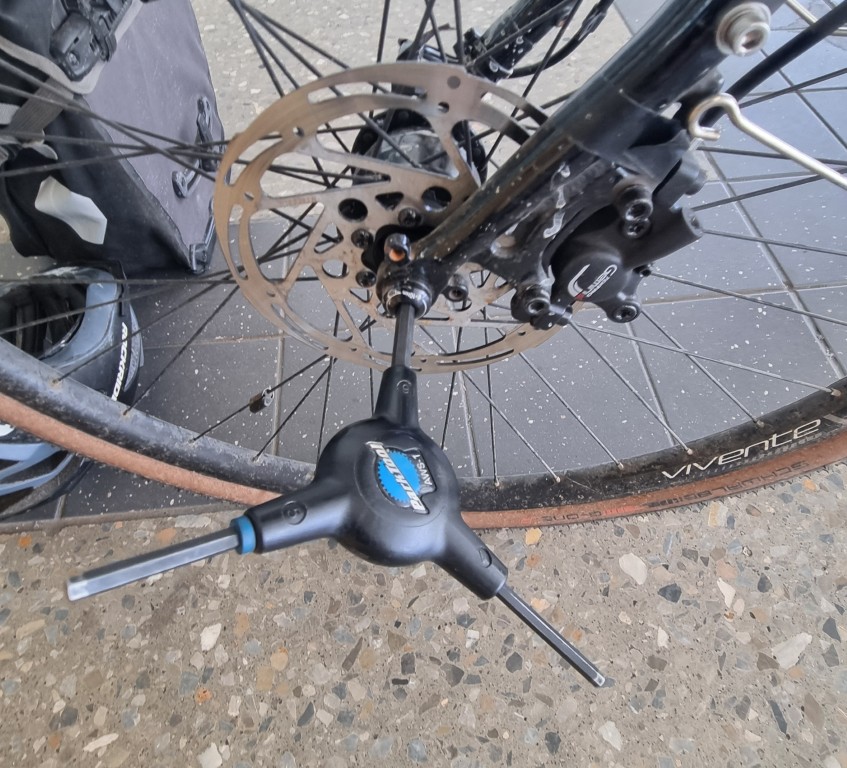
For this ride we use a different front through axle. This one uses a 6mm Alen key, instead of the pull-out lever type that we use on Vivente bikes. A few people have found the pull-out lever annoying, so we have brought in some of these 6mm hex-key ones. The only time it was touched of course was packing at Adelaide airport.
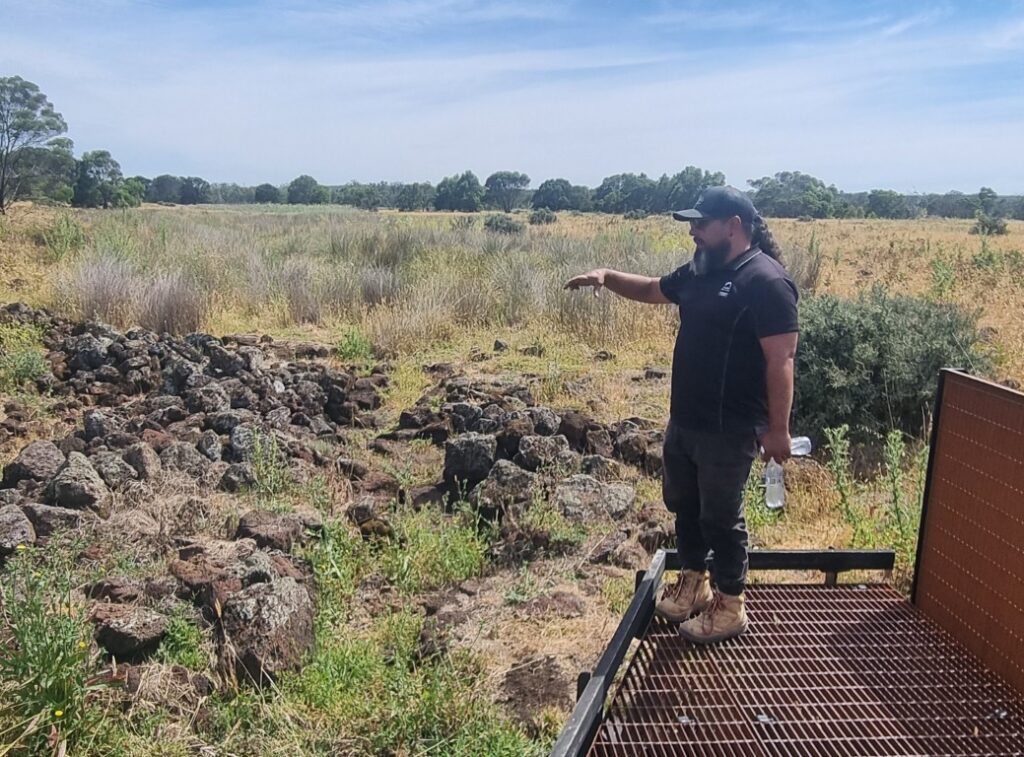
Lake Condah
Lake Condah is a day’s ride west of Warrnambool, in Gunditjmara country. You stay at a little town called Heywood and it is a 30km out-and-back ride to the site.
About 30,000 years ago, a volcano left lava flows crisscrossing wetlands and shallow lakes. The lines of lava created a maze of routes for migrating short-finned eels. They had floated down from the Coral Sea and swam up what is now called Darlot Creek. Clans of the Gunditjmara people learned ways of farming them and there were permanent settlements based on eel farming and trade. About 200 stone structures that were houses remain. For thousands of years, eels were kept in dammed sections. Conical one-way nets let only the small eels through. It is thought to be the oldest practice of aquaculture on this planet. The Henty brothers moved in, stole the land, drained the wetlands for grazing and dried up the lakes. The few Indigenous people that survived were herded into the Condah Mission, where they were not even allowed to speak their language.
The lake was dry by 1955. Post WW2 soldier settlement had been the last straw. But 30 years of activism brought about policy change. (Onus V Alcoa) The lake returned in 2012 and is still recovering. Eels are back! It is now a declared World Heritage Site.
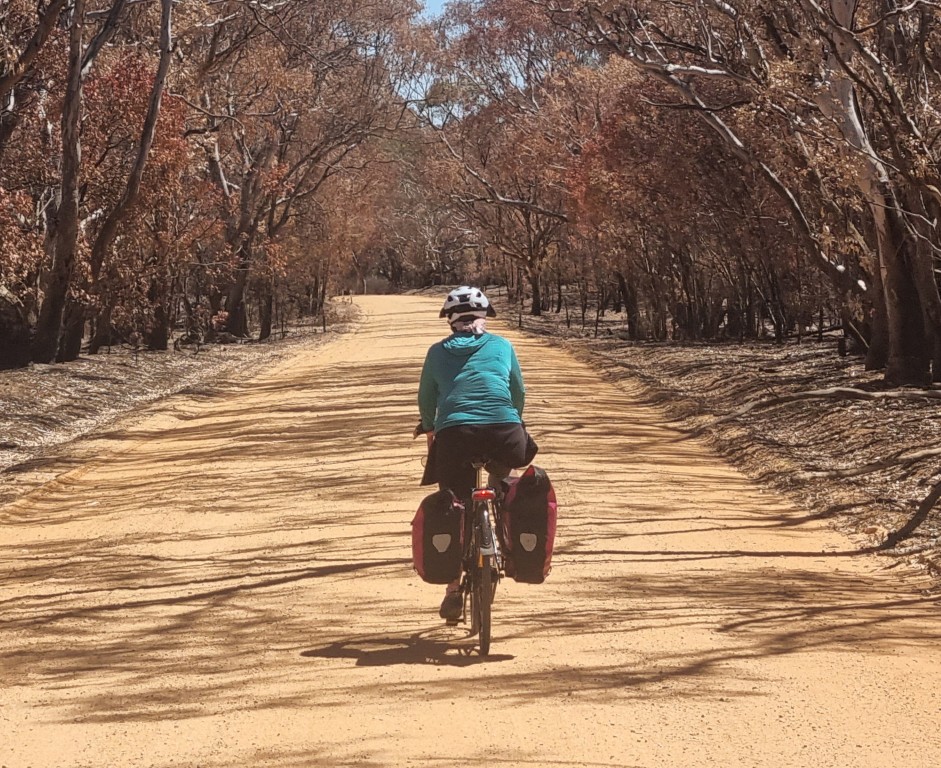
Leaving Condah as we head North, and, because of last week’s bushfires, we skirt to the east of the Grampians. We were in and out of fire zones, but the weather got better.
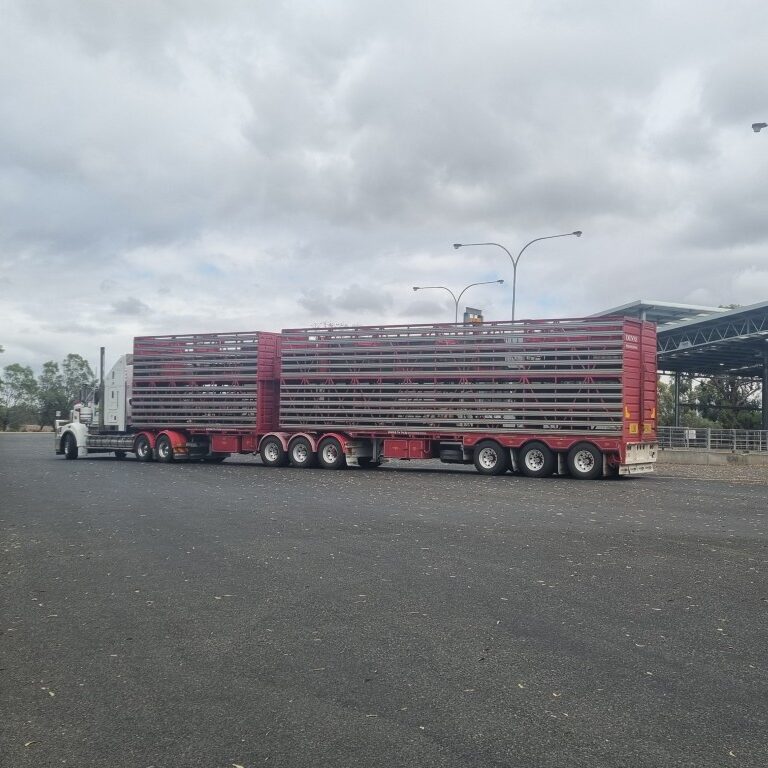
Just out of Horsham there is a huge sheep saleyard. The sales are on Wednesday mornings, and this was an opportunity to get close to this local industry. There was a yarding of just over 10,000 sheep.
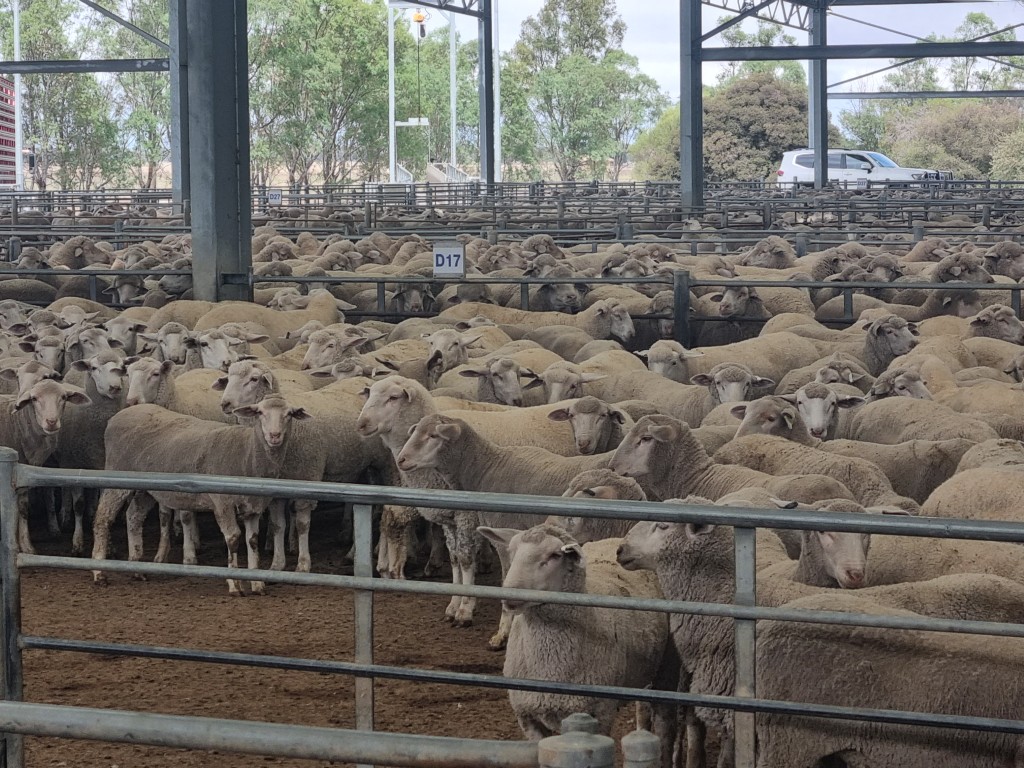
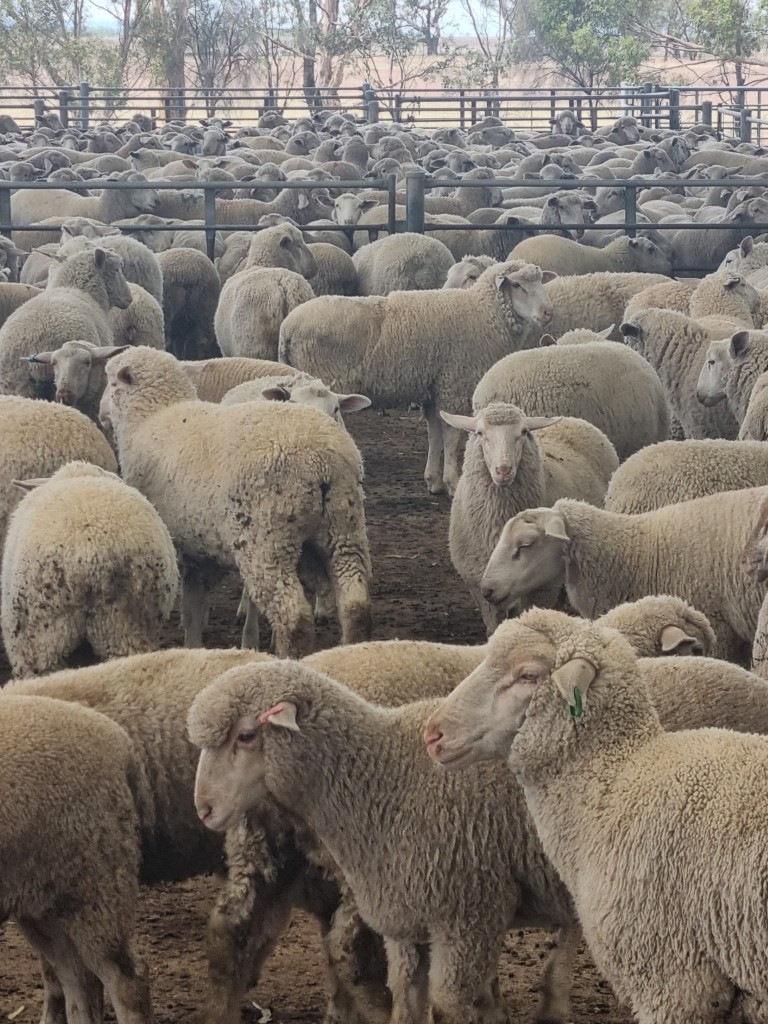
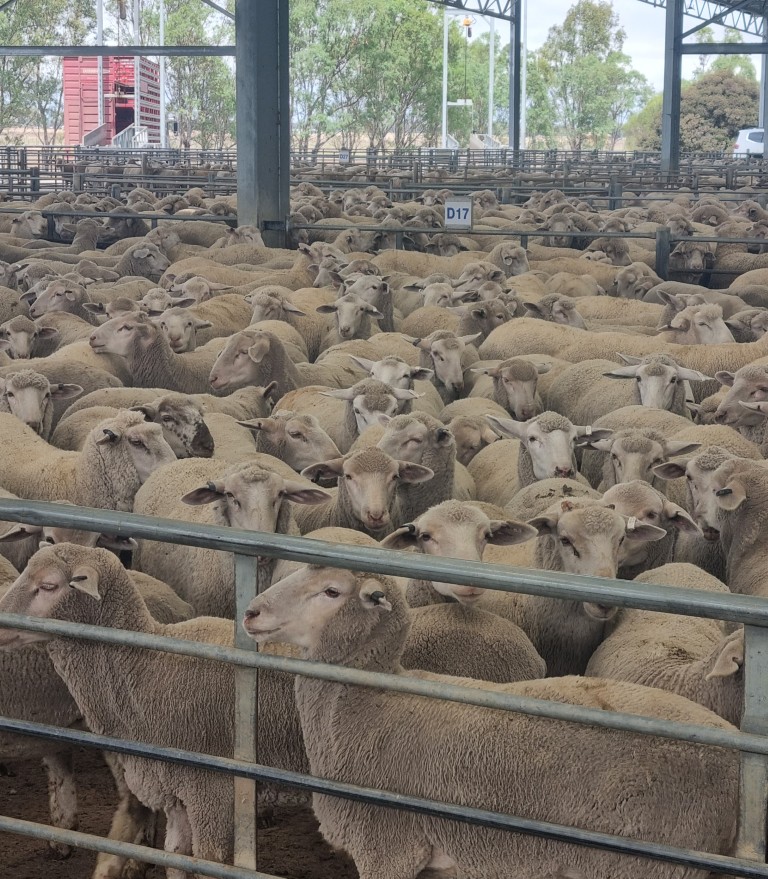
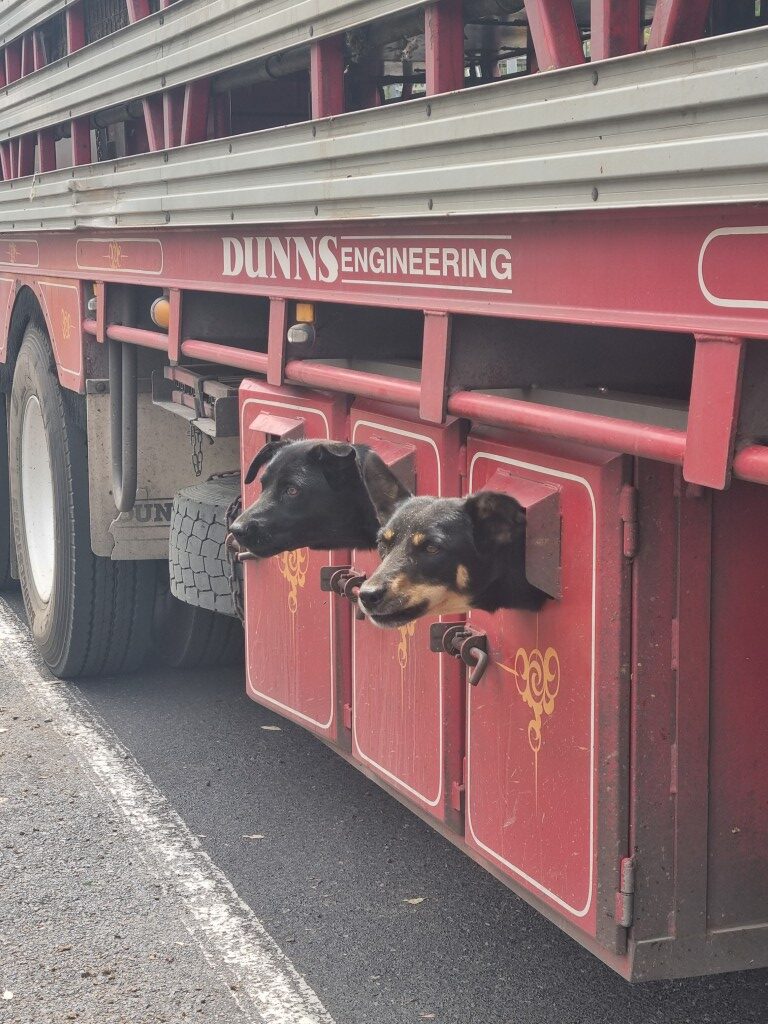
Have you ever had to reverse a car with a trailer? Can you imagine what it would be like reversing a semi-trailer with an extra trailer behind that? It’s extraordinary to watch the skill of the drivers. Once in place, the driver has to load the sheep. They have sheepdogs on board rearing to help. Muzzles are mandatory.
The Murtoa Stick Shed
In 1941, the war was preventing the export of wheat. There was a shortage of jute bags that wheat was mostly stored and transported in. A bumper crop was forecast.
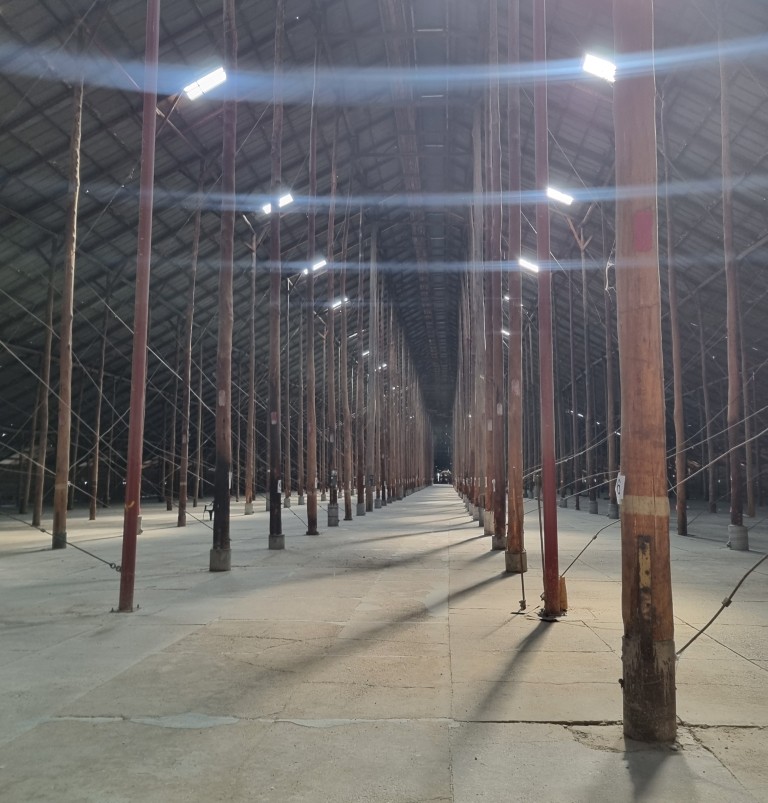
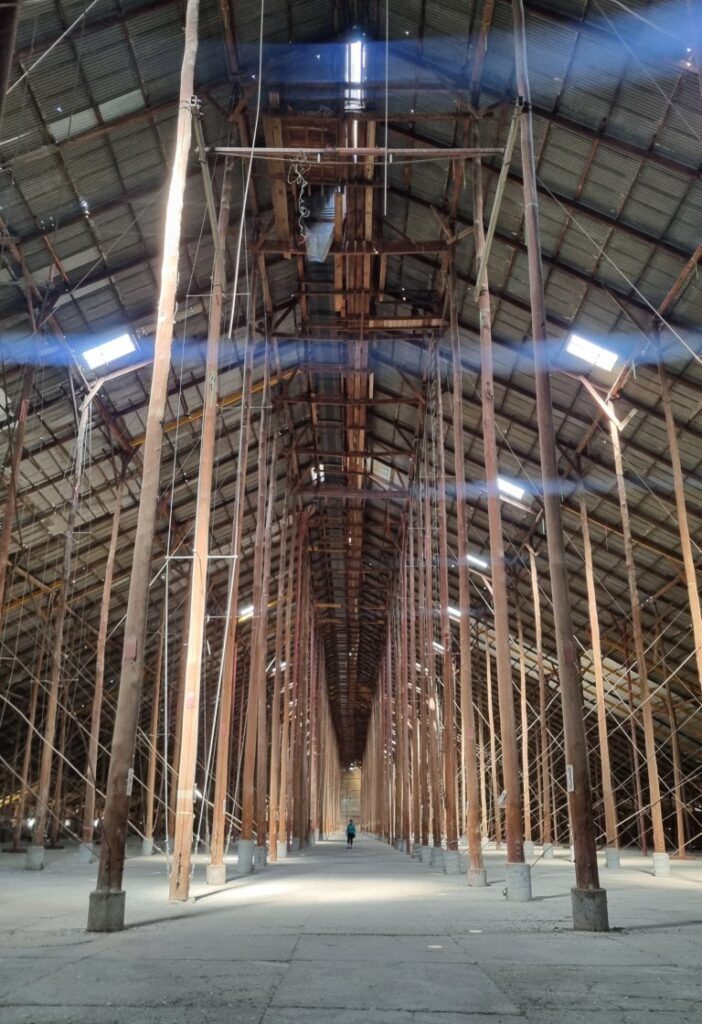
The Grain Elevator Board decided to build 29 grain storage sheds, and it had to be done fast. Only this one at Murtoa had a concrete floor and it is the only one still standing. The roof is over five acres. It was built in only four months.
Pink Lake
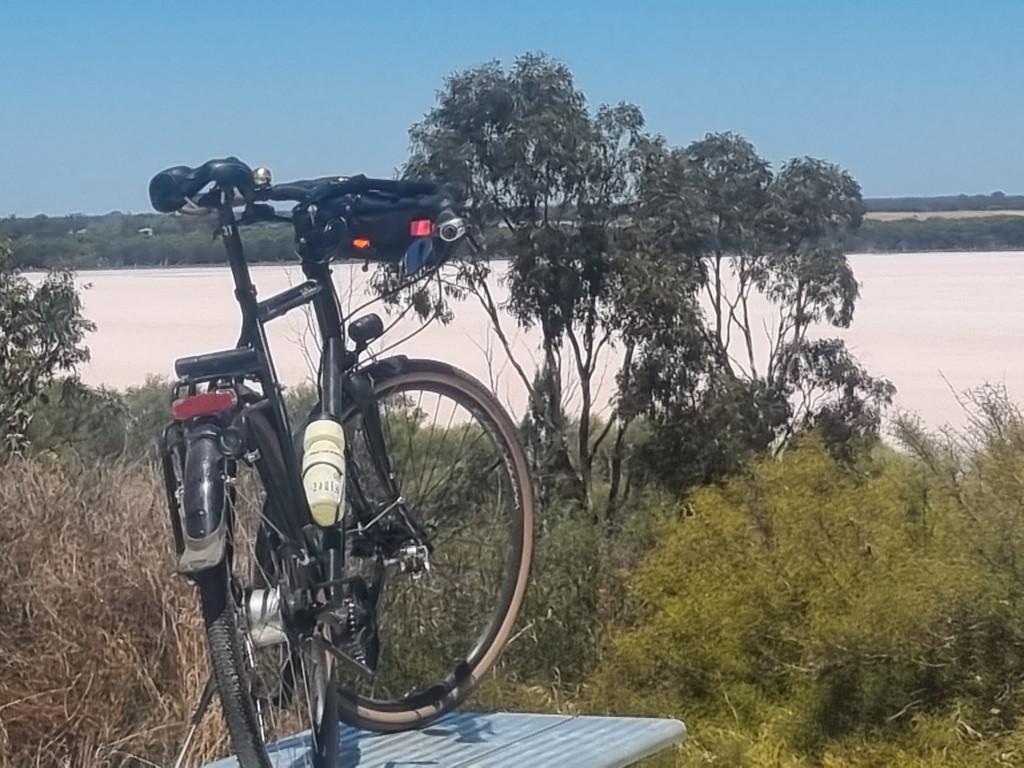
Just off the road between Dimboola and Nhill is the Pink Lake. There are a few others that have these particular algae, and they change colour from time to time. It is a bit of luck to be able to see pink and our luck is good.
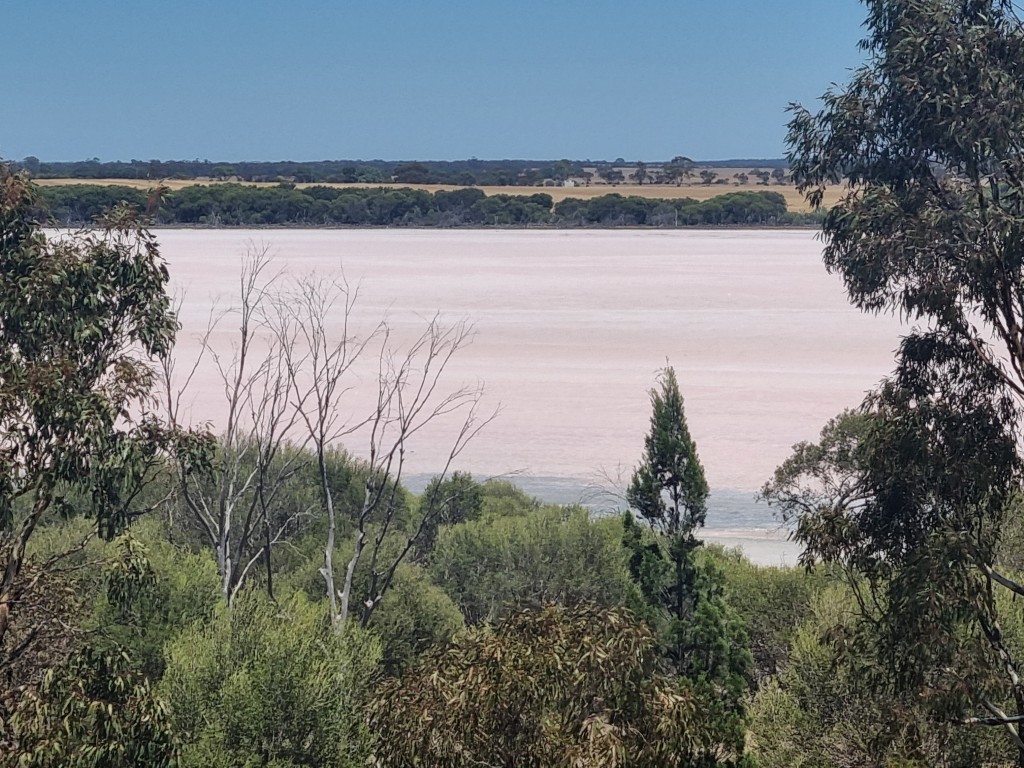
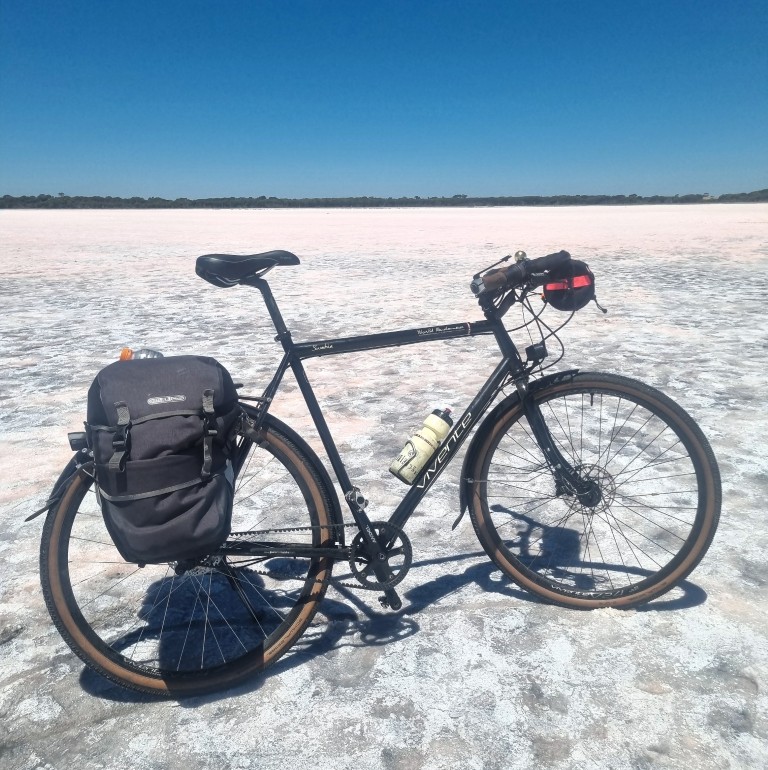
Although it has many side trips, this tour is from Geelong to Adelaide. There is a train, called The Overland, which runs twice a week each way between Melbourne and Adelaide and allows fully assembled bicycles on board. That’s always interesting when planning a three-week bike tour. If you are riding around Australia, you don’t catch a train. But we didn’t need to ride the Bordertown to Murray Bridge section. It is a flat 200km stretch of semidesert, that is mostly straight, and with almost no shop. It’s a busy highway. Being able to just wheel the bikes on is appealing.
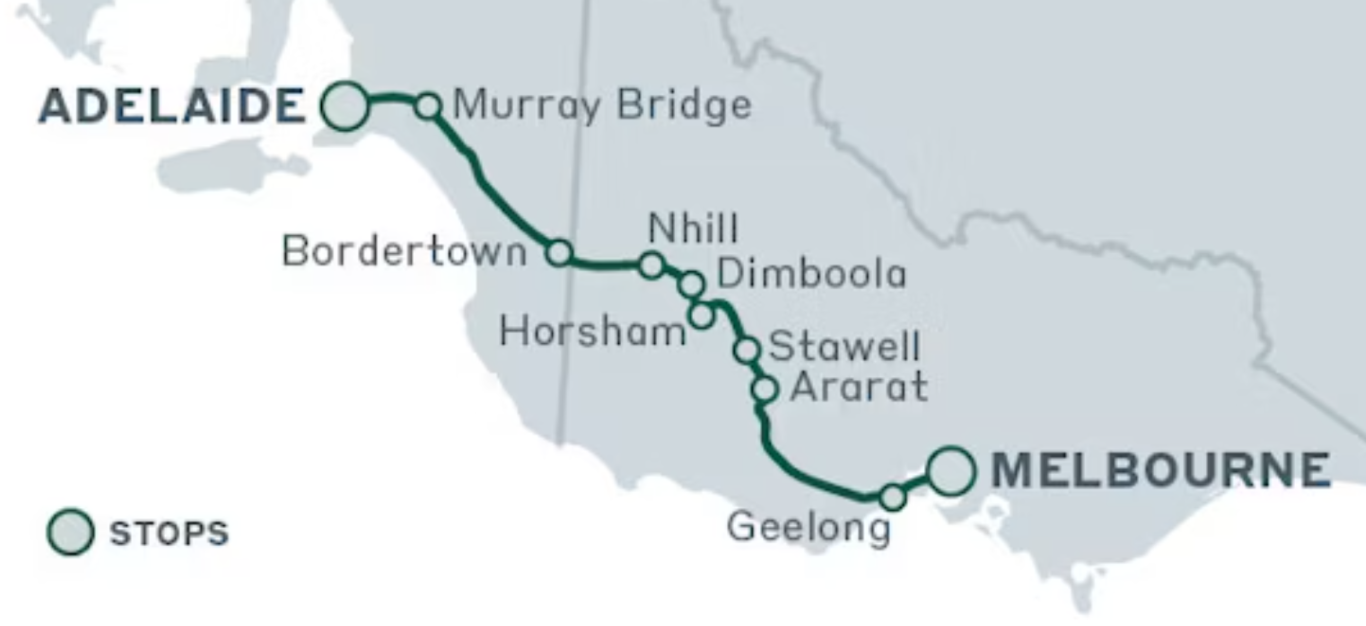
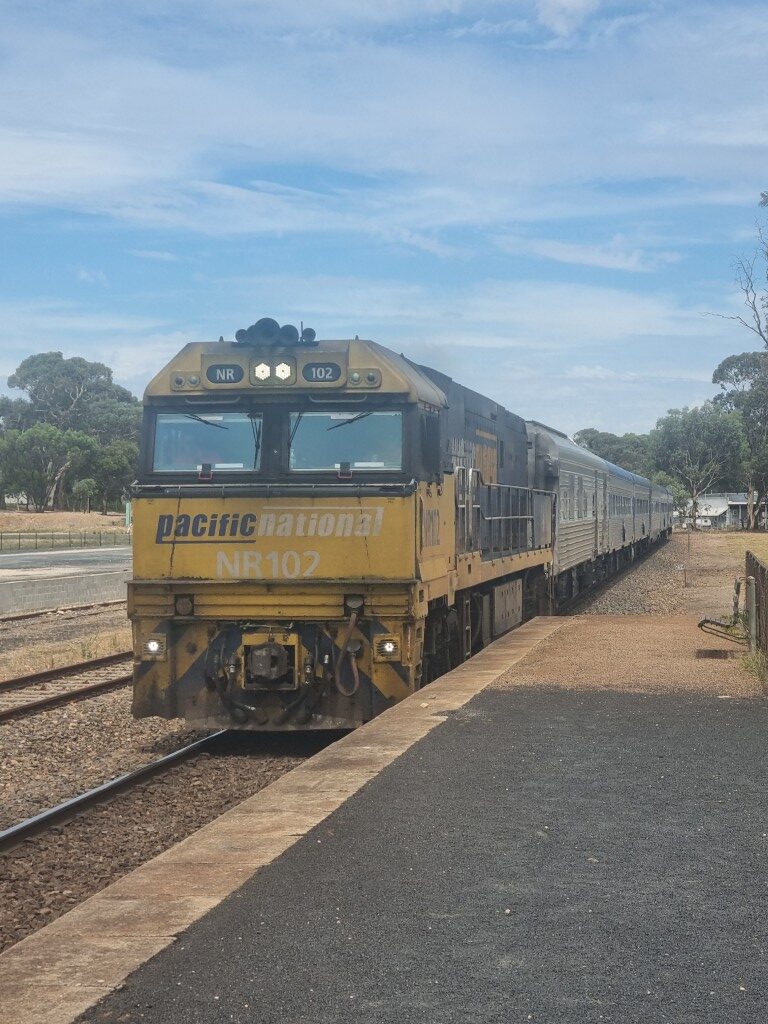
We got to ride through Dimboola and Nhill, to see the Little Desert National Park and the Pink Lake. Then at the SA border we were on the train, covering the 200km in 2 hours!
South of Murray Bridge the mighty Murray flows into Lake Alexandrina and Lake Albert. These fresh-water lakes are about 40km across and are a bird watcher paradise.
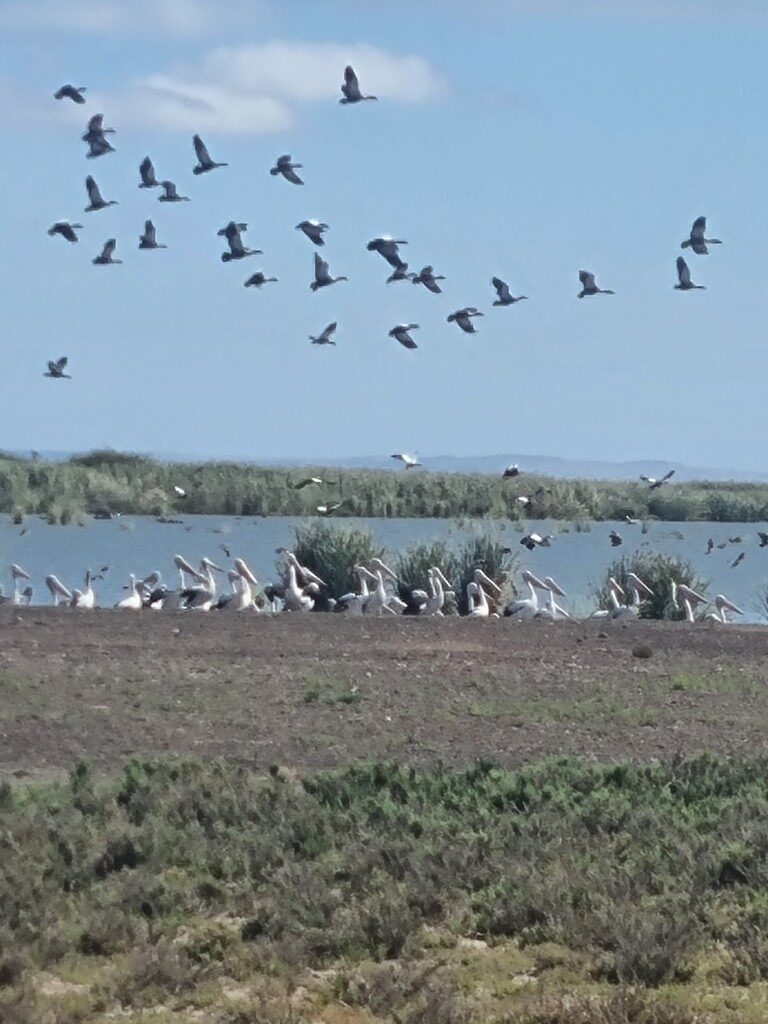
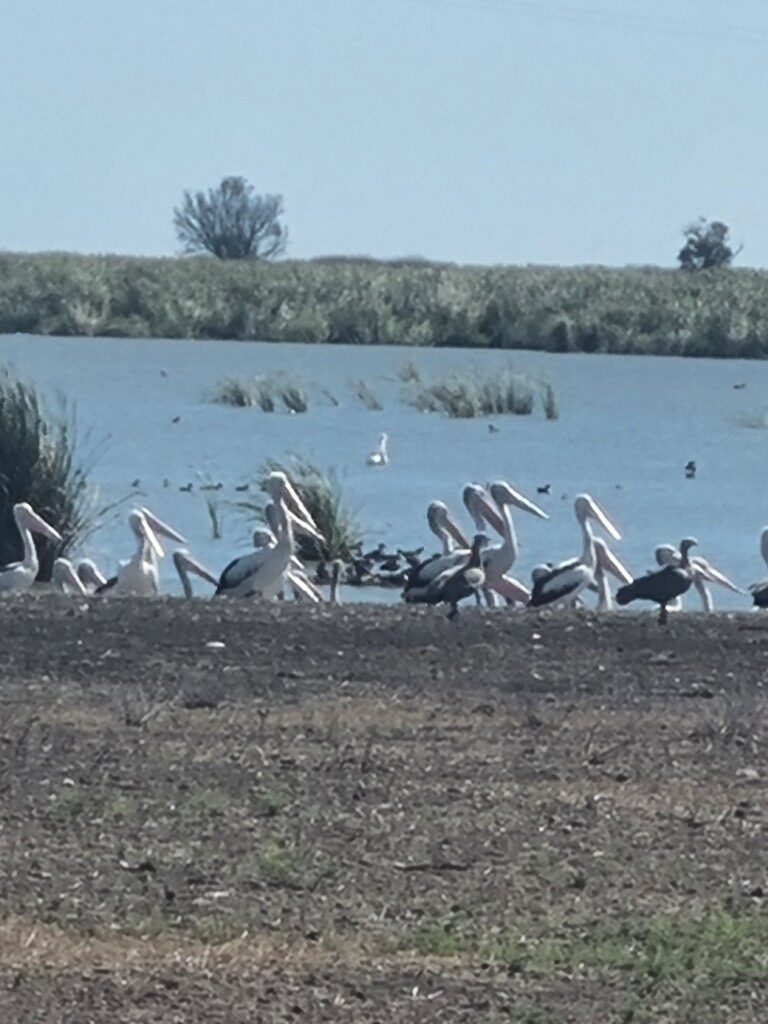
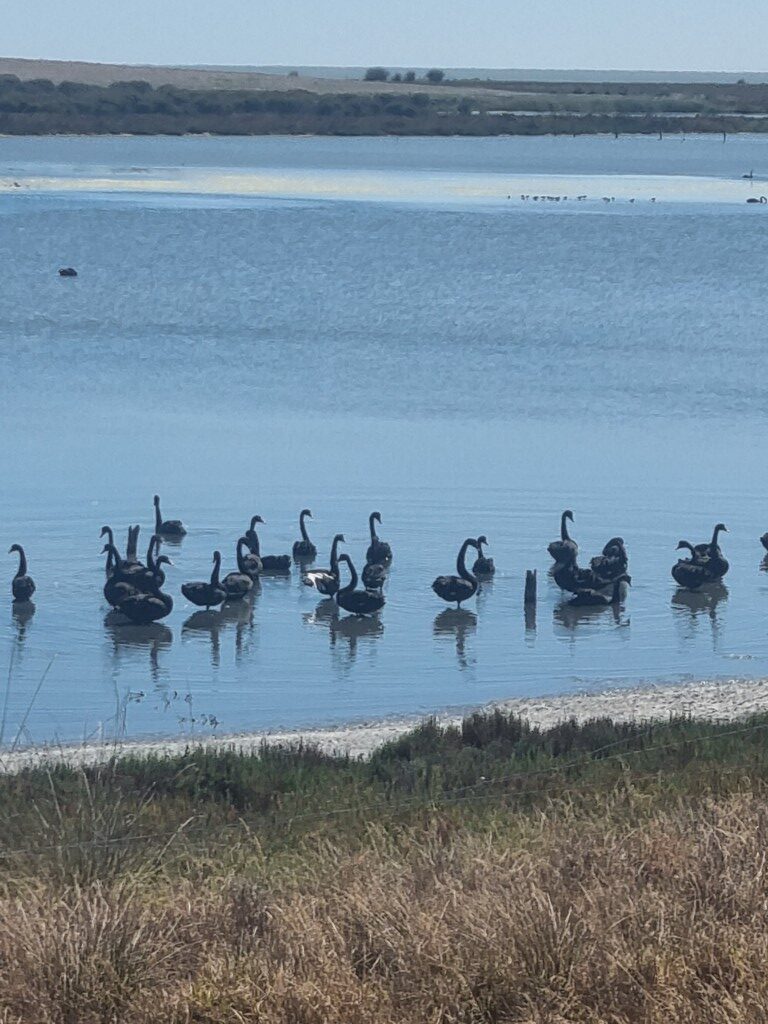
On the eastern side, between the desert and the ocean, is a narrow neck of sand dunes stretching 150km, called The Coorong. It is a fantastic landscape. Rainfall is so low that there are no water courses. In the hinterland there are numerous “ephemeral” lakes which, now being summer, are dry salt pans. The juxtaposition of the permanent freshwater lakes and these salt pans, sometimes only metres apart, is amazing.
In this pic, the white in the middle is salt. The grey-blue behind the white is fresh water in Lake Alexandrina.

Ferries cross the Murray River and at Narrung lakes. They are free and run 24/7. At Narrung, which is a fantastic side trip out of Meninge, the operator said she sees only one bike about every two months. But at the Murray, 10 bikes a week.
Heading down the west side, in the Currency Creek area, there are Aboriginal Canoe Trees. It’s thought that the canoes were cut at least 200 years ago. In the movie Ten canoes, there is a scene where this was done. As it is being cut it is held all around by many hands, so it doesn’t fall and crack. The cut bark is then soaked in water to soften it and later tied together at the ends using kangaroo sinews and plaited reeds.
On the Southwestern side of the big lakes is Goolwa and the mouth of the Murray River to the Southern Ocean. In times of low river flow, saline water used to come into the lakes and up the river. To prevent this, and to manage the river height, in the 1930s “barrages” were built. The intention was to foster irrigation along the river and enhance town water supplies. Currently, the fresh water is 0.75m above sea level. So the barrages are also dams.
From the Goolwa area (Goolwa South) to Encounter Bay just West Victor Harbor, is one of the best ocean bike rides anywhere. It reminded me of the French Riviera. Gorgeous coastal views along a 28km bike path. Many worked on it, but a local hero got it over the line. It’s called the Encounter Bikeway.
After weeks of dry, flat country it’s a nice change to arrive in the Fleurieu peninsula. This is the home of the Tour Down Under, the Adelaide Hills, the Mount Lofty ranges, the Coonawarra and McLarenvale wine regions and where Hans Hysen painted many of his familiar masterpieces. This is South of the Goyder Line which demarcates rainfall in South Australia. A Mediterranean climate with mild wet winters and hot dry summers. Only 50 km to the east, in the rain shadow, we were in a desert.
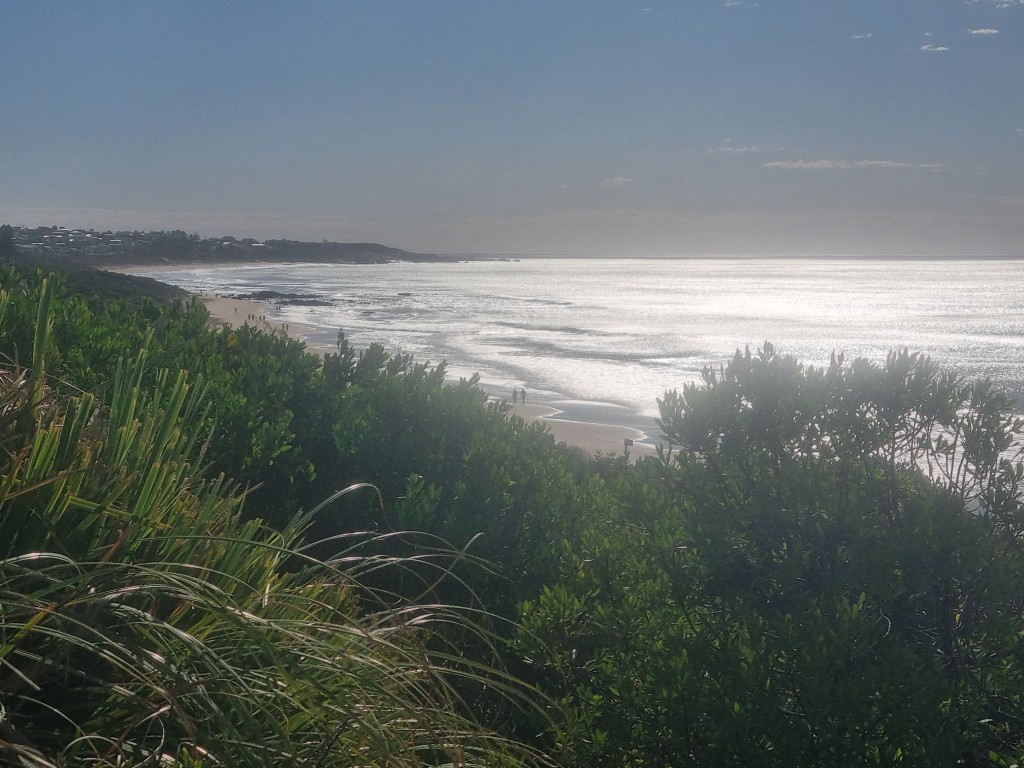
Rather than take the easy way around the West coast, we head up the centre through Meadows to Hahndorf, wanting to stay in the bush as long as possible. After weeks of flat, the climbs feel brutal. It’s 35 degrees and windy. But the next day we had that marvelous 600m descent from Crofters into Adelaide.
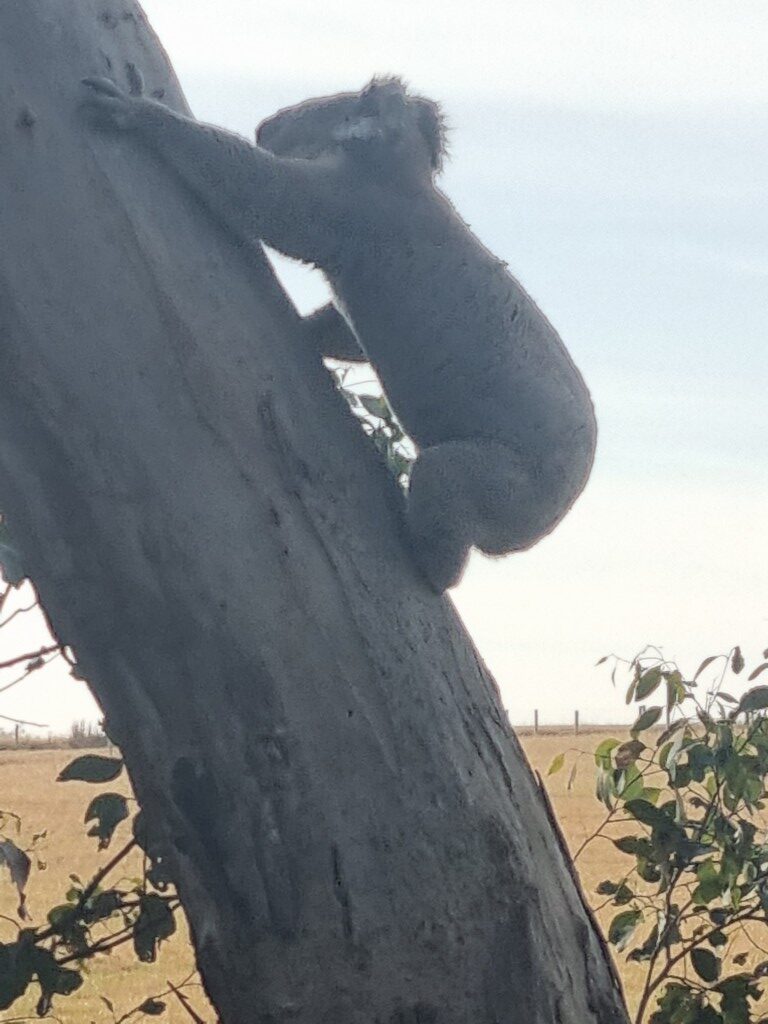
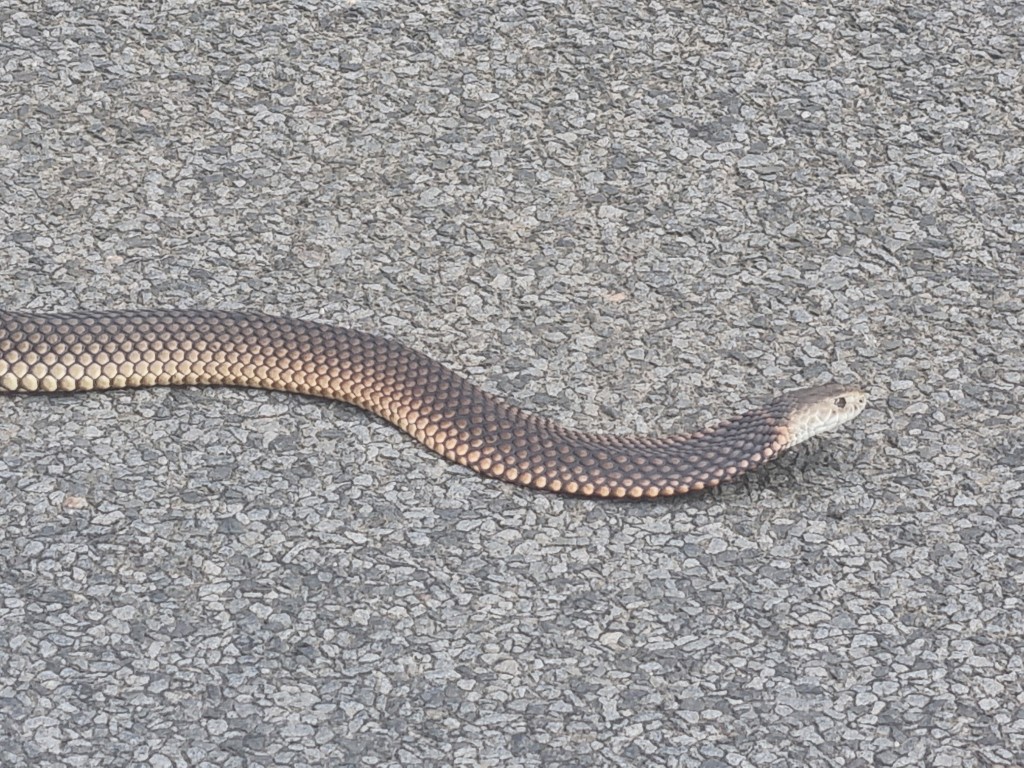
During this ride there were good roadside fruit and berries (figs, plums, grapes and blackberries) and we saw a lot of wildlife including eagles, koalas, echidna, kangaroos and beautiful Lowland Copperhead snakes.
PLUGS
The Overland Train
You can wheel your bike on and off at any of the stations. If you embark in Melbourne or Adelaide your bike will go in a luggage car but at intermediate stations it will be in the passenger carriage where there is also room. You don’t book the bike. You mention it in the notes when you book your seat. The conductor calls (phones) ahead and tells you where to stand on the platform. They even serve tea and cake on crockery!
Victorian Regional Cycling Infrastructure
Small and mid-sized Victorian cities are the best provisioned for bikes in Australia. Victoria is consistently good. Being able to take bikes on trains adds to it. A combination of wide streets, decades of activism by Bicycle Victoria and several favourable Victorian Ministers of Transport have normalised bike riding. Compare, for example, Griffith NSW and Horsham Vic. It is a very different experience. Few people in Griffith ride down Banna Avenue. Bendigo, Ballarat, Warrnambool, Shepparton, Horsham, Mildura and Echuca all give us room to ride. Ironically, Albury just over the border does too. That’s another story though and also about the importance of a local hero, Patricia Gould.
Adelaide
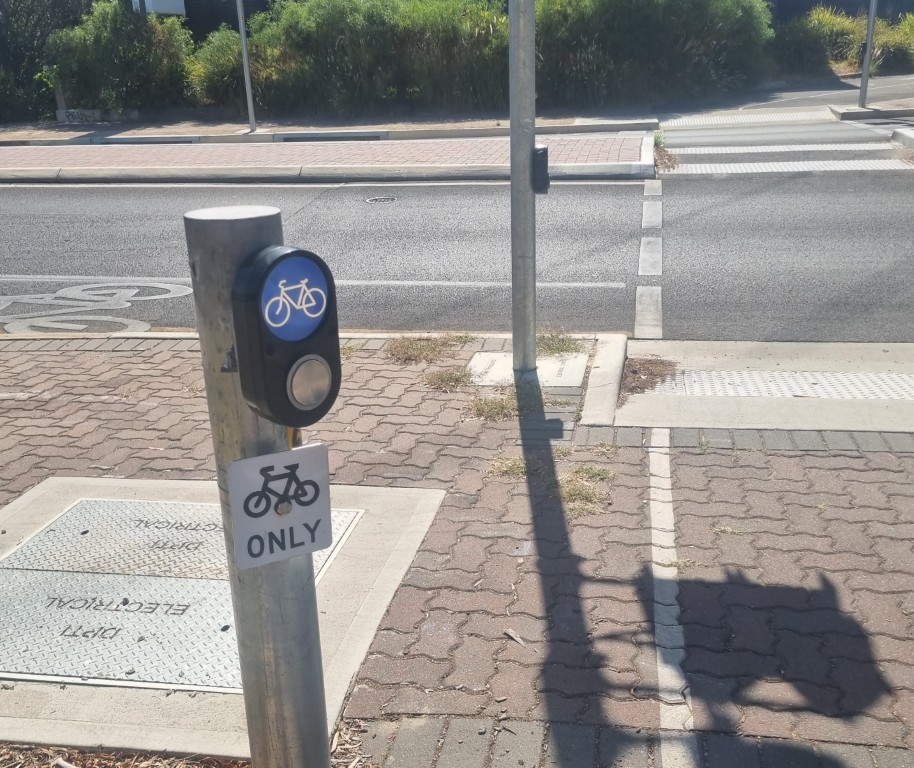
This is the easiest capital city in Australia for cycling. There are numerous bike provisions, including this fast-response bike crossing light. CBD bike use is quite high. Adelaide is a pleasure to ride.
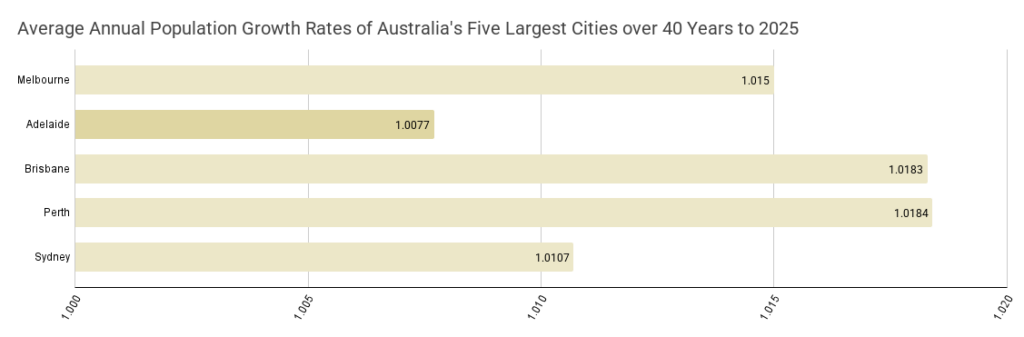
Adelaide has not had the pressure of population growth that has kept space from cyclists in other cities. Other cities have focused more on trunk routes and connections. In Adelaide it feels like you can ride on all the streets. It’s not surprising that more rapid urban population growth, in addition to bringing all sorts of other problems, is likely to be worse for cyclists
Barcoo Bars Report
Our Barcoo handlebar, and also, a new bike in our range, the Vivente Barcoo, are named after the Barcoo river that feeds into Kati Thanda Lake Eyre
Handlebars are subjective and not a bike part that one person can readily say will be good or bad for someone else.
As a traditional drop bar rider, I don’t expect to really like a bar that’s in the sit-up style. Not that on drop bars we don’t sit-up anyway.
The GC1 grips have so much surface that you can lean down on them slightly more without hurting your hands. Therefore, you can bend over slightly more. After the first few kilometers I moved the bars down three spacers.
There are several different ways you can put your hands on the grips. You can move around, including to the taped junctions of the outside bar and the cross bar. That is a more aero position. That does allow a complete change of position, but you have less steering being in closer to the axis. That position is best for good roads and lower speeds.
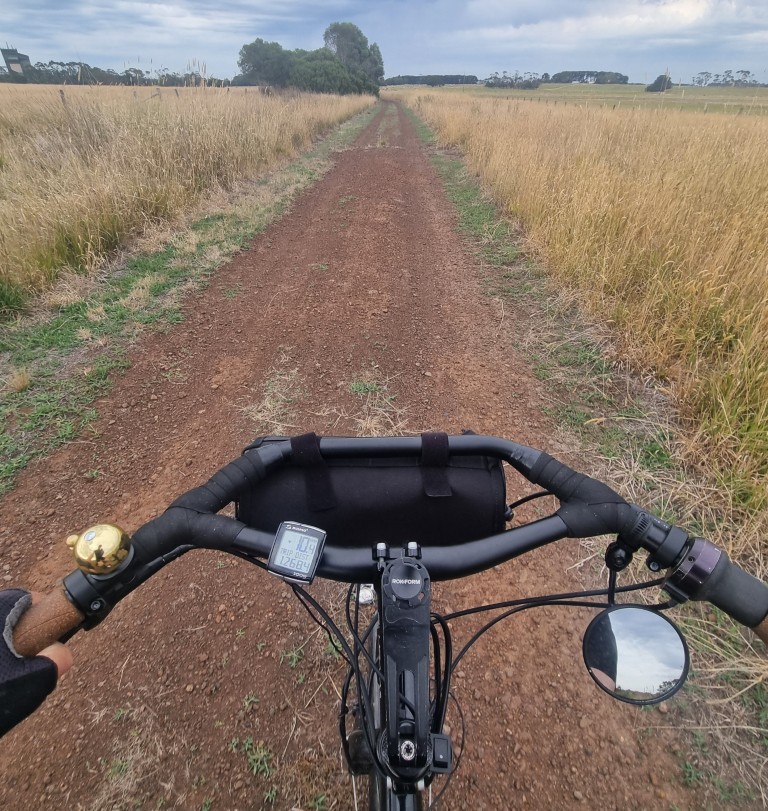
Having done the Munda Biddi Trail on a Swabia, for me, the Barcoo bar would have been a better choice.
In the CBD of Adelaide, the (720mm wide) bars felt a bit wide and vulnerable in traffic. Probably in part that I wasn’t used to riding in city traffic just then. I wouldn’t ride this set-up in inner Sydney (if I could have a Swabia). But, out in the country, the Barcoo bar is a strong a contender for me.
Steering a drop-bar bike is more from leaning on the side of the saddle. Steering this sweptback-bar is more by pushing a side of the bar down.
In descents, you can get down low. Not as much as on a drop bar. But more than on a trekking bar.
If this 1,500 km had been entirely on tar, the Barcoo bar would likely have been fine but so would other bars. However, on this ride, there were regular gravel and bumpy road sections. The width gave the added steering. The larger surface-area of the GC1 grips in the swept back position were comfortable on what were often jarring surfaces.
SGB bag
The Skingrowsback bag (SGB is made in Melbourne) was fine. Did the job. but a bit small at first. Unlike an Ortlieb HB bag, it stays on the bike, so I used a Topo shoulder bag too. The SGB HB bag has less capacity but for those few essentials it is fine.
For a November test ride this year we chose the deep south of the USA, primarily Alabama and Tennessee. It’s a cultural region, defined not by landscape but by history.
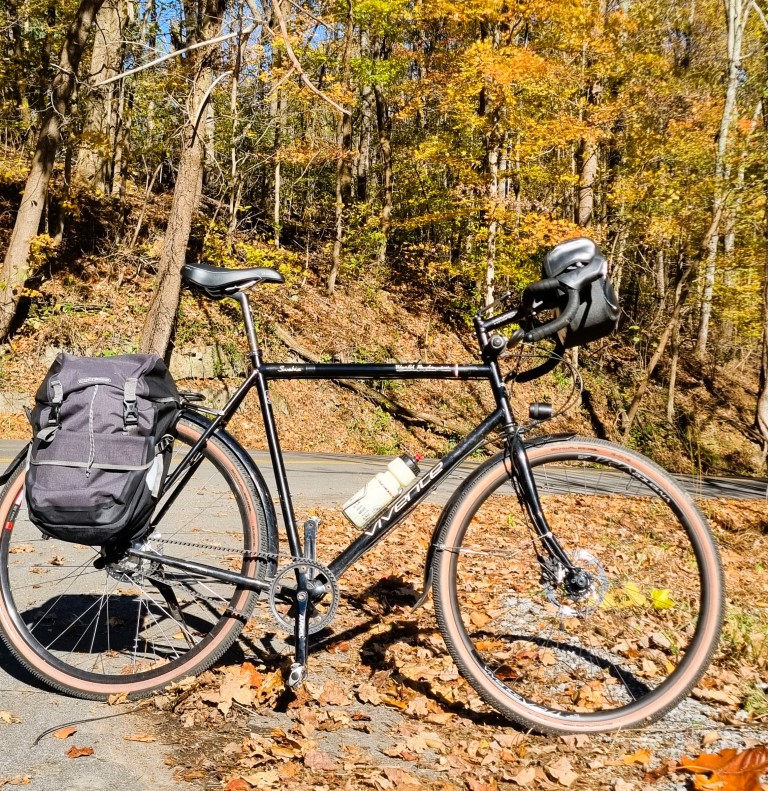
It’s autumn and nice and I’ve brought a Swabia XXL with 50:19 gearing.
We are checking out the use of “race gravel” tyres for normal touring. The Schwalbe G-One R, a 700c in 45mm width. It’s a light tyre, but high quality and strong. It’s not the tough-as-nails tyre. But perhaps it is? Expected to be run tubeless but we are running front tubeless and rear with a tube just to see if there are differences. More later on this.
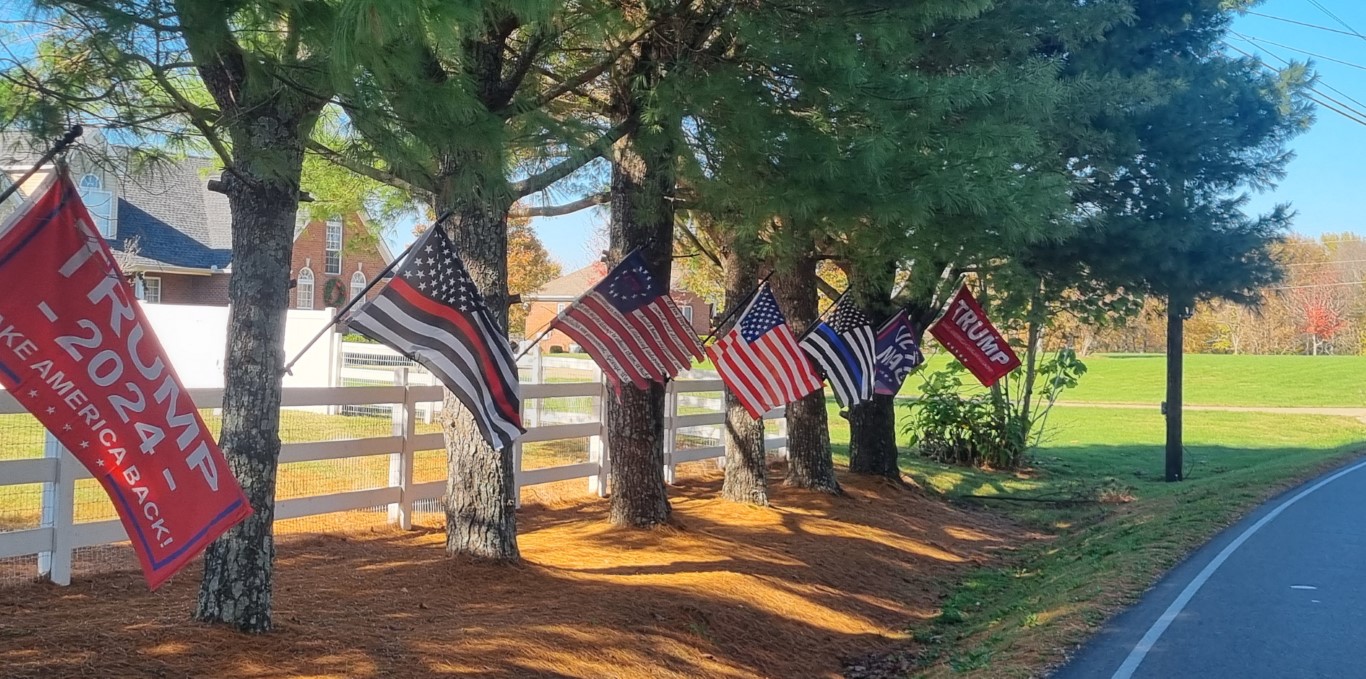
Arriving on Nov 5th, election day, added a twist. Trump signs were everywhere. Just a few days after the election, some counties were putting up signs saying how much their county had voted for Trump. This one, 88%.
Petrol (or gas as they call it) costs AU$1.12 a litre. Australians and Europeans know this is ridiculously cheap. But America is the home of more-is-better. Cheaper gas means more money in your pocket. Here in the South, there are no busses or trains. Leadership turns on gas prices. In the 2016 election, Cambridge Analytica, a Facebook data centre, targeted messages and manipulated people. In this election, Elon Musk has done that.
This was a road trip. There are very few bike paths in these states. The few they have are short too.
You don’t even see other people on bikes in the South. In Northern Tennessee there are some, but from south of Nashville and all through Alabama there are virtually none. It may be why dogs are unchecked. More later on dogs.
The USA is generally good for bike travellers given the quality of the roads, the moderate speeds on them, and the easy availability of accommodation. US Highway motels really work for bike travellers. They are cheap because there are too many. They are from when people drove distances which they now fly. Under and around AU$100 a night. Microwaves but strangely, no jug/kettle. Check in early? No problem.
The culture is unsubtle. Food is tricky but possible. The people, of course, are nice. This was a history lesson.
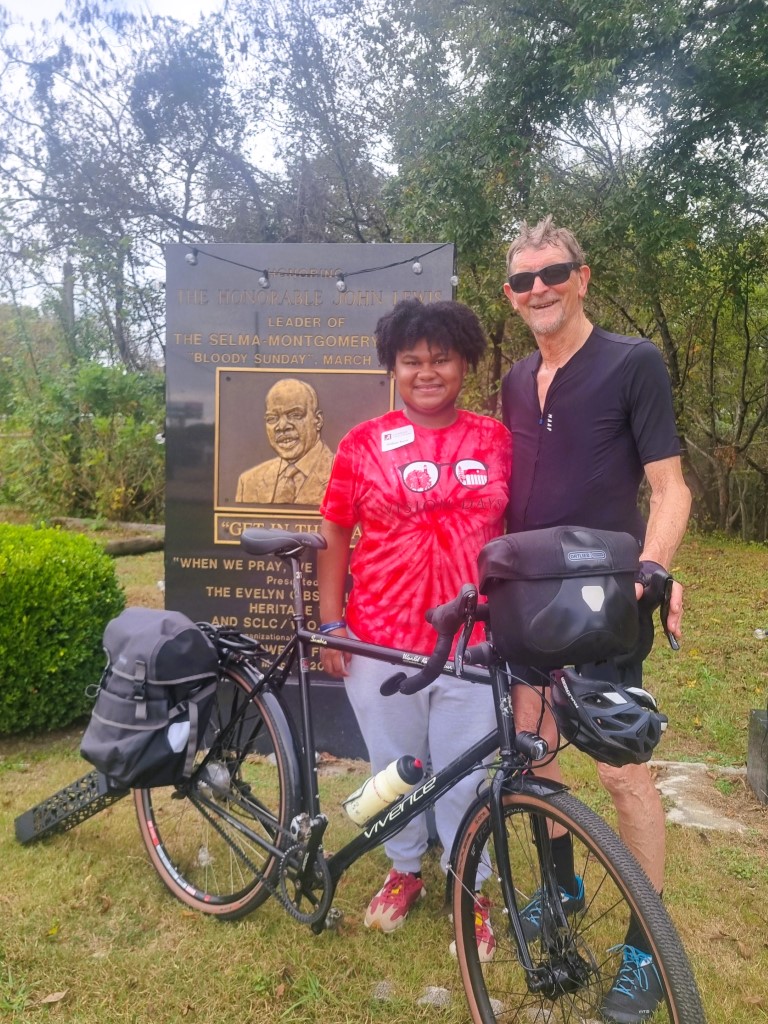
Flags
The USA is one of those countries into flying their flag a lot. There are not many that do. Turkey is another. In the USA, the flag means different things to different people. That’s the irony of them having so many flags.

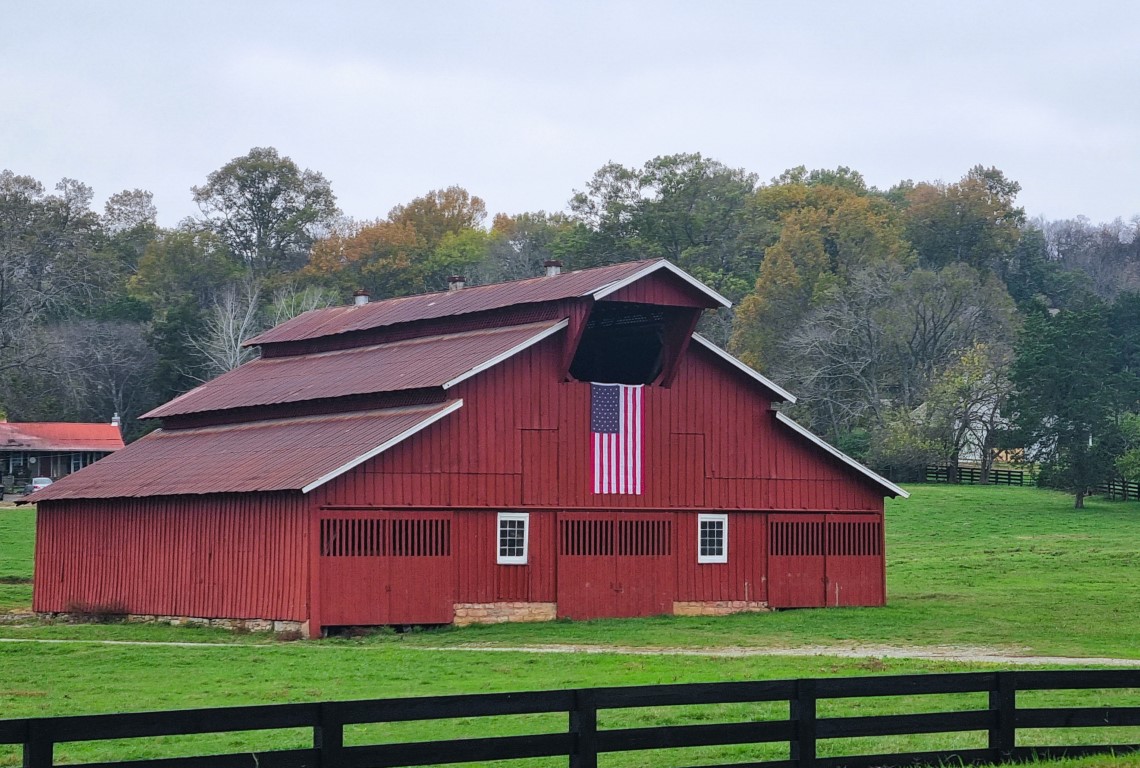
Sample counts were done, and we report that in rural Alabama, there are on average 4.5 US flags per kilometre. Beat that!
State flags are also to be seen everywhere whilst in most countries they are not seen at all. In the deep south the confederate flag still flies. Also, MAGA and “ULTRA MAGA” flags as in the image below. The black one with the blue stripe is something to do with police.
Slavery in the Deep South
12.7 million Africans were kidnapped and shipped to the Americas overall. 2 million died on the way. By the mid 1800’s much of the world had rejected slavery but the Deep South held out. Alabama and Tennessee were two of the thirteen confederate states that tried to break away from the US in order to preserve slavery. In 1860, 44% of Alabama’s population, or 435,000 people, were enslaved Africans.
Enslaved people built much of the state’s infrastructure. Local government could either purchase their own slaves at the slave markets or lease them from slave owners.
Prior to the Civil War, nearly every railroad in the American South was built entirely using slave labour.
It was a classic settler society but with slave labour added. Ironically, it is thought that it was slaves joining the Union, that made the ultimate difference in the Civil War.
Slavery was abolished in 1865 through the 13th amendment, but racism persisted through Jim Crow laws that used segregation (different busses, different schools), voting restrictions, interracial marriage restrictions, even different school textbooks for black and white kids, all to entrench and broaden division. White mobs lynched black people. Lynchings were advertised in newspapers and attended, sometimes, by thousands. This continued well into the 20th century.
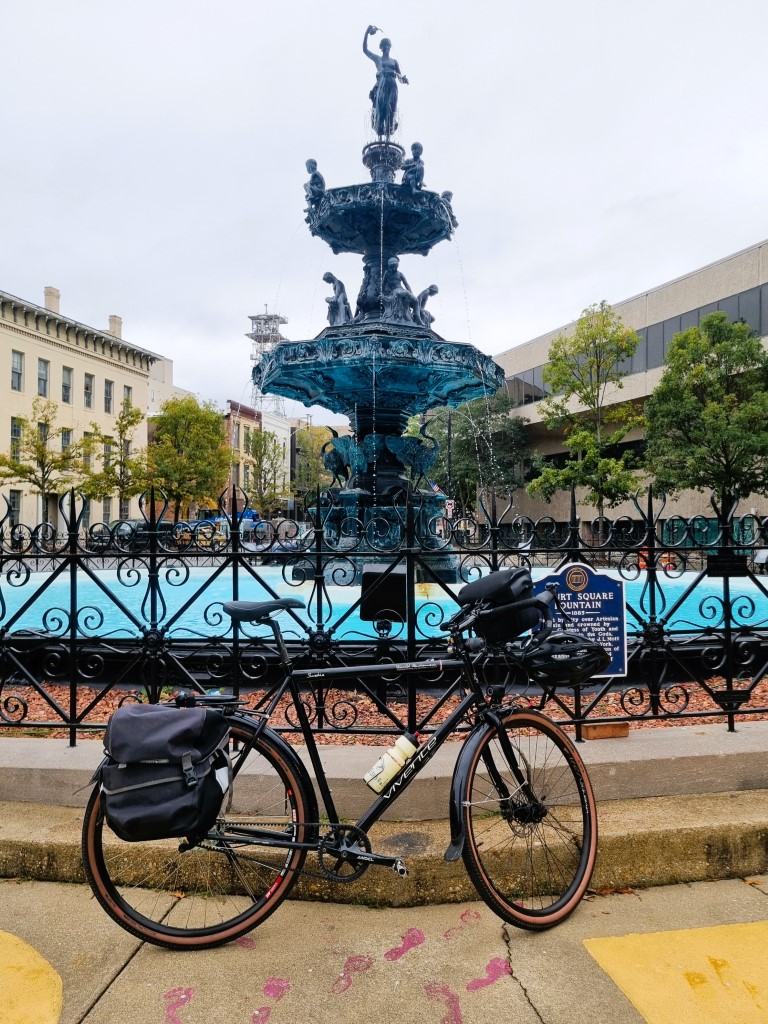
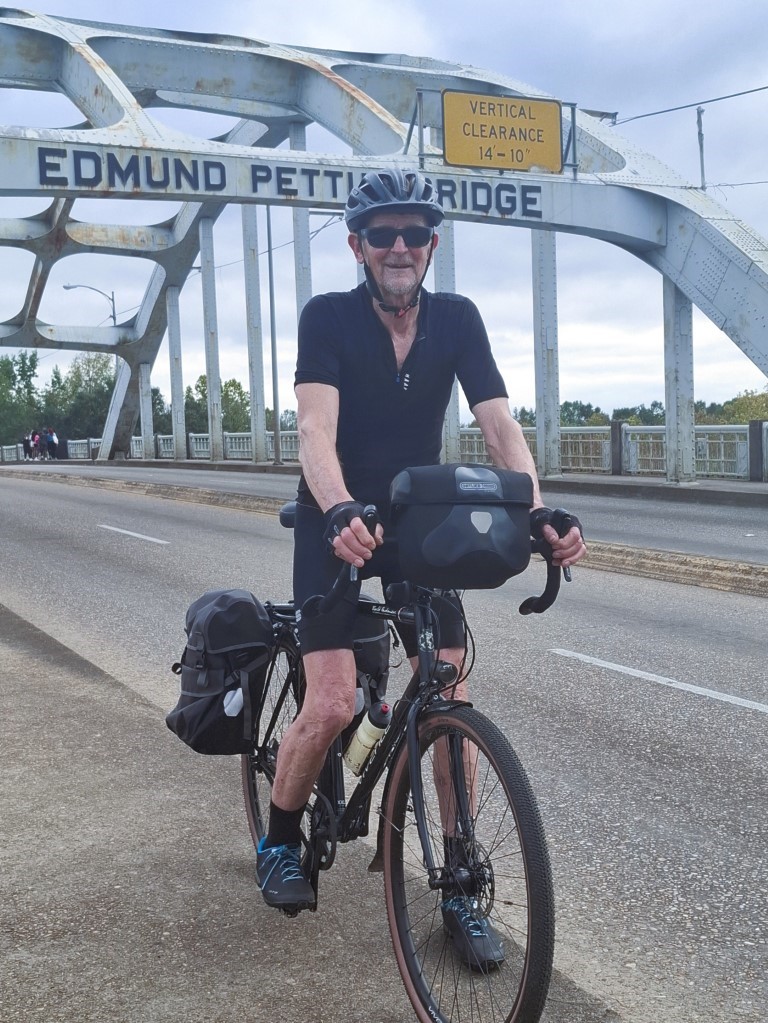
The Civil Rights Movement began in central Alabama. On the Edmund Pettus Bridge in Selma, 50 miles from Montgomery, freedom marchers setting out for Montgomery, were brutally attacked by the State Police.
Truth-telling is a critical and first part of the path for communities that have suffered as horribly as has happened here. In Montgomery the truth is laid bare in the Legacy Museum and in the Freedom Monument Sculpture Park.
They are both must-visit places and are indescribable. Photography is not allowed.
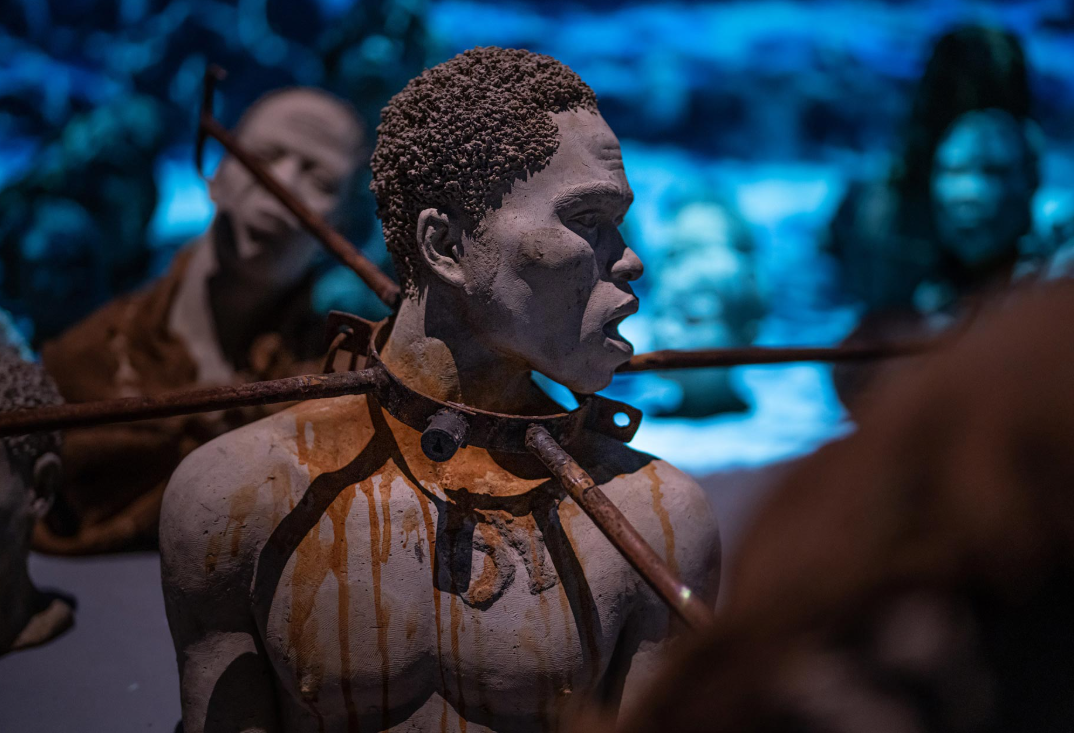
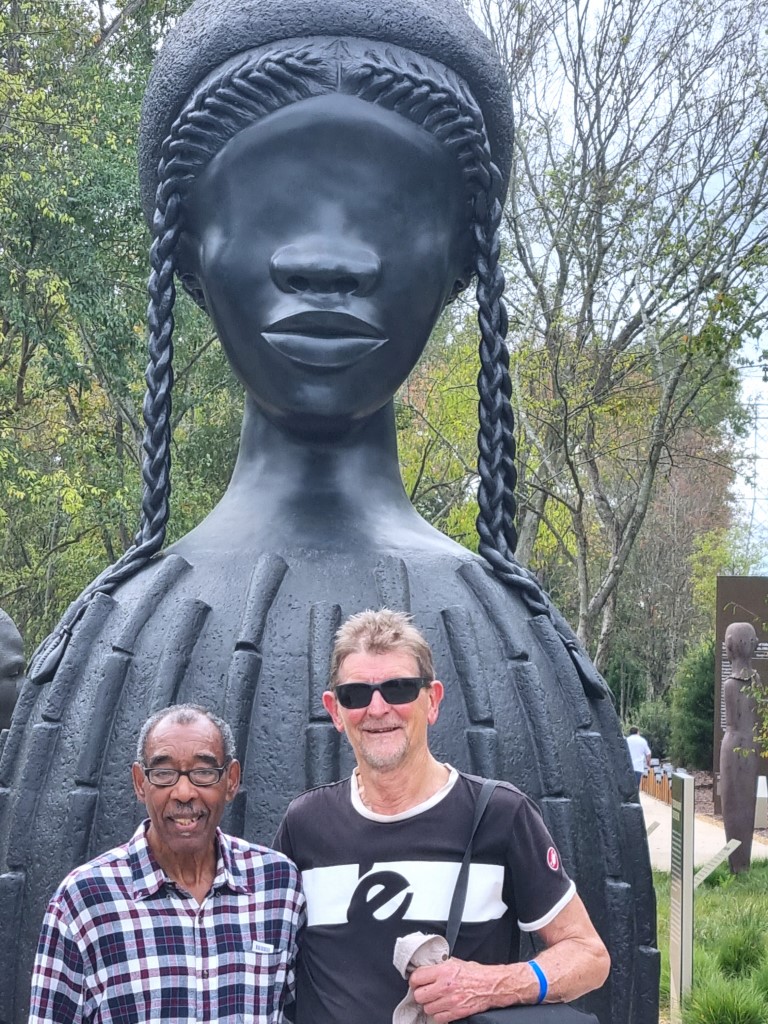
In the Monument Park there are two slave huts. They are not replicas. They are real. 10 or 12 enslaved people slept in each hut.
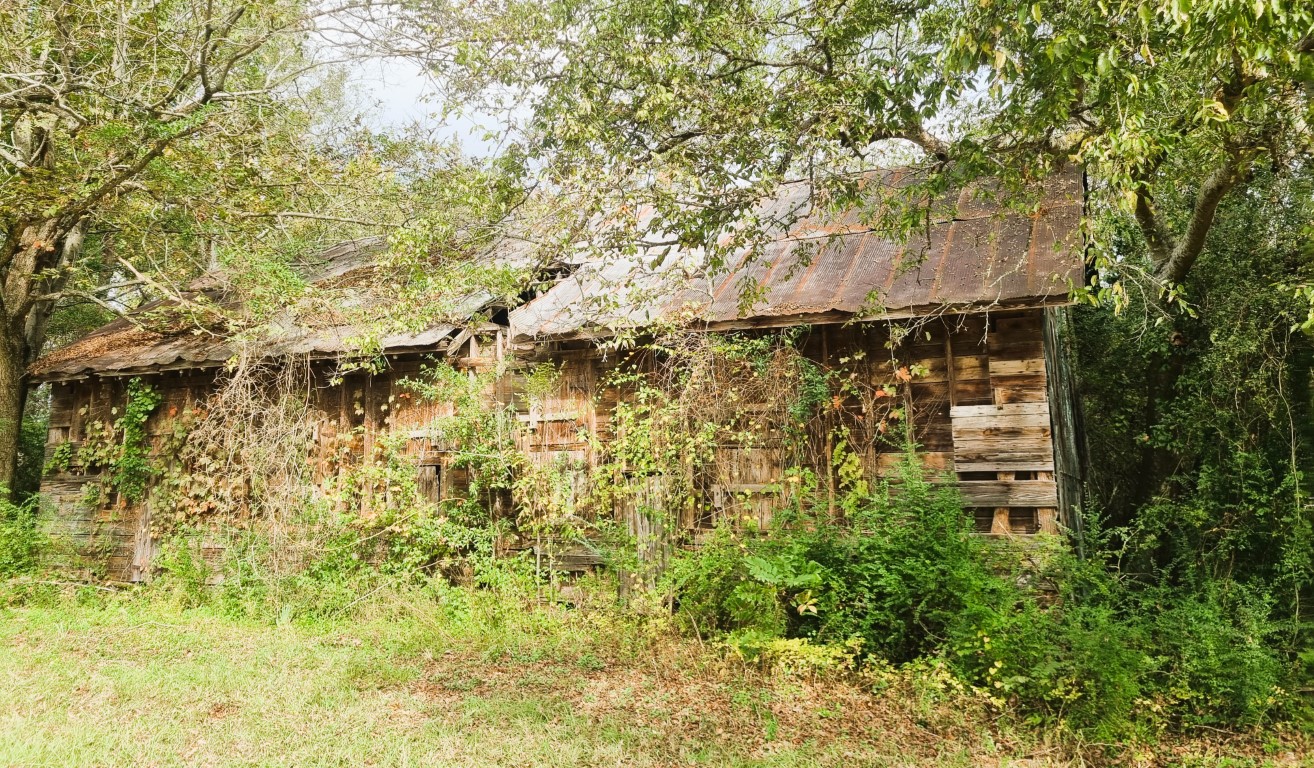
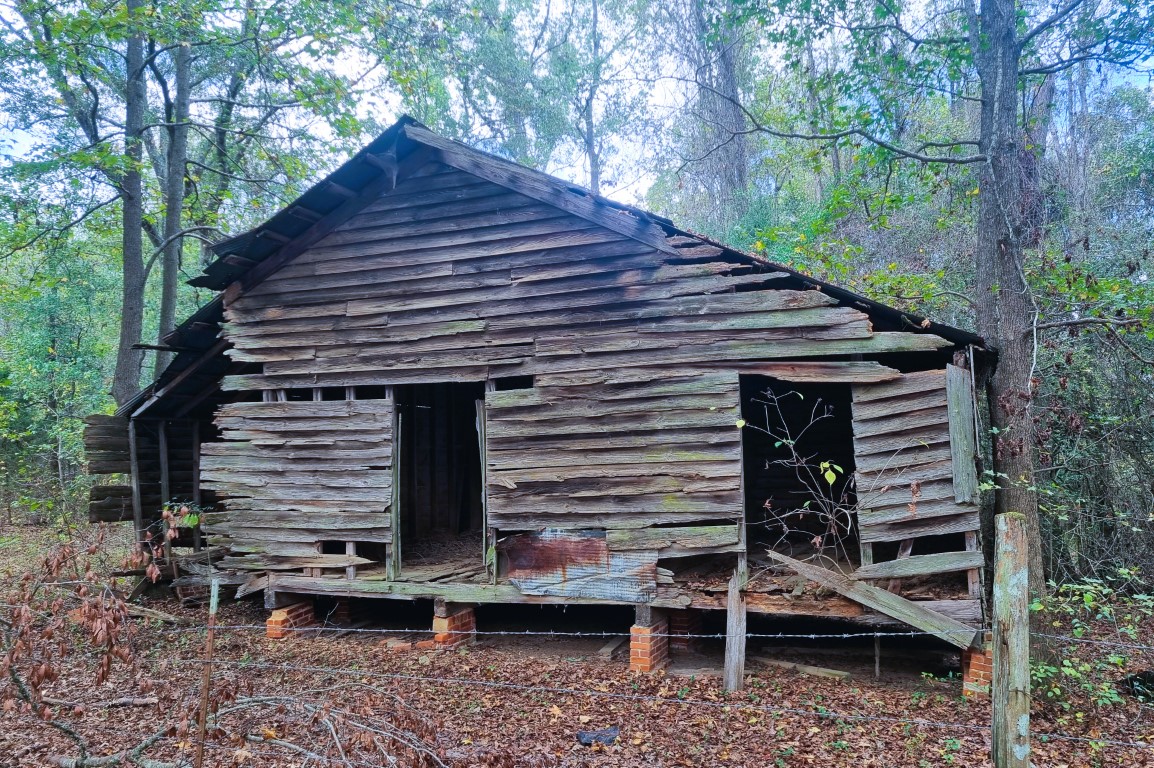
You also see the homes of the families that owned the slaves. Riding past them you have to wonder if the descendants may feel rather pleased with their lot in life.
The history is extraordinary. Black people were totally subjugated.
Now they are the poor. And the incarcerated.
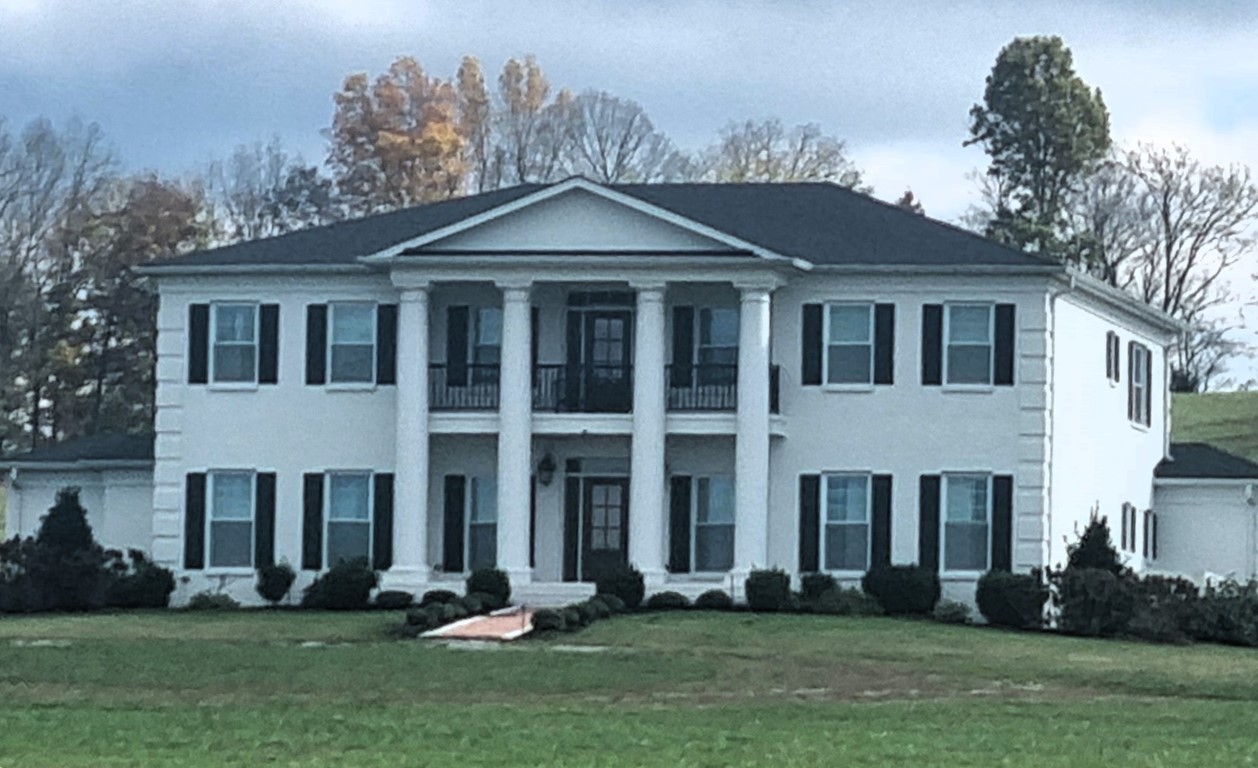
Seeing what happened to the indigenous people and then to the black people is shocking in part because it’s not what we have been told.
Hollywood commodified slavery and gave us movies like “12 years a slave” that made it look mild. In reality, most enslaved people did back-breaking work and were flogged, even daily, if they didn’t do enough of it.
Hollywood made the invasion and then occupation by Europeans, of native American land, look like self-defence. Resistance to white invasion has been shown as militancy.
American heroes are shown in line with the narrative. It’s the official version. Taught in schools.
Thomas Jefferson is renowned for saying… “We hold these truths to be self-evident, that all men are created equal, that they are endowed by their Creator with certain inalienable rights, among these are life, liberty, and the pursuit of happiness, that to secure these rights governments are instituted among men.”
He is not so well known for hypocrisy and racism. But he should be. Thomas Jefferson, the third president of the United States, owned more than 600 enslaved people over his lifetime. He freed only seven enslaved people during his life, including two of his children with his slave Sally Hemings.
Dogs
There is a lot to recommend about this part of the USA for cultural immersion and cycle touring.
But daily dog attacks in Alabama and Tennessee have been hard to take. It’s ok if you are going downhill but that’s often not the case. Typically, the dog owners won’t come out of their houses. When they do, they typically say the (big, aggressive and angry-sounding) dog is “harmless”. One owner told me to “go back to my country”. The dogs in the rural south are even worse than the dogs in Turkey. Dogs in some places are weak and can only go about 28kph. These are faster. Interestingly we are within our rights to “stand our ground” and shoot a dog dead. I pondered mentioning that but decided not to.
As the adrenaline was surging, I could not even get a picture of a dog attacking me. But it happened a few times a day. These dogs may have never seen a human on a bicycle, let alone one with a high-end headlight.
North into Kentucky, the problem faded away.
Churches
There are a lot of churches. On Sunday mornings their carparks are nearly full. They are well attended. Not like in Australia or much of Europe.
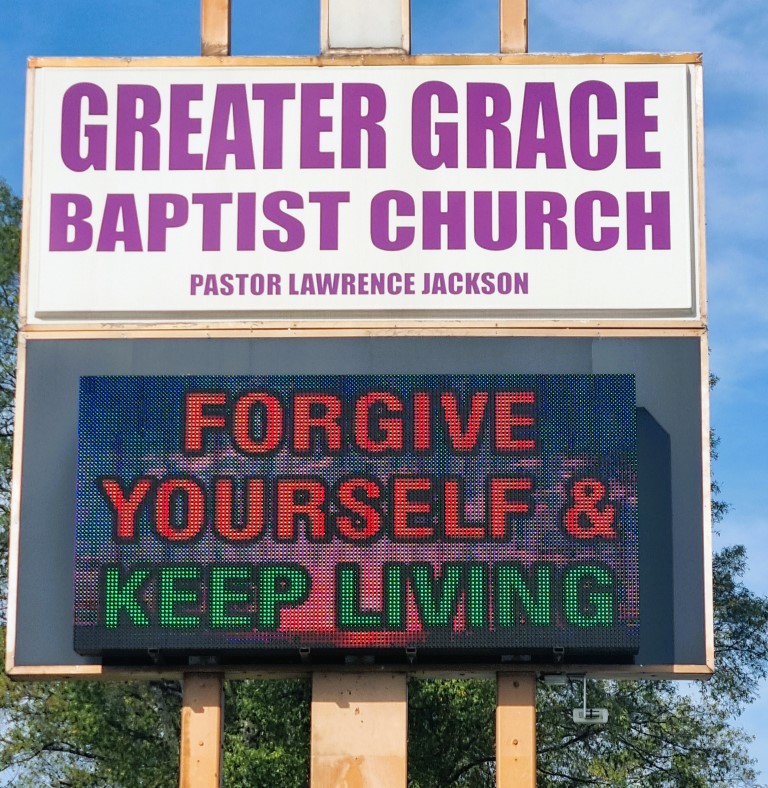
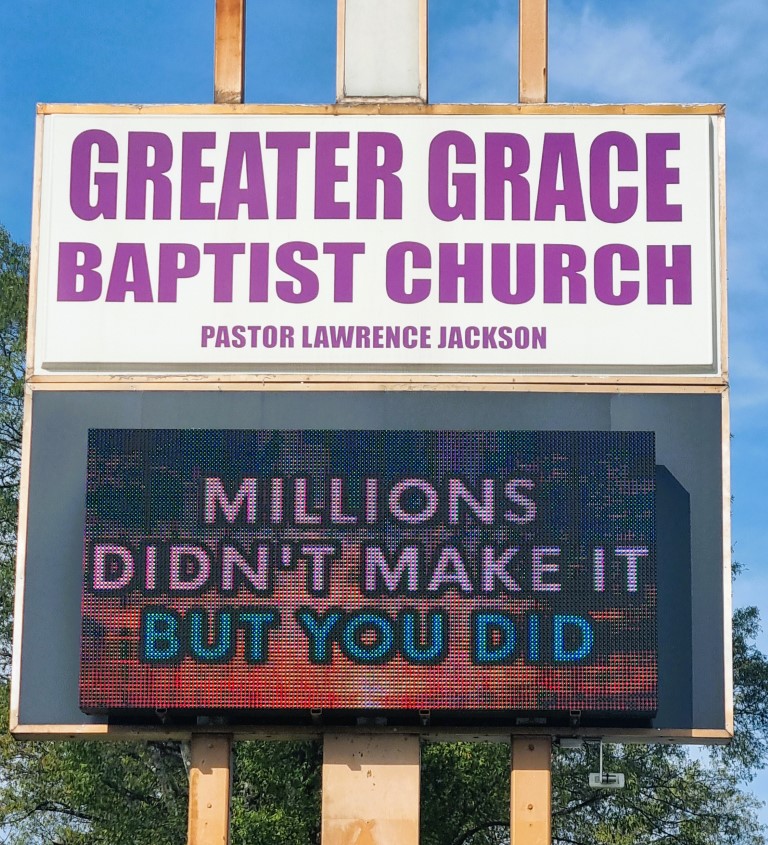
So, we wondered what it was that works for churches in the deep south of the USA. Perhaps negro spiritual singing? We listened but didn’t hear it. Or is it what they have to sell/offer? Most of the placards and signs outside the churches are biblical quotes, encouraging us all to be good. But some go further. The most interesting ones we came across seemed to be saying you could put your neighbourliness aside. What’s in it for you?
Church signs are part of how, in the USA, things are in your face. The advertising. The preaching. The warnings. The shouting.
Y’all have a nice day. Hmmm.
eSims
Bike travellers often get short-term Sim cards when they arrive in new countries but these have required removal of your normal sim. On the flight from SYD-DFW an eSim was advertised. Then in the USA, on a YouTube channel, there was another eSim ad.
The reason I checked them out was not just the savings or curiosity. On the fourth day I found myself with no internet connection, way out in the bush. As I navigate using online (google) maps, that was annoying.
That night I got the Holafly eSim which turned out to be (in the USA), the AT&T service. Coverage was 100%. After the number of days I’d purchased ended, I went into my phone settings/connections.sim_manager and reselected my Telstra sim.
Google mapping
Once again we are using google for route planning, mapping one day in advance and resetting the route during the day. Choosing the least dog-infested.
With the availability of good quality, quiet roads it is a breeze. The motels are just off the big highways. The locations are accessible from quiet country roads. Google does, in some countries, send you on a track across a paddock. But the only mistake in this 1,000km was a gated community. Google knew it was a road but didn’t know there was a closed gate.
Road Safety. The deep south is good
It’s never been clearer that Australian speed limits are too high, especially considering road quality. In the USA Deep South, although there is almost no cycling (you ride for days without seeing anyone on a bike) it is quite safe to ride.
You must wonder why? If we knew why one area is safer, we could apply it elsewhere.
Many US states have “Move Over” laws. They were brought in to protect emergency workers, police and road workers. The focus was on vulnerability. It’s in the driver education and seems to be broadly accepted.
A motorist will slow right down until they can move right over into the oncoming lane. I wasn’t passed dangerously at all.
Also, in the USA there is a large ambulance-chasing industry. Thousands of billboards for law firms suggesting if you have suffered in any way, on the roads, you can get money.
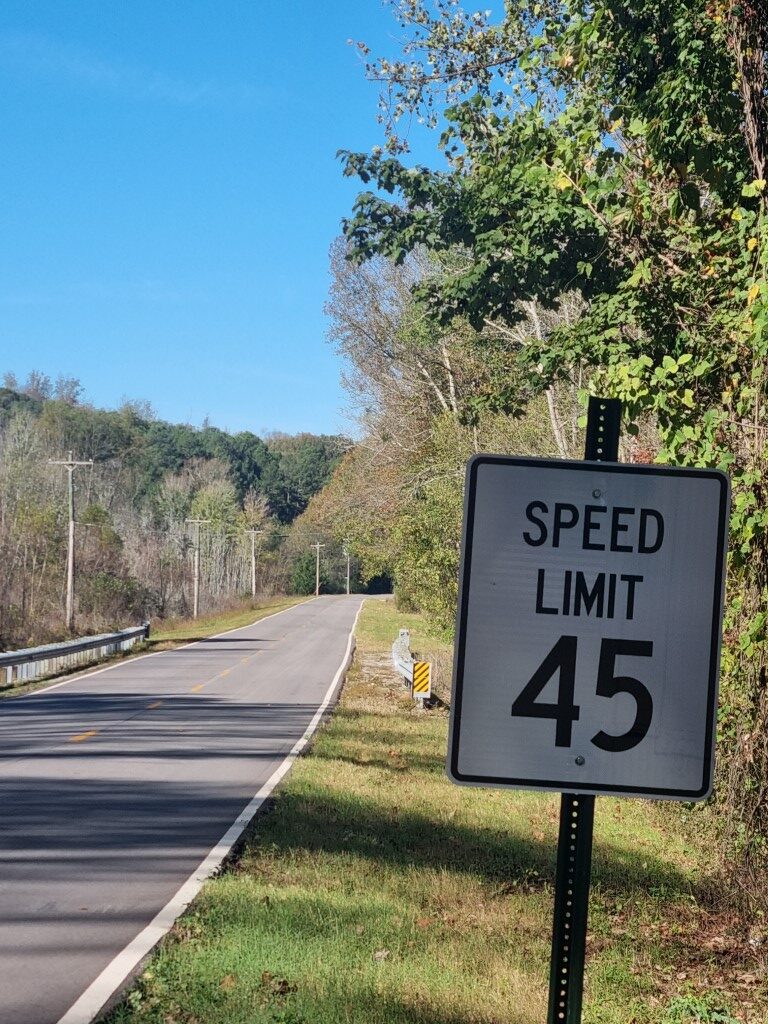
Speed limits are more sensible. This is a quiet, wide, fairly straight and flat country road in Tennessee. 45MPH is 72KPH.
This is near our factory in Tasmania. Where that second car is in the distance, there is a blind bend to the left with no warning and no shoulder. To the right is a steep embankment. There is no guard rail. 100KPH is 62.5MPH. It’s such poor design.
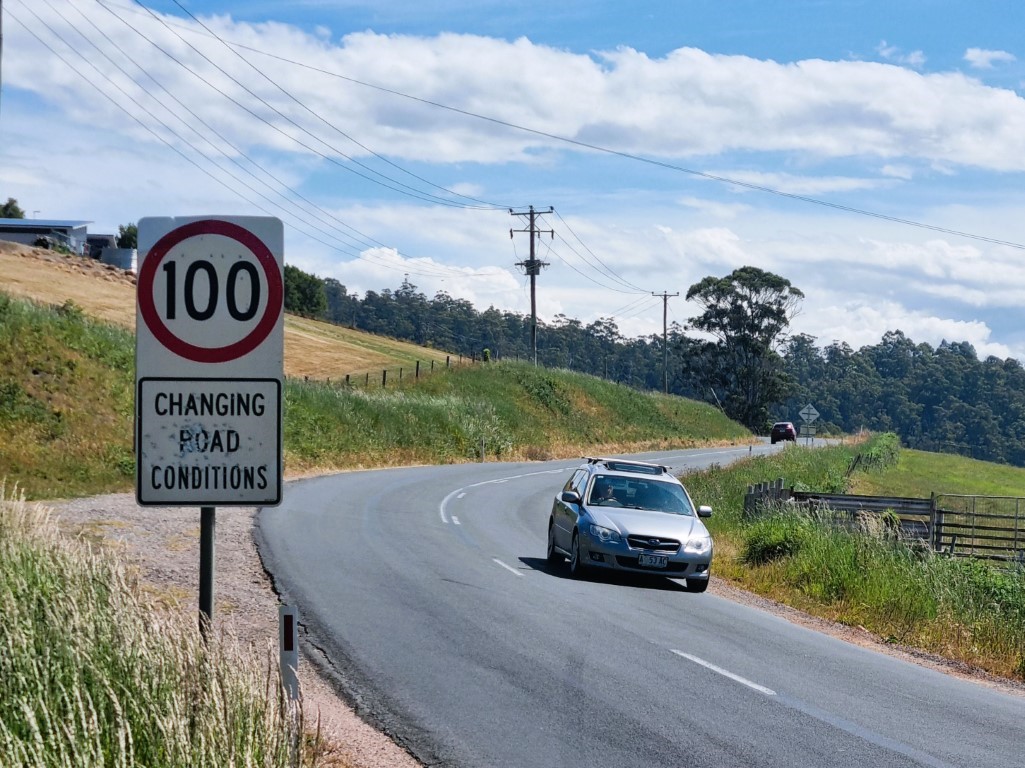
Tasmania is a poor state and can’t afford better roads. It’s in debt already. But the speed limits should be set to suit the poorer road condition, and we need Move Over laws. Any emergency worker will agree.
It is so ironic that higher speed limits cause people to think they have to hurry.
Schwalbe G-One R 700 x 45 – one tube and one tubeless
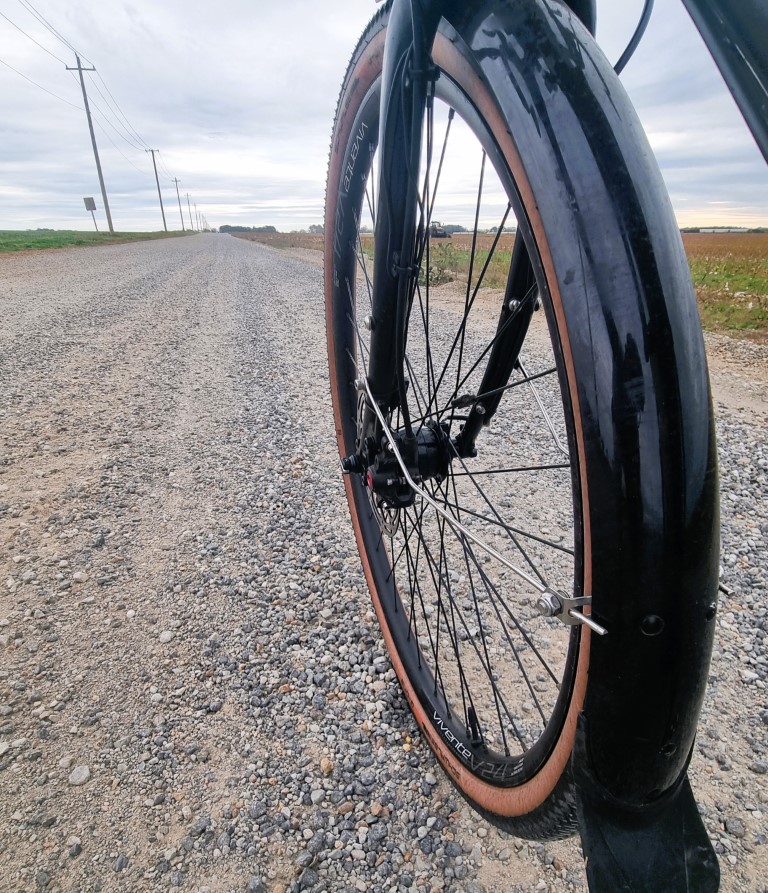
No punctures in 1,000km but the roads are good so that’s not surprising.
If you hit gravel sections, these tyres are easy. Only 45mm wide and with a race tread, these are light to steer. But they are noticeably fast on tar. That’s their best feature.
They are rated to 55psi but with the bigger bag you can have a lower pressure and softer ride. Just increasing the tyre diameter from 40mm to 45mm, increases the tyre volume by 27%.
Bikes on Greyhound
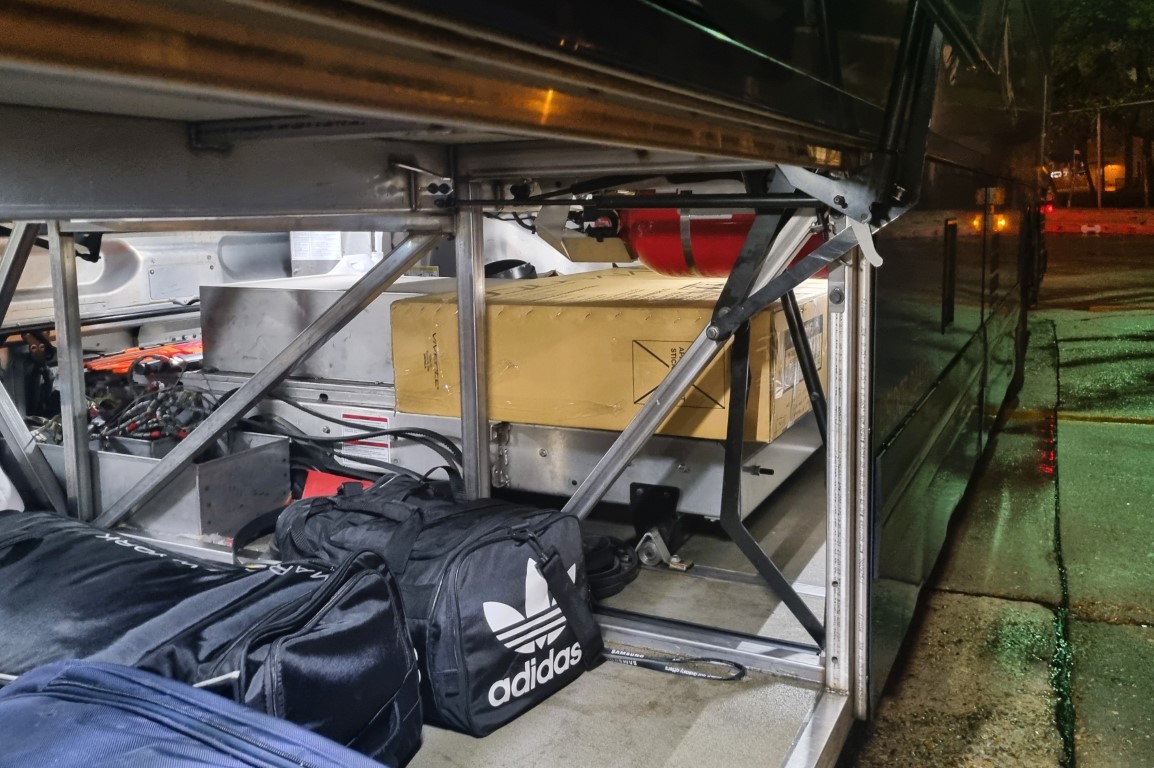
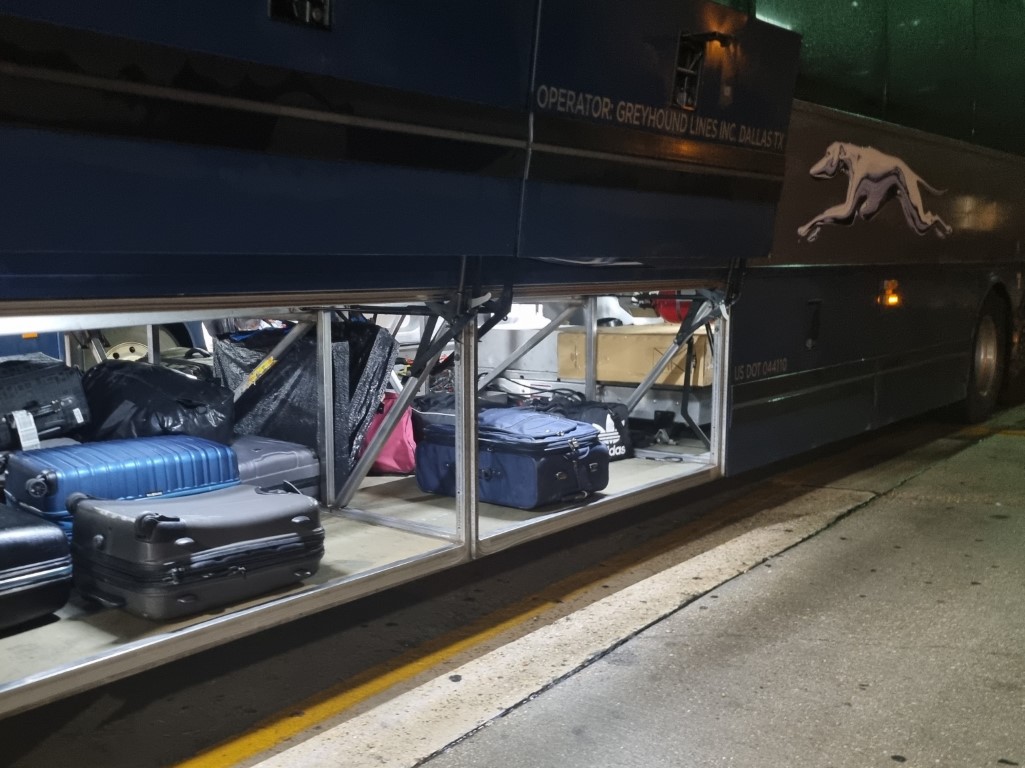
From Dallas in Texas into central Alabama is a bus ride. The bike needs to be in a carton. In an online booking, I added an oversize item. A normal bike carton is a little over the allowable dimensions, but no one seems to care. On the far side of the bus, towards the rear, is another door where fold-up wheelchairs are meant to fit. It’s a great spot for your bike carton.
Timing-wise, this November ride has been good. It fits into our seasons. We have heard, in the US south, that Memphis is good. But India is calling. It is so comfortable to travel in. We are planning a November ride in central Maharashtra. Nagpur to Aurangabad through Yawal Wildlife Reserve and then calling in on the Ellora and Ajanta caves. We’ll need to test something for sure!
We hear more about European heatwaves, droughts and floods but, on this July 2024 ride I enjoyed perfect conditions. In the bike-traveller community, there is a tendency to talk about how tough conditions were. Not so here. The countryside has been green, temperatures 18-28℃, the winds were gentle and no mountains.
I’m on a Swabia (drop bars), with standard 50:19 gearing (low of 20.5”), and I’m trying out the 57mm version of Schwalbe G-One tyres running as tubeless. When I took out the tubes and put in the tubeless solution, each wheel became 200 grams lighter. Unsurprisingly, I got no punctures. Before the outbound flights I let a little air out, down to 30psi. Over the following three weeks and 1,500km I added more air only once. As an emergency I carried a 100 gram TPU tube and no repair kit. So that saved another 150 grams. Now, 57mm tyres are not fast, but the G-One tread has less rolling resistance than knobby MTB tyres.
There are good route planning apps like Komoot, but I use google maps. These days we have our phones mounted in front of us, in my case on a Rokform mount. For a short trip it is worthwhile paying the $10 per day and getting the internet. On a longer trip you might not want to pay that, and therefore might want embedded maps such as from OSM and preplanned routes downloaded as tracks. But with internet and using live google maps you can pick up fresh destinations and recalculate routes during the day. If you don’t like the look of something, you can zoom in on the map and choose a secondary road for a section. You do need a compass or a compass app as changing hemispheres and seasons is quite disorientating.
With modern phones and fast charging you can get away without a spare battery and just grab extra charge whilst at a coffee stop. In less settled places there is less need to consult the map. There might only be one road. So less checking and less drain. But in most of France there are so many routes you could take. That includes along the big rivers such as the Loire. It’s not as if there is just one bike path with clear signage. Far from it! You really are better off with live navigation.
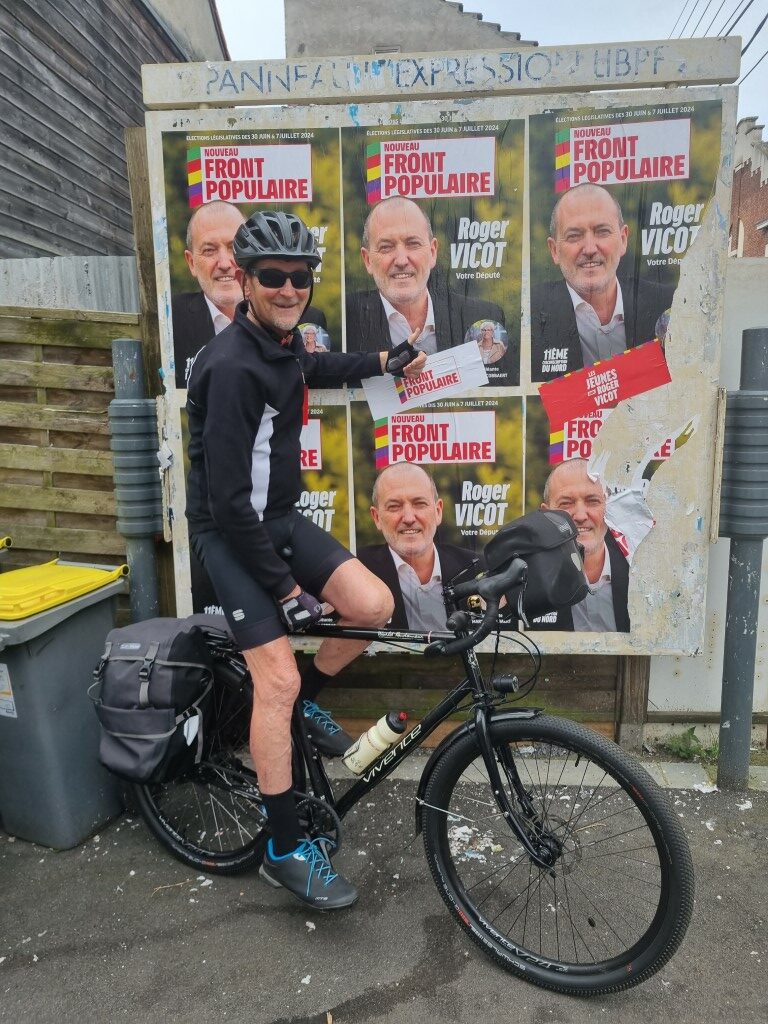
There was an election in France and posters everywhere. France doesn’t have preferential or mandatory voting. In presidential elections they have two rounds. The country seems polarised during the campaign, but my impression is that it is a relatively diverse, cohesive and inclusive society. As is the case with all of the Western European countries, much of the wealth dates back to the slave and sugar trade. But the actual slaves were in the Americas and today, the resulting problems are there.
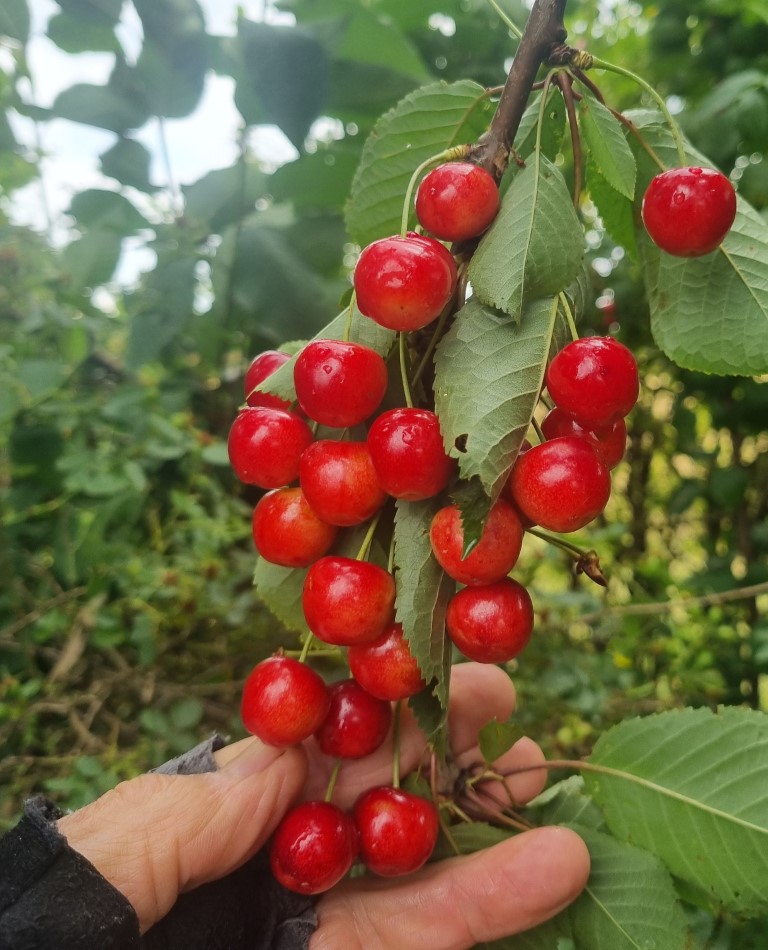
Bike travellers know their seasons by what roadside fruit and berries are ripe and to be snacked on. In the north it was still cherries. In the south blackberries. It was too early for figs and grapes which were growing wild along the roadside towards the south. You want to be in Europe in September for those.
A lot of European bike tours follow the Eurovelo (EV) routes or along the river valleys. This ride, from Lille to San Sebastian, crosses many of those routes, and briefly follows bits of them. It is a marvellous thing about European riding that there are so many long routes that you inevitably come across them even when not deliberately looking for them.
I crossed the Loire, the Seine, the Dordogne, the Mayenne and the Somme rivers. Google took me along the EV path on the Loire for a whole day. I discovered the 450km path from Paris to Saint-Michel which I followed for 40km.
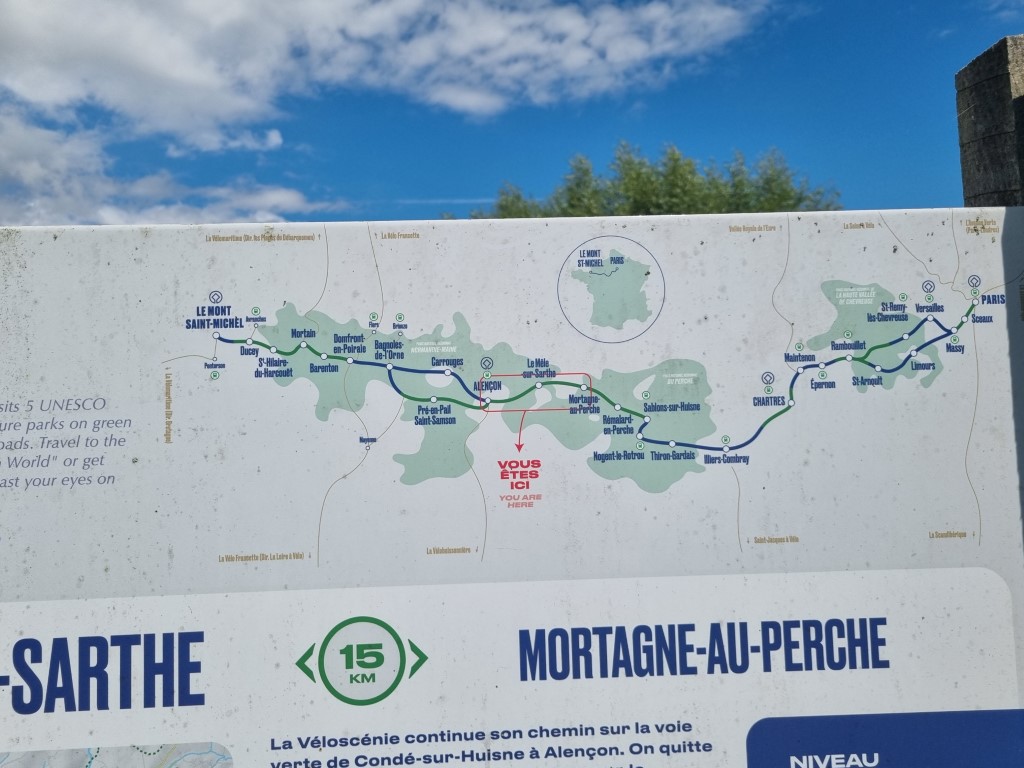
It’s mainly on these paths that you see other travellers. Lots of them. And you see beautiful, serene places.
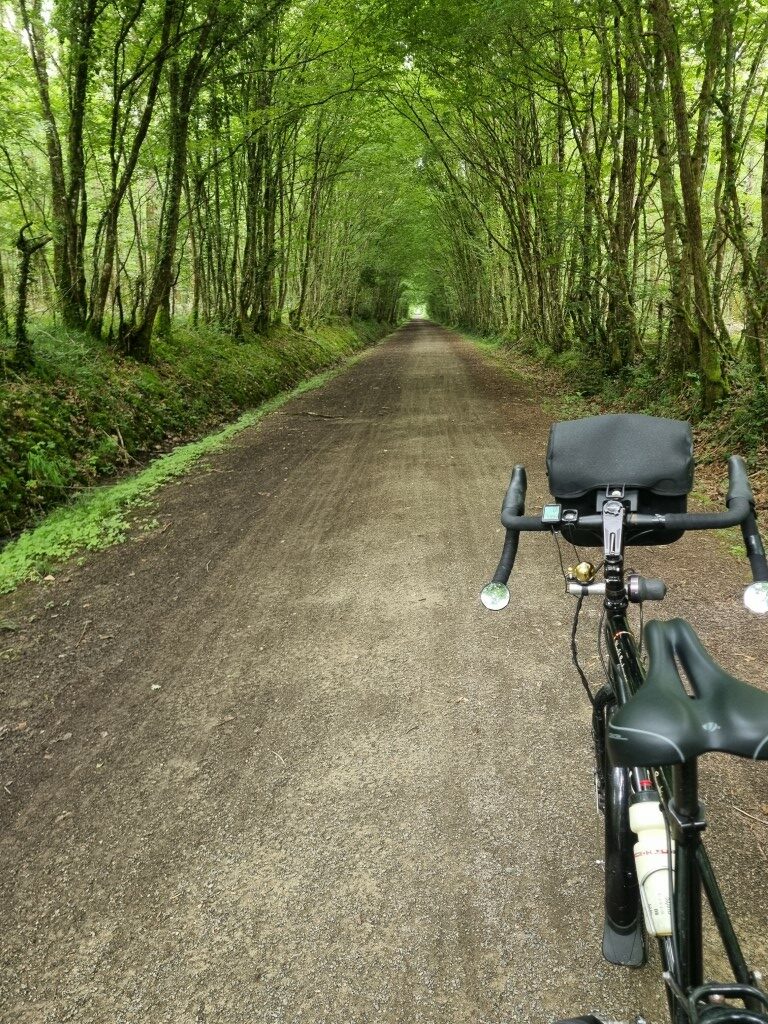
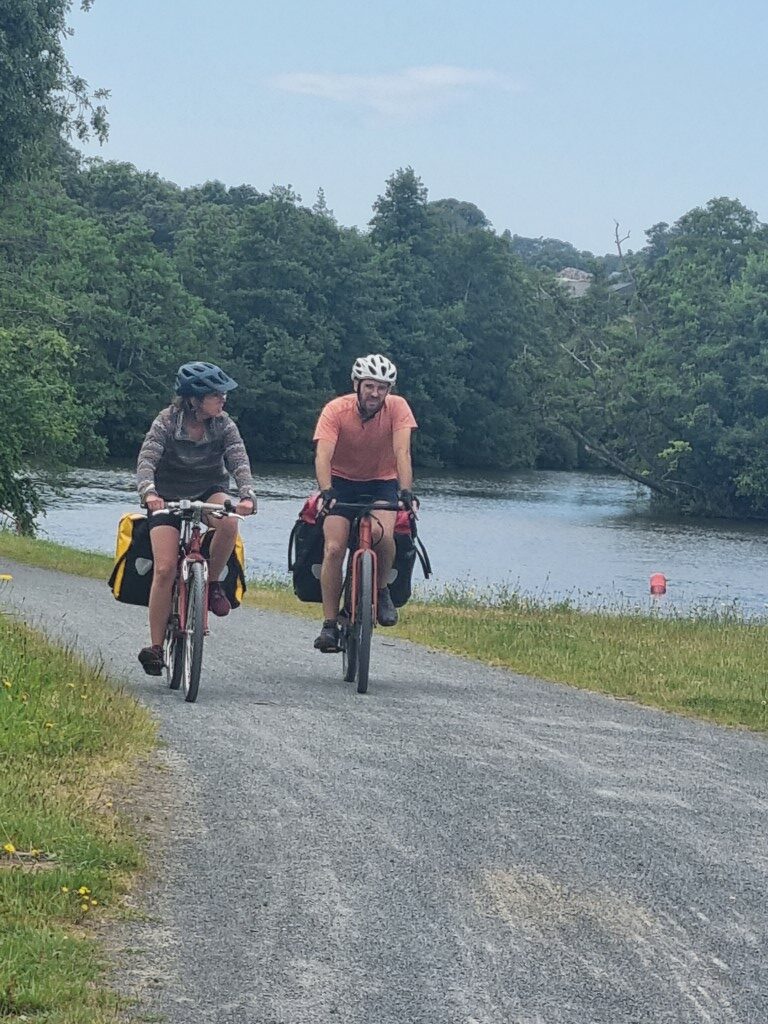
As bike travellers, we spend most of our time out in the country. Vivente is closely connected to the land. Our factory is on a farm in Tasmania. Touring the world is touring often through agriculture, seeing how humans grow their food and what is in season. Western France is most impressive in this regard. In the north there was a lot of sugar beet, flax (linseed), potatoes, hemp, and asparagus. In the south, more grains, vineyards and sunflowers. Some great farm buildings as well.
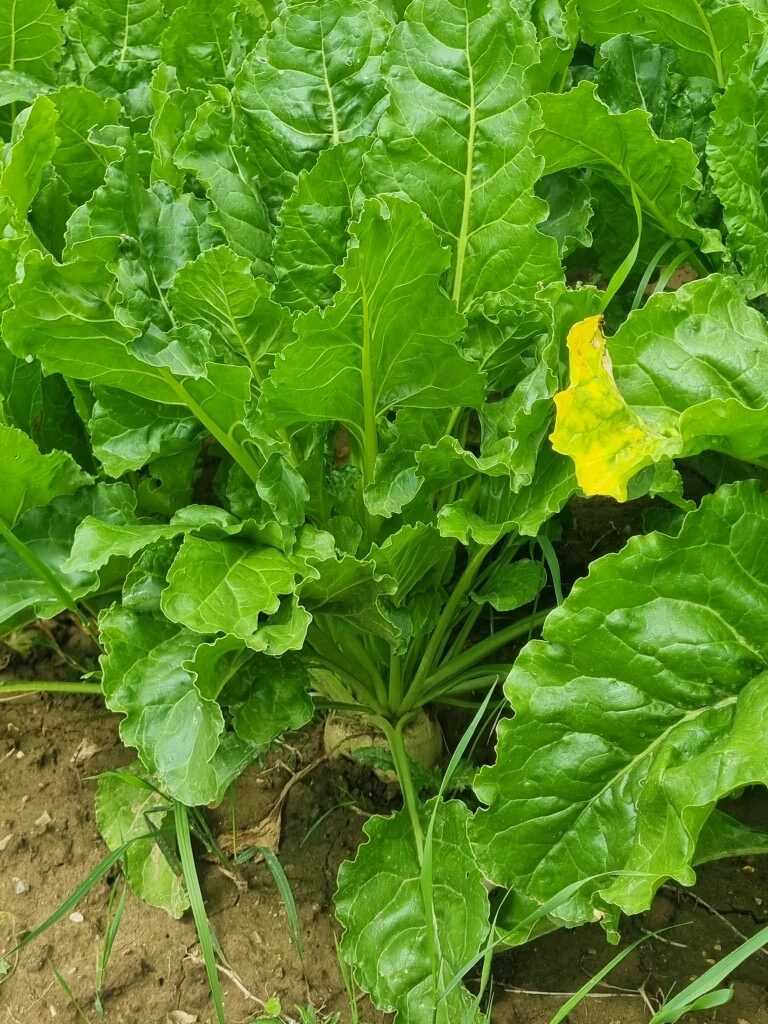
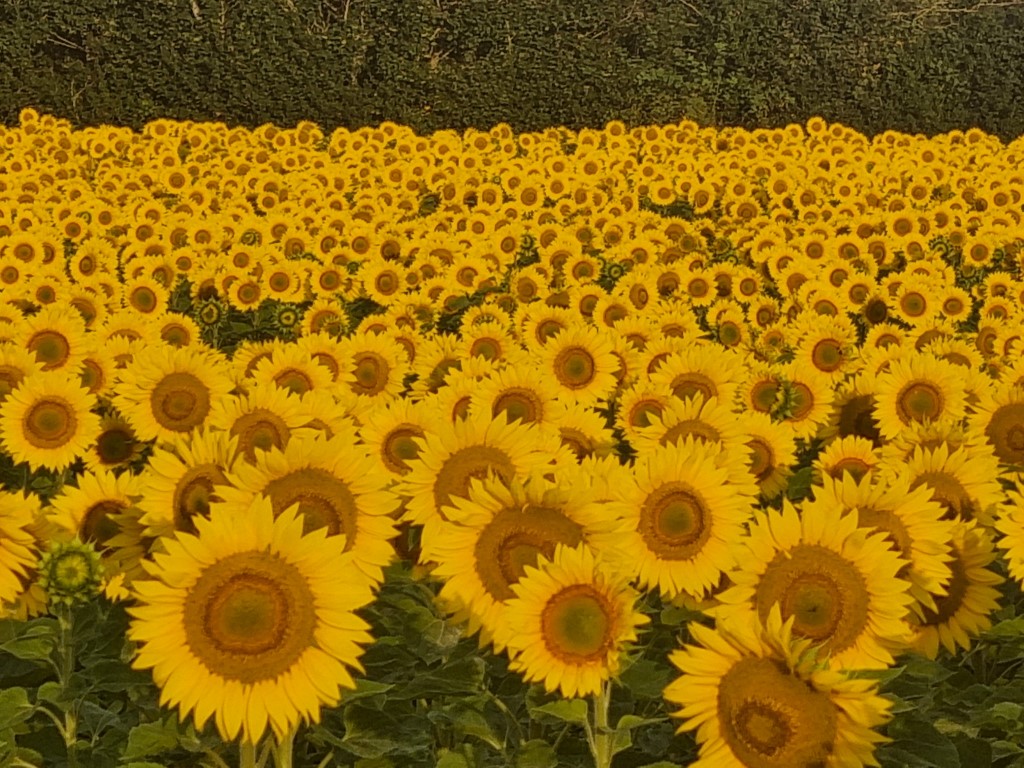
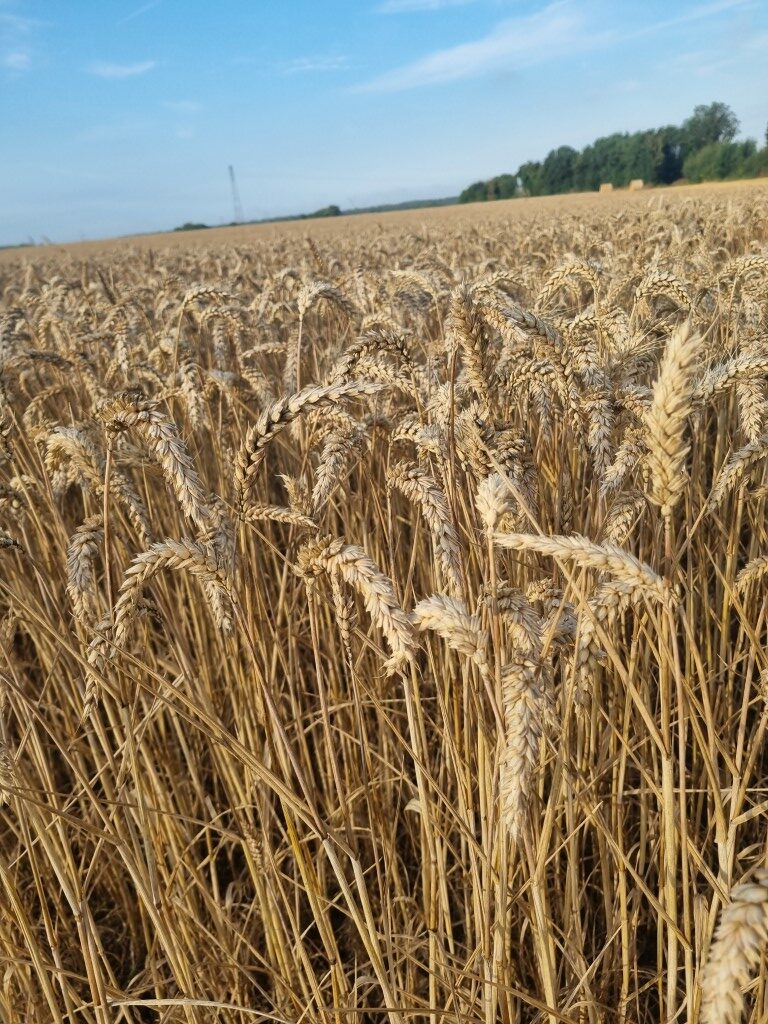
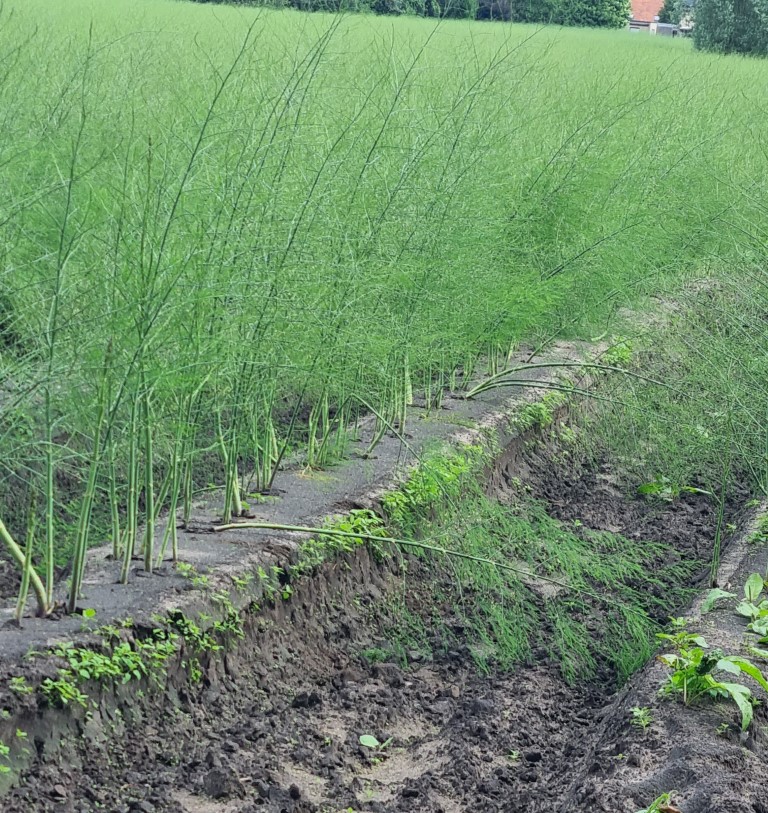
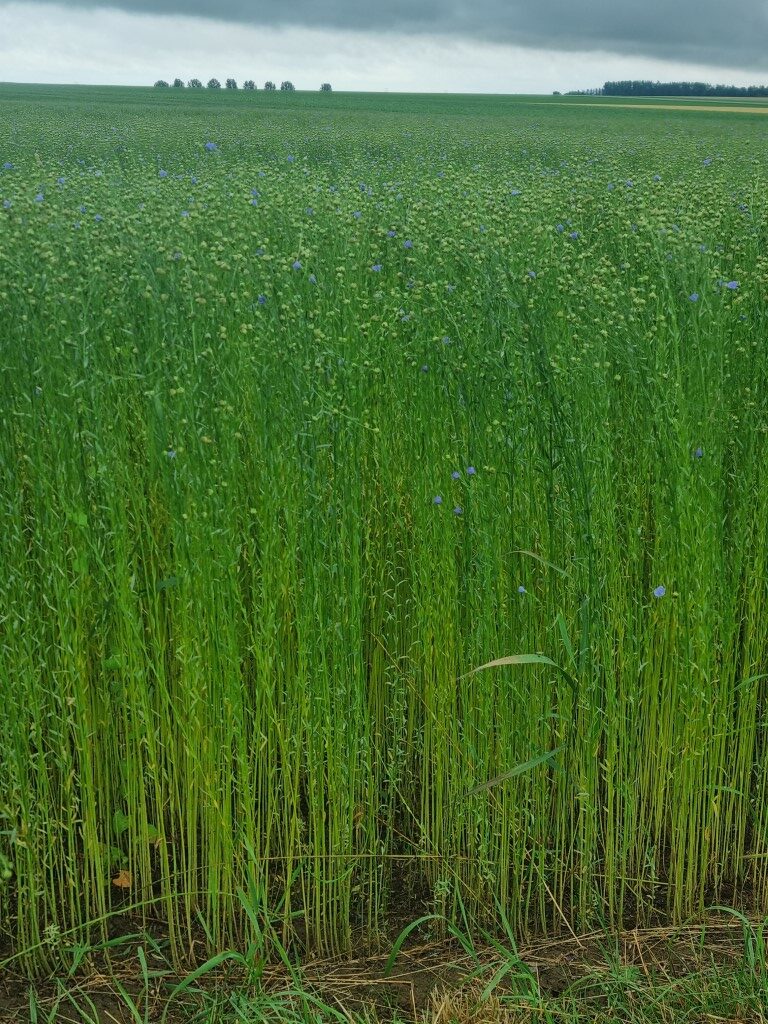
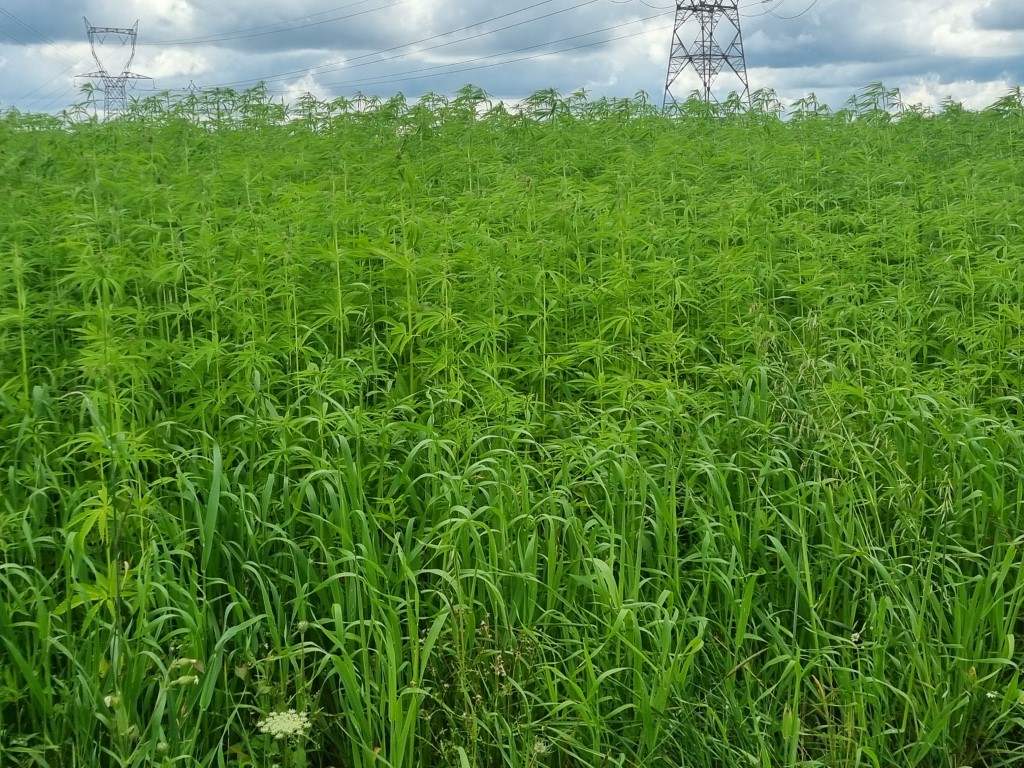
Somehow, the Europeans, or at least the French, have avoided urban sprawl. The cities have boundaries and don’t invade the countryside. Perhaps this is because populations are not increasing. You don’t see high-rise wrecking the charm of the old cities. I make a point of visiting cities and rode through Lille, Arras, Nante, Angers, La Rochelle, Laval, Rouen, Bordeaux, Bayonne and, in Spain, San Sebastian.
You really have to be there. Postcards don’t do it. But here are two anyway! The castle in Angers and a church in Laval.
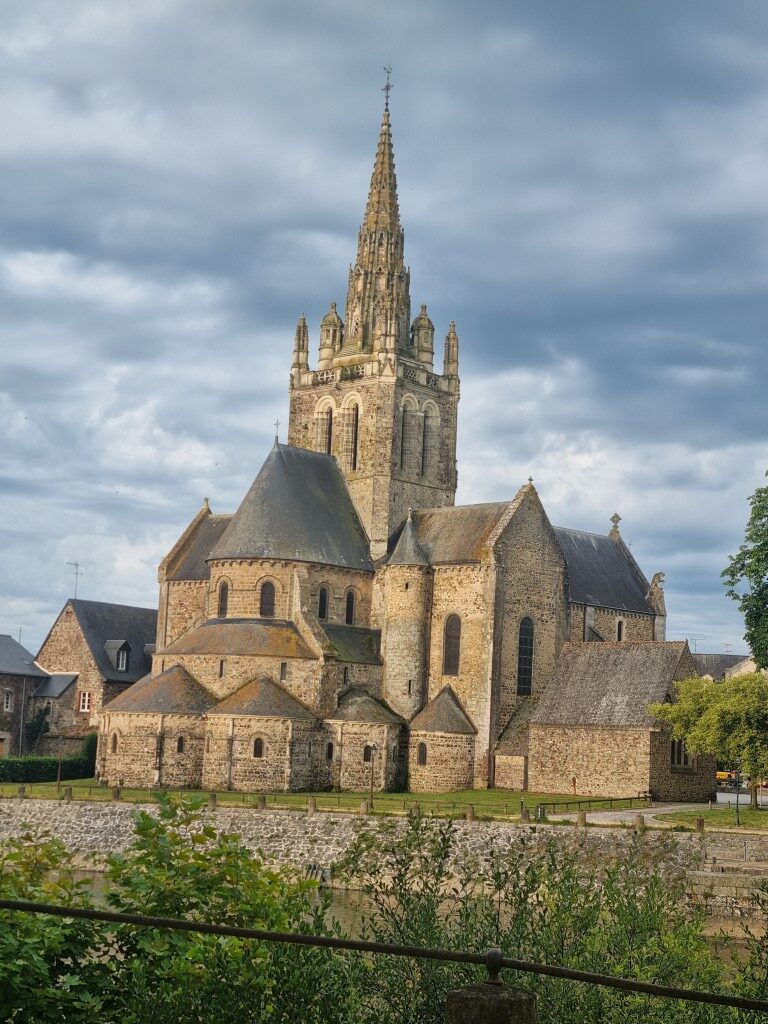
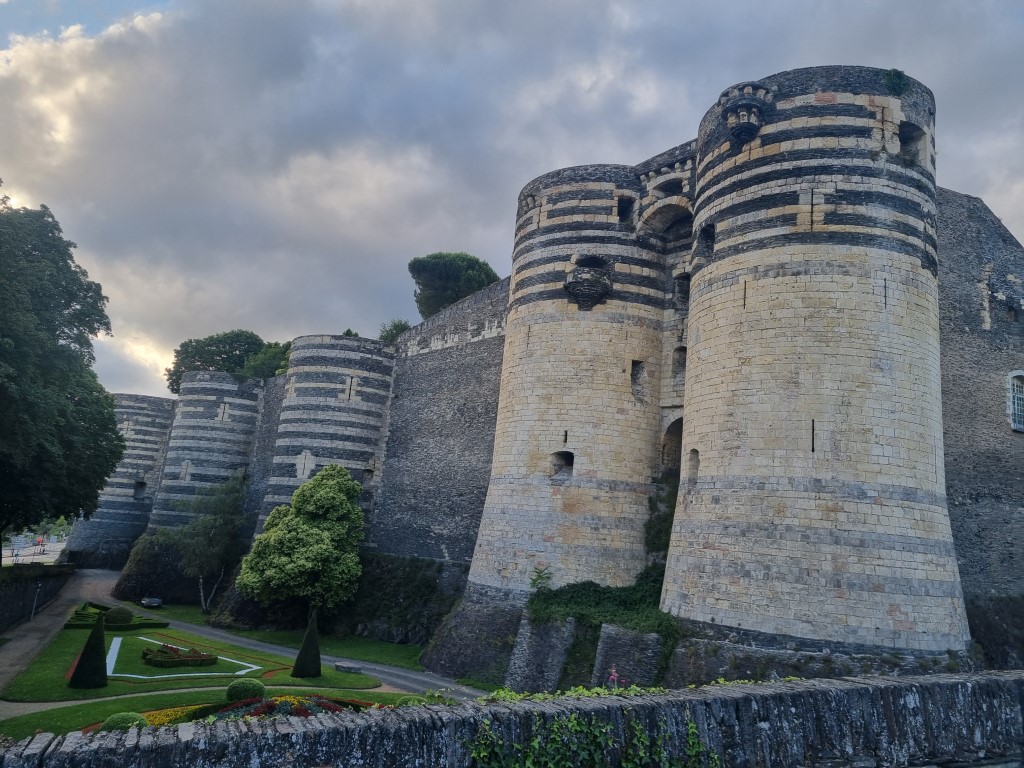
The French seem to have missed (or solved) the NIMBY issues around wind turbines and solar that are currently in play in Australia. I ride past thousands of turbines. They are part of the landscape. Many farms have their own solar.
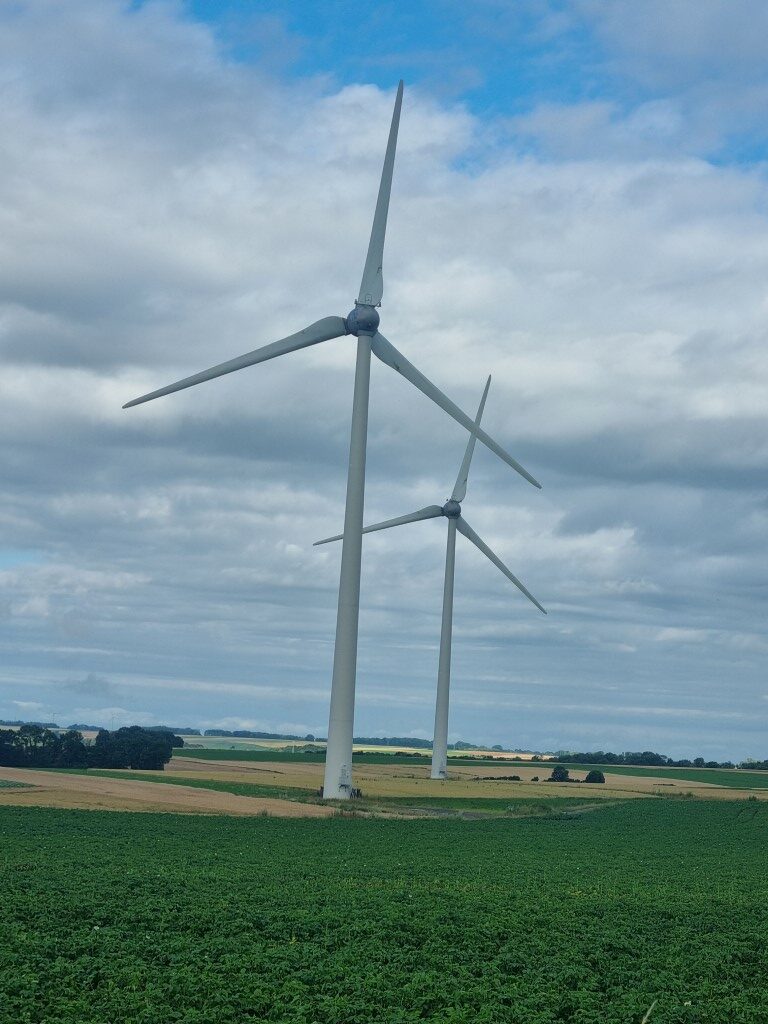
Having the 2” (57mm) tubeless tyres on allows me to go pretty much anywhere. When you allow google to choose the route you can end up in places that don’t even look like a trail let alone a road. There must be an old “public access” status. Probably it was once a road but is no longer such. Online mapping, a compass and wider tyres are best for this. A rear derailleur would be vulnerable, so Rohloff is good. If you are covering 100+ km a day you simply don’t have time to check out every bit of the suggested route in advance.
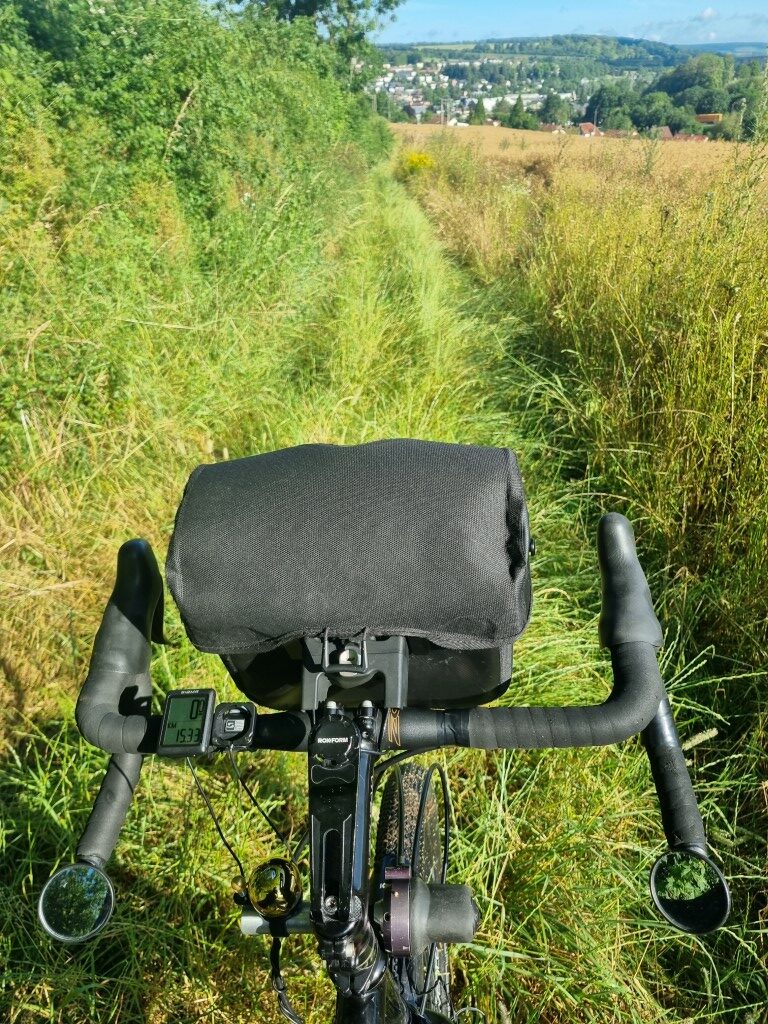
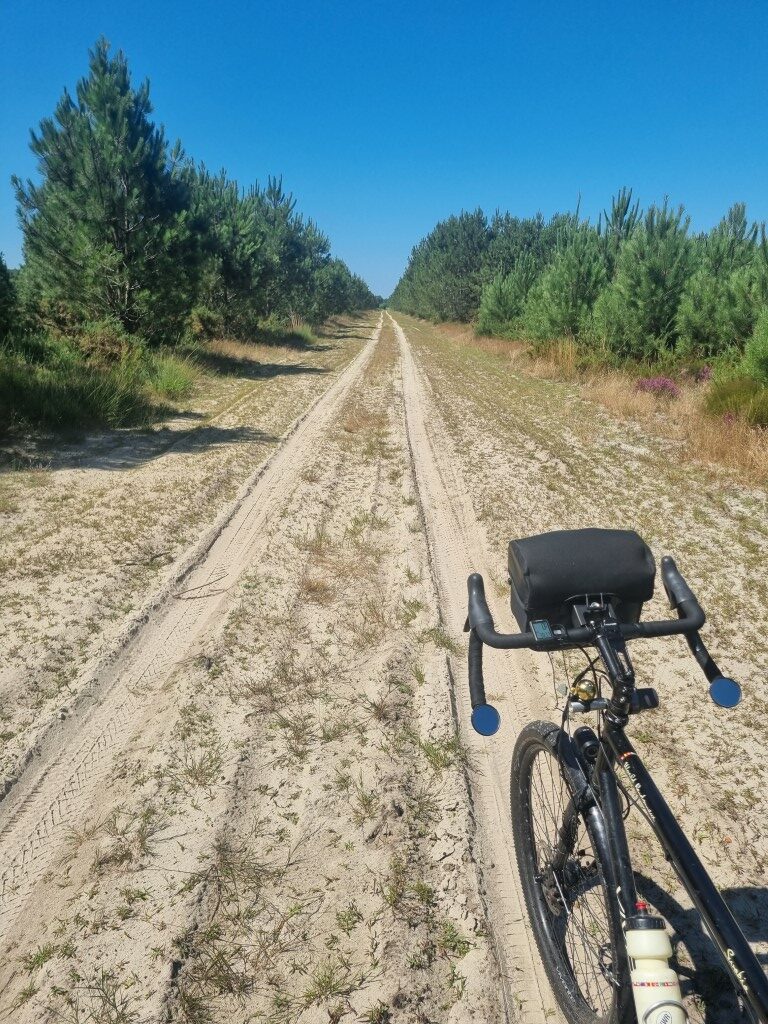
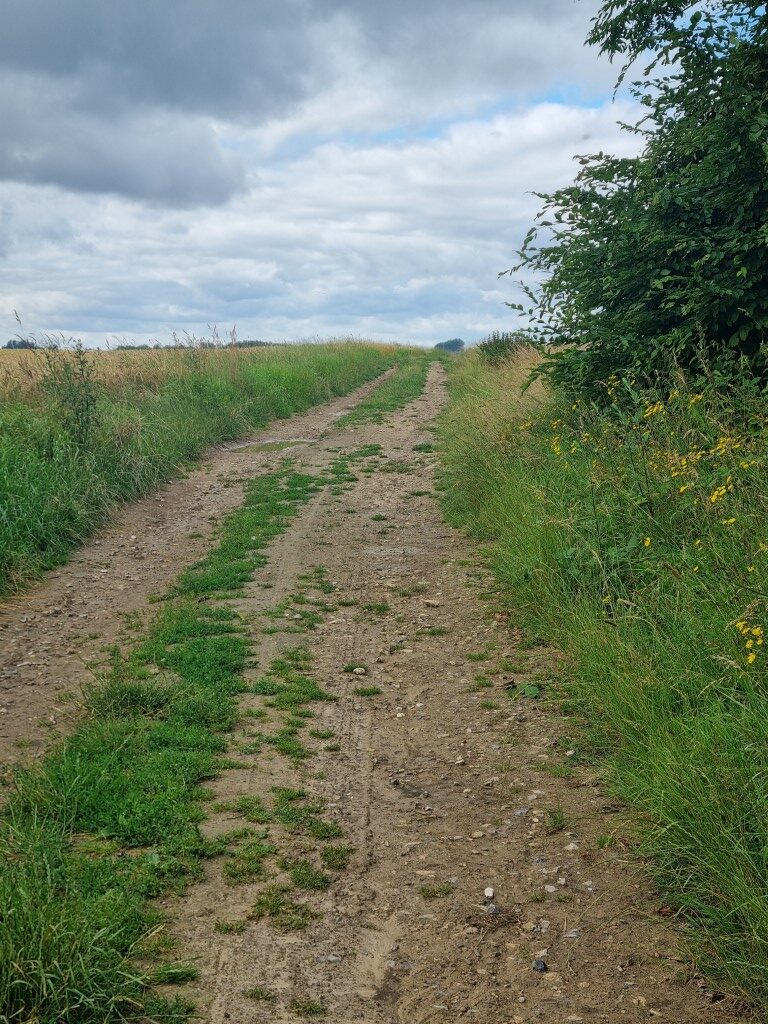
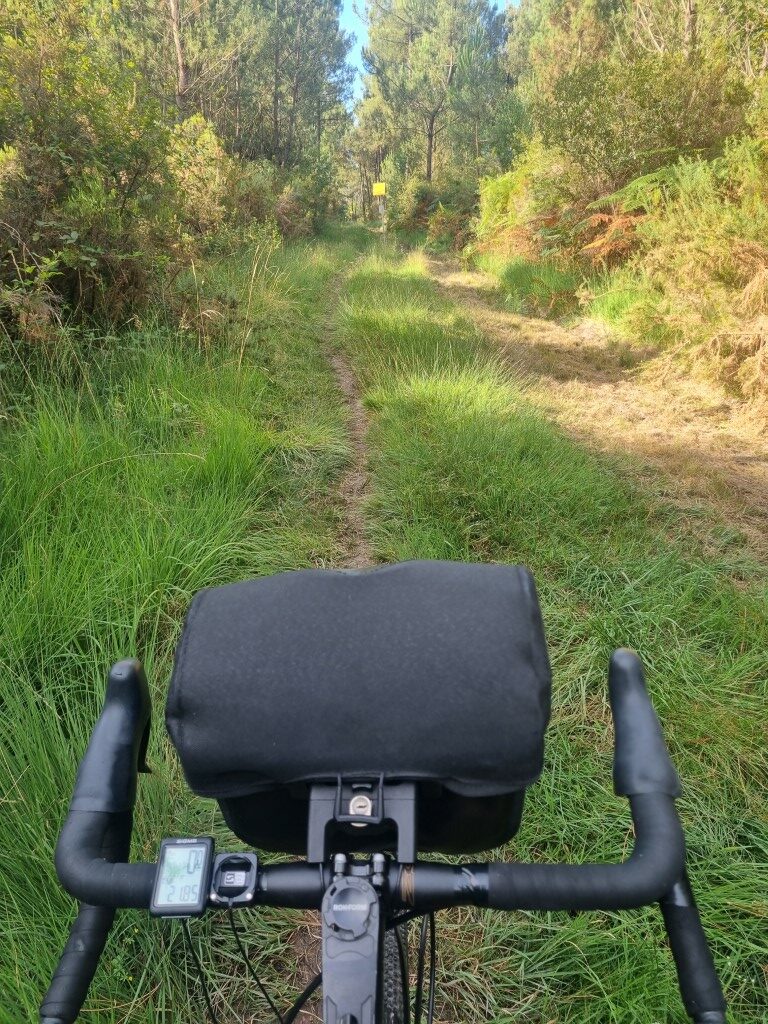
For decades, Vivente has been involved in bike advocacy. Our global travels have tested all sorts of bike parts but inevitably have witnessed culture as it affects cycling and public administration as it affects infrastructure.
There is a video doing the rounds at the moment about the difficulties of cycling in the UK. It calls the car-dominant culture there “moto-normativity”.
What is the status of cycling in France in 2024?
This 1,500 km tour, through several Departments, cities, country sides and villages has proved that car dominance is not the norm in France. Speed limits in urban areas are mostly 30km/h. Country roads are 70 or 80km/h. There are lots of places bikes may go but cars may not. Cars are restricted in many ways. Almost all one-way streets are bi-directional for bikes. There is relatively little public space given up to car parking. Cycling infrastructure is not just in isolated pockets and does not abruptly end, leaving us stuck. Car drivers slow right down and don’t seem impatient and cross. In fact, there are not that many cars on the roads. Young and old, male and female, in cities and towns, the French cycle as if there is nothing to be concerned about. They don’t wear helmets, and they ride well. The French also walk a lot. Unsurprisingly, obesity levels in France are much lower than in the UK, the US and Australia. French public health costs per person are half of the USA for example.
I would not have mentioned this; It just felt natural. But seeing that video and then being overtaken dangerously several times whilst riding back from Devonport airport (in Australia) to our base at Sheffield made me want to mention how admirable French road culture is. Food culture too but that’s another subject. What I don’t get is that when speed limits are higher, people are in more of a hurry. It should be less. We have to make cars less convenient. Don’t let them go so fast. Don’t let them hog all the space.
Continuing our post-Covid thinking of doing more test rides in Australia, we rode down the Murray from Albury to the junction of the Darling. We chose January, and were fortunate to not strike a heatwave. I was testing Schwalbe G-One Allrounder 2.8” (70mm) tyres, and I was using the new Baramind handlebars which have a bit of downward flex in them. The second bike was a standard drop-bar Swabia.
In the world of bike travel, there are those journeys that last for many months and even years, but there is also our lifestyle: working normal jobs and taking 3-week bike tours in breaks. Our ride was the latter.
Cycling infrastructure is the responsibility of local government. Thirteen councils on both sides of the river have formed Murray Regional Tourism. They have endorsed the idea of a cycle route along the River but it is early days and we didn’t see another travelling cyclist for 1,000km. It will develop over time, though, and there are lots of rideable roads, some separated paths, especially as you approach the towns.
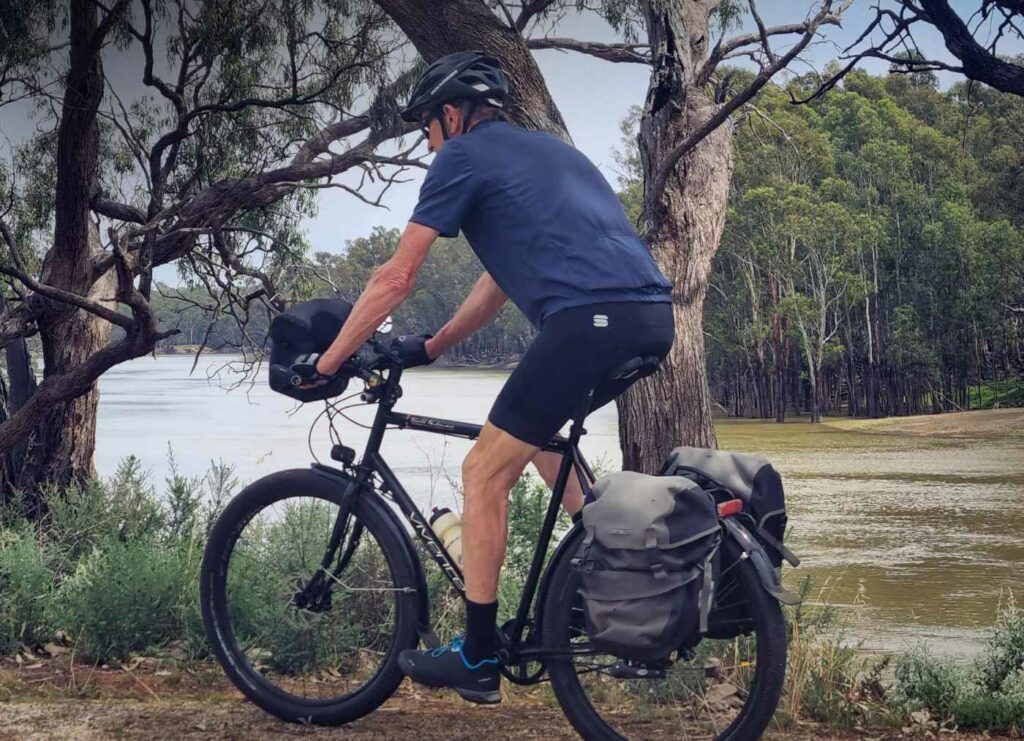
There’s plenty of accommodation along the way. Wild camping would be easy, and there are many campgrounds and motels. But on a 3-week ride, we opted for motels and hence only had rear panniers and handlebar bags. The motels all have microwaves and fridges and typically only had to be booked a day in advance and cost about AU$125.
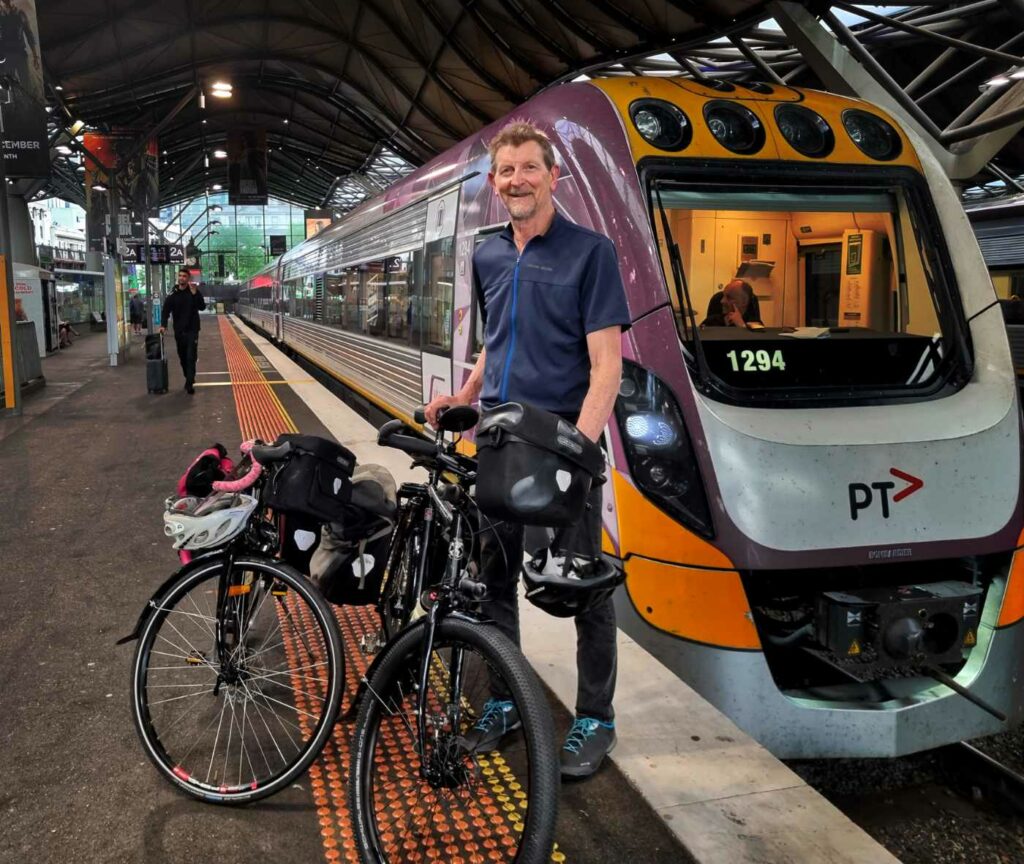
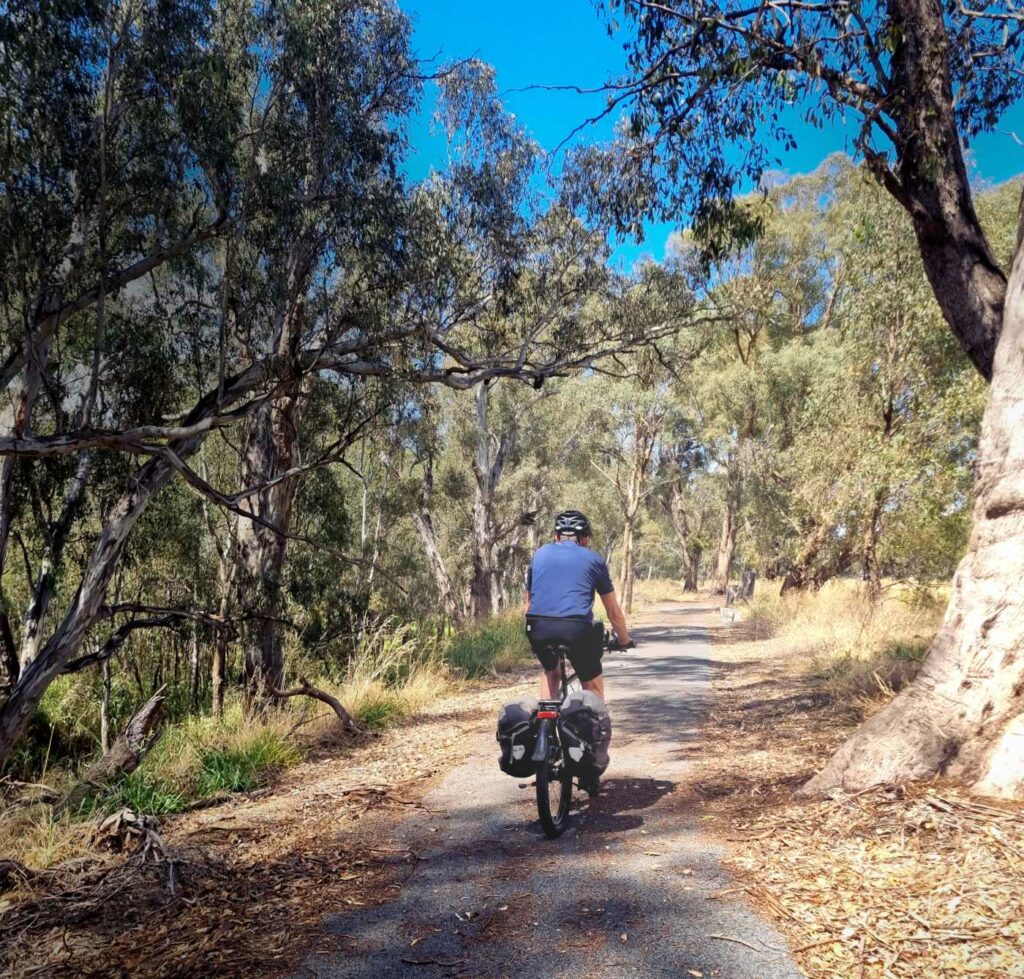
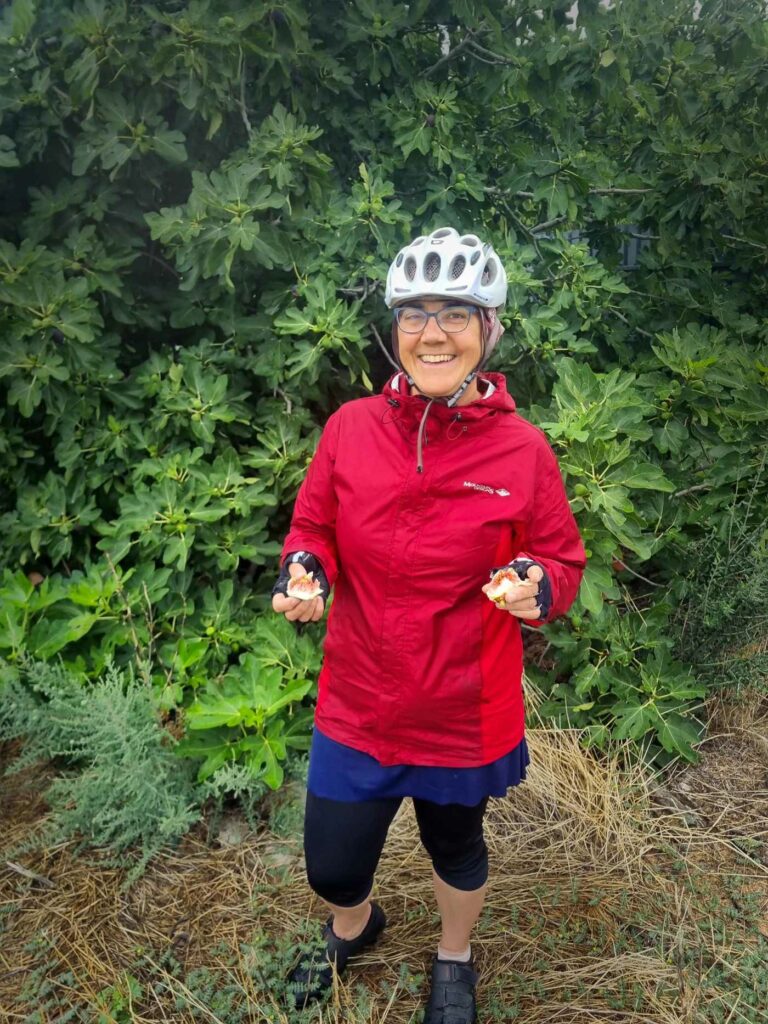
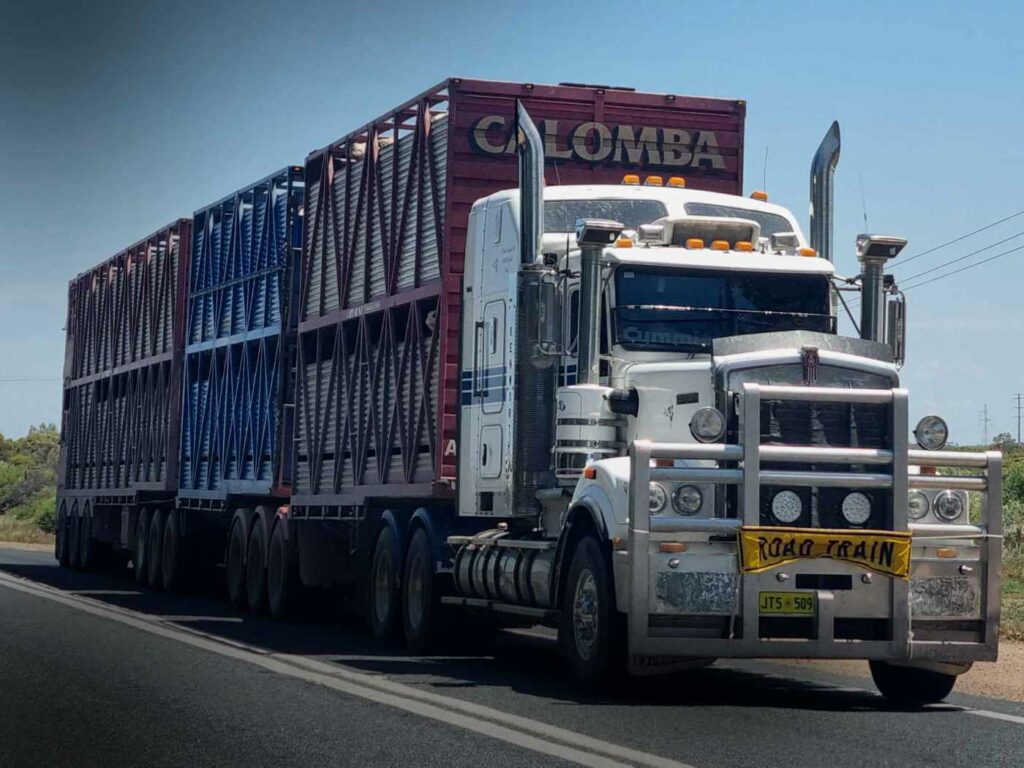
In this era of strange weather, bike travellers have to keep an eye on forecasts. There are several rivers that rise in the south of Victoria and flow north to the Murray. At one stage we knew the Campaspe river was going to flood and we had to get across it by a certain time or risk waiting out the flood.
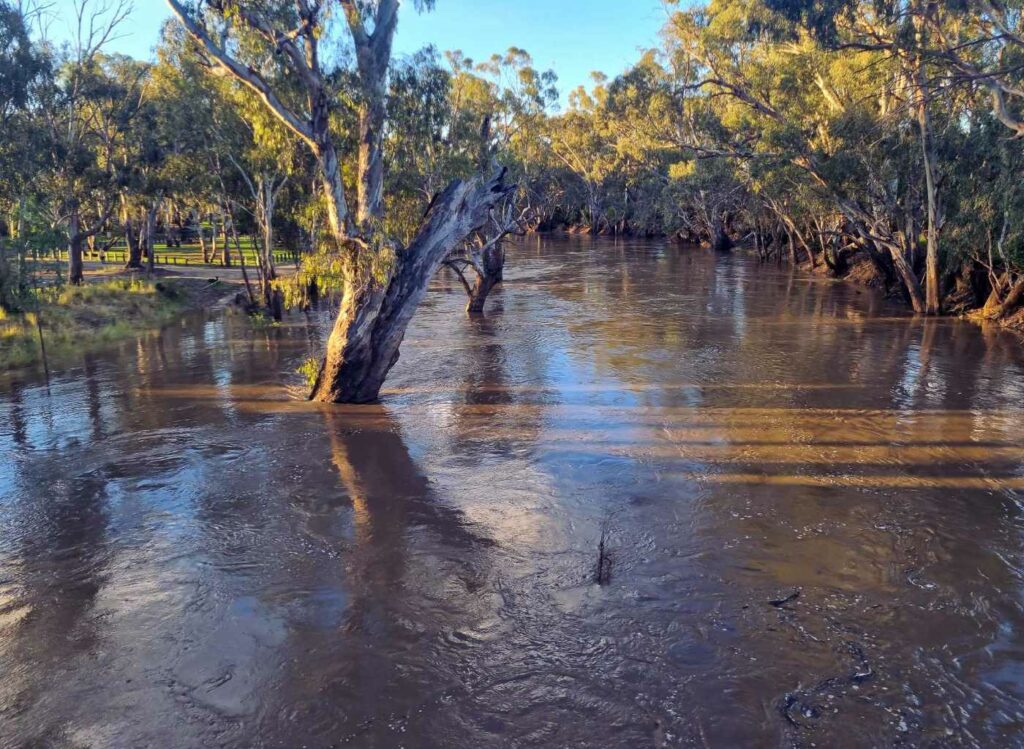
Summer on the Murray is the time of year when the dirt tracks are mostly rideable. But a bit of rain can switch from dirt to tar on short notice. This is part of riding in the region. You certainly don’t want too rigid a plan.
The Swabia had 40mm tyres and that kept us more on the sealed surfaces. The Diamantina with 2.8” tyres seemed to be happy everywhere. Wherever we were though, we were on the lookout for puncture risks.
The 2.8” (70mm) tyres deserve their own discussion which is best done under the heading of touring bike wheels.
The best defense is to see them in advance. In January, the new crop is not yet hardened. But there are still puncture risks. We got three punctures. One from a staple on the 2.8” tyres that have no Kevlar belt. And one on each bike from three-cornered jacks. Tubeless most likely would have prevented all of them. But you have to balance that with the work of setting up tubeless on relatively short-duration rides. See our separate article on this.
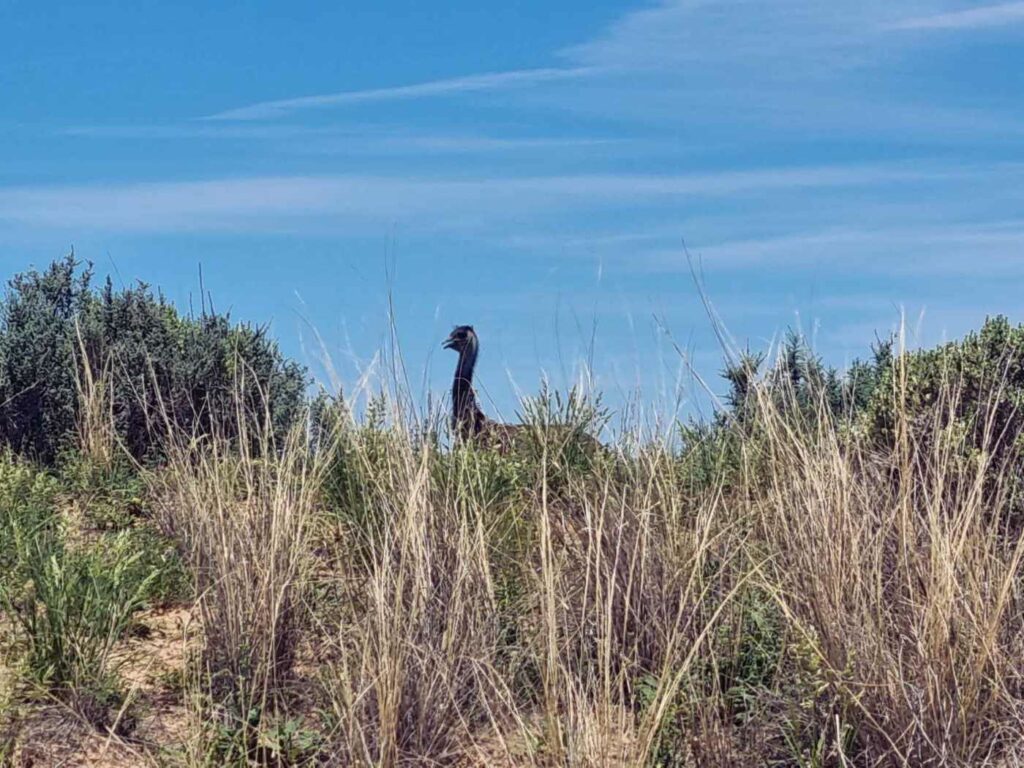
Mallee fowl were a hope but talking to park rangers revealed just how rare it is to see one of these amazing creatures. That’s a bit surprising given how the related common brush turkeys are now on the east coast. But feral cats and foxes are the main reason mallee fowl are endangered.
Bike travellers spend most of their time in wilderness or farming regions. Some of us are actively interested in farming and there’s plenty to see along the Murray.
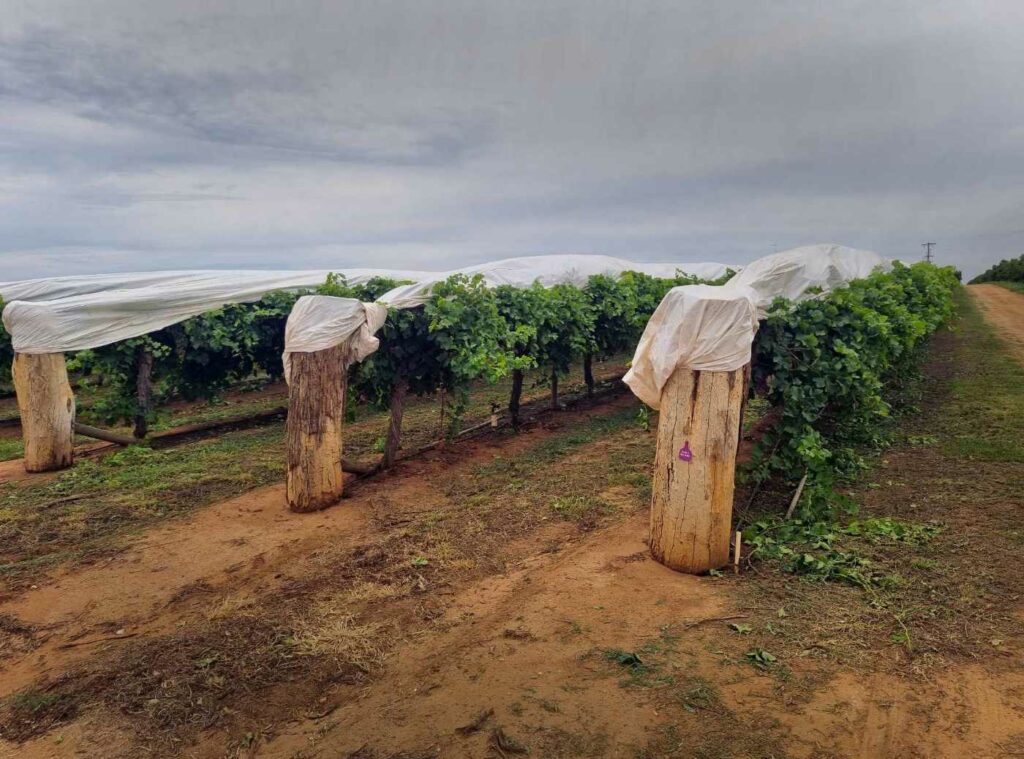
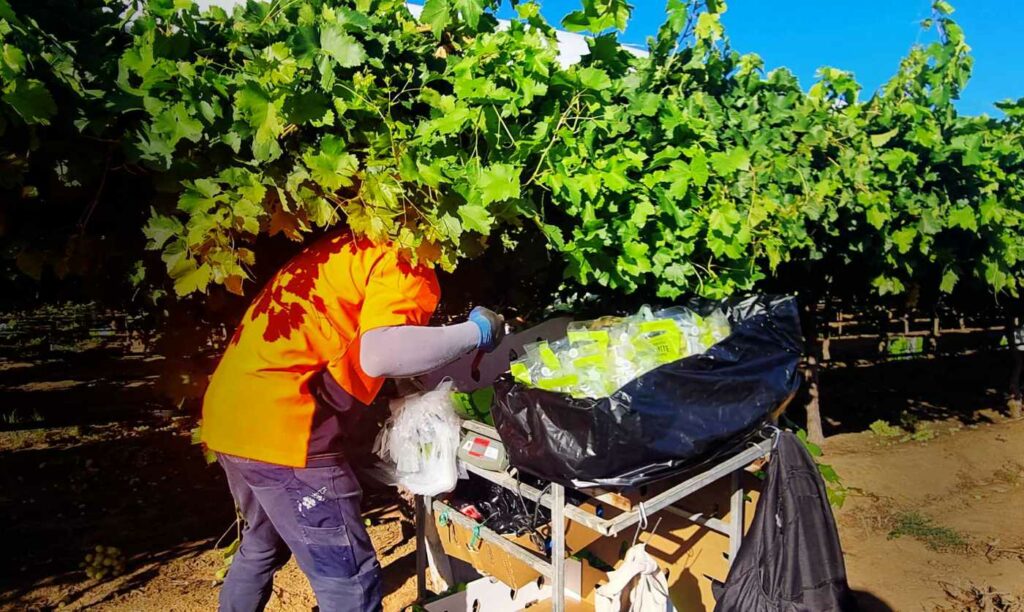
Another interesting crop is saltbush. They grow it so as to produce saltbush lamb. Join the club if you have never heard of it. According to the marketing… The protein-rich foliage and high mineral content of Oldman Saltbush gives the meat a very clean, crisp, lean and delicious flavour, a unique characteristic.
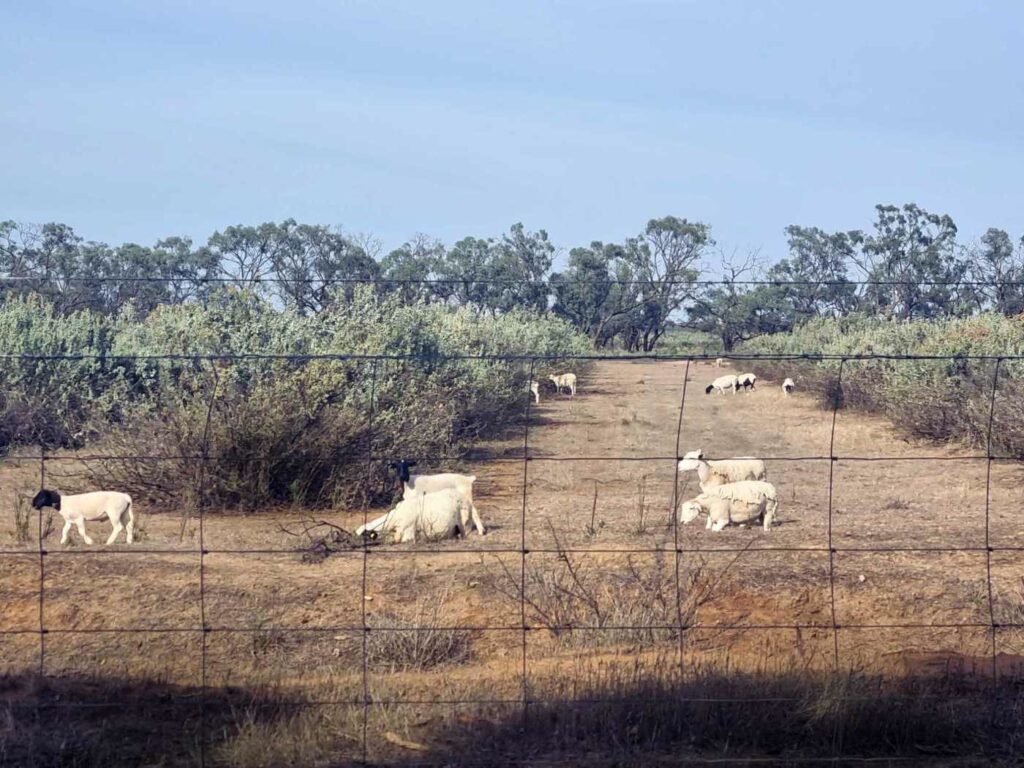
The Murray was the boundary for different Indigenous tribes. Europeans took their land and, in some cases, massacred them. There is little sign now that up to only 200 years ago, a civilisation dating tens of thousands of years lived here. But we did come across one extraordinary relic from olden times.
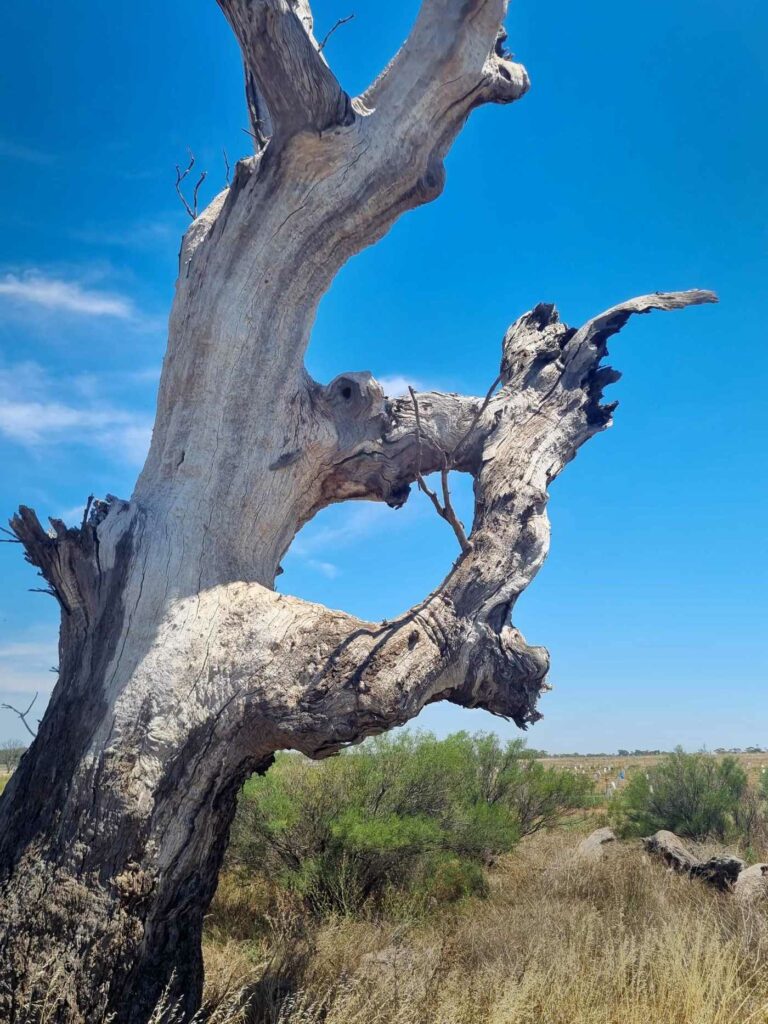
Mildura is the main departure point for tours to Lake Mungo. This is not rideable. You travel through vast stations. Camping on them is not allowed. You need to carry all of your water. But there are a few operators that will take you out there and ours was faultless. Visiting Lake Mungo is an incredible experience.
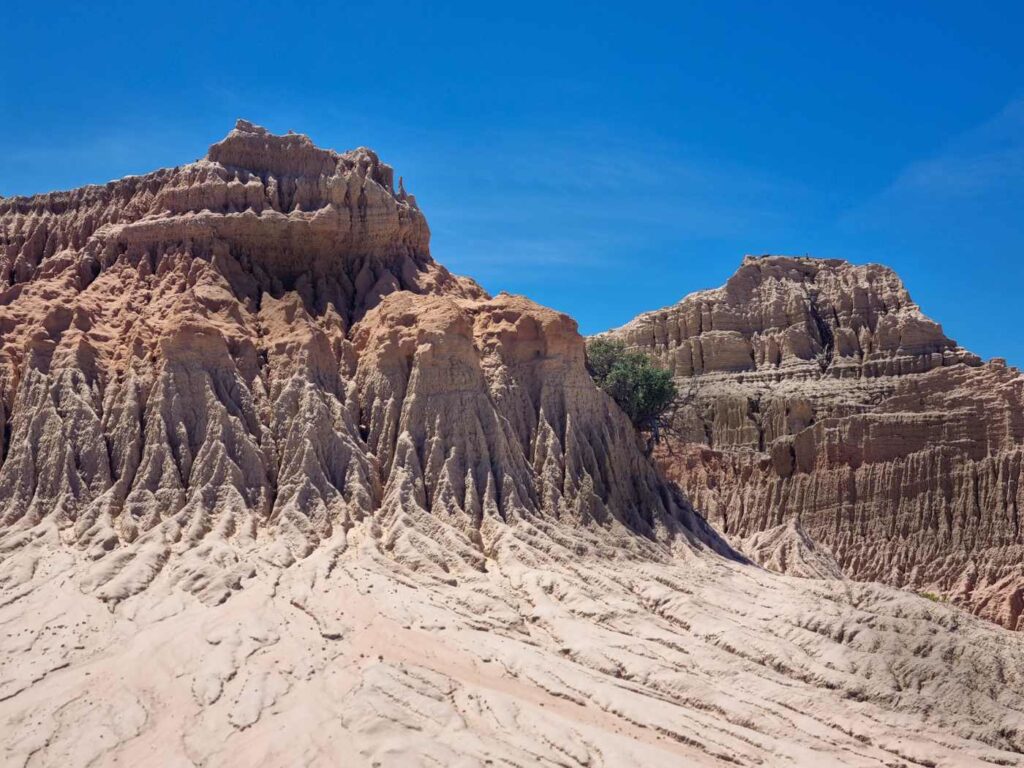
The lake was one of five in a system that for many thousands of years drained the melting ice sheet on the eastern highlands. In 1968, an ANU geologist studying ancient and now dry lakes went there and found human remains. Named Mungo Woman, the remains are part of the earliest human settlement known anywhere. The lake dried up 14,000 years ago!
About 35km beyond Mildura is Wentworth. This is where the Darling River joins the Murray. You can do a loop and see both sides of the river. You can also, from Wentworth, ride up the Darling. Towns peter out though and that’s another type of bike tour. We went as far as Pomona.
IMG14 – Big tree
“Buy-back” in the Murray Darling catchment, refers to policy whereby government would buy back some water entitlements from farmers.. How wrong could buying back water entitlements be? I expected people that we’d encounter along the Murray River would have a “whatever-it-takes” attitude to achieving what was set out in the Murray Darling Basin Agreement. That was signed up to in 2007 and was to be achieved by 2024. But almost none of the promised environmental river flow has come about. There is irrigation everywhere. The farmer first needs to own a licence. That might be worth $4,000 per megalitre (ML). High Security licences are up to $7,000. Then he/she buys the water which, in a normal year, is (an extra) $80 per ML. The value of licences has gone up a lot. As much as 25% a year. They owners don’t want to sell. So, there is an impasse, and, as a result, our environment suffers.
Successive governments have over-allocated the water. Taxpayers (the governments) want to buy back enough licenses to achieve the environmental flow they agreed on. But talking like that along the Murray River is not smart. Tentatively, I would ask…”what percentage of people around here are against buy-backs?” 100% was the answer every time.
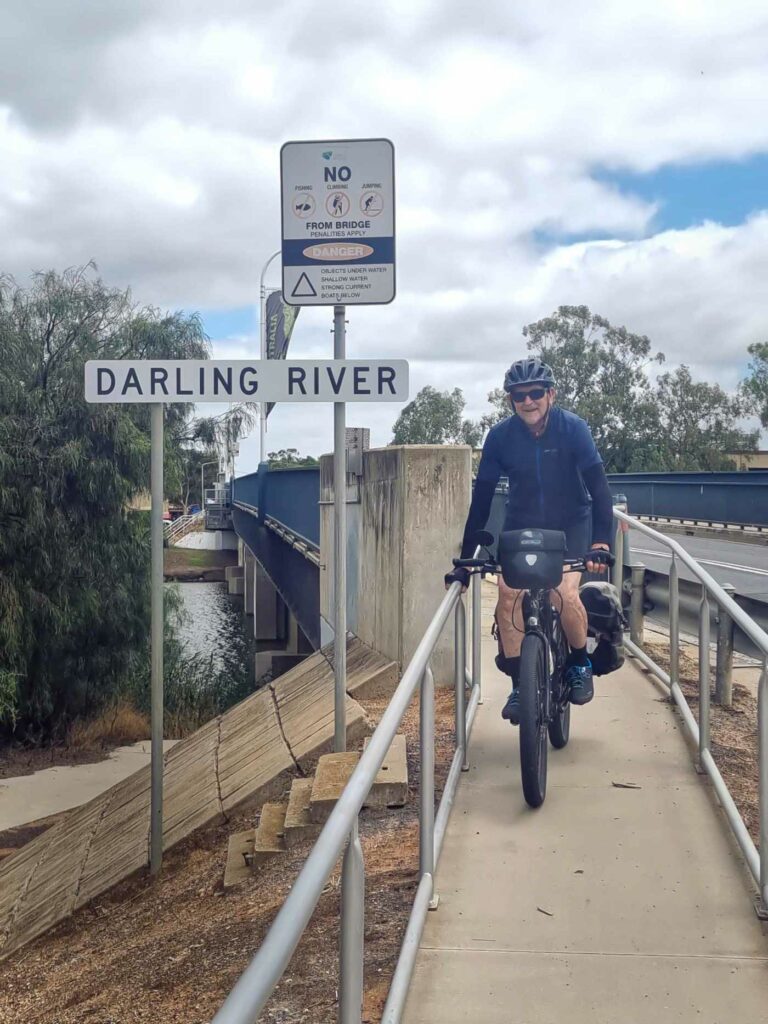
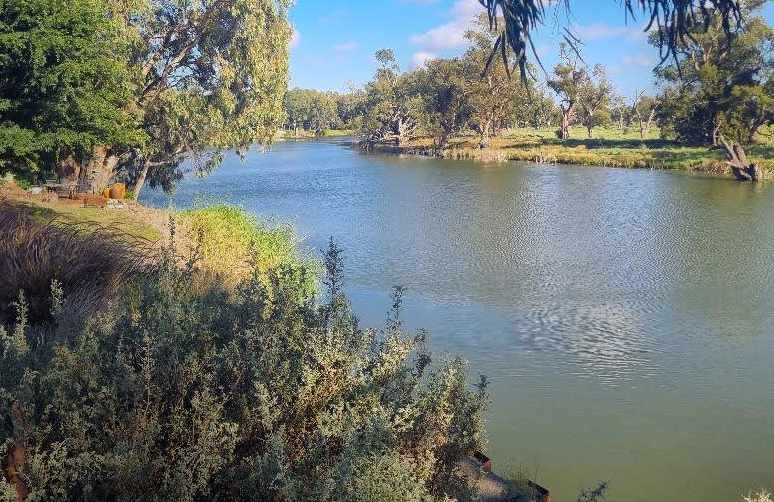
But the fouling might be upstream cotton industry- driven pesticide pollution. When I got back to Sydney and went to the Invasion Day rally in Belmore Park, a speaker was talking about how the Darling and especially its northern tributaries are poisoned by the cotton industry. I found more, including this article on the subject. The claim was that cancer levels amongst Aboriginal workers in the cotton industry around Moree are high. It looks like that is true.
Whether or not you share these concerns about the environment, a ride down the Murray River should be on your list. You can alternate between NSW and Victoria, there are towns along the way and plenty of places to stay. There are dramatically different landscapes. At Mildura you can fly to either Sydney or Melbourne. We were able to get bike cartons at the airport.
Shout-Out to Victorian Trains Taking Bikes
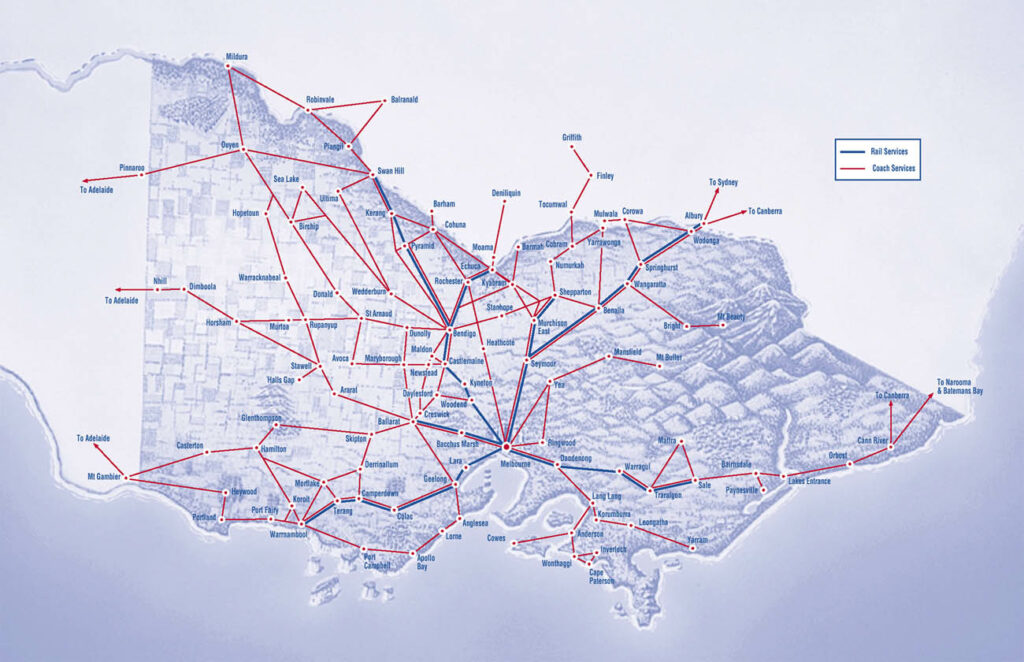
You can wheel your bike on and off Victorian trains. The lines go to Warrnambool, Sale, Wodonga, Echuca, Swan Hill, Ballarat and Shepperton, although there are a few time periods when it’s best not to. Read more about Bicycles, luggage and animals on Victorian Trains.
In addition to the train lines on this map, there is also the Overland between Melbourne and Adelaide. They accept bikes too but they need to be booked 72 hours out. You could get on or off at a number of stations.