In Australia, Victoria has a strong history of cycle advocacy. Over the decades, the state has accumulated extensive bicycle infrastructure. To cyclists from other states, this is notable and appreciated. This trip explores more of Victoria by riding the rail trails.
The Rail Trails (RT) movement, whilst national, has also had its greatest success in Victoria. Over five decades, Bicycle Victoria and more recently Bicycle Network have collaborated with government, plus bushwalking and other organisations. There are now 49 separate rail trails in the state.
We head over from Tasmania on the Spirit to check some of them out.
Being January, it’s bushfire and heatwave season, but life must go on. If it is forecast to be a hot day, we’ll leave early. If there is a bushfire, we’ll change routes. Last January that meant skirting around the Grampians and getting past Dimboola just in time before roads were closed.
This ride is mostly in the Southeast, where the weather is milder. We are not into suffering or taking on excessive risks. It might be 45℃ in Mildura but only 29℃ in Orbost (on the Snowy River at the end of the East Gippsland RT).Off the Spirit we ride around the west of Corio Bay on the Bellarine Rail Trail.
From Port Arlington, there’s a fancy ferry that runs to inner Melbourne. They take bikes but you need to book. It’s a great way to move between Geelong and Melbourne.
Once at Southern Cross station in Melbourne we connect to the Victorian train network. Drouin station is about 40 km from the start of the 138 km long Great Southern Rail Trail (GSRT) and we head there.
There are some cool features of rail trails. Especially these longer ones.
Normal navigation on bike rides is interesting and fun. But on a long rail trail you just don’t do it. Also, you don’t climb anything steep. Trains don’t do that. You get to go right through the centre of town. Although close to things, there is a sense of being in a separate zone. Safe and welcome.
On the Rail Trail website you can pick a state, then a region, and see the trails in lists and on a map. In Gippsland there are 12.
Long before good road networks were established, and road bridges built, trainlines were the main access routes into Gippsland. Before then, access had been limited to coastal vessels. Welshpool, on the GSRT was one of these port-access points.
In typical British fashion, the stolen Aboriginal land was “granted” to settlers. The trainlines allowed timber and farm produce to be taken out. As we tour through Loch, Korumburra, Leongatha, Welshpool and Yarram, there is little to indicate we are on the land of the Kurnai people. There are very few memorials. Things are happening though. There is a Treaty in Victoria. There are provisions for truth telling.
Between 1830 and 1850 Indigenous population in the south east region had collapsed, from thousands to less than one hundred. They were wiped out, about eight generations ago. When intensive colonisation occurred in the late 1870s, brought by the train in 1877, it must have seemed like vacant land.
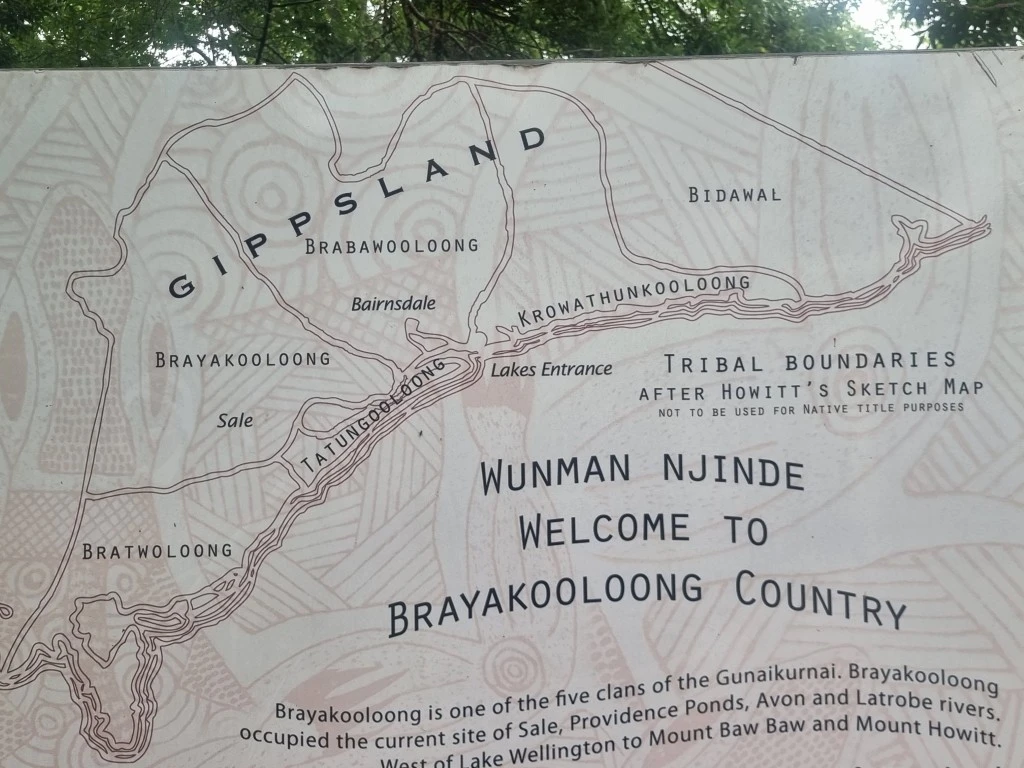
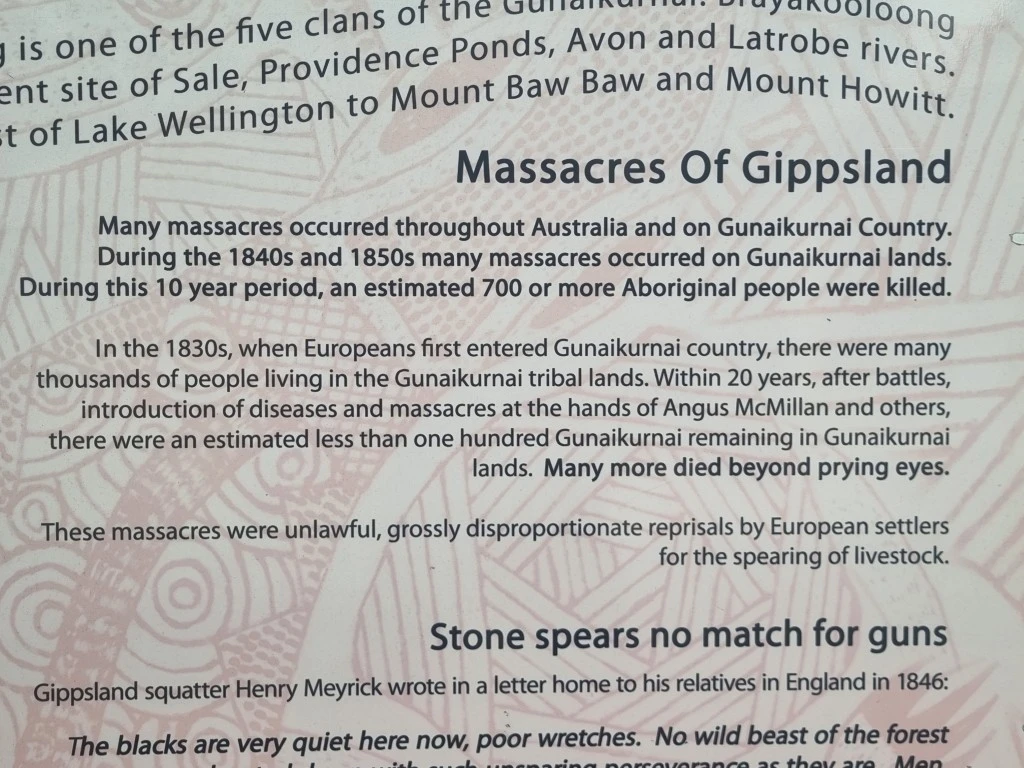
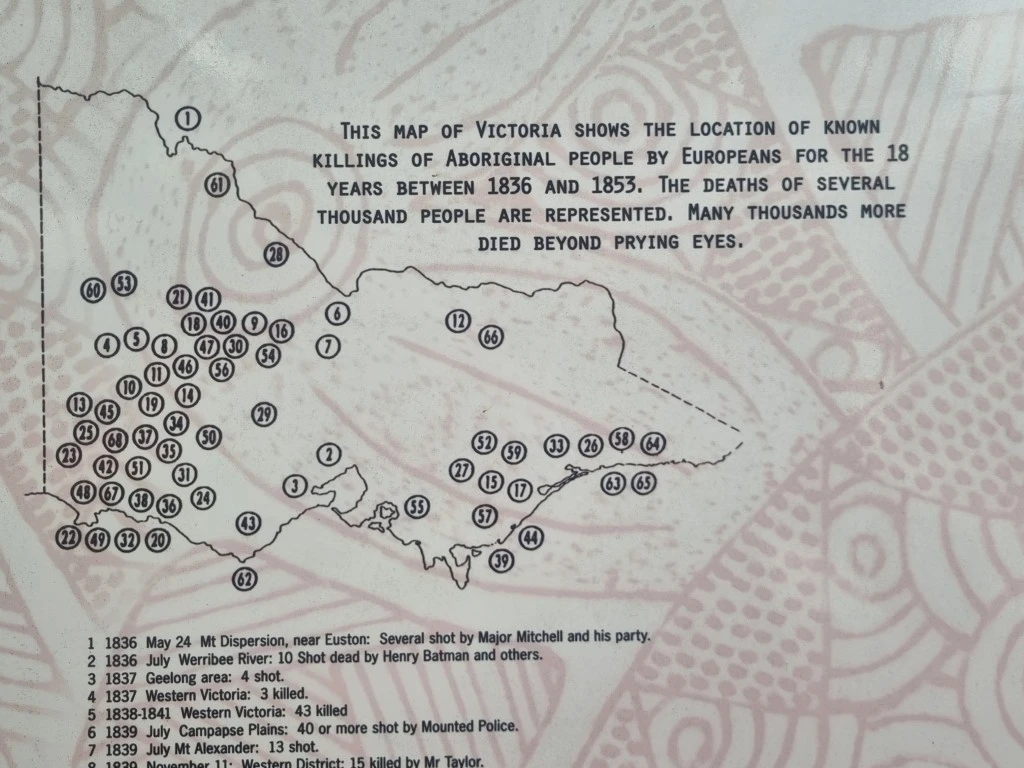
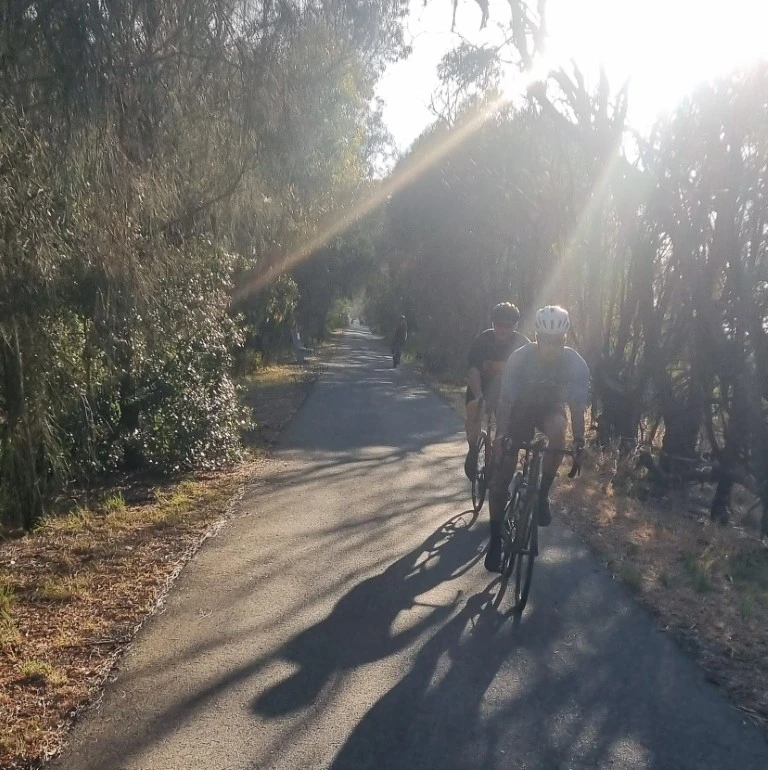
Much of the time the trail is in beautiful forest and bushland. Wildlife abounds. The trail surface is fine gravel and 40mm tyres are a good choice. There is virtually no loose sand.
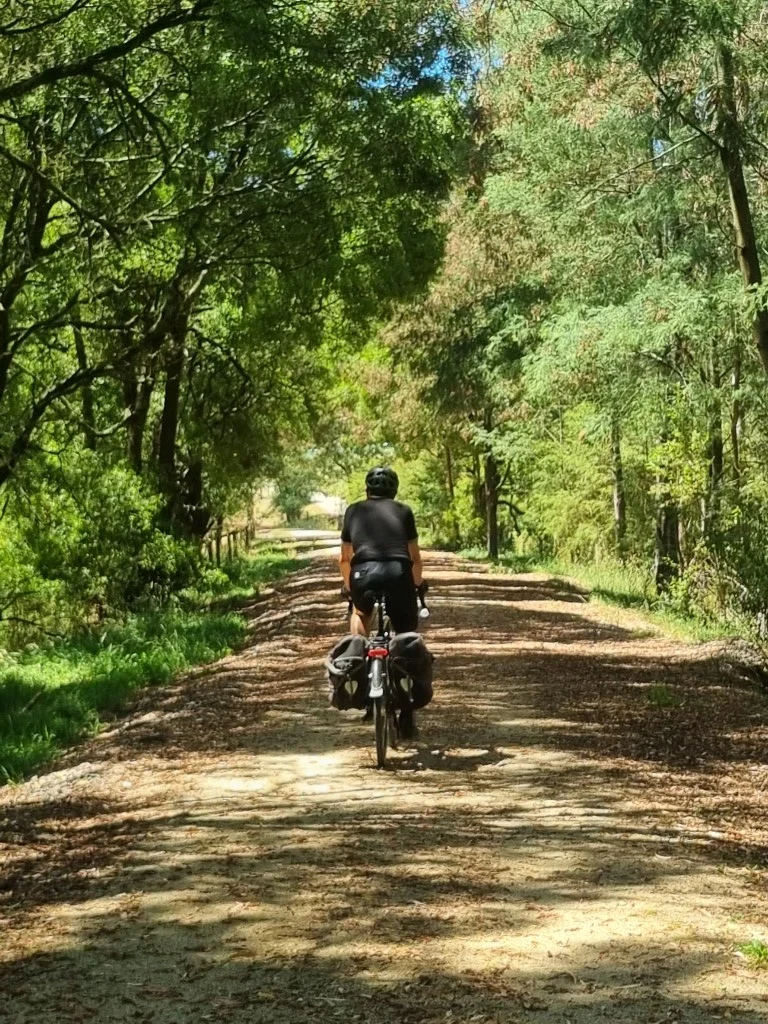
We soon get into the vibe of being out in the bush and on a beautiful trail. There is no rush. The impulse is, at the end of a trail, to find another one. After reaching Yarram, to reach the next trail starting at Bairnsdale there are two days road riding, with a stop at Sale. The highway has a good shoulder.
North of Sale there is an extensive and low-lying plain. Sale itself is only 5M above sea level. The plain north to Stratford is less than 15M above sea level. It’s rich dairy pasture-growing country. It will eventually be inundated by salt water due to sea level rise.
Then it is another day on the tar to Bairnsdale.
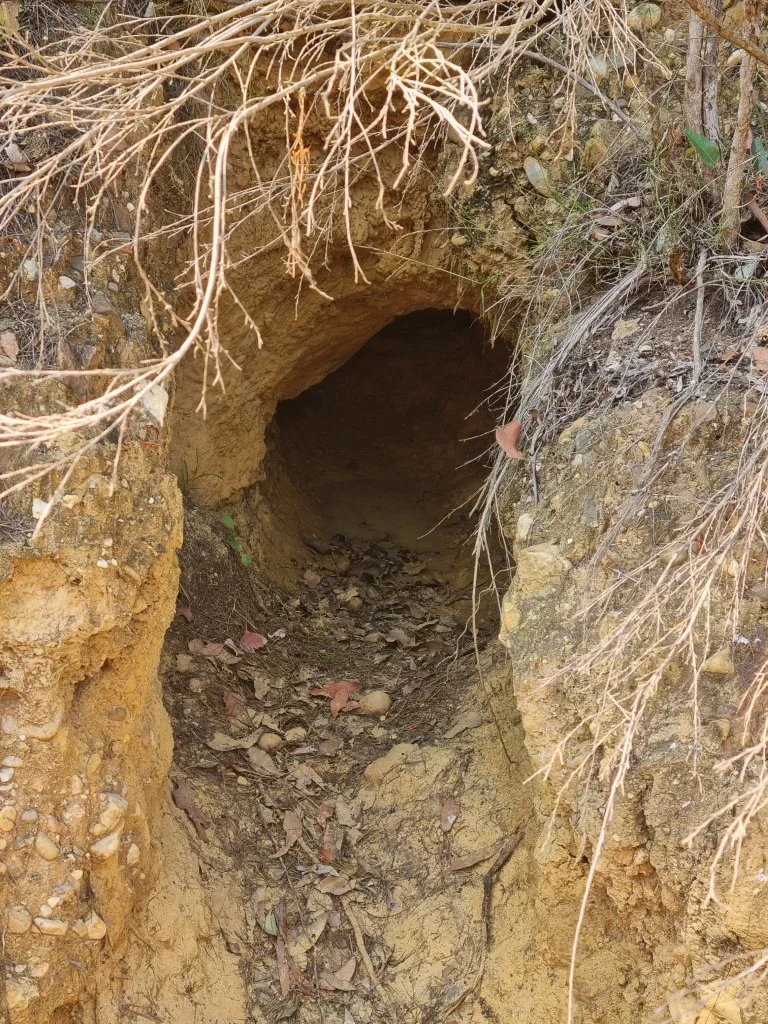
Bairnsdale is where the East Gippsland Rail Trail (EGRT) starts. It’s well made and has excellent signage. There are informative plaques and fascinatingly large wombat holes.
Travelling on a bike, you don’t expect serenity. But these days in the bush are like that.
After two days on the highway, with caravans and wide mirrors and wide boat trailers, as we head out east from Bairnsdale, we are immersed in serenity again.
We come across a memorial to the work of Michael Oxer. Michael has inspired people in Melbourne, in Victoria and nationally and this is a very fitting recognition.
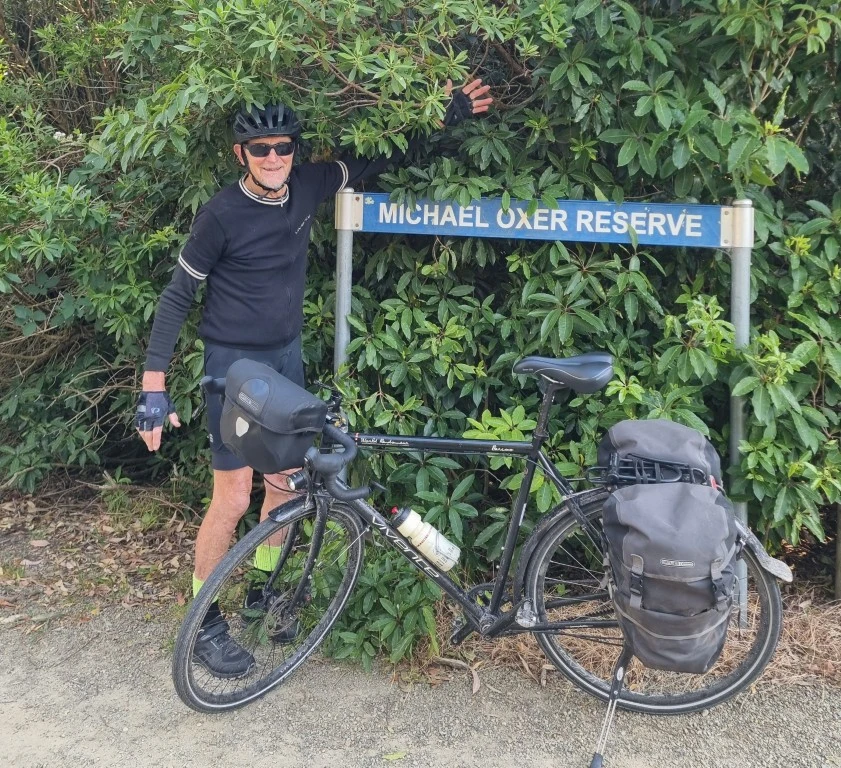
Although it is mid summer there are still several other cyclists travelling on Victorian Rail Trails. Here are the bikes of two Koreans cycling around the world.
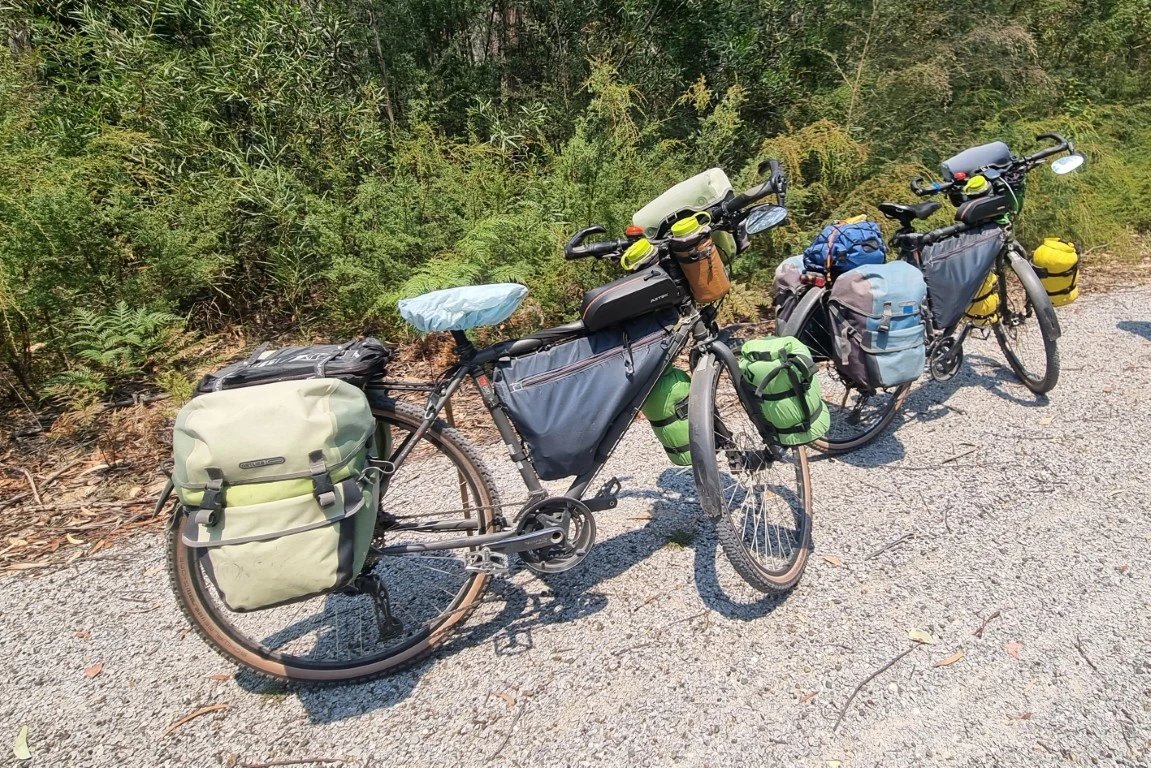
They are German bikes with 40mm tyres and triple sets. They are quite similar to the now discontinued Vivente Anatolia.
It’s a current trend on sit-up bar touring bikes to use frame bags and to move the water bottles up behind the handlebars. Also to have front fork-blade-mounted luggage, not on a rack, but on two or three M5 mounts in a straight line on the fork blades.
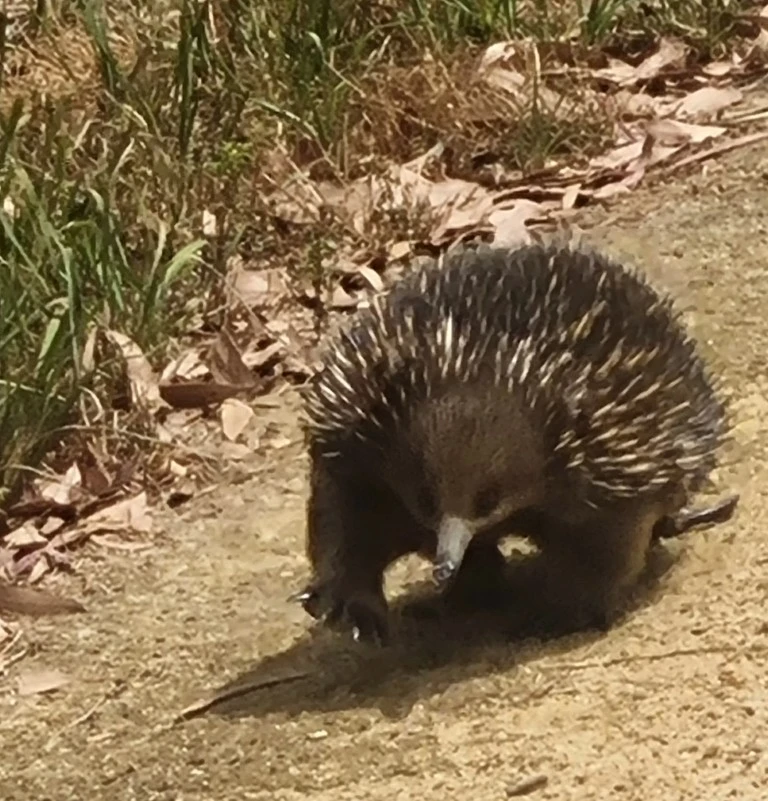
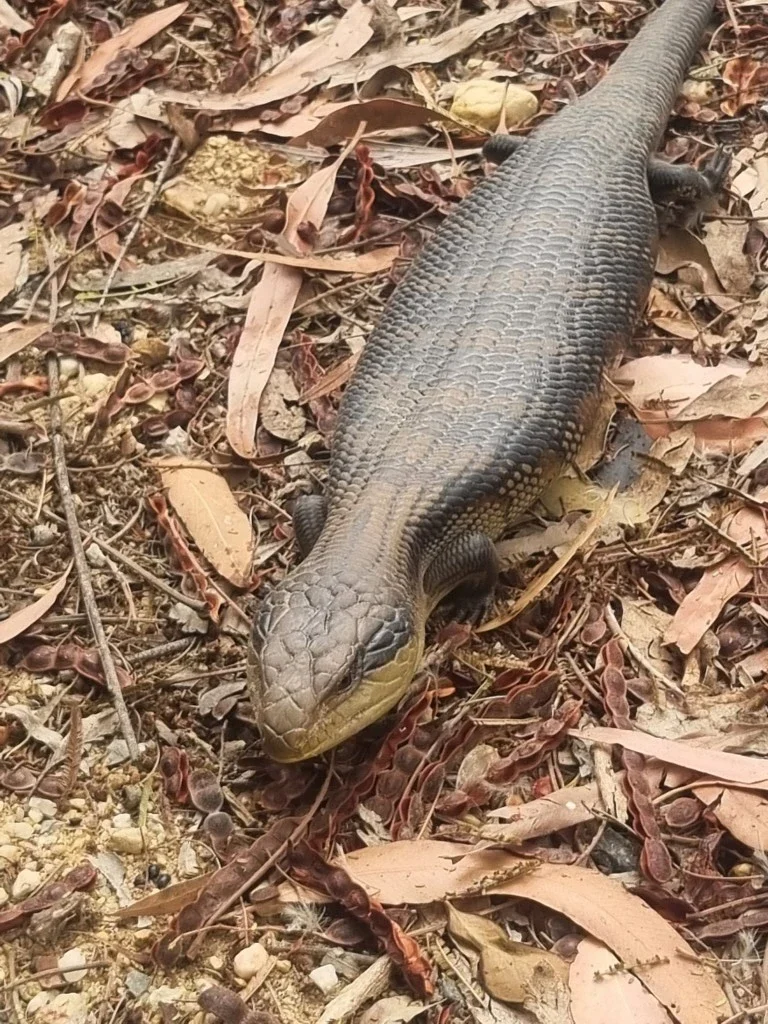
If you love Australian wildlife, you will love riding these rail trails. Plenty of echidna, blue tongue lizards, wombat holes and their characteristic square poo, and huge termite nests. Birdlife in abundance. Sadly, no goannas for this ride.
At Nowa Nowa we take a side trip north to visit the Buchan (“Buch” as in” Buccaneer”) caves. Take the Old Buchan Road. The caves are well worth a visit.
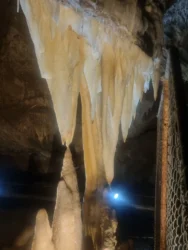
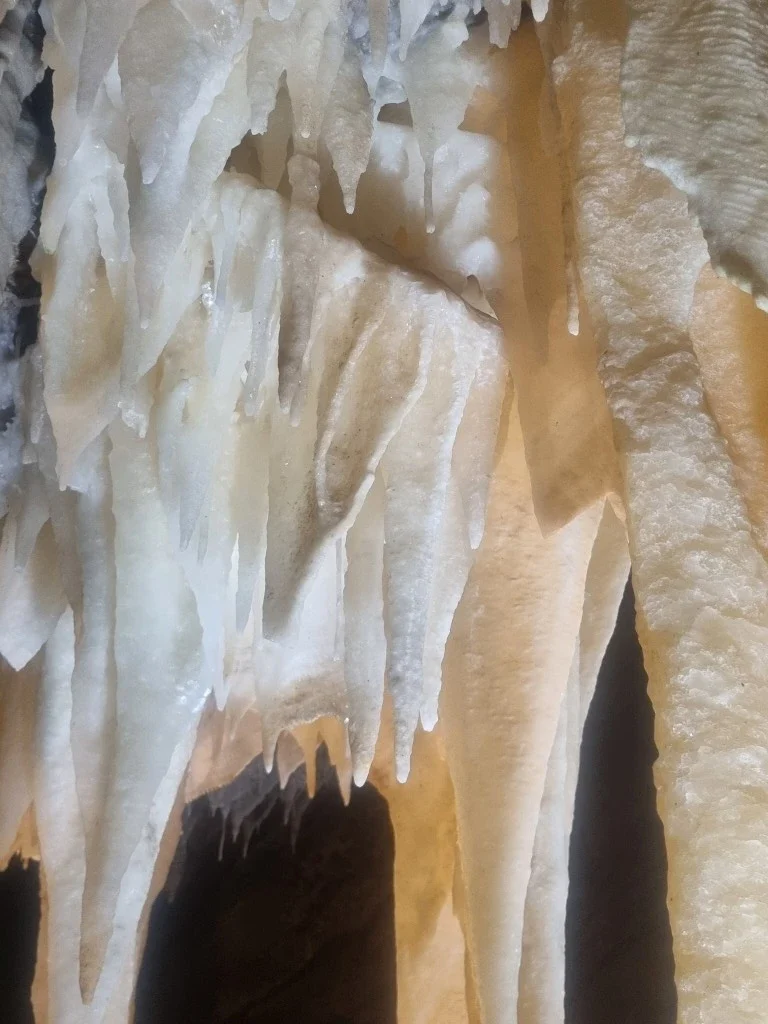
After Buchan we want to cut across to Orbost which is the eastern end of the EGRT. From there we will ride back to Bairnsdale.
Studying the maps there is a choice between the Buchan-Orbost Road, which is tar, and the Mottle Range. Fortunately, we came across a report from a guy (on a Vivente) from 2012. He took this route and reported that much of it was unrideable. He did see 10 goannas though! So, we take the tar. In the 55km section through the mountains there was only one car. Thank you, taxpayers!
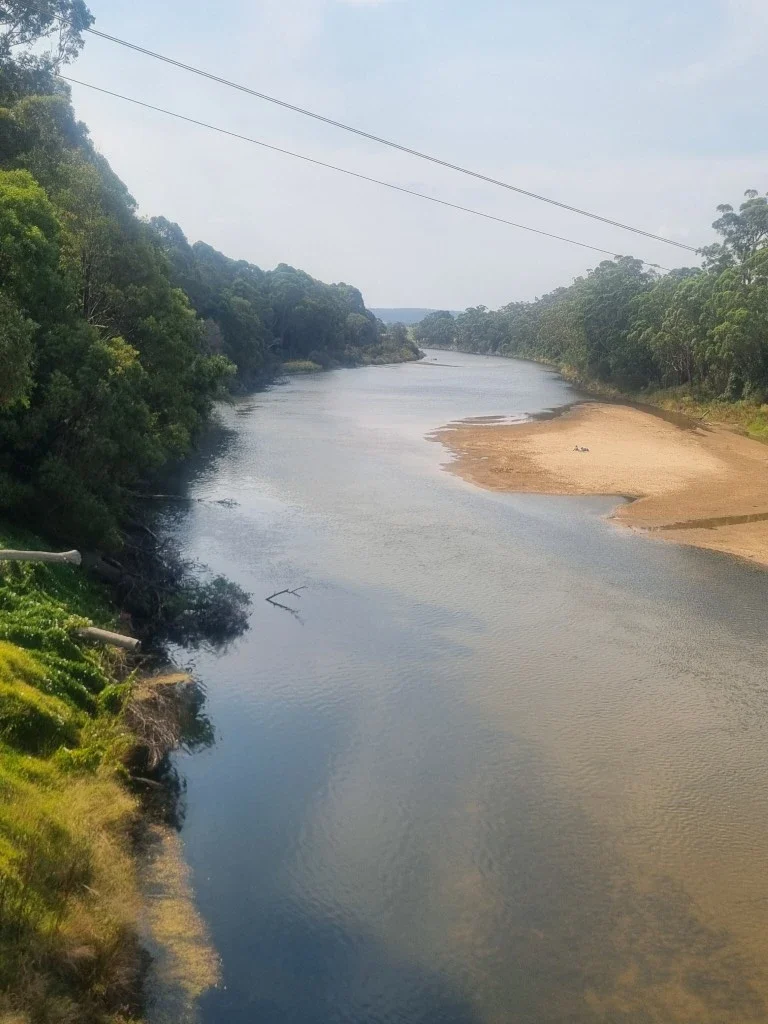
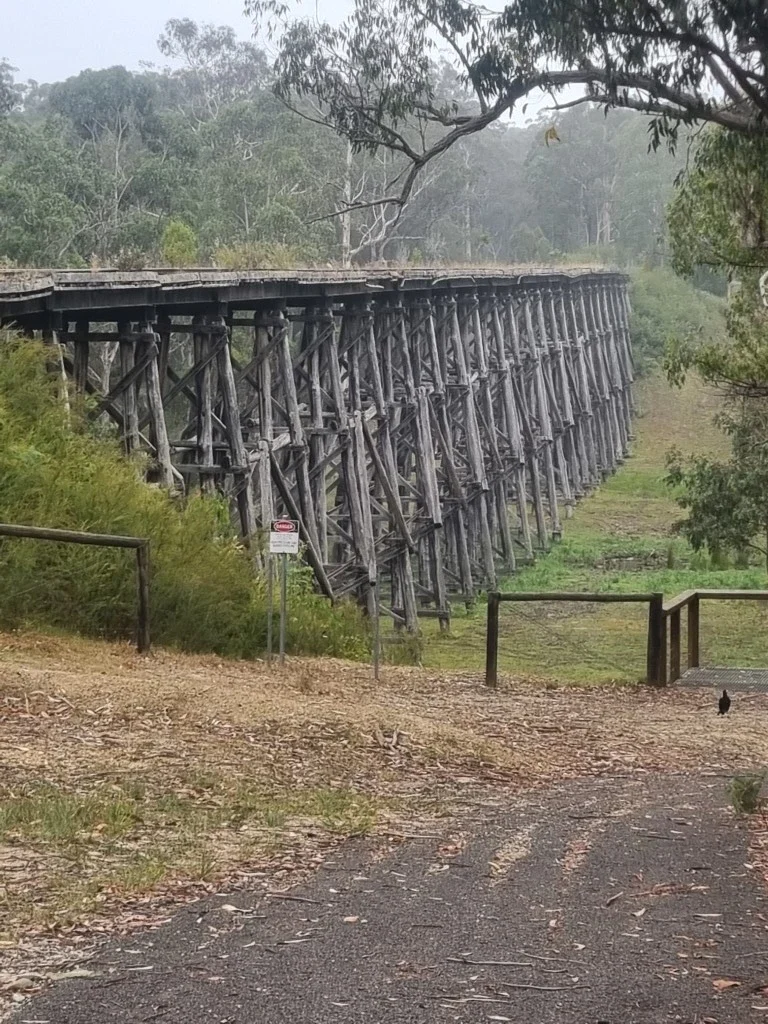
Along the trail, heading back westward, there are some amazing bridges.
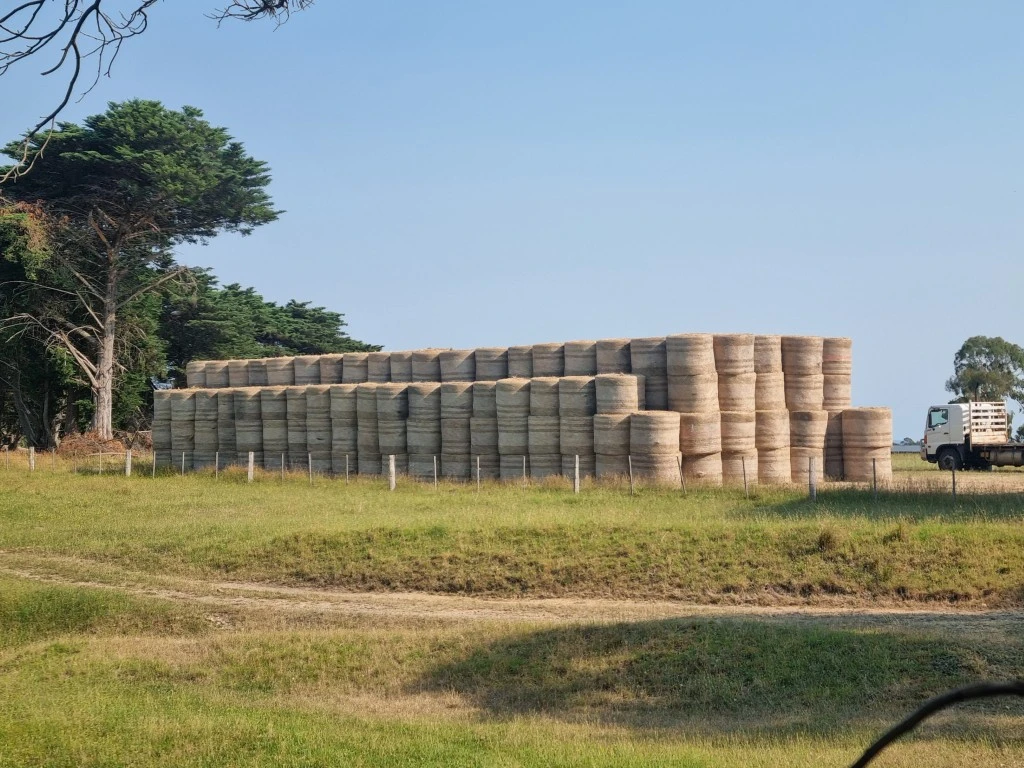
We are not in farming country as much as in the bush but there are some lovely rural scenes.
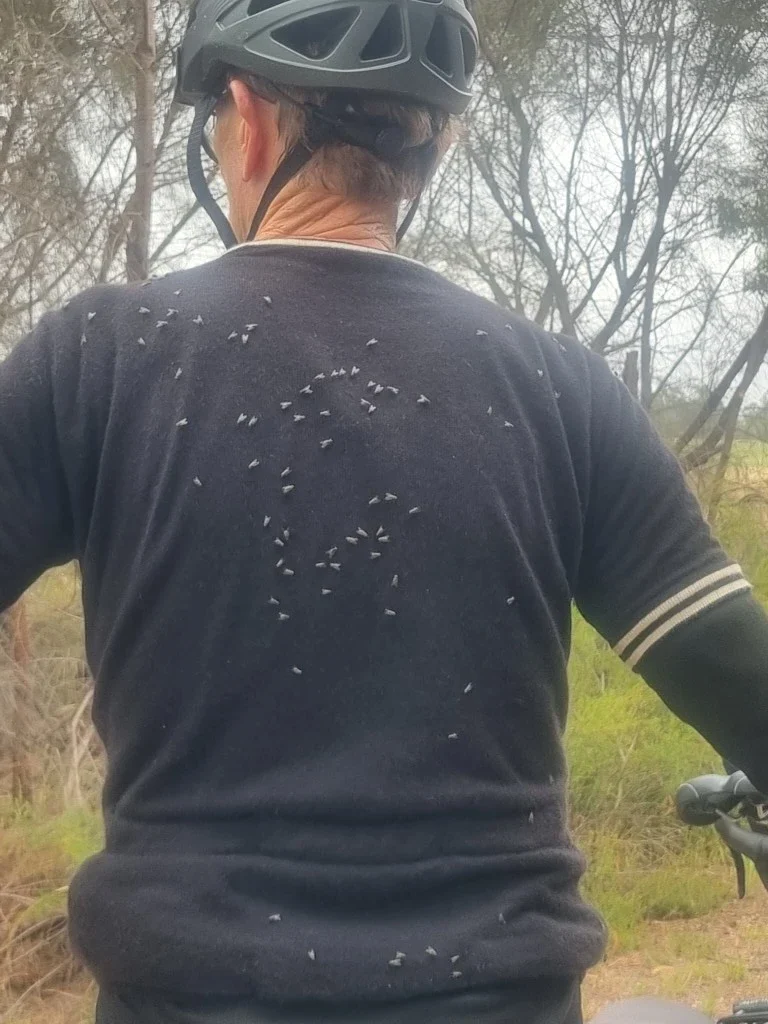
From Bairnsdale, having already cycled the highway, we are on the train to Stratford and the start of the Gippsland Plains RT. This is dairy country. There are lots of flies. We deploy the roll-on Aeroguard. But it’s not enough…
This trail might be one of the earlier ones to be developed. Or maybe it was not so well funded. It’s good but not AS good as the others. It goes as far as Traralgon. This is brown coal mining country. Fifteen km past Traralgon is Morwell where the mushroom trial took place. Morwell is a surprising place. Probably two thirds of shops are “for lease”. The town is quite empty. Apparently, the proximity of Morwell and Traralgon meant that eventually one would take over as the regional centre.
This completes the Gippsland Rail Trails, and we are back to Melbourne on the train. Our sights are on Geelong where the Spirit of Tasmania departs. There is scheduled track work and we need to get to the far western outskirts of Melbourne before we can catch a train. Once again, the Victorian cycling advocates of yesteryear and recent times deliver. We ride the brand-new Dixon Veloway to Footscray.
In Footscray we were shocked to see both Teds and Beasleys bike shops are there no more. They were thriving multi-generation businesses, looking after people like us. Who’s doing it now?
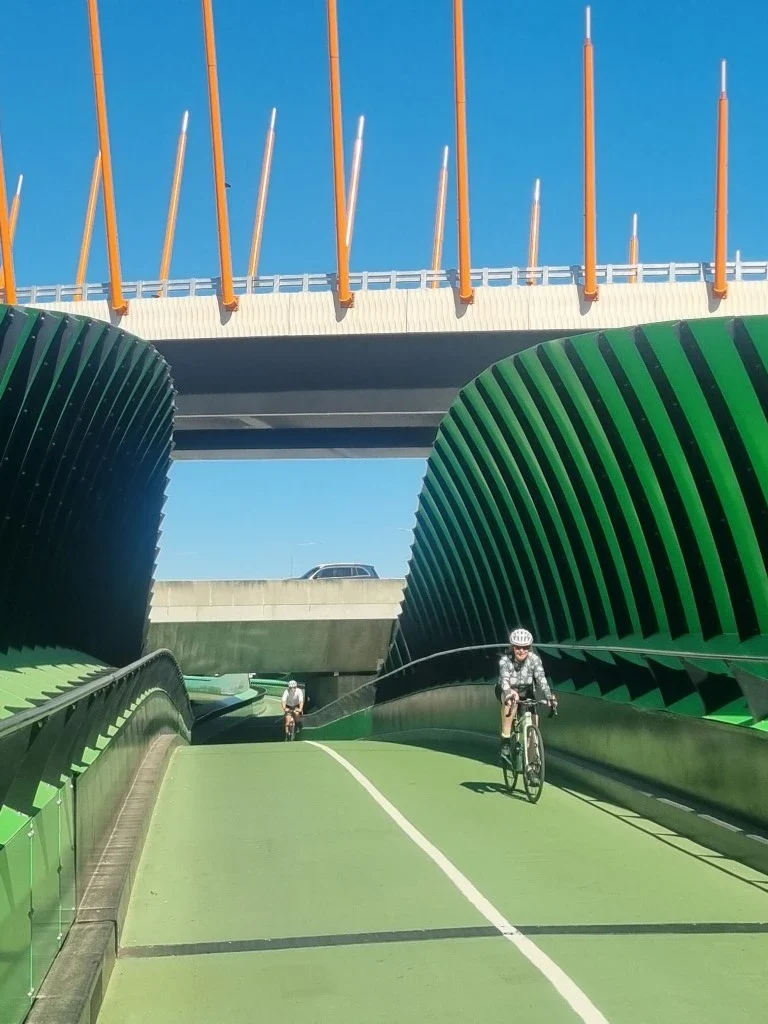
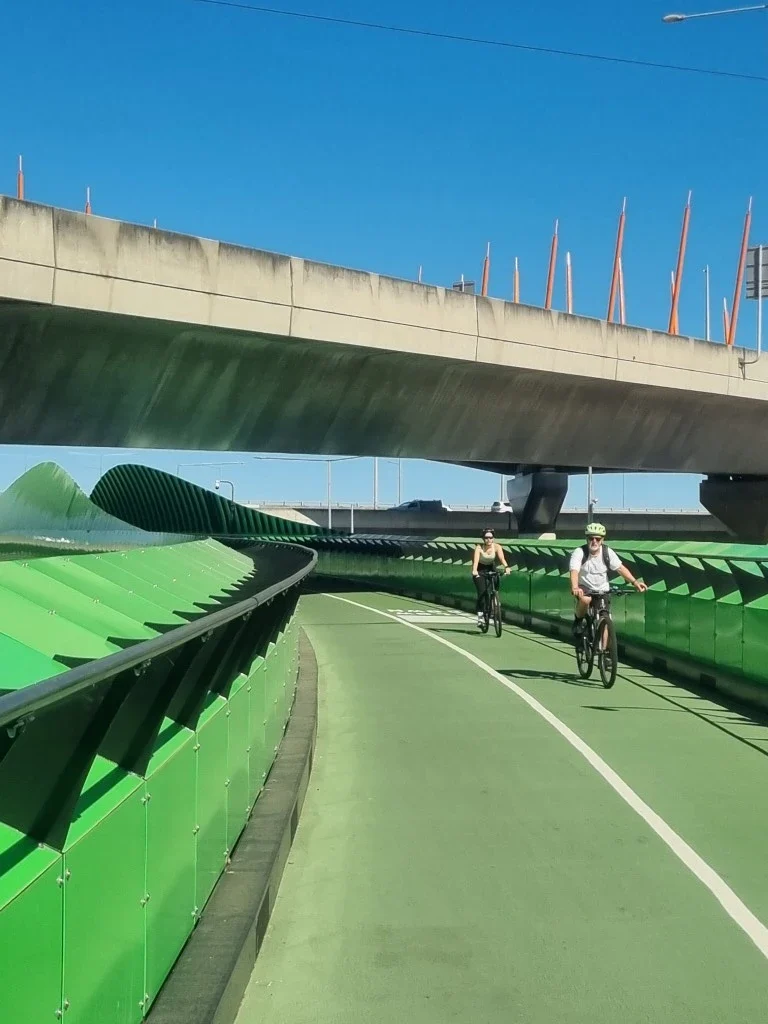
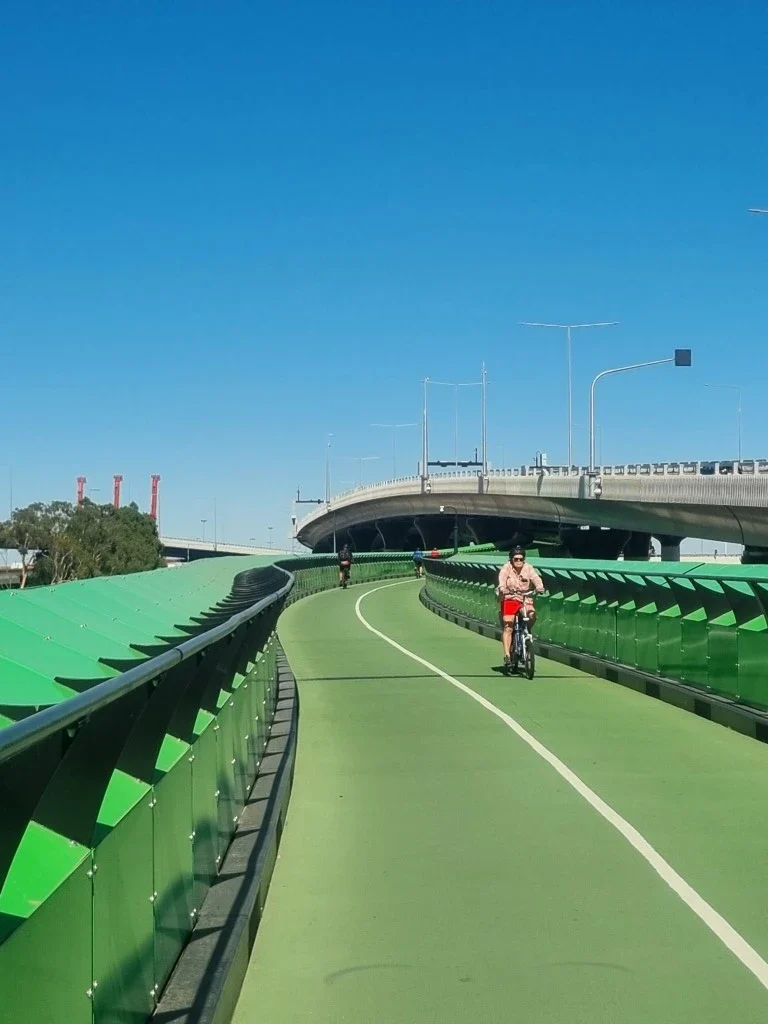
We then pick up the Federation Trail to Werribee. The recently opened Federation Trail, just one of numerous long routes in Melbourne, is not a rail trail but rather follows an old sewer easement. As a testament to the state’s commitment to cycling, there are four huge new bridges across highways. It is fantastic cycling infrastructure. A credit to the state governments that made the decisions to build it.
Testing
40mm tyres on rail trails. There’s no need for wider tyres (which would have been slower). Not that that matters really.
Drop bars. On rougher trails you want the higher leverage of wider bars but there is no tight cornering here. Any bar is fine.
Standard 50:19 Rohloff gearing. There’s no need for lower gears. Trainlines are not steep. Lower gears are ok to have, but you would not use them.
Riding in January and not booking ahead. To remain flexible in case of fires or heavy rain, we booked only 24 hours ahead and that worked every night. Motels, caravan park cabins. The better availability is from Jan week 2.
Jersey. Following the ride in India last November the Soigneur woollen jersey receives another tick.
Plug for Victorian trains. Key rail stock purchasing decisions, made decades ago, resulted in rail carriages having space for two bikes. Having bikes on trains is normalised. Other passengers accept the cyclist and the bike. We don’t feel like we are “in the way”. Usually there are multiple carriages on any one train, each with a picture of a bike on the side. Generally, you can use your Myki card. Riding rail trails. It’s unquestionably a nice way to travel. You don’t miss the traffic. You go into multiple small villages that modern highways bypass. The surface is firmer than I’d expected. No flats. You are a member of a tourist category that provides significant support to each community, and it is appreciated. Seeing other cyclists and walkers, rather than traffic, feels good. It’s not crowded, but there is some company. Wildlife replaces barking dogs. You are more in natural bush and less in the modified urban and farming landscapes. There’s history to be seen. Picking the route of the old trainline was about picking and managing slope. And trying to be not washed away in the next flood. The line to Sale opened in 1877. Two trains a day ran.