Trips
A ride in Germany and Austria solely on bike paths. We started in Stuttgart and caught the train to Nagold and rode down the river to where it meets the Enz and then back into Stuttgart. There we caught the train to Nuremberg and followed the paths along the Regnitz and the Main canal, through Bamburg. We then got the train to Passau and rode the Danube path to Vienna.
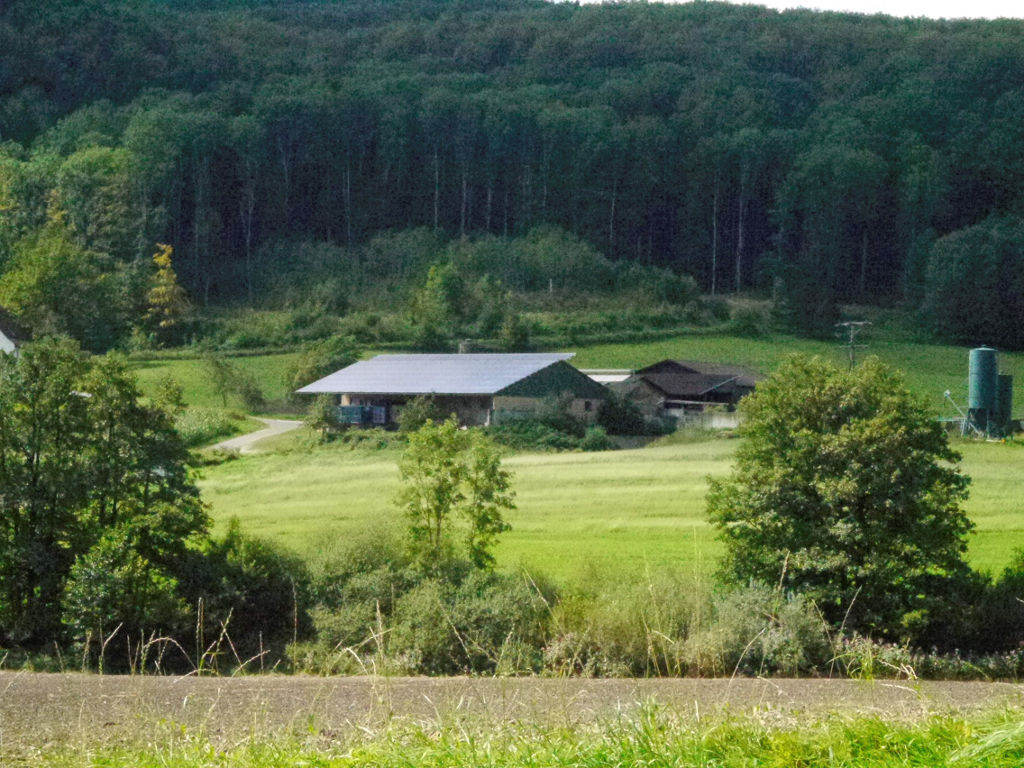
Southern Germany has lots of huge farm sheds covered in solar panels. I love that.
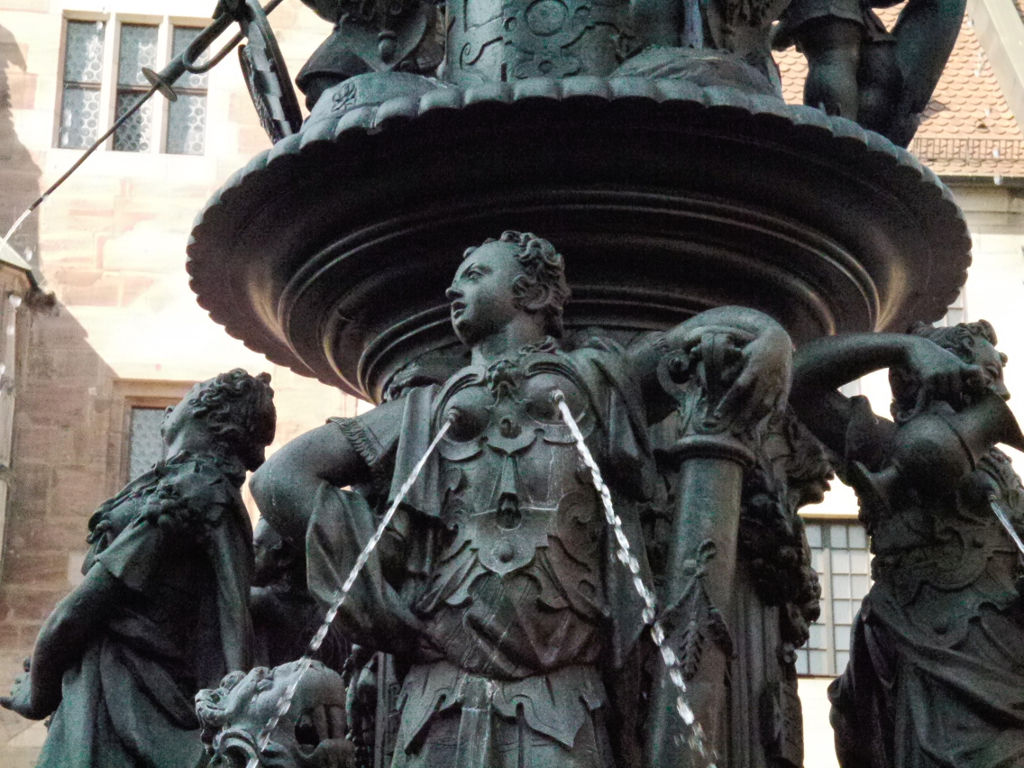
Odd but worth a photo!
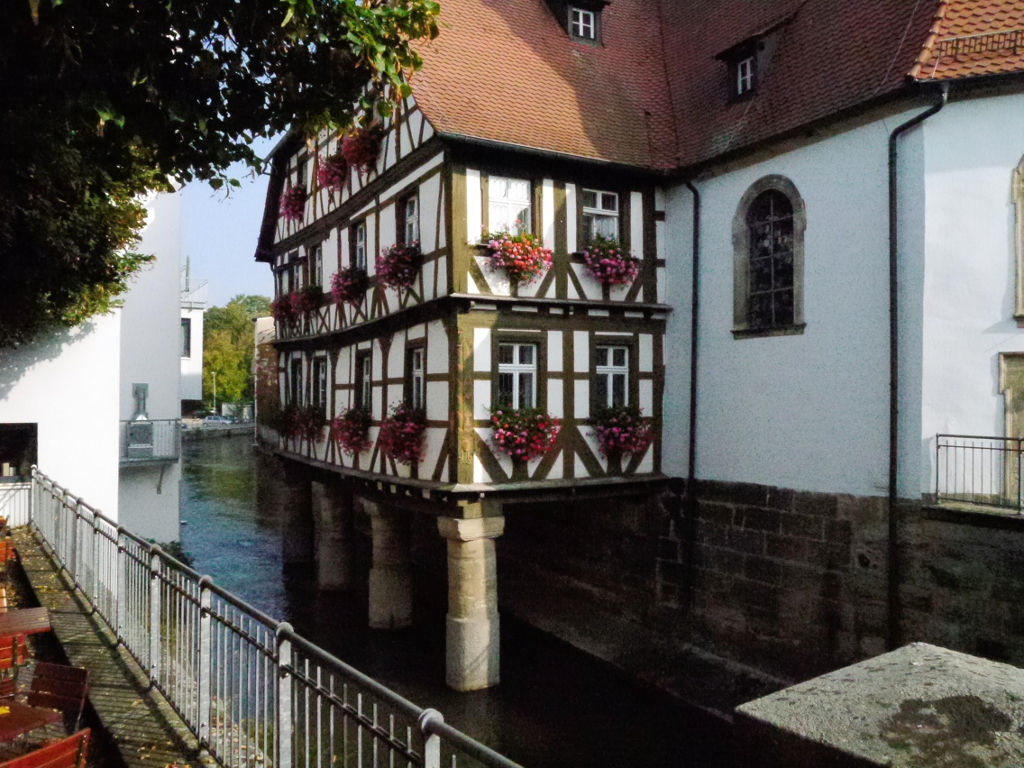
Bamburg is a gorgeous city. I passed through a few years earlier and am lucky to be able to come through again. Cycling paradise.
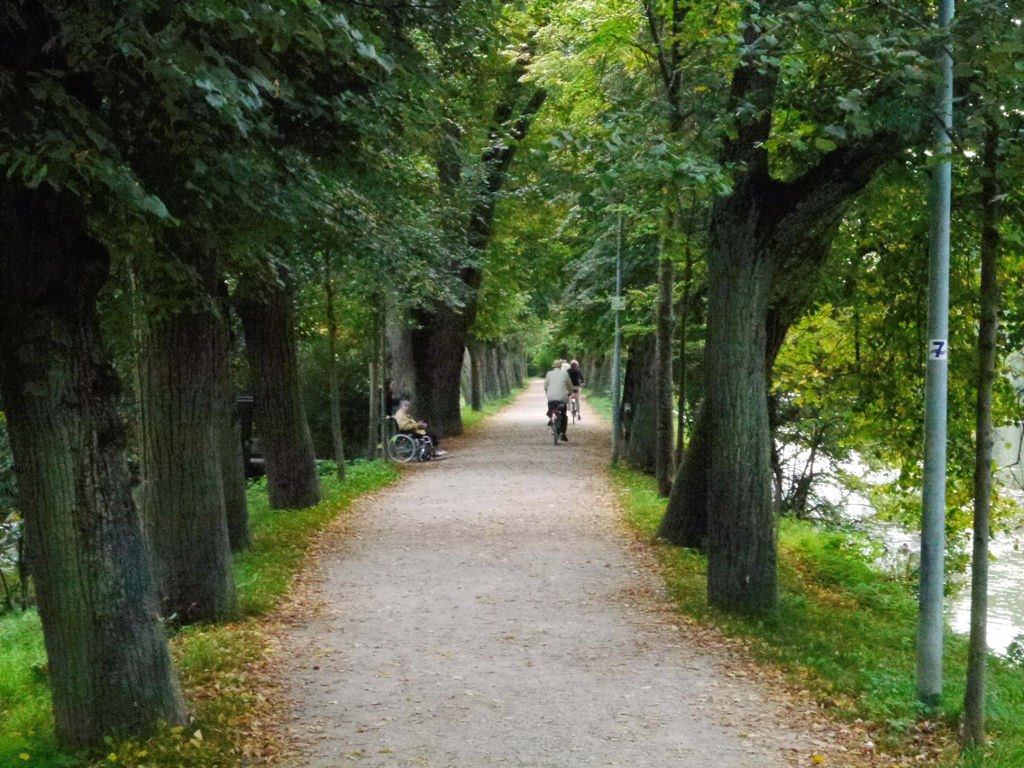
There are paths to take you anywhere you want. It is SO good.
I did the rounds of the bike shops in Bamburg and got a Hebie Chainglider fitted. The uncovered chain was ok but rain eventually made it squeak. Plus it is a bit dirty.
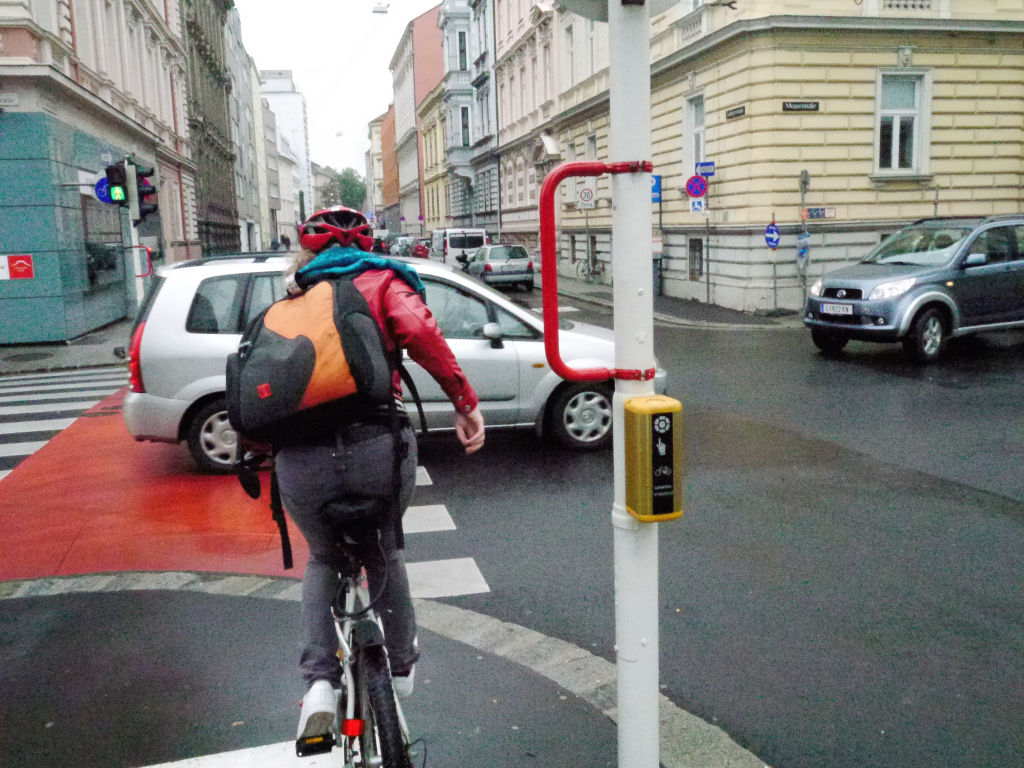
How civilized! At the traffic lights there is a hand-hold so you don’t need to take your feet out of the clips.
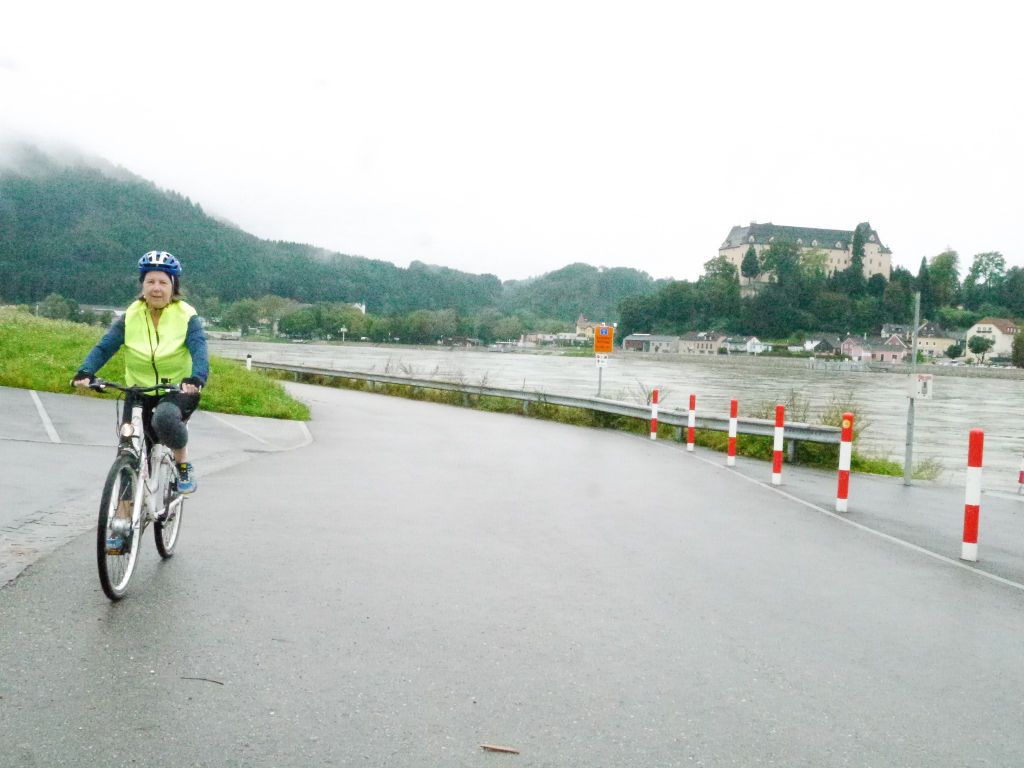
Over on the Danube going South. It must be great to live around here. The facilities for bikes are so good.
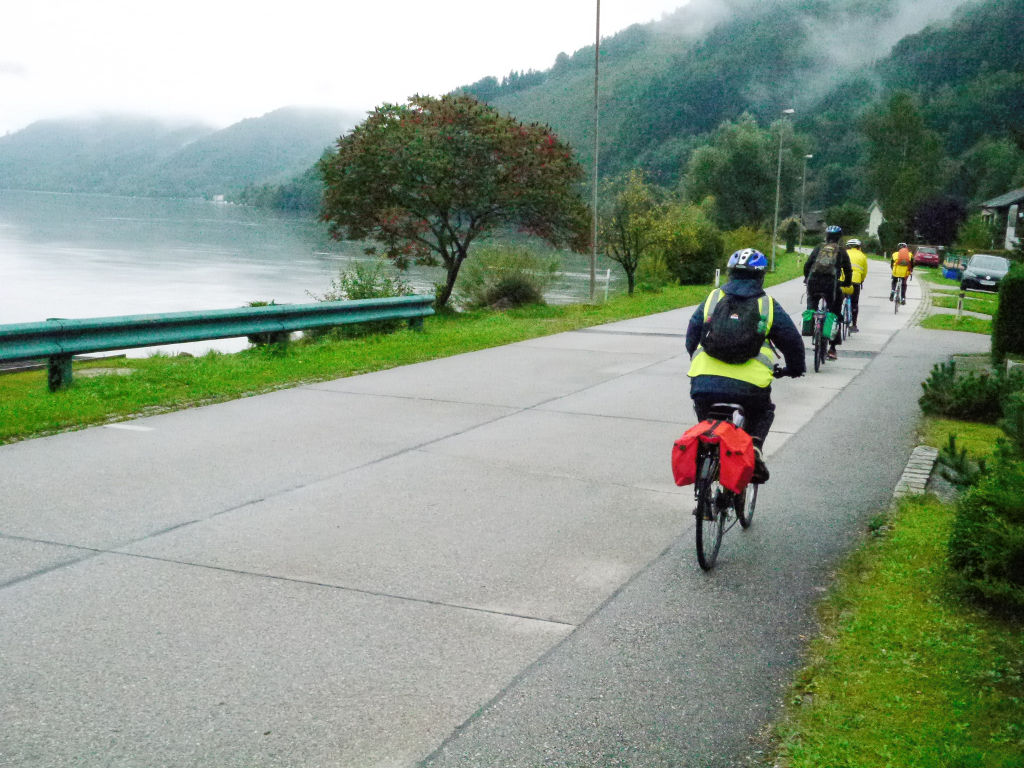
This group of riders is from Oregon. They bought a package that included hire bikes and accommodation. But that meant they rode all day yesterday in the rain whereas we, with no bookings, ducked into a hotel mid-morning and stayed.
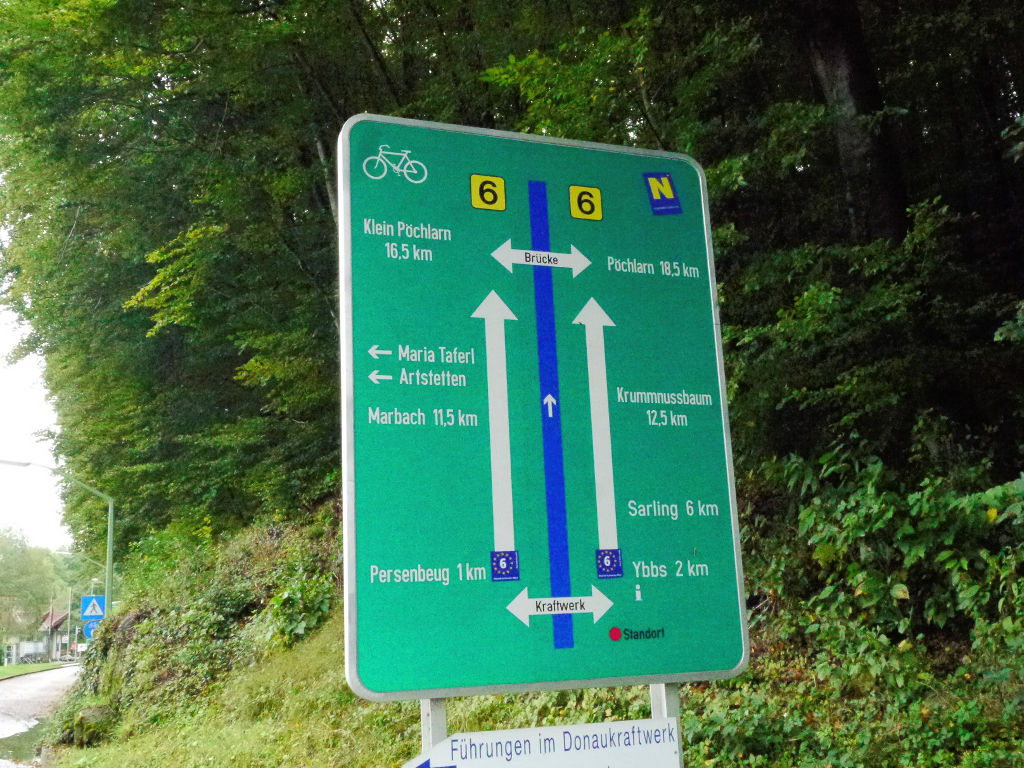
For much of the Danube path you can ride on either side of the river.
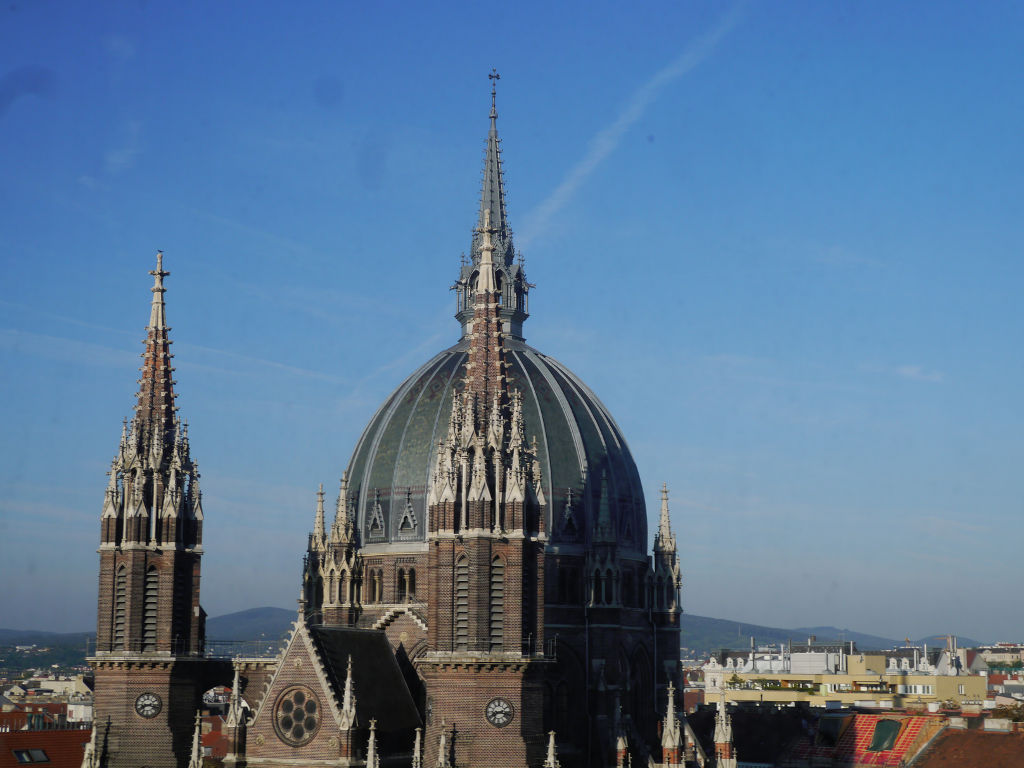
Vienna is fantastic. It is so easy to ride around. Lots of tourists but you get absorbed by the city.
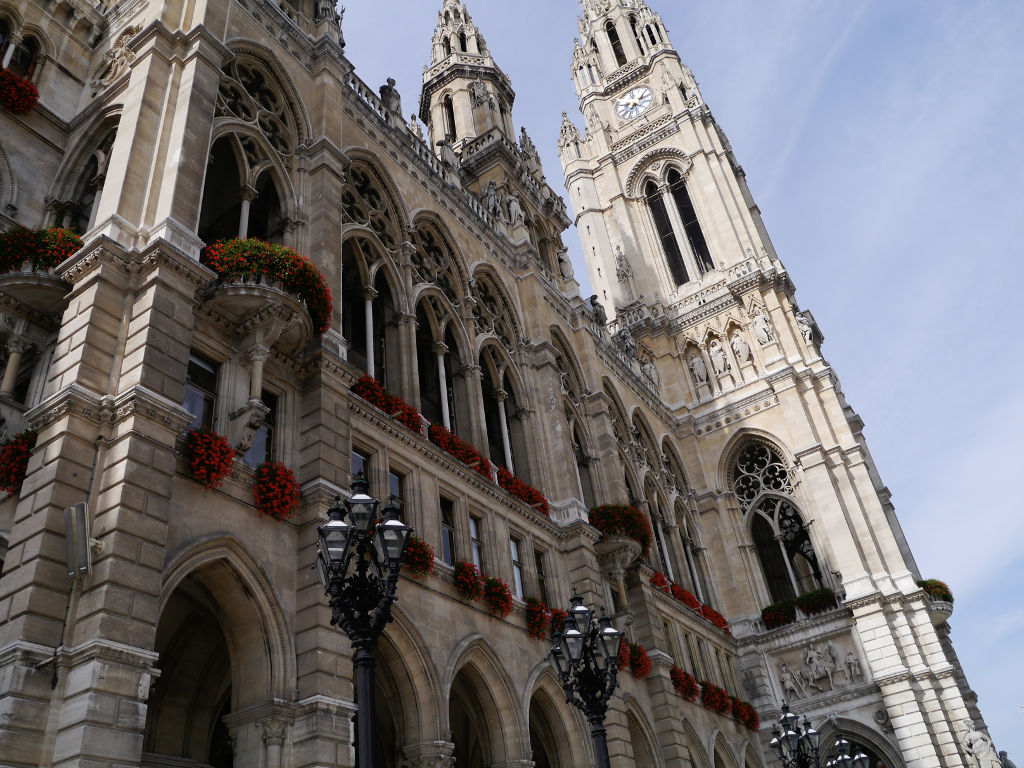
The city was not smashed in the wars. The architecture is beautiful.
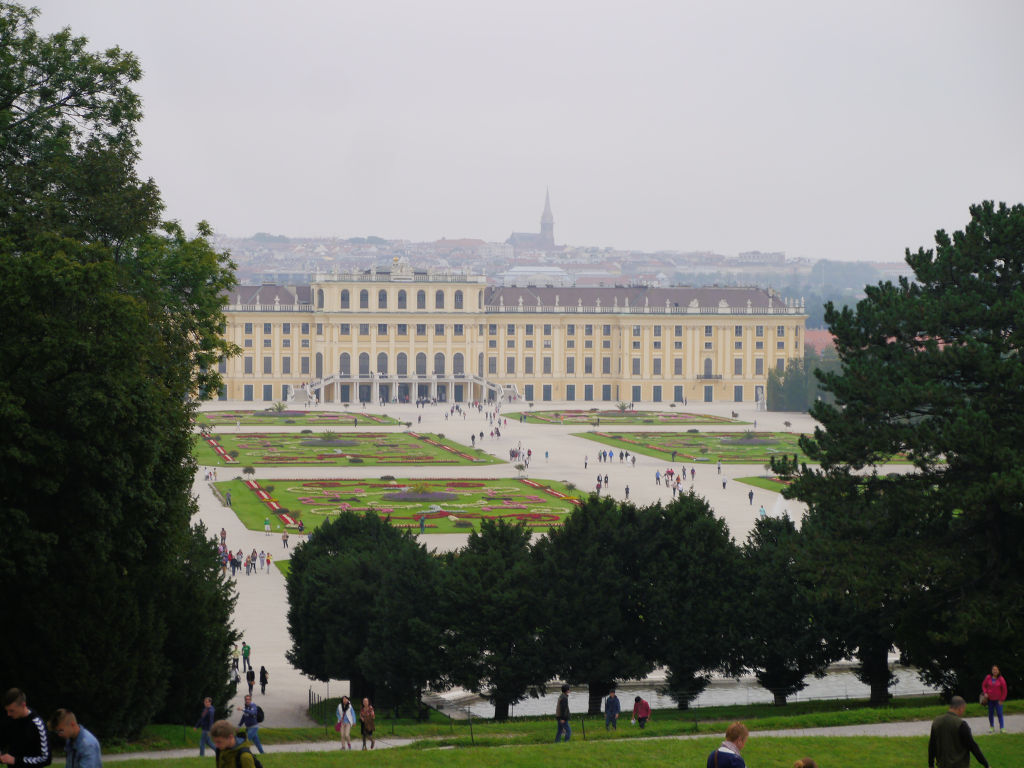
Near to the city is the Schonbrunn Palace, the base of the Habsburg Empire. The empire was so secure that they could have their palace in the country, without fortifications.
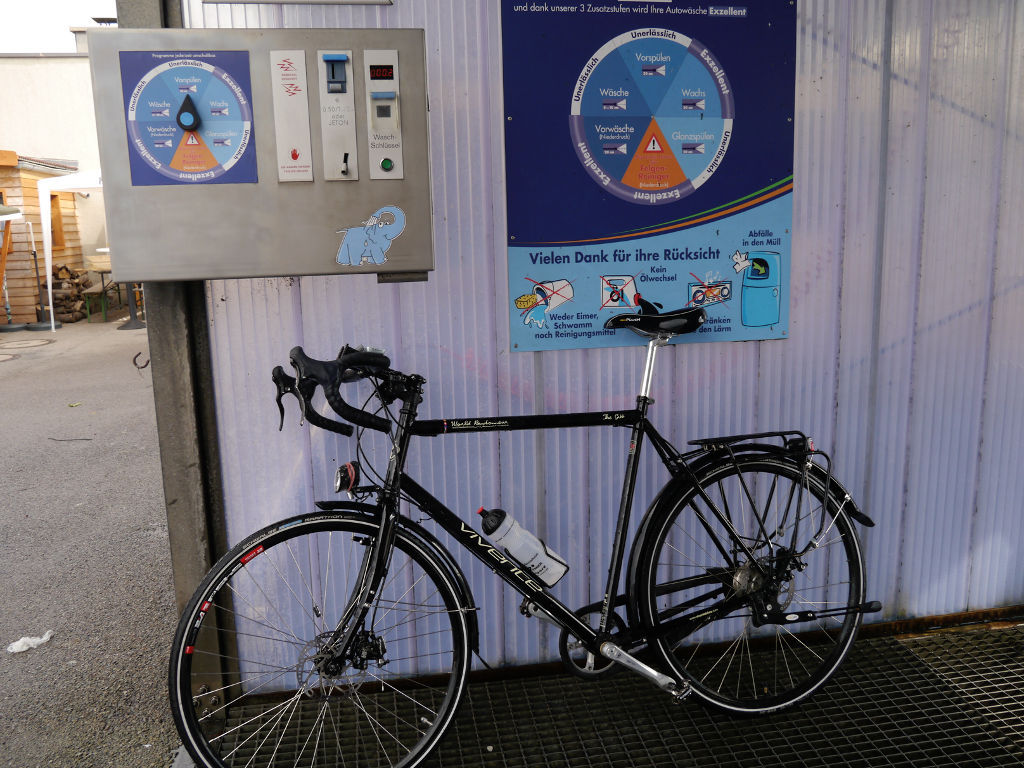
My bike posing before packing at Vienna airport. My policy of carrying a small packing knife paid off as the only cartons available were massive and needed to be substantially cut-down. I’m very happy with the Hebie Chainglider.
Riding from Amsterdam to Bodensee in Southern Germany. This tour crosses Netherlands, Belgium, France, Luxemburg and Germany. I have put drop bars onto my Rohloff test bike and later call it the Swabia model. I’m riding with no paper maps and no digital maps. Just a compass and watching for signs that might help. Due to this navigational restriction, the 850km took me 1,200 but it was interesting and fun. The ride overall was most memorable for the navigation challenge plus discovery of the Vennbahn in Belgium and the canal paths west of Strasbourg.
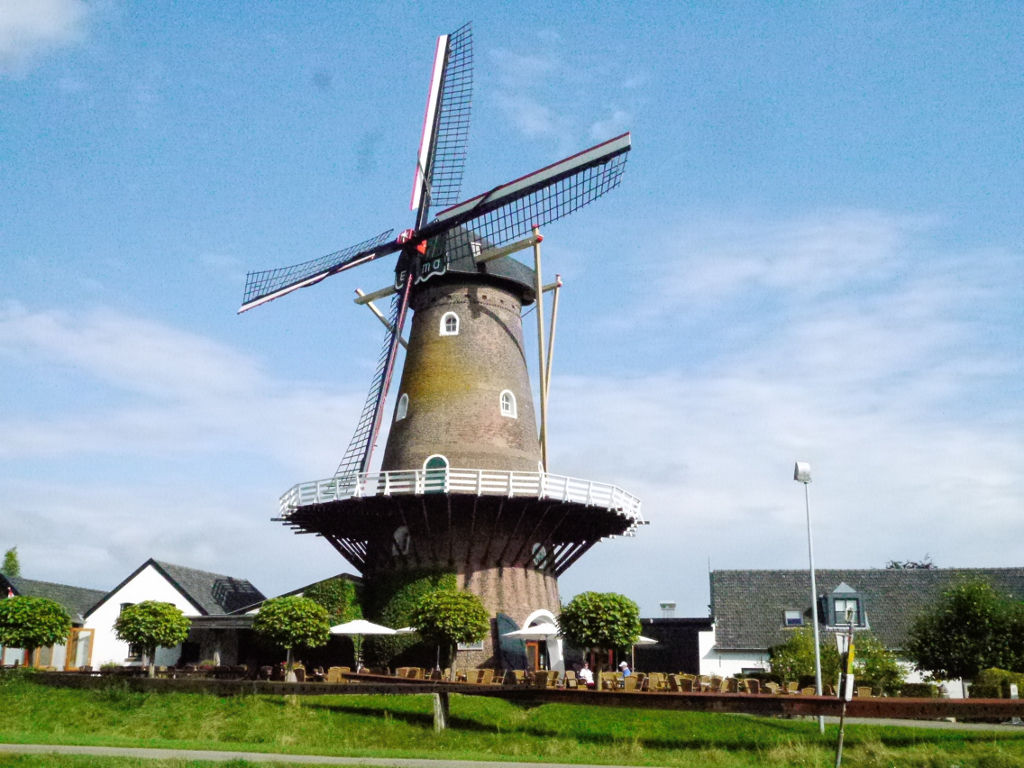
Out of Amsterdam airport. I only slept one night in the city and next morning zigzagged past very Dutch scenes trying to find straight SE lines when massive canals caused me to often go sideways
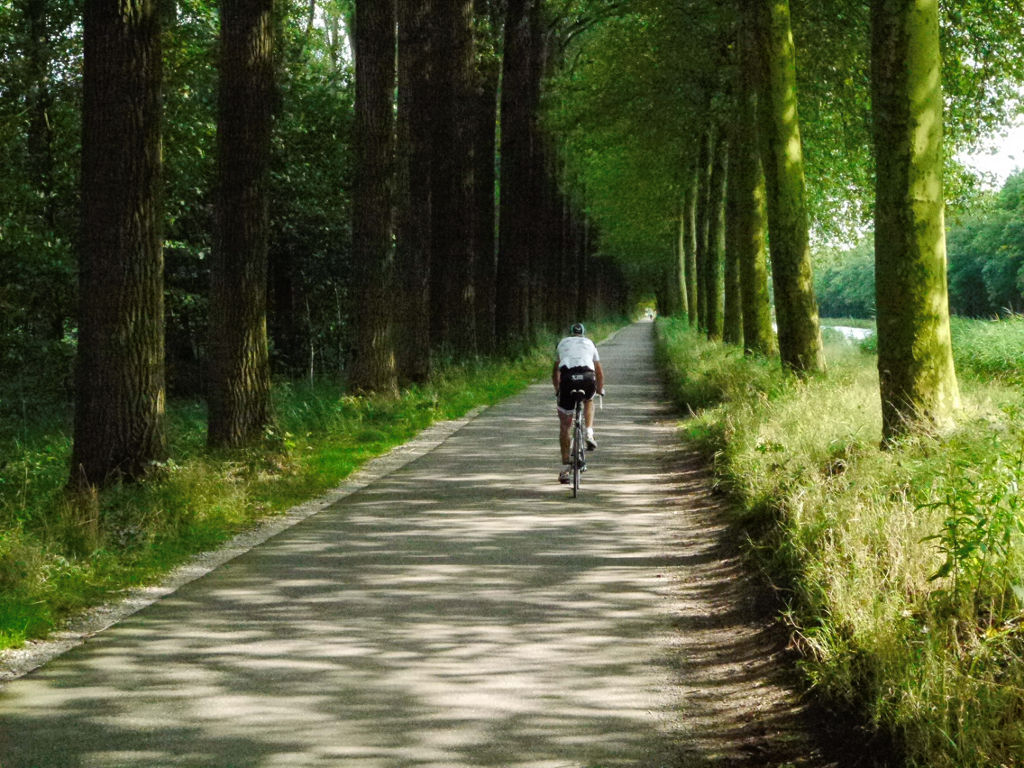
Near Maastricht in the SE of the Netherlands I strike some long paths heading just the way I want.
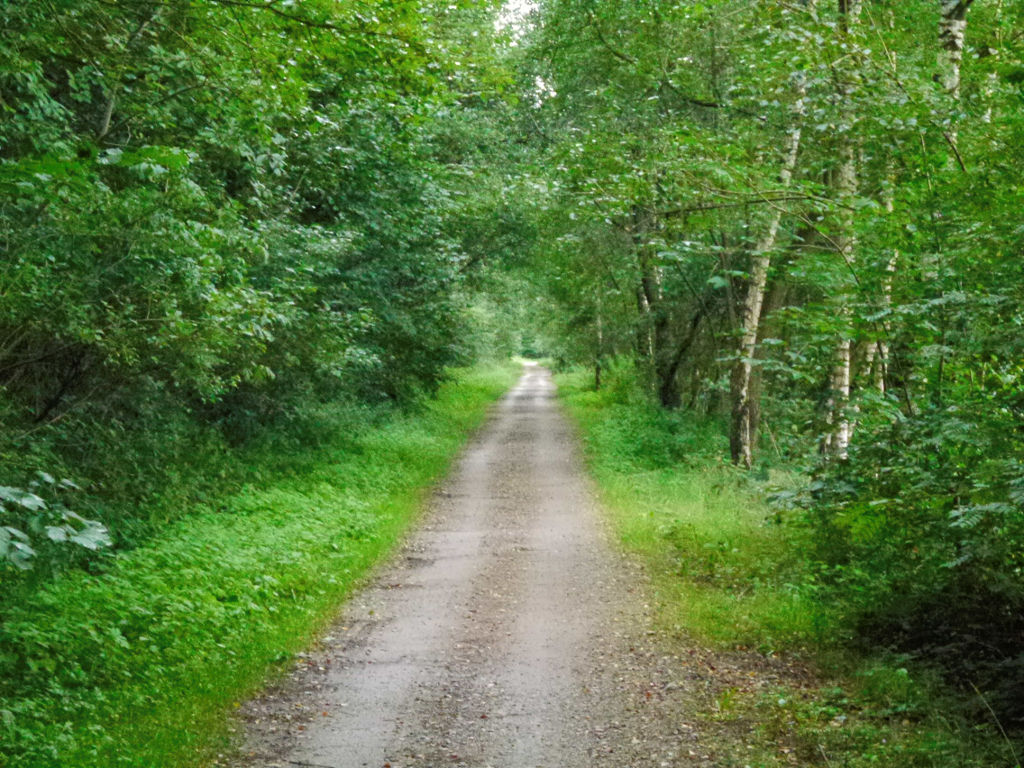
Yesterday I had glimpsed cyclists occasionally through gaps in vegetation and today discovered they were on a long bike path, the Vennbahn, (a rail trail) in SE Belgium. Now I am off the highway.
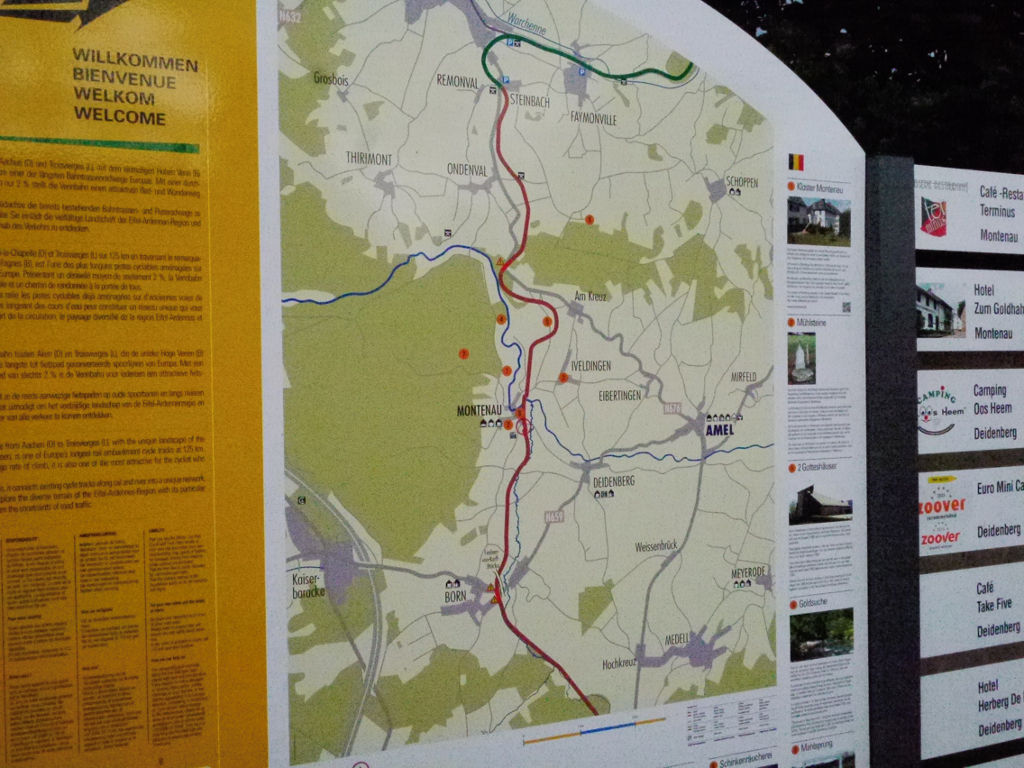
Rail Trails are always good, but this is the best I’ve come across. I may be the only person to ride it that did not even know of its existence. It happens to be running just the way I want to go.
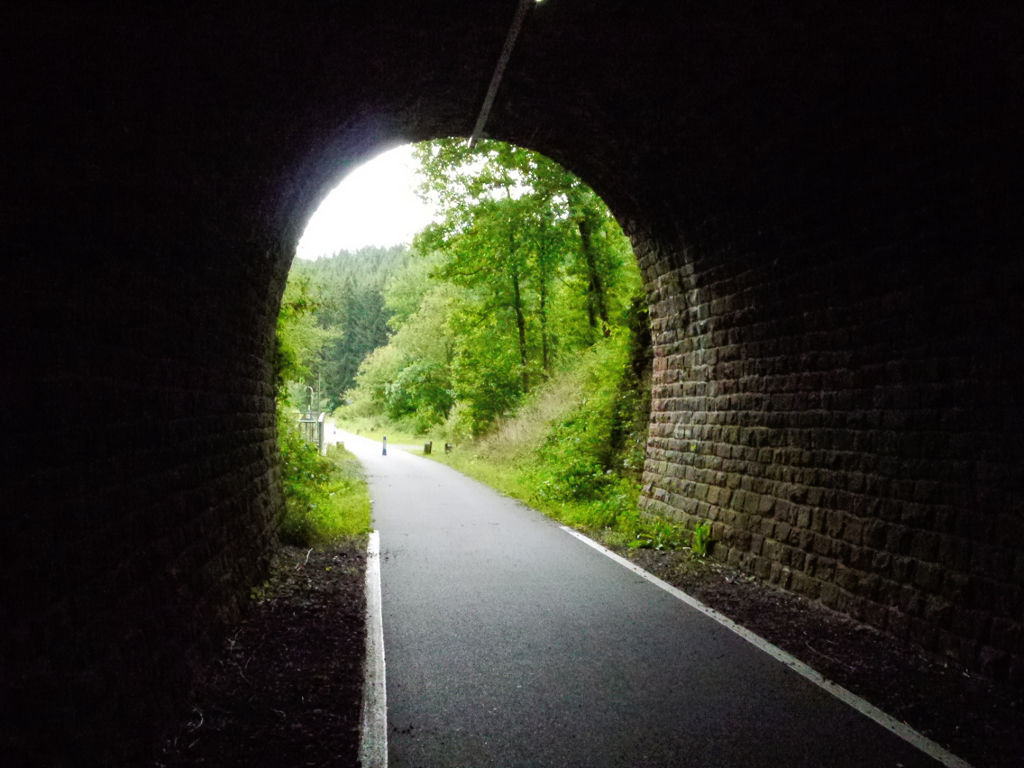
Classic. The tunnel reminds me of the trail at Newcastle (NSW) and the Rimutaka in New Zealand (another trail I found by pure chance).
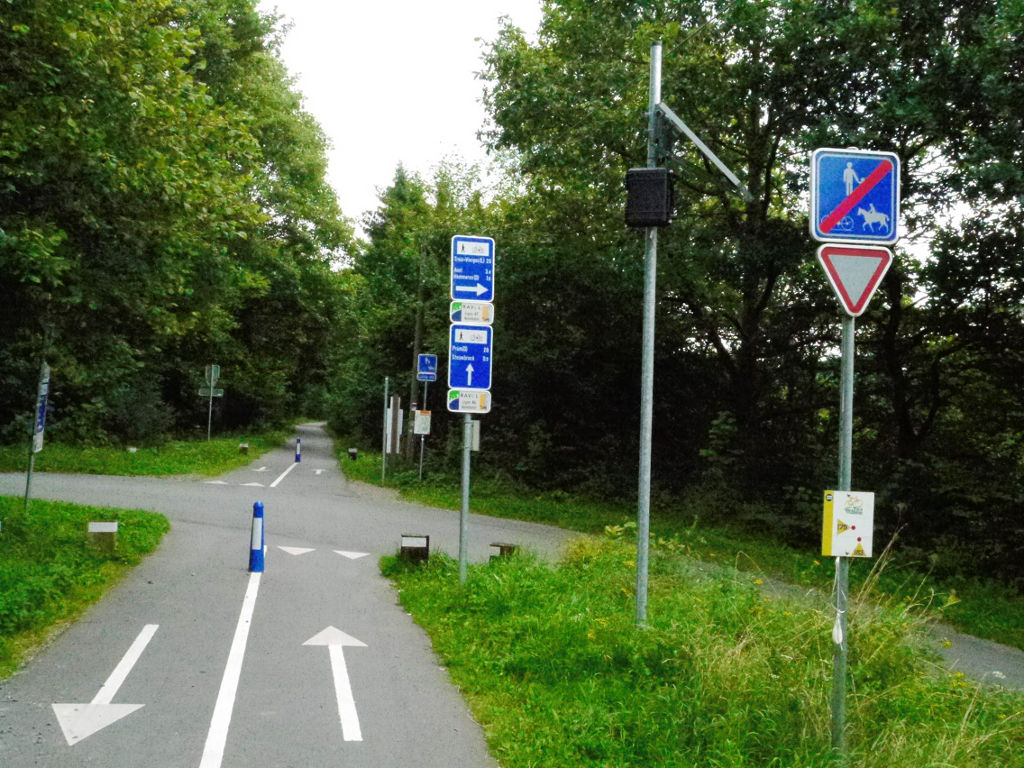
No pedestrians and no horses so you can really zoom along.
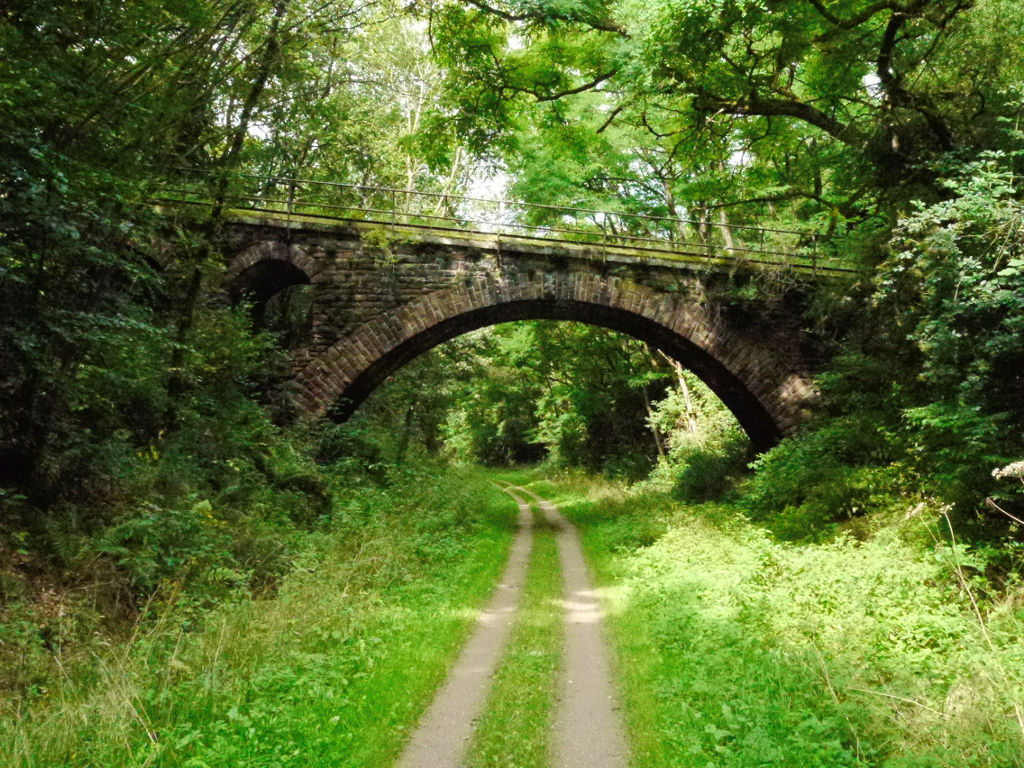
This trail is only 125km but every bit is a delight.
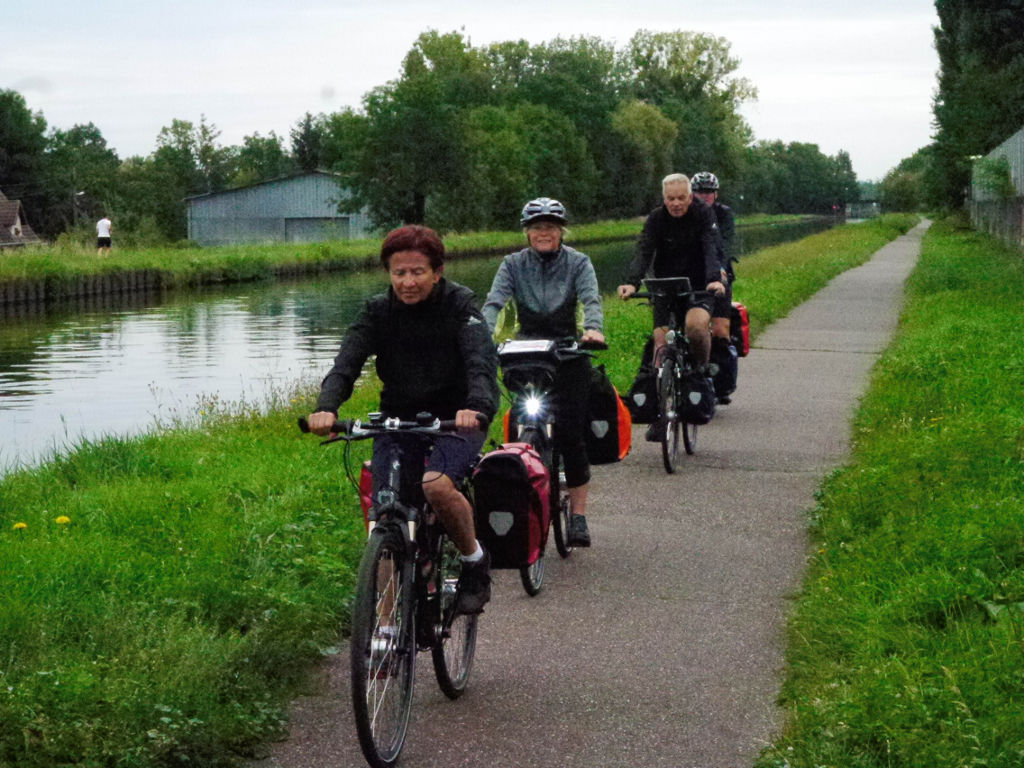
After passing through Luxemburg, Metz and Nancy I head for Strasbourg. At Saverne I arrive at another region of extensive bike paths. These are along the canals on the French side of the Rhine.
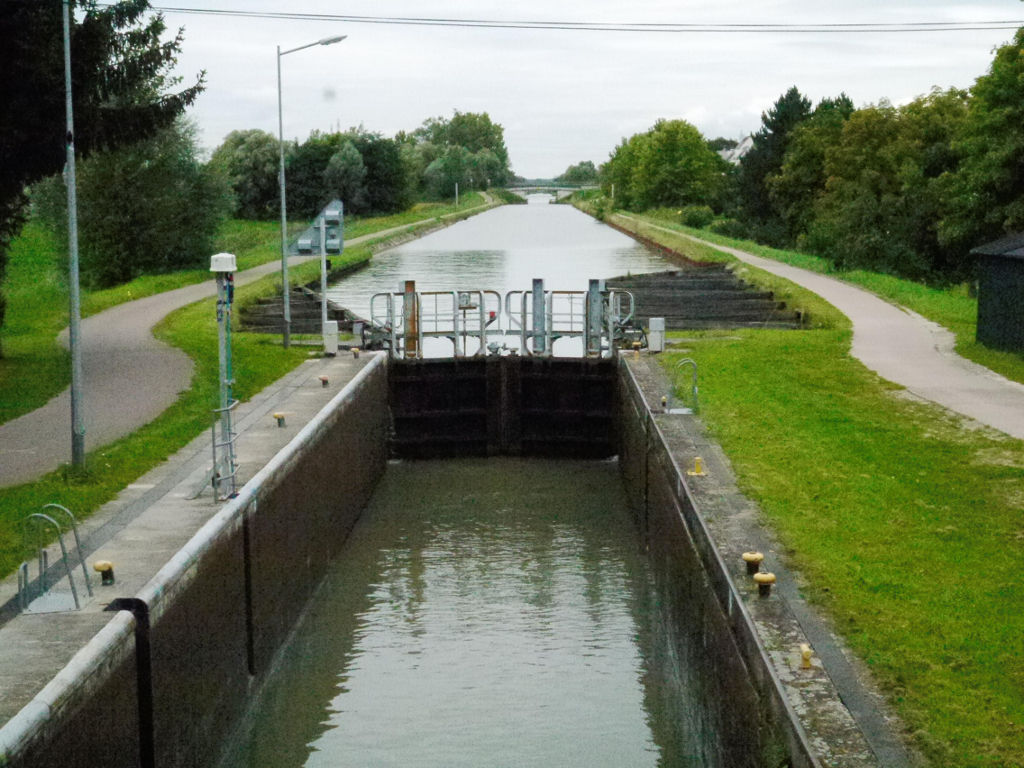
The canals of course have lots of locks. They are ideal for bike tourism and are well used by both boats and bikers.
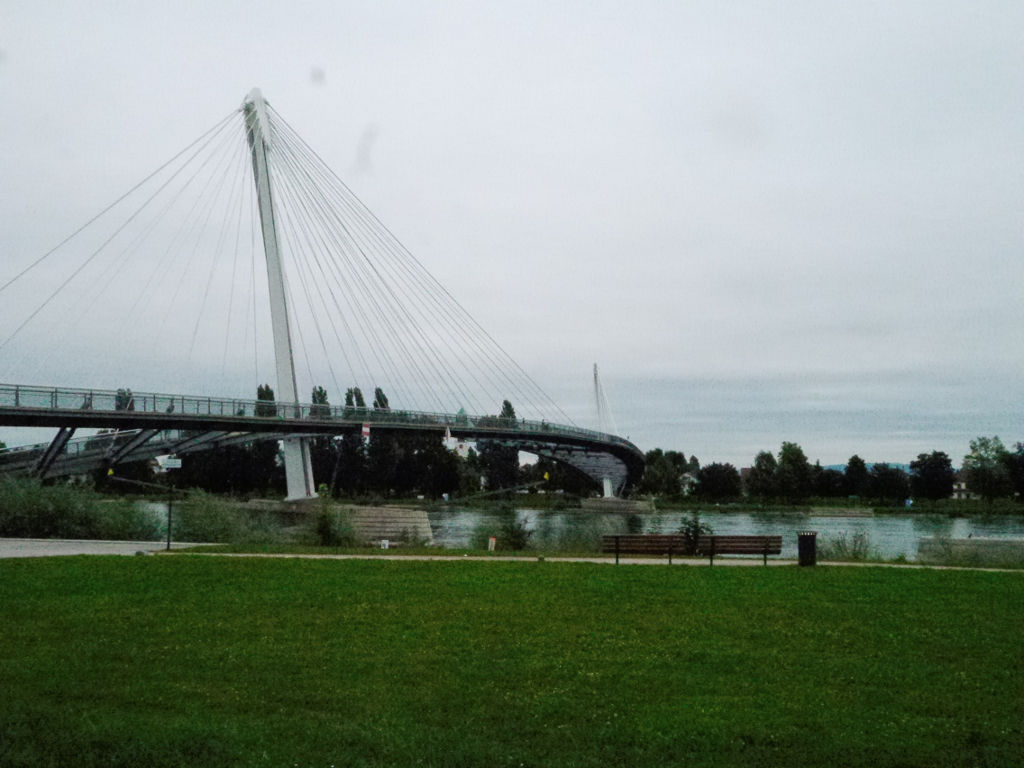
After Strasbourg there is a fantastic new-looking bike bridge across the Rhine. Germany is on the other side.
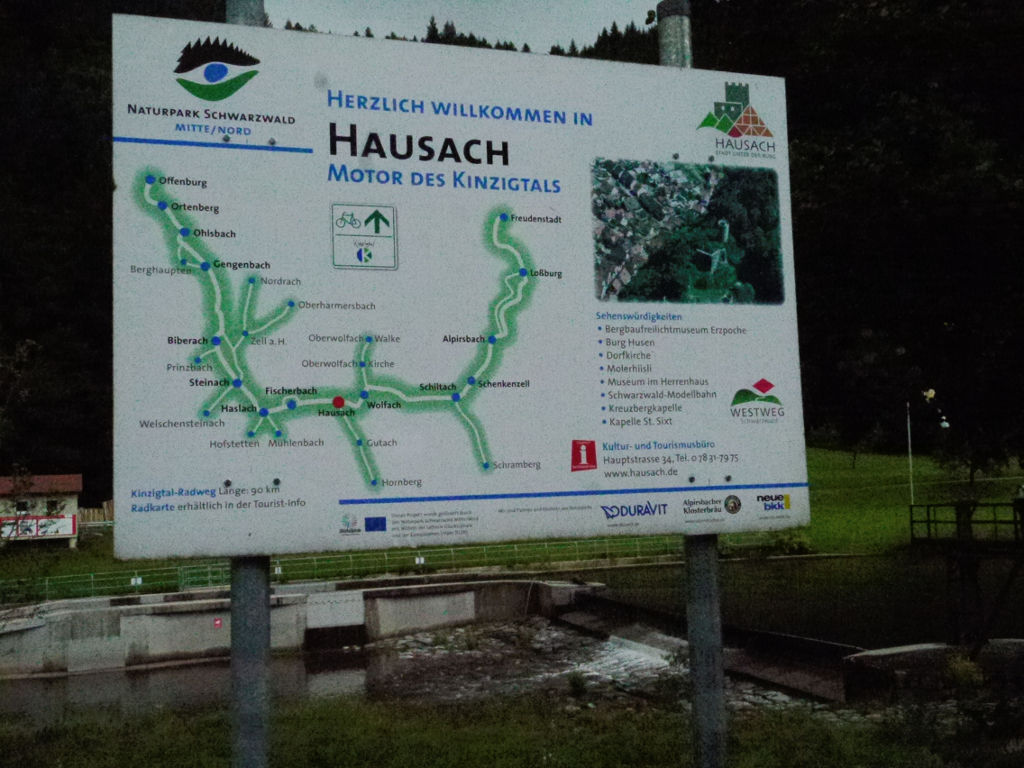
The networks of bike paths in Germany is so extensive. I can just head in my south easterly direction and be guaranteed of being on off-road paths most of the time.
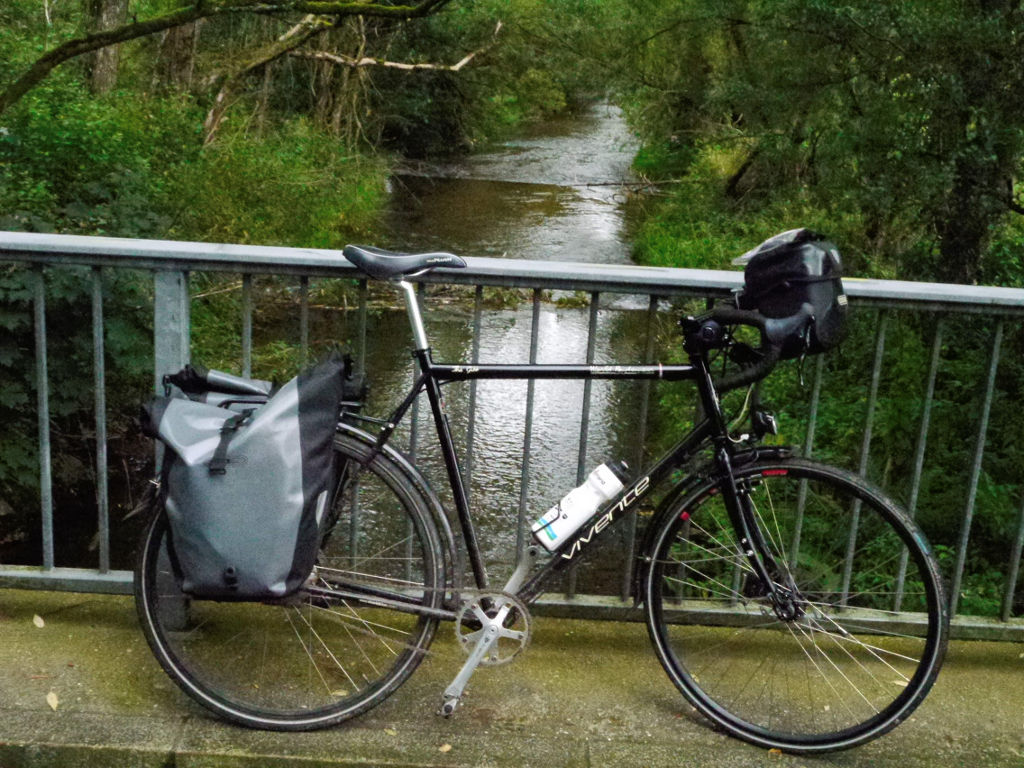
This is the Danube quite near its source. I am running a chain on a Rohloff hub. I’m trying out a steerer-mounted accessory-bar as the shift-lever mounting position. There has been a bit of rain and the chain is getting noisy.
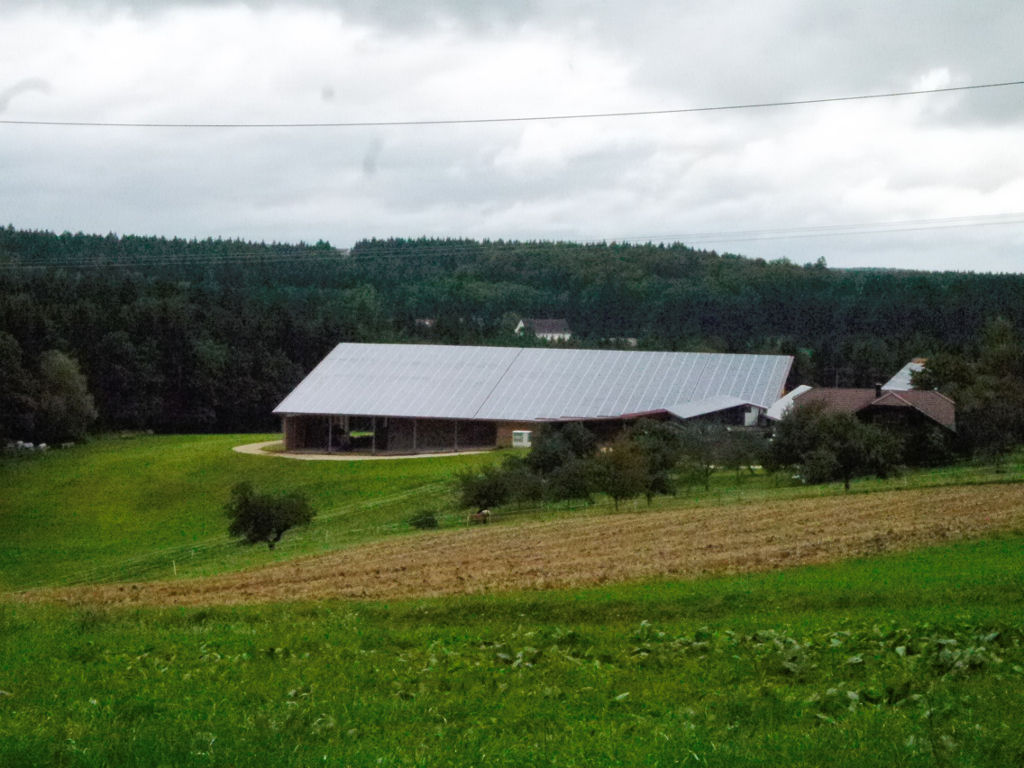
Down in the south of Germany I’m in the land of massive farm sheds built to catch the sun on huge solar roofs.
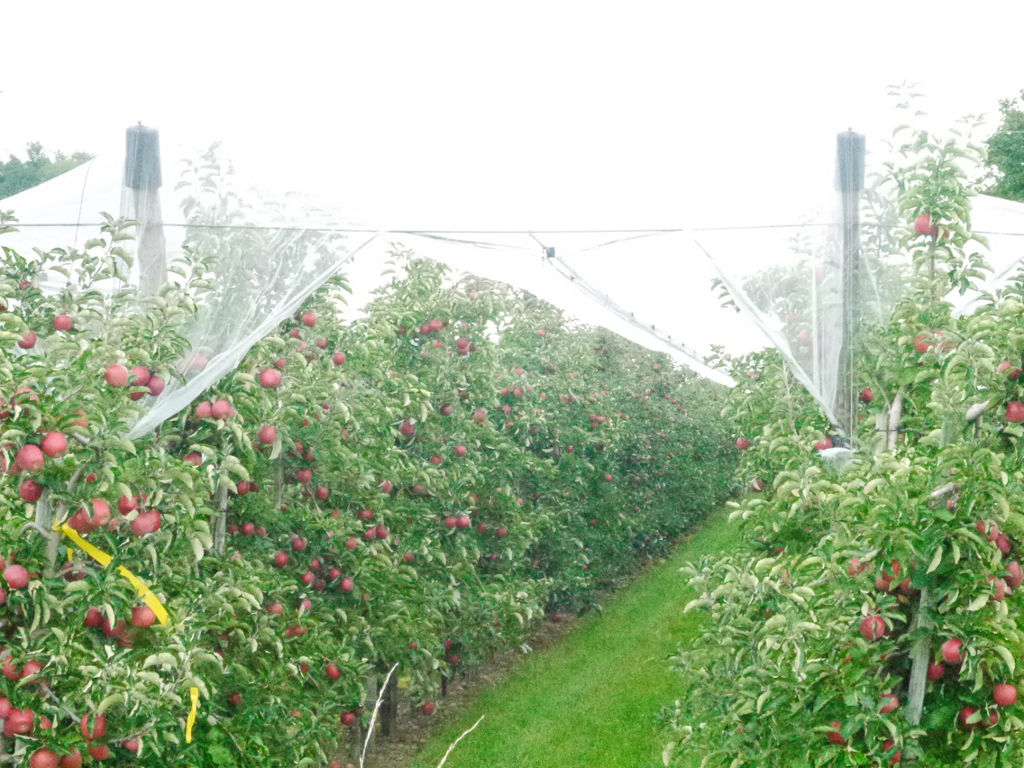
Approaching Bodensee, the apples and hops begin. Feels like home. I dub this new drop bar bike the “Swabia”.
A ride in southern Hokkaido and northern Honshu, following on from our 2014 ride in Hokkaido. We didn’t start with a detailed plan but the basic idea has been to go south from Chitose, check out some of the high snowfall areas, figure out how to use the ferries to and from Honshu, get better at working out the hotels and start to explore Honshu.
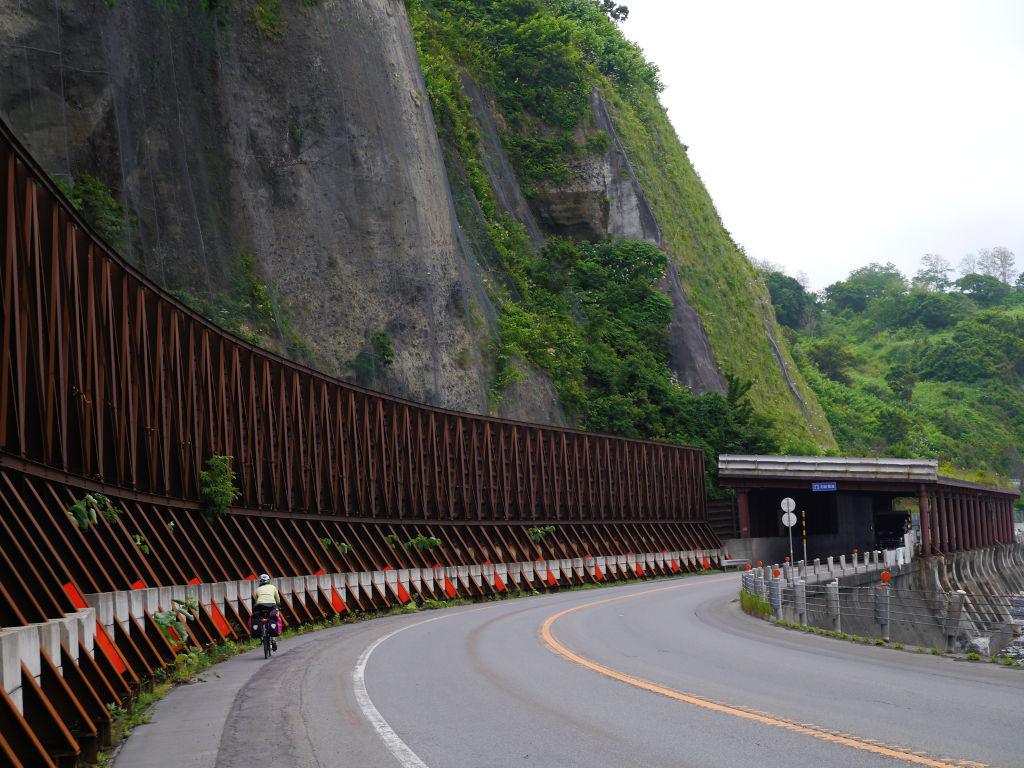
Half way to Otaru and the coast road has big fortifications against avalanches. Very reassuring.
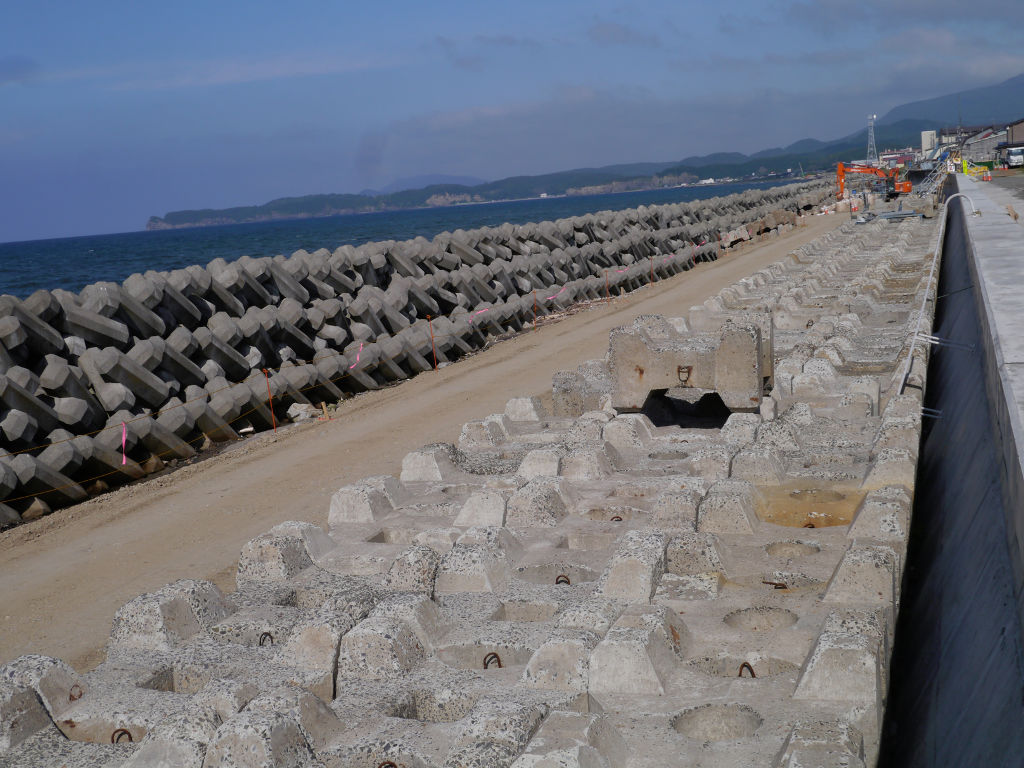
The fortifications against the sea are extensive and substantial. Must be expensive too. This is just in a small town.
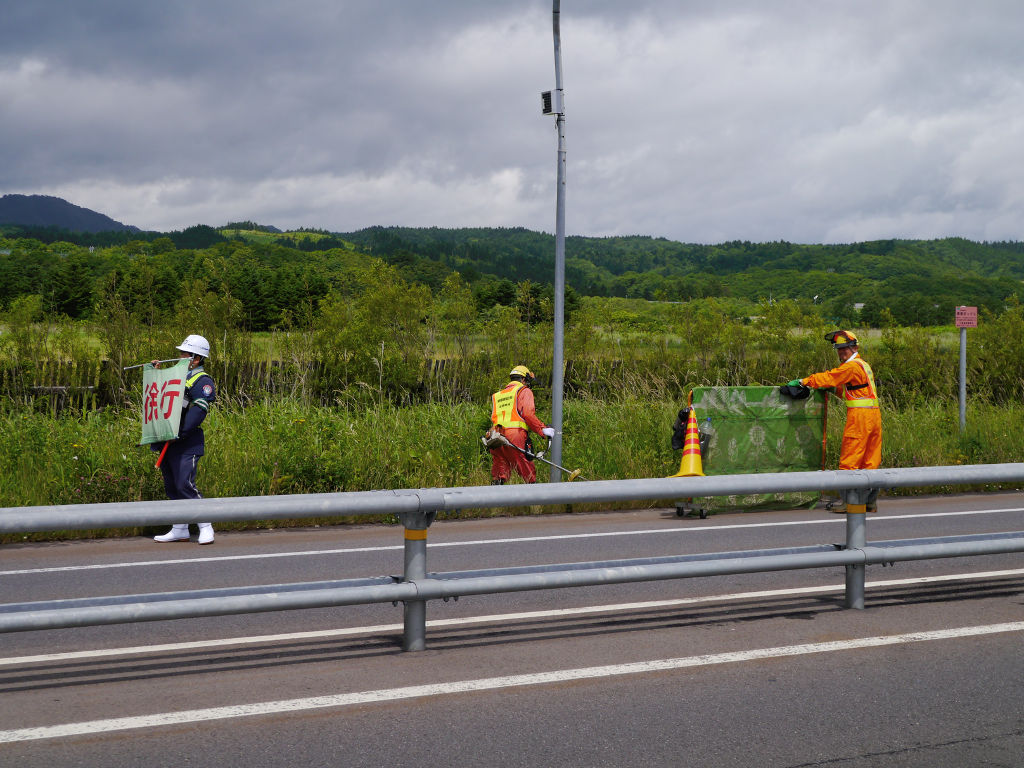
The guy with the whipper snipper has two helpers. One with a sign warning motorists (and cyclists) and one holding a frame with a big bit of shade cloth to stop anyone getting hurt. Perhaps this is why Japan has full employment.
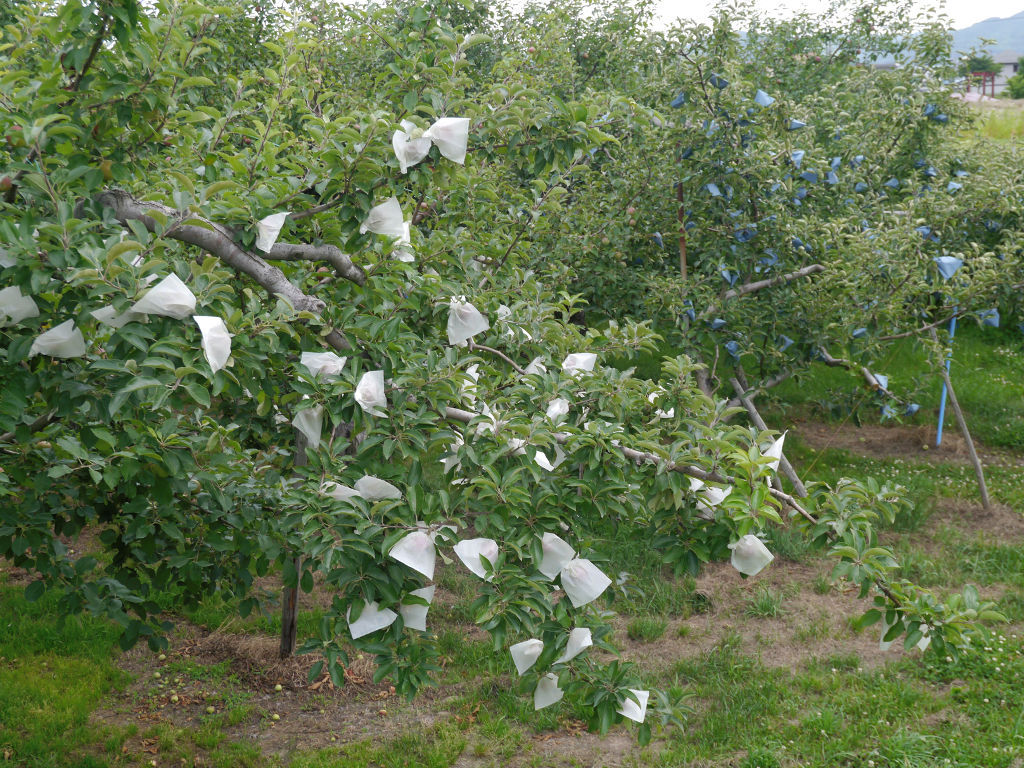
The Japanese manually pollinate their fruit due to an absence of European bees. There is a hornet in Japan which makes it very uncommon for a bee colony to survive. An individual hornet can kill forty European honey bees in a single minute. Apples and other fruit can cost over $5 a piece.
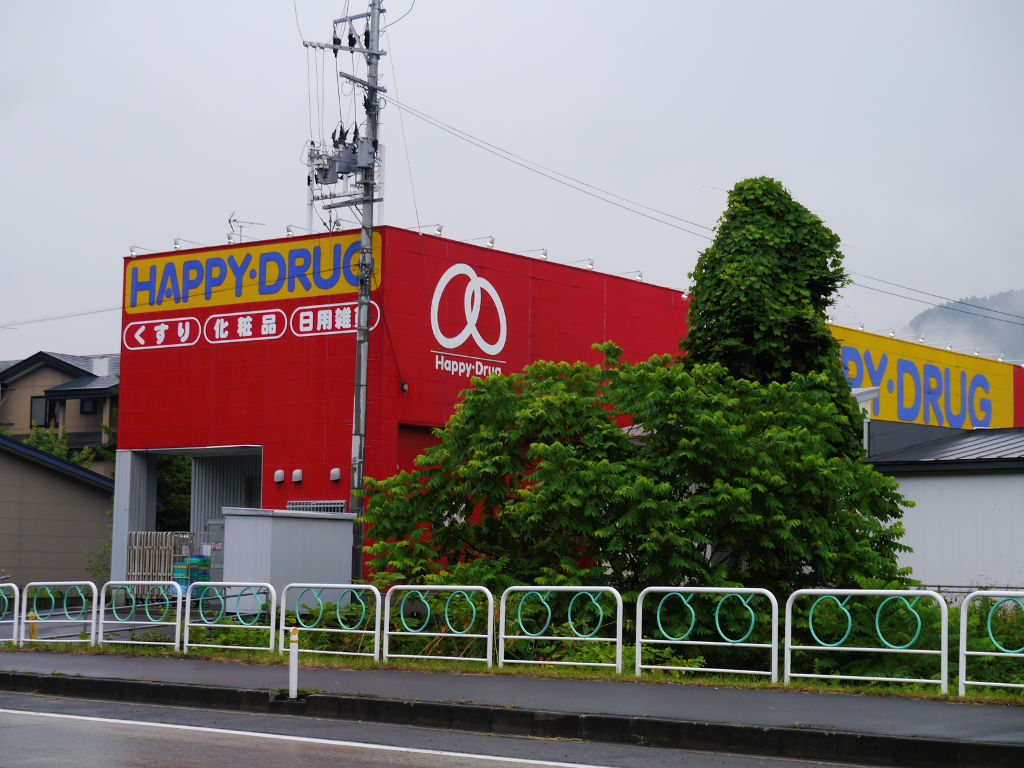
Happy Drug. There are also Real Drug, Super Drug and Sapporo Drug. Probably more. These are a retail “category” we don’t have (yet) in Australia.
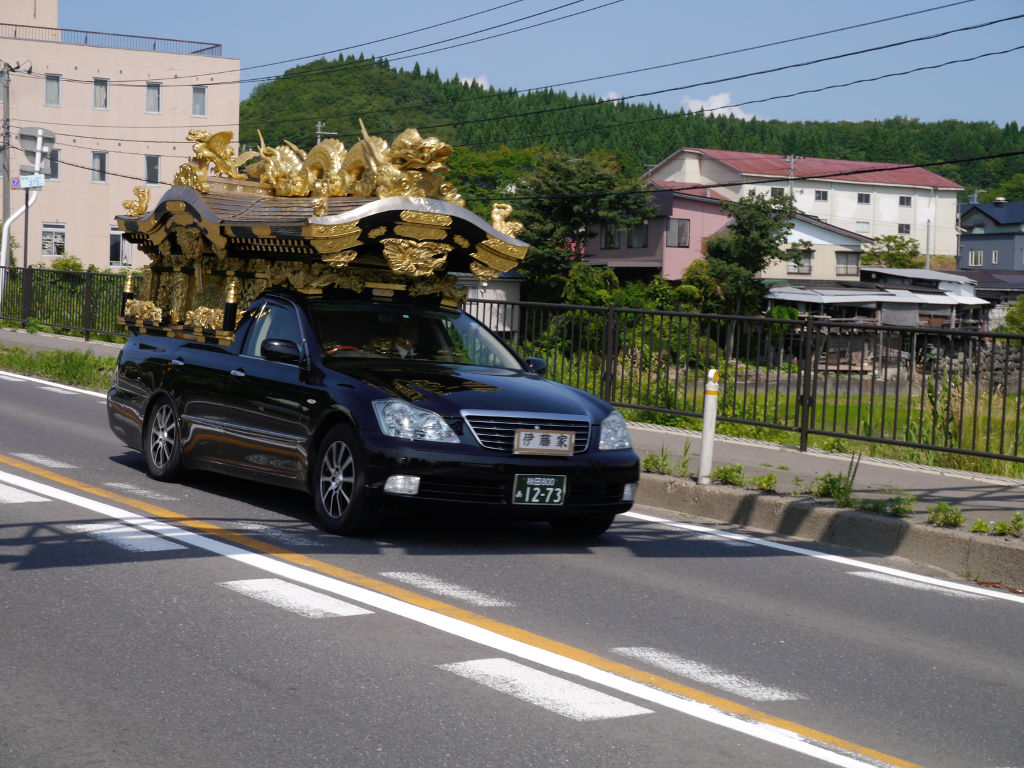
A hearse.
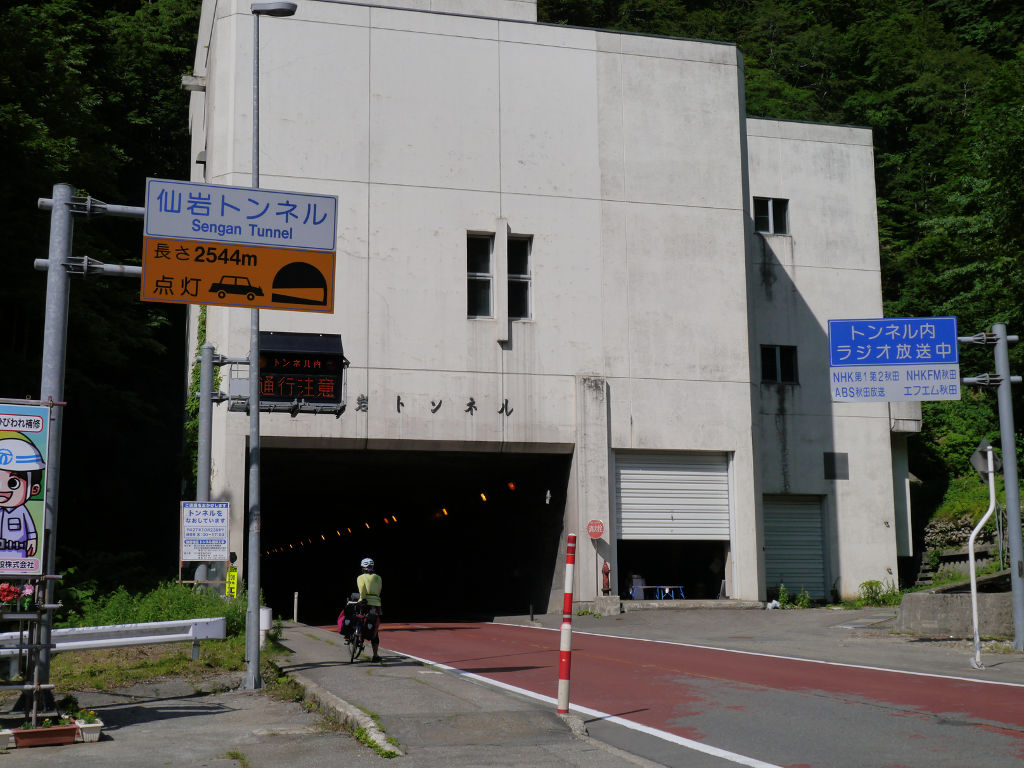
Heading from Akita on the west coast across to Miyako on the east coast takes two days, each over 100km and each with lots of tunnels. About 40 all up. This is the entrance to Sengan Tunnel which measures 2,544m. They are scary but mainly because of the noise. You just don’t know where things are. It can sound like they are right behind you and huge.
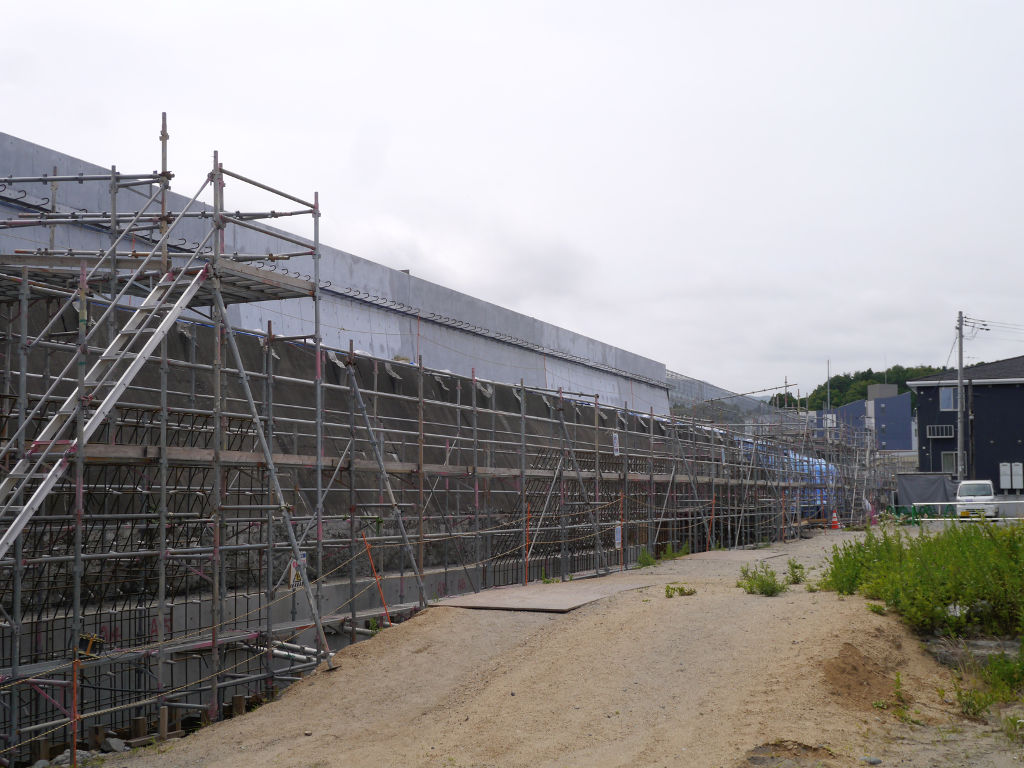
This new sea wall extends right behind houses. Not sure if I’d be living there though.
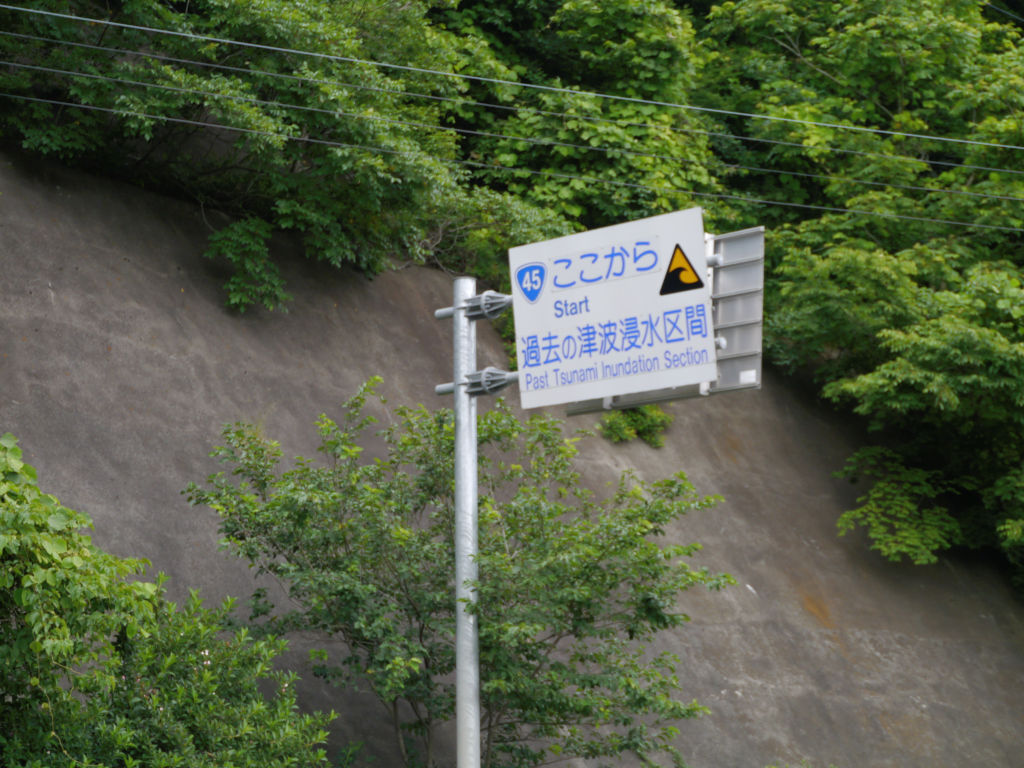
The extent of 2011 tsunami inundation is signposted all along the east coast. Whole coastal towns were submerged.
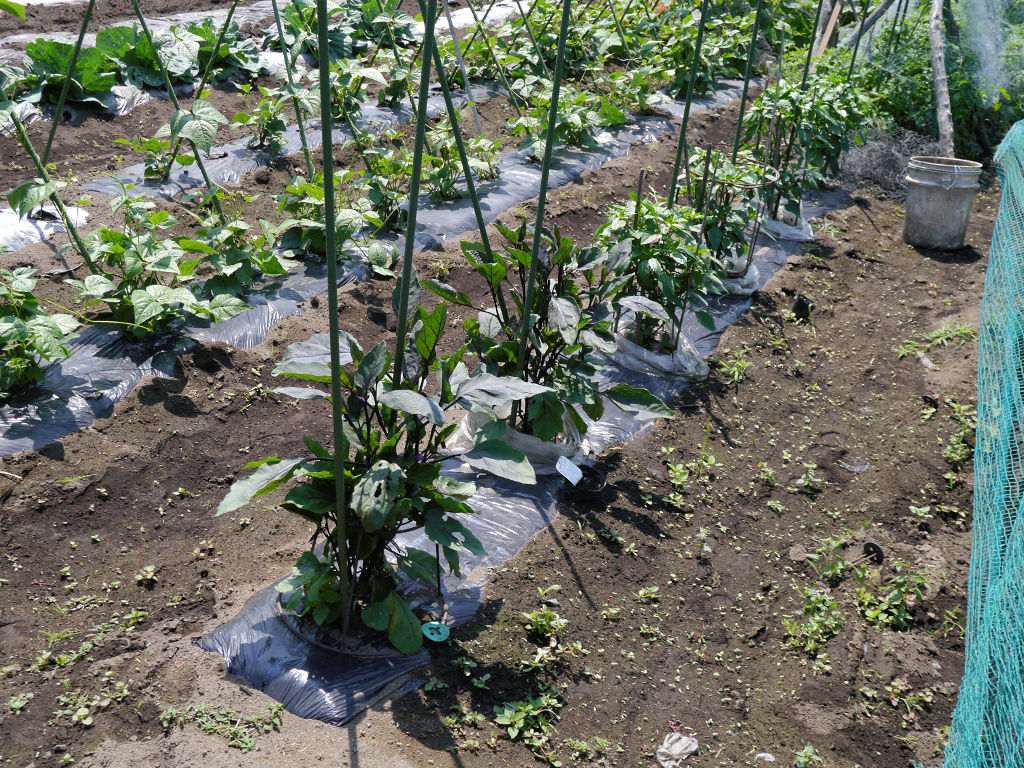
The soil is amazingly fertile. There is often a volcano nearby. The growing season is being extended by warming up the soil using plastic. This is used extensively including even on many broad acre crops.
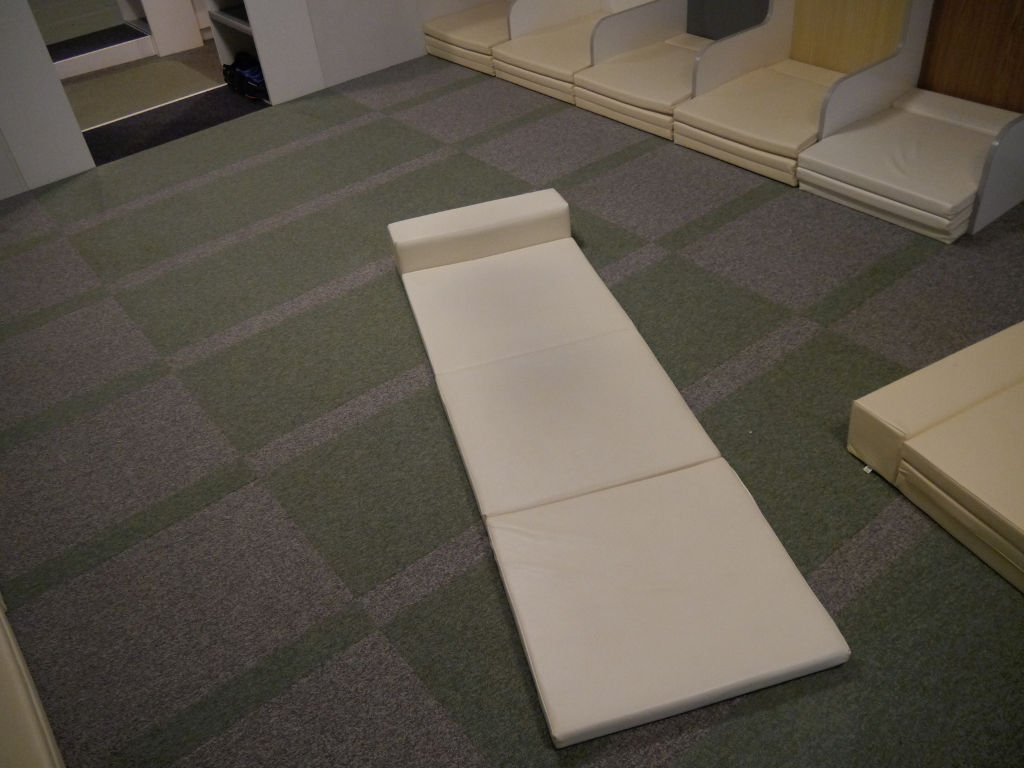
We are on the 8 hour ferry from Hachinohe to Hokkaido. Most of the business seems to be moving big trucks but it is a really good way for cyclists to get around. Much less drama than on a train where you need to put your bike in a bag and cross your fingers a bit.
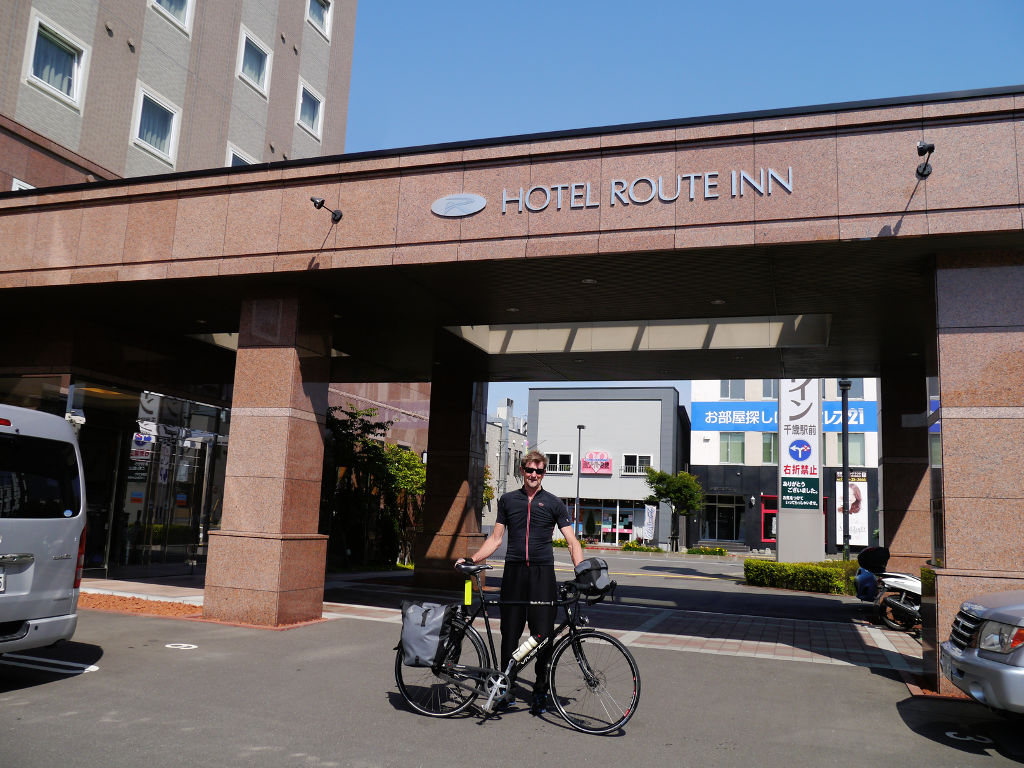
The main hotels we are using are Toyoko Inn and Route Inn. The Route Inn’s are a bit more costly, not as close to city centres but all have an Onsen which makes them very tempting.
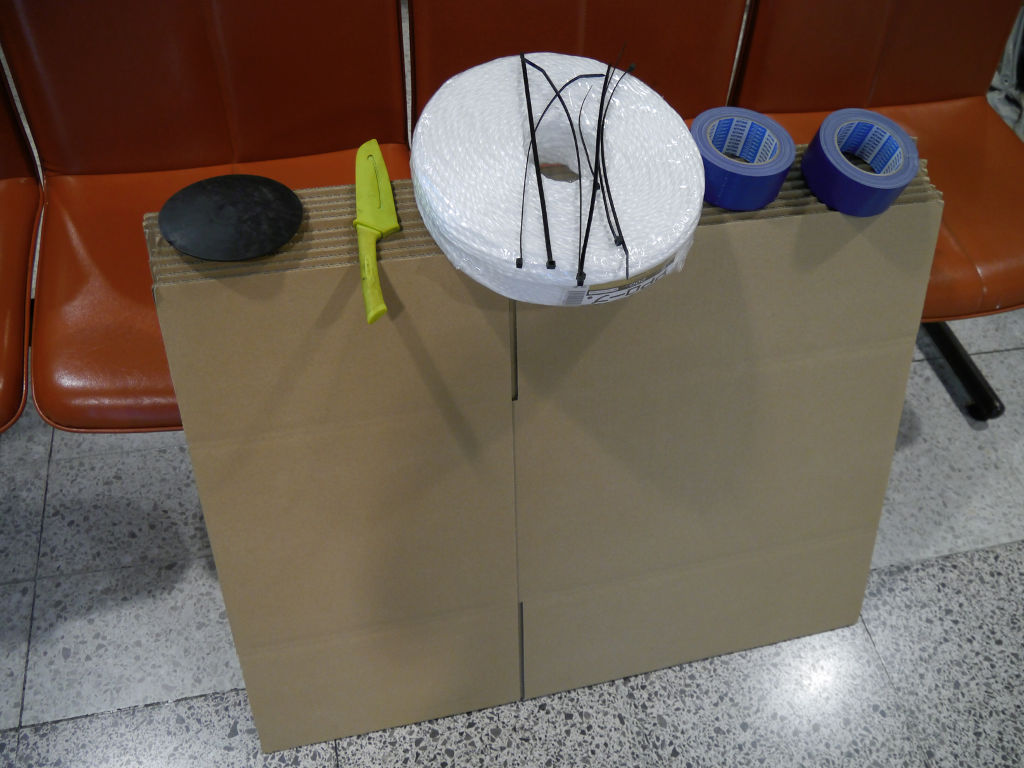
No bike cartons available at Sapporo (New Chitose) airport. However for $4 each you can get the cartons here. Added to the brew was a roll of nylon rope, adhesive tape and zip ties. The items that could not be carried on board are in a pannier which is lashed to the bike and then the whole thing is wrapped in cardboard and finally in rope.
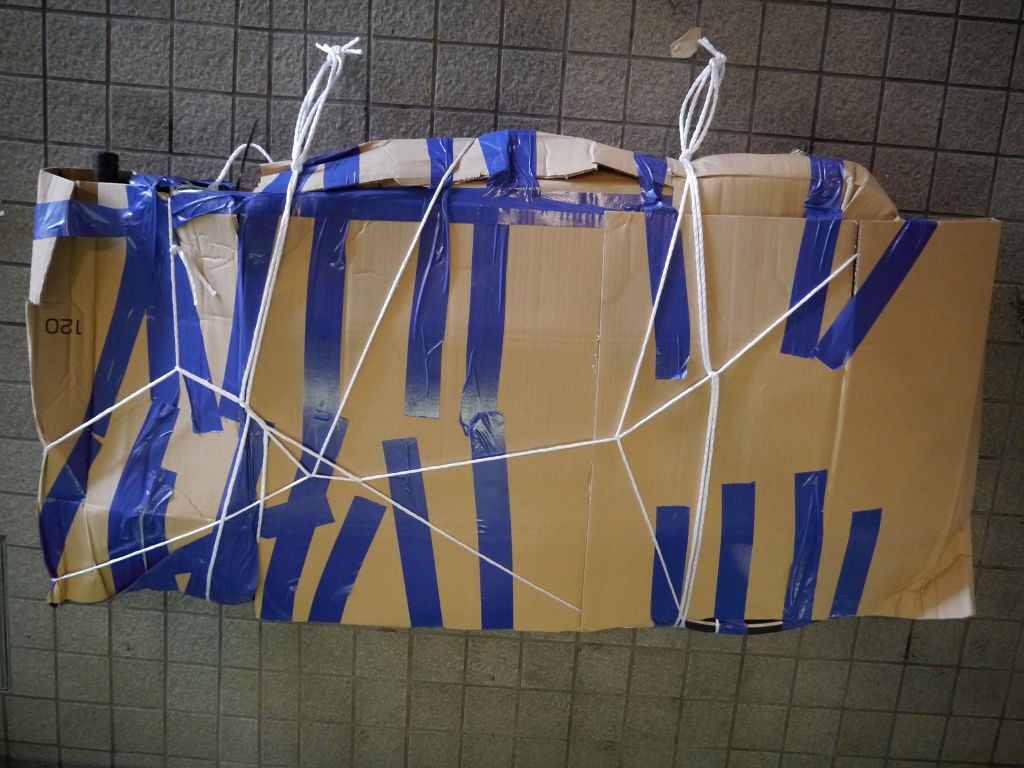
Packing took 2 hours for 2 bikes. It meant being able to cycle to the airport which is almost always a lot simpler. It avoided the fuss of finding a bike carton at a bike shop. Local bike cartons would have been too small anyway.
The Tasmanian Trail crosses Tasmania Nth to Sth or vice versa. We (Chris from Omafiets in Sydney and Noel from Vivente Bikes) are starting in the south. The Tassie Trail is for walkers, cyclists and horse riders. It is March 2016 and after a typically dry summer so we are expecting good conditions.
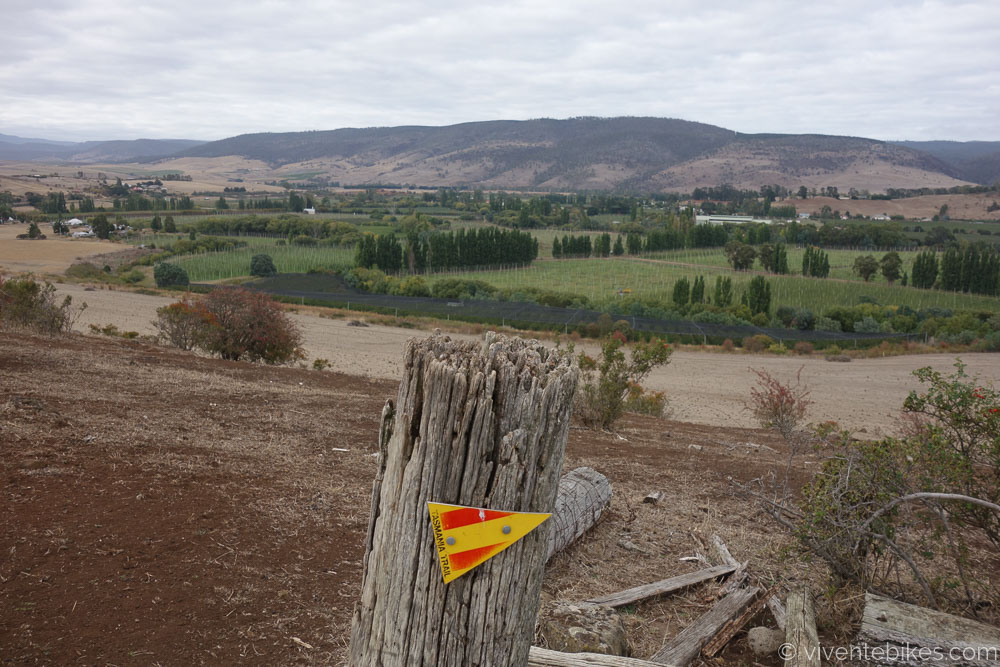
We just follow these signs.
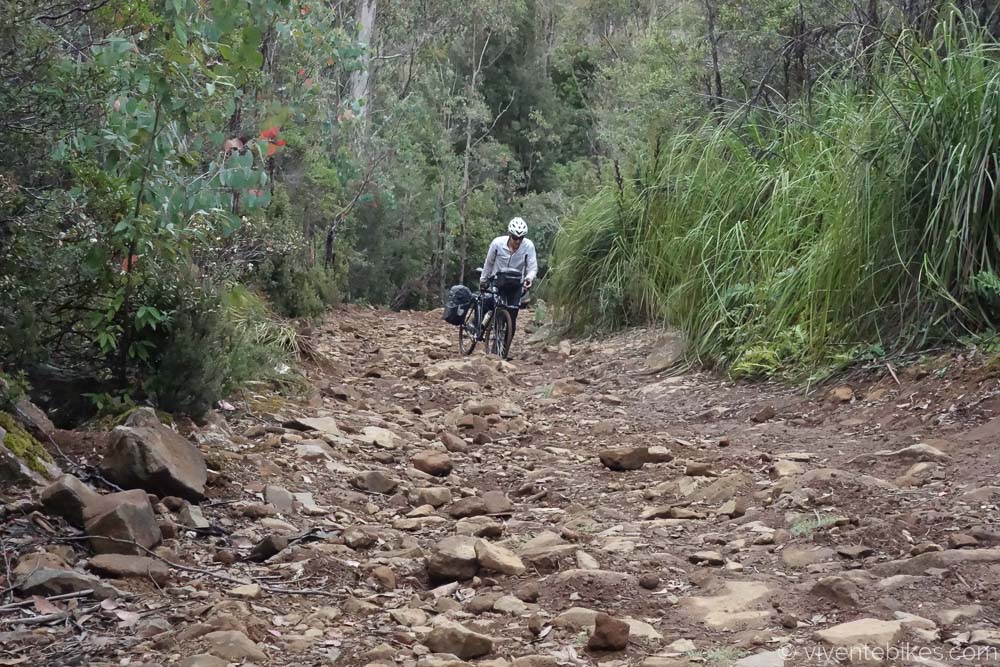
Climbing up the Wellington Range turns out to be very rocky. Fat tyres would be unlikely to help here.
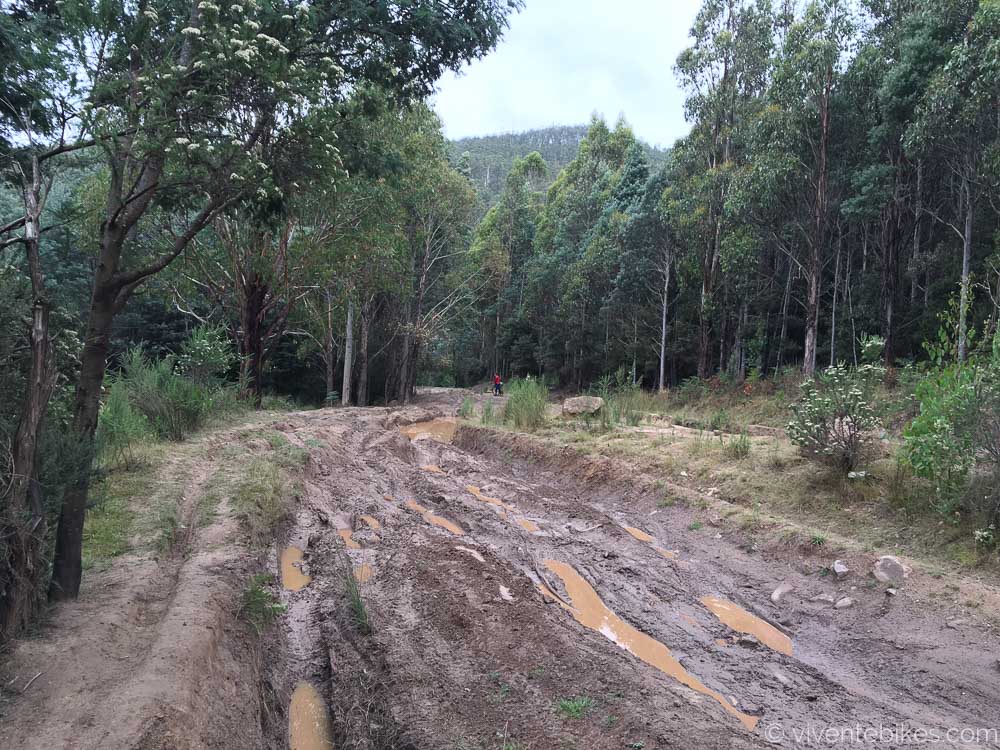
Chris is getting way ahead in this muddy section, He has 1.75” Schwalbe Smart Sams and I’m struggling in these conditions with Marathon 35s.
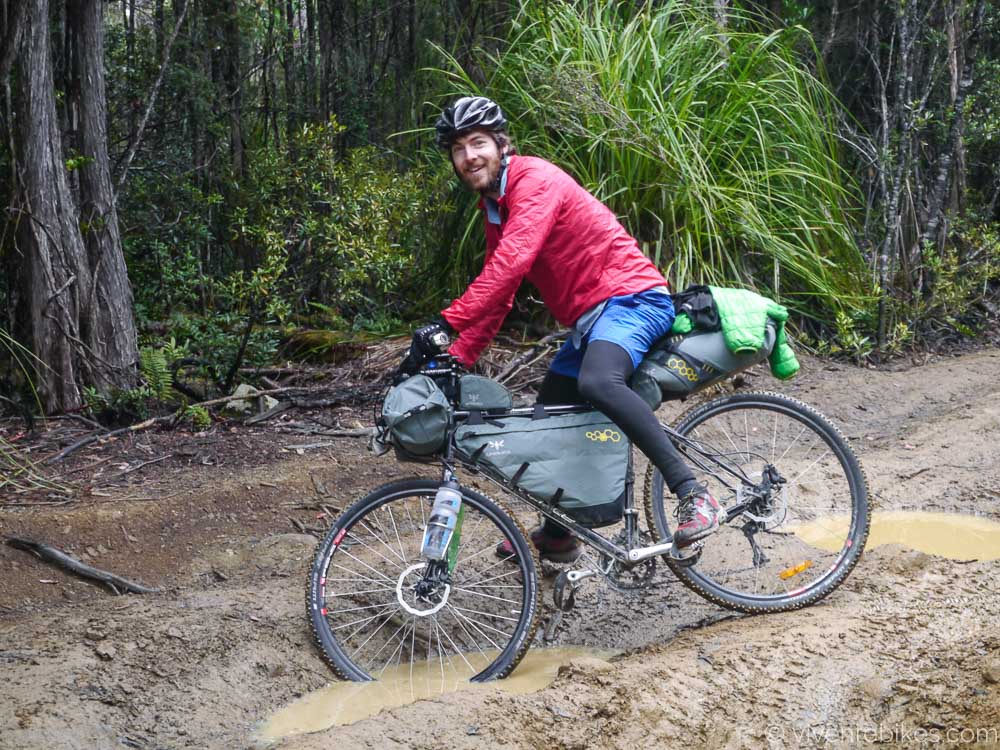
Chris is using the bikepacking (no rear panniers) set-up.
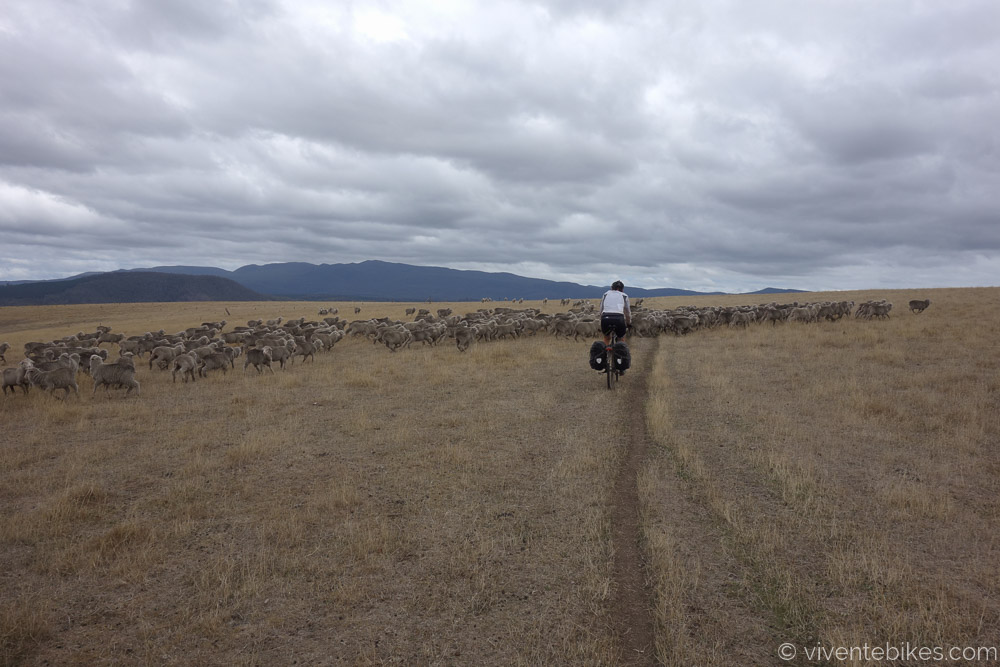
We get out of the mud and into sheep country. You need to register to be able to use this trail. You rent a key that gives you access through some big farms and conservation parks.
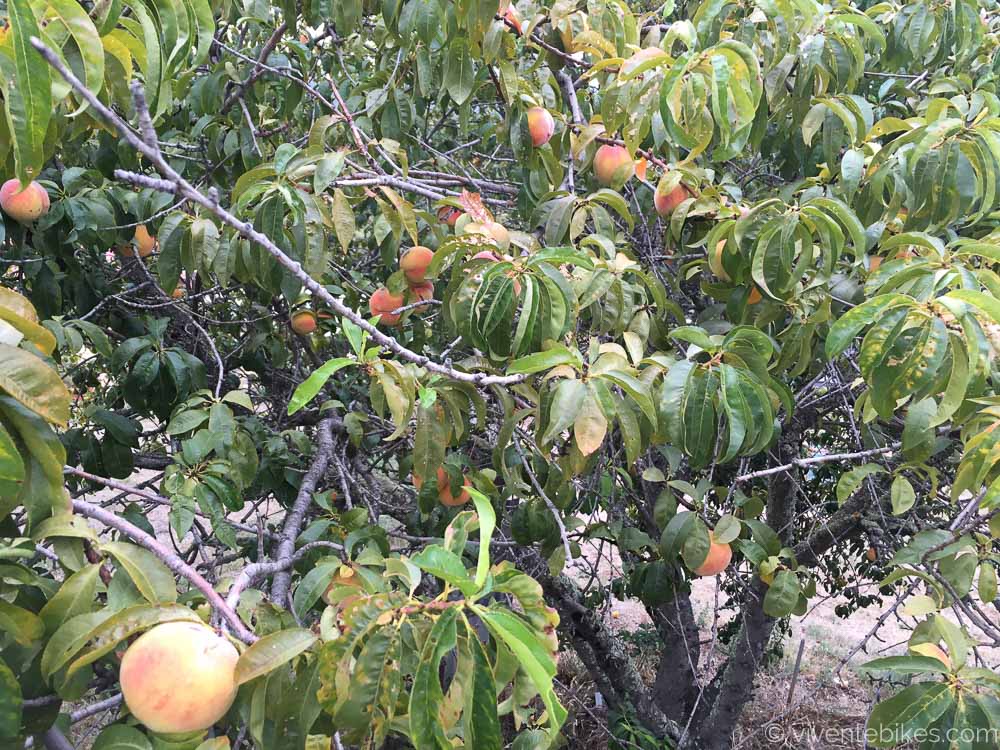
There is nothing better than a tree of ripe peaches on the roadside when you are nearing the end of a long day.
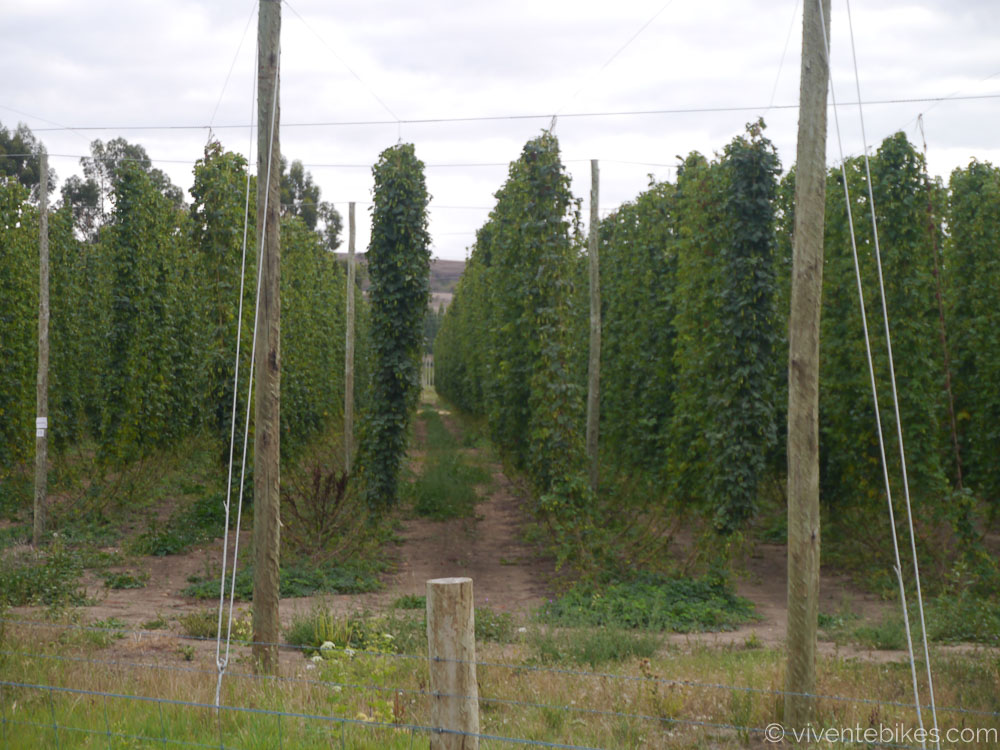
Hops at Bushy Park. Ironically our night in the shed at the Bushy Park Showground coincides with the start of the hops harvest. This meant that all night tractors were buzzing around, working 24/7.
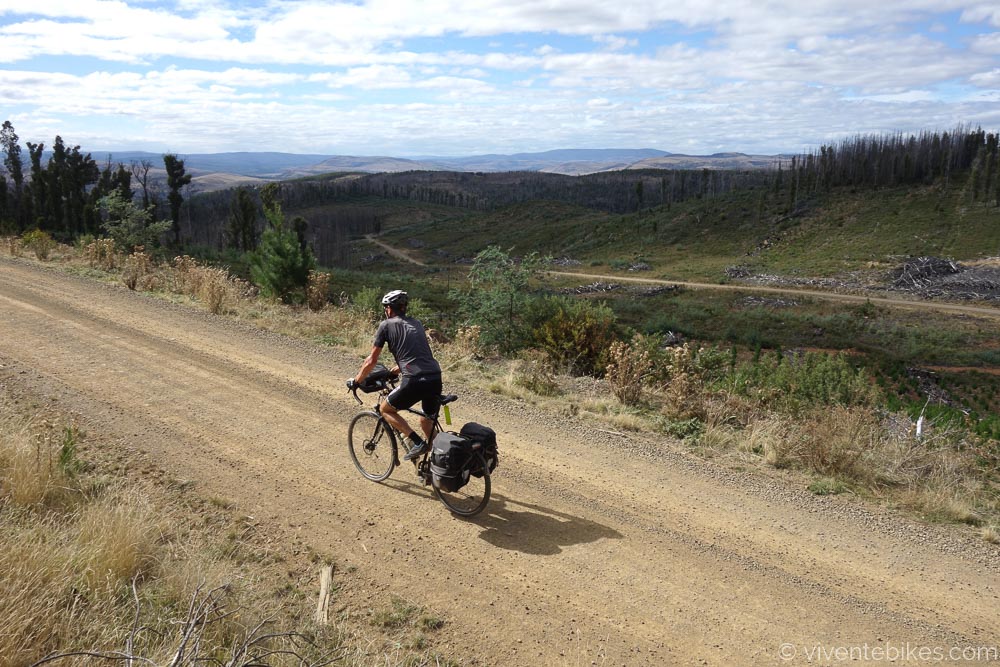
The surfaces are really variable. On some, the narrower tyres are great. Although tight corners on downhill runs in gravel like this force the narrow tyre bike to slow down whereas the 1.75 tyres handle corners at speed.
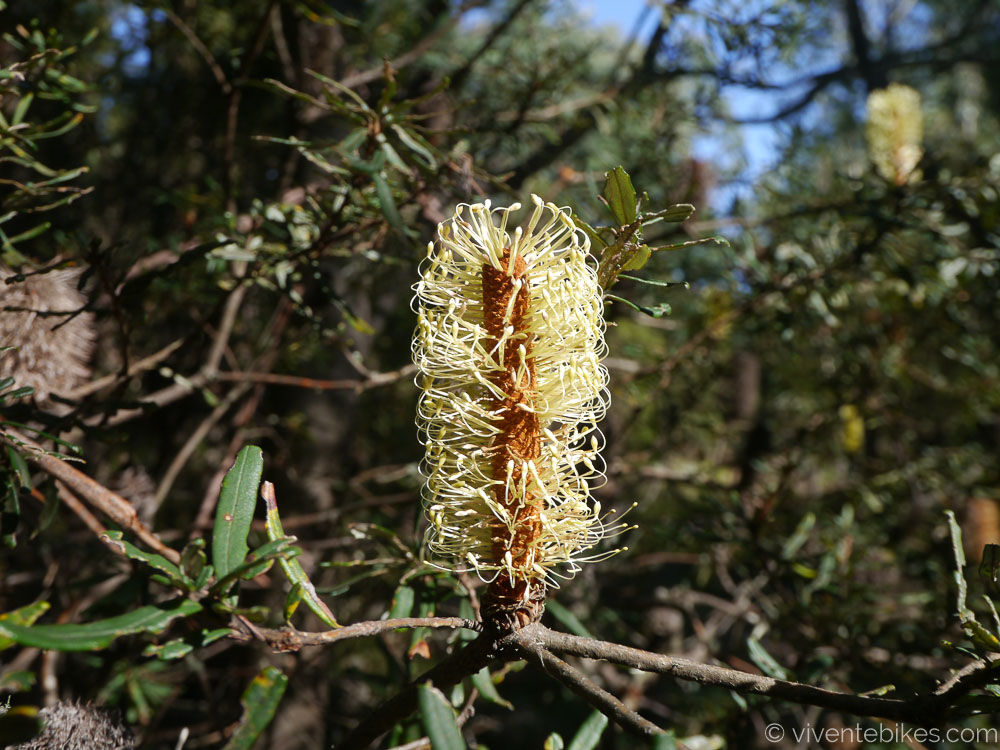
The bush is so peaceful and beautiful.
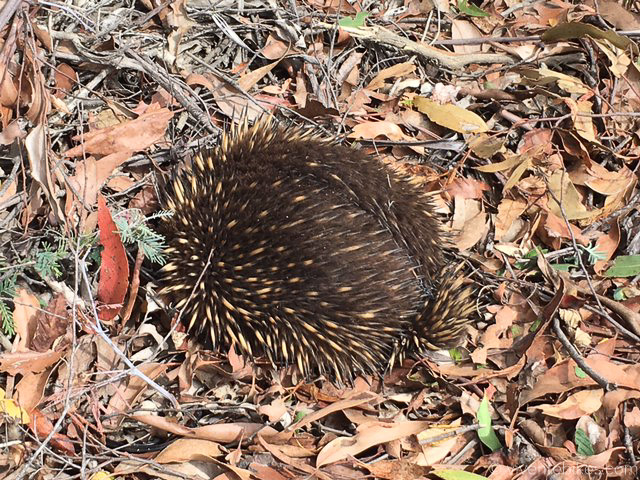
As soon as an echidna sees or hears you it does not scurry away. It turns itself into this prickly ball.
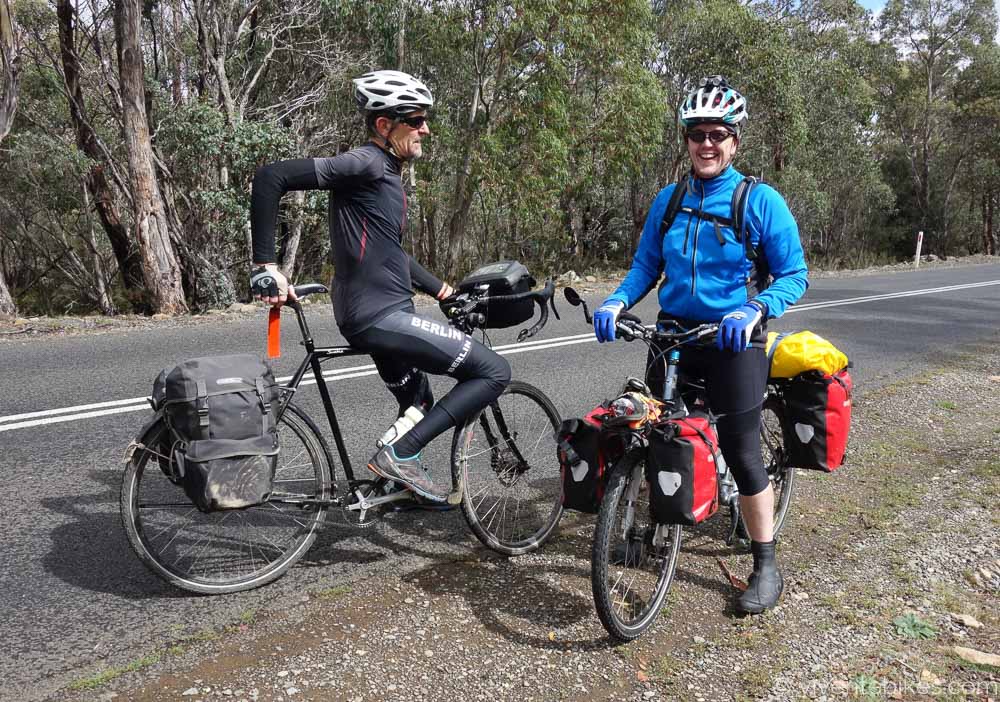
We meet the occasional cyclist heading south on the trail. This woman is Canadian and we meet up on one of the brief bits of tar.
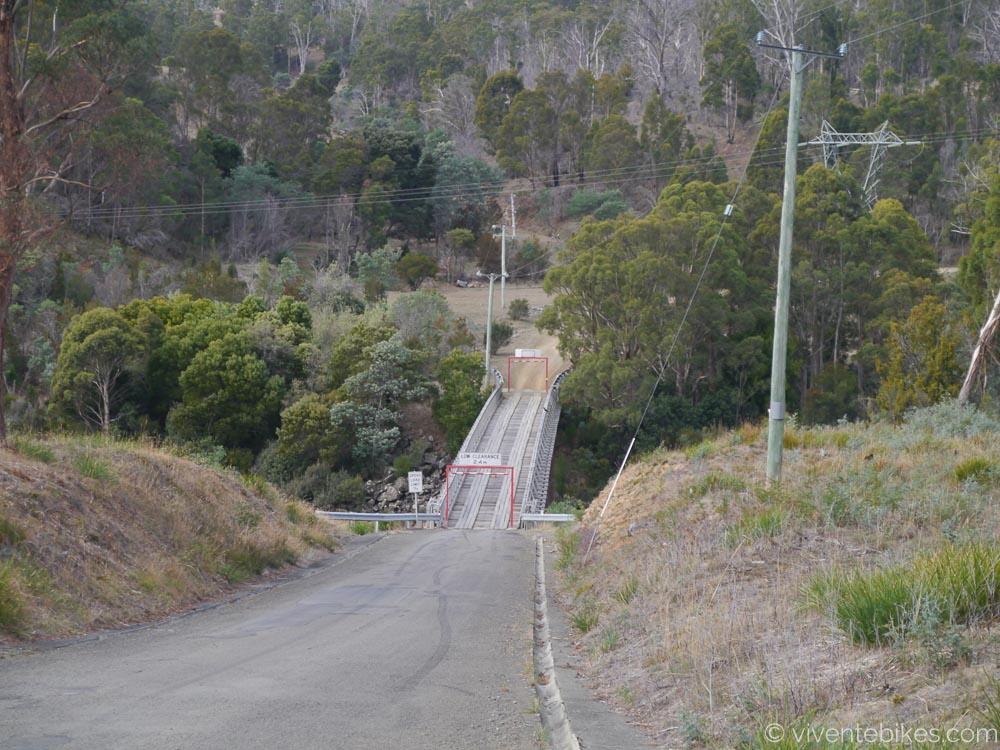
Tasmania has a big hydroelectric scheme. Some of the infrastructure is in remote places resulting in some better riding conditions in otherwise unsettled country.
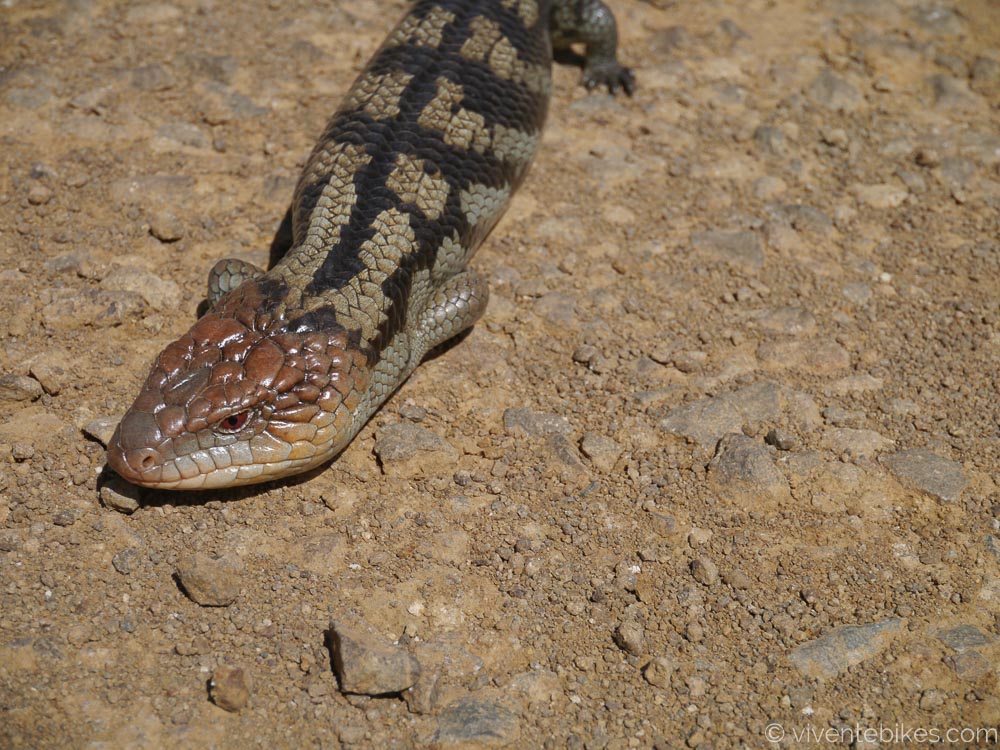
You’ll see a lot of wildlife on the Tasmanian Trail. This is a blotched blue-tongued lizard or blue-tongued skink.
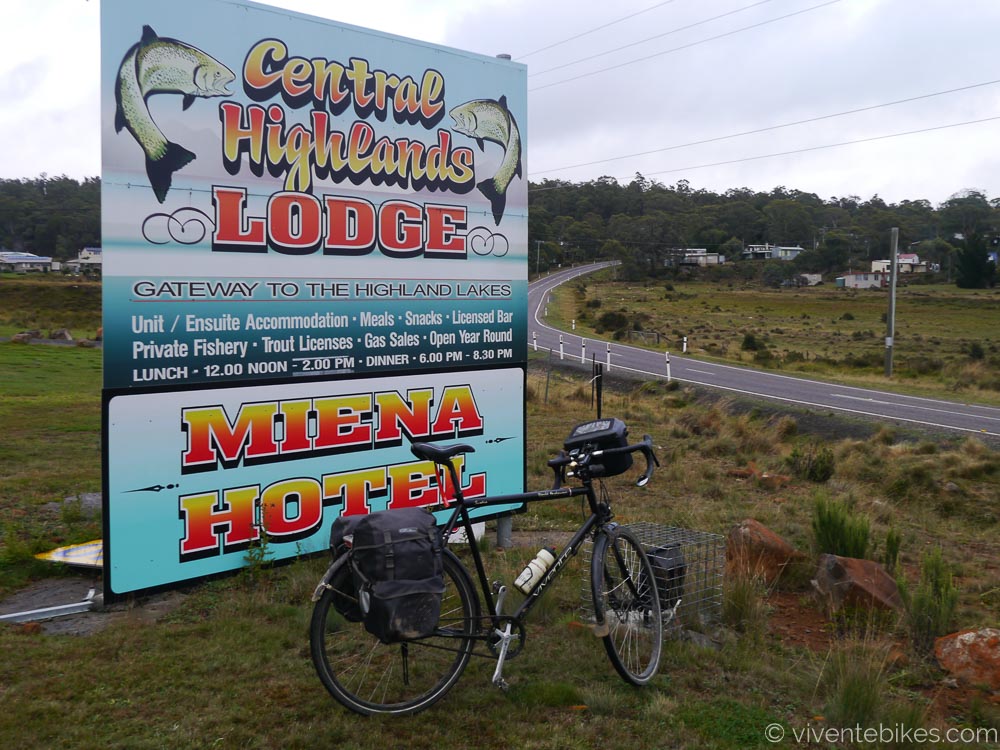
The Miena Hotel looks pretty nice. Rain is predicted so we book in for two nights and get a needed rest day plus several meals. And internet!
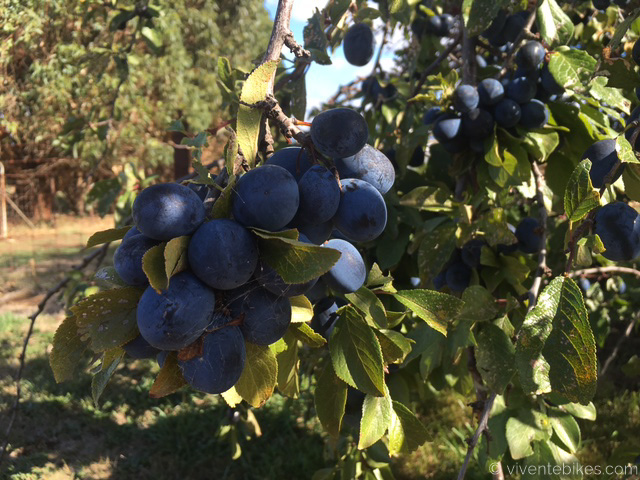
More fruit. It is really late for plums but these ones waited just for us.
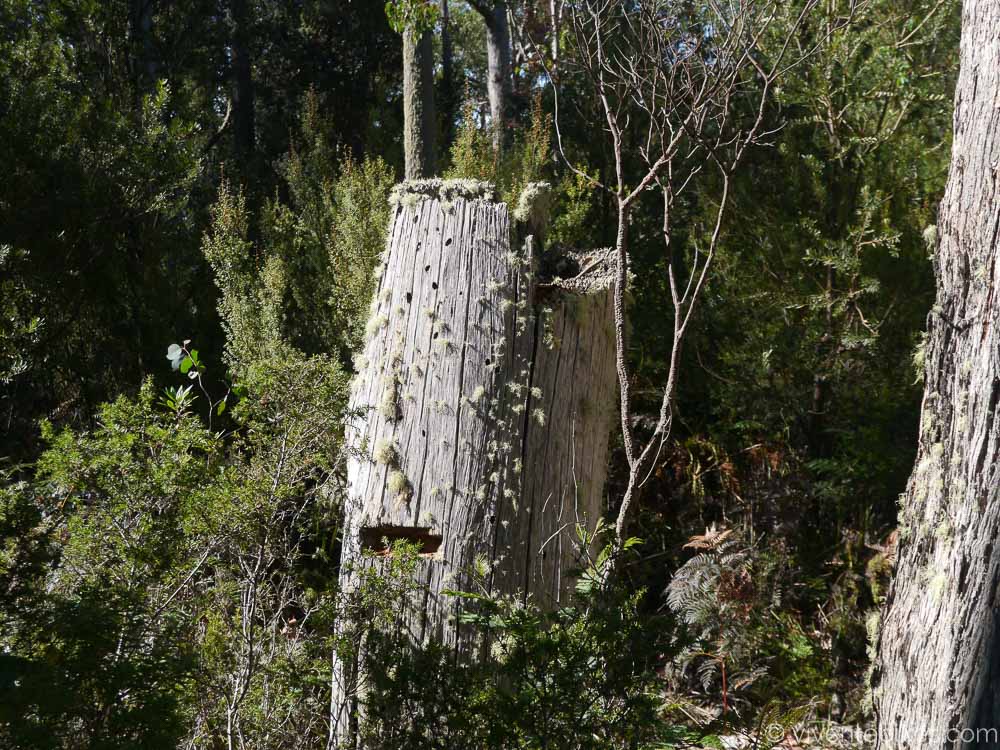
Relics. This old tree still has the hole that a plank was once held in so an axeman could stand on it (on the plank) and cut the tree down.
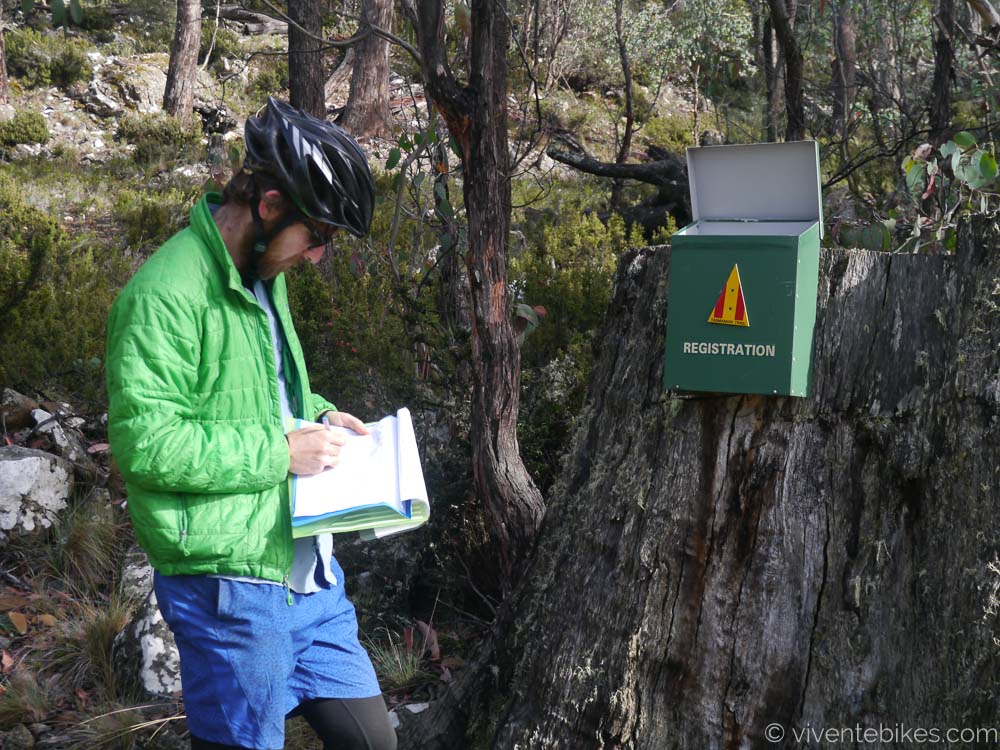
Chris is keeping the records up to date. The books ask for names, dates, mode and direction of travel and comments.
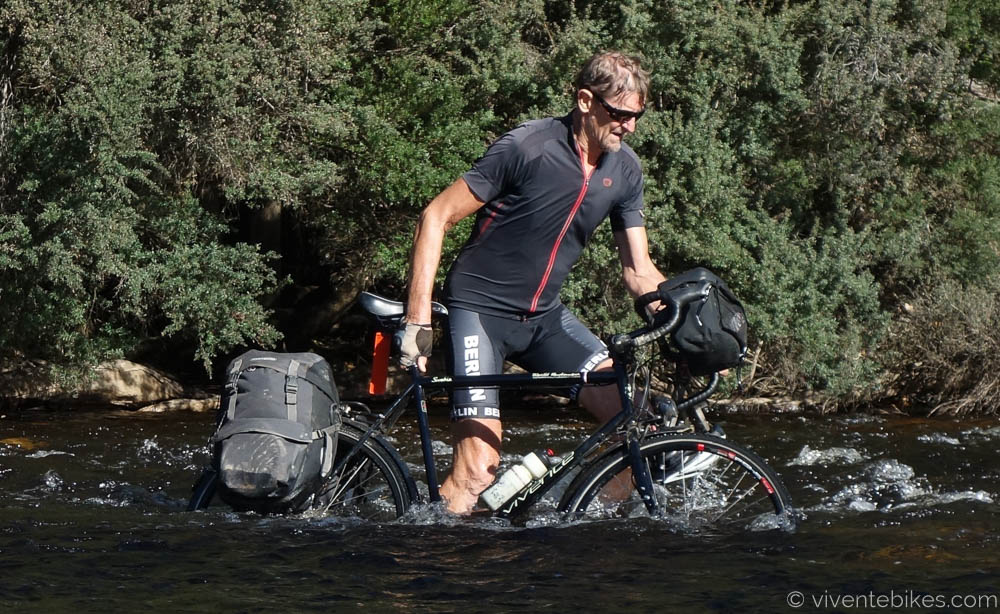
Many Rivers to Cross
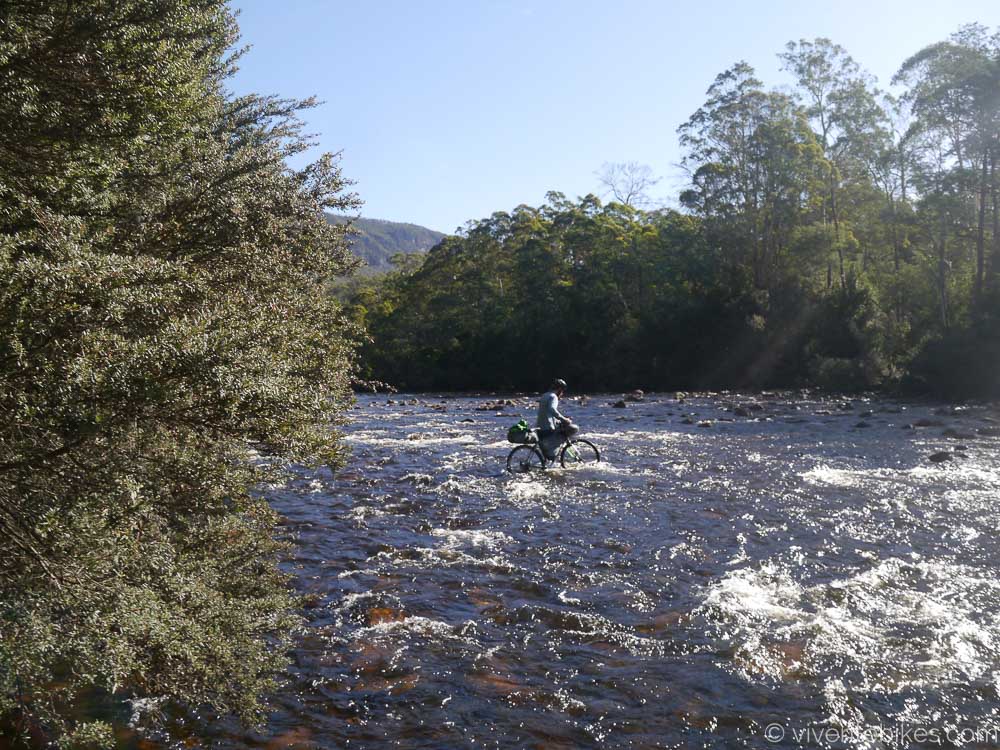
The final Mersey crossing in the Gog Ranges. It has been a great trail ride and is highly recommended.
A highlight of the trip in Queensland was cycling what was called “the horror stretch” or “the triple murder highway”. From Marlborough to Sarina via Lotus Creek. When we said we were just going north people would always say…”yes, but you won’t ride the horror stretch will you?” It turned out to be one of the most beautiful parts of Australia that you could find.
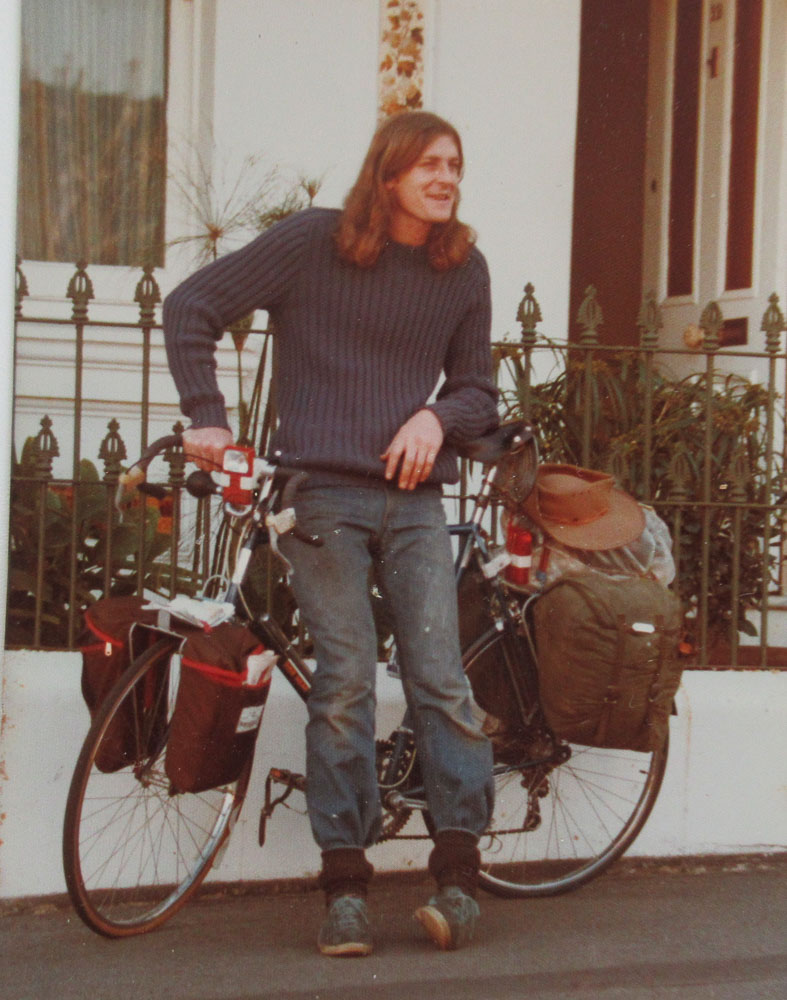
Noel getting his gear ready outside the old Randle in North Newtown, Sydney.
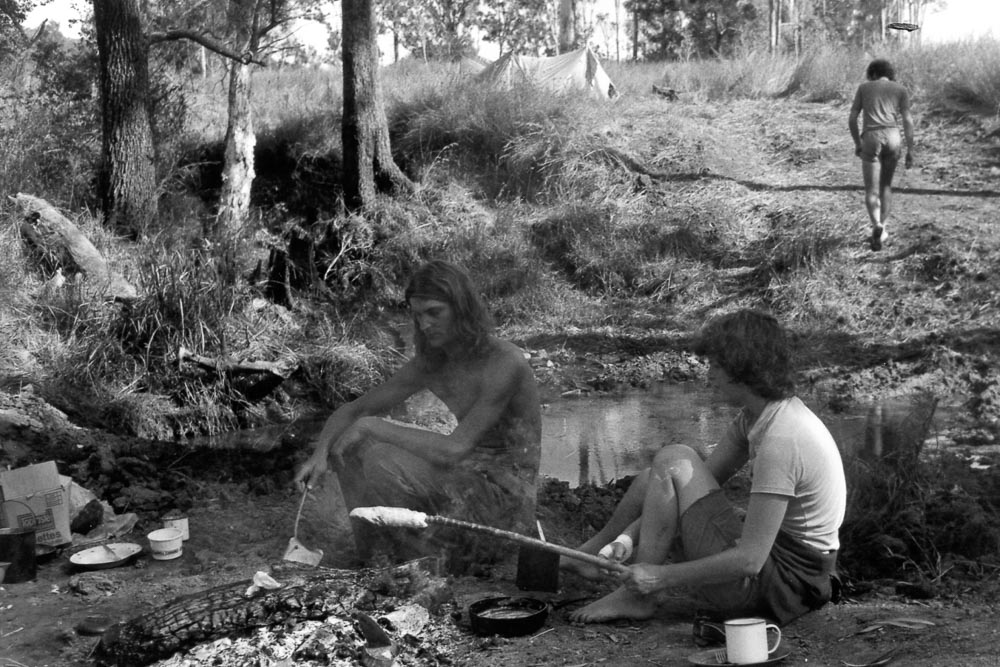
Caroline, Danny and Chris, all teachers, came up and joined us in their break at the end of the school term. We camped in beautiful bush places night after night.
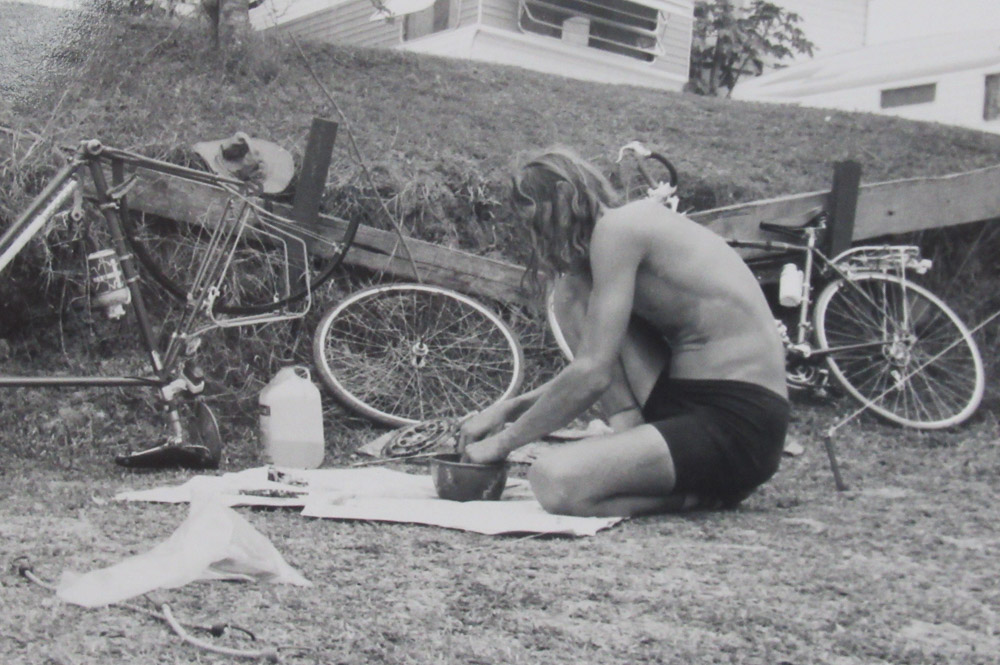
Bike maintenance in the 1970s was a must for bike tourers. We would regularly wash our chains, regrease and adjust bearings and check tightness of things.
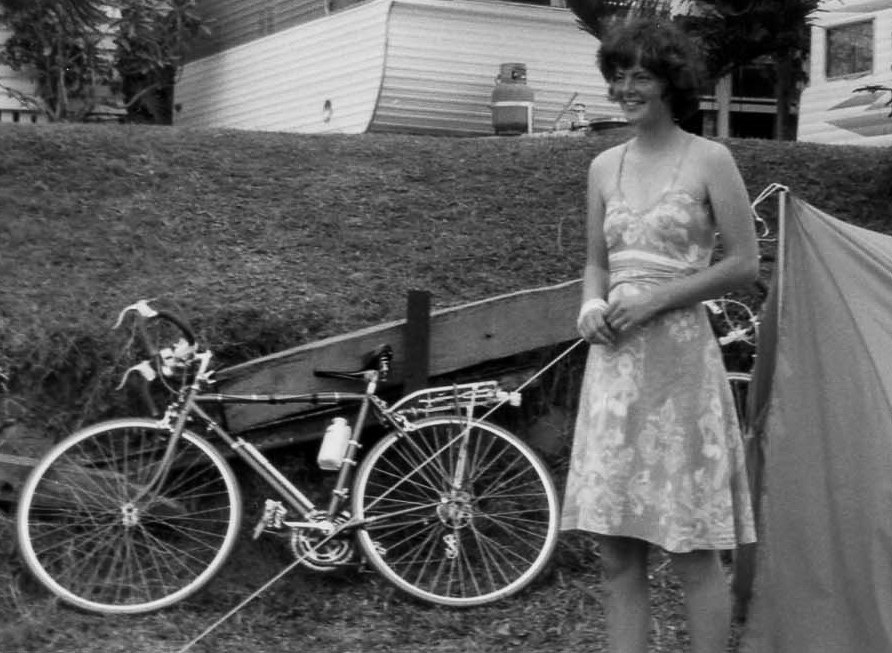
The lovely Caroline Weller, who so sadly was not to survive this trip.
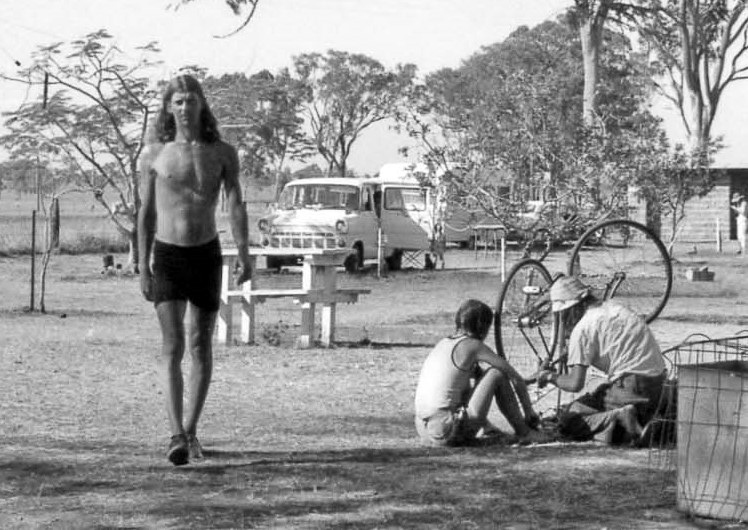
In the caravan park at Rockhampton, Barb, a very experience bike mechanic, is explaining things to a sole traveller that we met there.
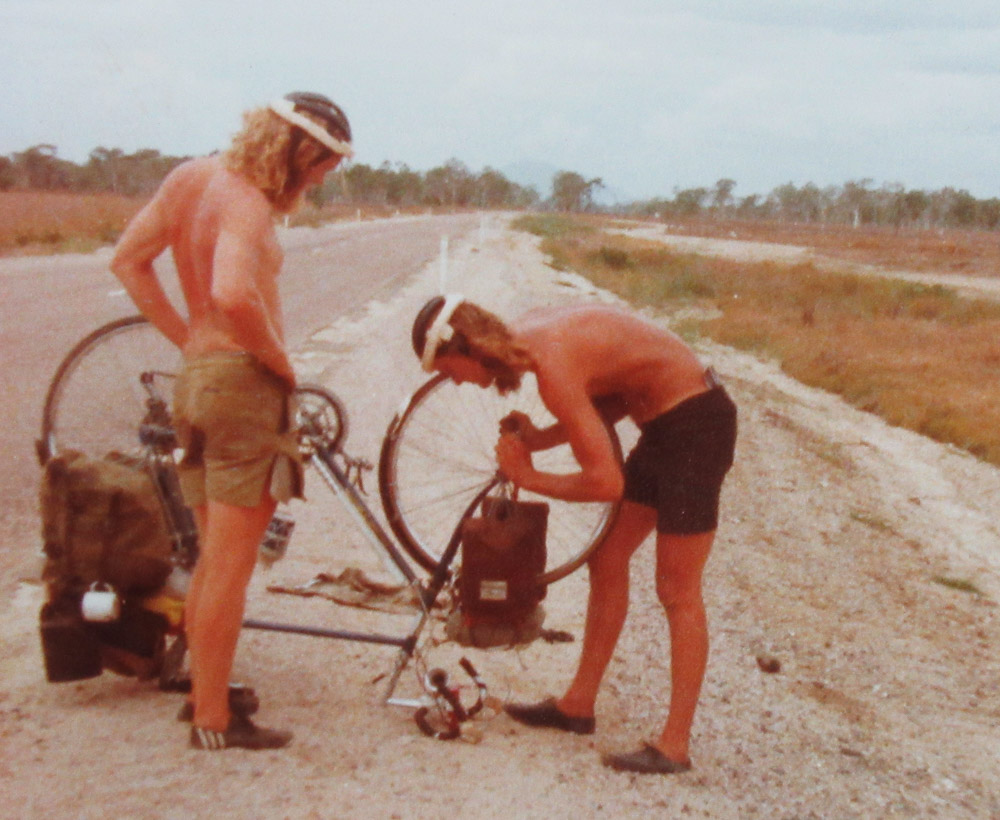
In those times, bike spokes were crap. Decades later, very good spokes are available and are standard on top European and Vivente touring bikes. On the way to Cairns, between the three of us, we broke and replaced over 100 Ashai (Japanese) 14G steel spokes.
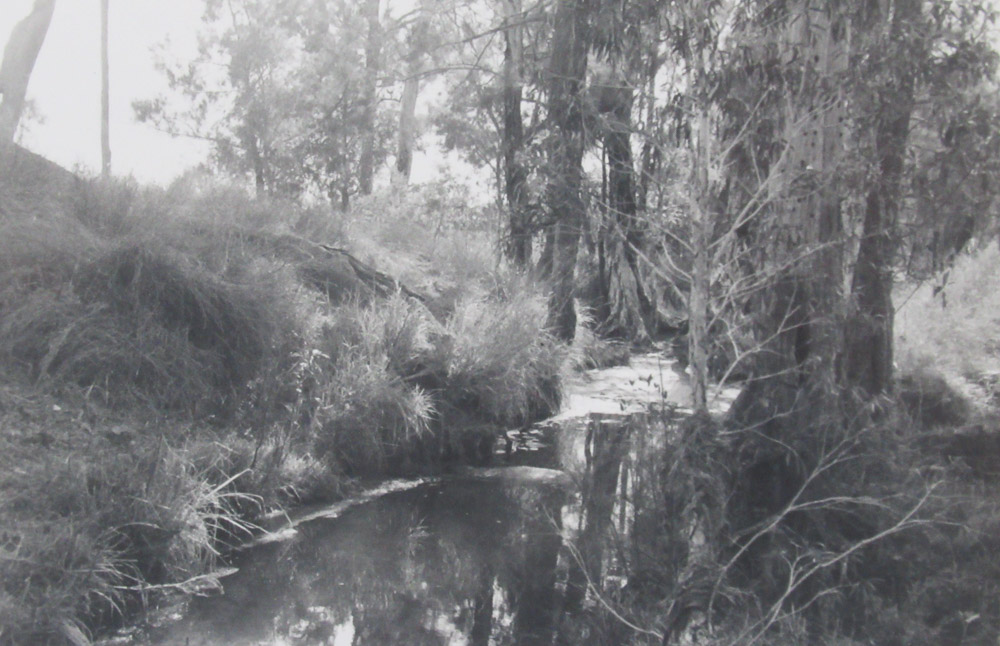
Camping beside small streams every night, we could have gone on forever.
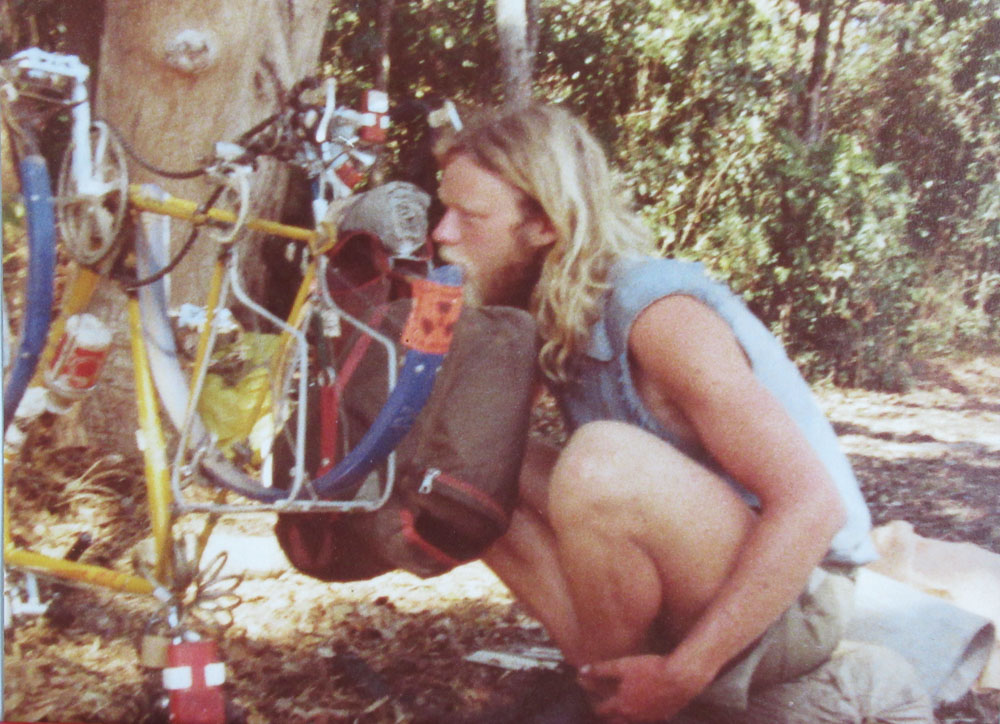
Dave pondering the rewelding on his Europa frame. Notice the Karrimor rack. We all had them and on the same day, in Nth NSW, two of them broke, both in the same spot.
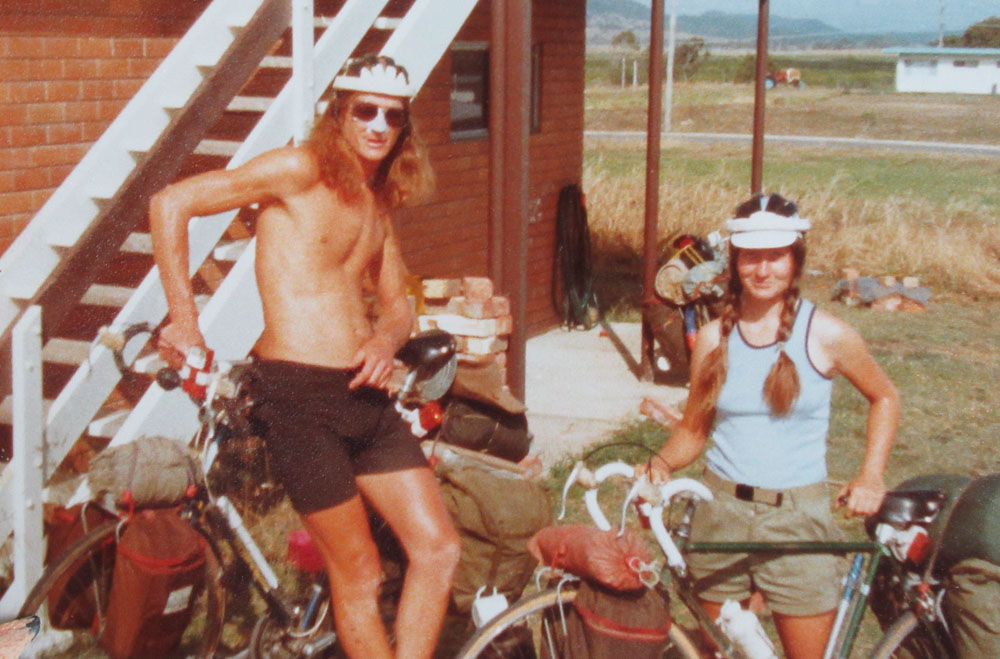
Pushing North. In the 1970s there was no modern suncream. There was pink zinc. Also notice the pumps. We had “English” valves and the pumps had hoses. You were doing well to achieve 50 psi.
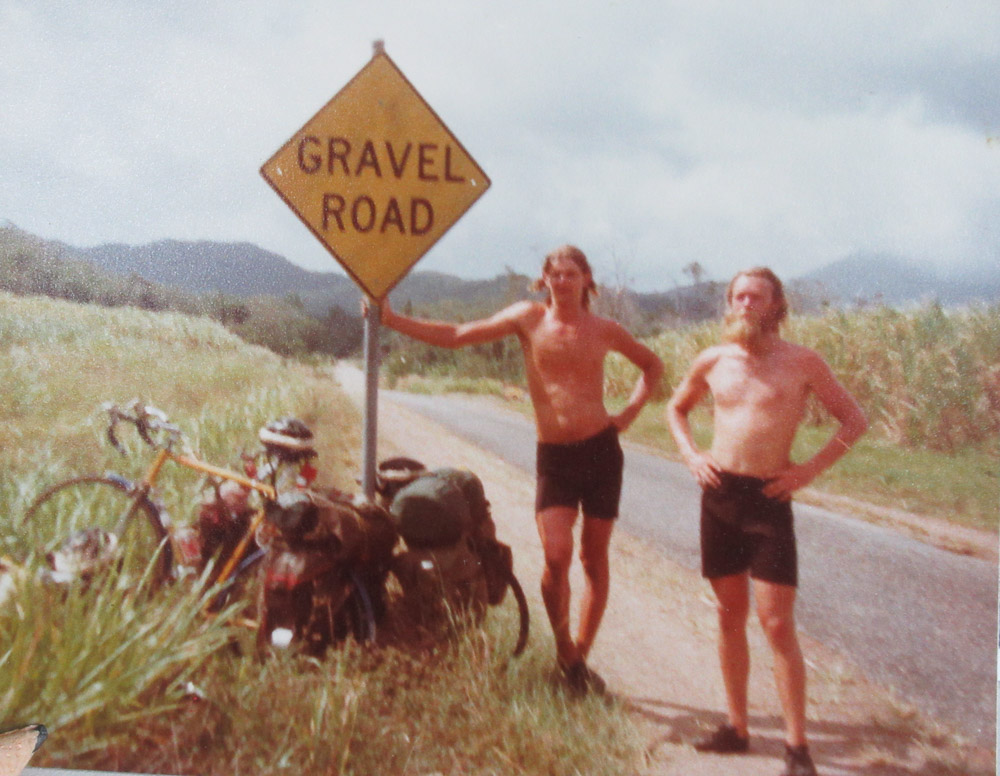
About 100km north of Cairns we hit the gravel. Soon after that we were making camp beside rivers with signs warning about crocs. We deemed that to be “north enough”. We rode around the Atherton Tableland and then got the train back to Sydney.
A tour in the hills of Odisha and north eastern AP. Two loops starting in Vizag. The first to the NW and the second to the SW. Odisha, inland, is a drier and poorer part of India with many quiet areas. It is great for cycling.
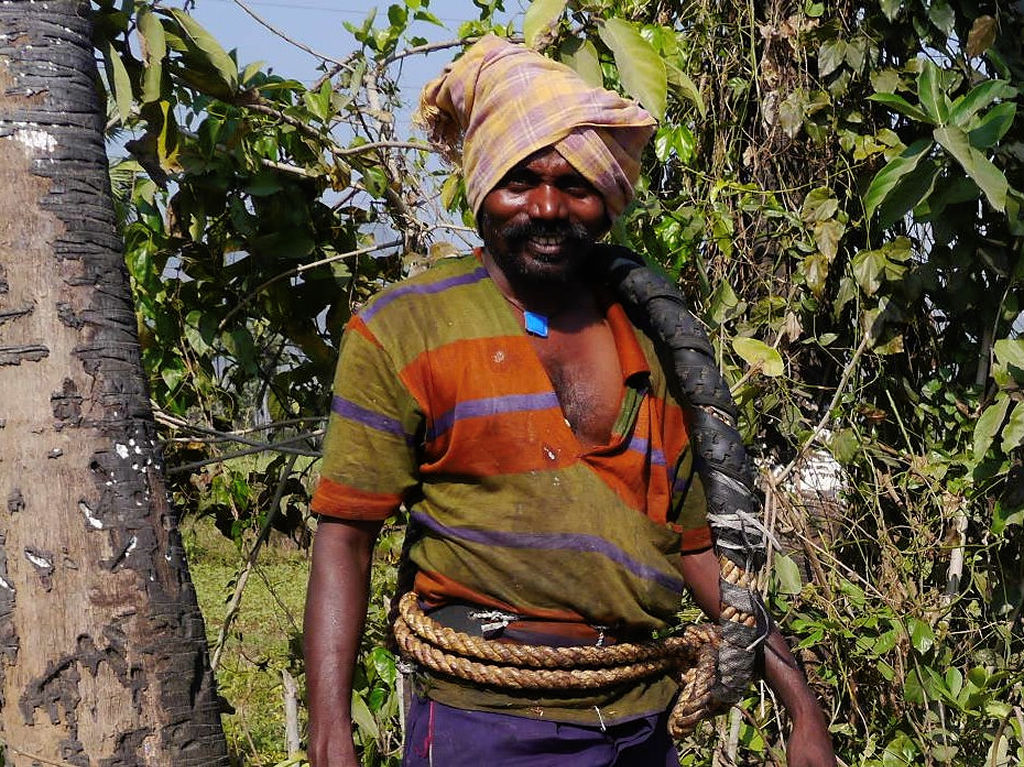
A toddy tapper. They climb certain types of palm trees and extract a liquid that is then fermented.
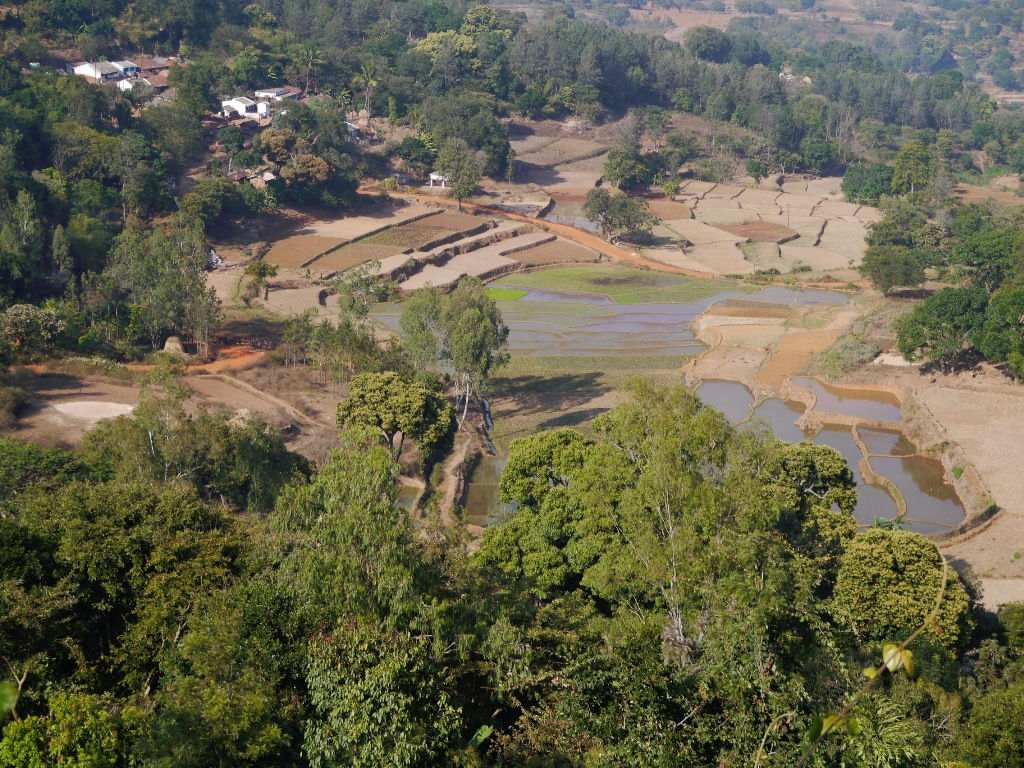
Climbing up the ghats. The hills here are under 1,000m. Unlike the western ghats which are an unbroken chain, these are more like scattered ranges with quite dry rain shadow areas.
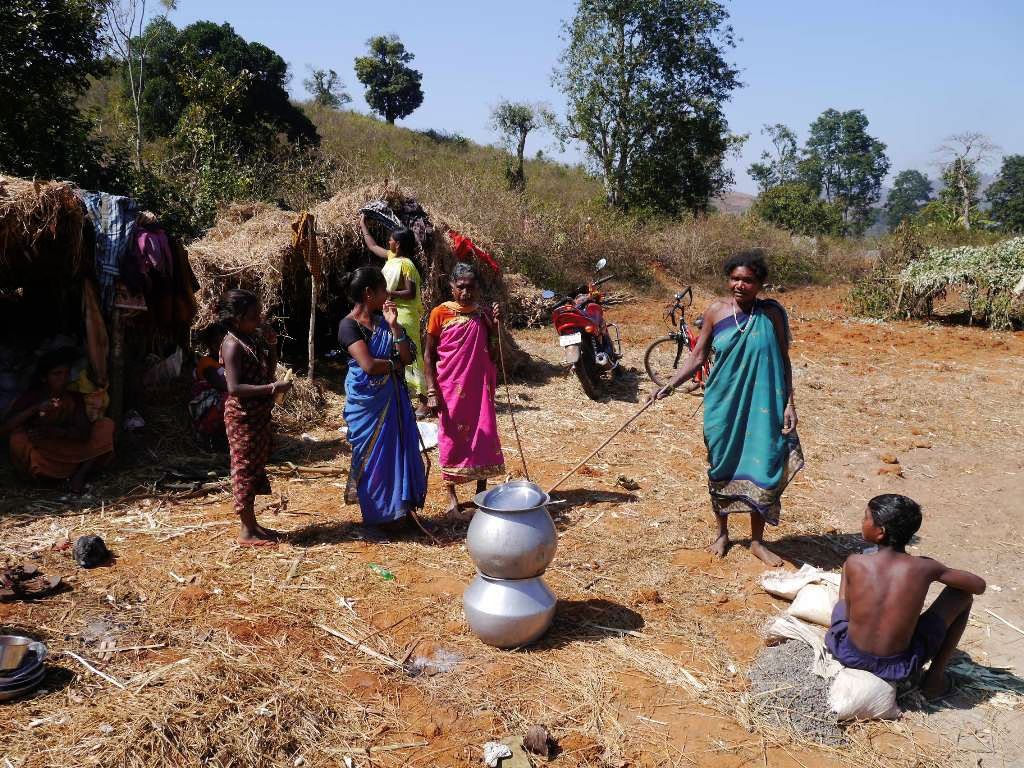
This family is working on the sugar harvest. They have a massive pot of sugar on the boil so as to reduce it down.
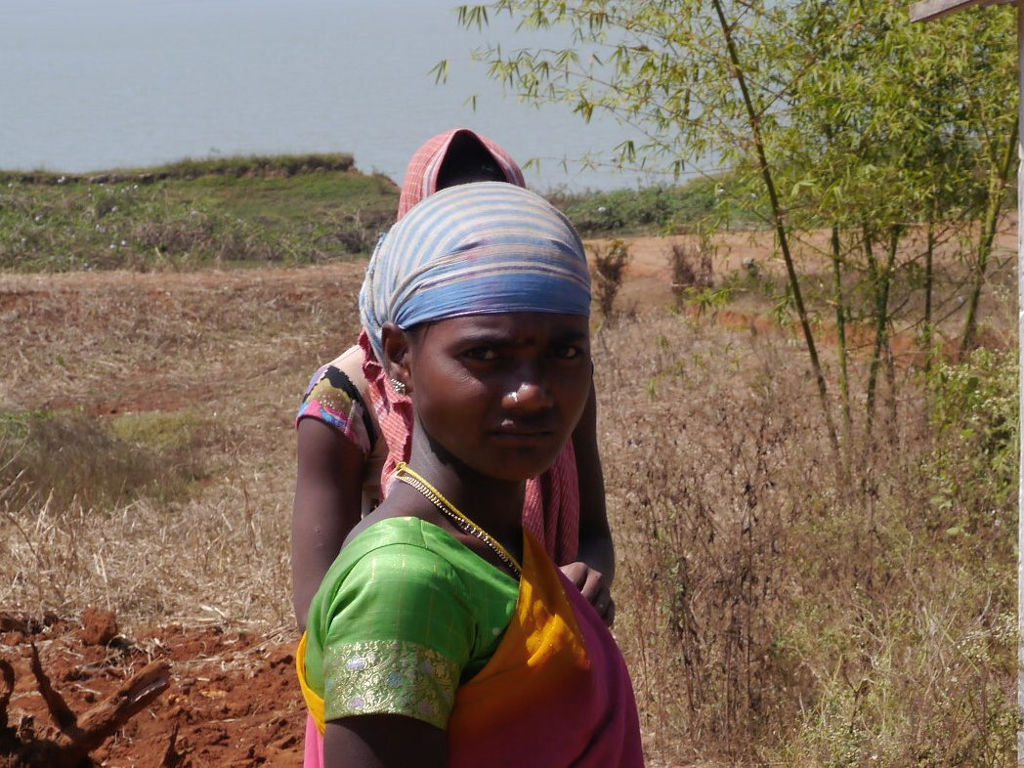
A roadworker. It is very physical the way they do things here. These women are really tough.
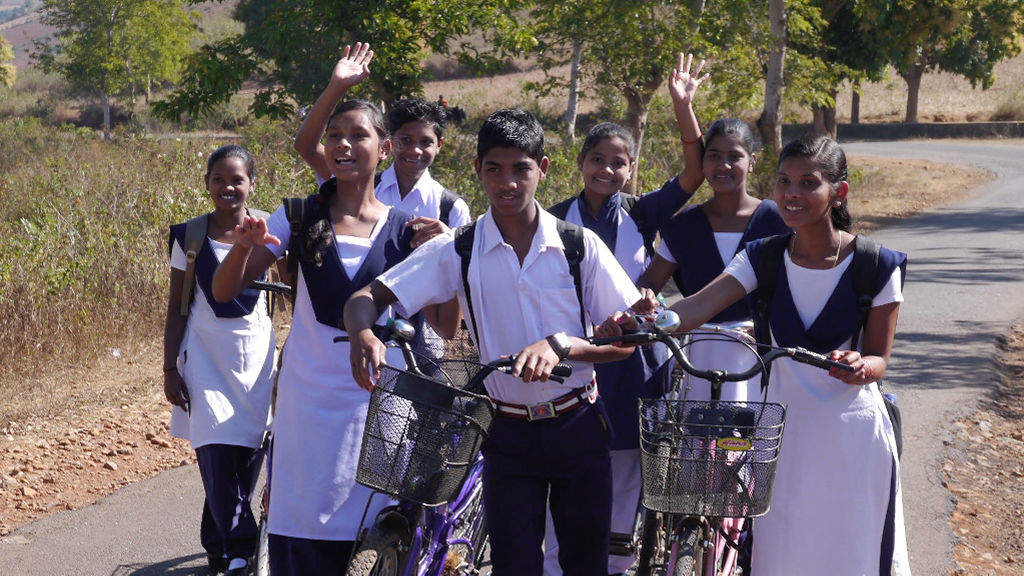
I’m greeted on a quiet country road by school students.
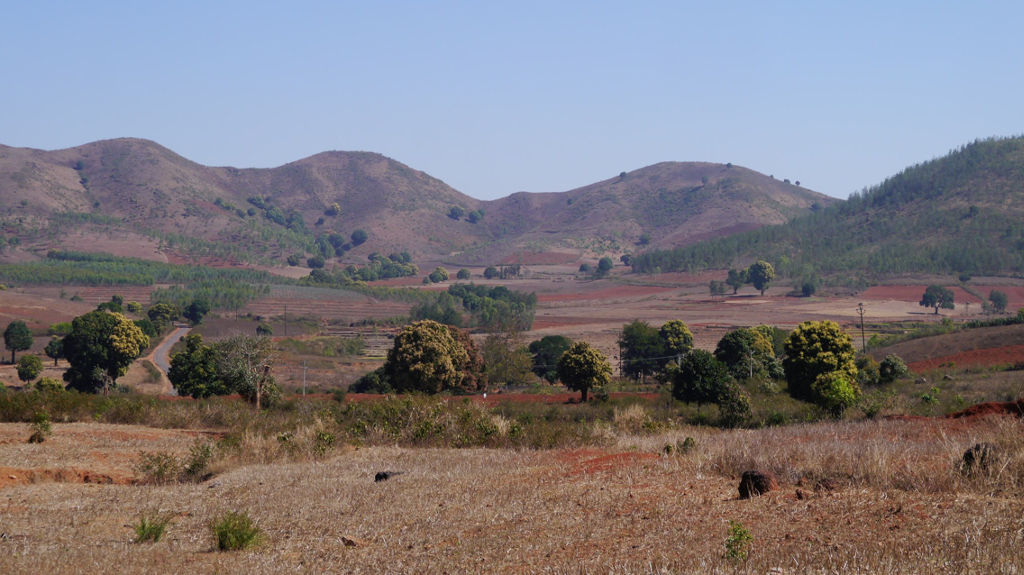
Big mango trees dot the landscape. It is the dry season. But it is dry most of the time around here.
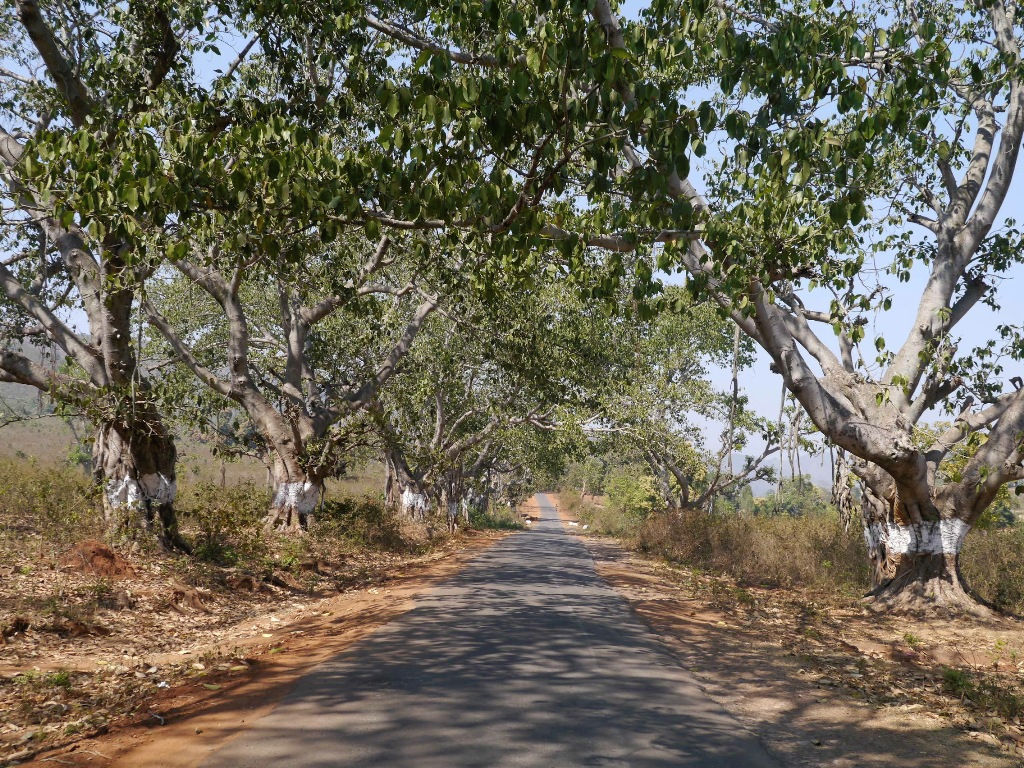
Although many people think India is all intense and overpopulated it is not true. This is a typical example of the quiet of countryside inland Odisha.
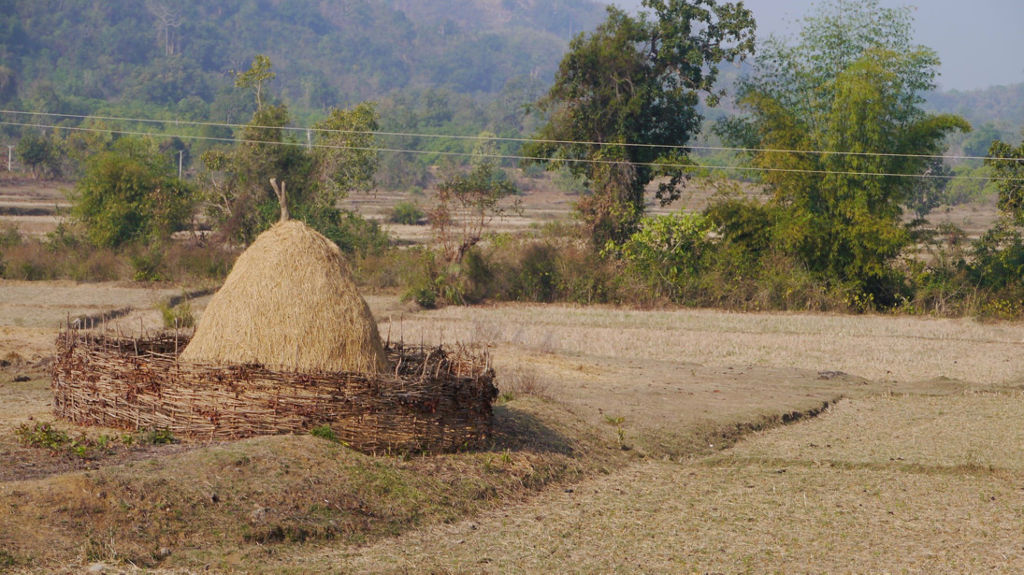
The straw left over from threshing is stacked and then protected from animals with a fence made from local vegetation.
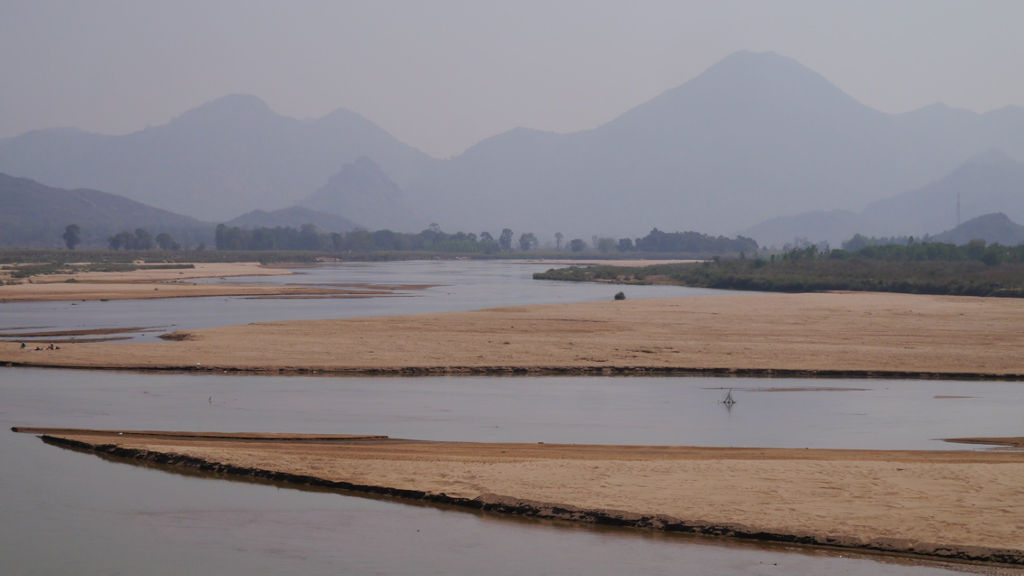
Often the areas around the bigger rivers are quite isolated as it is hard to make bridges that will survive the floods. There is no one around.
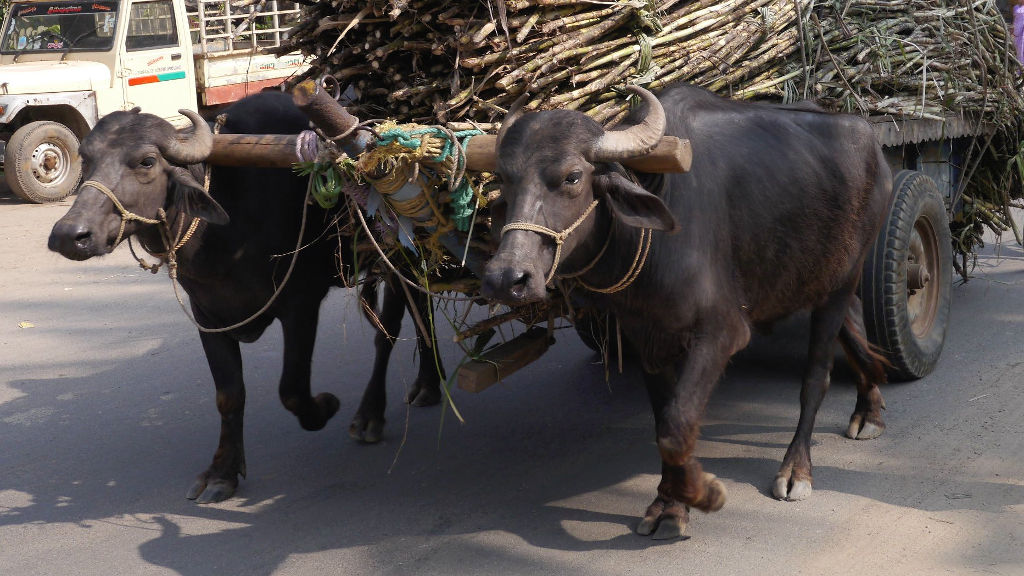
It is sugar harvest. Oxen cart the cane to the mills. Often, a 10 year old will be in control of the massive carts being towed.
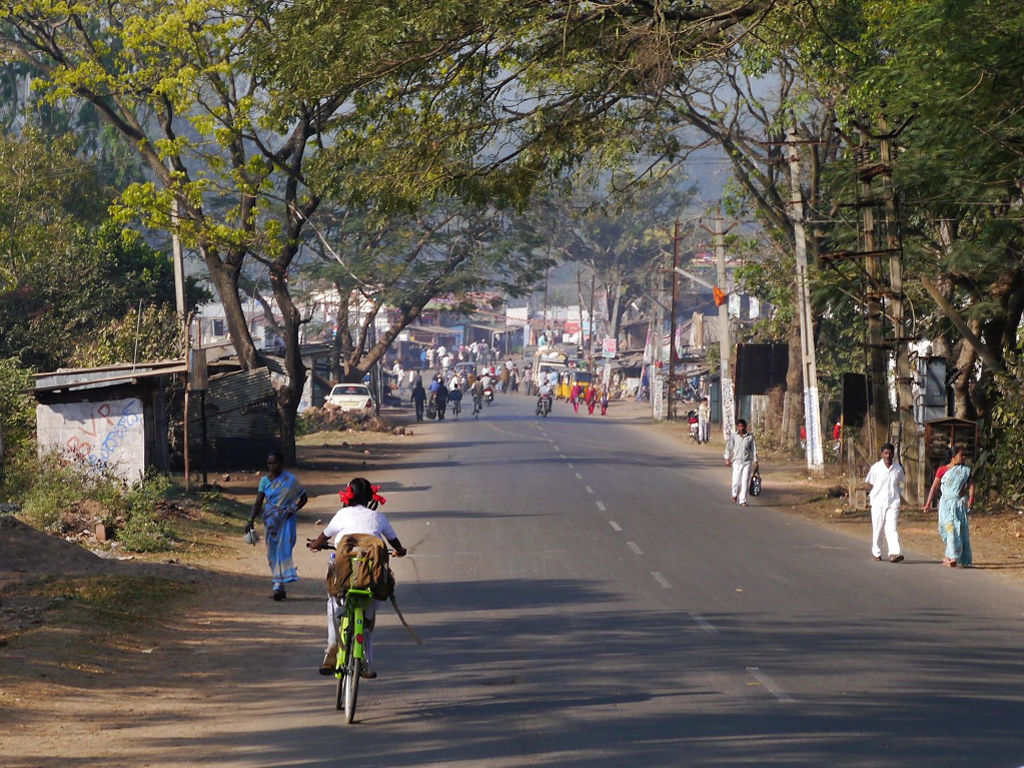
A young girl scoots past me on her bike, going to school.
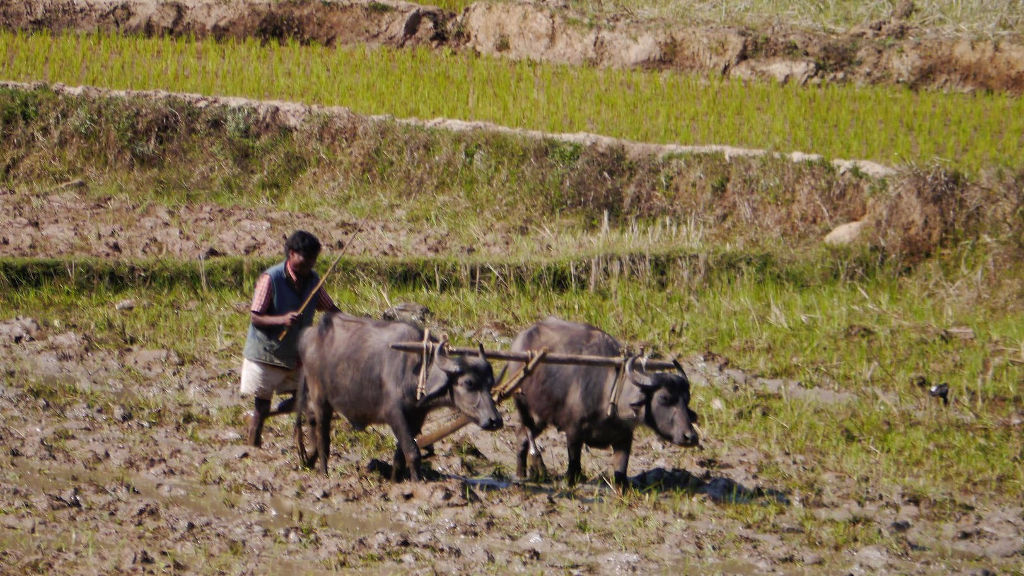
The timelessness and lack of dependence on modern machinery and fuel really impresses me.
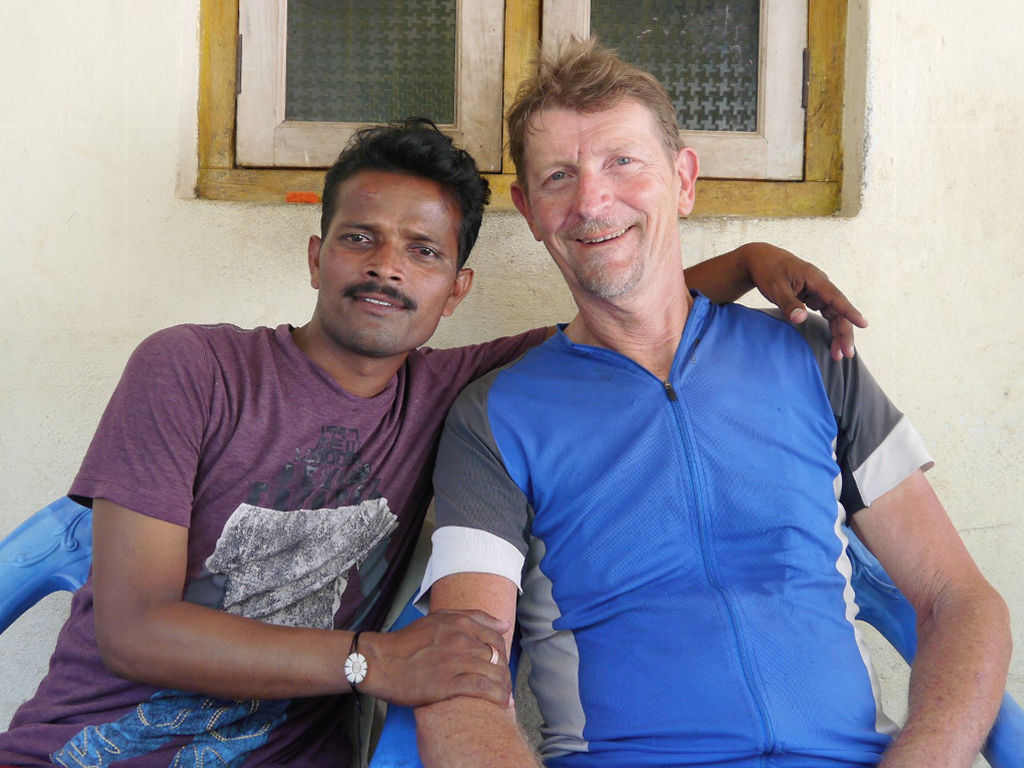
This fellow rode with me for quite a while and pleaded with me to come to his village. His mum cooked up a fantastic fish curry. A lasting memory on my last day.
A ride from Friedrichshafen in southern Germany, to the Danube, along the river a while, then across Czech into Poland, finally departing from Warsaw.
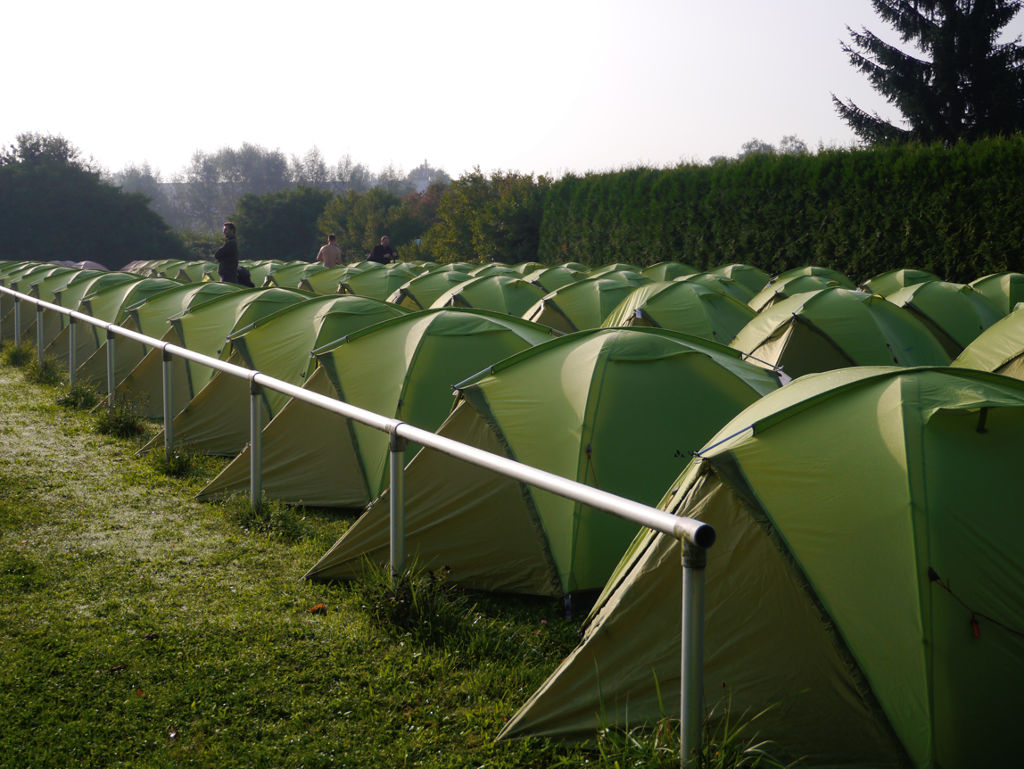
The campsite provided by Eurobike, the world’s premier bike show, for trade visitors arriving by bike. It is held at Friedrichshafen on the shore of Bodensee in southern Germany.
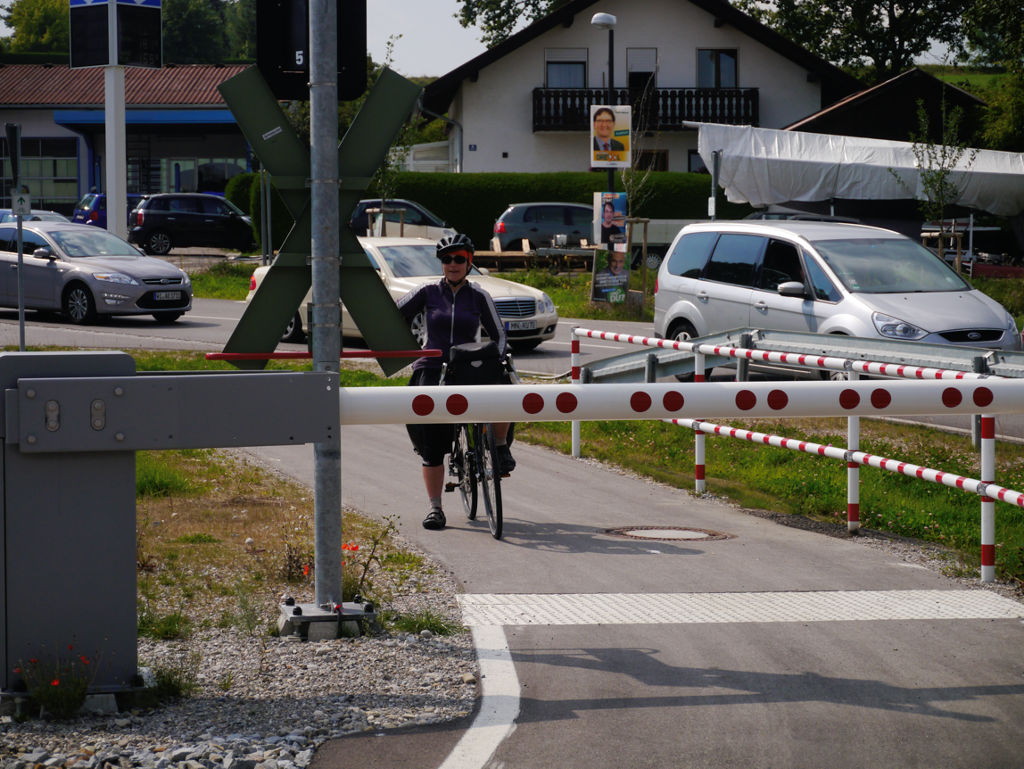
While cyclists in Australia generally have to ride in traffic, in Germany they are far safer. This is a train crossing and the cyclists get their own boom gate.
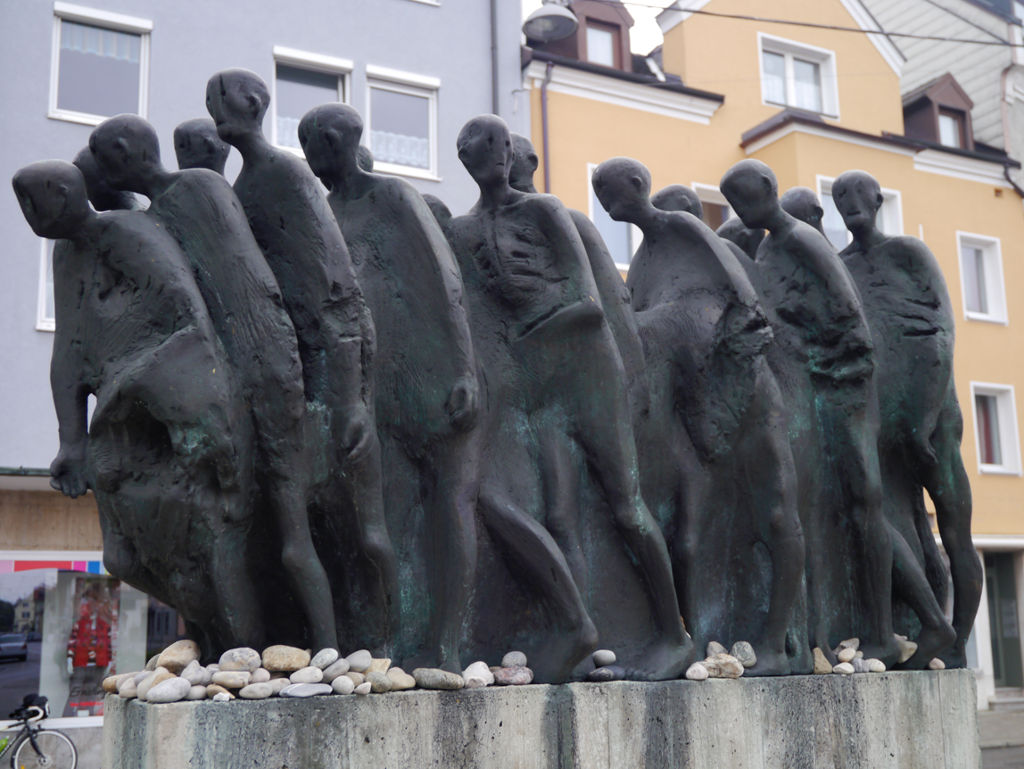
Moving east across Germany. This is a monument, 20km from Dachau, to the Jews forced into death camps to be systematically murdered.
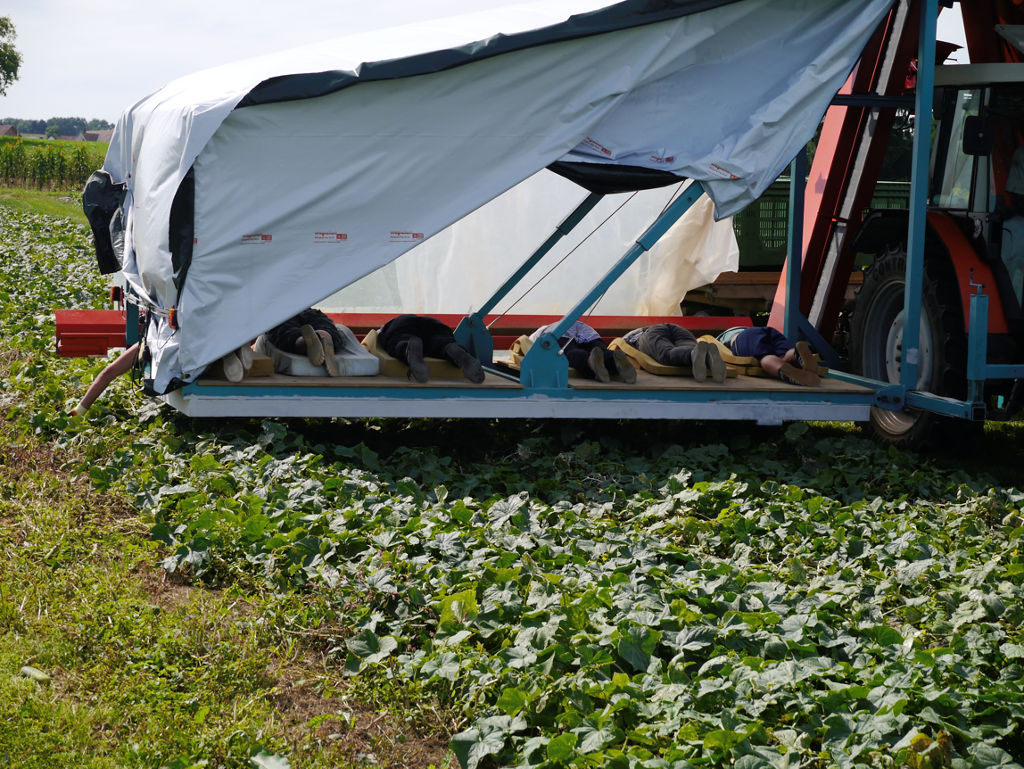
A gherkin harvester. There are 12 rows per run. Under the canopy there are 12 pickers lying flat, facing the plants, on foam mattresses. They pick the gherkins and place them on a conveyer.
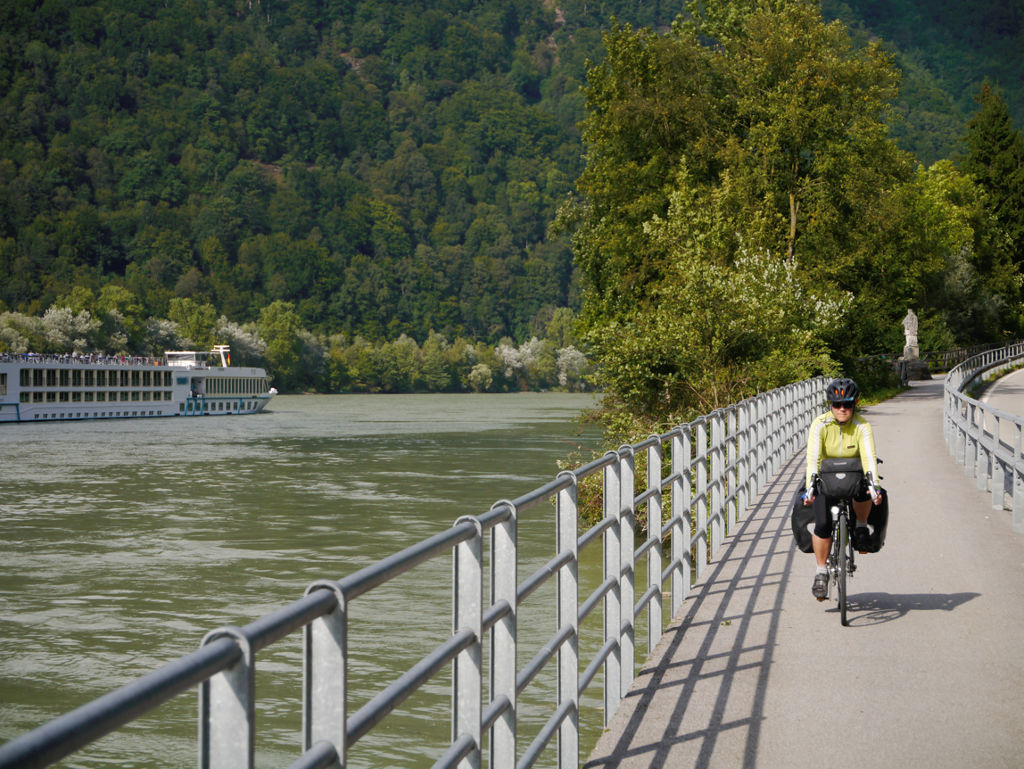
On the Danube bike path, in Austria. We pass river cruise boats all the time. Advertisements for the cruise boats don’t mention how enviously the passengers watch the cyclists.
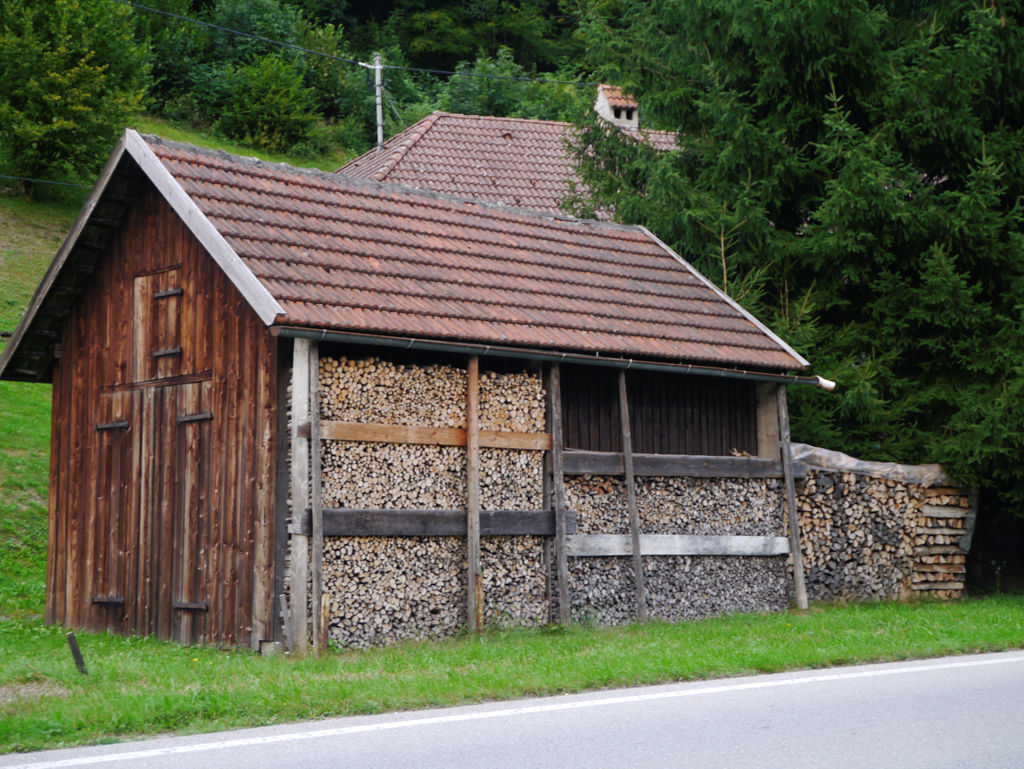
A wood shed in Austria. Notice how orderly the stack is. Around the world woodsheds reveal something about the local culture. You would be unlikely to find this one in Australia. Too orderly.
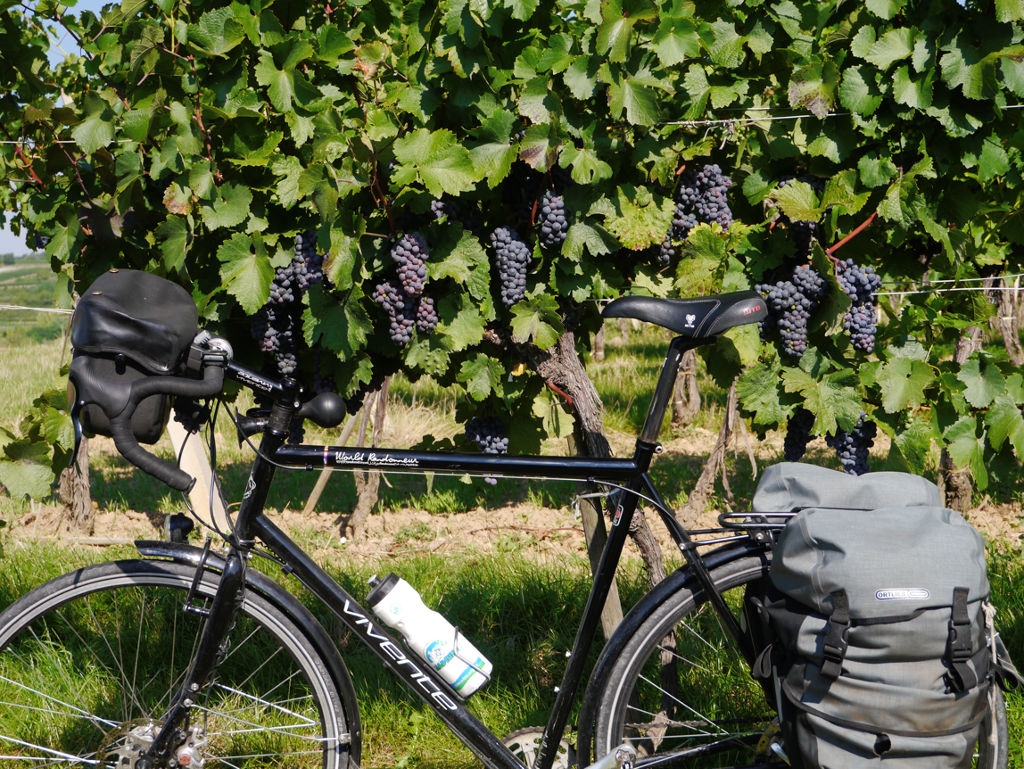
The 2013 test bike with Rohloff, chain tensioner, cable disc brakes, B&M lights, WTB saddle, 36 spoke wheels and Alex rims.
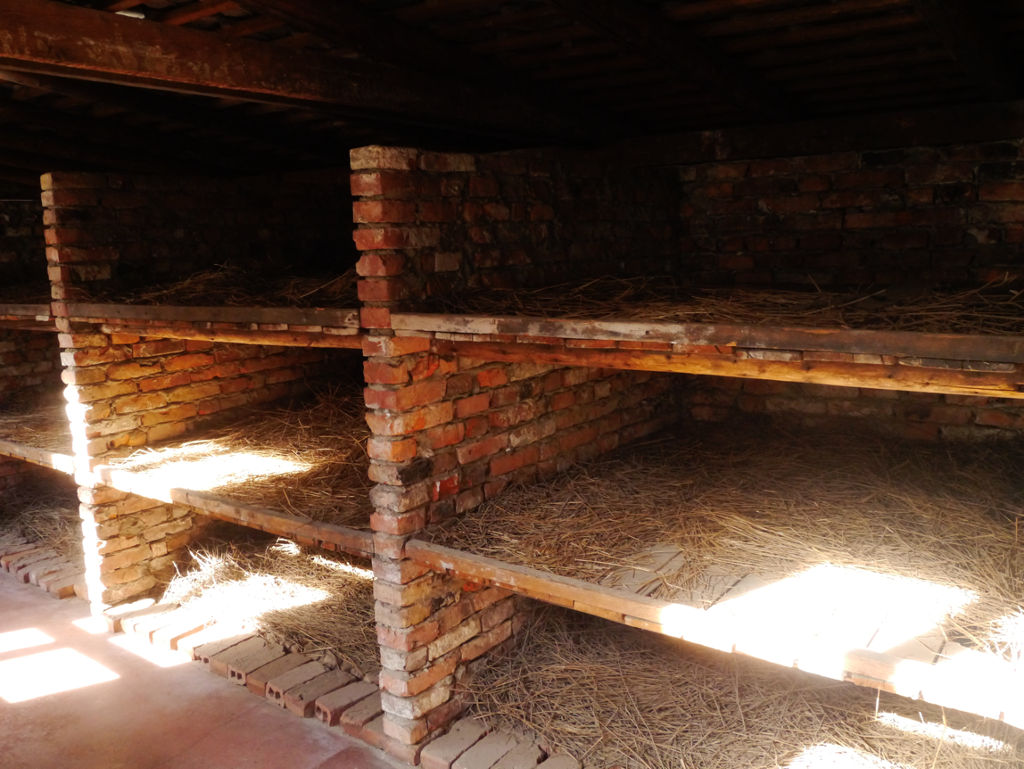
Auschwitz. Reconstructed interior of a brick barracks for prisoners. At least 4-5 prisoners slept on each pallet. There was hardly any heating and no sanitation. 1.1million were murdered in Auschwitz.
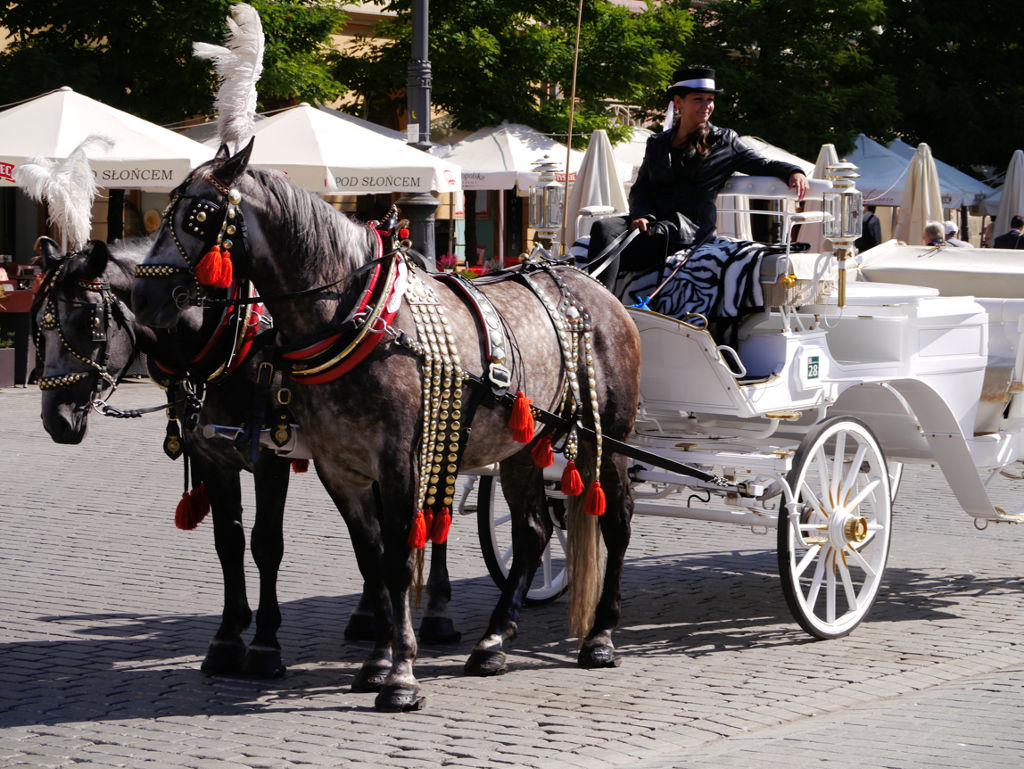
Scene in Krakow. The historic centre is particularly charming.
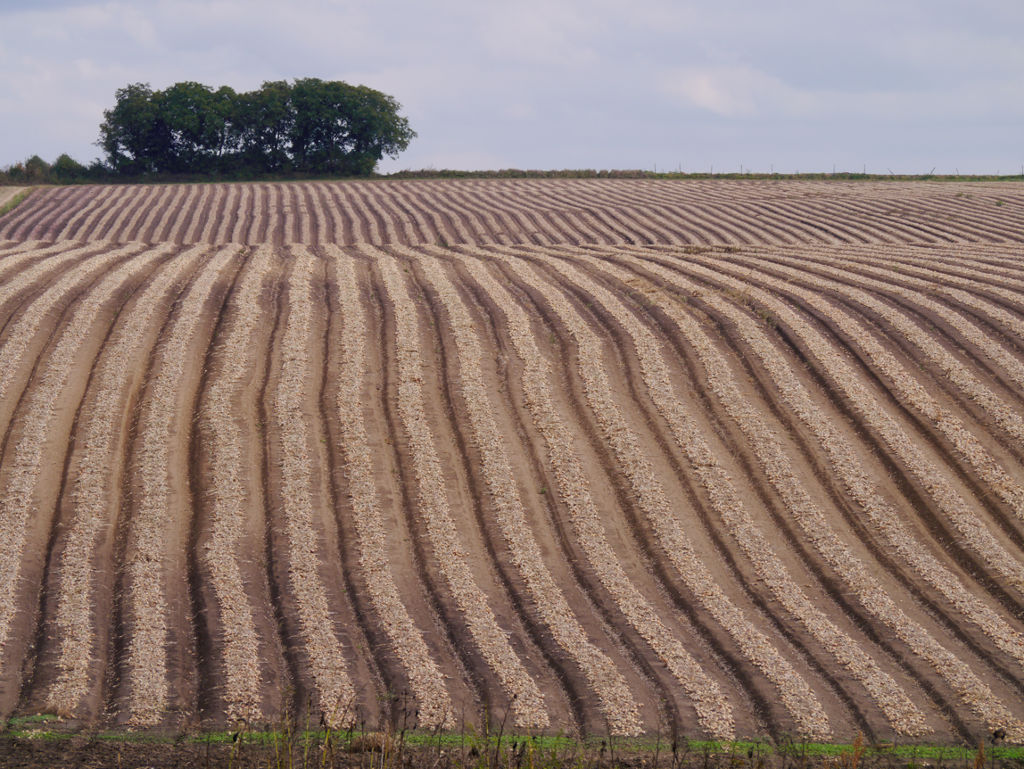
Onions drying before harvest in Poland.
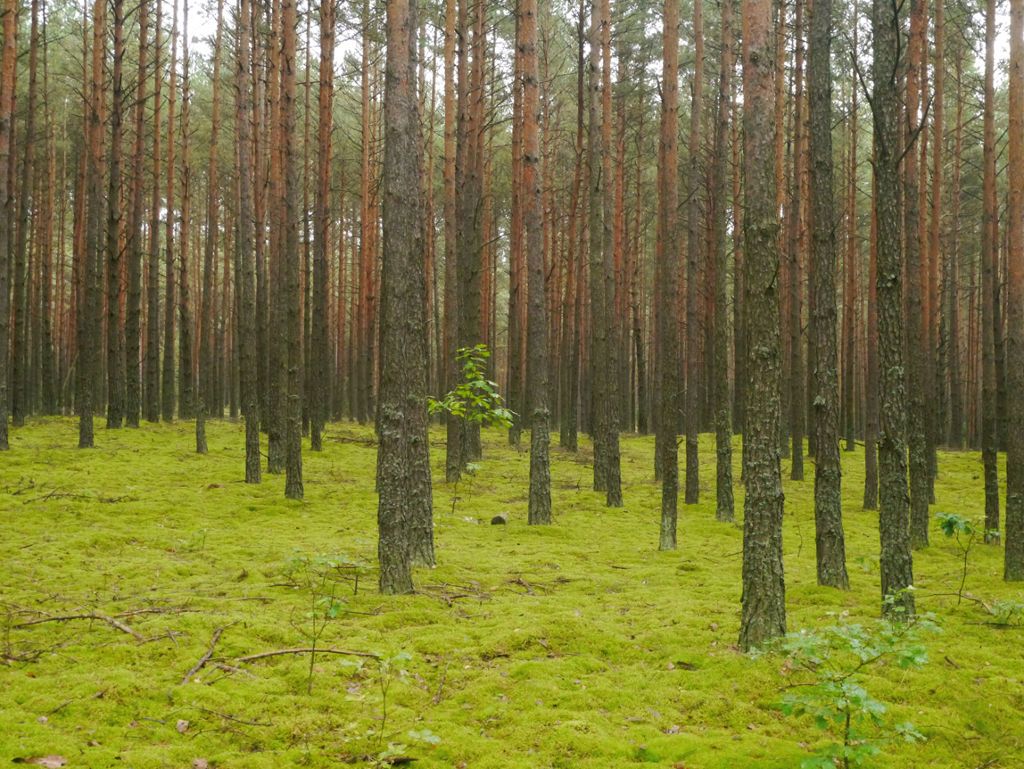
Heading north to Warsaw. The forest floor is covered by moss and lichen. When we arrived in Warsaw we were greeted by a couple we’d met in Georgia on another tour.
A ride from Zurich airport, to Basel, Strasbourg, around Stuttgart, to Munich, then to Lindau and around Bodensee clockwise to Eurobike at Friedrichshafen.
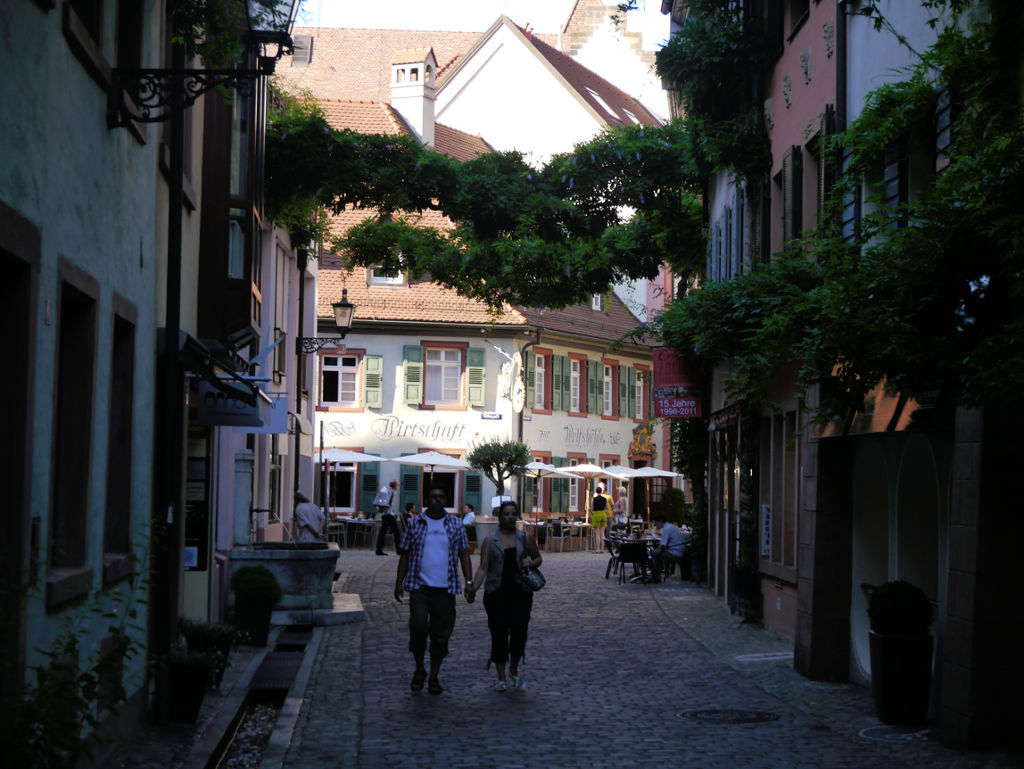
Street scene in Strasbourg.
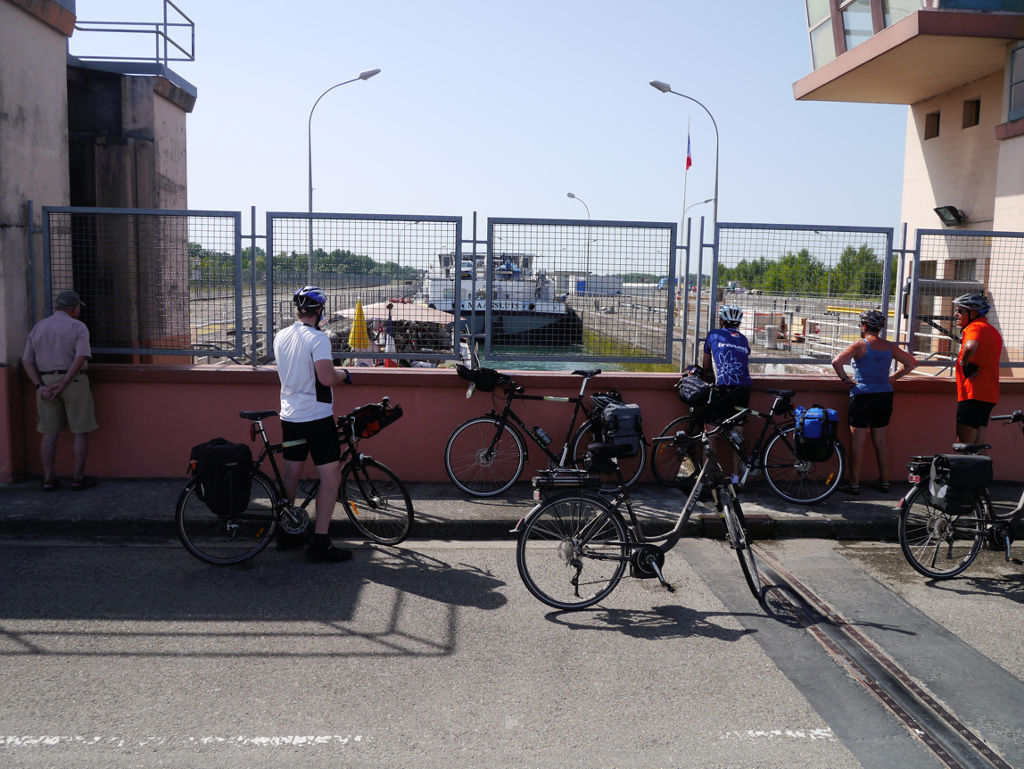
Watching a canal lock fill up. The canal systems throughout Western Europe provide cyclists with thousands of kilometres of cycle paths along or beside their banks.
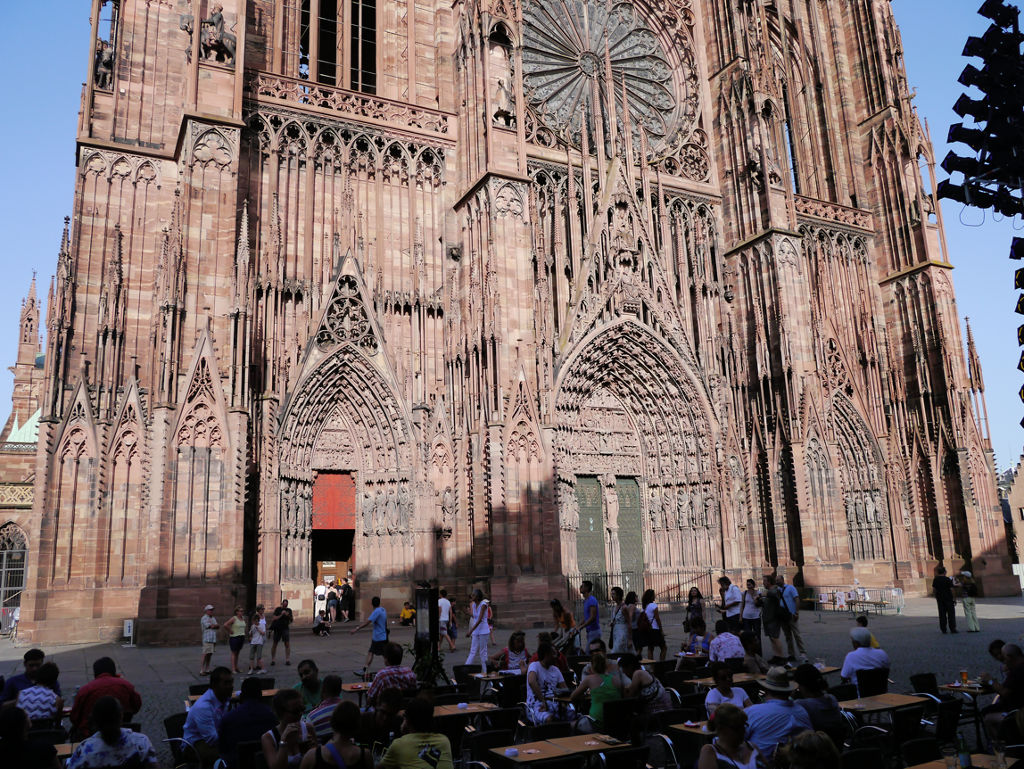
The cathedral in Ulm. It is so impressive. Ulm is a city to pass through on any tour of Germany.
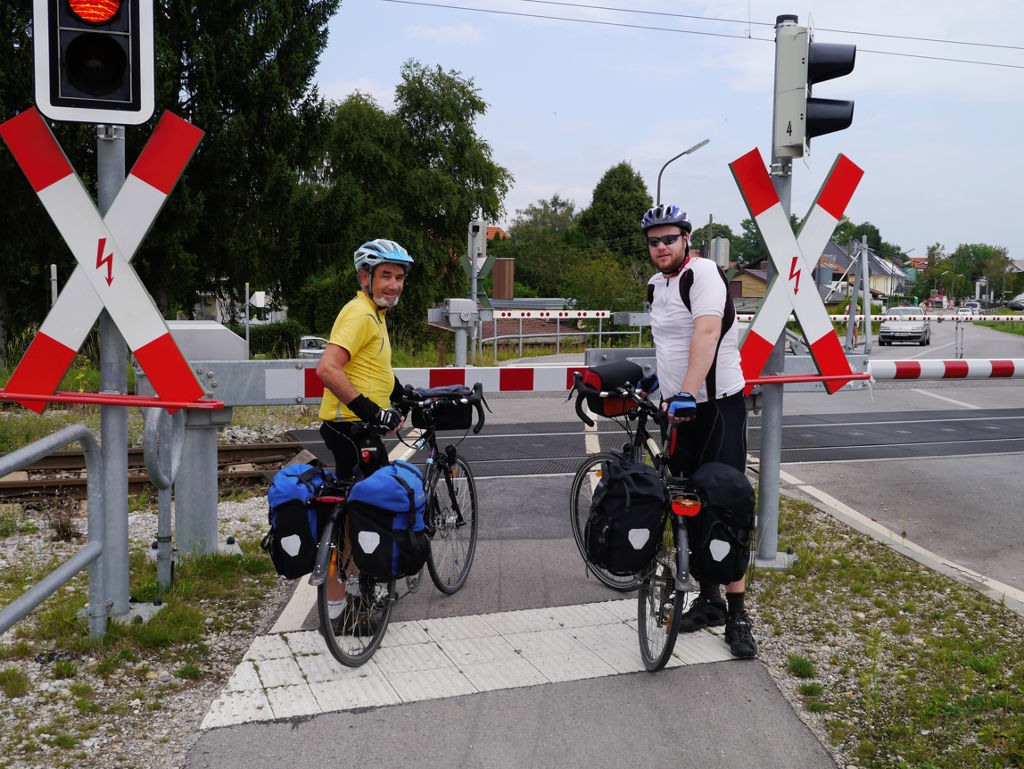
A separate crossing for cyclists.
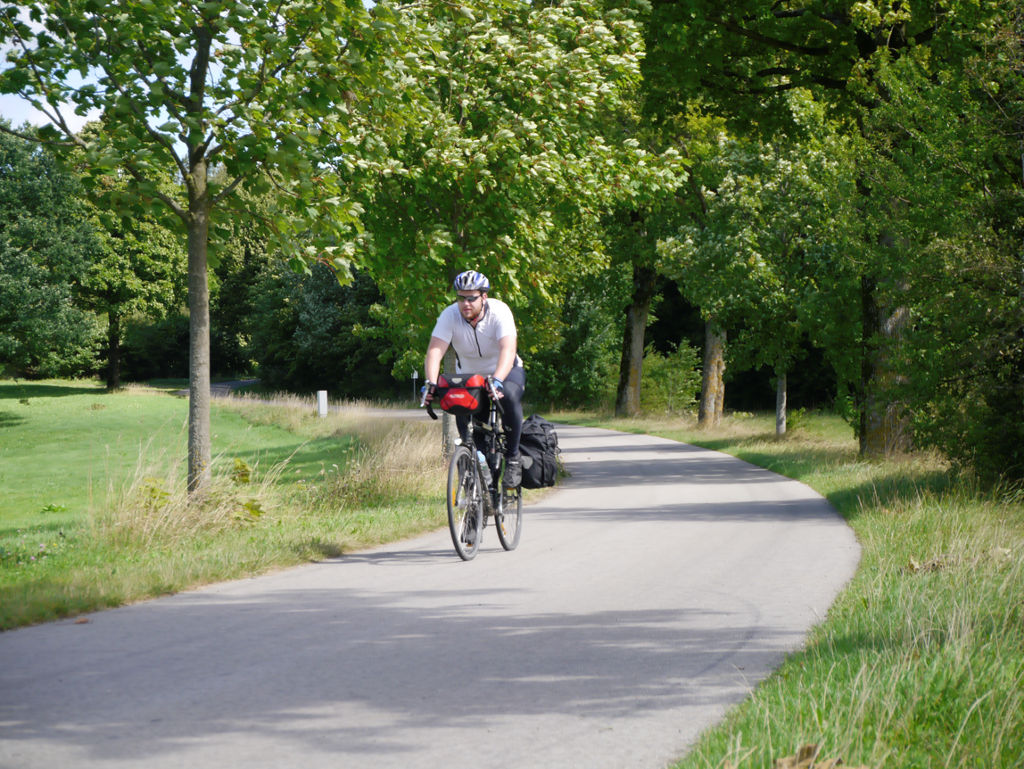
Bavaria is cycle touring heaven. You don’t need to choose a route based on where the cycle paths are. You decide where to go and there will be a way to go on bike paths.
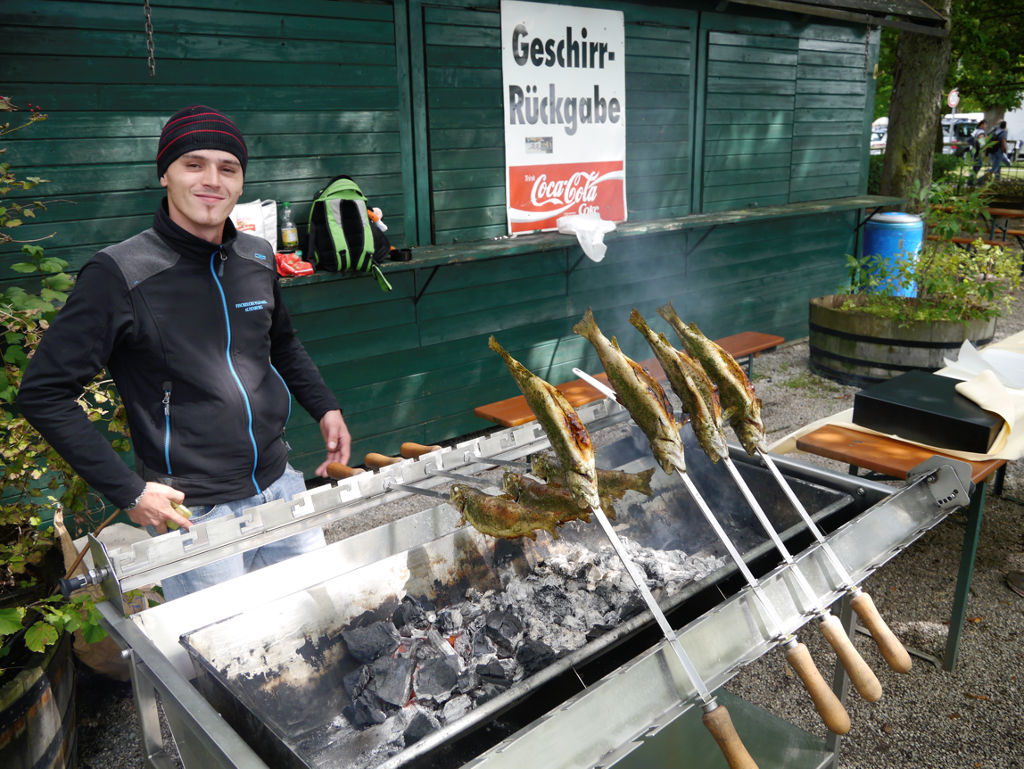
Lunchtime at the lakes south west of Munich.
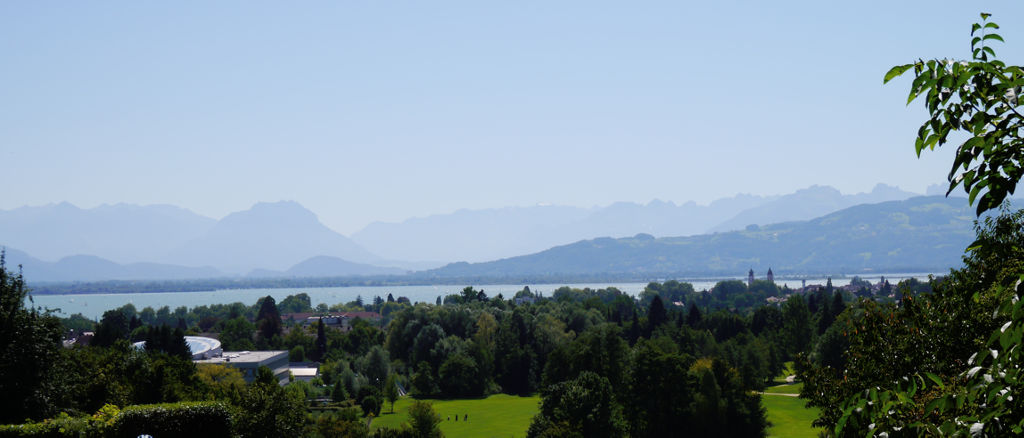
Coming down to Lindau from Meiningen. Bodensee with the Swiss alps on the other side. This area is literally teaming with cyclists doing the multi-day ride around the lake.
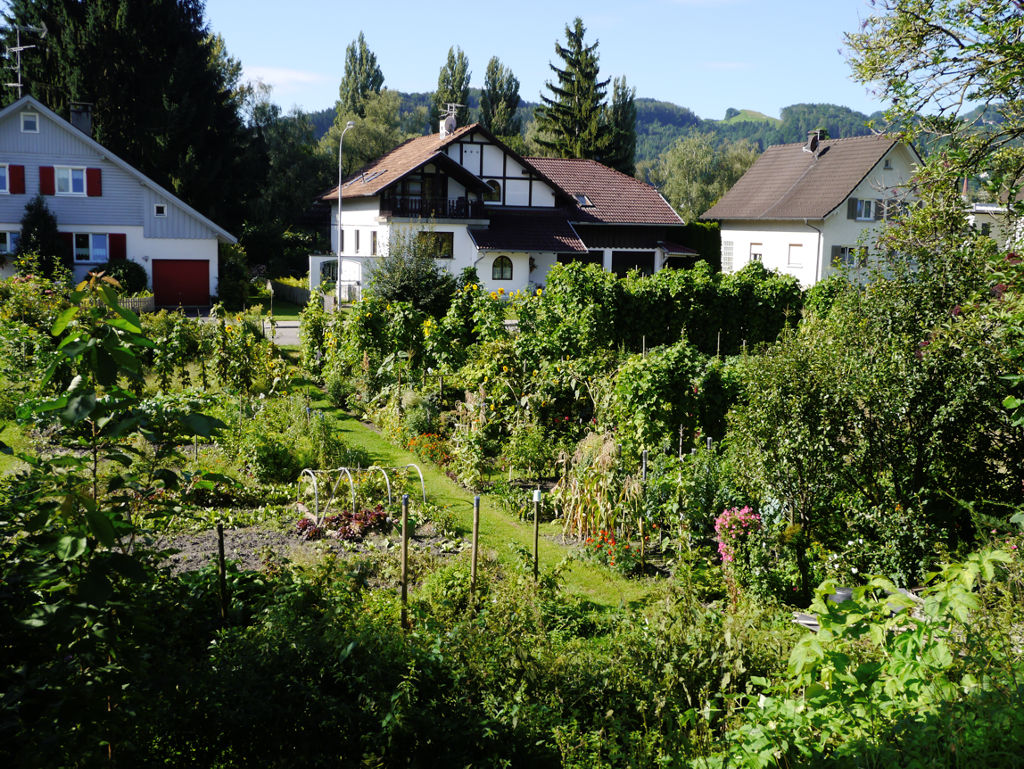
Home vegetable gardening and communal gardening is very popular in this region and from the bikes we admire them.
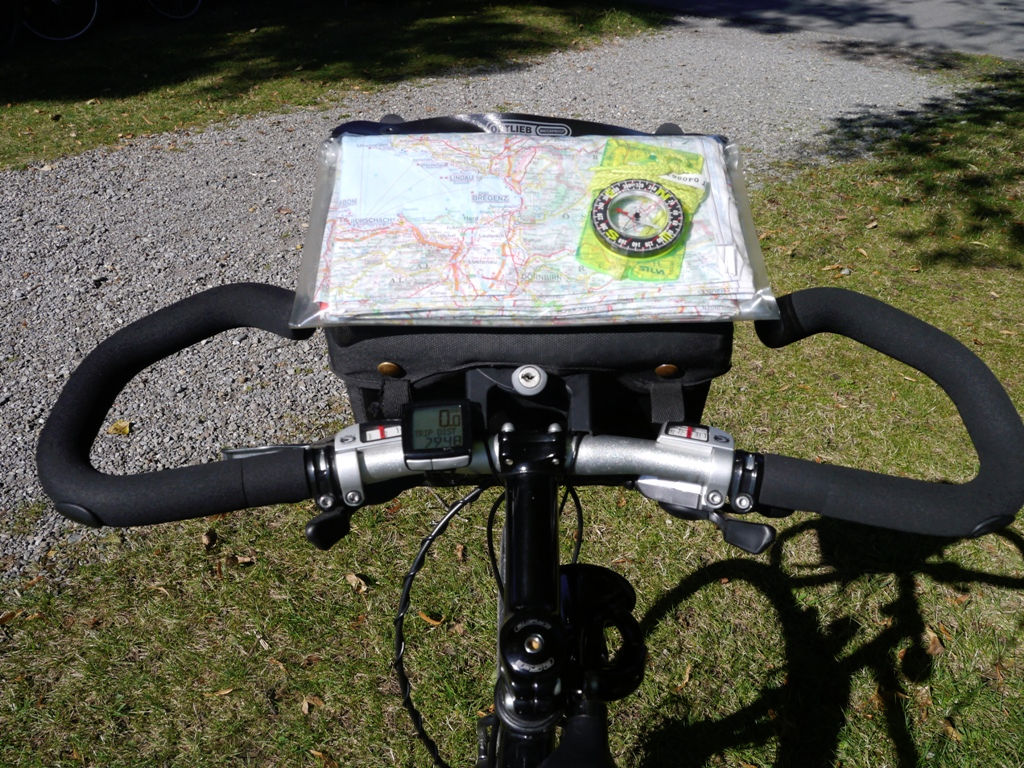
This has been a test ride of the Humpert trekking bar. Verdict? Better than other trekking bars because it does not reduce the reach on the bike and it offers settable angles for the extensions.
A ride in two sections. Firstly, Vienna to Sofia in Bulgaria to connect two sections of earlier VWR test-riding from Amsterdam to Arak in central Iran. This has been done in bits and pieces over the years and is being completed. The second section was in the cycling paradise of Switzerland. The start was a ride to Sydney airport, buying a carton and flying to Vienna. The end was riding into Zurich Airport, buying a carton and flying back to Sydney.
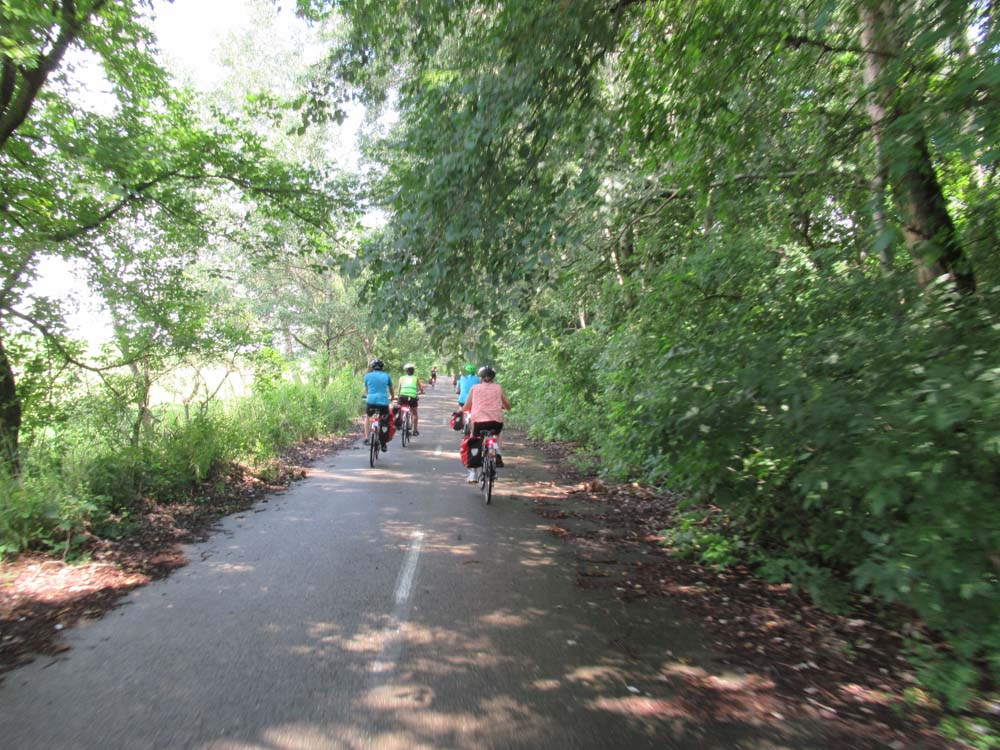
Much of the first few days I’m on the EV6, the EuroVelo route along the Danube. Here is a group of English women in Slovakia.
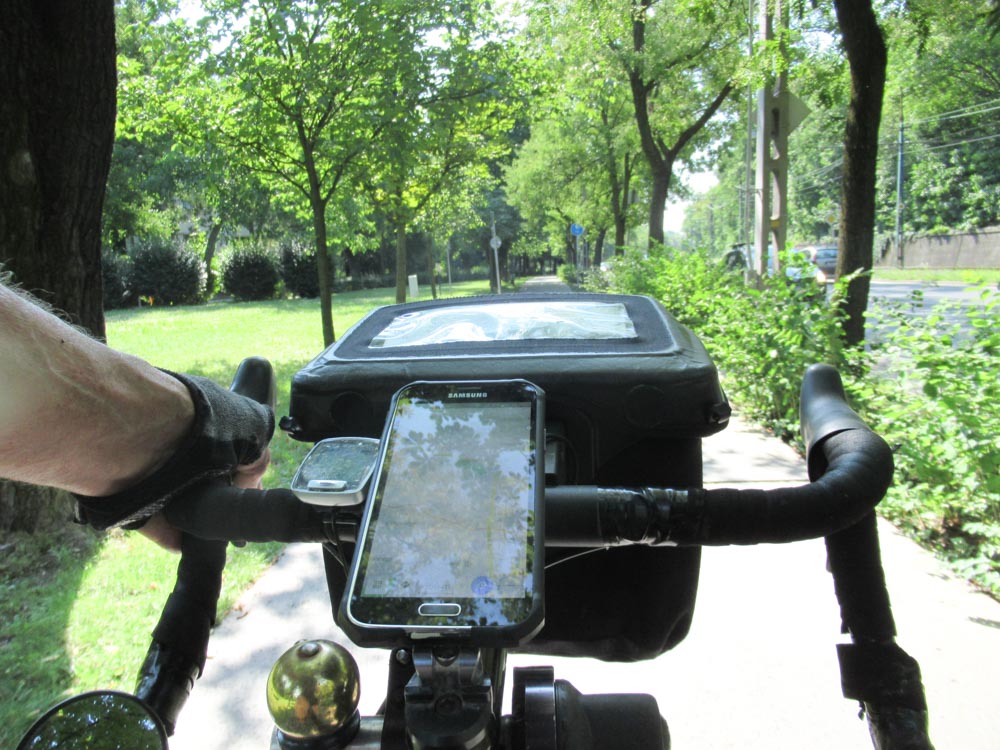
Coming into Budapest. My last time through here was pre-GPS. Now it is so easy as the route and current location are right in front of me.
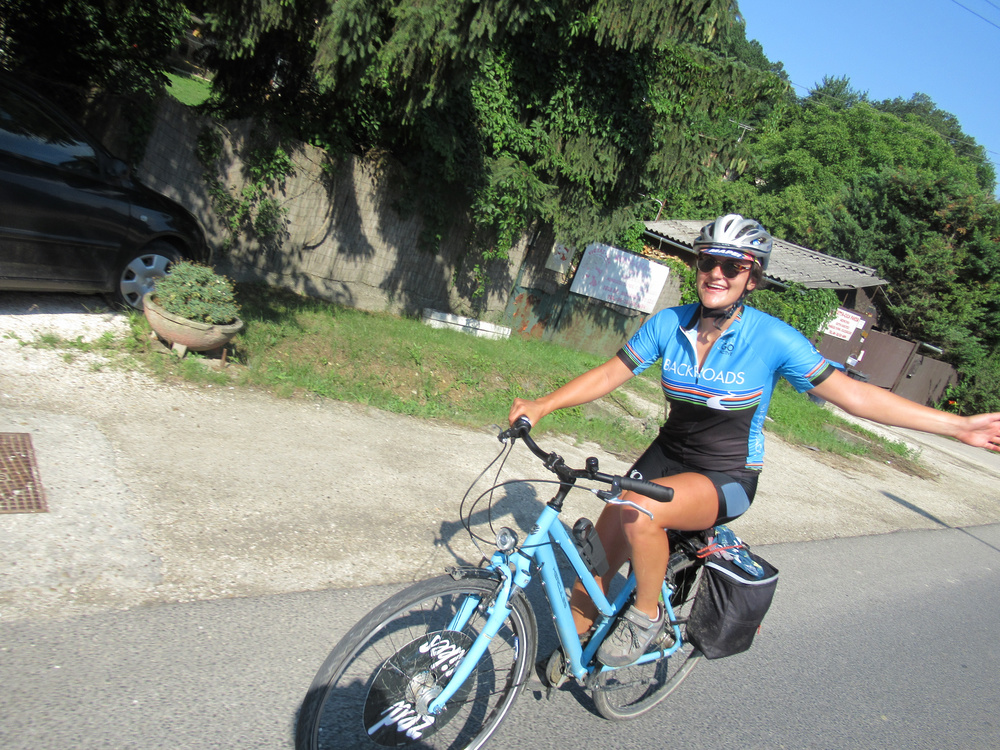
I’m riding with my friend from Backroads who is having a break from tour-leading in Italy.
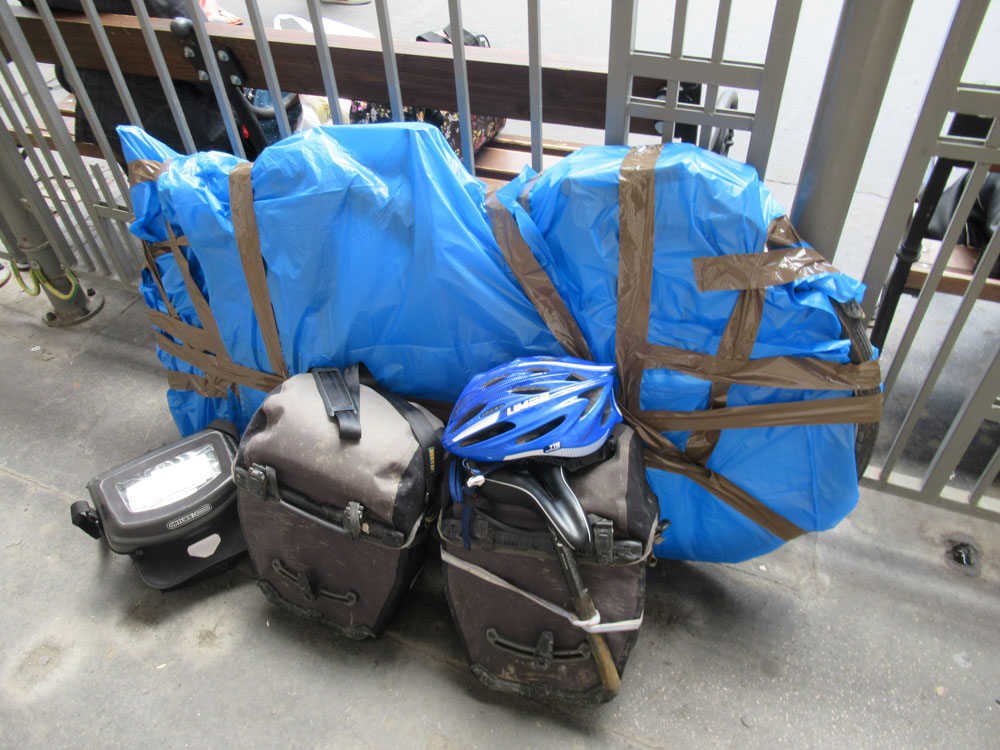
Having previously ridden from Budapest to Arad in Romania I’m taking the train to Arad. No bikes allowed though. So, I’ve got some big bin liners from Aldi.
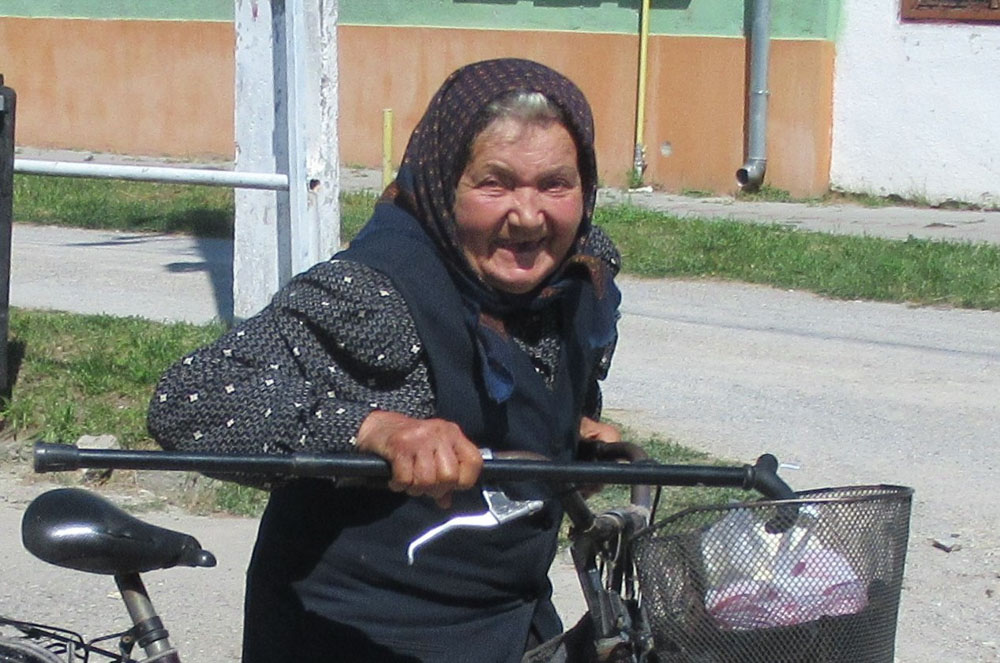
In a Romanian town an old woman manages to still ride her bike. I’m full of admiration.
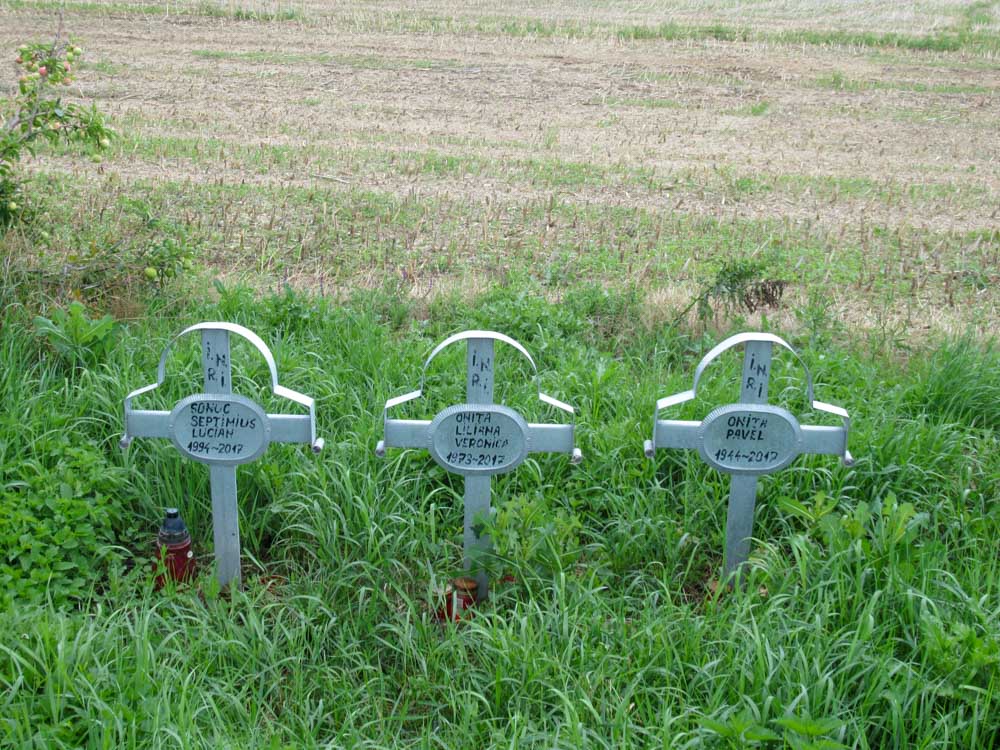
This shot is really a plug for having a mirror on the bike. Through Romania and Serbia I’m passing literally hundreds of roadside memorials. Drivers don’t seem particularly bad but there is no shoulder and the mirror keeps me safe.
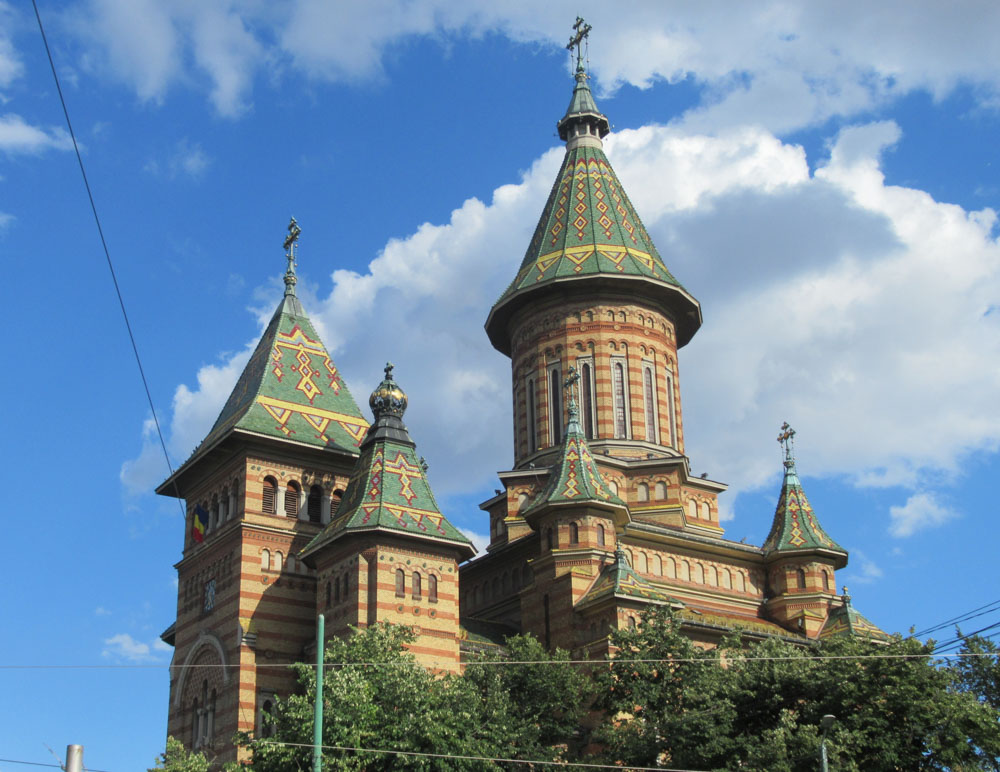
In central Timisoara, Romania. Romania is a great country for touring.
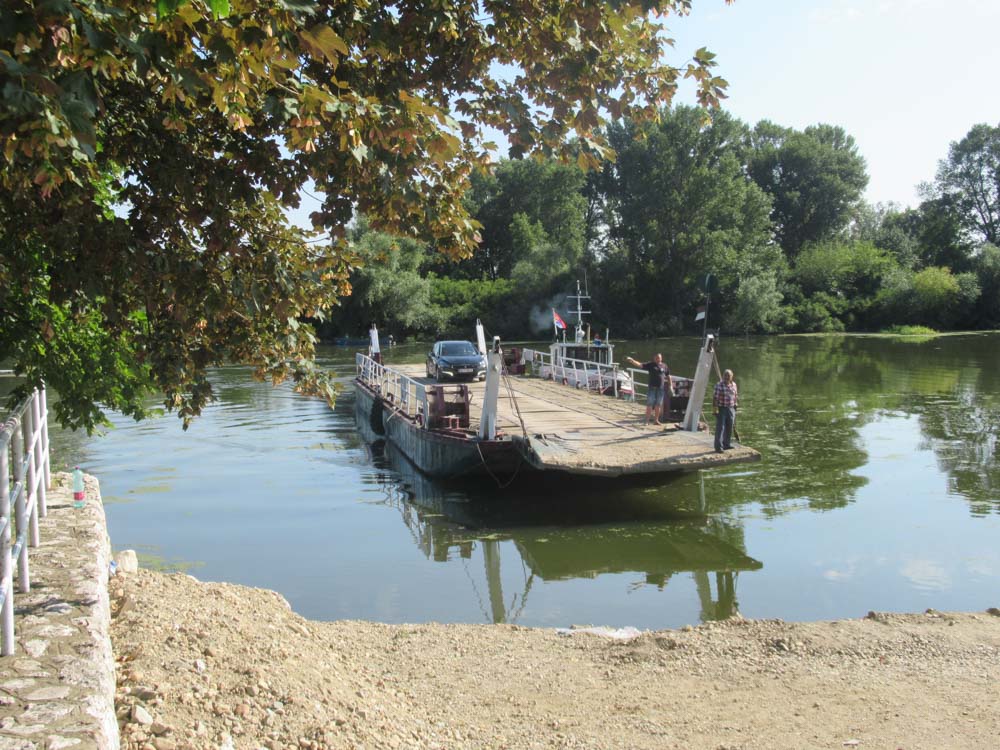
There is a ferry crossing over the Danube (the big river is not visible here) from Romania to Ram in Serbia. This saves me having to go a long way up-river to a bridge.
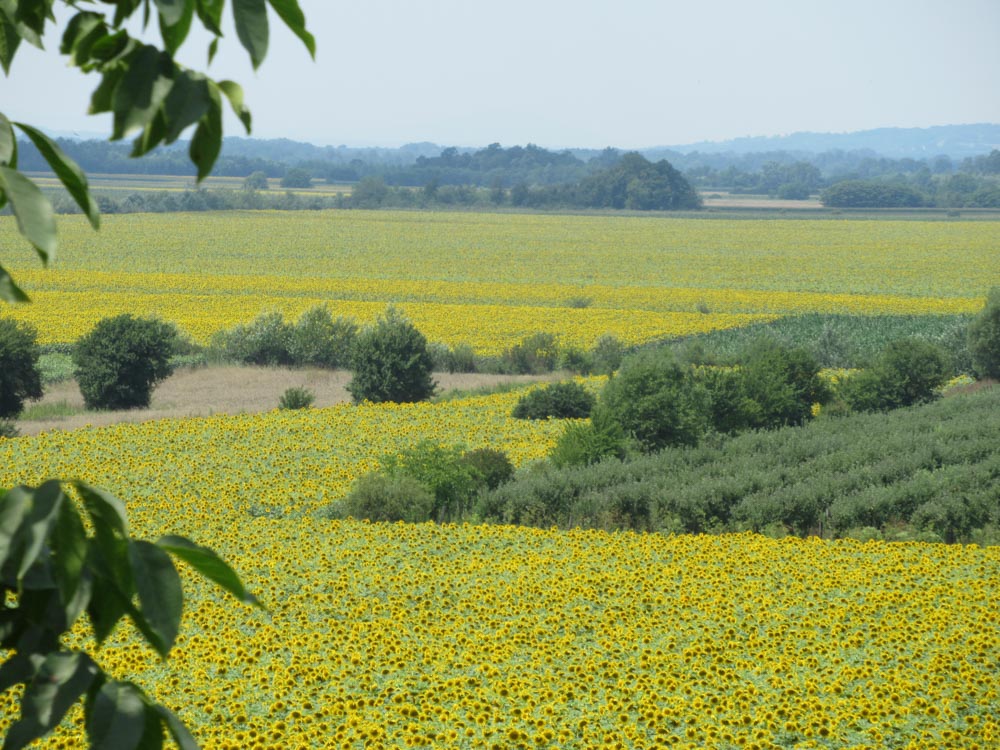
There must be trillions of sunflowers that I’m passing all day every day. I can’t stop photographing them but shots don’t convey the real beauty.
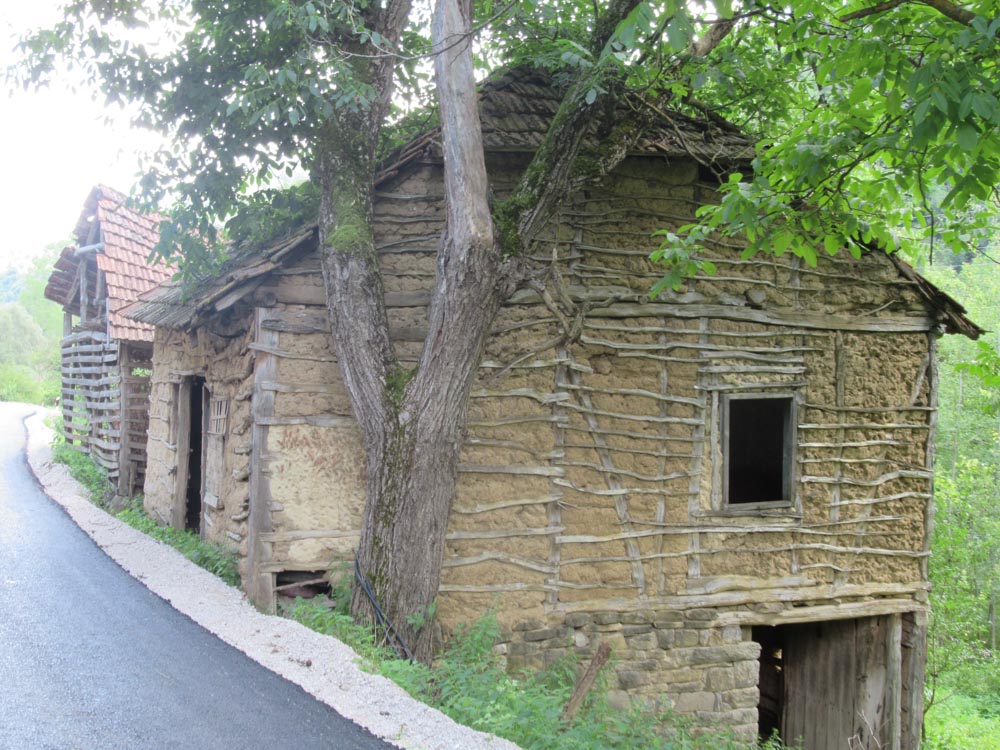
To avoid traffic I’m in the mountains in eastern Serbia. It seems to be deserted. A local tells me “all the young people went to live in the city”.
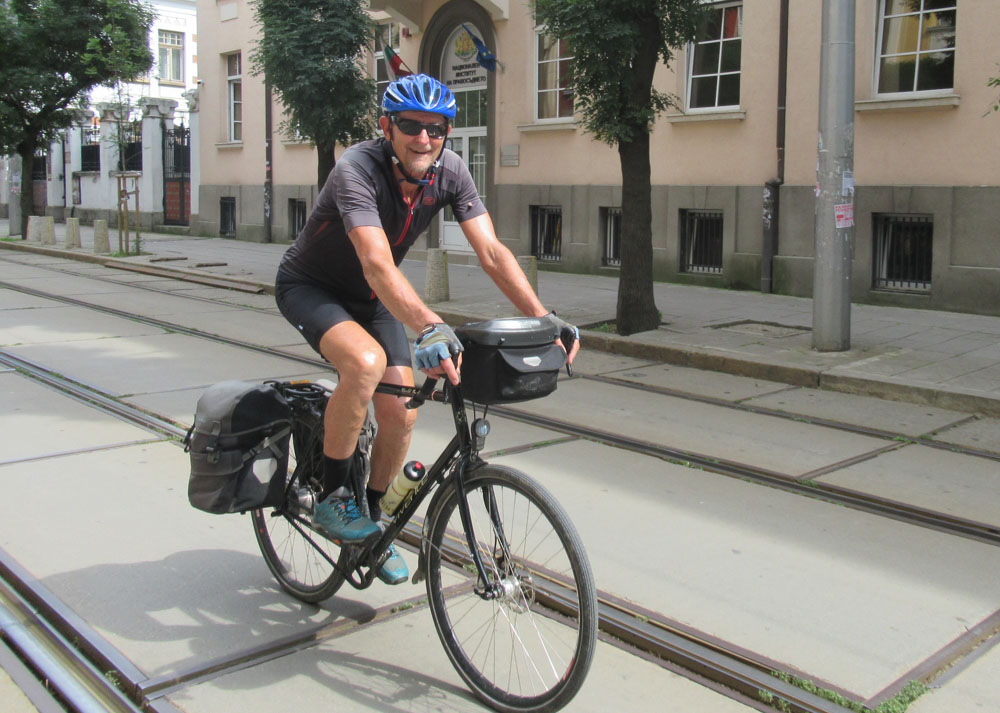
From the north, arriving in Sofia, the capital of Bulgaria. Many years ago I arrived here from the south, having come up from Greece.
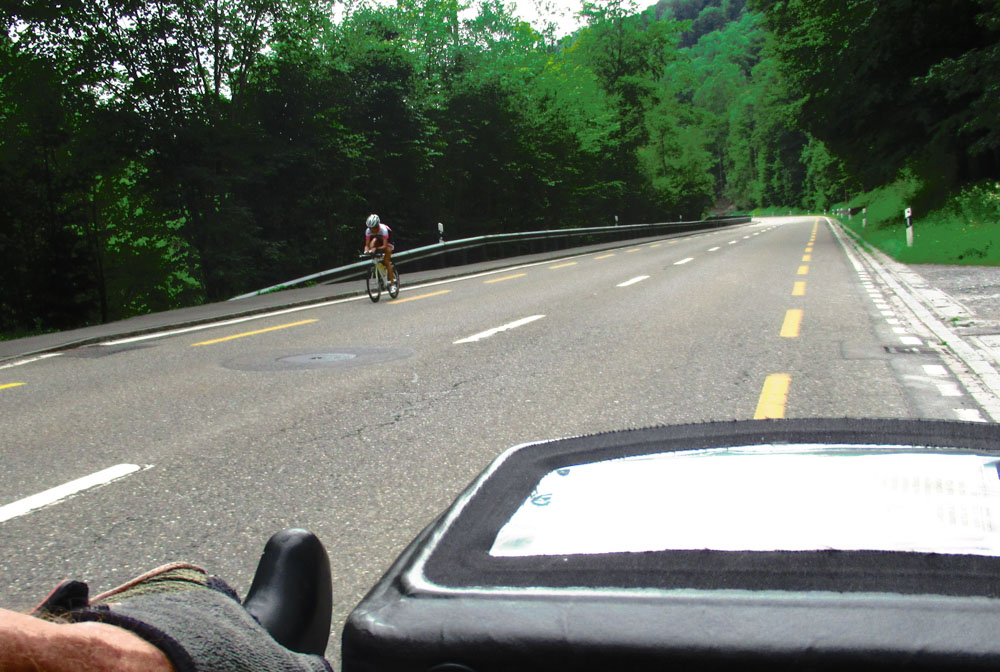
After attending the annual Eurobike show in southern Germany, I cross Bodensee to Switzerland. There are off-road bike routes in most places but for roadies who want to be on-road, there is a demarcated shoulder. Always!
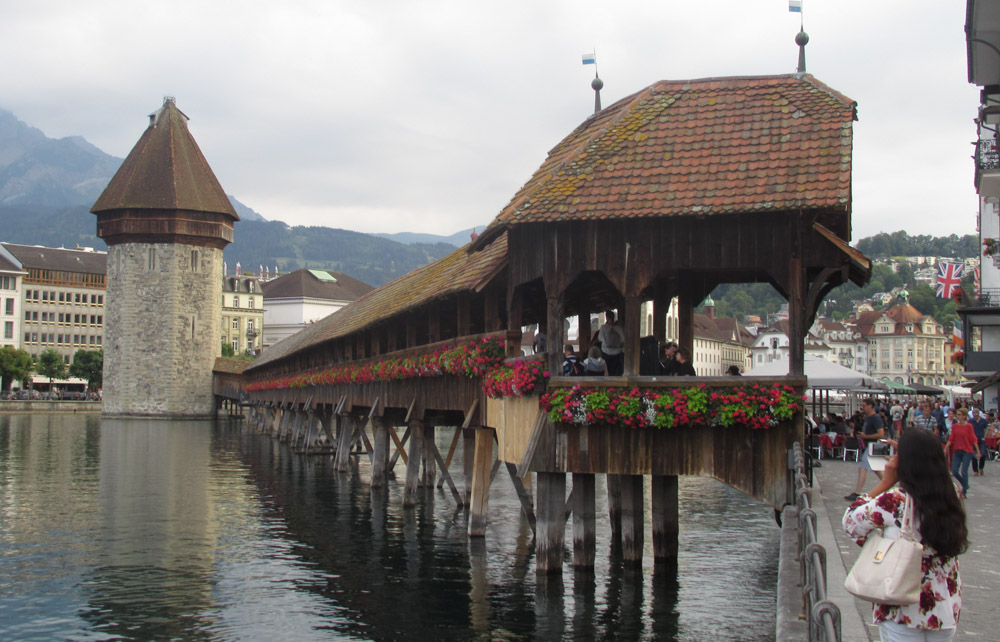
The covered bridge in Lucerne.
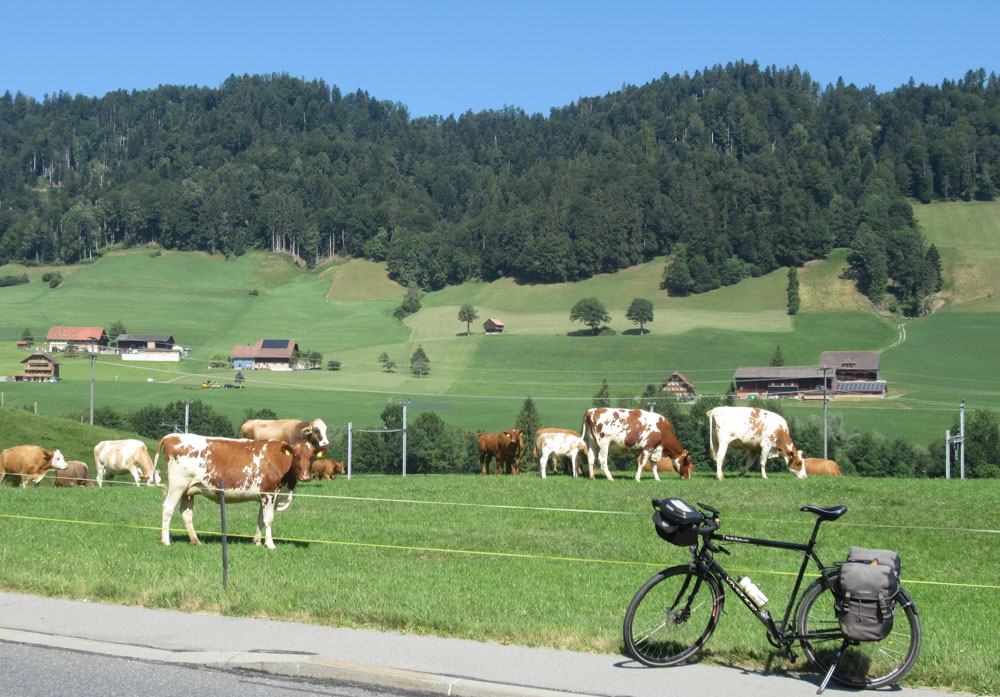
In the UNESCO Biosphere between Lucerne and Bern.
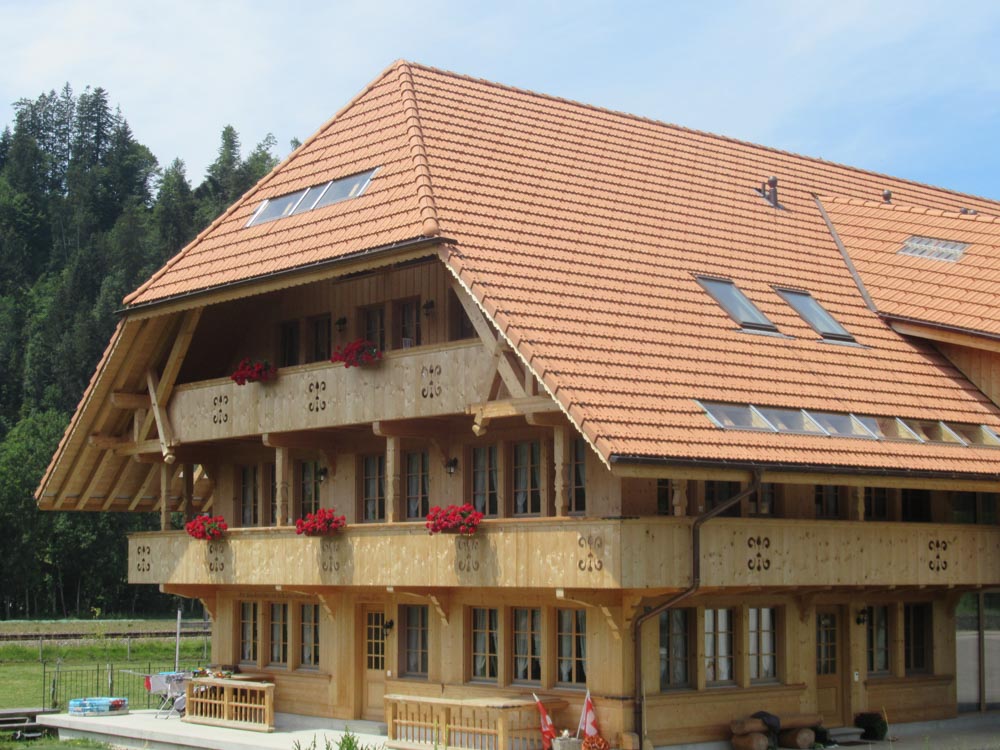
New buildings in Switzerland are frequently entirely (apart from the foundations and roofs) wooden. It is impressively sustainable. The wood has likely been grown and milled nearby.
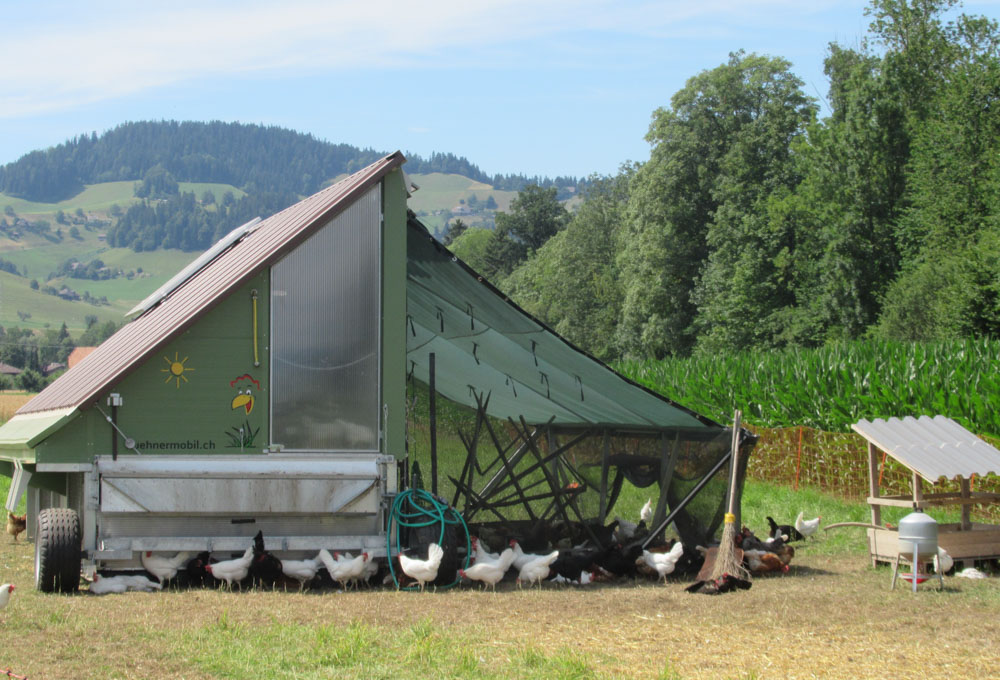
I’m passing quite a few mobile chook set-ups. They just move them around paddocks. In Australia, 10,000 chooks per hectare (one per square metre) qualifies as free range. Not here.
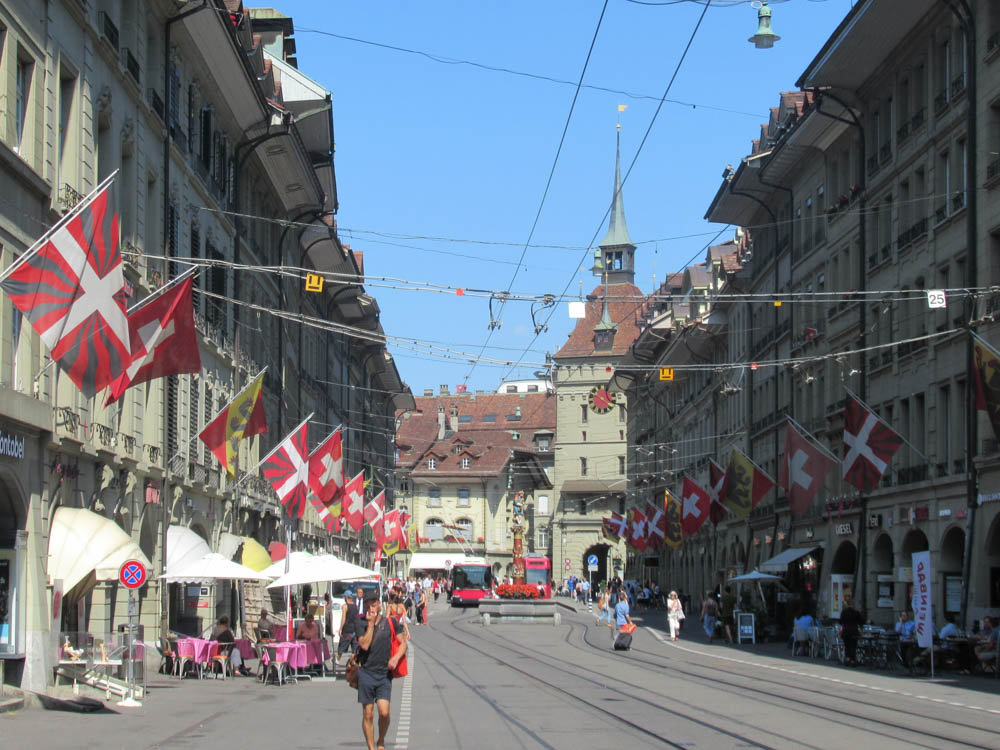
Downtown Bern. Switzerland is highly recommended for cycle touring. All levels of government endorse and encourage cycling. The cycling infrastructure is fantastic. Now I’m off to Zurich, three days away. I know I can get a bike carton at the airport.
A tour of the Pilbara in Western Australia. Newman to Port Headland. All dirt.
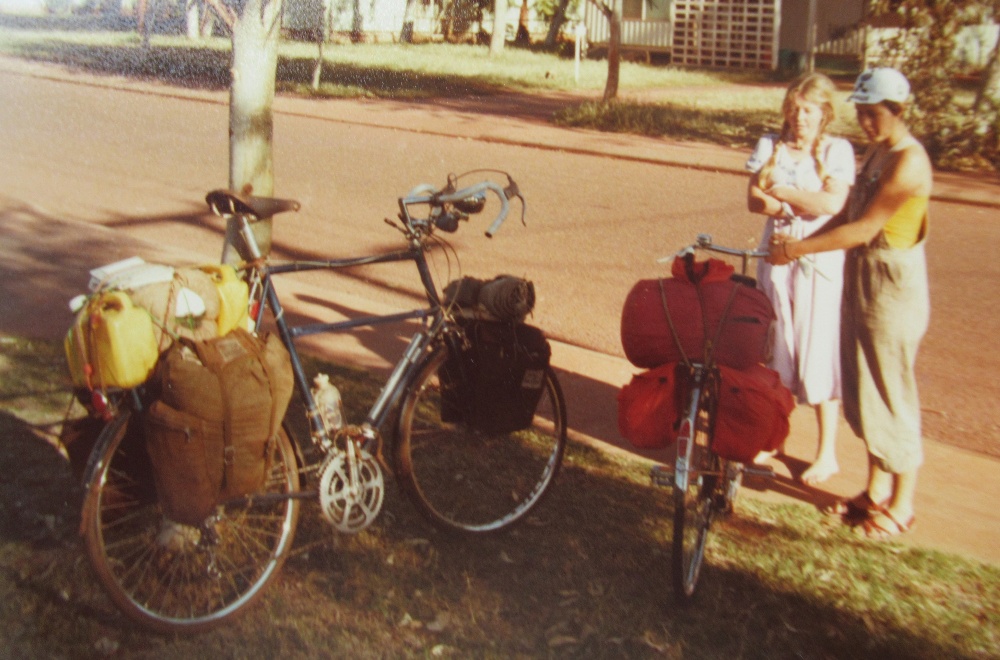
We are ready to go. It’s late winter so not yet hot but there is no water for vast distances and only the Iron Clad Hotel in Marble bar, 300KM from Newman, where anything could be bought.
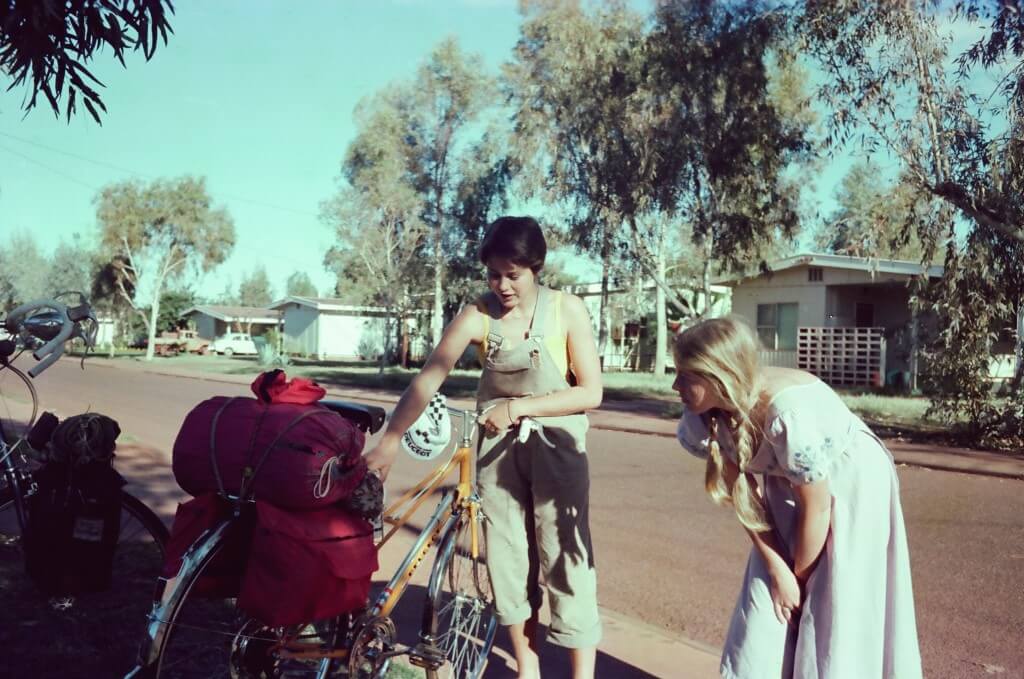
Explaining how it works.
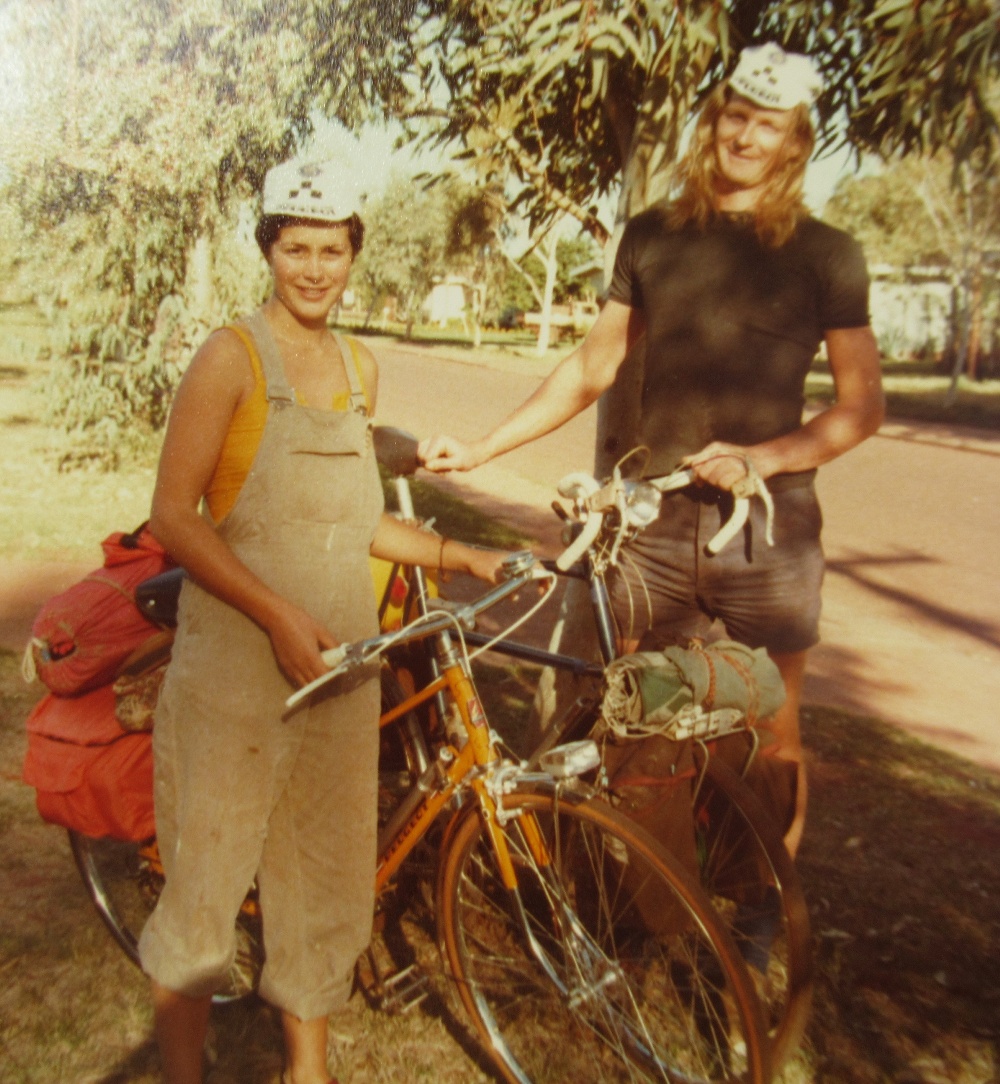
My bike is in the early stages of what is now Vivente’s World Randonneur development. 1-1/2” wide tyres, wide range gears, pannier system luggage capacity, relatively high drop handlebars, double butted steel frame, lighting and mudguards.
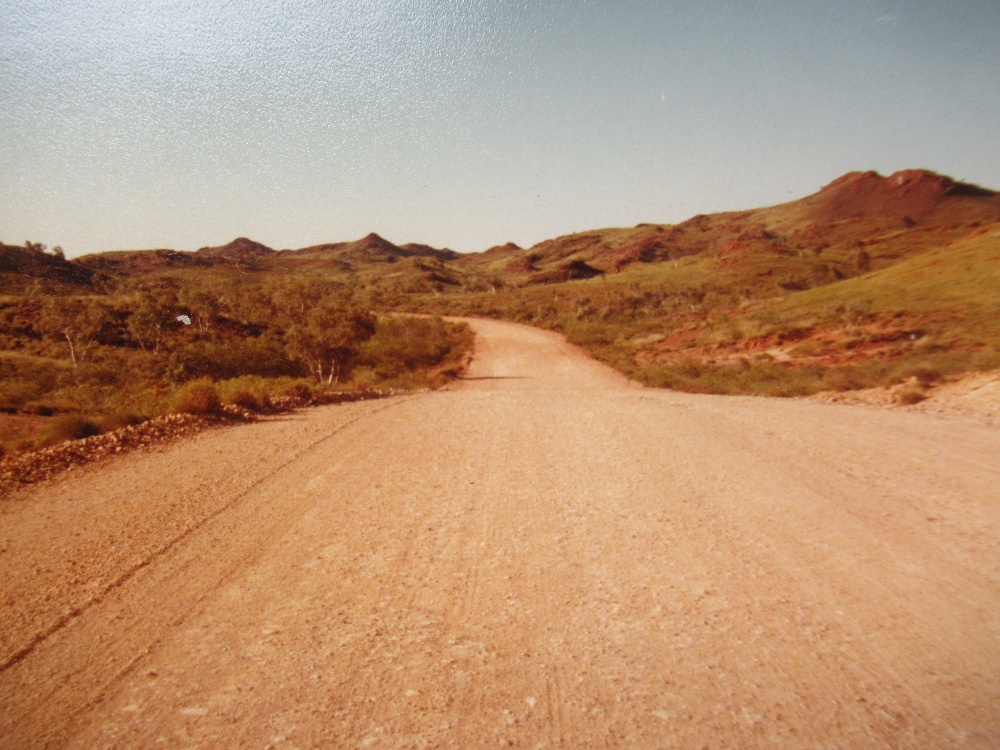
Heading out through the Pilbara desert.
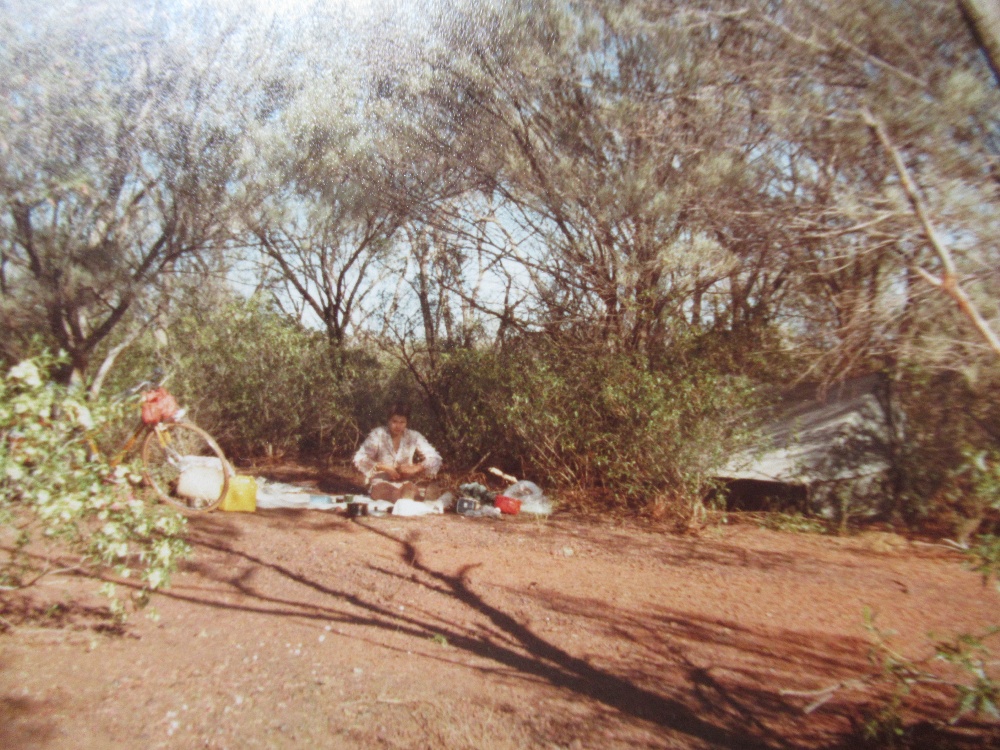
Beautiful camp sites.
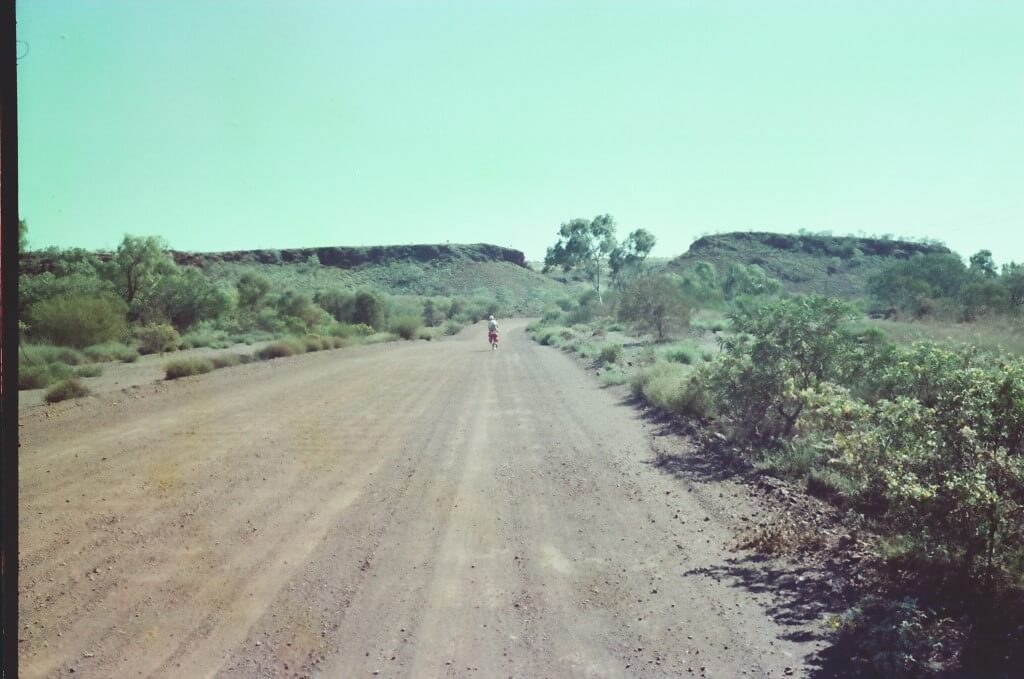
On average we were passed by three cars or trucks a day.
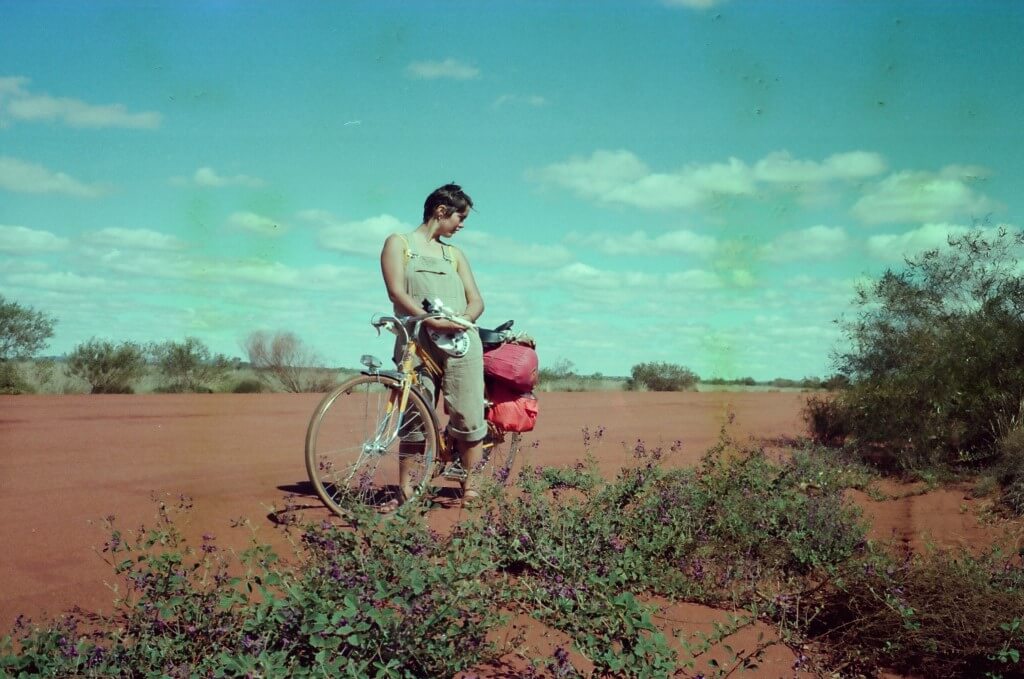
Anyone in a car was not stopping but we were in awe of the beauty around us and took it in.
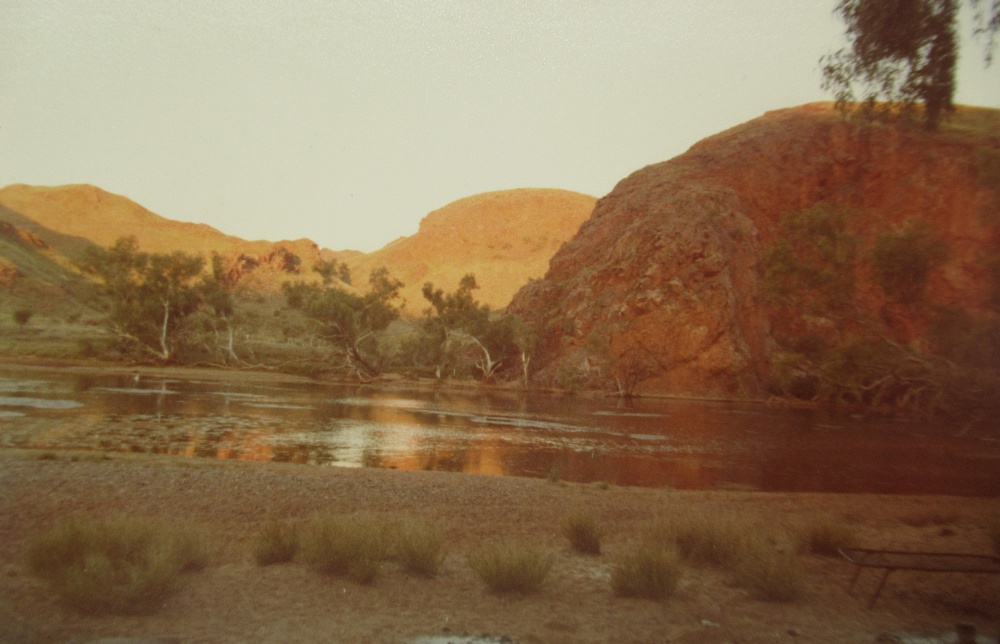
There were two gorges along the way where we swam and got water.
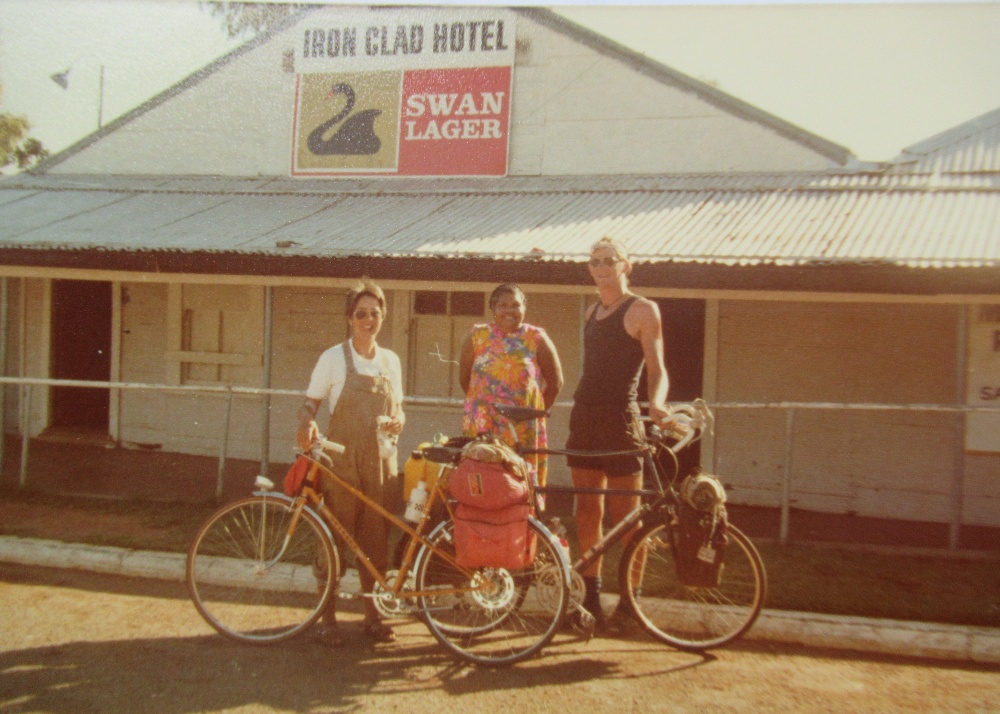
Marble Bar was the hottest place in Australia. The Iron Clad Hotel welcomed us.
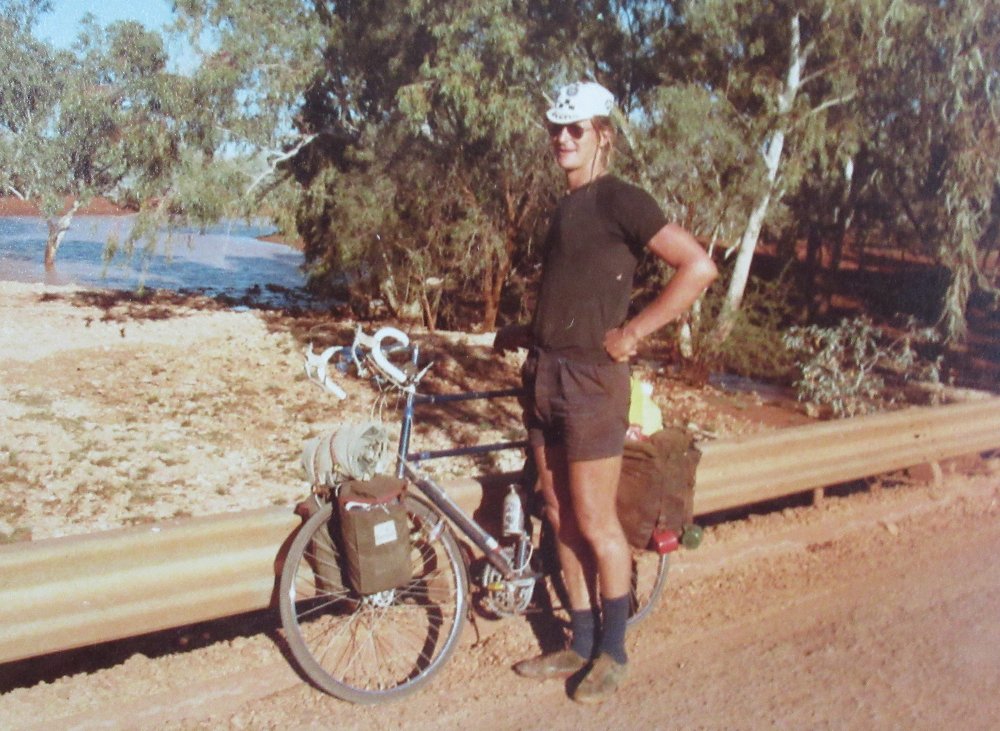
This bike marked the Randonneur becoming the World Randonneur. It was my personal
benchmark for a tougher bike. I’d been breaking so many spokes on 27” wheels. I had this frame made for 26 x 1-3/8” wheels because I knew I could get 12g spokes in that length. They were used in horse trotting! Also, I could use Michelin Endurance 40mm wide tyres. I thought I’d never stop cycle touring. Now, over 40 years later I am writing this up, in-between tours.